
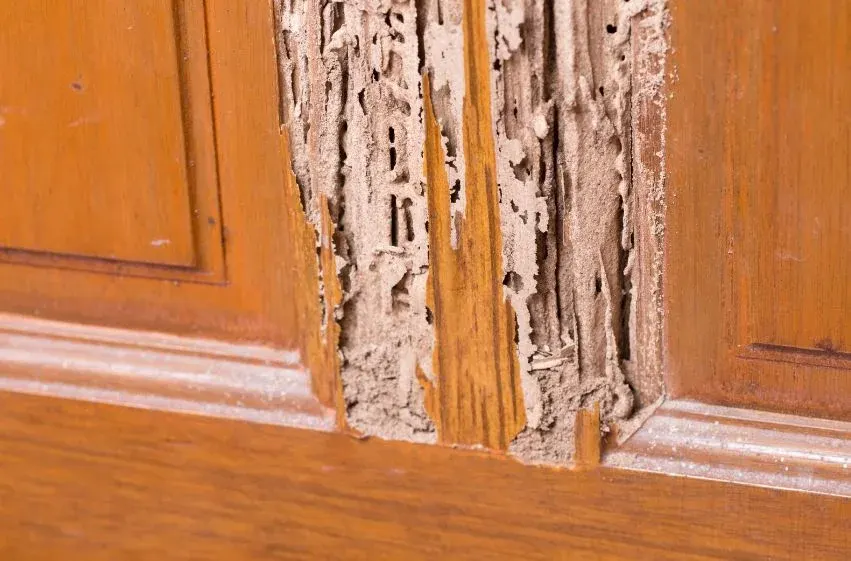
That gap between what the timber looks like and what it actually is explains almost every termite story in Australia. It gets found during a renovation, a bathroom refit or a pre-purchase inspection, and by then the eaten section is well beyond the one board anyone noticed.
Note
If you think you have found live termites, do not spray them, do not knock the mud away and do not pull the timber out. Disturbing an active colony scatters it into other parts of the house and destroys the evidence needed to identify the species and the entry point.
What are the first visible signs of termites in a house?
The first visible signs are almost never the insects. They are mud tubes on a pier or foundation wall, paint that has gone rippled or blistered over a section of skirting or architrave, a soft or sunken patch in a plasterboard wall, a door or window that has started to stick, and small piles of discarded wings near a window in warm humid weather.
None of those are proof on their own. Blistered paint can be moisture. A sticking door can be seasonal movement. What makes them worth acting on is that they all sit in the same category: something has changed in a piece of timber you cannot see into.
- Mud tubes or leads on brick piers, stumps, foundation walls, the inside of a subfloor, or running up a wall cavity. Pencil to thumb width, the colour of the local soil.
- Rippled, blistered or dimpled paint over skirtings, architraves, window reveals or door jambs, where the eaten timber underneath has stopped supporting the coating.
- A hollow or papery sound when timber is tapped with the handle of a screwdriver, compared with the solid thunk of sound timber next to it.
- Sunken or spongy plasterboard, sometimes with a faint tracing of tunnels visible through the paper facing.
- Doors and windows that suddenly stick, because the frame or the lintel above has lost section and dropped.
- Discarded wings in even piles on window sills or in cobwebs, usually after warm, humid, still weather.
- Frass or fine pellets below timber, which points at drywood termites or at borers rather than the common subterranean species.
What do termite mud tubes and mud leads look like?
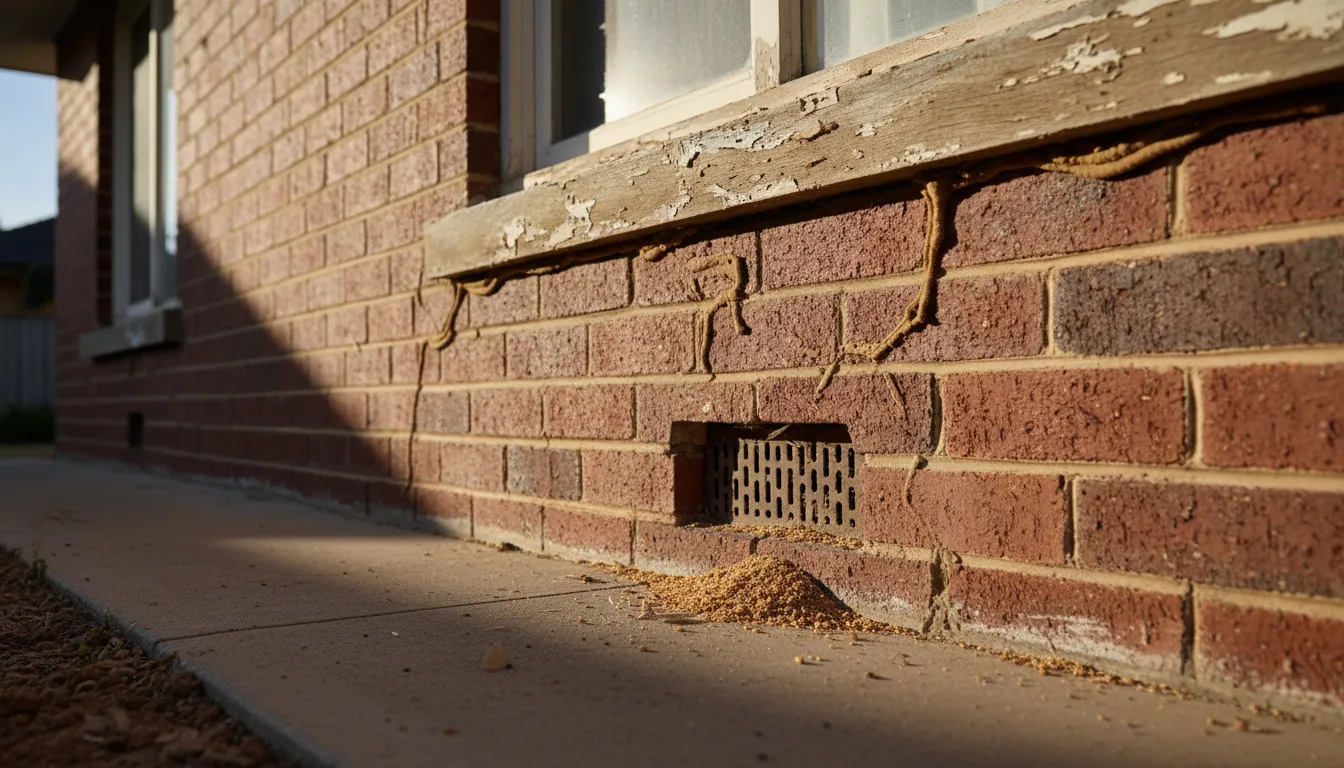
Mud tubes look like narrow, irregular ridges of dried soil stuck to a hard surface, running vertically up a pier, a stump, a foundation wall or the face of a slab edge. They range from pencil thickness to a flattened band several centimetres wide, and their colour matches the soil around the building, so they read as dirt smears until you look closely.
Subterranean termites build them because they need to stay in a humid, dark environment. The tube is a covered road between the nest in the soil and the timber they are eating. Where a tube crosses an obstacle it cannot tunnel through, such as a concrete stump cap, an ant cap or a slab edge, it gets built over the top. That is exactly why those elements exist: an ant cap does not stop termites, it forces them into the open where an inspector can see the bridging.
Heavy infestations go further than tubes. Once a colony is established inside a wall cavity or against a beam, it packs the void with mud rather than running a single lead, and the result is a solid crust of workings over the timber.
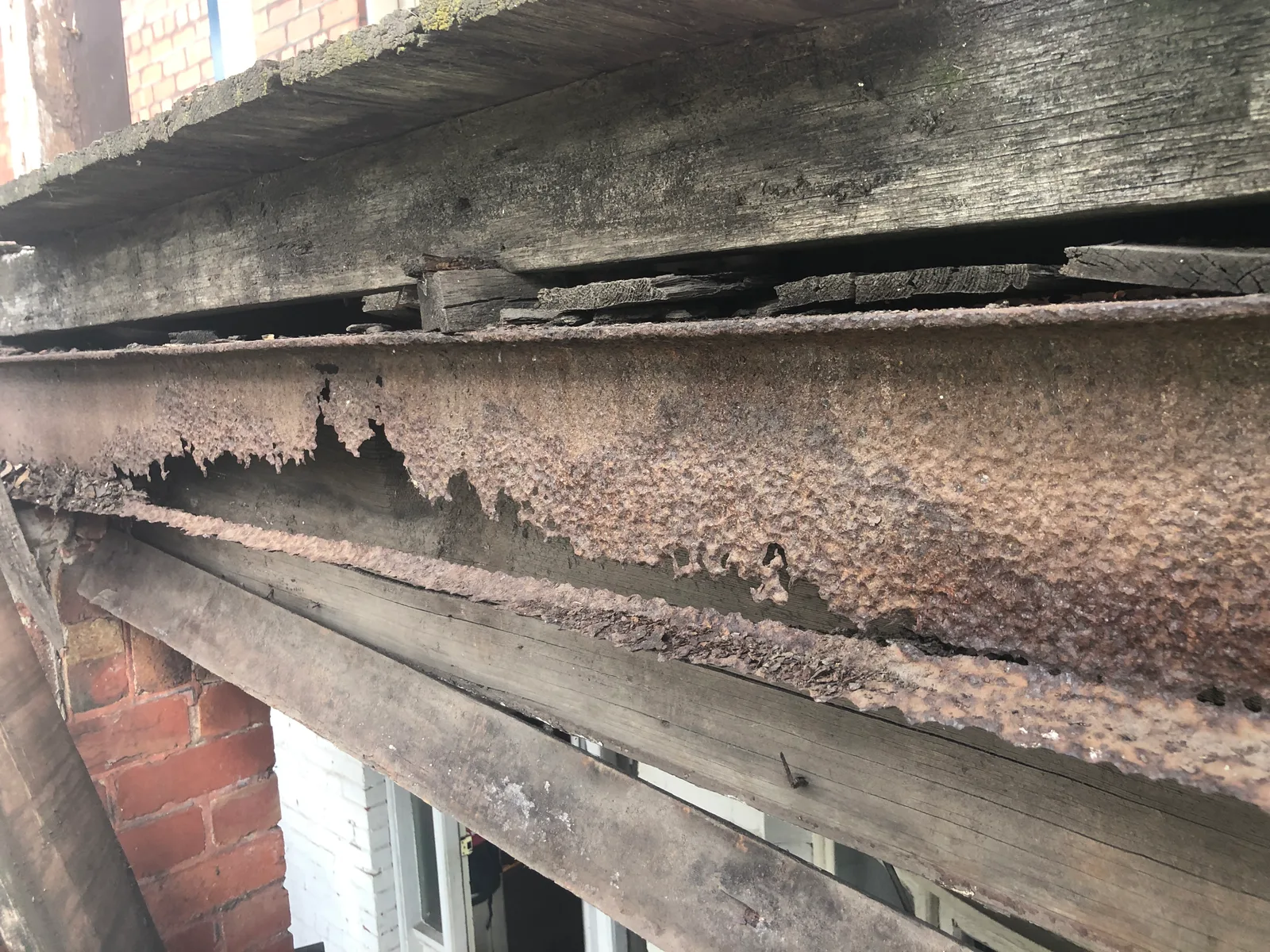
The beam above was opened up during works. The dense, honeycombed crust across the face is termite workings, not render or old mortar, and the timber underneath has lost a substantial part of its section. From the finished side of that wall, none of this was visible.
What does termite damage look like on a wall or ceiling?
On a plasterboard wall, termite damage looks like a shallow depression or a soft patch that gives under light finger pressure, sometimes with faint raised lines where tunnels run behind the paper. On a ceiling it shows as a sagging line along a joist, staining that does not behave like a water leak, or a cornice that has pulled away in one section.
Plasterboard is a useful early indicator precisely because it is weak. Termites eat the paper lining and the timber behind it, so the sheet loses its support and dimples before anything structural announces itself. The trap is that all of this reads as moisture damage, and plenty of it gets patched and repainted as exactly that.
The distinction that matters is what is underneath. Water damage softens the plaster core itself and usually has a traceable source, such as a shower, a roof penetration or a failed flashing. Termite damage leaves the plaster core dry, and the softness comes from what has happened to the timber behind it.
What does termite damage look like on a door frame, skirting or architrave?
On joinery, termite damage looks like a section of timber that has become a thin shell. The painted or veneered face survives because termites avoid open air, so they eat right up to the coating and stop. Push a fingernail into it and it collapses into layered fibres and mud rather than splintering.
Door jambs, architraves, skirting boards and window reveals are the most commonly reported findings in Australian homes for a simple reason: they sit at the bottom of a wall, close to the floor, right where a subterranean colony arrives, and they are softer than structural framing. They are also the elements most people can actually inspect without pulling anything apart.
- Run a hand along the skirting at floor level. Look for a section that flexes, sounds different, or shows paint that has gone slightly wavy.
- Press firmly with a thumb rather than a tool. Sound painted pine resists. A hollowed jamb dents or breaks through.
- Tap along the length and listen for the point where the note changes from a thunk to a drum.
- Check the wet areas first. Bathrooms, laundries, kitchens and the wall behind a hot water unit are where moisture and termites overlap.
Two cautions. First, if a section does break through, stop. An open gallery lets an active colony disperse. Second, a hollow note tells you the timber has lost section, not what caused it, and not whether the loss matters structurally.
What does termite damage look like in a subfloor or roof space?
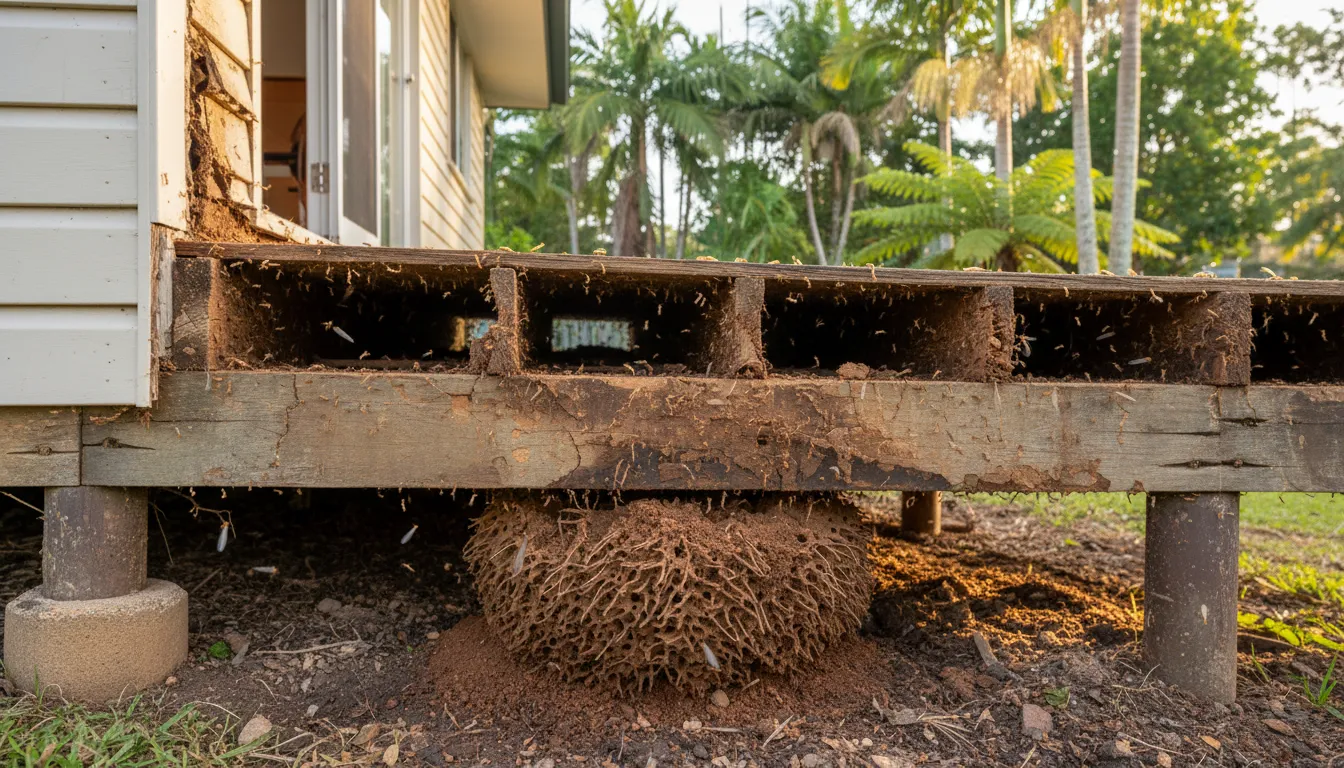
In a subfloor, termite damage shows as mud leads climbing piers and stumps, mud packing at the point where a bearer sits on a pier, and bearers or joists that look sound from below but sound hollow and collapse under a probe. In a roof space it shows as mud crusting along a truss bottom chord or a wall plate, usually where a wall cavity meets the ceiling.
These two spaces are where an inspection earns its money, because they are the only places in a finished house where structural timber is directly visible. They are also where damage runs for the longest before anyone notices, since nobody goes in there.
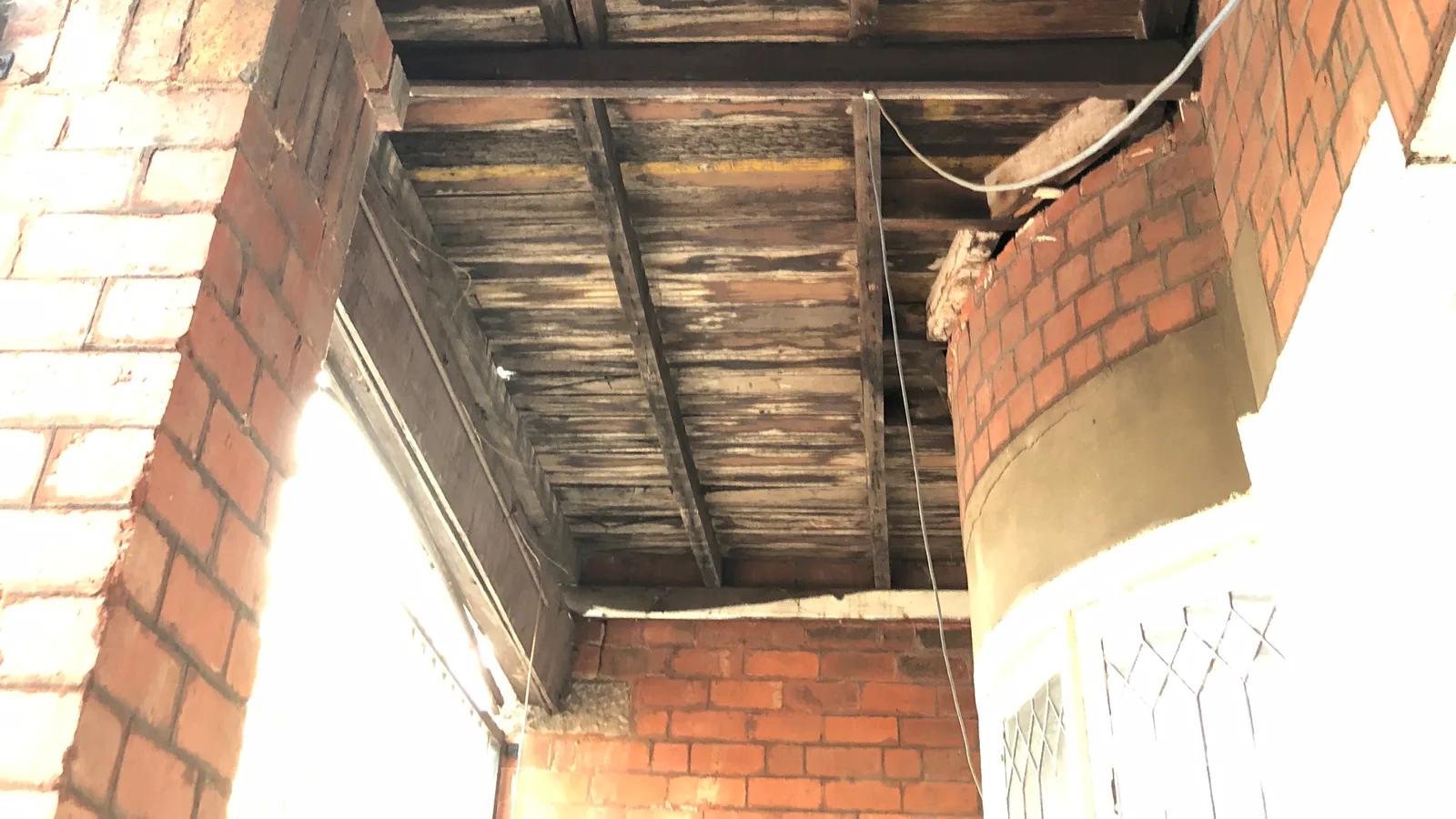
Roof spaces surprise people. Termites are associated with the ground, but subterranean species will travel the full height of a wall cavity to reach roof timbers, and in a two storey house the first evidence can be at ceiling level with nothing visible downstairs at all.
Not Sure What You Are Looking At?
An independent timber pest inspection tells you whether it is termites, whether the colony is live, and how far the damage runs, before you commit to a repair or a purchase.
Is it termite damage, rot, or borers?
Termite damage is layered along the grain with mud packed galleries. Fungal decay, which most Australians call rot, is dark, crumbly and cracks into cubes, and it always comes with a moisture source. Borer damage leaves round exit holes and fine powder. Confusing them matters, because each one points at a different repair and a different specialist.
| What you see | Termites | Fungal decay (rot) | Borers |
|---|---|---|---|
| Pattern in the timber | Follows the soft grain, leaves hard growth rings, looks layered or honeycombed | Cubical cracking, timber goes dark, soft and crumbly throughout | Random tunnels, round exit holes 1mm to 5mm across |
| What is inside | Galleries packed with mud and faecal material, damp to the touch when active | Nothing packed in, just broken down timber, often with visible fungal growth | Fine powdery frass, like flour or talc |
| Surface condition | Usually intact, paint rippled or blistered, veneer papery | Visibly deteriorated, paint flaking, timber discoloured | Intact except for the exit holes |
| Where it turns up | Anywhere timber meets a concealed route to soil, including upstairs and in roof spaces | Only where water has been getting in, and stops when the source stops | Commonly in sapwood of seasoned hardwood, floorboards, furniture |
| Who fixes it | Licensed pest manager for the colony, builder for the timber | Fix the water first, then the timber, or it returns | Often old and inactive, may need nothing beyond confirming that |
The two most expensive mistakes here run in opposite directions. Treating termite damage as rot means chasing a leak that does not exist while a colony keeps eating. Treating rot as termites means paying for a chemical treatment that solves nothing, because the water is still coming in.
A fourth possibility gets missed entirely. Roof timbers can suffer chemical delignification, where the surface fibres break down and the member loses strength with no insect involvement at all.
What do Australian termites actually look like?
Australian subterranean termites are pale, soft bodied insects roughly 3mm to 7mm long, often mistaken for white ants, though they are not ants at all. Workers are creamy white and blind. Soldiers have larger, harder, darker heads, and the shape of the soldier head is what a technician uses to identify the species.
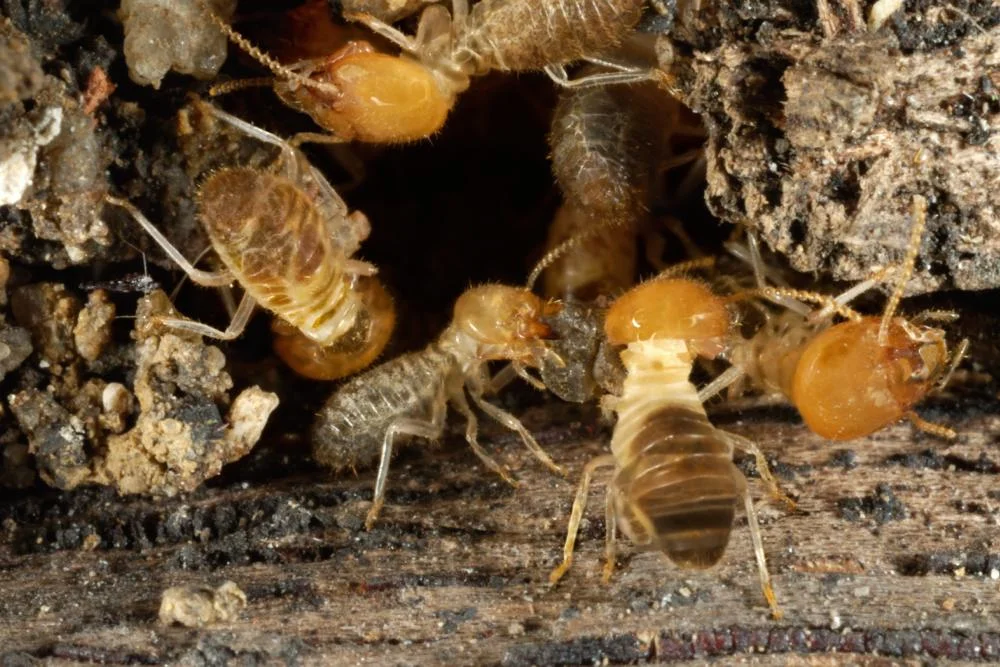
The pale bodies and orange brown soldier heads in the photo above are typical of the destructive subterranean species. Termites differ from flying ants in three visible ways: a thick waist rather than a pinched one, straight beaded antennae rather than elbowed ones, and, in the winged forms, two pairs of wings of equal length.
| Species | Where it is found | Why it matters |
|---|---|---|
| Coptotermes acinaciformis | All mainland states, the most widespread destructive species | Responsible for the majority of serious damage to Australian homes. Nests in tree stumps, live trees, or inside the building itself |
| Schedorhinotermes intermedius | Eastern seaboard, common in Queensland and NSW | Highly destructive and often cryptic. Has two distinct soldier sizes, which is a useful identification clue |
| Nasutitermes species | Widespread, including mound and arboreal nests | Soldiers have a pointed snout instead of jaws. Generally prefer damp or decaying timber over sound seasoned framing |
| Mastotermes darwiniensis | Tropical northern Australia only | The giant northern termite, the most destructive species in the country, and it attacks non timber materials as well |
| Cryptotermes brevis | Restricted, mainly a Queensland concern, a notifiable pest there | A drywood termite that needs no soil contact. Leaves clean galleries and hard six sided faecal pellets rather than mud |
The Australian Museum is a reliable public reference for identification if you want to compare what you have found against clear species photographs.
How can you tell if termite damage is old or active?
You often cannot tell by looking, which is the honest answer. The indicators that suggest an active colony are damp, intact mud leads that rebuild within days of being broken, moisture inside hollow timber, live workings when a gallery is opened, and swarmers in warm humid weather. Dry, crumbling, abandoned galleries that stay broken suggest old damage.
Those indicators are suggestive rather than conclusive, and the distinction changes the size of the job completely. Old, treated damage is a carpentry problem. An active colony is a carpentry problem plus a management programme, and new timber put back into an untreated wall is simply more food.
This is where equipment earns its place. A timber pest inspection under AS 4349.3 is visual and non invasive, so the inspector cannot cut walls open, but they can use moisture meters, thermal imaging, borescopes and microwave or radar detection to find activity inside timber and behind linings that stay closed. If a previous treatment was done, ask for the paperwork and check the warranty. Our guide to warning signs a termite treatment has not worked covers what a failed job looks like.
How much damage is usually behind what you can see?
Almost always more than the visible area suggests, because what you can see is the point where the damage finally broke through a surface, not where it started. A dimpled patch of plasterboard the size of a hand routinely sits over a stud that has been eaten for most of its length, and the galleries commonly continue into the plate, the noggings and the adjacent studs.
That is why an assessment comes before a repair, not after. The remaining capacity of a structural member depends on the section that is left, which cannot be judged from the face, and load bearing elements need to be measured rather than eyeballed.
| Element | Examples | What it means for the repair |
|---|---|---|
| Load bearing | Bearers, joists, studs in load bearing walls, top and bottom plates, lintels, trusses, stumps and posts | Assessment before removal, sometimes temporary propping, often a permit and a designed repair |
| Non structural | Skirtings, architraves, door jambs, non load bearing linings, cupboard carcasses | Unpleasant, but generally a like for like replacement once the colony is dealt with |
Where the damage is structural, a defect investigation records the extent, the affected members and the remedial scope, which the builder then prices and works to. Replacing a stud is trivial. Replacing a stud that was carrying a roof beam, without propping first, is not.
Should you be worried about termite damage in a house you are buying?
You should treat it as a pricing and scope question rather than an automatic reason to walk away, but only once you know whether the colony is active and whether the damage is structural. A pre-purchase building and pest inspection is the mechanism for finding that out before the contract becomes unconditional.
Timber pest inspections are visual and non invasive by standard, so concealed damage inside a wall cavity is usually outside scope. That is a limitation to plan around, not a reason to skip the inspection: an inspector who finds mud leads in an accessible subfloor has told you something a builder walking through the house will not. The article on DIY versus professional timber pest inspections sets out what the two actually differ on.
New construction has its own protections. Termite risk management is a requirement of Volume Two of the National Construction Code, and the relevant standard for new buildings is AS 3660.1. A management system, whether chemical, physical or a combination, is not optional in most of the country, and it needs a durable notice recording what was installed.
Is termite damage covered by insurance?
Almost never. Australian home building policies routinely exclude damage caused by insects, vermin and gradual deterioration, on the basis that termite damage is a maintenance issue rather than a sudden accidental event. Read your own product disclosure statement rather than relying on a general statement, but do not build a repair plan around a claim.
Where a dispute does arise it is usually about a recent build, inspection or treatment rather than about the insurer, and state consumer bodies run complaint and conciliation processes for building work, including NSW Fair Trading and Consumer Affairs Victoria.
Owner Inspections is an inspection company, not a law firm. We can establish what the damage is, how old it appears to be, whether it was reasonably detectable and what a proper repair involves. Whether anyone is legally liable for it is a question for a solicitor.
What should you do if you think you have found termite damage?
Leave it alone, photograph it, and book a timber pest inspection before anyone touches the timber. Those three steps in that order protect both the evidence and the house. Spraying, scraping or opening up the damage scatters an active colony and removes the information a technician needs.
Stop and do not disturb it
No fly spray, no knocking the mud away, no pulling boards off. If work is under way, isolate that area only.
Photograph it properly
Wide shots showing where the damage sits in the house, then close ups. Date them. If a dispute follows, these become the record of what things looked like before any repair.
Book a timber pest inspection, not a spray quote
A treatment quote answers a different question. You need to know the species, whether the colony is live, and where it is getting in.
Get the structural extent assessed
If any load bearing member is involved, the repair needs to be designed and scoped rather than guessed at on site.
Fix the conditions, then the timber
Reinstate a compliant termite management system, correct the moisture and ventilation problems that attracted them, and only then put new timber back.
The order is the point. Repairing before the extent is established means paying twice when more damage turns up behind the next sheet.
Frequently asked questions
Can termite damage be seen from the outside of a house?
Does termite damaged timber always need replacing?
How fast do termites damage a house?
Do termites eat treated pine and hardwood?
What is the difference between white ants and termites?
Can I inspect for termites myself?
How often should a house be inspected for termites?
Related Articles
Renovation uncovered termite damage, what now?
The first steps to take when a renovation exposes eaten timber, and how to tell an active infestation from old damage.
Termite Control Red Flags: Warning Signs a Treatment Hasn't Worked
How to recognise a failed or incomplete termite treatment before the damage starts again.
Why Are Termites Such a Major Concern in Queensland and NSW?
Why the eastern states carry the highest termite risk in the country, and what that means for inspection frequency.