
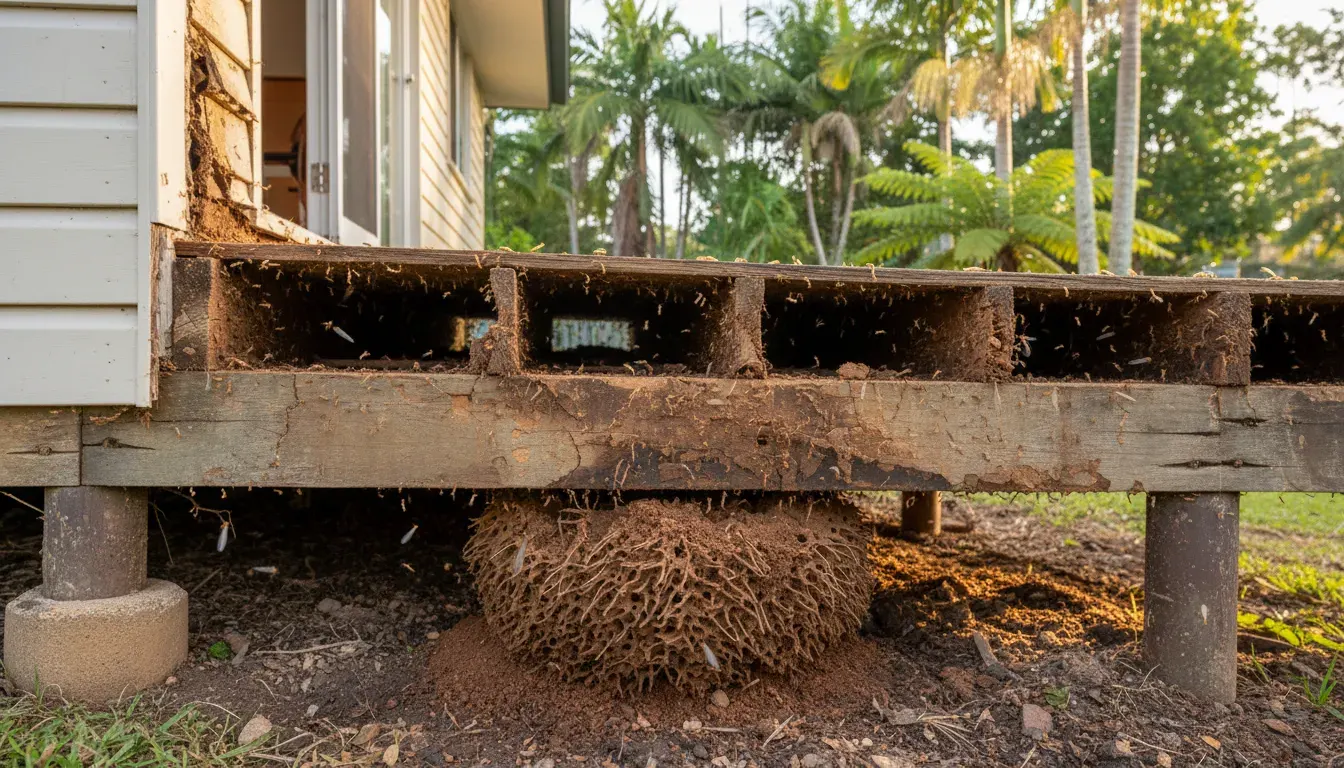
This guide is written for property buyers, homeowners and investors in Queensland and NSW who need to understand termite risks and the role professional pest inspections play in property protection. Under Australian Standard AS 4349.3, timber pest inspections provide systematic assessment of termite activity, damage and conducive conditions.
Whether you are purchasing a property, maintaining your home or investigating potential termite damage, understanding why these states face elevated risk will help you make informed decisions about pest management and inspection frequency.
Understanding Termite Risk in Queensland and NSW
Australia is divided into termite hazard zones based on climate, soil conditions and termite species distribution. The Building Code of Australia (NCC) classifies most of Queensland and the northern two-thirds of NSW as high to very high termite risk areas.
$1.5B
Annual termite damage in Australia
1 in 3
Australian homes affected by termites
32%
Of insurance claims denied due to termite exclusions
Several factors contribute to elevated termite risk in these states:
| Risk Factor | Queensland Impact | NSW Impact |
|---|---|---|
| Humidity levels | Very high year-round | High, especially coastal areas |
| Average temperatures | 20-30°C ideal for termites | 15-28°C supports activity |
| Rainfall patterns | Wet summers increase activity | Variable, concentrated periods |
| Soil types | Clay and loam retain moisture | Mixed, many termite-friendly zones |
| Housing stock | High timber content, many older homes | Mix of construction types |
Insurance Does Not Cover Termite Damage
Standard home and contents insurance policies in Australia specifically exclude termite damage. This means homeowners bear the full cost of repairs, which average between $7,000 and $25,000 for moderate infestations and can exceed $100,000 for severe structural damage.
Termite Species of Concern
Not all termites pose equal risk to buildings. Understanding the species active in Queensland and NSW helps explain why professional inspections require specialist knowledge.
Subterranean Termites
Subterranean termites cause approximately 95% of termite damage to Australian buildings. They build nests underground or in tree stumps and travel through mud tubes to reach timber food sources.
| Species | Distribution | Damage Potential | Behaviour |
|---|---|---|---|
| Coptotermes acinaciformis | All QLD and NSW | Very high | Most destructive species in Australia |
| Coptotermes frenchi | Coastal and urban areas | High | Common in urban environments |
| Schedorhinotermes | Northern QLD, coastal NSW | High | Aggressive, multiple colonies |
| Nasutitermes | Throughout both states | Moderate | Often builds visible mounds |
| Heterotermes | Widespread | Moderate | Prefers decayed timber |
Important
Coptotermes acinaciformis can consume up to 500 grams of timber per day in a mature colony. A single colony can cause significant structural damage within three to six months of initial infestation.
Drywood Termites
While less common, drywood termites (Cryptotermes species) establish colonies entirely within timber without soil contact. They are particularly prevalent in coastal Queensland and northern NSW, often entering homes through furniture or timber products.
What a Professional Pest Inspection Covers
Pest inspections conducted under AS 4349.3 follow systematic procedures to identify termite activity, damage and conditions that may encourage future infestation.
Visual Inspection of Accessible Areas
Inspectors examine all accessible internal and external areas including subfloor spaces, roof voids, interior rooms, exterior walls and landscaping. They look for live termites, termite workings, damaged timber and mud tubes.
Moisture Detection
Using specialised moisture meters, inspectors identify areas of elevated moisture that may indicate termite activity or conditions conducive to infestation. Termites require moisture to survive.
Thermal Imaging
Many inspectors use thermal cameras to detect temperature variations in walls and ceilings that may indicate termite activity or moisture problems not visible to the naked eye.
Sounding and Probing
Inspectors tap timber surfaces to detect hollow areas indicating internal damage. In some cases, they may probe timber to assess structural integrity.
Documentation and Reporting
A detailed report documents findings, including photographs, diagrams showing affected areas and recommendations for treatment or further investigation.
Inspection Limitations
AS 4349.3 defines standard pest inspections as visual assessments with specific limitations. Inspectors cannot see through walls, under concrete slabs or into areas without safe access.
| Area Type | Standard Inspection Access | Additional Investigation Required |
|---|---|---|
| Subfloor (>400mm clearance) | Full inspection | No |
| Subfloor (<400mm clearance) | Limited or excluded | Excavation or camera inspection |
| Roof void | Full inspection | No |
| Wall cavities | External only | Invasive inspection if suspected |
| Concrete slab edges | Visual only | Core sampling if suspected |
| Landscaping within 50m | Visual assessment | Tree drilling for nest detection |
When to Get a Pest Inspection
Regular pest inspections form the foundation of termite risk management in high-risk areas like Queensland and NSW.
Recommended Inspection Frequency
The Australian Standard recommends annual termite inspections for properties in high-risk areas. Properties with previous termite history, conducive conditions or chemical barrier systems approaching expiry may require inspections every six months.
Critical Inspection Timing
| Situation | Inspection Type | Urgency |
|---|---|---|
| Before purchasing property | Pre-purchase pest inspection | Essential before contract unconditional |
| Annual maintenance | Routine pest inspection | Recommended yearly minimum |
| After major rainfall or flooding | Additional inspection | Within 2-4 weeks of event |
| Before selling property | Pre-sale pest inspection | Recommended for vendor disclosure |
| After noticing signs | Urgent inspection | Immediate |
Frequently Asked Questions
How much does a termite inspection cost in Queensland and NSW?
Termite inspections in Queensland and NSW typically cost between $250 and $450 for standard residential properties.
Pricing varies based on property size, accessibility and location. A standard three-bedroom house inspection usually falls within the $280 to $350 range. Larger properties, those with multiple buildings or properties with limited subfloor access may attract higher fees.
Combined building and pest inspections offer better value, typically ranging from $450 to $650. This approach provides comprehensive property assessment in a single appointment and is particularly recommended for pre-purchase inspections.
Are termites covered by home insurance in Australia?
No, standard home insurance policies in Australia exclude termite damage from coverage.
Insurance companies classify termite damage as a maintenance issue rather than a sudden, accidental event. This exclusion applies to virtually all Australian insurers and extends to damage caused by other timber pests including borers and wood decay fungi.
Some specialist insurers offer termite damage coverage as an add-on policy, but these products typically have significant limitations, waiting periods and require evidence of regular professional inspections. The most effective protection remains prevention through regular inspections and appropriate barrier systems.
What are the first signs of termites in a house?
Common early signs include mud tubes on foundations, hollow-sounding timber, tight-fitting doors or windows, and small piles of frass (termite droppings).
Subterranean termites build pencil-width mud tubes to travel between their nest and food sources. These tubes often appear on foundation walls, inside cupboards or in subfloor areas. Tapping timber architraves, skirting boards or door frames may reveal a hollow sound where termites have consumed internal timber.
Doors and windows that suddenly become difficult to open may indicate termite damage or the moisture termites introduce. Drywood termites leave small piles of pellet-shaped frass below infested timber. Any of these signs warrants immediate professional inspection.
How long does a termite inspection take?
A thorough termite inspection for a standard residential property takes between 1.5 and 2.5 hours.
Inspection duration depends on property size, accessibility and whether thermal imaging equipment is used. Inspectors require adequate time to access subfloor and roof void areas, examine all accessible timbers and assess external grounds.
Be wary of inspectors who complete assessments in under an hour for standard homes, as this rarely allows sufficient time for comprehensive inspection under AS 4349.3 requirements.
Can termites come back after treatment?
Yes, termites can return after treatment. Chemical barriers degrade over time, and new colonies may establish in the area.
Termite treatment eliminates current infestations but does not provide permanent immunity. Chemical soil barriers typically remain effective for five to eight years depending on the product, soil conditions and environmental factors. Physical barriers offer longer protection but can be bridged if not maintained properly.
Annual inspections remain essential even after treatment to detect any new activity before significant damage occurs. Properties with termite history face elevated ongoing risk and may benefit from more frequent inspections.
What is the difference between a building inspection and a pest inspection?
Building inspections assess structural condition and defects under AS 4349.1, while pest inspections specifically identify timber pests and damage under AS 4349.3.
Building inspections examine foundations, walls, roofing, plumbing, electrical safety and general maintenance issues. Pest inspections focus on termites, borers, wood decay fungi and conducive conditions.
Both inspections examine similar areas but with different objectives and require different expertise. Most inspectors are qualified in both disciplines and offer combined building and pest inspections, which is the recommended approach for pre-purchase assessments.
Do I need a pest inspection for a new house?
Yes, pest inspections are recommended even for new houses, particularly to verify termite management systems are correctly installed.
The National Construction Code requires termite management systems for new buildings in termite-prone areas. These systems include chemical barriers, physical barriers or a combination. Pest inspections verify these systems are properly installed and documented.
New homes can also develop termite problems within their first year if construction practices were poor or if management systems have gaps. Identifying issues during the warranty period allows defect claims against the builder.
What do termites look like compared to white ants?
Termites and white ants are the same insect. The term white ant is a colloquial Australian name for termites.
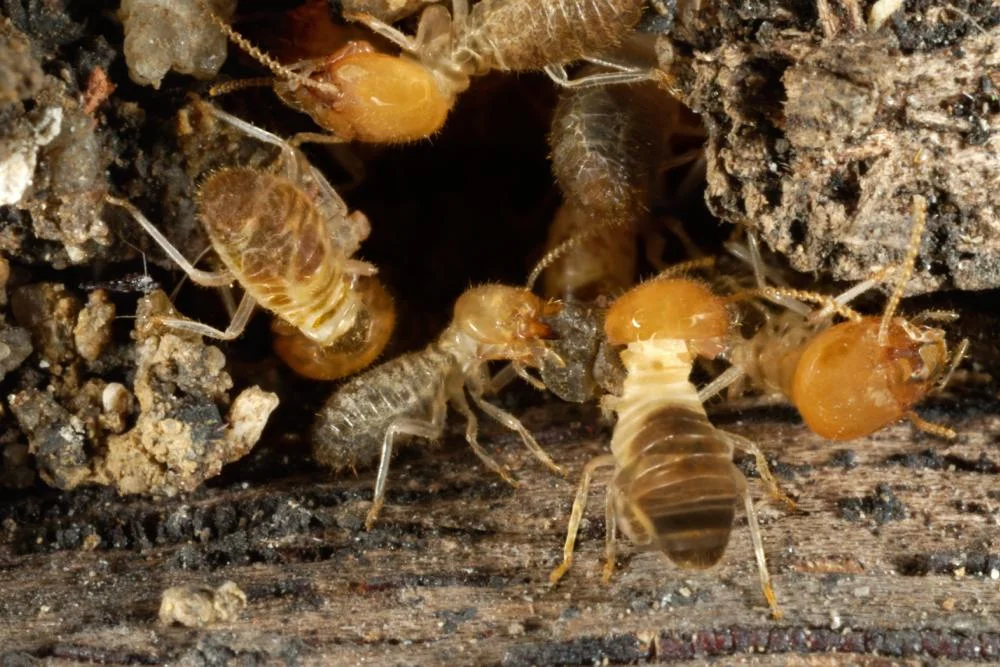
Despite the name, termites are not ants. They are more closely related to cockroaches. Worker termites are pale, soft-bodied insects approximately 4-6mm long. Soldier termites have larger, darker heads with prominent mandibles. Reproductive termites (alates) have wings and appear darker, often seen swarming after rain.
True ants have distinctly segmented bodies with a narrow waist, bent antennae and harder exoskeletons. Termites have thick waists and straight antennae.
How far can termites travel from their nest?
Subterranean termites can travel up to 100 metres from their nest to reach food sources, though most foraging occurs within 50 metres.
A single Coptotermes colony may have foraging territory covering several neighbouring properties. This means termite nests in trees, stumps or neighbouring land can affect your property even without a nest on your premises.
Pest inspections assess not only your property but also visible potential nest sites on neighbouring land. Termite management strategies must account for this foraging range when designing barrier systems.
What time of year are termites most active in Queensland and NSW?
Termites remain active year-round in Queensland and NSW, with peak activity during warmer, humid months from October to March.
Unlike cooler southern states where termite activity slows significantly in winter, the subtropical and temperate climates of Queensland and NSW support continuous termite activity. Swarming events, where reproductive termites emerge to establish new colonies, typically occur after summer storms.
This year-round activity is a key reason why annual inspections are essential in these states, regardless of season.
Can I do my own termite inspection?
While homeowners can monitor for visible signs, professional inspections using specialised equipment are essential for thorough assessment.
Homeowners should regularly check for mud tubes, timber damage and moisture issues. However, termites often remain hidden within wall cavities, under flooring and in areas requiring specialist access equipment.
Professional inspectors use moisture meters, thermal imaging cameras and borescopes to detect activity not visible during casual observation. Insurance claims, property transactions and effective treatment planning all require formal inspection reports from qualified professionals.
What qualifications should a termite inspector have?
Termite inspectors should hold a current pest management licence issued by their state authority, with specific timber pest inspection endorsements.
In Queensland, inspectors must hold a Pest Management Technician Licence from Queensland Health. In NSW, licensing falls under NSW Fair Trading. Look for inspectors who hold relevant Certificate III or IV qualifications in pest management and are members of professional associations such as AEPMA.
Building inspectors conducting timber pest inspections should demonstrate competency in AS 4349.3 requirements. Always request licence numbers and verify currency with the relevant state authority.
Key Takeaways
- Queensland and NSW have the highest termite risk in Australia due to climate conditions favouring year-round termite activity
- Coptotermes acinaciformis is the most destructive termite species in Australia and is common throughout both states
- Standard home insurance does not cover termite damage, making prevention through regular inspections essential
- Annual pest inspections are the minimum recommendation for properties in high-risk areas
- Professional inspections under AS 4349.3 use moisture meters, thermal imaging and systematic assessment procedures
- Combined building and pest inspections provide comprehensive property assessment for buyers
- Chemical termite barriers typically last five to eight years and require reinspection and retreatment
- Termites can travel up to 100 metres from their nest, meaning neighbouring properties affect your risk level
References and Resources
Related Articles
Brisbane Termite Infestations: When to Schedule an Inspection
Brisbane
Termite Inspection to Protect Your Home from Damage
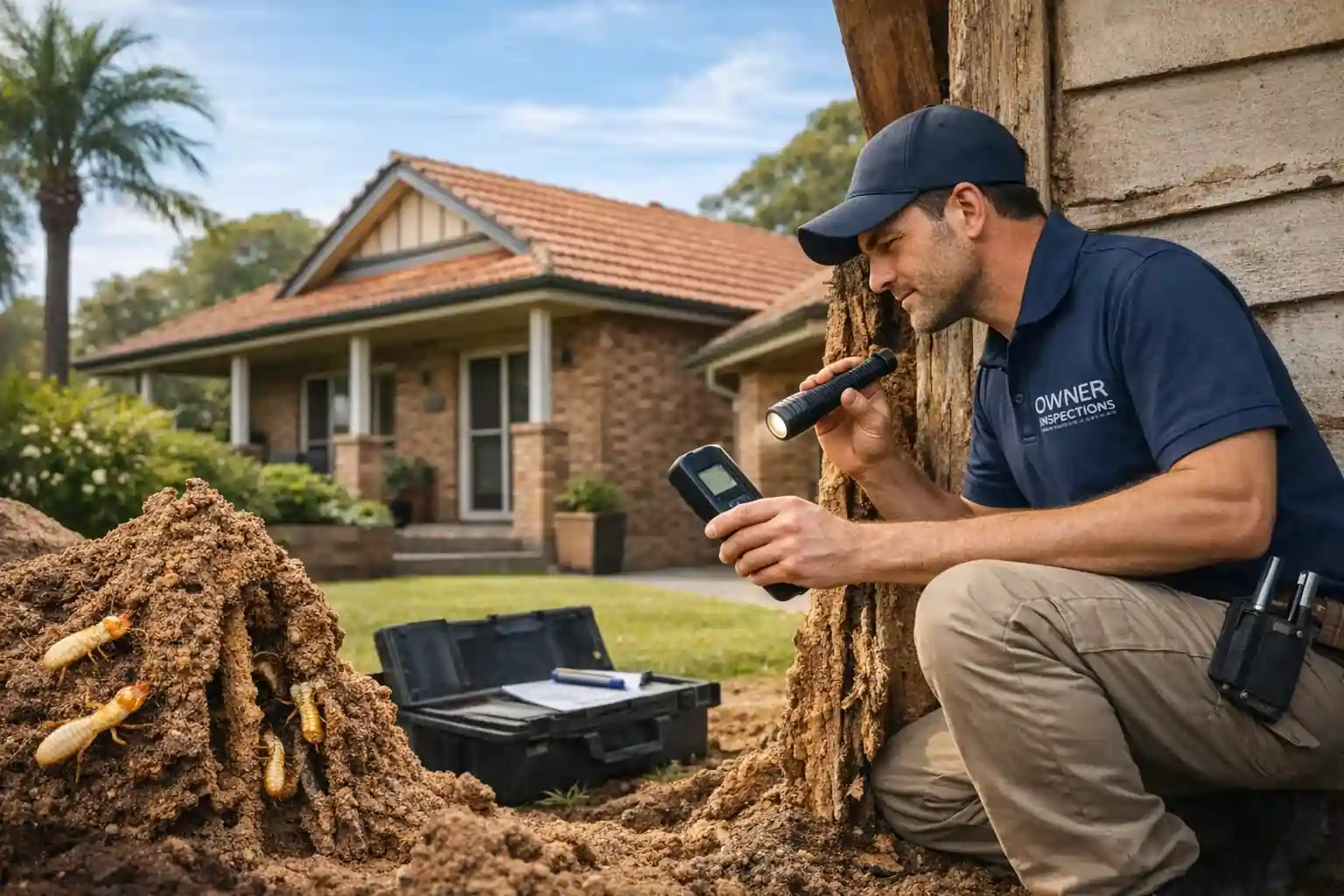
Termites cause approximately $1.5 billion in damage to Australian properties annually. Learn how professional termite inspections can protect your home and investment.
Termite Inspections: Expectations and Preparations
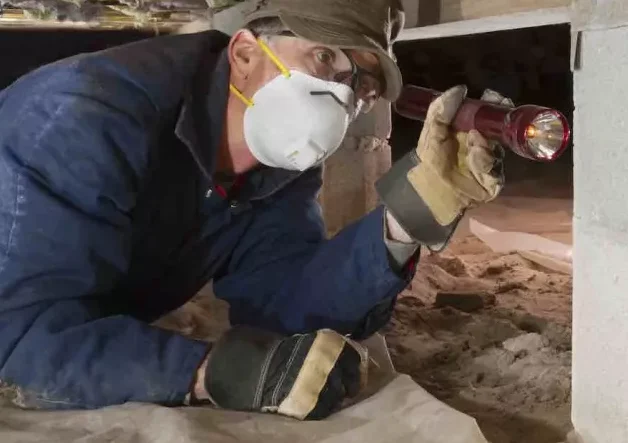
Termite damage can be catastrophic for properties. Learn what to expect during a termite inspection and how to prepare your property.
Protect Your Property from Termite Damage
Book a comprehensive pest inspection with our qualified inspectors. We service Queensland and NSW with detailed reports meeting AS 4349.3 requirements.