




Why Are Mould Inspections Important?
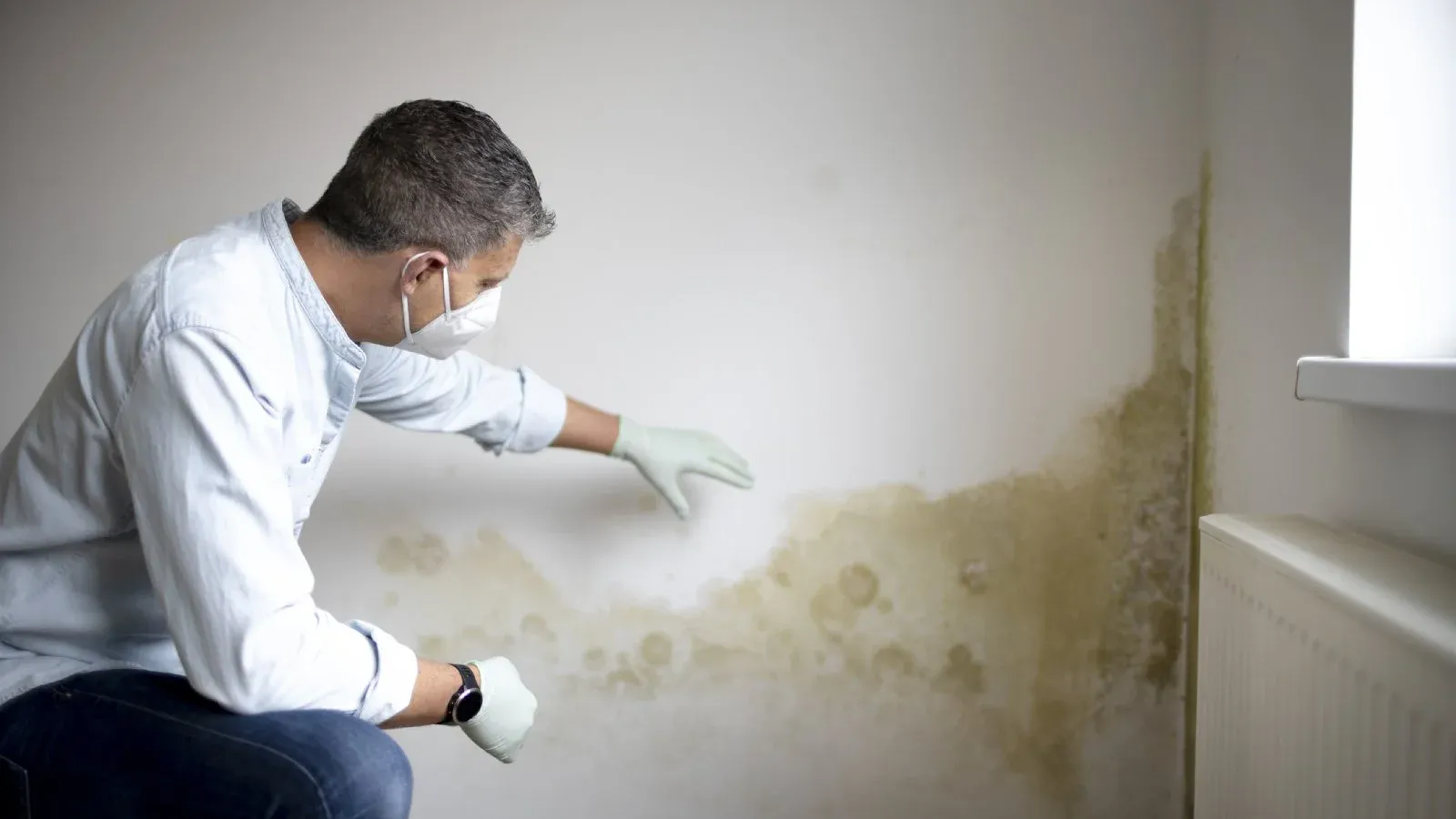
A mould inspection identifies where mould is growing and, more importantly, what is keeping it wet. Occupant interviews establish whether anyone in the property has experienced respiratory symptoms, and the inspection then traces moisture in the places it usually hides: wall cavities, under floor coverings, ceiling spaces, subfloors and around air conditioning units.
Mould enters the body mainly through breathing, and contact can also irritate the eyes and skin. People with asthma, allergies, lung disease or weakened immune systems are more likely to experience symptoms and are more susceptible to serious effects such as aspergillosis. Reducing exposure means removing the growth and eliminating the water feeding it, in that order.
Why Do Australian Homes Get Mould?
Mould needs moisture, and Australian housing supplies it differently depending on where the property sits. In subtropical Queensland and northern New South Wales, summer humidity keeps indoor surfaces damp enough for growth without any leak being present. In Melbourne and Tasmania the more common cause is winter condensation, where warm moist indoor air meets cold single-glazed windows, uninsulated walls and unheated rooms. Coastal properties add wind-driven rain and salt exposure that degrade seals and flashings.
Construction plays as large a part as climate. Bathrooms and laundries without working exhaust ventilation, subfloors with blocked or insufficient vents, failed shower waterproofing, blocked weep holes and downpipes discharging against a wall all create a moisture supply that never dries out. Prolonged wet periods such as La Nina years tend to make existing defects visible rather than create new ones.
This matters for an inspection because the visible growth is rarely the problem. Removing it without correcting the moisture supply returns the property to the same condition within weeks.
When Does Mould Need a Professional Inspection?
Australian health guidance separates mould into simple and complex. Simple mould can usually be cleaned by the occupant. Complex mould is the category that warrants professional assessment, and it is defined by measurable characteristics rather than appearance: growth covering more than one square metre, growth appearing in multiple rooms or locations, mould or dampness that keeps returning after cleaning, and any growth confirmed or suspected inside a heating, ventilation or air conditioning system.
Two further situations justify an inspection even when the visible area is small. The first is a persistent musty odour with no visible source, which usually means growth inside a wall cavity, subfloor or ceiling space. The second is occupants with asthma, allergies or a weakened immune system, where reducing exposure matters more than the size of the patch.
If none of these apply, the honest answer is that you may not need an inspection. A small patch in a bathroom that has a working exhaust fan is a cleaning task.
Does Mould Testing Tell You Whether Your Home Is Safe?
No, and Australian health authorities are consistent on this point. No Australian jurisdiction recommends air or surface sampling as a way to establish the level of health risk in a home. No reliable dose-response relationship has been established between the quantity of mould measured and health outcomes, so a spore count cannot be translated into a safety verdict.
What sampling is useful for is mapping. Where hidden mould is suspected, sampling can help determine how far contamination extends, and surface sampling has a legitimate role in confirming an area has been cleaned properly after remediation.
Assessment itself is visual and moisture-based: visible growth, visible water damage, excess condensation, standing water and mouldy odour, supported by moisture meters and thermal imaging. That is what determines the extent of the problem and what needs to be done. An inspector who leads with a laboratory report rather than a moisture source has the process backwards.
How Do Inspectors Find Mould Behind Walls?
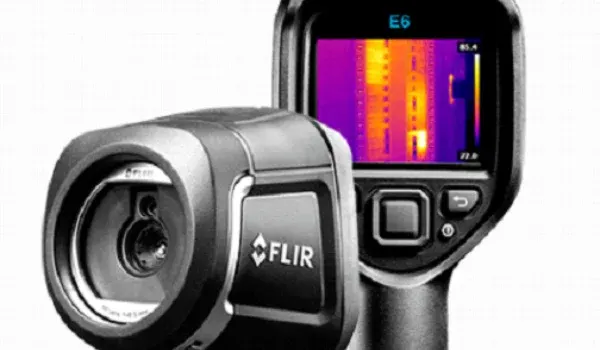
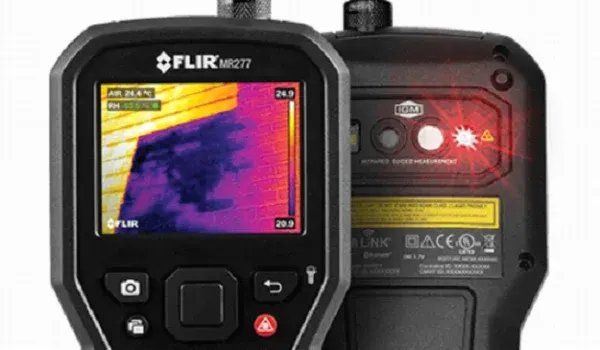
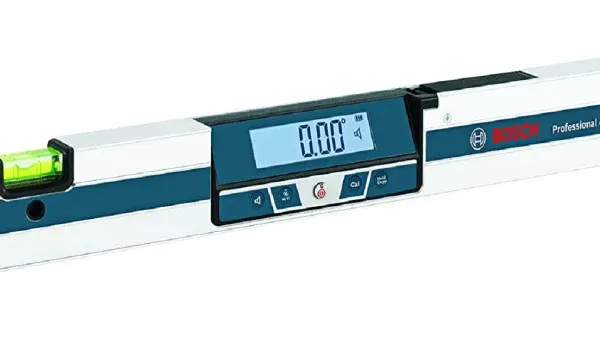
Mould inside a wall cavity, subfloor or ceiling space cannot be seen, so detection relies on finding the moisture that would sustain it. Moisture meters measure the water content of building materials directly, distinguishing a surface stain that has dried from an area that is still wet. Thermal imaging cameras detect temperature differences across a surface, which reveal evaporative cooling from damp material, missing insulation and cold bridges where condensation forms.
Neither tool sees mould. They locate the conditions that create it, which is then confirmed by inspecting the cavity where access allows. That distinction matters: a thermal image showing a cold patch is evidence of a moisture anomaly, not proof of growth, and a report presenting it as proof overstates what the equipment can do.
Where access is genuinely unavailable, the report records what could not be assessed rather than implying a clear result.
Which Moulds Are Common in Australian Homes?
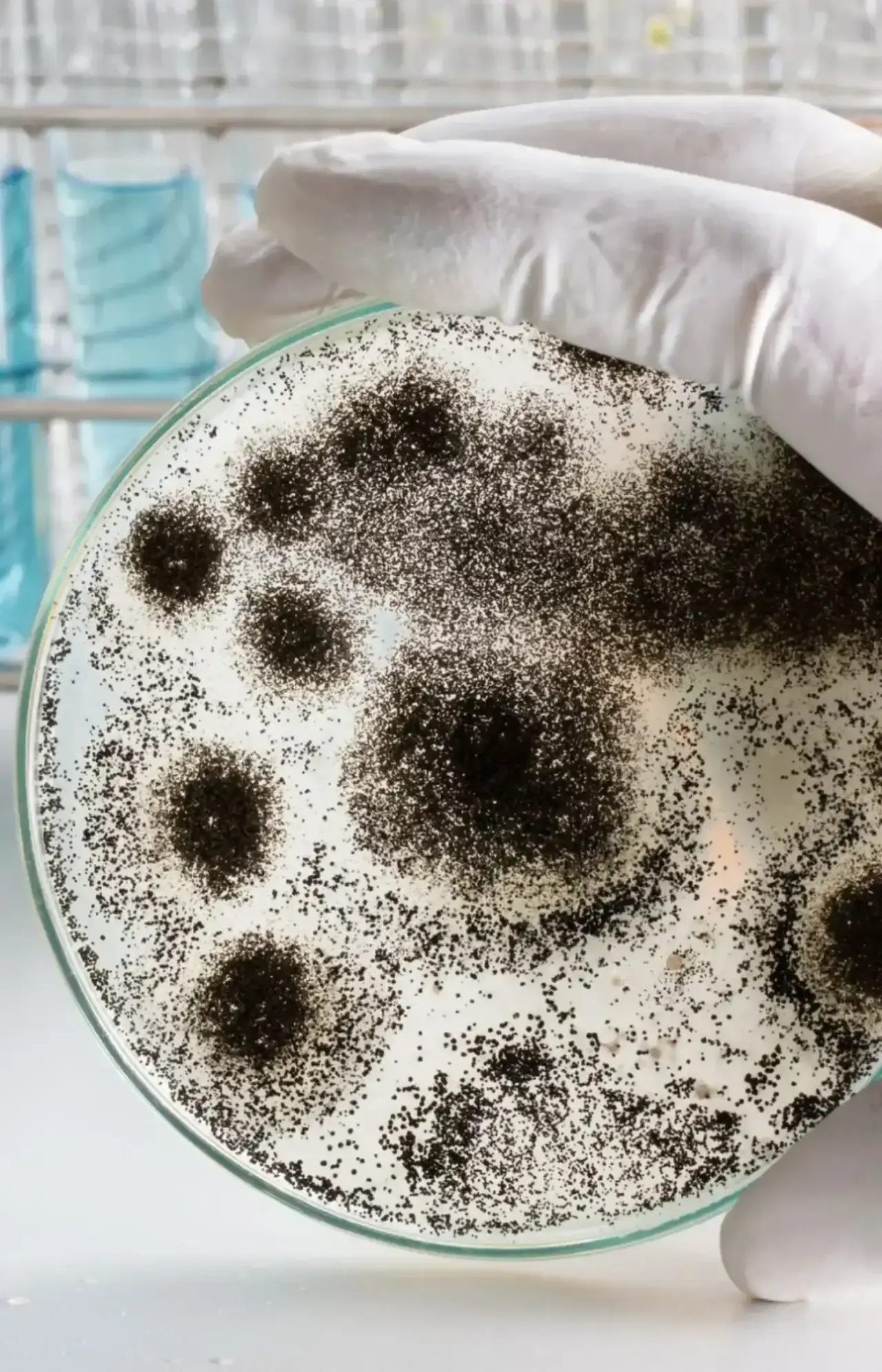
The genera found most often in Australian indoor environments are Cladosporium, Penicillium, Aspergillus, Alternaria, Fusarium, Acremonium and the Zygomycetes. Australia has an estimated 160,000 to 250,000 fungal species, of which fewer than five per cent have been formally described, so identification is inherently partial.
Some species, including Aspergillus versicolor and Stachybotrys chartarum, produce mycotoxins with known risks to human health. Stachybotrys is usually what people mean by black mould, though colour is not a reliable guide: many harmless moulds are dark, and several species of concern are not.
Species identification rarely changes what needs to happen. Remediation is driven by the extent of growth and the moisture source, not by which fungus is present, which is why routine species testing is not recommended by Australian health authorities. Identification becomes relevant in narrow circumstances, such as supporting a tribunal claim, or where occupants are immunocompromised and a clinician has asked for it.
Who Is Responsible for Mould in a Rental Property?
Across New South Wales, Victoria and Queensland the principle is the same. If a defect in the building caused the mould, the rental provider is responsible for fixing it. If the occupant's use of the property caused it, they are.
In Victoria, rental minimum standards require every room to be free from mould and damp caused by or related to the building structure, alongside separate standards for adequate ventilation and for the property being structurally sound and weatherproof. Consumer Affairs Victoria gives a faulty window frame letting rainwater in as a rental provider responsibility, and failing to use a bathroom exhaust fan as a renter responsibility.
Queensland's minimum housing standards require the premises to be free from mould when the tenant moves in and throughout the tenancy, with the same split: a leaking roof is the owner's problem, steam allowed to build up in an unventilated bathroom is the tenant's.
In New South Wales, the Residential Tenancies Act 2010 requires the landlord to provide and maintain the premises in a reasonable state of repair and fit to live in, so mould traceable to a leak, rising damp or failed ventilation is a repair matter rather than a cleaning matter.
In every case the argument turns on cause, which is why a report identifying the moisture source carries more weight at NCAT, VCAT or QCAT than photographs of the growth.
What Does a Mould Inspection Cost in Australia?
Every mould inspection is quoted up front, including GST. The price moves with the size of the property, how many affected areas need assessment, and whether access to subfloors, roof spaces or wall cavities is required.
Two things commonly add cost. The first is laboratory sampling, charged per sample, and worth taking only where hidden contamination needs mapping or post-remediation clearance needs confirming. The second is properties where the moisture source is not obvious and tracing it requires extended investigation across the building envelope, drainage and plumbing.
Reports are delivered within 24 hours. Where the inspection is needed for a tribunal matter or an insurance dispute, the report scope differs and is quoted separately, because the evidentiary standard is higher than for a homeowner deciding whether to remediate.
Mould Inspections in Brisbane and South East Queensland
Brisbane produces mould without a leak. Summer humidity keeps indoor surfaces damp for months, and air-conditioned rooms add condensation where cool internal air meets warm walls and ceilings. The result is growth in wardrobes, behind furniture against external walls, on ceilings under uninsulated roofs and in bathrooms that vent into the roof space rather than outside.
Storm season adds the other trigger. Wind-driven rain past window seals, overflowing box gutters and stormwater backing up into subfloors leave moisture that dries slowly in humid weather. A property that has taken water should be inspected within days, not weeks, because growth is established well before it is visible.
The most useful time for a routine inspection in Brisbane is late February through April, after the wet season peak. Our QBCC-licensed inspectors cover Brisbane, Ipswich, Logan, the Gold Coast and the Sunshine Coast, and the report identifies the moisture source so the fix addresses the cause rather than the growth.
What an Inspection Covers
Bathrooms, laundries, basements, roof spaces, subfloors and any room with poor ventilation or limited sunlight are checked first, because these are where moisture accumulates and dries slowest. Moisture meters and thermal imaging identify damp material behind finishes rather than relying on what is visible.
The report records where growth was found, how far it extends, what is causing the moisture, which areas could not be accessed, and what should be done next. Where remediation is required it is specific enough for a remediation contractor to quote from, and where the cause is a building defect it is specific enough to support a claim against whoever is responsible.