
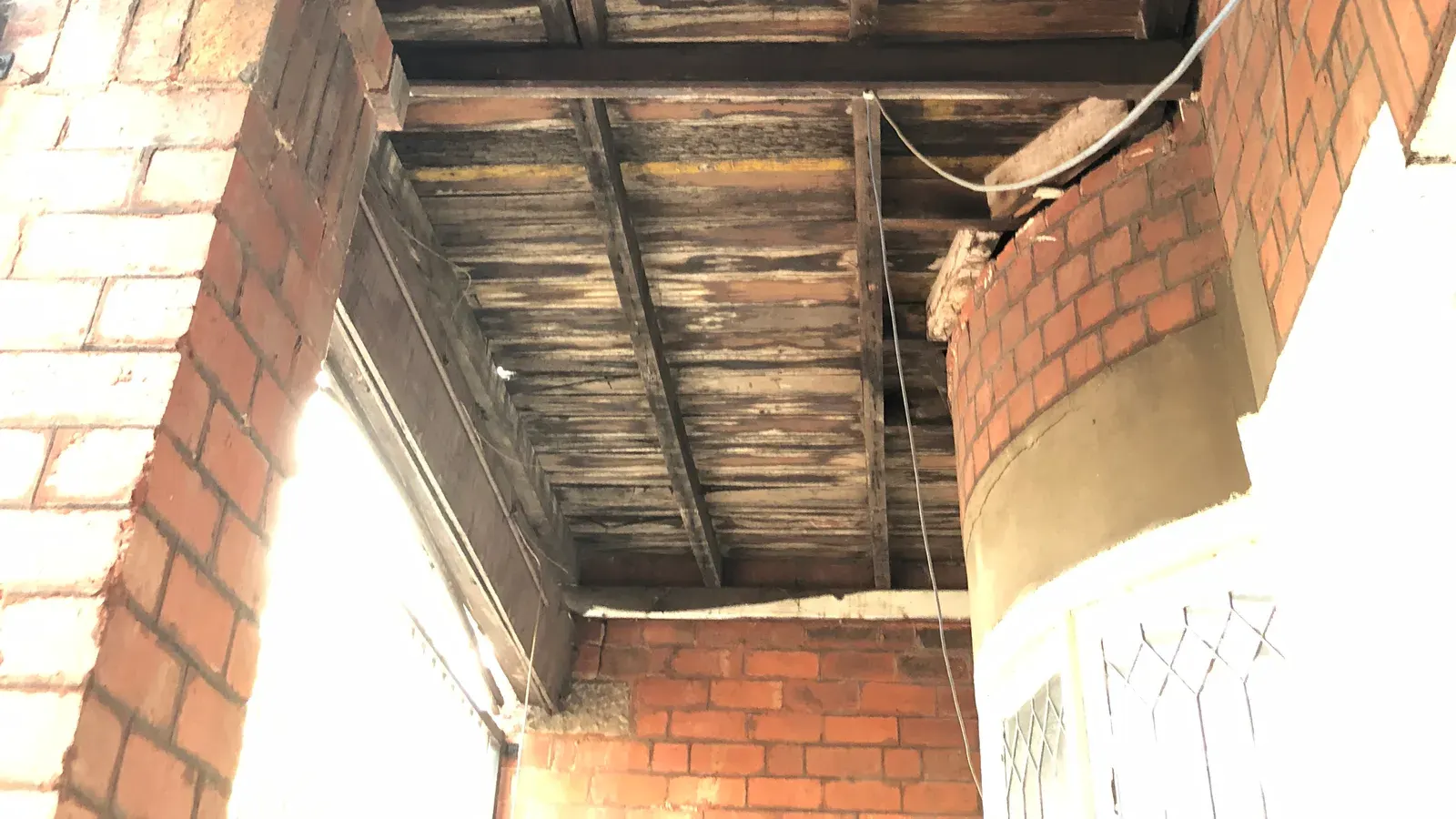
The wall being open is the good news. Most termite damage in Australian homes is found years late, after it has spread through framing that nobody could see. You are looking at yours at the one moment it can be assessed properly, priced accurately and fixed once.
Note
Do not spray the workings with fly spray, do not knock the mud away, and do not pull the damaged timber out yet. Disturbing an active colony scatters it into other parts of the house, and it destroys the evidence a pest technician needs to identify the species and the entry point.
What to do in the first 24 hours
- Stop work in that area only. The rest of the renovation can usually continue. Isolating the affected room keeps the damage contained and keeps the evidence intact.
- Photograph everything before anything moves. Wide shots showing where the damage sits in the house, then close ups. Date them. If a dispute follows, these photos become the record of what the wall looked like before any repair.
- Leave the mud leads and workings undisturbed. They tell a technician the species, the direction of travel and whether the colony is live.
- Book a timber pest inspection, not just a pest spray. A treatment quote answers a different question to the one you have.
- Check your contract and your insurance policy before you authorise variations, but expect the insurance answer to be no. More on that below.
If your builder or trades want to press on and replace the timber immediately, that is understandable but it is the wrong order. Repairing before the extent is established means paying twice when more damage turns up behind the next sheet.
Is it termite damage, or rot, or borers?
The three get confused constantly, and they lead to completely different repairs.
Termite damage follows the soft grain of the timber and leaves the harder growth rings behind, so the surface looks layered or honeycombed. Galleries are usually packed with a mud and faecal mix. The paint or veneer often stays intact over the top, which is why a wall can look perfectly normal until you open it.
Fungal decay, what most people call rot, comes with moisture. The timber goes dark, soft and crumbly, often in cube shaped blocks, and it is concentrated where water has been getting in. No mud, no galleries.
Borer damage leaves round exit holes and fine powder, and in seasoned hardwood it is frequently old and inactive.
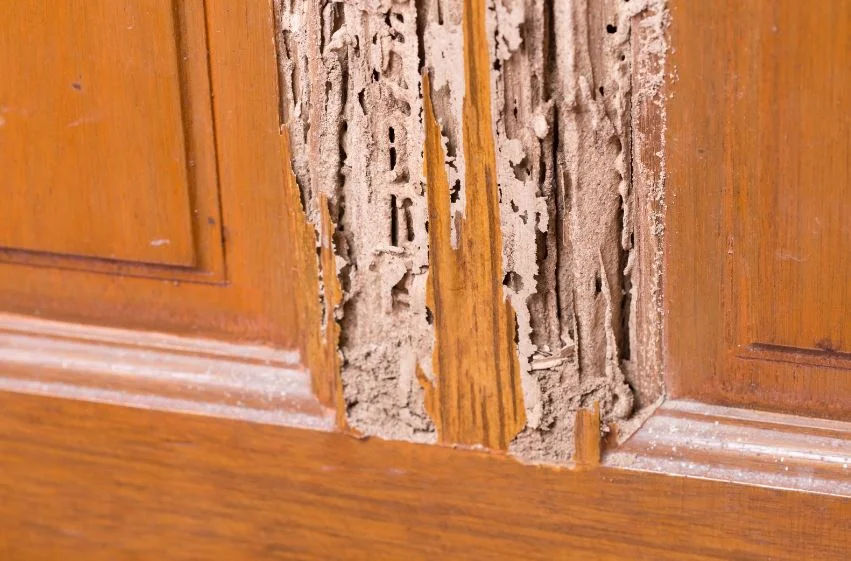
The door frame above is the classic presentation. The termites worked upward inside the timber and left the painted face standing, so from a metre away the door looked fine. That is the same reason renovation is when this gets found: the finish was doing the hiding.
Are the termites still active?
This is the question that changes the size of the problem, and it is the one you cannot answer by looking.
Old, treated, abandoned damage is a repair job. An active colony is a repair job plus a management programme, and until the colony is dealt with, new timber put back in the same wall is just more food.
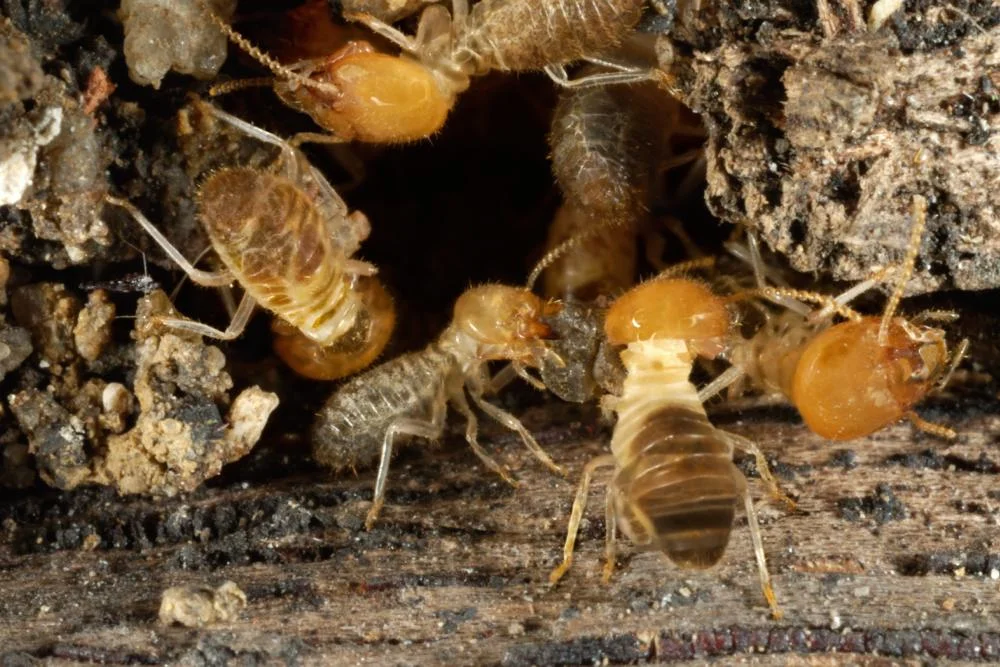
- Signs that suggest activity: damp, intact mud leads that rebuild within days of being broken, live workings, hollow sounding timber with fresh moisture inside, or swarmers around windows in warm humid weather.
- Signs that suggest old damage: dry, crumbling, abandoned galleries, no moisture, and mud that does not get repaired after it is disturbed.
Even those are indicative rather than conclusive. A technician uses moisture meters, thermal imaging and sometimes microwave or radar detection to find activity inside timber and behind linings that are still closed. If the previous owner had a treatment done, ask for the paperwork and check whether the warranty is still running. Our guide to warning signs a termite treatment has not worked covers what a failed job looks like.
Is the damaged timber structural?
A chewed out architrave is a nuisance. A chewed out bearer, stud, lintel or bottom plate is a different conversation, and it needs someone qualified to say which one you have.
The elements that matter most:
| Element | Examples | What the repair involves |
|---|---|---|
| Load bearing | Bearers, joists, studs in load bearing walls, top and bottom plates, lintels, roof trusses, stumps and posts | Assessment before anything is removed, sometimes temporary propping, often a permit |
| Non structural | Skirtings, architraves, door jambs, non load bearing wall linings, cupboard carcasses | Unpleasant, but generally a straightforward like for like replacement |
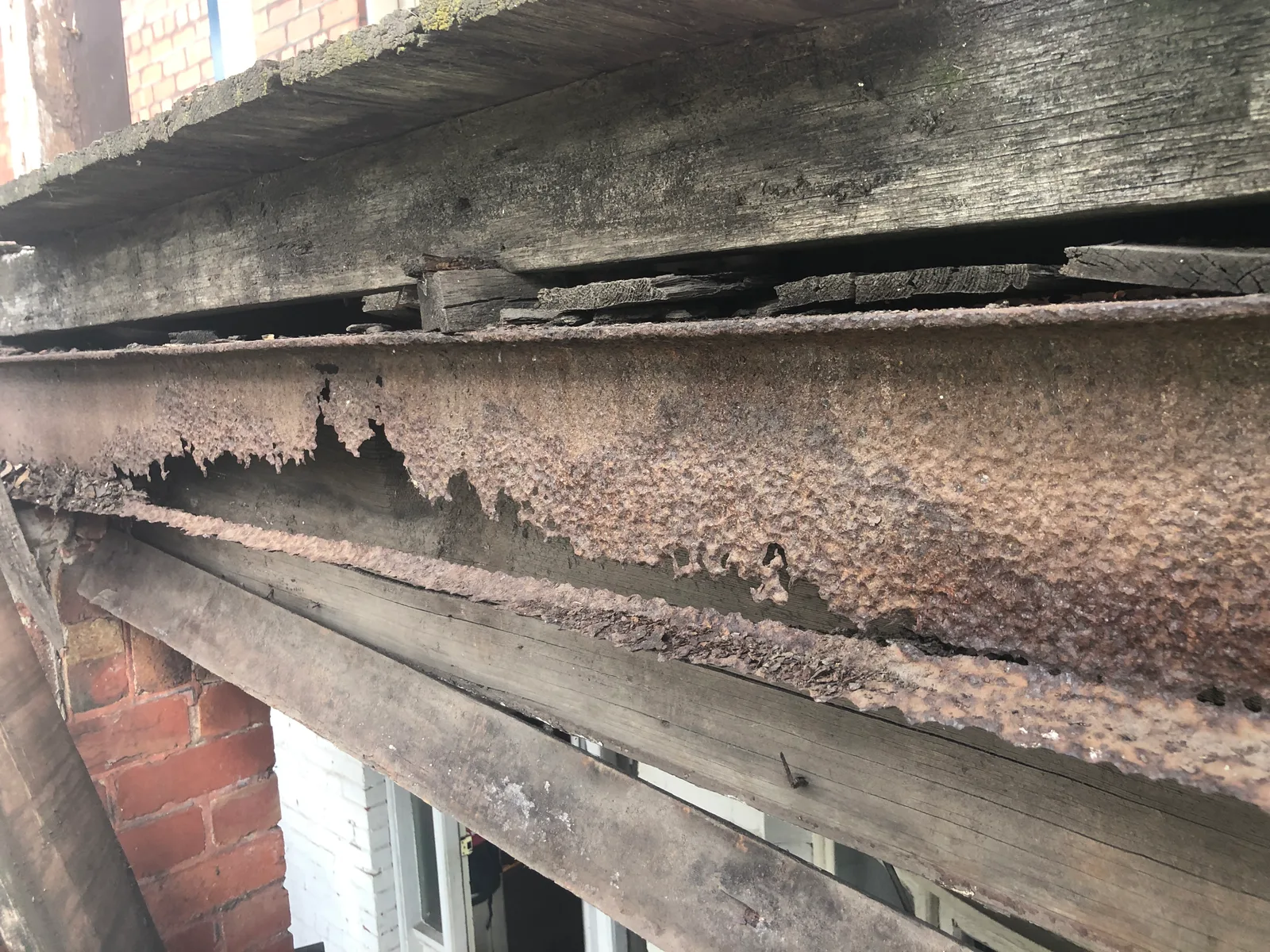
The timber above shows why this needs measuring rather than eyeballing. The visible face gives almost no indication of how much section has been lost inside, and the remaining capacity of a member depends on what is left, not on what you can see from below.
Where damage is structural, the repair is designed rather than guessed. That usually means a defect investigation that records the extent, the affected members and the remedial scope, which the builder then prices and works to. Replacing a stud is trivial. Replacing a stud that was holding up a roof beam, without propping first, is not.
Get the Damage Assessed Before It Is Closed Up
An independent timber pest inspection tells you whether the colony is live, how far the damage runs, and what actually needs replacing, while the wall is still open.
Who pays for it?
This is where most people are surprised, so here it is plainly.
Home insurance almost never covers termite damage. Australian building policies routinely exclude damage caused by insects, vermin and gradual deterioration, on the basis that it is a maintenance issue rather than a sudden event. Read your own product disclosure statement rather than relying on this, but do not build your plans around a claim.
If you bought recently and had a pre-purchase timber pest inspection, the question becomes whether the evidence was visible and accessible on the day. Inspections under the relevant Australian Standard are visual and non invasive. An inspector does not cut open walls or lift flooring, so damage concealed inside a wall cavity is usually outside scope. Damage with visible mud leads in an accessible subfloor is a different matter.
If you are mid build or the damage relates to recent work, the builder may be responsible, and state consumer bodies such as NSW Fair Trading and Consumer Affairs Victoria both run complaint and conciliation processes. In Queensland the equivalent is the QBCC.
Most often, the owner pays, because the damage predates everyone involved and nobody breached anything. That is worth knowing early so the money goes into fixing it properly rather than into chasing someone.
Owner Inspections is an inspection company, not a law firm. We can establish what the damage is, how old it appears to be and whether it was reasonably detectable. Whether anyone is liable for it is a question for a solicitor.
Does the repair need a permit?
It depends on the state and the scope. Replacing like for like non structural timber generally does not. Replacing structural members, altering framing, or any work that changes how load is carried usually does, and it needs to comply with the National Construction Code.
New timber going back into a termite affected area should also be protected. Australian practice is to reinstate a termite management system to AS 3660, which may mean treated timber, a physical barrier, a chemical soil treatment, or a combination, depending on the construction. A licensed pest manager specifies this, not the carpenter putting the timber back.
What does it cost?
Ranges vary enormously with access, extent and location, but the shape is consistent:
- Inspection and assessment is the smallest number in the whole exercise, and it is the one that sets every other number correctly.
- Treatment of an active colony is a defined, one off scope, usually with an ongoing monitoring recommendation.
- Timber replacement is where the money goes, and it scales with how much structure is involved and how much has to be pulled apart to reach it.
The reason to spend on the assessment first is arithmetic. Guessing at the extent means either over specifying, and paying to replace sound timber, or under specifying, and reopening the wall in two years. The article on the economic cost of termite infestation goes through how the numbers usually break down.
What to do so it does not happen again
- Fix the moisture source. Termites follow moisture, and leaking showers, blocked weepholes, poor subfloor ventilation and garden beds against the wall are the usual invitations.
- Keep soil, mulch and timber away from the slab edge and weepholes so the barrier stays inspectable.
- Have the property inspected annually. That is the standard recommendation, and it is the only reliable way to find the next attack early.
- Store the report, the treatment certificate and the warranty together. Both a future buyer and a future dispute will ask for them.
There is a reason a proper inspection is not the same as a look around. Our comparison of DIY versus professional timber pest inspections covers what the equipment finds that eyes do not, and a full building and pest inspection is what most owners book once a renovation has turned up something like this.
Should I stop my renovation completely if I find termite damage?
Does home insurance cover termite damage in Australia?
How can I tell if the termites are still active?
Can I just replace the damaged timber myself?
My pre-purchase inspection missed this, do I have a claim?
How long does termite damage take to happen?
Related Articles
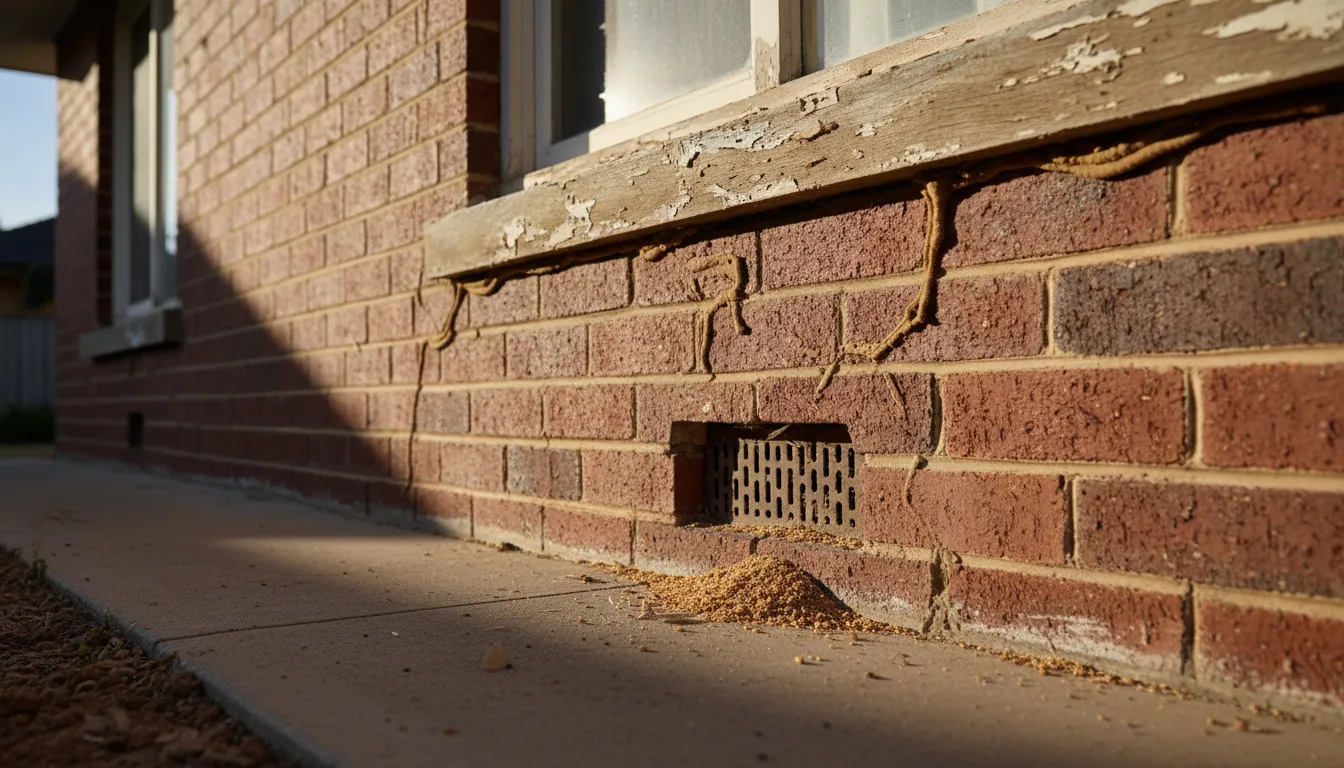
Termite Control Red Flags: Warning Signs a Treatment Hasn't Worked
How to tell whether the treatment on your home actually stopped the colony, or just moved it.
The Economic Cost of Termite Infestation
What termite damage really costs Australian owners, and where the money goes in a repair.
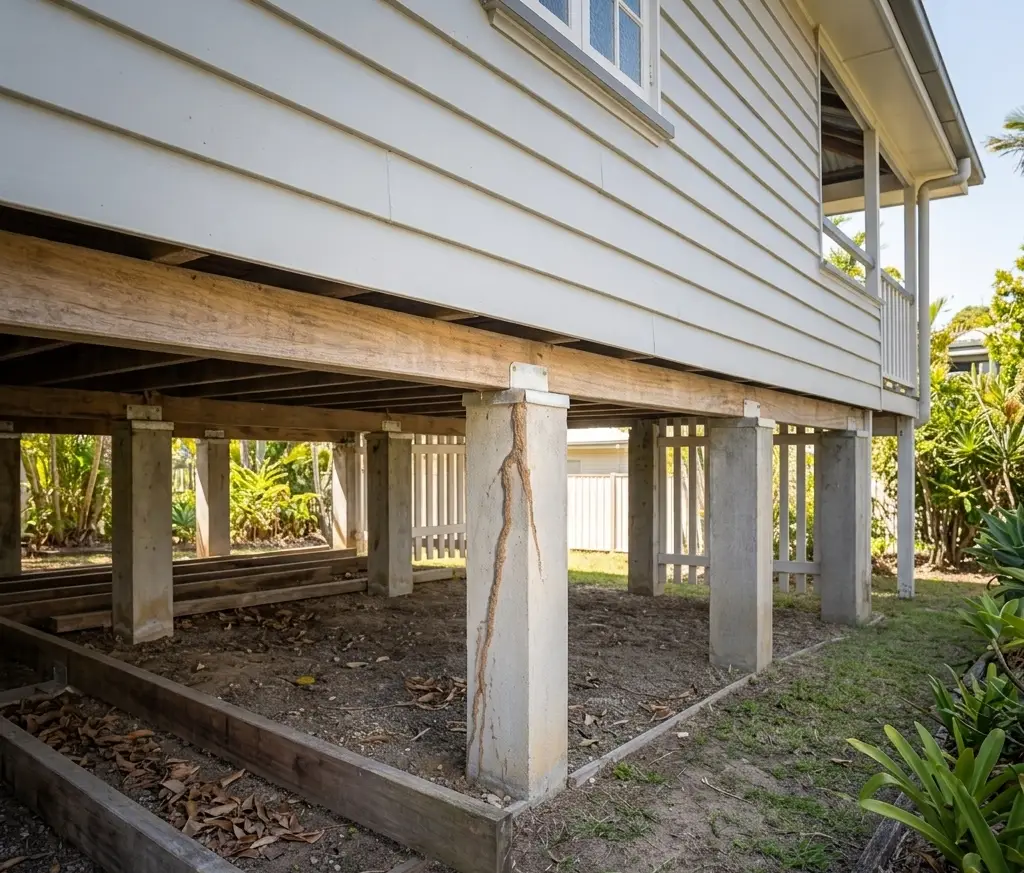
House On Stilts: Termite Risk Around Posts and Bearers
Why elevated homes hide termite attack at the posts and bearers, and what to check.