
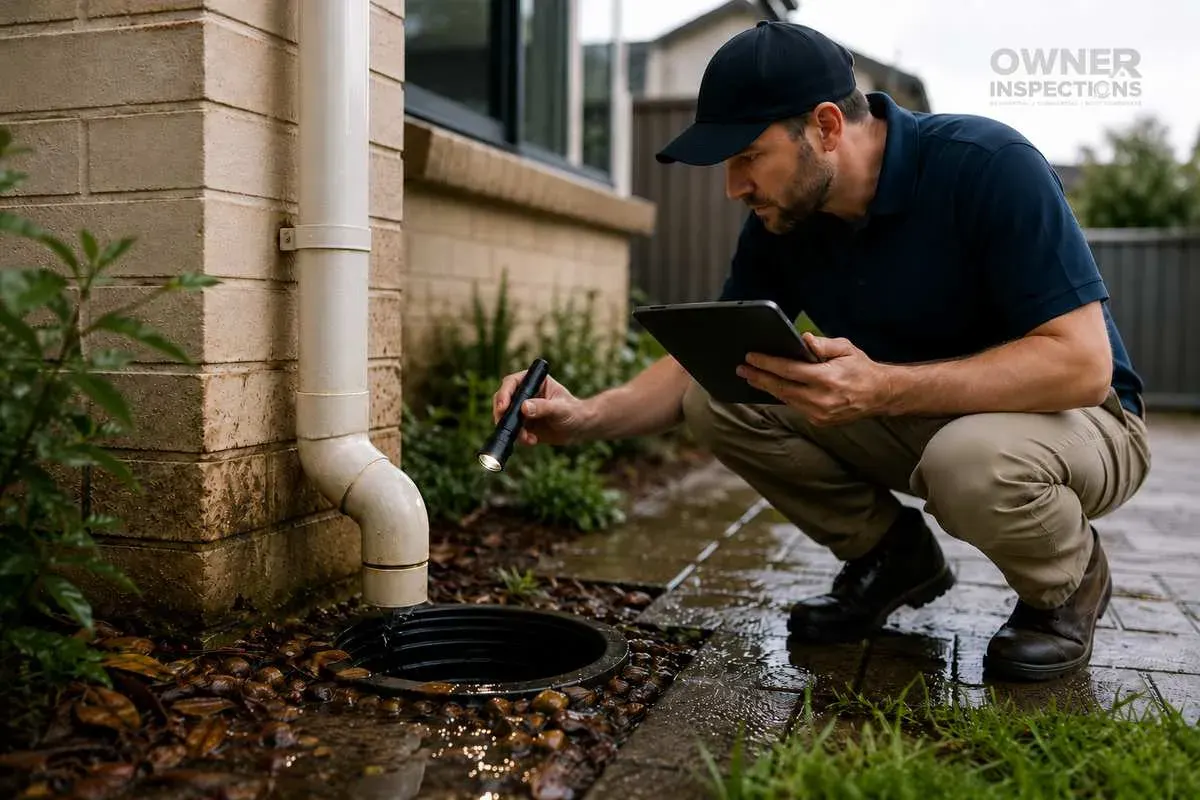
Soakwells are common across many Western Australian homes because they help manage roof runoff and surface water on-site. Buyers are not expected to become stormwater drainage experts, but they should know the warning signs that may show up during an open home, a pre-purchase inspection or a final inspection.
Stormwater is water that drains from the roof and land around a house. It can carry soil, organic matter, litter, fertilisers and oil residues into downstream waterways when it is not managed well. YourHome also notes that poorly managed stormwater can cause erosion and move pollutants into waterways.
During a property inspection, the key question is not simply whether a soakwell exists. It is whether the visible drainage system appears to direct water away from the building without creating damp, movement or boundary issues.
Buying a Home with Drainage Concerns?
A soakwell issue can point to hidden moisture, paving movement or drainage defects. Book an independent inspection before you commit.
Services
What Is a Soakwell?
A soakwell is an underground stormwater drainage structure that collects water and allows it to soak into the surrounding soil.
In simple words, a soakwell receives stormwater from downpipes, paved areas or surface drains. The water then disperses slowly into the soil instead of pooling around the home or flowing straight onto a neighbouring property.
Soakwell vs drainage pit
A soakwell is designed for soakage. It holds water and lets it infiltrate into the ground.
A drainage pit or sump may hold and direct water into another drainage system. The City of Gosnells also explains that a silt pit captures silt and solid objects before stormwater moves into the drainage system.
Why buyers should care
A hidden or failing soakwell can contribute to:
- Pooling water near walls
- Damp smells inside or below the home
- Softened soil near footings
- Paver subsidence
- Moisture ingress
- Termite-conducive conditions
- Disputes about stormwater crossing a property boundary
A soakwell problem may not be obvious during dry weather. That is why visible signs around downpipes, paving, garden beds and external walls matter during a building inspection.
Why Soakwells Matter When Buying a Home
Good stormwater management protects the building, neighbouring properties and the buyer’s budget.
Stormwater runoff from roof water or surface water must be disposed of within the subject lot without detriment to adjoining land. It also states that the distance from buildings and boundaries should not be less than the depth of the soakwell.
This matters because stormwater rarely stays in one place. Water that falls near the house may soak into soil near footings, sit against external walls, run into subfloor spaces, wash out bedding sand under pavers or move toward the neighbour’s land.
A property may look dry at the open home in summer, yet show drainage defects after sustained winter rain. For buyers, the best approach is to ask better questions early and use the inspection report to decide whether further drainage review is needed before settlement.
What Does a Property Inspector Look for Around Soakwells?
A standard building inspection does not usually expose underground drainage components. It is a visual inspection of accessible areas, so the inspector looks for signs that the drainage system may not be working as intended.
Downpipes and roof drainage
Downpipes are one of the easiest places to start. An inspector may observe whether downpipes appear:
- Connected to a drainage system
- Disconnected at the base
- Damaged or rusted
- Overflowing
- Discharging beside walls, slabs, paths or garden beds
- Poorly directed toward neighbouring land
REIWA advises buyers to inspect roof drainage outlets, check that guttering is sound and find out where soak wells are located before buying.
A downpipe that ends on paving beside the wall does not prove the soakwell has failed, but it does suggest stormwater may not be directed to a suitable system.
Surface water and paving falls
Paving should generally fall away from the dwelling. Water should not be encouraged toward walls, garage entries, subfloor vents, retaining walls or weep holes.
Watch for low spots in paving, ponding near the slab edge, green staining, damp garden beds against brickwork and areas where paving has been lifted or patched.
Signs of moisture movement
Drainage defects can show up inside and outside the home. Common signs include:
- Damp skirting boards
- Musty smells
- Efflorescence on brickwork
- Fretting brick faces
- Blistering paint
- Swollen cabinetry near external walls
- Cracks that appear worse after rain
- Damp subfloor soil or timber
These signs do not automatically prove a failed soakwell. They do tell the buyer that moisture is present and should be assessed in context.
Visible access limitations
AS 4349.1-2007 is listed by ABLIS as the Australian Standard for pre-purchase inspections of residential buildings. A standard inspection is not a full hydraulic engineering assessment.
An inspector may identify visible drainage defects and recommend further review. They may not be able to confirm underground soakwell size, depth, capacity or internal condition without specialist equipment, excavation, drainage plans or CCTV inspection.
Common Soakwell Problems Found During Property Inspections
| Warning Sign | What It May Suggest | Buyer Action |
|---|---|---|
| Downpipes discharge onto paving or garden beds | Missing or disconnected stormwater system | Ask the inspector to note it and recommend drainage review |
| Pooling water near walls | Poor surface fall, blocked soakwell or inadequate drainage | Investigate before settlement where possible |
| Sinking pavers or driveway dips | Possible collapsed soakwell, poor compaction or washout | Request drainage specialist assessment |
| Damp walls or musty subfloor | Moisture ingress or poor site drainage | Consider building and pest inspection |
| Water flowing toward neighbour | Potential boundary or compliance issue | Check local council requirements |
| Termite-conducive moisture | Damp conditions around timber or concealed areas | Add timber pest inspection |
Rainwater that is not managed well can contribute to erosion, building subsidence, footing and concrete pad subsidence, rising damp, wood rot and termite-conducive moisture.
Soakwells, Council Requirements and Australian Inspection Standards
Council requirements vary by location, soil type, groundwater level, lot size and drainage design. This is why buyers should not assume that one property’s soakwell setup is suitable for another.
The City of Canning requires developments to provide stormwater drainage within lot boundaries. Its stormwater information sheet says each lot must manage and dispose of stormwater without impacting neighbouring lots. It also lists on-site disposal via soakwells, soakwells with overflow connection, and detention via drainage pits as possible stormwater disposal methods.
The City of Gosnells also notes that on-site infiltration depends on factors such as soil, groundwater and stormwater disposal conditions. It states that high groundwater can reduce the efficiency of deeper soakwells and may require shallow soakwells with a larger diameter for storage capacity.
What AS 4349.1 means for buyers
AS 4349.1 is relevant to pre-purchase residential building inspections. For buyers, the key point is scope.
A building inspector can report visible defects, visible moisture-related risk and accessible drainage concerns. They are not usually confirming that an underground soakwell is correctly sized, compliant with council design rules or free from collapse.
When to request further investigation
Ask for further drainage, plumbing or engineering review when there is evidence of:
- Repeated pooling near the home
- Paver subsidence
- Damp skirting or internal moisture
- Unconnected downpipes
- Suspected collapsed soakwell
- Neighbour runoff concerns
- Recent drainage works without receipts or plans
- New paving that may conceal old defects
Buyer Checklist: What to Look for Before and During the Inspection
At the open home
- Look for downpipes that discharge onto the ground.
- Check for damp smells near external walls, garages and subfloor areas.
- Look for paving that slopes toward the house.
- Check whether garden beds are built up against weep holes or damp-proof courses.
- Ask the agent whether soakwell locations, drainage plans or recent drainage repairs are known.
- Look for access lids, grates, silt pits or patched paving.
- Check driveway dips and areas where pavers look newer than the rest.
During the inspection
- Ask the inspector to comment on visible site drainage.
- Ask whether moisture-related defects were observed.
- Ask whether downpipes appear to be connected to a stormwater system.
- Ask whether further drainage, plumbing or CCTV inspection is recommended.
- Ask whether a timber pest inspection is advisable.
- Ask whether any visible defects could affect negotiation or repair planning.
Before settlement
- Re-check the property after rain if possible.
- Ask for receipts or evidence of recent soakwell repairs if the seller says work has been done.
- Do not assume new paving means the drainage below is sound.
- Ask your conveyancer or solicitor about any contract steps linked to inspection findings.
Found a Defect During Your Inspection?
If drainage, dampness or structural warning signs are found, proper documentation can help support repair requests, quotes or future action.
Document Defects
What Should Your Inspection Report Say About Soakwells?
A clear inspection report should separate what was observed from what needs specialist testing.
For a suspected soakwell issue, the report should describe:
- The visible drainage defect
- The location of the defect
- Photos showing the concern
- Related moisture or structural warning signs
- Conditions conducive to timber pests
- Any access or weather limitations
- Whether underground drainage could not be assessed
- Recommended next steps
For example, a report may say that a downpipe discharges beside an external wall, paving falls toward the dwelling and damp staining was visible nearby. It may then recommend a licensed drainage contractor or plumber for further investigation.
Owner Inspections supports buyers with independent reporting, photos and practical findings that help them understand visible risks before committing to a property. This is especially useful when drainage defects may affect repair quotes, settlement questions or future maintenance planning.
When Is a Soakwell Issue Serious?
| Severity | Example | Recommended Next Step |
|---|---|---|
| Low | Minor surface water away from the house after heavy rain | Monitor and maintain gutters and downpipes |
| Moderate | Downpipe not connected to drainage | Obtain drainage repair quote |
| High | Pooling against walls, damp skirting, paver subsidence | Specialist drainage inspection before settlement |
| Critical | Structural movement, major damp, suspected collapsed soakwell near footing | Building inspector plus engineer or drainage contractor review |
A low-risk issue may be a maintenance item. A high-risk issue may affect the buyer’s decision, repair budget or settlement strategy.
The risk rises when water sits near footings, visible damp is present, timber is affected, or the drainage concern appears close to structural movement. In those cases, a building inspection and pest inspection can help identify whether moisture is linked to wider damage or termite-conducive conditions.
Can a Buyer Negotiate After a Soakwell Issue Is Found?
Inspection findings may help buyers ask questions, seek quotes, negotiate repairs or reconsider risk. The best next step depends on the contract, the timing of the inspection and the seriousness of the defect.
A report with photos and clear findings may support a buyer when asking for more information from the seller. It may also help the buyer obtain a drainage repair quote before settlement.
Speak with your conveyancer or solicitor before relying on any inspection finding to change contract terms.
Do not treat every soakwell defect as a deal breaker. Some issues are repairable. Others may point to broader moisture, boundary or structural concerns. The value of an inspection is that it helps buyers understand the risk before they commit.
Getting the Most Value from Your Home and Building Investment
A soakwell is easy to overlook because it is usually underground. Yet drainage defects can affect moisture, paving, walls, termite risk and future repair costs.
Before you commit to a property, Owner Inspections can assess visible drainage risks, moisture-related defects, structural warning signs and termite-conducive conditions as part of a detailed pre-purchase inspection or building and pest inspection.
Buying a property with soakwells or visible drainage concerns? Book an independent inspection and receive a clear report with photos, practical findings and next-step recommendations before you commit.
Get Clear Advice Before Settlement
Owner Inspections can assess visible drainage risks, moisture concerns and building defects, then provide a clear report with photos and next steps.
Key Takeaways
- A soakwell helps manage roof and surface stormwater.
- Buyers should check downpipes, surface falls, paving, damp signs and pooling.
- A standard inspection is visual and may not confirm underground soakwell capacity.
- Poor drainage can contribute to damp, movement and termite-conducive conditions.
- Council requirements vary, especially in WA. Further drainage investigation may be needed if warning signs are visible.
- A pre-purchase inspection helps buyers make informed decisions before settlement.
Frequently Asked Questions
What is a soakwell?
Are soakwells checked during a building inspection?
What are signs of a blocked or failed soakwell?
Should every downpipe be connected to a soakwell?
Can a bad soakwell cause structural damage?
Can soakwells attract termites?
How do I know where the soakwells are located?
What should I ask the inspector about soakwells?
Is a soakwell issue a deal breaker?
Who repairs or replaces soakwells?
Can I check soakwells myself at an open home?
Are soakwells required by law in Western Australia?
What happens if stormwater flows into a neighbour’s property?
Do new homes need soakwell checks too?
What should the report include if a soakwell problem is suspected?
Related Articles
Bored Piers vs Driven Piles: Understanding the Difference
Bored piers and driven piles are two common deep foundation methods used in Australian construction. This guide compares how each is constructed, their advantages and limitations, which soil conditions suit each method, and how to choose the right foundation for your project.

What Is a Granny Flat? Benefits and Legal Requirements
A granny flat is a self-contained secondary dwelling on the same property as a primary residence. This guide covers types, benefits, legal requirements, size restrictions, approval processes, and costs for building a granny flat in Australia.

What Is Drywall? How It Works and Why It Is Used in Construction
Drywall, known as plasterboard in Australia, is a panel made of gypsum between paper sheets used for interior walls and ceilings. This guide covers drywall types, installation steps, finishing levels, costs, and maintenance tips.