
Rising property prices and housing affordability challenges have made granny flats increasingly popular across Australia. Whether you are planning to build one for family use, as a rental investment, or to add value to your property, understanding the rules, costs, and benefits is the first step.
Types of Granny Flats
| Description | Key Advantage | |
|---|---|---|
| Detached Granny Flat | Standalone unit separate from the main home | Maximum privacy and independence for occupants |
| Attached Granny Flat | Extension of the existing home with a private entrance | Close connection with the main residence while maintaining separation |
| Garage Conversion | Existing garage transformed into a livable space | Cost-effective solution that uses an existing structure |
| Prefab Granny Flat | Pre-built modular unit delivered and assembled on-site | Faster construction time and often more affordable |
Common Uses
- Housing for ageing parents: Allows elderly relatives to live independently while staying close to family, reducing aged care facility costs
- Rental property: Generates passive income that can help cover mortgage payments or create an additional revenue stream
- Guest accommodation: Provides a private space for visitors, ensuring comfort and privacy for both guests and hosts
- Home office or studio: A quiet workspace separate from the main house, ideal for remote workers, freelancers, or creative professionals
- Short-term rentals: An alternative income stream through platforms like Airbnb in approved areas, particularly in tourist-friendly locations
Benefits of Building a Granny Flat
Rental Income Potential
Many homeowners use granny flats to earn rental income, with rates ranging from $350 to $500 per week depending on location. In high-demand areas like Sydney and Melbourne, these secondary dwellings can provide strong returns.
A homeowner in Sydney who built a granny flat for $140,000 and rented it out for $450 per week was able to cover a significant portion of their mortgage and improve their cash flow. Investors may also be able to claim depreciation deductions and offset expenses related to maintenance, insurance, and council rates through the Australian Taxation Office (ATO).
Increased Property Value
A well-built granny flat can increase a property's value by up to 30%, making it a smart long-term investment. Properties with secondary dwellings appeal to buyers looking for rental opportunities or extra space for family members.
Multigenerational Living
With aged care costs exceeding $55,000 per year in many facilities, granny flats provide a financially viable alternative. Families can live together while maintaining separate spaces, reducing household stress while keeping elderly relatives close.
Additional Functional Space
Granny flats can serve as a home office, gym, art studio, or guest house. Many professionals are converting granny flats into remote workspaces, making them a versatile addition to any property.
Sustainability Benefits
Modern granny flat designs often incorporate solar panels, rainwater collection, and energy-efficient materials. Smaller living spaces naturally consume fewer resources, and energy-efficient construction reduces utility bills for both homeowners and tenants.
Legal Requirements in Australia
Zoning and Land Requirements
Each state and local council has its own zoning laws and minimum land size requirements.
| Minimum Lot Size | Maximum Size | Key Notes | |
|---|---|---|---|
| NSW | 450m2 | 60m2 | Subject to state environmental planning policies |
| VIC | No specific minimum, but council approvals vary | 60m2 | Council-specific requirements apply |
| QLD | Typically 450m2+ | Varies by council | Local councils may impose different conditions |
| WA and SA | Varies by council | Up to 70m2 | Land size considerations apply |
| TAS and NT | Varies by council | Up to 80m2 | Subject to local planning regulations |
Approval Process
- Complying Development Certificate (CDC): Fast-tracked approval available in NSW and VIC, provided all guidelines are met
- Development Application (DA): Required for non-standard designs, which may take longer to process
- Compliance with fire safety, accessibility, and drainage regulations is required regardless of the approval pathway
Rental and Occupancy Rules
- NSW and VIC allow granny flats to be rented to any tenant under standard rental laws
- Some states only allow renting to family members or as non-commercial dwellings
- Short-term Airbnb rentals are restricted in some areas and may require special council approval
Financing Options
- Home equity loans: Borrow against existing home equity to fund construction
- Construction loans: Designed specifically for granny flat projects with progressive payments
- Government grants: Available in some states for eco-friendly designs or affordable housing initiatives
Steps to Build a Granny Flat
Check local council regulations
Confirm zoning requirements and size limits for your property. Consult with a town planner if the rules are unclear or your property is in a heritage or flood zone.
Choose a design
Select from prefab, custom-built, or modular designs based on your budget, intended use, and site constraints.
Secure financing
Explore home equity loans, construction loans, government grants, or savings. Get quotes from multiple builders to compare costs.
Obtain council approvals
Apply for a CDC or DA depending on your state and the design. Allow enough time for the approval process before scheduling construction.
Hire licensed builders
Work with builders experienced in secondary dwellings. Verify their licensing, insurance, and track record with similar projects.
Complete construction and inspections
Ensure all building and safety standards are met at each construction stage. Independent inspections at each stage help catch defects early.
Decide on use
Choose whether to use the granny flat for family, long-term rental, short-term rental, or as a workspace based on your financial and personal situation.
Building costs for granny flats in Australia typically range from $80,000 to $150,000 or more, depending on size, design, materials, and site conditions. Prefab options are generally at the lower end, while custom designs cost more.
Key Takeaways
- A granny flat is a self-contained secondary dwelling with a kitchen, bathroom, and sleeping area on the same lot as a primary home.
- Types include detached units, attached extensions, garage conversions, and prefabricated modular builds.
- Granny flats can generate rental income of $350 to $500 per week and increase property value by up to 30%.
- Maximum size limits vary by state, with most capping at 60m2, though some states allow up to 80m2.
- Approval is required through a Complying Development Certificate (CDC) or Development Application (DA).
- Building costs typically range from $80,000 to $150,000 or more depending on design and materials.
- Independent building inspections at each construction stage help catch defects and ensure compliance.
- Rental rules and short-term letting restrictions vary by state and local council.
Frequently Asked Questions
Can I build a granny flat without council approval?
Some states allow granny flats under a Complying Development Certificate (CDC) if specific criteria are met, which provides a streamlined approval pathway. However, this is not the same as building without any approval. You still need to obtain a CDC. If your design does not meet the criteria for a CDC, a full Development Application (DA) is required. Always check with your local council.
How much does it cost to build a granny flat in Australia?
Costs typically range from $80,000 to $150,000 or more, depending on the size, design, materials, and site conditions. Prefabricated options tend to be more affordable, while custom-built designs with premium finishes will cost more. Site preparation, council fees, and connection to services are additional costs to factor in.
How many granny flats can I have on my property?
In most states and councils, only one granny flat per property is allowed. There may be exceptions for rural or large-lot properties, but these are uncommon. Check with your local council for the rules that apply to your specific property.
Do I need a permit for a granny flat in NSW, VIC, or QLD?
Yes. In all three states, you need either a Complying Development Certificate (CDC) or a Development Application (DA) depending on your property's zoning, the design of the granny flat, and local council requirements. The CDC is a faster process, but it requires full compliance with all design criteria.
Is a granny flat considered a secondary dwelling?
Yes. A granny flat is classified as a secondary dwelling, meaning it shares the same land title as the main house and cannot be sold separately. It must have its own kitchen, bathroom, and living area to qualify as a self-contained dwelling.
Can I rent out my granny flat on Airbnb?
This depends on your local council rules. Some councils permit short-term rentals with conditions, such as a maximum number of days per year, while others restrict them entirely. Check with your council and review any applicable state legislation before listing on short-term rental platforms.
Are there government grants for building a granny flat?
Grants are available in some states, particularly for eco-friendly designs, affordable housing projects, or builds that include accessibility features. The availability and amount of grants change over time, so check with your state housing authority for current programmes.
How does a granny flat affect property taxes?
A granny flat may increase your property value and therefore your council rates. If you rent it out, the rental income will be subject to income tax. However, you may also be able to claim deductions for depreciation, maintenance, insurance, and other expenses. Consult with a tax professional for advice specific to your situation.
What is the maximum size for a granny flat in Australia?
The maximum size varies by state. In NSW and Victoria, the limit is typically 60m2. In Western Australia and South Australia, it can be up to 70m2. In Tasmania and the Northern Territory, up to 80m2 is permitted. Local councils may impose additional restrictions, so always verify with your council.
Should I get building inspections during granny flat construction?
Yes. Independent building inspections at each construction stage help catch defects early and confirm the build meets Australian standards. This protects your investment and can prevent costly repairs after the build is completed. Inspections at slab, frame, lock-up, and final stages are recommended.
References and Resources
- NSW Planning Portal - Granny Flats - NSW planning rules for secondary dwellings
- Victorian Planning Authority - Victoria planning guidelines for secondary dwellings
- Queensland Government - Planning - QLD planning and building requirements
- Australian Taxation Office (ATO) - Tax implications for rental income and property investment
- National Construction Code (NCC) - Building standards for secondary dwellings
Related Articles
Construction Stage Inspections: What to Check at Each Stage
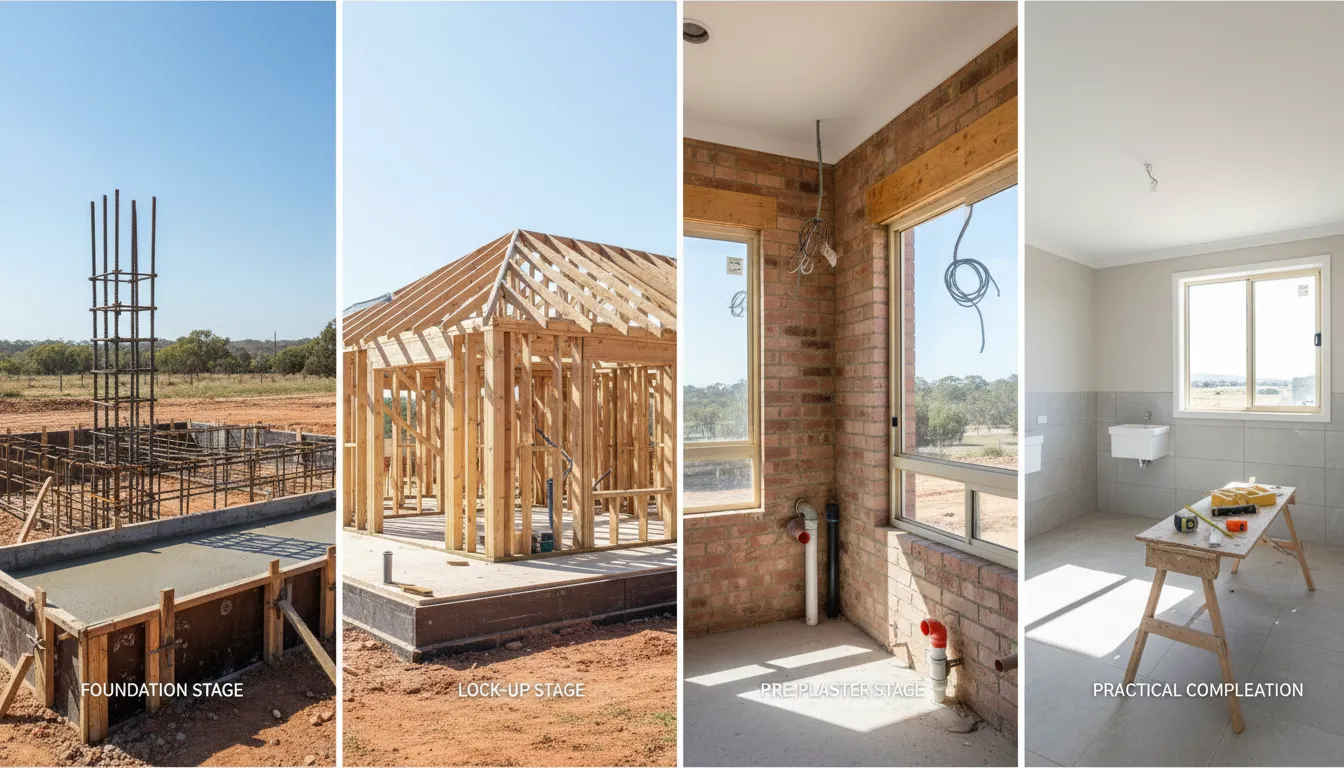
Every construction stage hides the one before it, so the defects that matter are the ones that become invisible next week. This guide covers what to check at pre-pour, slab, frame, lock-up, waterproofing and practical completion, the mandatory inspections in NSW, Victoria and Queensland, and the tolerances that decide whether something counts as a defect at all.
What Does a Building Inspection Cover?
Building inspections serve as a critical investment safeguard, examining structural integrity, electrical systems, plumbing, and more before property purchase.

Property Depreciation Calculator to Estimate Value Loss
Property depreciation is one of the most significant tax deductions available to Australian investment property owners. Understanding how depreciation works, the difference between Division 43 and Division 40 deductions, and how to calculate your claims can save thousands of dollars each year. This guide explains depreciation methods, calculation steps, and strategies for maximising your claims.
Building a granny flat? Owner Inspections provides independent construction stage inspections to make sure your secondary dwelling meets Australian building standards at every phase. Our licensed inspectors cover projects across NSW, Victoria, and Queensland. Book a construction inspection or call us on 1300 471 805.