
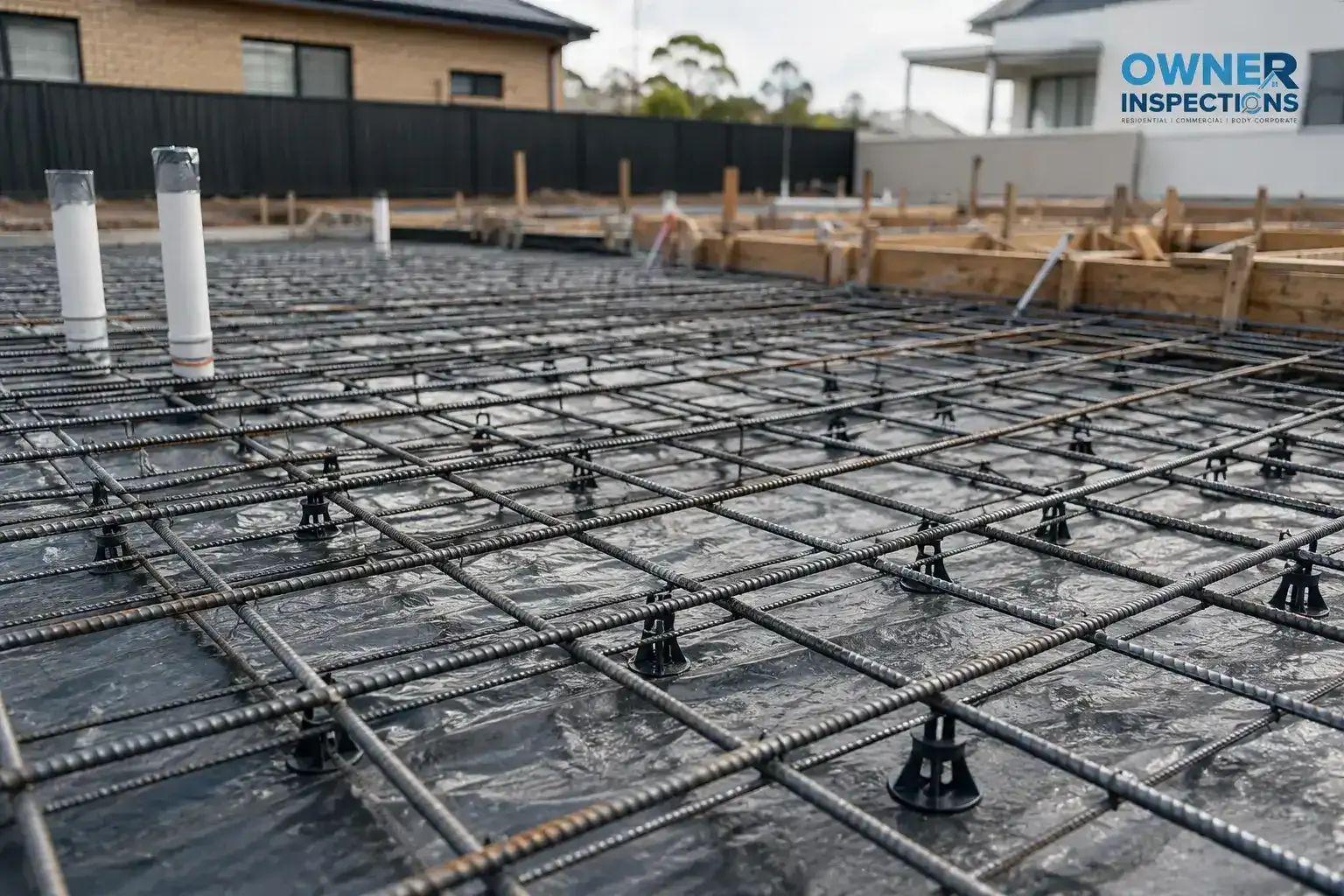
A new build must handle more than the weight of walls, floors and roof framing. It also needs to cope with ground movement, moisture, temperature change, wind, soil pressure and daily use. That is why reinforced concrete in new builds matters.
Plain concrete is strong when something presses down on it. This is called compression. It is not as strong when it is pulled, bent or affected by ground movement. This is called tension. Steel reinforcement, such as mesh, rebar or trench mesh, helps concrete handle that extra stress.
Short answer: Reinforced concrete matters in new builds because plain concrete is strong under compression but weak under tension. Steel reinforcement helps concrete resist cracking, bending, movement and long-term structural stress.
For homeowners, builders, owner-builders and property investors, the main issue is timing. Before concrete is poured, an inspector can still see the reinforcement, formwork, vapour barrier, service penetrations and slab set-out. After the pour, much of that evidence is hidden inside the structure.
That is where a reinforced concrete inspection, especially a pre-pour inspection, can help. It gives owners and builders a chance to raise visible issues before they become covered by concrete.
Book a New Build Stage Inspection Before the Pour
Reinforcement, formwork, vapour barriers and service penetrations can still be checked before concrete hides them inside the slab. Owner Inspections provides independent stage inspections with clear photos and practical next steps.
Inspection
What Is Reinforced Concrete?
Reinforced concrete is concrete strengthened with steel reinforcement. The reinforcement may include rebar, reinforcing mesh, trench mesh or steel rods placed inside the concrete before it sets. These materials come together to form a strong material, namely a reinforced steel material, like this concrete mesh by Sydney REO. This sturdy material enables it to resist many types of pressure, from compressive loads to lateral pressure from soil and wind.
Concrete and steel work together. The concrete surrounds the steel and gives the structure mass and compressive strength. The steel helps where tension develops, such as in slabs, beams, footings, retaining walls and suspended concrete areas.
Concrete handles downward pressure well, but it is less effective when pulled, bent or affected by ground movement. Steel reinforcement helps support the concrete where tension develops.
This is why plain concrete may be suitable for garden paths, decorative areas or light-duty surfaces, but structural areas usually need reinforcement. A house slab, footing, beam, retaining wall or suspended slab is doing more than holding its own weight. It is part of the load path that carries forces through the building and into the ground.
The reinforcement must also be in the right position. Steel mesh sitting directly on the ground, pushed too low in the slab, poorly lapped or unsupported may not work as the design expects. Owner Inspections’ pre-pour guidance lists steel placement, bar chairs, moisture barriers, penetrations, formwork and engineering drawings as key items to prepare before a slab inspection.
Why Reinforced Concrete Matters in New Builds
A building is constantly exposed to pressure, load changes, moisture, soil shifts and temperature movement. If structural concrete is not designed, reinforced and installed correctly, the risk of cracking, movement, corrosion and long-term defects can rise.
Reinforced concrete does not make a new build free from risk. It does, however, help the structure manage loads and movement when used according to the engineering design and project requirements.
Improving Load-Bearing Capacity
Reinforced concrete helps slabs, beams, footings, columns and retaining walls carry loads more effectively.
In a new home, the load does not simply sit on the floor. It travels through walls, frames, slabs, beams and footings before reaching the soil. This path needs to stay stable. If reinforcement is undersized, misplaced, missing or poorly supported, the concrete may not carry loads as intended.
Reinforcement helps spread loads through the concrete. It also helps areas that are likely to bend or flex under pressure. This matters in:
- Concrete slabs
- Edge beams and internal beams
- Strip footings and pad footings
- Columns
- Retaining walls
- Suspended slabs and balconies
- Driveways and vehicle areas
During a reinforced concrete inspection, an inspector may flag steel reinforcement that does not appear consistent with the available engineering drawings or reinforcement schedule. This does not replace engineering sign-off, but it gives the owner or builder a clear issue to raise before the pour.
Reducing Crack Risk
Concrete can crack for many reasons. Shrinkage, drying, temperature change, ground movement, poor curing and structural stress can all play a part.
Reinforced concrete is not crack-proof. No builder, inspector or engineer should describe it that way. Instead, reinforcement helps manage cracking by holding concrete together when tension develops.
This is helpful in areas such as slab corners, slab edges, around service penetrations, driveways and retaining walls. These areas can be exposed to concentrated stress, soil movement or load changes.
There is also a difference between minor shrinkage cracks and cracks that may suggest movement or a structural issue. A post-pour inspection can check visible cracking, but it cannot fully confirm hidden reinforcement placement once the concrete has covered it.
This is why pre-pour inspection matters. When reinforcement is still visible, an inspector can check whether the mesh is supported, lapped and positioned before the slab is poured.
Improving Weather and Moisture Resilience
Australian homes face moisture, heat, cold, storms and changing ground conditions. Concrete expands and contracts with temperature changes. Moisture can also affect slabs and footings over time.
Steel reinforcement helps concrete stay together under stress, but the steel must be protected inside the concrete. If reinforcement is too close to the surface or exposed, it can corrode. As steel rusts, it expands and can damage the surrounding concrete.
Concrete cover is the layer of concrete between the steel and the surface. It helps protect reinforcement from moisture and exposure. Vapour barriers also matter in slab systems because they help reduce rising moisture through the floor.
HIA explains that AS 2870-2011 covers site classification and design and construction requirements for slab-on-ground, stiffened rafts, waffle slabs, strip footings, pad footings and piled footings. It also lists requirements such as drainage, reinforcement placement, concrete grade, cover, vapour barriers and aggressive soils.
Offering Design Versatility
Reinforced concrete can be shaped with formwork, allowing it to suit many building layouts.
It can be used in slabs, beams, columns, stairs, balconies, driveways and retaining walls. This makes it useful for simple homes as well as more detailed designs.
The design freedom still depends on proper engineering and site work. The formwork must be set out correctly. The reinforcement must be placed correctly. The concrete must be poured, compacted, finished and cured with care.
Good design is only part of the job. Good execution is what turns the design into a safe, durable structure.
Where Reinforced Concrete Is Commonly Used in New Builds
| Building Area | Why Reinforcement Matters |
|---|---|
| Concrete slabs | Supports building loads and helps manage movement |
| Footings | Transfers loads into the ground |
| Beams | Helps resist bending and tension |
| Columns | Supports vertical loads |
| Retaining walls | Resists soil pressure and lateral loads |
| Driveways | Helps manage vehicle loads and surface cracking |
| Balconies and suspended slabs | Supports elevated loads and bending forces |
In residential construction, reinforced concrete often sits below the finished surfaces people see every day. The slab may later be covered by walls, framing, flooring and cabinetry. Footings may be hidden below ground. Beams may be hidden in the structure.
That is why inspection timing matters. The best time to check visible steel reinforcement is before concrete covers it.
What Do Inspectors Check When Evaluating Reinforced Concrete Structures?
Building inspectors look at the accessible work and compare visible items against available plans, drawings and common construction expectations. The exact scope depends on the inspection type, state or territory rules, site access and documentation available.
For reinforced concrete, inspectors usually focus on three stages: before the pour, during concrete placement where this is part of the scope, and after the pour.
Pre-Pour Inspection
A pre-pour inspection is one of the most useful stages because the reinforcement is still visible, which is why many owners book a slab pre-pour inspection through a new construction stage inspection.
At this stage, inspectors may check:
- Engineering drawings and reinforcement schedule
- Slab set-out and formwork dimensions
- Footing trenches and edge beams
- Reinforcing mesh and trench mesh
- Rebar size, spacing and placement where visible
- Bar chairs and spacers
- Mesh laps and ties
- Vapour barrier condition and overlaps
- Service penetrations
- Termite barrier where applicable
- Cleanliness of trenches and slab area
- General readiness before concrete arrives
Bar chairs are small supports that hold mesh or bars at the required height. Without enough bar chairs, the mesh may sit too low or move during the pour.
The vapour barrier should also be checked before pouring. Tears, poor overlaps or unsealed penetrations can increase moisture risk later.
Concrete Placement Phase
The pour itself can affect the final result. Even when reinforcement is placed correctly before the pour, it can shift if it is not supported well or if workers step on the mesh without care.
During the concrete placement phase, inspectors or site supervisors may look at:
- Pour sequencing
- Concrete consistency
- Slump testing where applicable
- Vibration or compaction to reduce air pockets
- Reinforcement movement during the pour
- Weather conditions
- Finishing practices
- Curing practices
Slump testing checks concrete consistency. Vibration helps remove trapped air and reduces voids. Poor compaction can lead to honeycombing, which is visible as voids or rough, stony concrete after formwork is removed.
Hot, windy or wet weather can also affect concrete placement and curing. Good site management reduces the chance of early surface defects and uneven finish.
Post-Pour Concrete Inspection
After the pour, inspectors can only check what is visible. They cannot directly see whether hidden reinforcement was supported, lapped, tied or placed correctly unless specialist testing is arranged.
A post-pour concrete slab inspection may check:
- Slab levels and finish
- Visible surface cracking
- Honeycombing or poor compaction
- Exposed reinforcement
- Slab edges and edge beams
- Penetrations and set-outs
- Drainage falls
- Curing condition
- Visible defects before framing hides areas
Post-pour checks still have value. They can identify surface defects, poor finish, exposed steel, obvious cracking and level issues. However, they are not a substitute for a pre-pour inspection.
Common Reinforced Concrete Defects Inspectors May Find
| Defect | Why It Matters | When It Is Usually Found |
|---|---|---|
| Low reinforcement mesh | Steel may not sit in the designed zone of the slab | Pre-pour |
| Missing bar chairs | Reinforcement can move or sit on the ground | Pre-pour |
| Poor mesh overlaps | Load transfer may not work as intended | Pre-pour |
| Incorrect reinforcement type | Work may not match the engineering design | Pre-pour |
| Damaged vapour barrier | Moisture may rise through the slab | Pre-pour |
| Pipe penetrations too close to reinforcement | Can affect spacing and concrete cover | Pre-pour |
| Honeycombing | May suggest poor compaction | Post-pour |
| Exposed reinforcement | Steel may corrode over time | Post-pour |
| Cracks wider than expected | May need further review or monitoring | Post-pour |
| Incorrect slab level | Can affect framing, flooring and drainage | Post-pour |
| Formwork movement | Can change dimensions or slab edges | During or post-pour |
| Concrete cover issues | Steel may have less protection from exposure | Pre-pour or post-pour if exposed |
Not every defect means the structure is unsafe. Some issues can be minor, while others need review by the builder, engineer or building surveyor. The value of an independent inspection is that visible concerns can be recorded clearly with photos and practical next steps.
Found a Defect? Keep Clear Records Early
Concrete defects, exposed steel, cracking and slab concerns should be documented properly. Learn how to record building defects with photos, notes and reports that may support a legal claim if the issue escalates.
Document Defects
Australian Standards and Building Requirements to Mention
Reinforced concrete work in Australia is guided by the NCC, Australian Standards, engineering drawings and project specifications. Homeowners should rely on the builder, engineer, building surveyor or certifier and relevant professionals for compliance decisions.
The inspector’s role is usually an independent visual assessment of accessible work.
References that may apply include:
- NCC and Building Code of Australia
- AS 2870: Residential slabs and footings
- AS 3600: Concrete structures
- AS/NZS 4671: Steel reinforcing materials
- Engineering drawings and project specifications
- State-based standards and tolerances guidance where relevant
Standards Australia lists AS 2870-2011 as the Australian Standard for residential slabs and footings. HIA states that AS 3600:2018 sets minimum requirements for the design and construction of concrete building structures and members containing reinforcing steel or tendons.
AS/NZS 4671 deals with reinforcing steel materials such as bars, coils and welded mesh, including chemical, mechanical and physical requirements. The NSW Guide to Standards and Tolerances was developed as a reference for builders and building owners on minimum technical standards and quality of work.
HIA also notes that NCC Volume Two outlines design and construction requirements for residential buildings and that Part H1D4 and the ABCB Housing Provisions cover Deemed-to-Satisfy construction requirements for residential slabs and footings.
Why Timing Matters: Before Concrete Hides the Evidence
Once concrete is poured, the inspector can no longer directly see whether the reinforcement was correctly supported, lapped, tied or positioned.
This is why photos and pre-pour checks are so useful, and why Owner Inspections recommends understanding when to book each stage inspection before the build moves ahead.
Early inspection can also make rectification easier. Adjusting bar chairs, repairing a vapour barrier, clearing debris from trenches or confirming penetrations is much simpler before the concrete truck arrives.
Late inspections may still find symptoms, such as cracking, honeycombing or uneven slab levels. Yet they may not be able to confirm the cause without further testing or engineering review.
What a Building Inspector Can and Cannot Confirm
| Can Usually Check Visually | Cannot Fully Confirm Visually |
|---|---|
| Visible reinforcement placement before pour | Hidden reinforcement after concrete is poured |
| Formwork dimensions and obvious set-out issues | Full structural design adequacy |
| Bar chairs, mesh laps and vapour barrier condition | Concrete strength without testing |
| Surface defects after pour | Every concealed defect inside the slab |
| Alignment with available plans | Engineering certification |
This helps set the right expectation. A building inspector is not a replacement for the structural engineer. The engineer designs the slab, footing or concrete element. The inspector visually checks accessible work and reports visible concerns.
That distinction builds trust. It also helps homeowners and builders avoid overclaiming what any visual inspection can prove.
How Reinforced Concrete Issues Can Affect Homebuyers and Owners
Reinforced concrete defects can become expensive because many concrete elements are hard to access after construction continues.
For homebuyers, the concern is hidden risk. A newly built or recently completed home may look clean and finished, but defects below the surface can be harder to identify later.
For homeowners and owner-builders, poor reinforced concrete work can lead to:
- Cracking concerns
- Moisture ingress
- Settlement issues
- Flooring problems
- Drainage issues
- Construction delays
- Disputes with trades or builders
- Costly repairs after handover
- Reduced confidence during resale
For builders and developers, early checks can reduce rework, help keep projects moving and provide a clearer record of site conditions.
For real estate professionals, simple explanations help clients understand why a slab or pre-pour inspection is not just another box to tick. It is a chance to check visible work before it becomes hidden.
Reinforced Concrete Inspection Checklist for New Builds
Use this checklist before the concrete pour is locked in:
- Latest engineering drawings available on site
- Slab set-out checked
- Formwork secure and correctly located
- Footing trenches clean
- Reinforcement installed as specified
- Mesh supported on bar chairs
- Correct cover maintained where visible
- Mesh overlaps and ties checked
- Vapour barrier intact
- Plumbing and electrical penetrations correctly placed
- Termite protection considered where required
- Site ready before the concrete truck arrives
- Photos taken before pour
This checklist is not a replacement for engineering review or builder quality control. It gives owners and builders a simple way to prepare for a reinforced concrete inspection.
Getting the Most Value from Your Home and Building Investment
Reinforced concrete is one of the most widely used structural materials in new builds because it combines the compressive strength of concrete with the tensile support of steel reinforcement.
For homeowners, owner-builders, buyers and investors, the key lesson is simple. The best time to check reinforced concrete is before it is covered.
A pre-pour inspection can help identify visible issues with reinforcement, formwork, vapour barriers, slab set-out and service penetrations before concrete hides them inside the structure.
Owner Inspections provides independent new construction stage inspections with clear reporting, site photos and practical next steps. Book an inspection before the pour so visible issues can be raised early.
Need an Independent Inspection Before Concrete Is Covered?
Owner Inspections can assess visible slab preparation, reinforcement, formwork and related defects before they become hidden. Get clear reporting, site photos and practical next steps from an independent inspection team.
Key Takeaways
- Reinforced concrete helps new builds resist loads, bending, soil movement and cracking.
- Steel reinforcement must be positioned correctly before concrete is poured.
- Pre-pour inspections matter because reinforcement becomes hidden after the slab is complete.
- Inspectors commonly check formwork, bar chairs, mesh laps, vapour barriers, penetrations and alignment with available plans.
- Post-pour inspections can identify visible issues such as cracking, honeycombing, exposed steel and poor slab finish.
- Australian Standards, the NCC and engineering drawings guide reinforced concrete work.
- Independent inspections help owners raise visible issues before they become costly hidden defects.
Frequently Asked Questions
What is reinforced concrete?
Why is reinforced concrete used in new builds?
Is plain concrete enough for a house slab?
What does an inspector check before concrete is poured?
Why is a pre-pour inspection important?
What are bar chairs in reinforced concrete?
What happens if reinforcing mesh is too low?
Can inspectors see reinforcement after concrete is poured?
What are common signs of poor concrete placement?
Does a building inspector replace an engineer?
What Australian Standards relate to reinforced concrete?
When should I book a reinforced concrete or pre-slab inspection?
Related Articles
Timber Frame vs Steel Frame: A Comparison in Home Construction
Choosing between timber and steel framing is one of the most important decisions in home construction. This comparison covers the advantages and disadvantages of each material, including cost, durability, fire resistance, pest vulnerability, energy efficiency, and maintenance requirements for Australian homes.
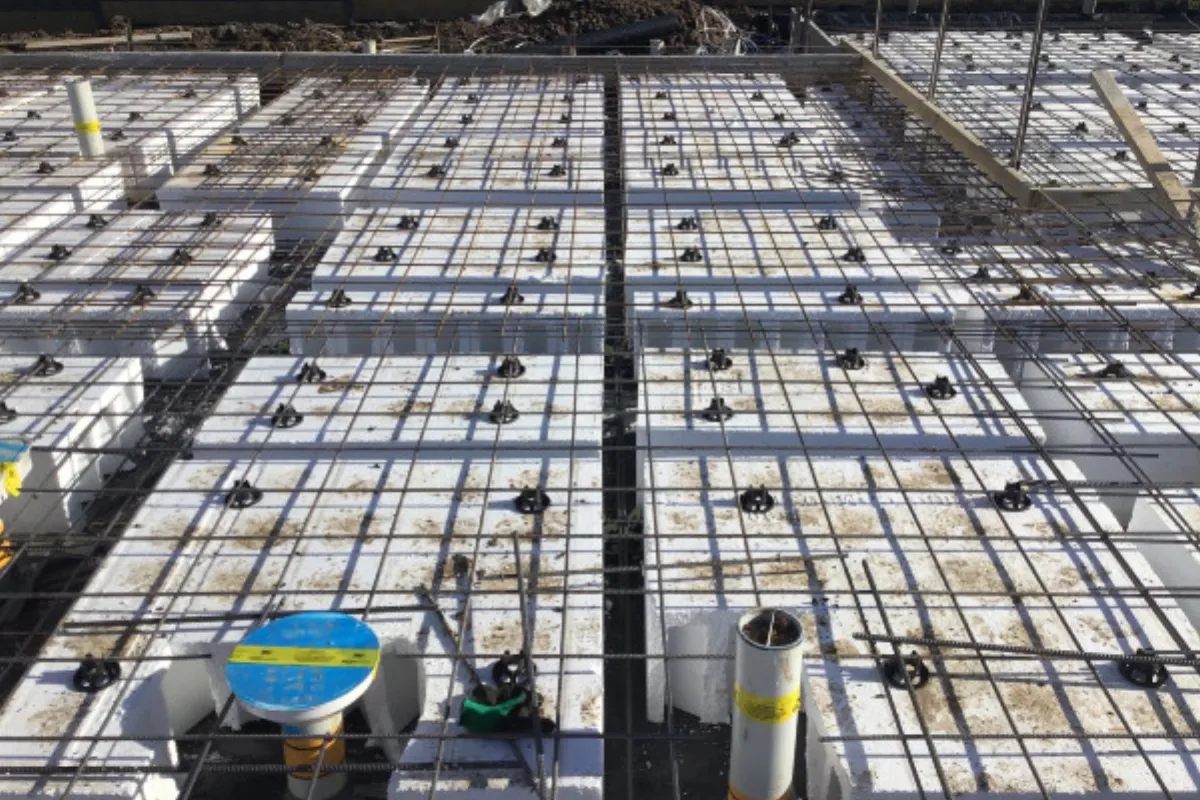
Tips for a Successful Slab Pre-Pour Inspection Process
A slab pre-pour inspection verifies foundation integrity before concrete is poured, checking reinforcement, formwork, moisture barriers, and soil compaction. This guide covers the inspection process, common challenges, and what to expect.
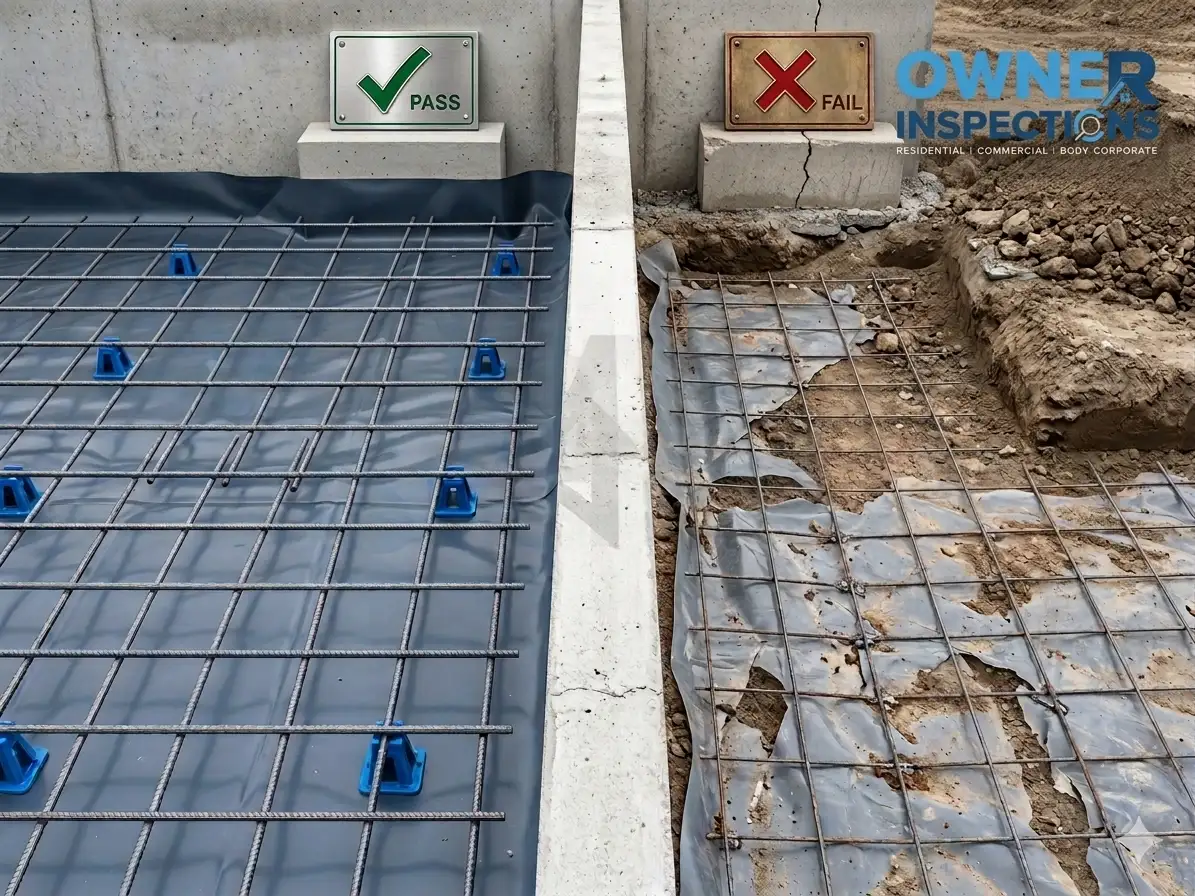
Why Steel Reinforcement Matters in Pre-Slab Inspections
Side-by-side example of correct and poor pre-slab reinforcement setup, showing how mesh support, vapour barrier condition and site preparation can affect inspection outcomes.