
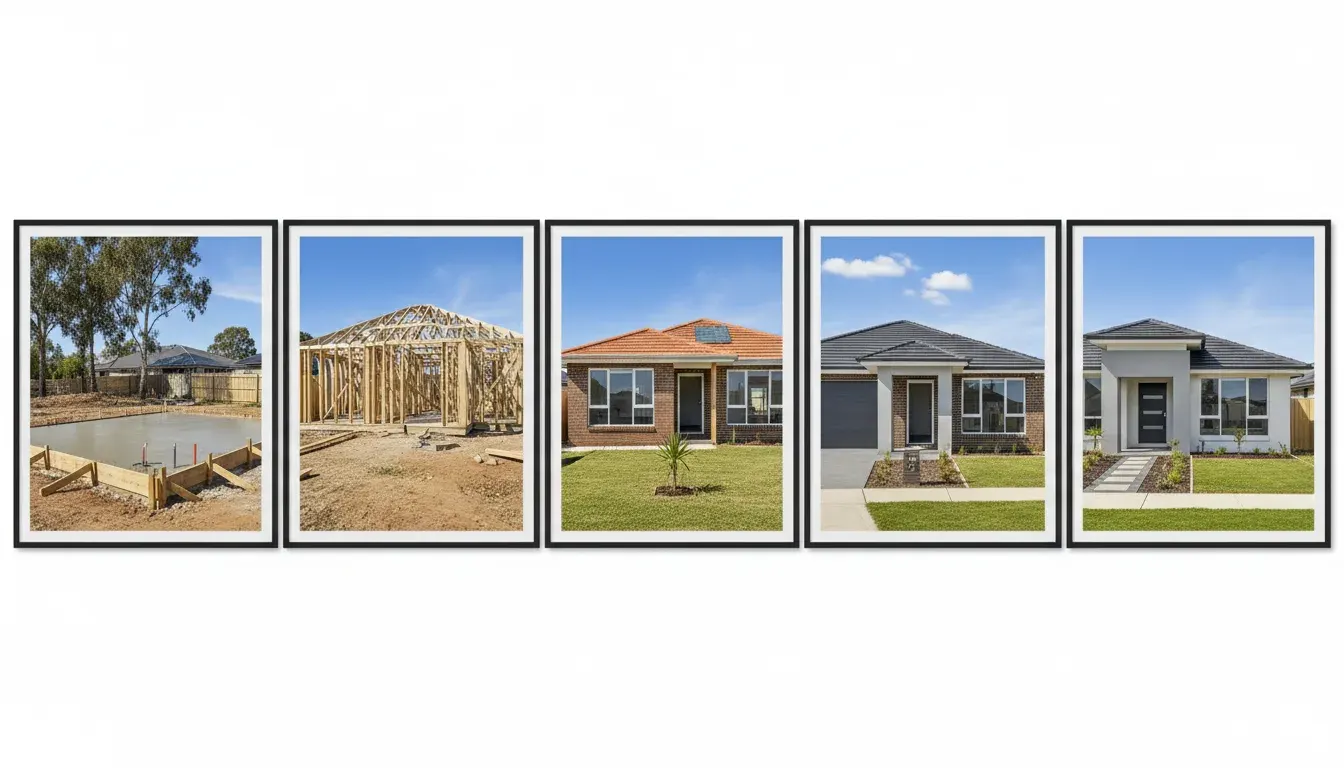
Booking your construction stage inspections at the right time is critical. Too early, and the work may not be complete enough to assess. Too late, and the next stage of construction may have already covered up the elements that need checking. Getting the timing right means understanding your builder's construction schedule, knowing how much lead time your inspector needs, and building a communication plan that keeps everyone aligned.
This guide walks through each of the five standard construction stages, explains exactly when to book the inspection for each one, and provides practical coordination tips that will help you get the most value from every inspection.
The Five Standard Construction Stages
A standard residential build in Australia follows five major construction stages. Each stage represents a milestone where significant work has been completed, and in most cases, the builder will request a progress payment before moving to the next stage. This payment request is your signal that an inspection should happen.
The five stages are:
- Slab or base stage
- Frame stage
- Lock-up stage
- Fixing or pre-plaster stage
- Pre-handover or practical completion inspection (PCI)
Each stage has a specific inspection window where the work is visible and accessible. Once the next stage begins, critical elements become concealed and are far more expensive to assess or fix.
Stage 1: Slab or Base Stage
What Is Being Inspected
The slab inspection covers the foundation of your home. This includes the formwork, reinforcement steel (rebar) placement, moisture barriers, plumbing rough-in below the slab, and the overall site preparation including drainage.
When to Book
Book the slab inspection after the reinforcement has been placed and the formwork is complete, but before the concrete is poured. Once the concrete is poured, the reinforcement and moisture barriers are permanently concealed.
If you are building on a waffle pod slab system, the inspection should occur after the pods and reinforcement are in place but before the pour. For strip footings and piers, the inspection should happen after the footing trenches are excavated and reinforced.
The slab inspection has the tightest timing window of all five stages. Your builder may schedule the concrete pour just 24 to 48 hours after the reinforcement is placed. Communicate with your builder early and book the inspection as soon as you know the approximate date for formwork completion.
Typical Timing in the Build
The slab stage usually occurs within the first 4 to 8 weeks of construction starting on site, depending on soil conditions, site preparation requirements, and weather.
Stage 2: Frame Stage
What Is Being Inspected
The frame inspection covers the structural framing of the house, including timber or steel frame members, bracing, tie-down connections, roof trusses or rafters, window and door openings, and the alignment and squareness of the structure.
When to Book
Book the frame inspection after all framing, bracing, and tie-downs are installed, but before any external cladding, internal linings, or insulation is applied. Once cladding and linings go on, the frame is hidden and cannot be properly assessed.
Your builder will typically notify you (or request a progress payment) when the frame stage is complete. This is your trigger to book the inspection. Ideally, the inspection should occur within a few days of the frame being signed off by the building surveyor or certifier.
Typical Timing in the Build
The frame stage is usually reached 8 to 14 weeks after construction begins, depending on the size and complexity of the home and whether the build uses timber or steel framing.
Stage 3: Lock-Up Stage
What Is Being Inspected
At lock-up, the building is enclosed. The roof is on, external walls are clad, and all external windows and doors are installed. The inspection also covers rough-in plumbing and electrical work, roof flashings, sarking (if applicable), and the building envelope's weathertightness.
When to Book
Book the lock-up inspection after the roof, cladding, windows, and external doors are installed and before internal lining (plasterboard) work begins. The rough-in plumbing and electrical should also be in place at this point, as these elements will be concealed once the walls are lined.
Typical Timing in the Build
Lock-up is typically reached 14 to 22 weeks into the build. This stage can vary significantly depending on the roof type, cladding material, and weather conditions during installation.
Stage 4: Fixing or Pre-Plaster Stage
What Is Being Inspected
The fixing stage covers the internal work that happens after lock-up, including plasterboard installation, wet area waterproofing, internal door frames, architraves, skirting, cabinetry, and tiling preparation. This is also when waterproofing membranes in bathrooms, laundries, and other wet areas should be inspected.
When to Book
The optimal timing for the fixing inspection depends on what exactly you want to assess. There are two key windows:
- Pre-plaster: After insulation is installed but before plasterboard goes up. This allows the inspector to check insulation placement, vapour barriers, and any concealed services
- Post-waterproofing: After waterproofing membranes are applied in wet areas but before tiling begins. This is the last chance to verify that waterproofing meets AS 3740 before it is permanently covered
If your budget allows only one inspection at this stage, prioritise the waterproofing check. Waterproofing failures are among the most common and expensive defects in Australian residential construction.
Some inspection providers offer a combined fixing and waterproofing inspection that covers both windows. Ask your inspector whether this is available and how the timing would work with your builder's schedule.
Typical Timing in the Build
The fixing stage generally occurs 20 to 30 weeks into the build, though this varies depending on the size of the home and the number of wet areas.
Stage 5: Pre-Handover or Practical Completion
What Is Being Inspected
The pre-handover inspection (also called the practical completion inspection or PCI) is a comprehensive assessment of the finished home. It covers all internal and external finishes, fixtures, fittings, paint, tiling, cabinetry, doors, windows, landscaping, driveway, and overall compliance with the approved plans and building contract.
When to Book
Book the pre-handover inspection after the builder notifies you that the home is complete and before you sign off on practical completion or make the final progress payment. This is your last opportunity to have defects recorded and rectified before the builder considers the project finished.
Do not rush this inspection. Make sure the builder has genuinely finished all work, including any external items such as landscaping, driveway, fencing, and letterbox installation. If you inspect too early while work is still in progress, you will miss defects and may need to pay for a second inspection.
Typical Timing in the Build
Pre-handover typically occurs 30 to 50 weeks into the build, depending on the overall project timeline. Volume builders often work to a 6 to 9 month construction period for a standard home, while custom builders may take 9 to 14 months or more.
Typical Build Timeline and Inspection Windows
The following table summarises the typical timing for each inspection across a standard residential build.
| Typical Week | Inspection Window | |
|---|---|---|
| Slab / Base Stage | Weeks 4 to 8 | After rebar is placed, before concrete pour (24 to 72 hours) |
| Frame Stage | Weeks 8 to 14 | After framing complete, before cladding or linings (3 to 7 days) |
| Lock-Up Stage | Weeks 14 to 22 | After roof, cladding, windows installed, before plasterboard (5 to 10 days) |
| Fixing Stage | Weeks 20 to 30 | After waterproofing applied, before tiling (2 to 5 days) |
| Pre-Handover | Weeks 30 to 50 | After all work complete, before final payment and settlement |
How Much Lead Time Do You Need?
Most inspection companies can schedule an inspection within 2 to 5 business days of your booking. However, during busy construction periods (particularly spring and summer in Sydney and Melbourne), lead times may extend to 5 to 10 business days.
To avoid delays:
Coordinating With Your Builder
Good communication with your builder is the key to getting inspections done at the right time. Here are practical tips for making the coordination work smoothly.
- Inform your builder at the start of the project that you will be engaging an independent inspector at each stage. This sets expectations and avoids surprises
- Ask the builder to notify you at least 3 to 5 business days before they expect to complete each stage. This gives you enough time to schedule the inspection
- Request that the builder does not proceed to the next stage until your independent inspection is complete and any identified defects are addressed
- Tie your progress payments to the satisfactory completion of each stage, including the independent inspection. Most building contracts already include provisions for this
- Keep all communication in writing (email) to create a documented trail
Most reputable builders are supportive of independent inspections. They understand that an inspection report provides clarity for both parties and helps prevent disputes later in the project.
What to Do If the Builder Moves Faster Than Expected
Sometimes a builder completes a stage faster than anticipated, leaving you with very little time to book an inspection. If this happens:
- Contact your inspection provider immediately and explain the urgency. Many providers offer priority or next-day bookings for time-sensitive stages, particularly the slab inspection
- Ask the builder to hold off on the next stage for 24 to 48 hours to allow the inspection to occur. Frame this as a benefit to both parties, since it protects the builder from defect claims later
- If the builder proceeds before the inspection can happen, document this in writing. You may still be able to have a partial inspection at the next stage, though some elements will be concealed
If your builder consistently moves to the next stage before allowing you time for an independent inspection, raise this in writing. In all Australian states, homeowners have the right to engage independent inspectors. A builder who deliberately prevents inspection access is a serious concern.
Key Takeaways
- Each of the five construction stages has a specific window during which the inspection must occur before the work is covered by the next stage.
- The slab inspection has the tightest window, often just 24 to 72 hours between reinforcement placement and the concrete pour.
- Frame, lock-up, and fixing stages generally offer 3 to 10 days of inspection window, depending on the builder's schedule.
- The pre-handover inspection should only be booked after the builder has genuinely completed all work, including external items.
- Book your inspection provider at the start of the project and ask for at least one week's notice before each stage.
- Communicate with your builder early and in writing about your intention to have independent inspections at every stage.
- Tie progress payments to the satisfactory completion of each stage, including the resolution of any defects found in the inspection.
- During peak construction periods, inspector lead times may extend. Plan ahead to avoid missing your inspection window.
Frequently Asked Questions
How far in advance should I book my stage inspections?
Ideally, engage your inspection provider at the beginning of the project so they are ready to schedule each stage as it arises. For individual stages, try to give at least one week's notice. For the slab inspection, which has the tightest timing window, give as much advance notice as possible. During busy periods, inspection lead times can extend to 5 to 10 business days, so early planning is important.
What if the builder pours the slab before I can get an inspection?
If the concrete is poured before the slab inspection can occur, the reinforcement and moisture barriers are permanently concealed and cannot be fully assessed. In this situation, you should document in writing that the inspection was not possible due to timing. You can still have the slab surface inspected for visible issues such as surface cracking, level accuracy, and edge finishing, but the most critical elements will be hidden. This underscores the importance of early communication with your builder and inspector about the slab pour date.
Can I have the same inspector for all five stages?
Yes, and this is recommended. Having the same inspector (or inspection team) follow your build from slab to handover provides continuity. The inspector becomes familiar with your project, can track whether earlier defects were properly rectified, and builds a comprehensive understanding of the construction quality over the life of the build. Most inspection companies offer stage packages that assign the same inspector to all five stages.
How long does each stage inspection take?
A typical stage inspection on a standard residential build takes between 1.5 and 3 hours on site. Slab and pre-handover inspections tend to take longer due to the level of detail involved. Frame and lock-up inspections are usually around 2 hours. The written report is normally delivered within 24 to 48 hours of the site visit.
Should I attend the inspection myself?
You are welcome to attend, but it is not required. If you do attend, the inspector can walk you through their findings on site and point out any areas of concern. If you cannot attend, the detailed report and photographs will give you a clear picture of the inspection results. Some inspectors also offer a follow-up phone call to discuss the report after delivery.
How Much Lead Time Do You Need?
Most inspection companies can schedule an inspection within 2 to 5 business days of your booking. However, during busy construction periods (particularly spring and summer in Sydney and Melbourne), lead times may extend to 5 to 10 business days.
For a complete overview, see our guide to construction stage inspections.
Need Construction Stage Inspections?
Our licensed inspectors cover Sydney, Melbourne, and all major Australian cities.