
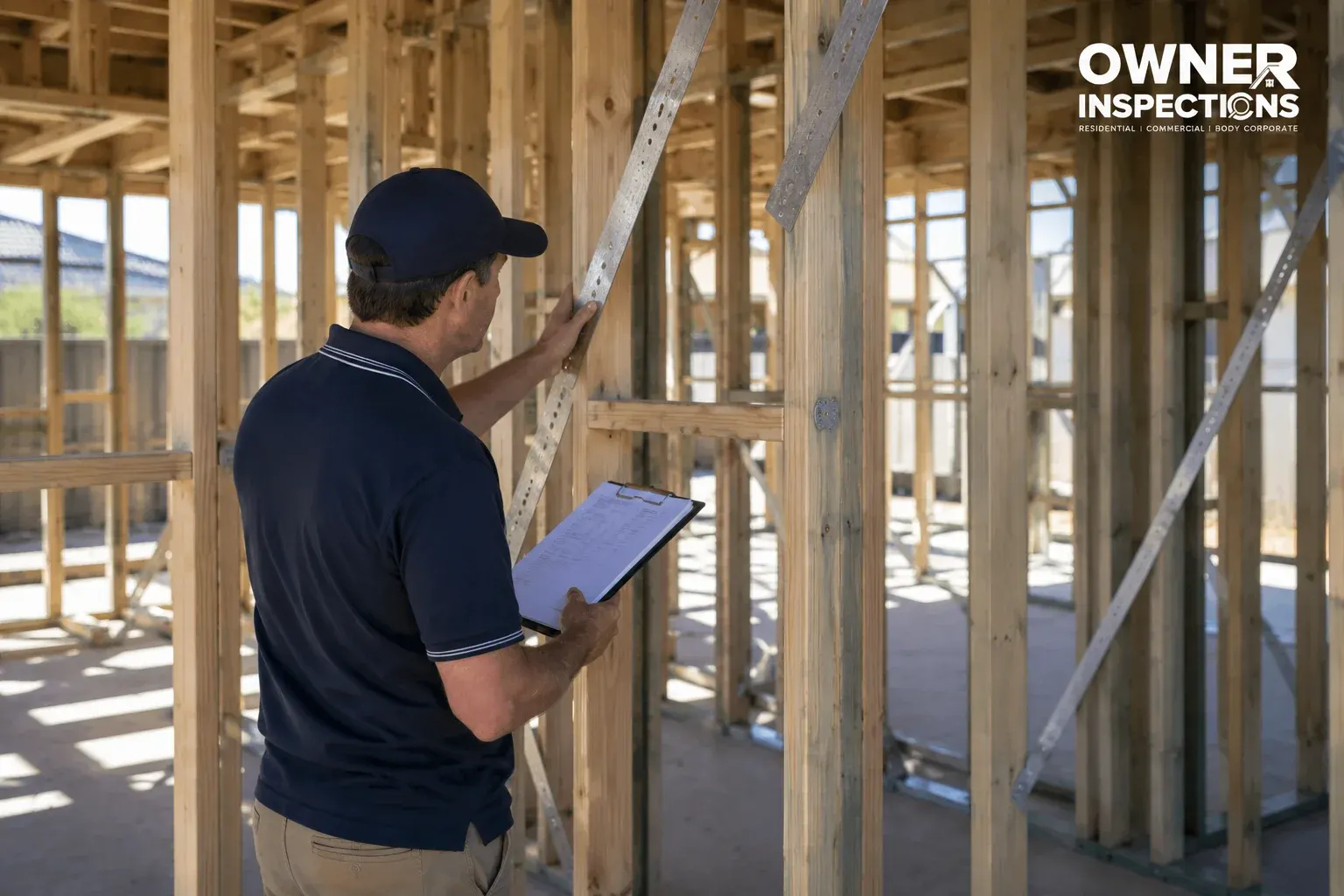
This guide is for homeowners building a new home, including first home buyers, busy professionals, risk aware families, investors, and interstate owners who can’t get to site often. It’s written to help you make a calm decision, avoid unnecessary conflict, and spend your inspection budget where it actually changes outcomes.
In Australia, the National Construction Code (NCC) sets the minimum technical baseline for building work, and it has legal effect through state and territory legislation. A certifier (or building surveyor, depending on your state) carries out mandatory inspections as part of the approvals and compliance process, but owners can still choose an independent inspector for owner focused quality checks, workmanship review, and strong defect documentation.
Need independent evidence of building defects?
Get a clear defect investigation report with photos, findings, and practical recommendations before the issue becomes harder to prove.
Investigation Report
Worth it when…
You are likely to get strong value from an independent inspector if one or more of these fit:
- It’s your first build and you don’t know what “normal” looks like at each stage.
- You can’t attend site often (FIFO, interstate, long hours, young kids).
- Your build has complexity: split levels, lots of wet areas, parapets, balconies, custom windows, tight blocks, or tricky drainage.
- The schedule is fast and you feel rushed to sign off.
- You want clear photo evidence and a prioritised defects list to manage handover calmly.
- You’ve already had variation stress and want a cleaner paper trail from here.
Might be an added cost when…
It can feel like paying twice if you already have strong oversight and can act early:
- You have deep building experience or a trusted independent project manager doing staged quality checks.
- You visit site frequently, take photos, and understand what you’re looking at.
- Your builder is unusually transparent: detailed checklists, open site access, and documented QA that you can verify.
- Your budget is tight and you would have to cut more valuable risk controls (like better waterproofing specs in writing).
What a Certifier Does vs What a Private Inspector Does
A lot of confusion comes from assuming “someone is already inspecting, so we’re covered.” The roles overlap in timing, but the purpose is different.
Certifier’s role
In NSW, for example, the principal certifier carries out mandatory inspections during construction and can issue written directions to comply when non compliance is found. The certifier’s job sits inside the approvals framework and ties into certificates needed to occupy the home.
Across Australia, inspection regimes vary. The ABCB’s model guidance on mandatory inspections is about setting minimum regulated inspection points and principles for jurisdictions, not a full room by room workmanship audit.
Why “mandatory inspections” are not the same as owner focused QA
Mandatory inspections are about minimum checkpoints for compliance, based on a regulated system. They are not designed to be a detailed finish quality review, and they are not a replacement for an owner’s contract based defect process.
Also, compliance and craftsmanship are not the same thing. You can have work that meets the minimum code yet still leaves you with avoidable defects, poor finishing, or incomplete items that become hard to argue once covered up.
What a private inspector typically focuses on
An independent inspector engaged by the owner usually focuses on:
- Workmanship and completeness (what’s missing, loose, damaged, misaligned, or unfinished).
- Before concealment checks (so you can raise issues while they’re still visible).
- Photo evidence and location references (room, wall, window label, gridline, elevation).
- A practical defects list that you can hand to the builder in plain English.
- Severity ranking, so you don’t treat a cosmetic mark the same as a safety risk.
Certifier vs Private Inspector
| Role | Engaged by | Primary purpose | Typical inspection focus | Can enforce? | Typical outputs |
|---|---|---|---|---|---|
| Certifier / principal certifier | Owner appoints, or builder manages appointment in some builds (check your contract) | Compliance within the approvals system and issuing relevant certificates | Mandatory inspections at required stages, compliance evidence, directions to comply | Yes, within regulatory powers, for example written directions to comply in NSW | Inspection records, compliance requests, certification-related documentation |
| Private / independent building inspector | Owner | Owner-focused quality and defect documentation | Workmanship, completeness, practical defect list, photo evidence, contract and inclusions cross-check | No, they document and advise | Independent report, prioritised defects list, photos, re-inspection notes |
Where Private Inspections Add the Most Value
The best return comes from timing. Once work is covered, your options narrow and disputes get harder.
Before work is covered up
These stages often change outcomes because they are your last clear view:
- Frame stage: bracing, tie downs, straightness, over notching, window openings, penetrations, and basic structural detailing.
- Waterproofing: membrane coverage, puddle flanges, bond breakers, falls, and penetrations before tiles hide everything.
- Pre plaster: services, insulation, sarking, wet area detailing, penetrations, and obvious frame movement.
What late vs early looks like in real life:
- If a waterproofing detail is wrong before tiling, it can be corrected in hours. If found after handover when water damage appears, you’re looking at disruption, tile removal, drying time, arguments about cause, and longer timeframes.
- If frame issues are found before linings, fixes are often straightforward. If found after plaster, the builder may need to cut, patch, repaint, and you may never get full visibility again.
Practical completion / pre handover: best leverage point
Practical completion is usually when you have the most leverage to document defects while the build is being finished, before you sign off and handover moves forward.
QBCC describes practical completion as when works are essentially finished and can be used for their intended purpose. Even outside Queensland, this “essentially finished and usable” idea is a helpful way to think about the handover point.
A strong practical completion inspection (PCI) report usually includes:
- A structured defects list by room and trade.
- Photos that clearly show the issue and its location.
- A priority rating so safety and functional problems get handled ahead of minor cosmetics.
- A clear re check plan.
Stage Inspection ROI Matrix
| Stage | What gets covered next | Common risk areas | Why it matters | Best for |
|---|---|---|---|---|
| Slab pre-pour | Concrete pour and reinforcement become permanent | Set out, edge beams, penetrations, vapour barrier, reinforcement placement | Very hard to verify after the pour | Owners who can’t attend site and want an early baseline |
| Frame stage | Linings, wrap, and services | Bracing, tie-downs, straightness, openings, obvious defects | Last clear view of the structure before it disappears | First builds, complex designs |
| Waterproofing | Tiles and finishes | Membrane detail, penetrations, puddle flanges, falls, junctions | Fixing later is disruptive | Homes with multiple wet areas or balconies |
| Pre-plaster | Plaster, cornices, internal finishes | Insulation, service penetrations, wet area prep, obvious gaps | Catches issues before walls close | Interstate owners, fast builds |
| Lock-up / fixing (optional) | Cabinets, doors, trim, paint | Window installation detail, door operation, cabinetry alignment | Functional issues show up here | Owners who want fewer surprises at handover |
| Practical completion / pre-handover (PCI) | Handover and occupation | Missing items, damage, incomplete work, functional defects, finish quality | Best leverage point for a defects list before sign-off | Almost everyone, especially if you only do one inspection |
What Acceptable Workmanship Means
A lot of handover stress comes from one sentence: “That’s within tolerance.” The trick is knowing what tolerance is being used and what your contract says.
Using Guides to Standards and Tolerances as a reference point
In NSW, the NSW Guide to Standards and Tolerances 2017 is published as a general reference to help homeowners understand acceptable standards, and it’s not framed as strict rules. Used well, it reduces arguments because it gives both sides a shared language.
Private inspection reports often reference common tolerance guidance to explain why something is a concern in plain language, without turning your handover into a legal fight.
The NCC is a minimum technical baseline
The NCC sets minimum technical requirements for safety, health, amenity, accessibility and sustainability. It also has legal effect through references in state and territory legislation.
What this means for owners is simple: code compliance is not the same as perfect finishes. You still need clear expectations in your contract, inclusions, and variations, plus good documentation at the right times.
Preparing for a building dispute or tribunal matter?
Owner Inspections can provide expert witness reports to help document technical building defects clearly and professionally.
Witness Reports
Costs vs Risk: Choosing the Minimum Effective Inspection Plan
Prices vary by home size, location, and access, so rather than quoting numbers, this section helps you spend your budget where it changes outcomes.
If you do one inspection
Best single choice for most owners: Pre handover / practical completion (PCI). You get a structured defects list while the builder is still finalising the job and before you sign off. Trade off: you may miss issues already covered up, which limits what can be proven visually.
If you do two inspections
Add one “before concealment” stage to your PCI. Most owners pick one of these:
- Waterproofing inspection (high impact, hard to verify later), or
- Frame stage (structure visibility), or
- Pre plaster (broad coverage of what’s about to disappear).
If you do 4–5 staged inspections
A common “ideal sequencing” looks like:
- Slab pre pour (or early stage) 2.Frame stage
- Waterproofing
- Pre plaster
- Practical completion / pre handover (PCI)
This plan is popular with interstate owners, busy households, and anyone who wants fewer surprises at the end.
Minimum Effective Package Options
| Package | Stages included | Best for | Trade-offs | Estimated time required from owner |
|---|---|---|---|---|
| 1 visit | PCI / pre-handover | Tight budgets, most owners | Less visibility into covered work | 15–30 minutes to share plans and inclusions; 30–60 minutes to review report |
| 2 visits | One before concealment + PCI | Owners who want real risk reduction | Still may miss early slab items | 30–60 minutes across the build for coordination and review |
| 4–5 visits | Slab, frame, waterproofing, pre-plaster, PCI | Interstate owners, complex builds, risk-aware families | Higher spend | 60–120 minutes total across the build for booking, access, review, and defect tracking |
Examples of Issues That are Easier to Fix Early
These examples are anonymised and described in the way owners usually see them in reports.
-
Waterproofing stage: missing bond breaker at a wall-to-floor junction, or a penetration detail that isn’t properly sealed. Before tiling, it’s a straightforward rework. After tiling, it can mean tile removal, delays, and arguments about damage.
-
Frame stage: wall bracing not installed as shown in documentation, or studs over notched where services run through. Before plaster, a builder can correct and document the fix. After plaster, you’re left with limited visibility and patch repairs.
-
Pre plaster stage: gaps around penetrations that need sealing, insulation missing or compressed, wet area prep that looks incomplete. Once linings go on, the owner loses the ability to see it.
-
Pre handover / PCI: doors rubbing, windows not operating smoothly, missing sealant, paint and trim damage, drainage falls that don’t look right, loose fittings, and incomplete finishes. These are the items that often cause handover friction because they’re obvious, but easy to miss when you’re exhausted and eager to move in.
How to Prepare for a Practical Completion Inspection
This is the part that makes the inspection useful. A good report is only helpful if it’s easy to action.
Step by step checklist:
- Gather your contract, inclusions, variations, and any updated plans.
- Make a simple list of “must have” items you paid extra for (appliances, niche upgrades, lighting, tapware).
- Confirm site access and safety requirements (PPE, induction rules, timing).
- Ask your inspector how defects will be labelled (room by room, elevation, photo numbering).
- Plan how you’ll send the defects list to the builder (email trail, spreadsheet, portal), and how you’ll track rectification.
- Book a re inspection if your contract and timeline allow it.
How to Respond When a Builder or CRO Says “It May Not Add Value”
The goal is to keep things neutral. You’re not accusing anyone. You’re putting a process in place.
Neutral scripts you can copy
Script 1: process-focused “We understand the certifier does the mandatory inspections. We’re booking an independent inspection for our own records so we have a clear defects list at practical completion.”
Script 2: time focused “We can’t get to site often, so this helps us keep decisions timely and reduce surprises at handover.”
Script 3: before concealment “We’d like a check before work is covered, so if anything needs attention it can be raised while it’s still visible.”
Script 4: relationship-friendly “This isn’t about blame. It’s to keep the handover smoother with a single written list we can work through.”
Script 5: documentation-focused “We’re aiming for clear photos and locations so your team isn’t guessing what we mean.”
If Defects Appear After Handover
This section is general information only, not legal advice. Time limits and definitions can depend on your contract, your build type, and how the law applies to your situation.
NSW time limits
Building Commission NSW explains statutory warranty time limits as:
- Major defects: 6 years from completion
- Other defects: 2 years from completion
- If a breach is discovered in the last 6 months of the warranty period, there is an extra 6 months after the end of the period to commence proceedings.
VIC implied warranties up to 10 years
Consumer Affairs Victoria states implied warranties apply to building work and action may be brought for up to 10 years from when the work was completed, with the right able to transfer to a new owner if sold within that period.
QLD Home Warranty Scheme time limits for cover and claims
QBCC sets strict time limits for cover and claims under the Queensland Home Warranty Scheme. For example, QBCC explains timeframes for non structural defects based on when you become aware and when you lodge the claim.
If you think you have a serious issue after handover, it’s worth getting independent documentation quickly, because timeframes can be tight and evidence is easier to capture early.
Checklist: Choosing a Good Private Inspector
You want someone who can spot issues and write them in a way that gets fixed, not ignored.
Credentials and insurance
Look for:
- Relevant building inspection experience, with new build stage inspections in their regular work
- Professional indemnity insurance and public liability
- Clear scope wording (what’s included and excluded)
Sample report quality
Ask for a sample report and check:
- Photos are clear and labelled
- Each issue has a location reference
- Severity is prioritised (safety, compliance, functional, cosmetic)
- Suggested next steps are practical and calm
- Language is plain, not legal heavy
Scope and limitations
Be clear about:
- What cannot be verified visually without invasive testing
- Access constraints (locked areas, unsafe zones, timing)
- Whether the inspector offers re inspections and how they document rectification
Why Homeowners Choose Owner Inspections
A private inspector is most useful when the report is clear, practical, and easy for the builder to action. Owner Inspections helps homeowners get independent eyes on the build at the stages where defects are easiest to identify, document, and rectify.
Whether you are building your first home, managing the process interstate, or preparing for practical completion, the goal is not to create conflict with your builder. It is to give everyone a clear written record of what has been checked, what needs attention, and what should be followed up before handover.
Owner Inspections can assist with:
- New construction stage inspections during key build stages
- Pre-handover inspections before practical completion sign-off
- Defect investigation reports for more complex or recurring issues
- Reinspections after the builder has completed rectification work
A good inspection gives you more than a list of defects. It gives you photo evidence, room-by-room clarity, practical recommendations, and a calmer way to manage the final stages of your build.
Unsure how to document your defect properly?
Speak with the Owner Inspections team about the right inspection, report, or next step for your property issue.
Frequently Asked Questions
Do I need a private inspector if the certifier already inspects?
What are “mandatory inspections” designed to do?
What is practical completion?
If I can only afford one inspection, which stage is best?
Which stages usually deliver the best ROI?
Will a private inspector “force” the builder to fix things?
How do I respond to “it won’t add value” without conflict?
What does the NCC cover, and what doesn’t it cover?
What is “acceptable workmanship” if my contract is vague?
What if defects show up after handover in NSW?
Related Articles

Building Inspector Sydney: Cost, Checklist and Buyer Tips
Need a trusted building inspector Sydney buyers can rely on? This guide explains inspection costs, what a standard checklist includes, building vs pest inspection differences, report limitations and practical tips to help Sydney buyers spot visible defects before committing to a property.

Can a Builder Refuse Private Inspectors During Construction? Your Rights by State
When a builder or developer refuses to allow your private inspector on site during construction stages, you have legal rights that vary by state. This guide explains the legislation protecting homeowners in NSW, VIC, QLD, SA, and ACT, plus practical strategies when builders push back.
Do You Need a Private Inspector for a Maintenance Request?
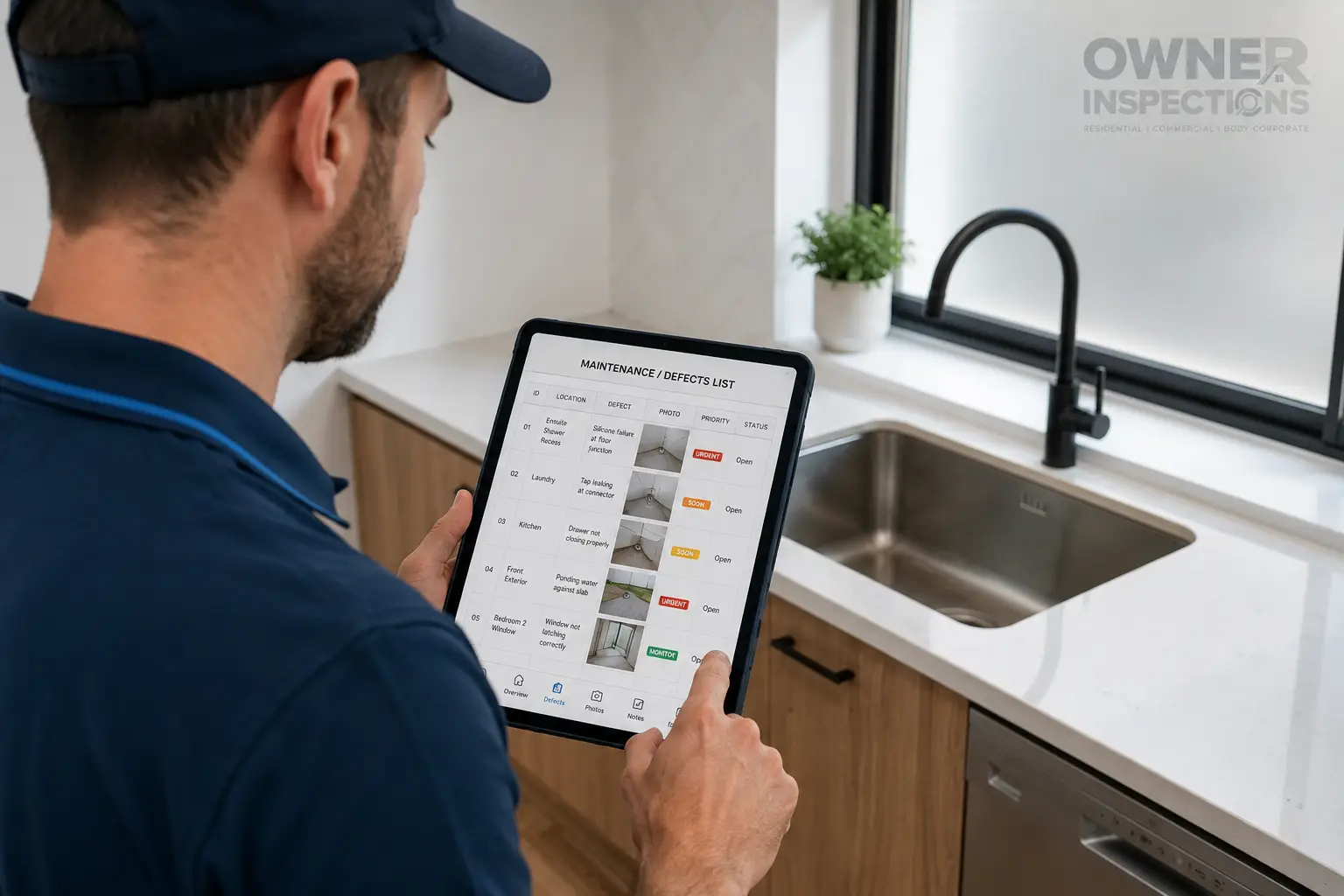
Learn when a private inspector maintenance request inspection is worth it, what defects to document, and how to create a clear builder-ready list before your maintenance window ends.