
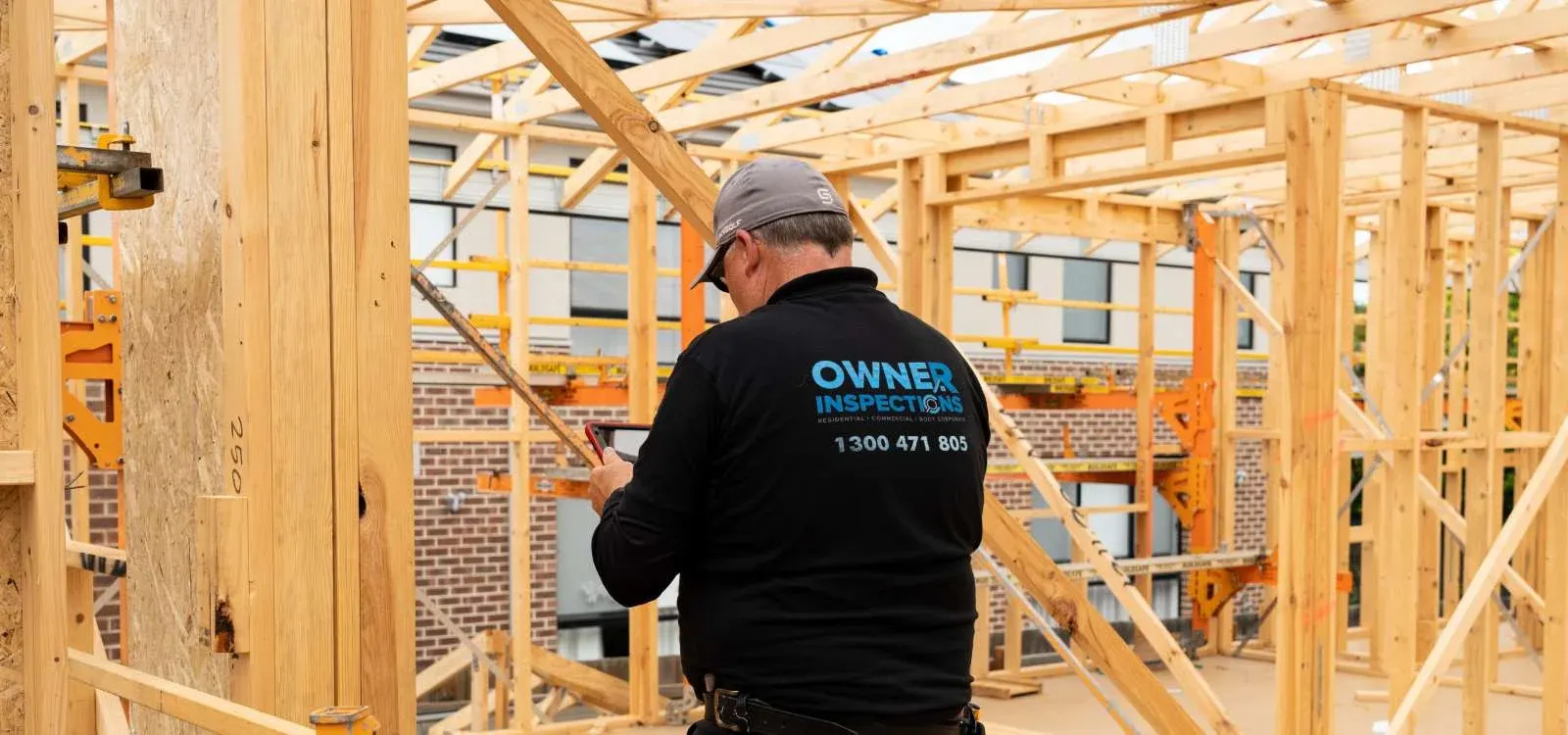
The frame of a building encompasses all the structural timber or steel members that form the skeleton of the structure. This includes wall frames, floor joists, roof trusses, bearers, and all the connections that hold these elements together. When any component of this system fails or underperforms, the effects can cascade throughout the entire building.
Understanding common frame defects, their causes, and appropriate remediation strategies empowers property owners to protect their investments. Early identification and professional assessment of framing issues can prevent minor problems from developing into major structural failures requiring extensive and costly repairs. For a complete overview, see our guide to building defect investigations.
The cost of identifying a framing defect early is minimal compared to the expense of repairing damage that has been allowed to progress unchecked. Prevention through regular inspection and prompt remediation is always more economical than extensive structural repairs.
Types of Frame Defects
Frame defects can manifest in numerous ways, each with distinct causes and implications for building safety. Understanding these different types helps property owners recognise warning signs and appreciate the importance of professional assessment.
Foundation Issues
While foundations are not technically part of the frame, foundation problems directly affect framing integrity by causing movement and stress throughout the structure. Foundation issues are among the most serious defects because they impact every element above them.
Common signs of foundation issues include:
- Cracks in foundations and walls: Visible cracking in concrete foundations, slab floors, or masonry walls indicating movement or settlement
- Uneven floors: Floor surfaces that slope noticeably or have areas that feel bouncy or unstable underfoot
- Sticky doors or windows: Doors and windows that suddenly become difficult to open or close, or that no longer fit properly in their frames
Causes of foundation problems include soil settling over time, poor soil quality at the building site, inadequate drainage allowing water to affect the foundation, and reactive soils that expand and contract with moisture changes. Australian properties are particularly susceptible to foundation movement due to the prevalence of reactive clay soils across much of the country.
Weak Framing
Weak framing occurs when structural members are inadequate for the loads they must support. This can result from poor original construction, subsequent modifications, or deterioration over time. Weak framing is particularly dangerous because it may not be immediately apparent until significant damage has occurred.
Indicators of weak framing include:
- Sagging walls or ceilings: Visible drooping or bowing in walls or ceiling surfaces indicating inadequate support
- Gaps around openings: Spaces appearing around door and window frames where the framing has deflected or moved
- Creaking floors: Floors that creak, groan, or feel springy when walked upon, suggesting inadequate joist sizing or support
Sources of weak framing problems include:
- Low-grade timber: Use of timber that does not meet required structural grades or specifications
- Improper spacing: Studs, joists, or rafters spaced too far apart for the loads they must carry
- Construction shortcuts: Omission of required bracing, blocking, or connection hardware
- Overloading: Addition of loads the original frame was not designed to support, such as heavy roof-mounted equipment or additional storeys
Inadequate Sheathing
Sheathing materials provide a protective layer over the structural frame, adding rigidity and protecting framing members from the elements. When sheathing is inadequate or compromised, it can allow moisture intrusion that leads to serious framing damage.
Symptoms of sheathing problems include:
- Warped panels: Sheathing that has buckled, bowed, or delaminated due to moisture exposure
- Peeling paint: Paint that bubbles or peels from exterior surfaces, often indicating moisture trapped behind the finish
- Mould growth: Visible mould on interior or exterior surfaces suggesting moisture penetration
- Water damage: Staining, discolouration, or soft spots in wall or ceiling linings
Compromised sheathing allows water intrusion into wall cavities and roof spaces. This moisture can cause wood rot in framing members, promote mould growth affecting indoor air quality, and lead to progressive structural damage if not addressed promptly.
Rot and Insect Damage
Timber framing is susceptible to both rot caused by fungal decay and damage from wood-destroying insects. These problems often develop together, as moisture conditions that promote rot also attract many pest species.
Rot typically occurs when timber is exposed to persistent moisture without adequate ventilation. Common locations include:
- Subfloor framing in poorly ventilated areas
- Wall framing around bathroom and laundry areas
- Roof framing where leaks have occurred
- External framing at ground contact points
Insect damage in Australian buildings is most commonly caused by termites, though borers and other wood-destroying insects can also affect framing. Termite damage can be particularly destructive because it often occurs hidden within timbers, leaving the external surface intact while hollowing out the structural core.
Faulty Connections and Insufficient Bracing
Structural connections and bracing systems are critical for transferring loads through the frame and resisting lateral forces from wind and seismic activity. Deficiencies in these systems can compromise the entire structure's ability to withstand environmental loads.
Connection problems include:
- Missing or inadequate tie-down hardware at wall-to-floor and roof-to-wall junctions
- Insufficient nailing or fastening at framing connections
- Corroded or deteriorated metal connectors
- Connections that have loosened or pulled apart over time
Bracing deficiencies include:
- Missing diagonal bracing in wall frames
- Inadequate bracing for wind loads in the relevant wind region
- Bracing elements that have been removed or damaged during renovations
- Insufficient blocking and bridging between floor joists
These deficiencies reduce the building's resistance to wind and earthquake forces, potentially leading to structural failure during extreme weather events or seismic activity.
Frame Defect Classification
Understanding the severity of different frame defects helps property owners prioritise remediation efforts and allocate resources appropriately.
| Defect Type | Severity Level | Typical Indicators | Recommended Action |
|---|---|---|---|
| Minor settling cracks | Minor | Hairline cracks in plaster, slight gaps at corners | Monitor annually, cosmetic repair if desired |
| Moderate floor deflection | Moderate | Noticeable bounce, creaking, slopes up to 10mm over 3m | Professional assessment, joist reinforcement or support |
| Sheathing deterioration | Moderate to Significant | Warped panels, water staining, soft spots | Identify moisture source, replace affected materials |
| Localised timber rot | Moderate to Significant | Soft or spongy timber, discolouration, fungal growth | Remove moisture source, replace damaged timber |
| Termite damage | Significant to Critical | Hollow-sounding timber, mud tubes, visible damage | Immediate pest treatment, structural assessment |
| Foundation movement | Significant to Critical | Multiple crack patterns, severe floor slopes, binding doors | Engineering assessment, underpinning or restumping |
| Inadequate bracing | Significant | Wall racking, excessive movement in wind, loose connections | Install additional bracing, upgrade connections |
| Structural member failure | Critical | Broken or severely cracked framing, visible collapse | Immediate shoring, evacuation if necessary, major repairs |
Solutions and Repairs
Addressing frame defects requires appropriate diagnosis followed by targeted repairs. The specific remediation approach depends on the type and severity of the defect, the building's construction type, and the root cause of the problem.
Professional Assessment
Before undertaking any repairs, professional assessment is essential. Structural engineers and experienced building inspectors can diagnose root causes of framing problems and recommend appropriate repairs that address the underlying issues rather than just the visible symptoms.
Professional assessment provides:
- Accurate diagnosis of defect causes
- Assessment of defect severity and safety implications
- Recommendations for appropriate repair methods
- Specifications for materials and workmanship
- Guidance on whether permits or engineering certification is required
Attempting repairs without proper diagnosis often results in wasted money on ineffective solutions or, worse, repairs that mask ongoing problems while damage continues to accumulate.
Foundation Repair Methods
Foundation repairs address the underlying support issues that cause frame movement and stress. Common foundation repair methods include:
- Hydraulic jacking: Lifting settled sections of the building back to level using hydraulic equipment
- Concrete or steel piers: Installing deep piers to transfer building loads to stable soil below the reactive zone
- Underpinning: Extending existing foundations to greater depth or width to improve support
- Restumping: Replacing deteriorated or settled stumps with new concrete or steel stumps at correct levels
Foundation repairs typically require engineering design and certification, particularly for significant underpinning works. Building permits are usually required for foundation modifications.
Weak Framing Repairs
Weak framing can be strengthened through various methods depending on the specific deficiency:
- Additional bracing: Installing diagonal bracing, metal strapping, or structural ply bracing to improve lateral resistance
- Sistering timber: Attaching new timber members alongside existing inadequate members to increase load capacity
- Section replacement: Removing and replacing framing sections that are too deteriorated or undersized to reinforce
- Additional supports: Installing new posts, bearers, or supports to reduce spans and deflection
Sheathing Repairs
Sheathing repairs address both the damaged material and the moisture source:
- Replacement: Removing and replacing damaged sheathing panels with appropriate new materials
- Improved flashing: Installing or upgrading flashings at vulnerable junctions to prevent water entry
- Sealing: Applying appropriate sealants and weatherproofing to prevent moisture penetration
- Ventilation improvements: Ensuring adequate ventilation in wall cavities and roof spaces to allow moisture escape
Rot and Infestation Repairs
Addressing rot and insect damage requires both eliminating the cause and repairing the damage:
- Professional pest control: Engaging licensed pest controllers to eliminate active infestations and implement preventive treatments
- Damaged wood replacement: Cutting out and replacing all affected timber with appropriate treated or naturally durable species
- Moisture management: Addressing drainage, ventilation, and waterproofing issues that created conditions for rot or attracted pests
- Preventive treatments: Applying preservative treatments to remaining timber and installing physical or chemical termite barriers
Prevention Strategies
Preventing frame defects is far more cost-effective than repairing them. Implementing appropriate prevention strategies during construction and throughout the building's life minimises the risk of serious framing problems.
Material Selection
Appropriate material selection is the first line of defence against frame defects:
- Pressure-treated timber: Use preservative-treated timber for all framing exposed to moisture or ground contact
- Appropriate sheathing: Select sheathing materials suitable for the local climate and exposure conditions
- Correct structural grades: Ensure all structural timber meets required stress grades for its intended purpose
- Durable species: Consider naturally durable timber species for exposed applications
Quality Construction
Quality construction practices prevent many frame defects:
- Reputable builders: Engage licensed builders with proven track records and appropriate insurance
- Building code compliance: Ensure all work complies with the National Construction Code and relevant Australian Standards
- Proper inspections: Conduct stage inspections during construction to verify compliance before work is covered up
- Quality hardware: Use appropriate connectors, fasteners, and hardware specified for the application
Ongoing Maintenance
Regular maintenance prevents minor issues from becoming major defects:
- Regular inspections: Conduct annual visual inspections and professional inspections every 3 to 5 years
- Prompt water repairs: Address any water leaks, drainage issues, or moisture problems immediately
- Pest management: Maintain termite barriers and conduct regular pest inspections, particularly in high-risk areas
- Ventilation maintenance: Keep subfloor and roof ventilation clear and functioning
Frequently Asked Questions
What maintenance practices help prevent frame defects?
Short answer: Regular inspections, prompt moisture repairs, maintained ventilation, and ongoing pest management are the key maintenance practices for preventing frame defects.
Conduct visual inspections of accessible framing areas at least annually, looking for signs of moisture, pest activity, or movement. Address any water leaks or drainage problems immediately to prevent moisture damage to framing. Ensure subfloor and roof space ventilation remains unobstructed. Maintain termite barriers and conduct regular pest inspections, particularly in areas prone to termite activity. Keep gutters clear and ensure water drains away from the building.
How do building codes address framing requirements?
Short answer: The National Construction Code and Australian Standards specify minimum requirements for framing materials, member sizes, spacing, bracing, and connections to ensure structural adequacy.
Australian building codes set performance requirements that framing systems must meet, while Australian Standards provide deemed-to-satisfy solutions specifying exact requirements. Key standards include AS 1684 for residential timber-framed construction, which covers member sizing, span tables, bracing requirements, and connection details. Compliance with these standards is mandatory for new construction and significant renovations. Buildings constructed before current codes may not meet modern standards but are generally acceptable unless modifications are made.
What environmental factors affect framing integrity?
Short answer: Moisture exposure, temperature extremes, humidity fluctuations, soil conditions, and termite pressure are the primary environmental factors affecting framing integrity in Australia.
Moisture is the most damaging environmental factor, causing rot, promoting termite activity, and contributing to foundation movement in reactive soils. Temperature and humidity variations cause expansion and contraction that can loosen connections over time. Reactive clay soils prevalent across Australia cause foundation movement that stresses framing. Coastal locations expose framing to salt-laden air that accelerates corrosion of metal components. Wind loads vary significantly by location and must be considered in bracing design.
How do home remodelling projects impact existing framing?
Short answer: Renovations can significantly impact framing through removal of structural elements, addition of loads, modification of bracing, and introduction of moisture pathways.
Removing walls, even those thought to be non-structural, can eliminate important bracing or load paths. Adding second storeys, heavy fixtures, or equipment imposes loads the original frame may not have been designed to support. Bathroom and kitchen renovations can introduce moisture risks if waterproofing is inadequate. Opening up spaces by removing walls often requires engineered beams and upgraded connections. Any structural modifications should be designed by a structural engineer and inspected during construction.
How should timber be stored before construction to prevent defects?
Short answer: Store timber off the ground on level supports, under cover, with good air circulation, and away from moisture sources to prevent warping, checking, and fungal attack.
Proper timber storage prevents many construction defects. Stack timber horizontally on flat bearers at least 100mm off the ground, with spacers between layers allowing air circulation. Keep stored timber under cover, protected from rain and direct sunlight. Store away from sprinklers, hoses, and other moisture sources. Do not store timber against wet concrete. Use timber reasonably promptly after delivery, as prolonged storage increases the risk of deterioration. Check stored timber for warping, twist, or fungal growth before use.
How do different wood types react to moisture and temperature?
Short answer: Different timber species have varying dimensional stability, durability, and resistance to moisture, affecting their suitability for different framing applications.
Softwoods like pine are commonly used for internal framing but require preservative treatment for exposed applications. Hardwoods generally offer better natural durability but vary significantly between species. Dense hardwoods are more dimensionally stable but can be harder to nail and work. Engineered timber products like LVL and glulam offer consistent properties and dimensional stability. Timber moisture content should be appropriate for the installation environment, typically 10-15% for internal framing. Species selection should consider the specific exposure conditions and durability requirements.
What technologies are used to detect hidden frame defects?
Short answer: Moisture meters, thermal imaging cameras, borescopes, and acoustic testing devices help detect hidden frame defects without destructive investigation.
Moisture meters measure timber moisture content, identifying areas at risk of rot or pest attack. Thermal imaging cameras detect temperature variations indicating moisture, missing insulation, or air leaks. Borescopes allow visual inspection inside wall cavities through small holes. Acoustic sounding techniques identify hollow or deteriorated timber by differences in sound when tapped. Termatrac devices detect termite movement within walls. These technologies enable inspectors to identify problems before they become visible, allowing proactive remediation.
What role does insulation play in protecting framing?
Short answer: Properly installed insulation protects framing by moderating temperature extremes and managing condensation, but incorrect installation can trap moisture and cause problems.
Insulation reduces temperature variations that cause timber movement and stress on connections. By maintaining more stable conditions, insulation reduces condensation risk within wall cavities. However, insulation installed without appropriate vapour management can trap moisture against framing, promoting rot and mould. Insulation should not block ventilation pathways in roof spaces or subfloor areas. Bulk insulation should not be compressed or installed in direct contact with roofing materials. Proper installation following manufacturer guidelines is essential for insulation to protect rather than harm framing.
When should complete frame replacement be considered?
Short answer: Complete frame replacement should be considered when damage is too extensive to economically repair, when the original framing was fundamentally inadequate, or when major renovation goals cannot be achieved with the existing frame.
Frame replacement is typically warranted when more than 30-40% of framing members require replacement, as the cost approaches complete replacement while leaving potentially compromised sections. Severe termite damage affecting multiple areas often makes replacement more practical than piecemeal repairs. When renovations require significant layout changes, rebuilding may be more economical than modifying existing framing. Buildings with fundamental structural inadequacies, such as missing bracing systems or grossly undersized members, may be more effectively demolished and rebuilt to modern standards.
Key Takeaways
- A building's framing system is its structural skeleton, and defects can compromise structural integrity and decrease property value.
- Common frame defects include foundation issues, weak framing, inadequate sheathing, rot and insect damage, and faulty connections or insufficient bracing.
- Warning signs of framing problems include cracks in walls, uneven floors, sticky doors and windows, sagging surfaces, and creaking when walking.
- Professional assessment by structural engineers or experienced inspectors is essential before undertaking any framing repairs.
- Repair methods vary by defect type and include underpinning, sistering timber, sheathing replacement, and professional pest treatment.
- Prevention through appropriate material selection, quality construction, and regular maintenance is more cost-effective than repairs.
- Regular inspections, prompt moisture repairs, maintained ventilation, and ongoing pest management help prevent frame defects.
- Complete frame replacement may be warranted when damage is too extensive for economical repair or when fundamental structural inadequacies exist.
References and Resources
- National Construction Code (NCC)
- Standards Australia
- Timber Development Association NSW
- NSW Fair Trading
- Queensland Building and Construction Commission (QBCC)
- Victorian Building Authority (VBA)
Related Articles
A Comprehensive Guide to House Inspections
House inspections are detailed professional assessments evaluating structural integrity, safety systems, and component functionality. Learn everything you need to know.
Building Inspection Stages: A Comprehensive Guide
With new home starts projected to exceed 190,000 annually by 2025, quality assurance at each construction phase is increasingly important. Learn the six key stages.

Essential Home Building Inspections in Australia
Building inspections function as protective mechanisms throughout both new construction and property acquisition phases. Learn what inspections are essential.
Concerned About Building Defects?
Our licensed inspectors cover Sydney, Melbourne, and all major Australian cities.