
If your builder goes into liquidation partway through the build, your contract does not normally end on its own, and your home warranty insurance, not the builder, is usually the route to recovering unfinished or defective work. Tell the liquidator and the insurer in writing, pause further payments, and record exactly what stage the build reached.
Ending the contract yourself without advice can put your insurance claim at risk, so do not treat the news as permission to terminate. Almost everything after that turns on proving what stage the build had reached on the day the builder stopped, so the evidence record comes first.
An independent administrator takes control of the company to work out whether it can be saved or whether creditors will do better if it is wound up. It is not yet liquidation, but the first steps below are the same.
A liquidator is appointed to wind up the company: collect and sell what it owns, deal with creditors' claims and close it down. A liquidator's duty is to all of the company's creditors, so do not plan on the liquidated company finishing your house.
A receiver is appointed, usually by a secured lender, to recover that lender's debt from particular assets. The receiver acts for the lender, not for you.
This is general information written by building inspectors, not legal advice. Questions about your contract and the insolvency itself need a solicitor.
What happens to my contract if my builder goes into liquidation?
The appointment of a liquidator or administrator does not, by itself, usually end a domestic building contract. The builder's company still exists while it is being wound up, so the contract does not simply disappear. It can be ended under its own terms, and a liquidator can also disclaim it under section 568 of the Corporations Act 2001, which needs the court's leave unless the contract is unprofitable. Whether and how it can be ended depends on the wording of your contract.
The one risk to take seriously is ending it too early. Home warranty schemes respond to set trigger events, and a step taken in the wrong order can complicate a claim. Get advice before you send any termination notice.
In practice, work stops and subcontractors leave. That is a fact about the site, not a contract event, and it is the moment to start writing things down.
Can you insure against a builder going bust?
Yes, but you do not buy the policy yourself. Above a contract value set by each state, the builder must take out home warranty insurance that covers you, and in NSW and Queensland it must be in place before work starts. In NSW this is the Home Building Compensation Fund, run by icare. Victoria and Queensland run their own schemes, and Queensland's sits with the QBCC.
The thresholds and limits differ by state and change from time to time, so check your certificate and your state scheme rather than a figure you read online. Do not assume your home and contents insurance covers a builder's insolvency; check its wording with your insurer.
Who do I contact first, the liquidator or my insurer?
Do both within days. The order between them matters less than speed and getting everything in writing.
- Confirm the appointment. Get the name and contact details of the liquidator or administrator. Appointments are published on ASIC's published notices website.
- Write to the liquidator. Say you are an owner under a current building contract, give the stage the work reached, and list the payments you have made.
- Notify the insurer named on your certificate. In NSW, icare says you can send a loss notification as soon as you think the builder is not doing the work, without waiting for a trigger event, and that doing so protects your claim rights. Do not wait for the liquidation to finish. In NSW you must notify icare within 12 months of the date work stopped, and other states start the clock from a different event, so check yours straight away.
- Start the evidence record. The next section explains what goes in it.
Should I keep paying progress claims?
Do not pay a claim until you know who is entitled to receive it and that the work it claims has actually been done. That is different from simply refusing to pay. Our guide to withholding payment from your builder explains why holding money back without written notice, or in the wrong amount, can put you in breach.
Money paid to a builder in administration or liquidation for work that was never done is often lost, because you will usually rank as an unsecured creditor. In NSW, icare's homeowner fact sheet also warns that payments made outside the contract's progress schedule may not be covered.
How do I prove what stage the build had reached?
This is the question the rest of the process depends on. The insurer, the liquidator and any builder who quotes to finish will all ask it, and they will each want evidence rather than recollection.
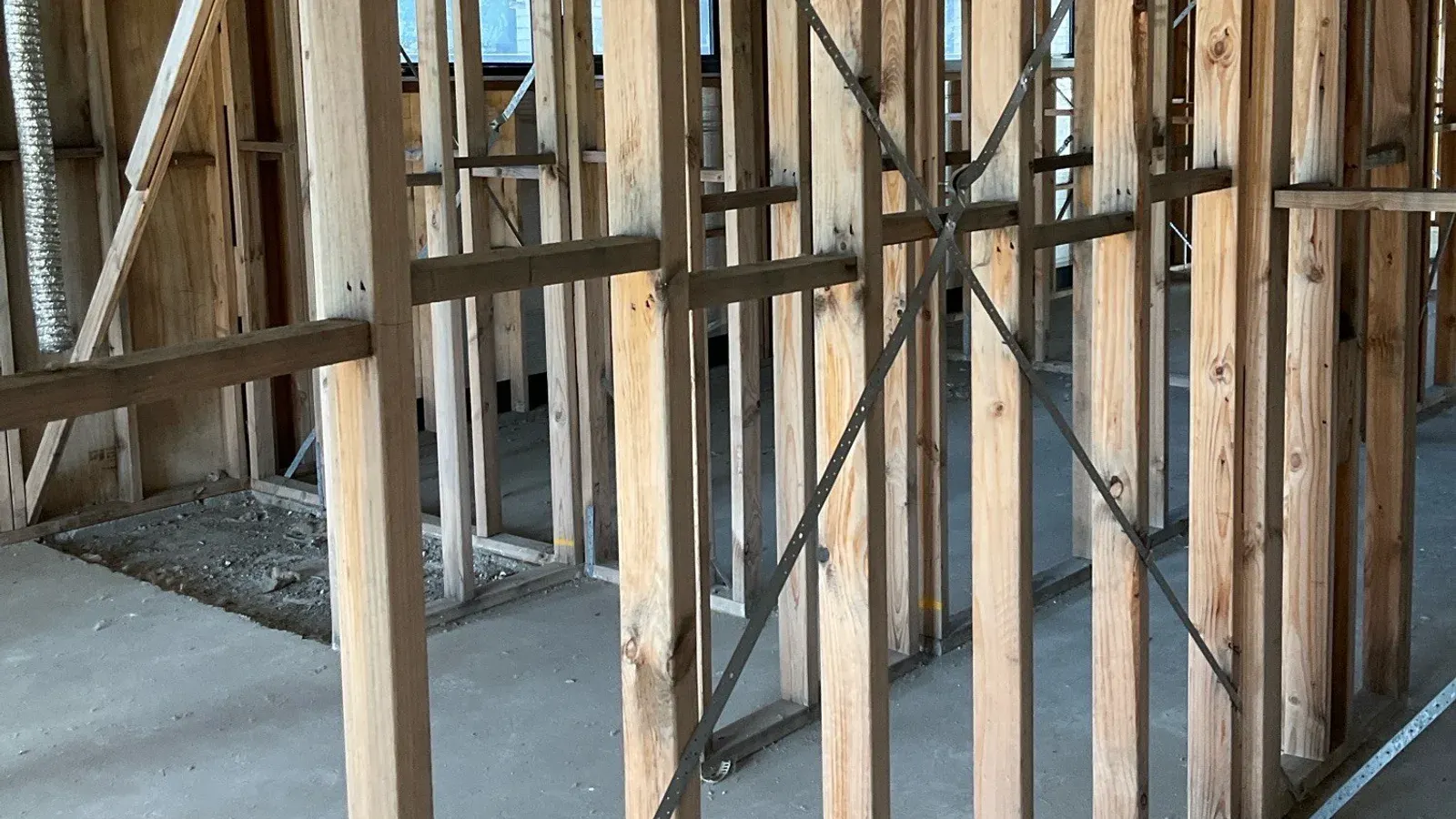
A useful record separates what is complete from what is merely on site. A pallet of roof tiles in the driveway is not a roof. Build the record from these:
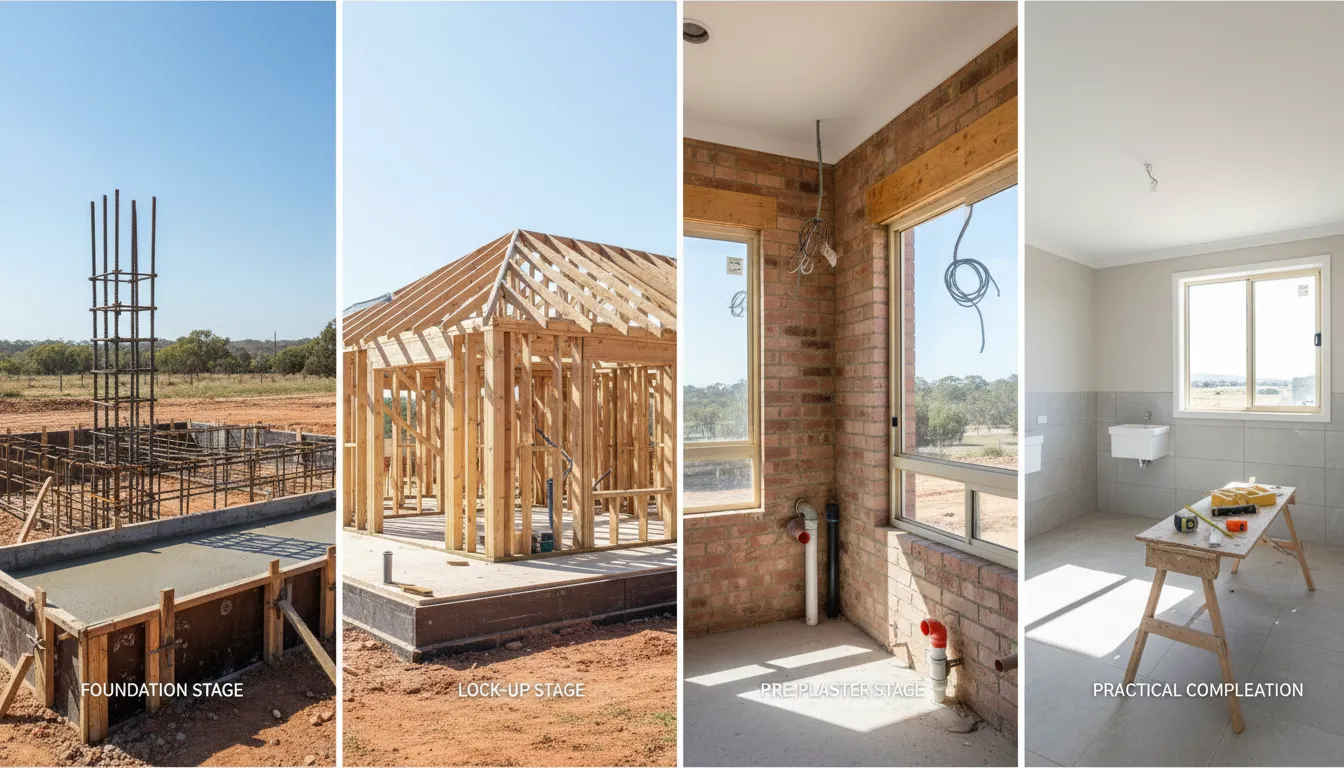
Timing matters because each stage hides the one before it. Slab reinforcement disappears under concrete, framing disappears behind plasterboard, and the shower membrane disappears behind tiles. A record made at each stage, during the build, is worth far more than a reconstruction made afterwards. Our guide to what gets hidden at each construction stage sets out what is concealed and when.
A stage report from Owner Inspections records each item against the contract stage with a dated photograph and its location, which is the form an insurer can compare against a claim. If no stage record exists, an independent defect investigation report can document the condition of the work as it stands now, including defects, before anyone else touches it.
Record the Stage Before It Is Covered
An independent stage inspection fixes the condition of the work on a date, before the next trade covers it.
What does home warranty insurance actually cover, state by state?
NSW. If your builder becomes insolvent partway through a build, icare's Home Building Compensation Fund may cover the loss from the unfinished work, up to 20 per cent of the contract price including agreed variations. That sits inside an overall per-dwelling limit for all claims on the policy. You must notify icare within 12 months of the date work stopped, and finding unfinished work is not enough on its own: a trigger event such as the builder's insolvency, death or disappearance must have happened. icare does not say you must terminate the building contract first, but check your policy wording and get advice before you do.
Victoria. Consumer Affairs Victoria explains home warranty insurance and builder insolvency.
Queensland. The QBCC runs the home warranty scheme.
For the full limits and lodging deadlines in each state, see how defect claims work after a builder becomes insolvent.
Can I get another builder to finish the job?
Usually yes, but talk to the insurer before you sign anyone. The insurer may want its own scope of work or its own process for completing the build, and hiring a new builder first can affect the claim.
The new builder will price the job from what is already there, and will often decline to warrant work they did not do. An independent record of the stage and any defects is what separates the old builder's work from the new builder's. For the stages still to come, see our guide to arranging independent stage inspections with the new builder.
Frequently Asked Questions
Is a builder in voluntary administration the same as in liquidation?
No. Administration is a temporary process that can end with the company being saved, a deal with creditors, or liquidation. The first steps for an owner are the same either way: confirm the appointment, write to the administrator, notify your insurer and record the stage.
Can I get my deposit back from a builder in liquidation?
From the liquidator, usually little or nothing, because owners generally rank as unsecured creditors. The home warranty policy is the main route. In NSW, the minimum cover set by SIRA requires non-completion cover for the deposit where no work has started.
What if my builder never took out home warranty insurance?
Then there may be no policy to claim on. First ask your state scheme whether a policy was issued for your address, because a certificate can exist even if you never received a copy. If none was, the regulator can act on the builder's failure to insure, and anything further is a question for a solicitor.
Does liquidation change my statutory warranty in NSW?
It can change when the clock starts. Under section 18E of the Home Building Act 1989, if the work is not completed, the warranty period runs from the date the contract was terminated or, if it was not terminated, from the date work ceased.
Related Articles

Builder insolvent, can I still claim for defects?
A builder in liquidation cannot be made to come back and fix anything, but the defect claim usually survives them.
What Issues Should You Care About at Each Construction Stage?
Every construction stage hides the one before it, so the defects that matter are the ones that become invisible next week.
How do I Arrange Independent Stage Inspections With My Builder?
Independent stage inspections help you catch defects before they’re hidden or costly.