
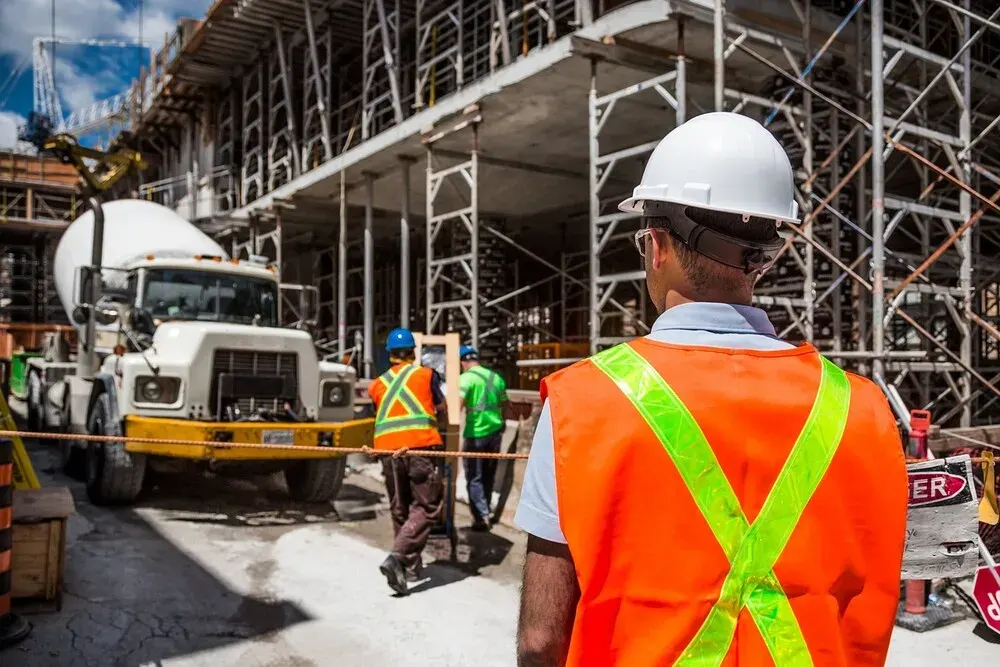
Whether you are building a new family home, a commercial development, or a major renovation, the process follows the same fundamental sequence. Knowing what happens at each stage, and what to look out for, puts you in a stronger position to protect your investment and hold your building team accountable. This guide breaks down each stage, explains the key activities and risks, and highlights where construction stage inspections play a role.
Stage 1: Project Initiation and Conception
This is where the entire project begins. The project owner defines what they want to build, determines whether the project is feasible, and assembles the team that will bring the vision to life.
Key Activities
- Defining the project scope: the type of structure (home, commercial building, renovation), size, budget, and timeline
- Conducting feasibility studies: assessing financial viability, site suitability (soil conditions, zoning laws, flood risk), and environmental impacts
- Assembling the project team: engaging an architect, project manager, and any specialists needed for the planning phase
- Securing financing: obtaining loan approvals, confirming budgets, and planning cash flow for the construction period
Thorough planning at this stage prevents problems later. A well-defined scope and realistic budget reduce the risk of cost overruns and scope changes during construction.
Stage 2: Design (Pre-Construction)
The design stage turns the project concept into detailed plans and technical documents that the construction team will follow.
Schematic Design
The architect creates initial drawings that establish the building's overall layout, spatial relationships, and aesthetic direction. These are reviewed and refined with the project owner before moving to the next phase.
Detailed Design
The approved schematic design is developed into full technical documentation: blueprints, engineering calculations, material specifications, and construction details. These documents form the basis of the building contract and are used for permit applications.
Permitting and Approvals
No construction can legally begin without the proper permits. Plans are submitted to the local council or a private certifier for assessment against the NCC, state building regulations, and local planning requirements. Approval may take several weeks to several months depending on the complexity of the project and the local authority.
| Deliverables | Duration | |
|---|---|---|
| Schematic Design | Concept drawings, floor plans, elevations | 2 to 6 weeks |
| Detailed Design | Full construction drawings, engineering specs, material schedules | 4 to 12 weeks |
| Permitting | Building permits, development consent (if required) | 4 to 16 weeks (varies by council) |
Stage 3: Procurement
With plans approved, the focus shifts to sourcing the materials, labour, and subcontractors needed to build the project.
Sourcing Materials and Labour
Materials are ordered based on the specifications in the design documents. Subcontractors specialising in trades such as electrical, plumbing, tiling, and plastering are engaged.
Bidding and Contracts
Builders and subcontractors submit bids outlining their costs and timelines. The bidding process helps select the most suitable contractors. Clear, detailed contracts protect all parties by defining the scope of work, prices, payment schedules, and dispute resolution procedures.
Budgeting and Scheduling
Final budgets are confirmed, incorporating all material costs, labour, margins, and contingencies. A detailed construction schedule is created to sequence every activity from site preparation through to handover.
Always ensure your building contract includes a detailed payment schedule tied to construction milestones, not arbitrary dates. This protects you from paying for work that has not been completed or inspected.
Stage 4: Construction and Monitoring
This is the longest and most visible stage. The physical building takes shape, and regular monitoring and inspections keep the project on track.
Site Preparation
The land is cleared, levelled, and prepared for construction. Temporary services such as power and water are connected. Excavation for footings and foundations begins.
Building the Structure
The project progresses through defined construction milestones:
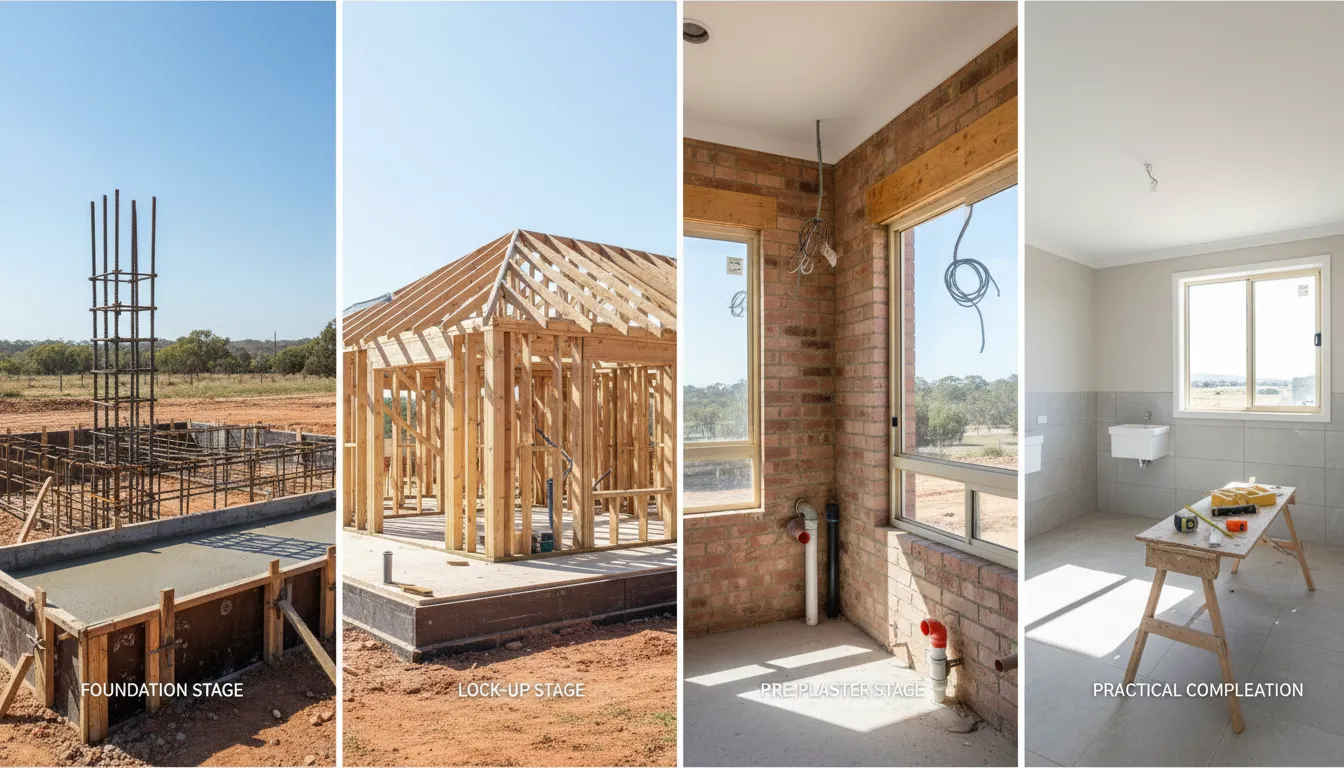
Slab and Footings
Concrete footings and slab are poured after formwork and reinforcement have been checked.
Frame Stage
Timber or steel framing is erected, including wall frames, roof trusses, and bracing.
Lock-Up Stage
External walls, roofing, windows, and doors are installed, making the building weather-tight.
Fixing Stage
Internal linings, cabinetry, plumbing fixtures, electrical fittings, and tiling are installed.
Practical Completion
All work is completed, final finishes applied, and the property is ready for handover.
Monitoring and Inspections
Regular construction stage inspections verify that the work meets the approved plans, the NCC, and Australian Standards. Independent inspectors can identify defects at each stage before they are covered up by subsequent work.
Stage 5: Post-Construction (Closeout)
The final stage covers everything that happens after construction is physically complete.
Final Inspections and Walkthroughs
A pre-handover inspection identifies any outstanding defects, incomplete work, or items that do not meet the contract specifications. This is the homeowner's last opportunity to document issues before accepting the property.
Commissioning Systems
Mechanical and electrical systems including HVAC, hot water, and fire safety equipment are tested, calibrated, and confirmed to be operating correctly.
Project Handover
Ownership is officially transferred. The builder provides all warranties, operating manuals, compliance certificates, and as-built drawings. The defect liability period begins from this date.
Inspections at Each Construction Stage
| What's Checked | Why It Matters | |
|---|---|---|
| Pre-Slab (Before Concrete Pour) | Footing excavation, reinforcement placement, formwork, plumbing rough-in, termite barriers | Errors at this stage are buried under concrete and extremely expensive to fix later |
| Frame Stage | Wall frame alignment, roof truss installation, bracing, tie-downs, window and door openings | Frame defects affect the structural integrity of the entire building |
| Pre-Plaster (Lock-Up) | Waterproofing, insulation, electrical and plumbing rough-in, sarking, ventilation | These elements are hidden behind wall linings and cannot be inspected once plastered |
| Fixing Stage | Cabinetry, tiling, plumbing fixtures, electrical fittings, paint, flooring | Quality of finishing affects both liveability and resale value |
| Practical Completion (Pre-Handover) | All items against the contract, defect identification, compliance with plans and NCC | Last chance to document defects before accepting the property and releasing final payment |
Key Takeaways
- Every construction project follows five stages: initiation, design, procurement, construction, and post-construction closeout.
- Thorough planning and feasibility studies during initiation reduce the risk of budget overruns and scope changes.
- Building permits must be obtained before construction can legally begin, with plans assessed against the NCC and local regulations.
- Construction stage inspections at each milestone catch defects before they are covered up by subsequent work.
- The pre-handover inspection is your last opportunity to document issues before accepting the property.
- Clear contracts with milestone-based payment schedules protect homeowners from paying for incomplete or defective work.
- The defect liability period begins at handover, giving you 12 to 24 months to report defects for rectification at no cost.
Frequently Asked Questions
What are the common challenges during project initiation?
Common challenges include aligning the project scope with available budgets, securing financing, dealing with uncertainties in regulatory approvals, and finding the right team. Early engagement with experienced architects and project managers helps mitigate these risks.
How do I ensure the feasibility study is comprehensive?
Involve a multidisciplinary team including financial analysts, architects, civil engineers, and environmental consultants. They will assess all relevant factors such as market conditions, environmental risks, soil conditions, zoning restrictions, and legal requirements.
What should I consider when selecting an architect?
Consider their experience with similar projects, their design approach, ability to work within your budget and timeframe, and their communication style. Review their portfolio and speak to previous clients to understand their track record.
Are there alternatives to traditional competitive bidding?
Yes. Alternatives include negotiated contracts, design-build arrangements where the contractor is involved from the design stage, and construction management contracts. These can offer time savings and cost efficiencies, particularly for complex projects.
What risk management practices should be used during construction?
Recommended practices include regular risk assessments, maintaining a risk register, contingency planning, independent construction stage inspections, and clear contract management. These practices help identify potential issues early and address them before they escalate.
How can technology improve construction project management?
Technology improves project management through Building Information Modelling (BIM), project management software, drone inspections, and real-time communication platforms. These tools support better planning, coordination, progress monitoring, and documentation.
Can the project scope change during construction?
Yes, but scope changes require formal change orders (variations) that document the new work, adjusted costs, and revised timelines. Changes must be agreed in writing by both parties. Poorly managed variations are one of the most common causes of construction disputes.
What is involved in commissioning mechanical systems?
Commissioning involves testing all mechanical systems including HVAC, plumbing, hot water, and fire safety equipment. Settings are adjusted for optimal performance, and the systems are verified against the project specifications. This ensures everything operates efficiently and safely before handover.
How should the final project handover be managed?
The handover should include a thorough review of all project documentation, warranties, operating manuals, compliance certificates, and as-built drawings. Conduct a final walkthrough with the builder to confirm all work is complete. Ensure you understand the defect liability period and the process for reporting issues.
Why are independent construction stage inspections recommended?
Independent inspections provide an unbiased assessment of the work at each stage. They identify defects, non-compliance, and workmanship issues before they are covered by subsequent work. This protects homeowners from accepting defective work and provides documented evidence if disputes arise later.
References and Resources
- National Construction Code (NCC) - Australian Building Codes Board
- NSW Fair Trading - Home Building - NSW Government
- Victorian Building Authority (VBA) - Victorian Government
- Queensland Building and Construction Commission (QBCC) - Queensland Government
Related Articles
Building Inspection Stages: A Comprehensive Guide
Construction Stage Inspections in Geelong
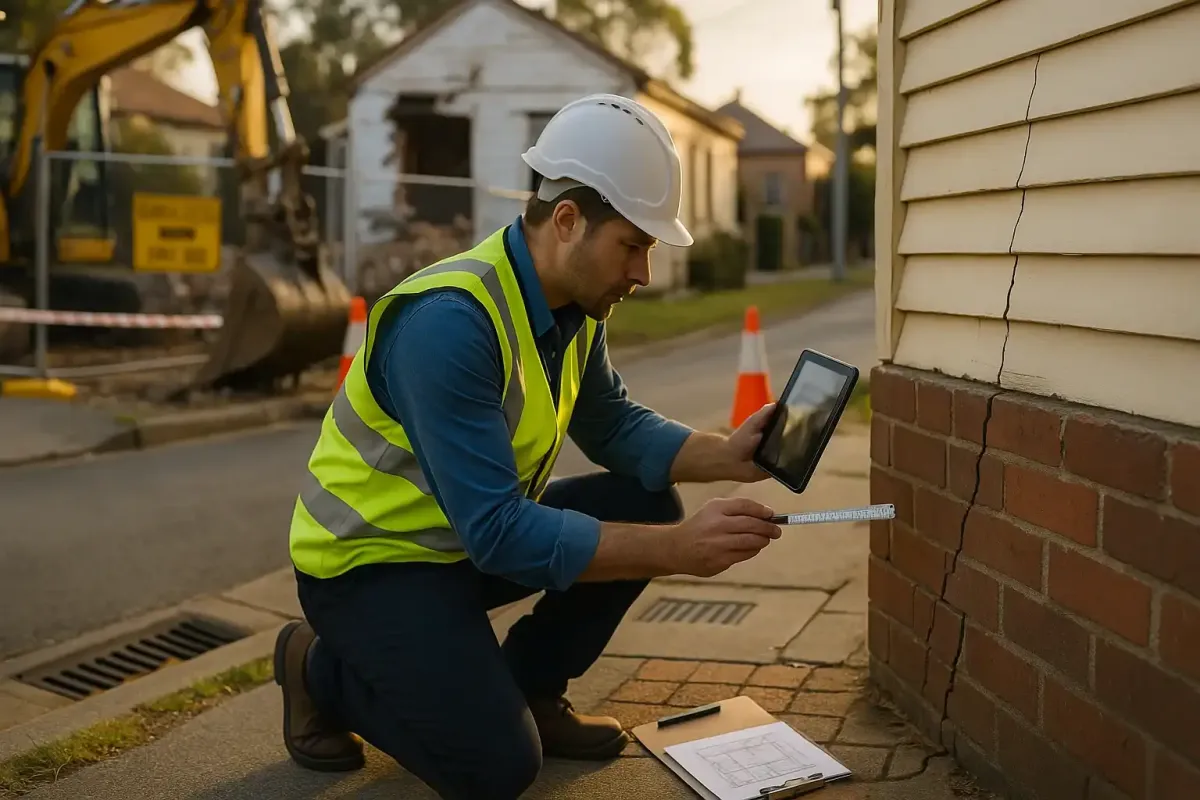
Geelong's residential market is growing rapidly, attracting new construction projects across the region. Construction stage inspections serve as health assessments for your build, ensuring quality and compliance at every phase from pre-construction through to final handover.
Construction Stage Defects: What to Check Each Stage
Every construction stage hides the one before it, so the defects that matter are the ones that become invisible next week. This guide covers what to check at pre-pour, slab, frame, lock-up, waterproofing and practical completion, the mandatory inspections in NSW, Victoria and Queensland, and the tolerances that decide whether something counts as a defect at all.
Building a new home in NSW, Victoria, or Queensland? Owner Inspections provides independent construction stage inspections at every milestone, from pre-slab through to practical completion. Our licensed building inspectors catch defects early and give you confidence that your home is being built to the right standard. Get a quote today or call us on 1300 471 805.
For a complete overview, see our guide to construction stage inspections.
Need Construction Stage Inspections?
Our licensed inspectors cover Sydney, Melbourne, and all major Australian cities.