
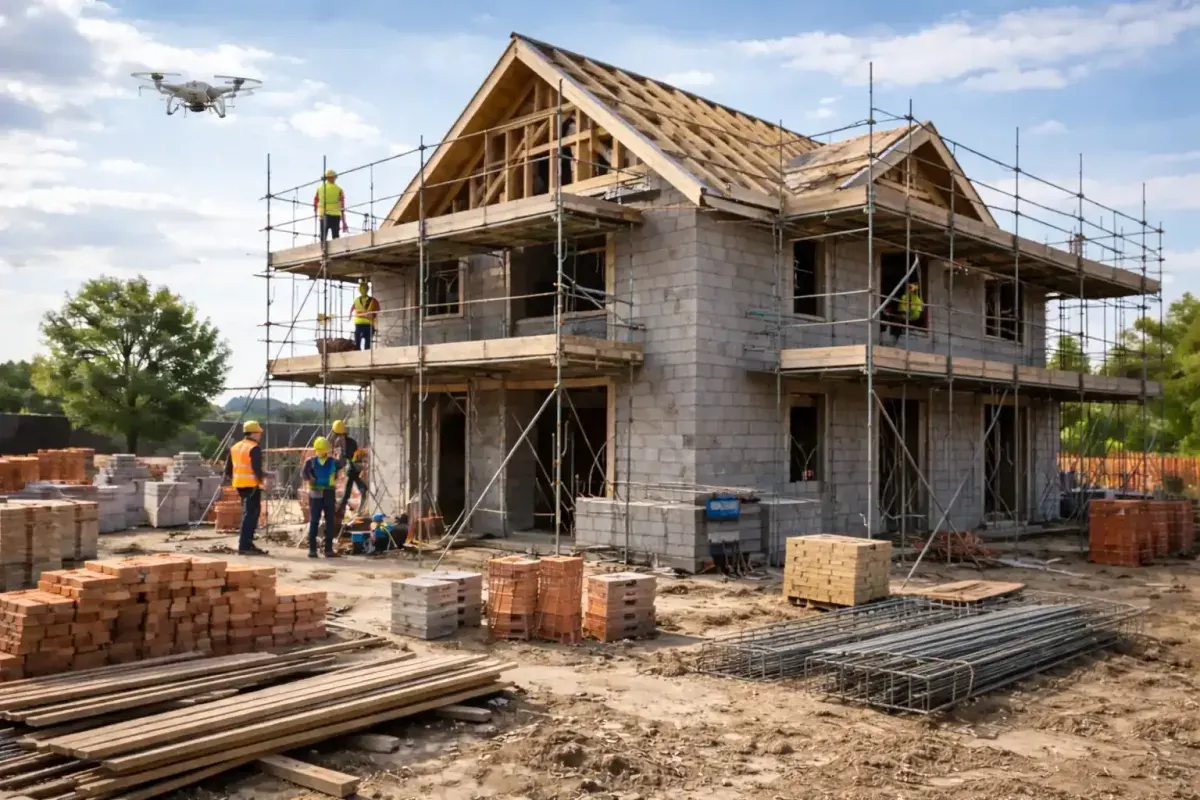
Australian residential construction has faced rising defect rates in recent years. Data from state regulators including the Victorian Building Authority (VBA) and the Queensland Building and Construction Commission (QBCC) consistently show that early detection of building defects through staged inspections can reduce rectification costs by up to 80% compared to discovering those same issues at practical completion. Knowing when to inspect and what to look for at each stage gives you a significant advantage as a property owner.
What Are Construction Progress Inspections?
Construction progress inspections are independent quality checks performed at specific stages during the building process. Each inspection verifies that the work completed so far matches the approved building plans, complies with the NCC and relevant Australian Standards, and meets the contractual obligations set out between the owner and builder.
Unlike a single final inspection at handover, progress inspections happen throughout the build. This means problems are caught when they are still easy and affordable to fix, rather than after walls have been lined, concrete has cured, or finishes have been applied over defective work.
Progress inspections are not the same as council or certifier inspections. While building certifiers check compliance at certain mandatory hold points, independent progress inspections provide a far more detailed assessment of workmanship, materials, and overall quality on behalf of the property owner.
The scope of each inspection depends on the construction stage, but typically covers structural elements, material quality, waterproofing, alignment, and compliance with engineering specifications.
Why Progress Inspections Matter
Building a home or investment property is one of the largest financial commitments most Australians will make. Without independent oversight during construction, homeowners rely entirely on the builder's own quality control, which may not always catch every issue.
- Defects identified early cost a fraction of what they cost to fix after completion
- Progress inspections provide documented evidence of build quality at each stage
- They protect your rights under the Home Building Act 1989 (NSW), Domestic Building Contracts Act 1995 (VIC), and equivalent legislation in other states
- Independent reports give homeowners leverage if disputes arise with the builder
- Insurers and lenders may require stage inspections for construction finance drawdowns
Without inspections at each stage, defects can be hidden behind plaster, tiling, or cladding. Once covered, these issues often remain undetected until they cause visible damage months or years later, at which point repairs become significantly more expensive and disruptive.
The Key Construction Inspection Stages
Australian residential construction typically follows a series of defined stages, each with its own inspection requirements. While the exact terminology varies between states, the standard stages are consistent across most builds.
Pre-slab and footing inspection
Before concrete is poured, the inspector checks excavation depth, soil conditions, formwork, steel reinforcement placement, plumbing rough-in positions, and termite management systems. This stage sets the structural foundation for the entire build and cannot be revisited once the slab is poured.
Frame stage inspection
Once the structural frame is erected, the inspector assesses wall framing, roof trusses, bracing, tie-downs, window and door openings, and overall structural alignment. Frame stage is the last opportunity to check the structural skeleton before it is enclosed by cladding and internal linings.
Lock-up stage inspection
At lock-up, the building is weather-sealed with external cladding, windows, doors, and roofing in place. The inspector checks the quality of these installations, verifies flashing and sarking, and assesses weatherproofing. This stage also includes a review of electrical and plumbing rough-in work before internal linings are applied.
Fixing stage inspection
During the fixing stage, internal fitouts are underway. The inspector reviews cabinetry, benchtops, doors, architraves, skirting boards, plumbing fixtures, and power points. Waterproofing in wet areas is checked against AS 3740, and tiling work is assessed for quality and compliance.
Pre-handover or practical completion inspection
The final inspection before you accept the property from the builder. Every element of the build is reviewed, from paint finishes and floor coverings to drainage, landscaping, and external works. The inspector produces a comprehensive defect list that the builder must address before settlement or handover.
Tip
Some builds also warrant additional inspections at the waterproofing stage (before tiling in wet areas) and at the bored pier or retaining wall stage for sloping sites. Discuss these with your inspector based on the specifics of your project.
Who Should Conduct Progress Inspections
The quality and independence of your inspector directly affects the value of the inspection. Several professionals may be involved at different stages.
| Role | When to Engage | |
|---|---|---|
| Independent Building Inspector | Conducts detailed assessments of workmanship, materials, and compliance on behalf of the owner | At every construction stage from pre-slab through to handover |
| Structural Engineer | Verifies structural elements meet engineering specifications and load requirements | Pre-slab, frame stage, and any stage involving structural modifications |
| Building Certifier | Issues compliance certificates at mandatory hold points required by council | At legislated hold points defined by state building regulations |
| Project Manager | Coordinates timelines, trades, and inspections to keep the project on schedule | Throughout the entire construction period |
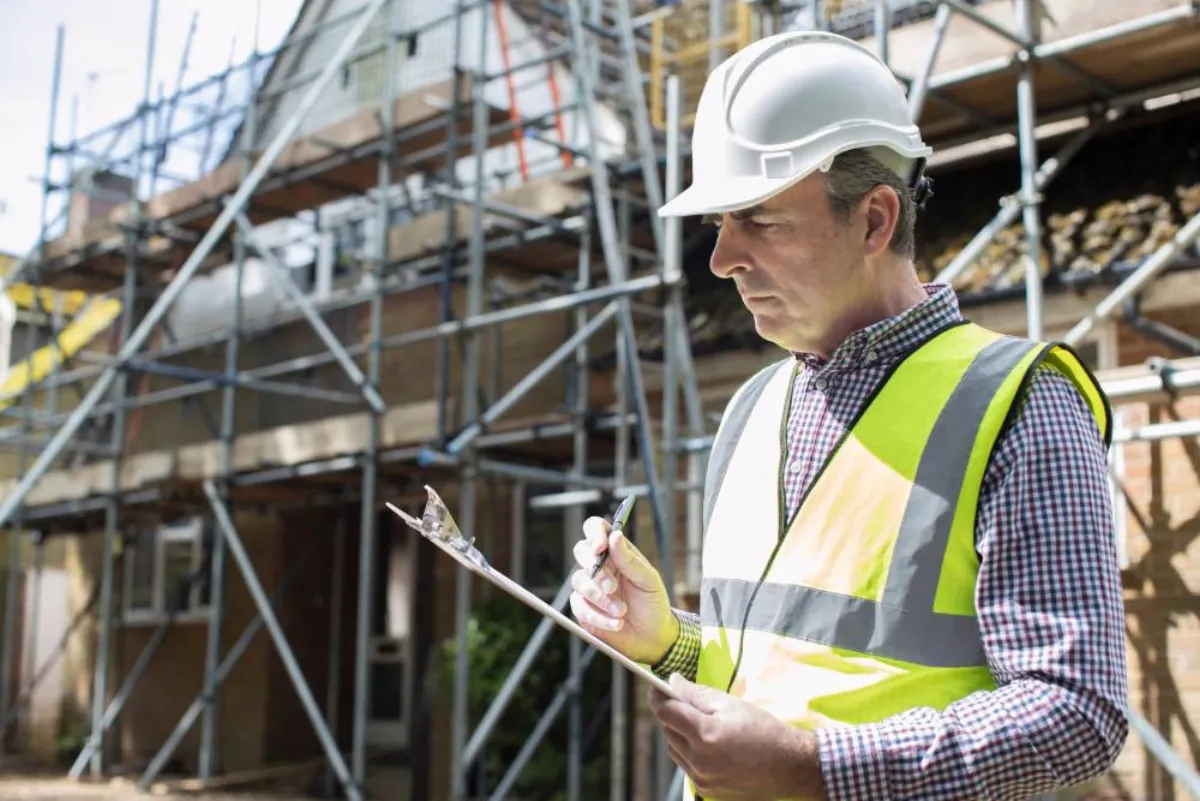
The key principle is independence. A building inspector engaged by the homeowner or developer provides an unbiased assessment that is not influenced by the builder's schedule or commercial interests. This is different from a certifier, who may have an ongoing relationship with the builder.
How Inspections Prevent Delays
One of the most significant benefits of regular progress inspections is delay prevention. Construction delays in Australia cost homeowners and developers billions of dollars each year through extended loan interest, rental losses, temporary accommodation costs, and contract penalties.
Progress inspections prevent delays in several ways:
- Early identification of defects means they can be fixed before subsequent trades begin work, avoiding the domino effect of one delayed trade holding up all others
- Catching non-compliant work before the next stage prevents the need for costly and time-consuming demolition and rebuilding
- Regular inspection schedules keep all parties accountable, reducing the likelihood of shortcuts or rushed work
- Clear documentation from inspections reduces disputes between owners and builders, which are a common cause of project stalls
If a structural issue is discovered at handover that should have been caught at the frame stage, the rectification may require stripping internal linings, re-engineering structural elements, and reinstalling finishes. This can add weeks or months to the project timeline and tens of thousands of dollars to the cost.
A proactive inspection schedule is always more cost-effective than a reactive approach where problems are only dealt with after they cause significant setbacks.
Cost Control and Financial Accountability
Beyond preventing delays, progress inspections play a direct role in controlling costs throughout the build.
- Each inspection confirms that the work claimed by the builder has actually been completed to an acceptable standard before progress payments are released
- Inspection reports can be used to verify material usage and identify waste or substitution of inferior products
- For construction finance, lenders often require independent verification that each stage has been properly completed before releasing the next drawdown
- Documented inspections create a paper trail that protects both parties in the event of a cost dispute
Up to 80%
Potential reduction in defect rectification costs when issues are caught at the relevant stage rather than at completion
$3,000 to $15,000
Typical cost range for rectifying structural defects discovered at handover in Australian residential builds
$300 to $800
Average cost per individual construction stage inspection across Sydney, Melbourne, and Brisbane
The return on investment from progress inspections is significant. Spending a few hundred dollars per stage inspection can save thousands in rectification costs, and in some cases, prevent disputes that would otherwise lead to tribunal or court proceedings.
Compliance and Safety Requirements
All residential construction in Australia must comply with the National Construction Code (NCC), which incorporates the Building Code of Australia (BCA). State-specific legislation adds further requirements.
- In NSW, the Home Building Act 1989 sets out warranty obligations and dispute resolution processes for residential building work
- In Victoria, the Domestic Building Contracts Act 1995 and the Building Act 1993 govern construction standards and owner protections
- In Queensland, the Queensland Building and Construction Commission Act 1991 regulates builder licensing and construction standards
- In South Australia, the Building Work Contractors Act 1995 applies to residential construction
- In the ACT, the Building Act 2004 outlines compliance and inspection requirements
Progress inspections verify compliance with these regulations at each stage. Specific standards that inspectors check against include:
Non-compliance discovered after construction is complete can result in costly rectification orders from building regulators, insurance complications, or reduced property values at the time of sale.
Common Defects Found During Progress Inspections
The types of defects found vary by stage, but certain issues appear frequently across Australian residential builds.
| Common Defects | Impact If Missed | |
|---|---|---|
| Pre-slab | Incorrect reinforcement spacing, missing or misplaced plumbing penetrations, inadequate compaction, incorrect slab thickness | Structural cracking, plumbing failures, foundation settlement requiring underpinning |
| Frame | Misaligned wall frames, missing bracing, incorrect truss spacing, inadequate tie-downs | Structural instability, roof movement under wind loads, wall bowing |
| Lock-up | Poor window installation, missing flashing, inadequate sarking, gaps in external cladding | Water ingress, mould growth, internal timber damage, energy inefficiency |
| Fixing | Waterproofing failures in bathrooms, uneven tiling, misaligned cabinetry, defective plumbing connections | Water damage to floors and walls, ongoing maintenance issues, warranty claims |
| Pre-handover | Paint imperfections, scratched surfaces, incomplete landscaping, drainage issues, missing fixtures | Owner inherits a list of defects that become harder to enforce after settlement |
An experienced independent inspector will know exactly what to look for at each stage and will document every finding with photographs, measurements, and references to the applicable standard or code.
Real-World Examples
Sydney Foundation Defect
A developer in western Sydney commissioned an independent pre-slab inspection on a multi-unit residential project. The inspector discovered that the concrete formwork had been set at the wrong level and that several steel reinforcement bars were positioned outside the tolerance specified in the engineering drawings. Rectification at this stage cost approximately $2,500. Had the defect gone undetected, the resulting structural issues would have required underpinning at an estimated cost exceeding $45,000.
Melbourne Roofing Rework
A homeowner building in Melbourne's outer suburbs chose not to engage an independent inspector during construction. At the pre-handover inspection, significant roofing installation errors were found, including incorrect tile overlaps and missing flashing at multiple junction points. The builder initially disputed the findings, and the resulting delay for rectification added six weeks to the project timeline. An inspection at the lock-up stage would have caught these issues before internal linings were installed.
Brisbane Waterproofing Failure
During a fixing stage inspection on a townhouse project in Brisbane, an inspector identified that the waterproofing membrane in two bathrooms had been applied incorrectly and did not extend to the required height under AS 3740. The builder rectified the work before tiling commenced. Without this inspection, the waterproofing failure would likely have resulted in water damage to adjacent rooms and the floor structure below, with repair costs estimated at more than $20,000 per bathroom.
Technology in Modern Construction Inspections
Modern construction inspections in Australia are increasingly supported by technology that improves accuracy and efficiency.
- Drone surveys allow inspectors to assess roofing, upper-level framing, and site conditions without scaffolding or elevated work platforms
- Thermal imaging cameras detect moisture ingress, insulation gaps, and electrical hot spots that are invisible to the naked eye
- Digital reporting platforms produce detailed inspection reports with geotagged photographs, compliance references, and defect severity ratings within hours of the inspection
- Moisture meters provide accurate readings of timber moisture content and identify potential problem areas in framing and flooring
- Laser levels and measuring tools verify alignment, fall, and dimensional accuracy to engineering tolerances
These tools allow inspectors to deliver more comprehensive reports and give property owners a clearer picture of build quality at each stage.
How to Arrange Progress Inspections for Your Build
Setting up construction progress inspections for your project is straightforward, but timing is important.
Engage an independent inspector before construction starts
Choose a licensed, experienced building inspector who is independent of your builder. Confirm their qualifications, insurance, and experience with the type of construction you are undertaking.
Agree on an inspection schedule
Work with your inspector to define which stages will be inspected. At a minimum, inspections should cover pre-slab, frame, lock-up, and pre-handover. Waterproofing and fixing stage inspections are also strongly recommended.
Notify your builder
Let your builder know that an independent inspector will attend at each stage. Builders are required to provide reasonable access for inspections under consumer protection legislation in most states.
Review each report promptly
After each inspection, review the report and raise any identified defects with your builder in writing. Most building contracts require defects to be rectified before the next stage of work can proceed.
Keep all reports for your records
Store inspection reports in a safe location. They form part of the construction documentation for your property and can be valuable for warranty claims, insurance purposes, or future resale.
Key Takeaways
- Construction progress inspections check build quality and compliance at defined stages from pre-slab through to handover, catching defects when they are cheapest to fix.
- Independent inspectors provide unbiased assessments that protect the homeowner's interests, separate from the builder's own quality control.
- Defects identified early can reduce rectification costs by up to 80% compared to discovering them at practical completion.
- The five standard inspection stages in Australian residential construction are pre-slab, frame, lock-up, fixing, and pre-handover.
- Progress inspections prevent delays by catching non-compliant work before it causes a chain reaction of hold-ups across subsequent trades.
- All construction must comply with the NCC, relevant Australian Standards, and state-specific building legislation including the Home Building Act 1989 (NSW) and Domestic Building Contracts Act 1995 (VIC).
- Inspection reports serve as documented evidence for warranty claims, insurance purposes, finance drawdowns, and dispute resolution.
- The average cost of a single stage inspection is $300 to $800, which is a small fraction of the cost of rectifying defects discovered after completion.
Frequently Asked Questions
What is a construction progress inspection?
A construction progress inspection is an independent assessment of building work carried out at a specific stage of the construction process. The inspector checks that completed work meets the approved plans, complies with the National Construction Code and relevant Australian Standards, and has been executed to an acceptable standard of workmanship. These inspections are performed at stages such as pre-slab, frame, lock-up, fixing, and pre-handover.
How many construction stage inspections do I need for a new home?
For most residential builds, a minimum of four inspections is recommended: pre-slab, frame, lock-up, and pre-handover. Adding waterproofing and fixing stage inspections brings the total to six, which provides more thorough coverage. Builds on sloping sites or with complex designs may require additional inspections at the bored pier or retaining wall stage.
How much do construction progress inspections cost in Australia?
Individual stage inspections typically cost between $300 and $800 depending on the stage, property size, and location. Many inspection companies offer packages covering all stages at a reduced total price. In Sydney, Melbourne, and Brisbane, a full package covering five to six stages generally ranges from $1,500 to $4,000. This is a small investment compared to the potential cost of rectifying undetected defects.
Can my builder refuse to allow a private inspector on site?
In most Australian states, builders are required to provide reasonable access for independent inspections. Under the Home Building Act 1989 in NSW, homeowners have the right to engage their own inspector. In Victoria, the Domestic Building Contracts Act 1995 supports the owner's right to inspect. If a builder refuses access, this should be raised in writing and may be grounds for a complaint to the relevant state building authority.
What is the difference between a building certifier inspection and a progress inspection?
A building certifier inspects at mandatory hold points required by legislation and issues compliance certificates. Their role is to confirm minimum regulatory compliance. An independent progress inspection is more detailed and covers workmanship quality, material standards, and alignment with the building contract in addition to code compliance. Both serve different purposes and are not interchangeable.
When should I book my first construction inspection?
The first inspection should be booked at the pre-slab stage, before concrete is poured for the foundation. This is one of the most important inspections because once the slab is poured, defects in reinforcement, formwork, and plumbing positions cannot be accessed or corrected without significant cost. Ideally, engage your inspector before construction starts so they can review the plans and prepare for the first site visit.
What happens if defects are found during a progress inspection?
The inspector documents all defects in a written report with photographs and references to the relevant code or standard. You then provide this report to your builder and request rectification before work proceeds to the next stage. Most building contracts include provisions for defect rectification. If the builder disputes the findings or refuses to rectify, you may need to escalate through the state's building dispute resolution process.
Do I need progress inspections if my builder has a good reputation?
Yes. Even reputable builders can have issues on individual projects due to subcontractor quality, material supply problems, or site conditions. Independent inspections are not a reflection of distrust but a standard quality assurance practice. Many experienced builders welcome independent inspections because they confirm the quality of their work and reduce the risk of disputes later.
Are construction progress inspections required by law in Australia?
Independent progress inspections are not mandatory under Australian law, although building certifier inspections at specific hold points are legally required. However, independent inspections are strongly recommended by consumer protection bodies including NSW Fair Trading, the Victorian Building Authority, and the QBCC. Some construction finance agreements also require independent stage inspections before progress payments are released.
What qualifications should a construction inspector have?
A construction inspector should hold a relevant building inspection licence issued by the building authority in their state, such as a builder's licence or building inspector accreditation. They should have professional indemnity insurance and public liability cover. Experience in residential construction and familiarity with the NCC and relevant Australian Standards are important. Membership of a professional body such as the Master Builders Association or Housing Industry Association is also a positive indicator.
How do progress inspections help with construction finance?
When you have a construction loan, the lender releases funds in stages as each phase of the build is completed. Many lenders require independent verification that the work has been completed to standard before releasing the next drawdown. Progress inspection reports serve as this verification, giving the lender confidence that their investment is protected and that the build is proceeding as planned.
What areas are covered in a pre-handover inspection?
A pre-handover inspection covers the entire property inside and out. This includes paint finishes, floor coverings, tiling, cabinetry, benchtops, plumbing fixtures, power points and switches, doors, windows, external cladding, roofing, gutters, downpipes, drainage, driveways, fencing, and landscaping. The inspector produces a defect list that identifies every item requiring attention before settlement or handover.
References and Resources
- National Construction Code (NCC) - Australian Building Codes Board
- NSW Fair Trading - Home Building - NSW Government
- Victorian Building Authority (VBA) - Victorian Government
- Queensland Building and Construction Commission (QBCC) - Queensland Government
- Home Building Act 1989 - NSW Legislation
- Domestic Building Contracts Act 1995 - Victorian Legislation
Related Articles
Building Inspection Stages: A Comprehensive Guide
Investing Wisely: Construction Stage Inspections in Sydney
Sydney's competitive property market makes construction stage inspections a smart investment. This guide covers all 8 inspection stages from foundation to post-handover maintenance, explaining what each covers and why it matters.

Third-Party Construction Stage Inspections in Melbourne
Third-party construction stage inspections in Melbourne provide independent quality assurance at every build milestone. Learn about key stages, costs, and how to choose an inspector.
Building a new home or investment property? Owner Inspections provides independent construction progress inspections at every stage, from pre-slab through to handover, across NSW, Victoria, and Queensland. Our licensed building inspectors deliver detailed reports with photographic evidence and compliance references so you know exactly what is happening on your site. Request a quote or call us on 1300 471 805.
For a complete overview, see our guide to construction stage inspections.
Need Construction Stage Inspections?
Our licensed inspectors cover Sydney, Melbourne, and all major Australian cities.