
The rest of this page explains why, and what to spend the effort on instead.
Is it worth getting tested for mould exposure?
This page is about testing the building, not the people in it. Whether you or your family have been affected by mould is a question for a GP, who can decide whether any medical testing makes sense.
For the house itself, a test is worth considering in four situations:
- You can smell it but cannot find it. A musty or earthy smell with no visible growth can mean mould inside a wall cavity, under a floor covering or in the roof space.
- You need a record for someone else. A landlord, an insurer, a builder or a tribunal may want something dated and independent, not a description from you.
- A clean-up has been done and someone wants it in writing. Even then, the main check is visual, as the table below explains.
- A doctor has asked for information about the home. Then the doctor's question decides what gets tested.
Outside those four, a test on visible mould mostly tells you what you already know: there is mould. The money does more good finding the water that feeds it.
Do at-home mould tests actually work?
They do what they claim, which is less than most buyers hope. A settle plate catches spores that land on it over a set time. A swab picks up what is on one surface. Send either to a lab and you can learn what grew. What a kit cannot tell you is whether that is a problem.
The reason is that mould spores are part of ordinary air. NSW Health describes mould as present virtually everywhere, indoors and outdoors, and Victoria's Better Health Channel says airborne mould spores are commonly found in both. So a plate left open in almost any home is likely to grow something. Without an outdoor sample taken at the same time and lab identification of both, a dish of growth does not separate a normal house from one with a wet wall.
Australian health departments don't treat mould sampling as a way to judge how risky a home is. WA Health says surface or air sampling of mould spores "is not recommended for establishing the level of health risk", because there are no health-based exposure thresholds and no dose-response relationship between the amount of mould detected and health effects has been established. Victoria's Better Health Channel and NSW Health say that where mould is visible, testing is generally not necessary.
None of that makes a kit wrong to buy. It answers a smaller question than "is my house okay". If the colour of the growth is what worries you, our page on common black mould myths covers it.
Is it safe to live in a house with mould for years?
For the building, it gets worse the longer it goes. Mould is a sign of moisture, and moisture that stays keeps feeding growth while it works on the materials around it. Plasterboard stains and softens, carpet underlay and ceiling insulation hold water, and framing timber that stays damp for long periods can decay. A patch that has come back every winter for five years usually means its cause has been there for five years too.
For the people living there, speak to your GP and read your state health department's guidance, such as the Better Health Channel's page on mould and your health. This article does not try to answer the medical side.
Can a mould-infested house be saved?
In most cases, yes, once the water is dealt with. The order matters: find the source, fix it, dry the structure, then remove the mould. If the source is not fixed, the same patch is likely to come back.
Porous materials such as plasterboard, carpet and insulation are often removed and replaced rather than cleaned, because growth that has gone into the material is hard to get out. Hard, sealed surfaces such as glazed tiles, glass and painted joinery usually clean up.
Finding the source is the job of a mould inspection. Sometimes the cause is a leak: a failed shower membrane, a cracked roof tile, a blocked gutter overflowing into a wall. Just as often it is condensation from a bathroom or laundry with nowhere for the steam to go, which is how poor ventilation causes mould in roof spaces and wardrobes that look dry from the room. A mould inspection, whether from Owner Inspections or anyone else, should end with a named moisture source and a location for it, not just the words "mould present". Our guide to what a mould inspection covers goes through the areas checked.
Mould test or mould inspection: which do you actually need?
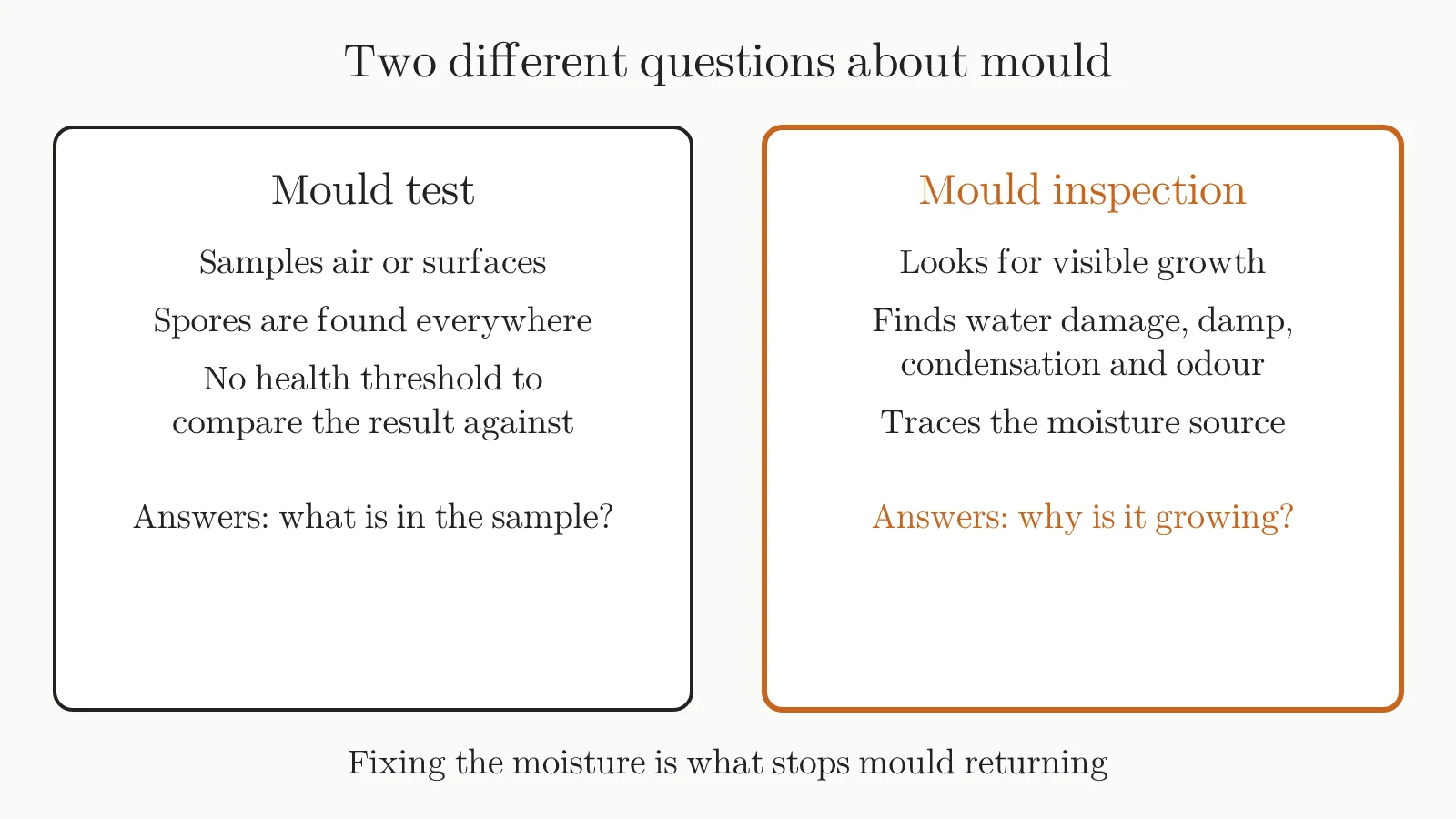
A test tells you what is in the air or on a surface. An inspection finds the moisture causing it, using moisture meter readings, thermal imaging, and a look at the roof space, subfloor, wet areas, weep holes and site drainage. Most owners need the second and assume they need the first.
| Situation | What you need first | Why |
|---|---|---|
| Visible mould | An inspection, or nothing for a small patch with an obvious cause | A test confirms what you can see. A small patch on a bathroom ceiling where the exhaust fan is never switched on is often a cleaning and ventilation task. |
| Musty smell, nothing visible | An inspection, then sampling if the source still cannot be found | WA Health's guidelines say sampling may play a role where mould or dampness is suspected but cannot be identified. |
| Rental dispute | An inspection report | The argument is usually about cause, a building fault or how the home was used, and a test result does not answer that. |
| Insurance claim | An inspection report, plus a test only if the insurer asks for one | Cover depends on your policy wording, and the question is usually what caused the damage. A test cannot show that. |
| After remediation | A visual check, plus a test only if one party requires it | WA Health's guidelines judge a clean-up by visible mould removed, moisture causes fixed, no regrowth within two to four weeks and no ongoing health complaints. |
| Buying a property | A pre-purchase inspection with moisture readings | You need the cause and the likely repair before you commit, not after. Our page on mould found after settlement covers what happens when it surfaces later. |
Tenancy obligations and tribunal outcomes differ from state to state, so if a dispute is heading that way, your state's tenancy authority or a solicitor can tell you where you stand.
Not sure whether you need a test or an inspection?
A mould inspection traces the moisture behind the growth, so the repair fixes the cause and the mould does not come back.
Frequently Asked Questions
Is it okay to sleep in a house with black mould?
Does a mould test tell me whether my home is safe?
Key Takeaways
- For visible mould, a test usually confirms what you can already see. The useful finding is the moisture source.
- A test is worth considering when you smell mould but cannot find it, need a record for a dispute, or a doctor asks for one.
- Home kits will capture spores that are present in ordinary air, so on their own they cannot say whether a home has a problem.
- WA Health does not recommend sampling to establish health risk, and WA's guidelines judge a clean-up by visual checks.
- Fix the water first. Mould cleaned off a surface that stays damp comes back.
References and Resources
- WA Health, Guidelines for Managing Mould and Dampness Related Public Health Risks in Buildings (April 2024), which covers sampling, visual assessment and post-remediation checks
- WA Health, Indoor Mould: Health Risk Assessment and Management (2024), the report behind the guidelines
- HealthyWA, Mould and dampness
- Better Health Channel (Victoria), Mould and your health
- NSW Health, Mould fact sheet
Related Articles
How Poor Ventilation Causes Mould, Condensation and Hidden Defects
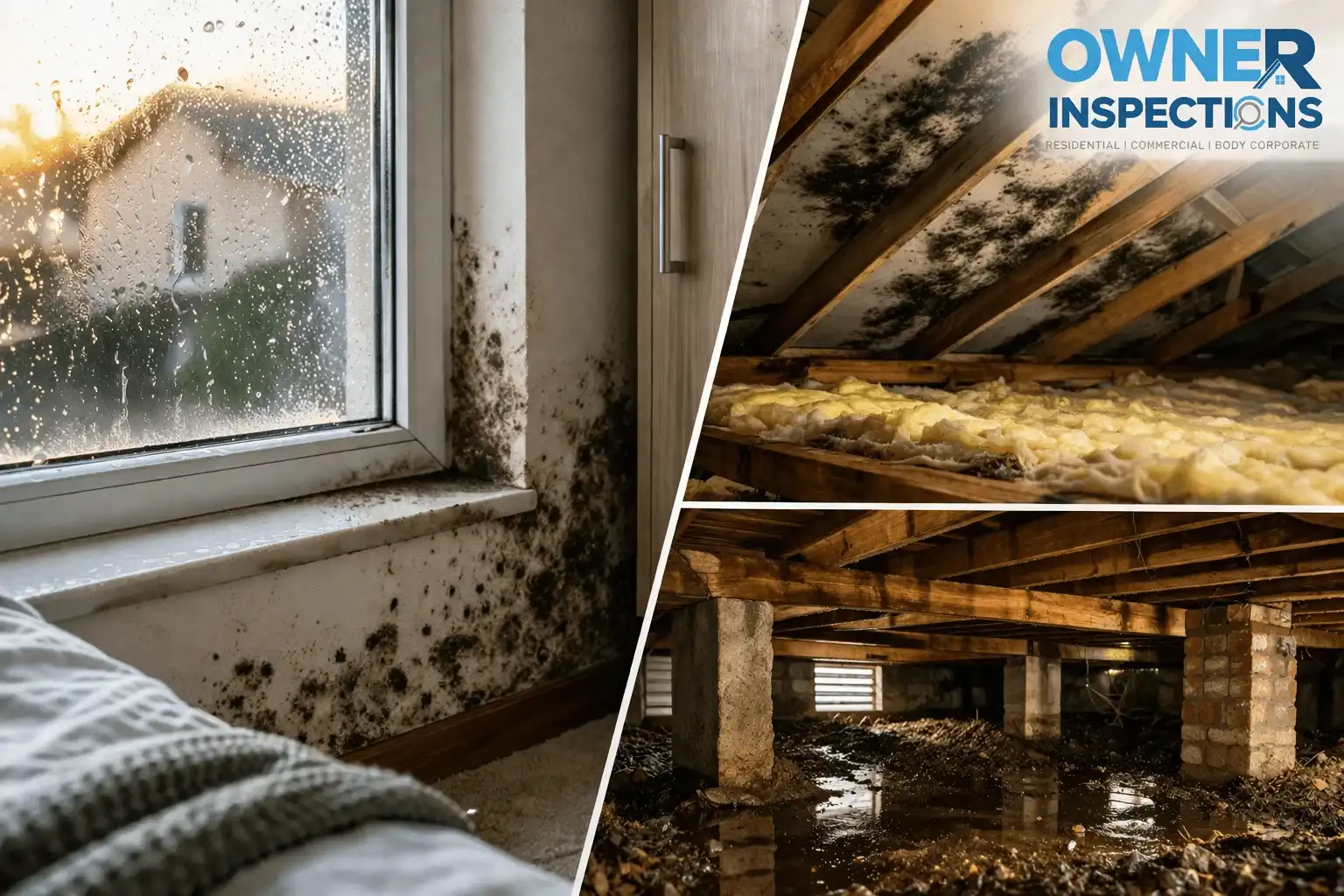
Poor ventilation can do more than leave a home feeling stuffy. It can trap moisture, cause condensation and mould, and contribute to hidden defects in roof spaces, wall cavities and subfloors.
Black Mould Myths: Separating Fact from Fiction in Mould Inspections
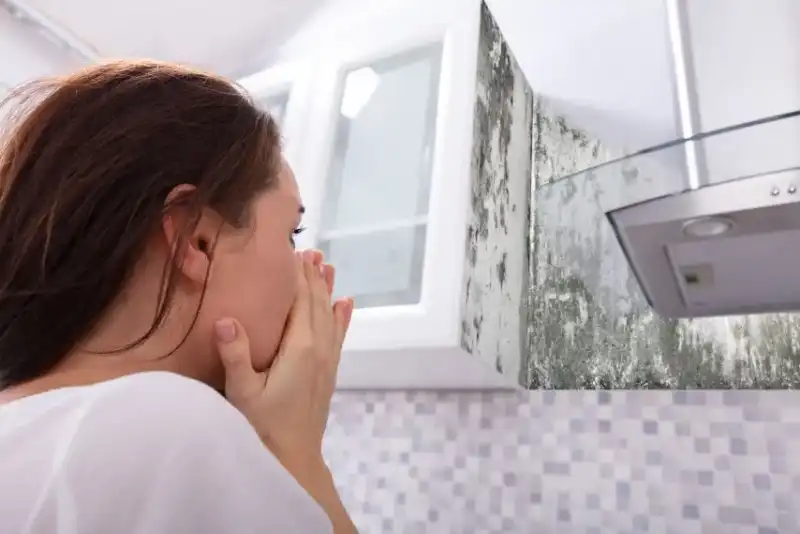
Black mould generates fear among property owners, but much of that fear is based on myths. This guide debunks common misconceptions about black mould.
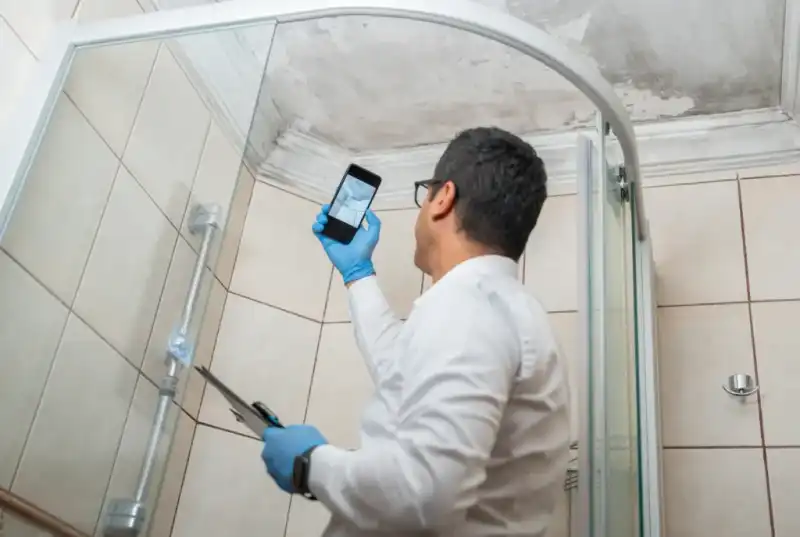
Mould Inspection to Detect and Prevent Home Damage
Mould often grows in hidden areas behind walls and within ventilation systems. Professional mould inspections detect contamination early, preventing structural damage and costly remediation.