
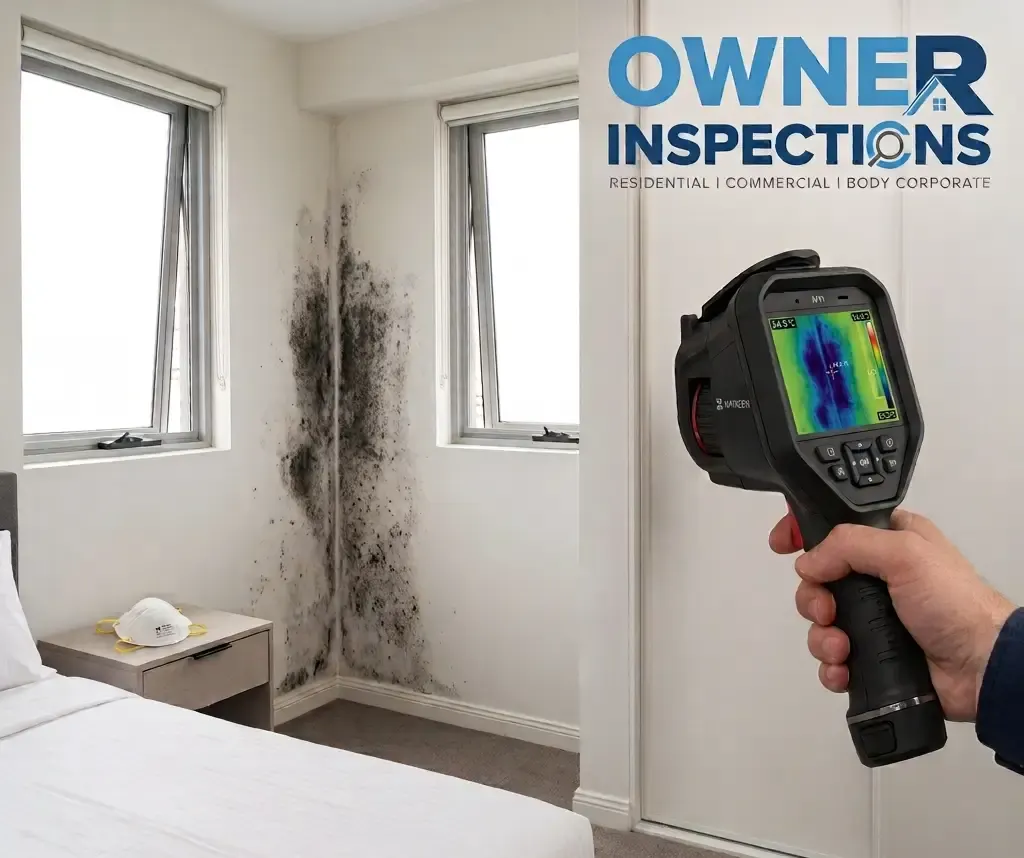
Mould is often hidden, moisture-related, and sometimes sits in the exact places a standard inspection may not fully access.
This guide is NSW-focused with Australia-wide notes. It walks you through what to do in the first 48 hours, how to work out the moisture cause, how to check whether the inspector was reasonably expected to find it, and what positive outcomes can look like when you complain or escalate.
Important
This is general information, not legal advice. If you are considering formal action, get advice suited to your circumstances.
Found a Building Defect and Need Clear Evidence?
An independent defect investigation can help document the issue, assess likely causes and provide a clearer record of what needs attention.
Investigation Reports
What This Situation Usually Means
Mould is the symptom; moisture is the cause
Mould is rarely the real problem. Moisture is. NSW Health notes mould needs moisture to grow, and it is likely to return unless you deal with the cause of dampness.
In NSW homes, major mould behind a BIR or in a roof void often traces back to one or more of these:
- Roof leaks (flashings, valleys, cracked tiles, gutter overflow, downpipe issues)
- Condensation (poor ventilation, cold surfaces, high indoor humidity)
- Plumbing leaks (wall cavities, bathrooms, laundry)
- Subfloor damp or rising/lateral damp (less common for roof-void scenarios, but possible)
Your job is to separate cause fix from clean-up. Cleaning without stopping moisture is where money gets wasted.
Why mould is commonly missed in pre-purchase inspections
Many pre-purchase inspections are visual, non-invasive, and limited to reasonably accessible areas. NSW Fair Trading explains that reports are based on what can be seen at the time of inspection, and inspectors may not be able to access concealed areas.
Industry scope statements that reference AS 4349.1 commonly spell this out in plain language: a visual assessment of reasonably accessible parts will not disclose defects in inaccessible or concealed areas.
Common blind spots in real houses include:
- Roof voids without safe manhole access, safe flooring, or safe ladder positioning
- Built-in robes with packed contents, fixed backing panels, or limited visibility behind shelving
- Furniture against walls hiding staining, skirting swelling, or musty odours
- Recently painted areas masking stains (paint can hide evidence, not stop moisture)
First 48 Hours: Health + Damage Control Steps
When to limit exposure and who shouldn’t clean it
NSW Health notes mould spores can affect people who are sensitive, especially those with asthma, allergies, or certain medical conditions. If anyone in the home is high-risk, treat exposure like a health issue as well as a building issue.
Better Health Channel (Vic Government) is very clear about who should not be present during mould removal, including pregnant women, children, and people with weakened immune systems or chronic lung disease.
If the affected area is large, inside porous materials (plasterboard, carpet underlay, robe linings), or the smell is strong through multiple rooms, it can be safer to keep people out of that room until containment and drying are underway.
Basic safety steps (ventilation, PPE, isolating the area)
If you are doing a small, surface-level clean while you organise proper help:
- Ventilate well. Better Health Channel recommends good ventilation during mould removal.
- Wear protective gear. Better Health Channel includes a P1 or P2 mask, gloves and eye protection as part of protective clothing for mould removal.
- Do not dry brush. It can flick spores into the air.
- Use HEPA filtration if vacuuming. Better Health Channel recommends only vacuuming mould-affected areas with a HEPA filter.
- Isolate the area. Close doors, seal gaps if you can, and avoid running fans that blow mould dust into clean areas.
NSW Health provides practical cleaning guidance, including mild detergent or diluted vinegar for routine clean-up, and a diluted bleach option for items that can’t be discarded and are hard to clean, with protective equipment and ventilation.
Step-by-step Action Plan
Document everything (photos, moisture readings, trades notes)
Before you scrub, rip out linings, or throw materials away, build an evidence bundle. Keep it simple and factual.
Evidence checklist table
| Item | What “good” looks like |
|---|---|
| Photos/video | Dated, wide + close shots, show the room context, the BIR/roof void entry, and any staining line on ceilings/walls |
| Trade findings | Written note identifying likely moisture entry path (example: flashing defect, gutter overflow, broken tile) |
| Moisture readings | Location-mapped readings, note date/time, and repeat after drying if possible |
| Quotes/scope | Itemised, split into “cause fix” (roof/plumbing) vs “internal remediation/replacement” |
| Report + agreement | Full inspection report, terms/conditions, and any notes about inaccessible areas (roof void/BIR) |
Tip
Create a folder called “Mould after settlement” and save everything, including emails and call notes.
Confirm source (roof leak vs condensation)
Start with the fastest cause checks:
- Roof leak clues: ceiling stain that grows after rain, damp insulation in roof void, wet rafters/battens, water tracks from penetrations, gutters overflowing.
- Condensation clues: mould on cold corners, behind furniture, on south-facing walls, bathrooms without exhaust, indoor clothes drying, no obvious rain link.
WorkSafe Queensland notes mould is often detected by visible growth or musty odour, and it can be in wall cavities or ceiling spaces. It also points out that building materials that become wet from leaks will deteriorate if not dried out quickly.
For a roof scenario, a roof plumber report with photos is often the quickest way to confirm cause and scope. For condensation scenarios, you may need ventilation and humidity assessment alongside building checks.
Get an independent assessment + written scope/costs
If you are considering a complaint to the inspector, an independent written assessment helps keep the conversation grounded.
A good independent assessment usually includes:
- Moisture mapping (moisture meter readings across the affected wall/ceiling and adjacent areas)
- Where useful, thermal imaging to identify damp patterns (it is not a mould detector, it is a moisture pattern tool)
- Photos of entry points (flashings, gutters, penetrations, valleys, box gutters)
- A clear separation between:
- Cause removal (roof/plumbing/condensation drivers)
- Remediation (containment, cleaning, HEPA filtration, removal of contaminated porous materials)
- Reinstatement (plaster, paint, joinery repairs)
NSW Health notes that if you think you have mould but can’t find the source, you can employ an occupational hygienist for specialist mould testing and consultancy services.
Has the Defect Dispute Become More Formal?
Where a building matter is moving towards tribunal, court or structured dispute resolution, an expert witness report may provide independent technical evidence.
Report Services
Was the Inspector Actually Expected to Find it?
A practical way to judge this is to ask: was the mould in a place an inspector could reasonably and safely view at the time?
NSW Fair Trading explains that inspectors may not be able to access concealed areas and that reports are based on what is visible at the time.
Many AS 4349.1-aligned scope statements define “reasonably accessible” as areas that can be accessed without removing fixed items, stored belongings, or linings, and where safety conditions allow access.
NSW reality examples
- A roof void with no safe manhole or unsafe access: often “not inspected” and should be noted as a limitation.
- A BIR packed to the brim at inspection: the internal wall behind items may not be meaningfully visible.
- A BIR with a removable panel that was not removed: a standard inspection typically does not dismantle joinery.
What the report should disclose (limitations + recommendations)
NSW Fair Trading advises using a suitably qualified person and checking they carry adequate insurance, particularly professional indemnity insurance, and it stresses understanding what the inspection covers.
A helpful report should make it clear:
- What was inspected and what was not
- Why access was limited (locked area, stored items, safety risk, no manhole)
- Any indicators that suggest further investigation (staining, musty odour, dampness, poor ventilation)
If you are unsure how to interpret defect descriptions, photographs, recommendations or limitation notes, read this guide on understanding your property inspection report before writing your complaint.
The key questions are:
- Did the report clearly state whether the roof space was accessed?
- Did it explain why any area was not inspected?
- Did it identify visible moisture indicators?
- Did it recommend further investigation where warning signs were present?
Red flags in reports (no access notes, vague “no issues observed”)
Red flags that can matter in a dispute:
- The report says “roof void inspected” but there is no photo, no note of access point, and no description.
- The report claims “no evidence of dampness” but you later discover obvious staining that appears older than settlement.
- The report has broad disclaimers but fails to document obvious access limits (example: BIRs not opened, roof void not accessed).
Inspection scope comparison table
| Service type | Typical inclusions | Best for |
|---|---|---|
| Standard pre-purchase inspection | Visual, non-invasive, reasonably accessible areas, written report | General defect screening and risk reduction |
| Moisture/leak investigation add-on | Moisture mapping, targeted investigation, roof/plumbing focus, evidence photos | Suspected leaks, staining, musty odours, prior water issues |
| Mould assessment | Containment advice, remediation scope, verification approach, hygiene considerations | Visible mould, strong odours, health concerns, porous material impacts |
Your Options With the Inspector
A complaint does not always end in a fight. “Positive” can mean:
- A clear explanation of access limits, with evidence from the original inspection
- A re-inspection to confirm whether the issue was visible at the time (sometimes at low or no cost)
- A negotiated partial refund if documentation was poor or a visible issue appears to have been missed
- A pathway to the inspector’s insurer, if liability is accepted (professional indemnity insurance exists for this reason)
NSW Government information for selling agents also highlights that when a report is included in a contract for sale, it must indicate whether the author has professional indemnity insurance.
How to write the complaint (facts, timeline, remedy request)
Keep the complaint calm and structured. Focus on facts, not feelings. You can use this format.
Subject line: Pre-purchase inspection at [address] on [date] – significant mould discovered after settlement
Include:
- Inspection date, report date, settlement date, move-in date
- Where the mould is (example: behind built-in robe in main bedroom, and dampness in roof void above that room)
- What you found (photos, odour, damaged plaster, swollen skirting)
- What a trade/independent assessor found (written diagnosis and photos)
- What the report says about:
- roof void access
- wardrobes/BIRs access
- any dampness or staining observations
- limitations and recommendations
Ask direct questions:
Was the roof void accessed? If not, why not, and where is that recorded? Were BIRs opened and internally inspected as far as practicable? Were any moisture indicators noted near that wall/ceiling?
Request a clear outcome:
- Written response addressing access and observations
- Re-inspection or file review
- Proposed resolution steps, including whether the matter is referred to insurance
NSW Fair Trading notes that if you are not happy with the report, you should try to resolve it with the consultant, and you can also access free advice and complaint services through NSW Fair Trading.
Other Responsible Parties You May Need to Check
Seller/agent (misrepresentation vs “as-is” risks)
Property purchases are often effectively “as-is”, but that does not mean everything is fair game. If you suspect a known leak or mould issue was actively concealed, or you relied on a specific representation, speak with a solicitor about your options and evidence thresholds. Keep your expectations realistic: this is often harder than it feels, and proof matters.
Builder/warranty (if newer build)
If the home is relatively new, there may be statutory warranty or defect pathways, depending on build type and timing. NSW strata guidance notes that some defects in residential buildings may be covered by statutory warranty periods and points to Building Commission NSW pathways for serious defects in certain newer buildings.
Strata/body corporate (common property water ingress)
If you are in an apartment, townhouse, villa, or strata duplex, water ingress can involve common property. NSW Government strata guidance states the owners corporation is responsible for common property maintenance and repair, including roof and gutters, and water damage coming from common property.
QWho might be responsible?
| Scenario | Likely pathway to check first | Why |
|---|---|---|
| Leak is from roof flashing/gutters | Roof plumber report + photos | Confirms cause and rectification scope fast |
| Mould was in an area the inspector couldn’t access (locked BIR, unsafe roof void) | Check report limitations | Standard inspections are often non-invasive and access-limited |
| Mould was plainly visible and accessible | Written complaint to inspector | Raises the “should have been identified” question |
| Strata property; leak may be common property | Strata manager/owners corporation | Roof and gutters are commonly owners corporation responsibility |
| Health symptoms or heavy contamination | Health guidance + professional remediation | PPE and exposure advice exists |
NSW Pathways If It Doesn’t Resolve
Consumer Rights for Services (ACL)
Australian Consumer Law provides consumer guarantees for services, including that services are provided with due care and skill. Consumer-facing regulator guidance explains that if you cannot resolve a problem with a business, you can take the complaint further through your state consumer protection agency.
This is where evidence becomes the whole game. The more you can show that something was visible, accessible, and should have been noted within the stated scope, the stronger your position tends to be.
NSW Fair Trading and NCAT
If you cannot resolve it directly, NSW Fair Trading is a standard next step for complaint pathways.
For formal consumer disputes, NCAT can hear and decide consumer claims up to $100,000. NCAT also sets out evidence examples to gather, including quotes, photos, and relevant documents, and notes time limits can apply.
How to Prepare Your NCAT-ready Bundle
- 1-page timeline (inspection, settlement, discovery, trades, costs)
- Photos with captions (what, where, when)
- Independent findings (roof plumber, building consultant, hygienist if used)
- Moisture mapping results (if available)
- The inspection report, terms, and any email communications
- Itemised quotes split into cause-fix vs remediation vs reinstatement
Note
Australia-wide note: Each state/territory has its own consumer agency and tribunal pathway. If you bought outside NSW, the same evidence-first approach applies, but the forum changes.
Preventing Recurrence After Repairs
Drying, containment, verification (clearance checks)
Mould remediation works best when it follows a sequence:
- Fix the moisture source
- Dry the structure and materials properly
- Remove or remediate contaminated materials
- Verify that moisture levels are back to normal before closing walls or reinstalling joinery
A public health guideline warns against sealing or covering surfaces until they are dry, and it outlines that drying may take days and may need dehumidifiers, fans, and controlled airflow.
If you are paying for remediation, ask what “done” looks like. A basic completion check often includes:
- Visible cleanliness with no dust and no musty odour
- Moisture readings returning to acceptable range for the material
- Confirmation that porous materials that cannot be cleaned were removed and replaced, where appropriate
A note on fogging: fogging can be marketed as a quick fix. Treat it cautiously. If the moisture source is not fixed and materials are still damp, fogging can become a temporary deodoriser rather than a solution.
Ventilation + Moisture Control Basics
Practical household habits that help once repairs are complete:
- Run bathroom and kitchen exhaust during and after use
- Keep furniture slightly off external walls in colder rooms
- Avoid drying clothes indoors without ventilation
- Use a dehumidifier during wet weeks if indoor humidity stays high
- Keep gutters clean and ensure downpipes discharge correctly
Request an Independent Moisture and Mould Assessment
If you need a clearer picture of the affected area, moisture indicators and next steps, request a professional mould inspection from Owner Inspections.
Not Sure What Evidence or Inspection You Need?
Speak with Owner Inspections about your building defect, existing documents and next steps so you can choose a service that fits the situation.
Frequently Asked Questions
Is black mould dangerous, and should I leave the house?
If mould appears after settlement, who is usually responsible?
Does a pre-purchase building inspection have to find mould hidden in a BIR or roof void?
What does AS 4349.1 mean in practice for “limitations”?
What evidence should I collect before contacting the inspector?
How do I raise it with the inspector so it doesn’t go nowhere?
Can anything “positive” come out of complaining to the inspector?
Do consumer guarantees apply to building inspection services?
What if my report says the inspector didn’t enter the BIR or roof space?
Could strata/body corporate be involved if the leak is external or common property?
Where can NSW homeowners go if the inspection dispute doesn’t resolve?
How do I prevent mould returning after repairs?
Related Articles
Black Mould Myths: Separating Fact from Fiction in Mould Inspections
Black mould generates fear among property owners, but much of that fear is based on myths. This guide debunks common misconceptions and explains why professional mould inspections are essential for accurate assessment.
How Mould Inspections Contribute to Healthy Living in Brisbane
Brisbane's subtropical climate creates ideal conditions for mould growth, with high summer rainfall generating warm, moist environments. This guide covers mould identification, professional inspection methods, health risks, prevention strategies, and when to schedule inspections.
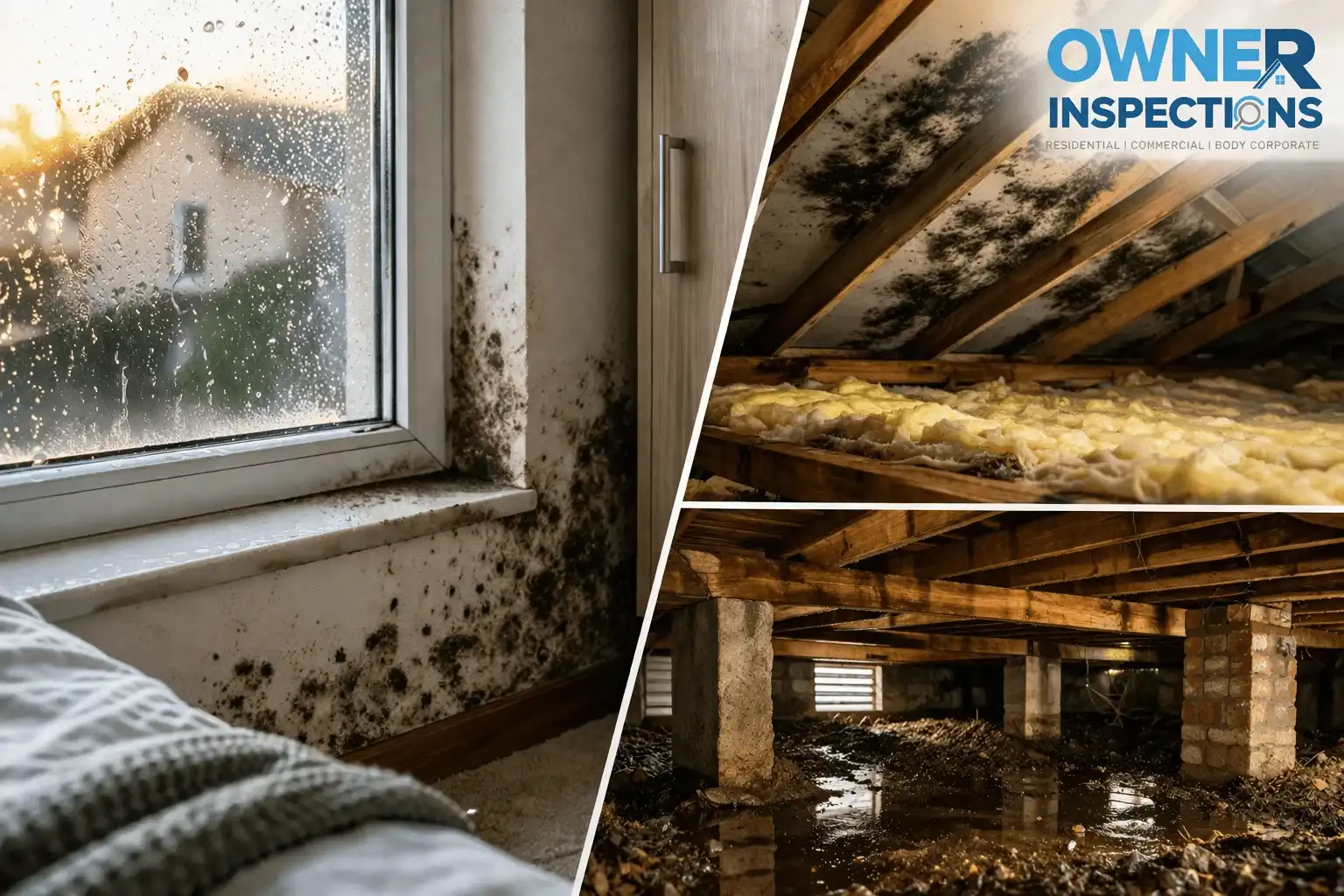
How Poor Ventilation Causes Mould, Condensation and Hidden Defects
Poor ventilation can do more than leave a home feeling stuffy. It can trap moisture, cause condensation and mould, and contribute to hidden defects in roof spaces, wall cavities and subfloors. This guide explains the warning signs, likely causes, and when an inspection is the right next step.