

Under the Australian Consumer Law, services must be provided with due care and skill. An inspection that falls below that standard can breach the guarantee. In practice, almost every one of these disputes turns on a single question: was the defect visible, and should a competent inspector have reported it?
That is a technical question, not a legal one, which is why these claims usually start with an independent defect investigation report rather than a letter from a solicitor. Finding the problem months after you moved in does not close the door by itself, but a clock is already running.
What counts as negligence, and what does not
Inspectors are not insurers. A standard pre-purchase inspection is visual and non-invasive. The inspector does not lift carpet, cut open walls, move heavy furniture or dismantle anything.
- Likely negligent: a large crack in an accessible wall, obvious active water staining, visible termite workings in an accessible subfloor, or a missing balustrade to a raised deck, none of it mentioned in the report.
- Usually not negligent: damage hidden behind a wall lining, a leak that only appears in heavy rain, a defect under a stored pile of boxes, or anything the report expressly flagged as inaccessible.
Read your report's limitations section before anything else. If it recorded an area as inaccessible and recommended further investigation, and you proceeded anyway, a claim becomes much harder. It cuts both ways, though. A report that skipped an accessible roof space or subfloor without saying why, that carries no photographs of the defects it names, or that omits its limitations section entirely is one the inspector will struggle to defend as meeting the standard.

What do you actually have to prove?
These claims are generally assessed in four parts, and each part needs its own evidence.
- Duty of care. The inspector owed it to you because you engaged and paid them directly. Your agreement and invoice establish it, and it is rarely the part that gets argued.
- Breach. They missed something a competent inspector, working to AS 4349.1 and to the report's own stated scope, should have found. This is proved by an independent expert opinion, not by your view of it.
- Causation. The missed defect, rather than later damage or work done after settlement, caused the loss you are claiming.
- Loss. A number, not a grievance. Usually repair quotes, sometimes the difference in value between the property as reported and as it actually was.
Breach and causation are where these claims are won and lost, and both sit inside the expert report rather than in anything you can argue yourself.
What is considered a major defect?
Australian Standard AS 4349.1, which governs pre-purchase property inspections, treats a major defect as one of sufficient magnitude that rectification has to be carried out to avoid unsafe conditions, loss of utility, or further deterioration of the property.
In practice that means structural movement, unsafe electrical work or balustrading, active water penetration, significant timber pest damage, or anything that will worsen without intervention. A scuffed skirting board is not a major defect. A stepped crack through brickwork with displacement almost certainly is, and the seriousness of what was missed decides whether there is a recoverable loss at all.
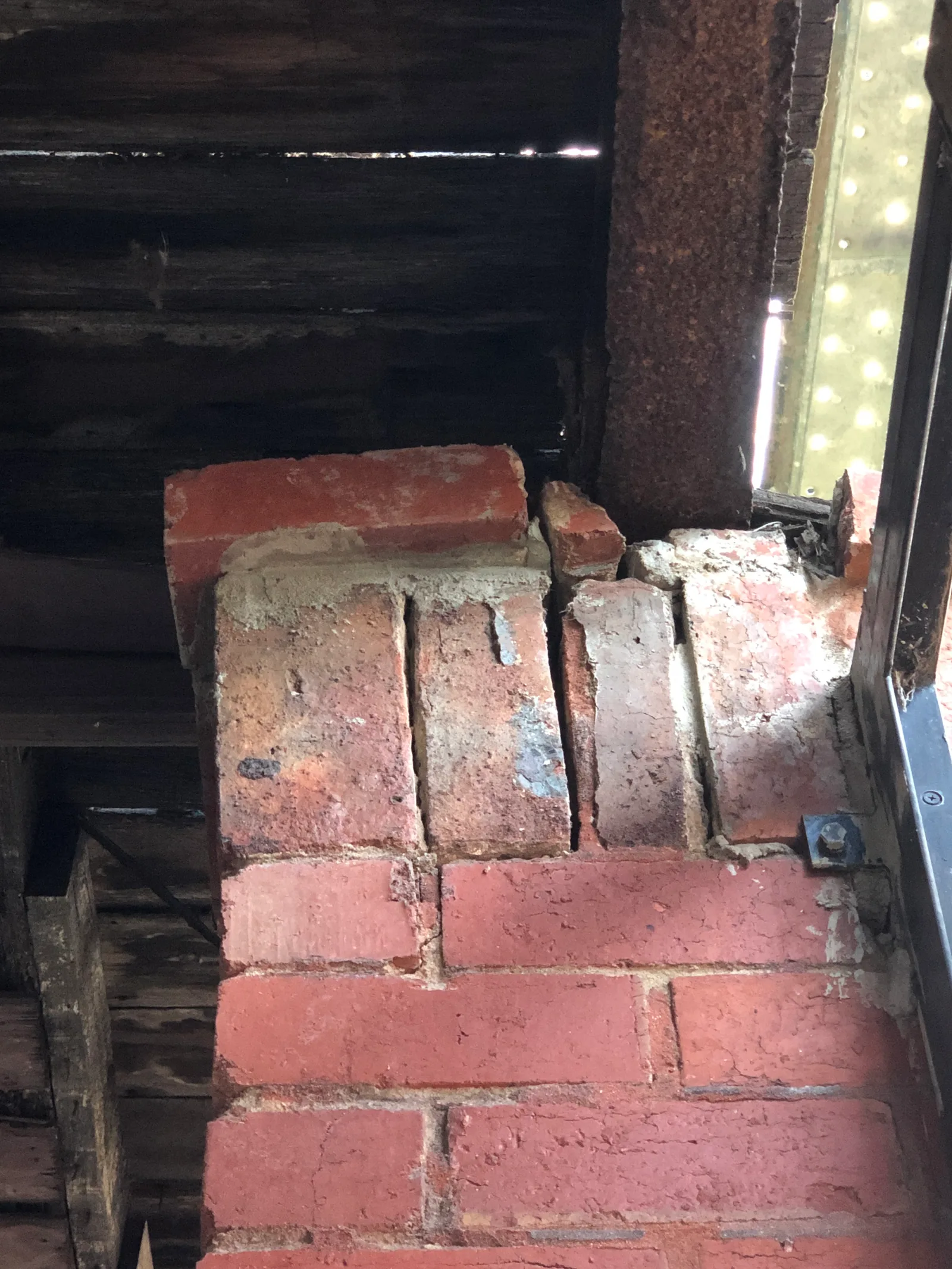
The brickwork above is a major defect. The mortar joints have opened, individual bricks have displaced, and the steel lintel carrying the load has corroded and expanded. None of that is subtle and none of it is concealed. Obvious and accessible together is what a negligence claim is usually built on.
The evidence that actually decides these cases
You cannot win by saying the defect exists now. You have to establish it existed, and was visible, on the day of the inspection. That is the whole battleground.
- An independent expert report. A qualified consultant inspects the defect, assesses its age and progression, and gives an opinion on whether it was reasonably detectable at the time. What separates a strong expert witness report from a weak one is that it reasons from what it observed instead of asserting a conclusion.
- The original report, including the limitations and scope sections.
- Dated photographs, including any taken by the selling agent before you bought.
- Repair quotes, which establish the size of your loss.
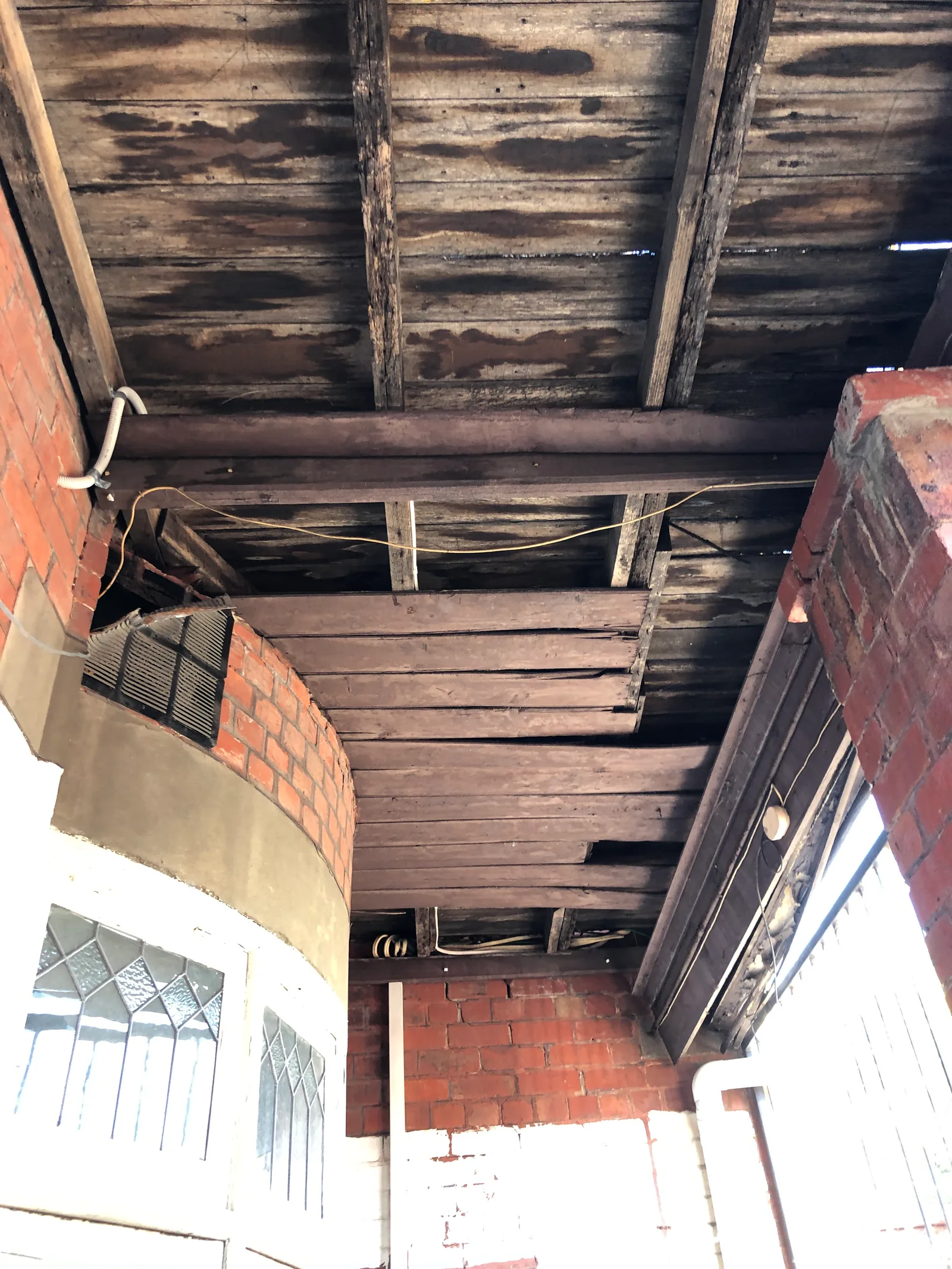
The age question is the one people underestimate. Cracking, rot and termite damage progress at rates a consultant can reason about, so an expert can often say whether a defect is months or years old, which either supports the claim or destroys it. The staining above did not appear in a week, and where a defect is that advanced and that visible from ground level, the argument shifts from whether it existed to why it was not reported.
Need a Defect Documented Properly?
Get an independent defect investigation report with photographs, findings and an opinion on cause, before the evidence gets harder to establish.
Can I sue a building surveyor?
Building surveyors and building inspectors do different jobs, and it matters for who you pursue.
A building surveyor issues permits and inspects for compliance with the National Construction Code at set stages of a build, so their duty is largely about statutory compliance. A building inspector carries out a private inspection under contract with you, and their duty runs to you directly.
If a new build has code defects, the surveyor may be relevant, and complaints usually go to the state regulator, such as the Building and Plumbing Commission in Victoria or the QBCC in Queensland. If you paid privately for a pre-purchase inspection, your claim is against the inspector.
Where do I file a claim, and what does it cost?
Where you file depends on the state and on the size of the claim, and not every state uses a tribunal for this. New South Wales, Victoria, Queensland, the ACT and the Northern Territory route homeowner sized consumer claims to NCAT, VCAT, QCAT, ACAT and NTCAT respectively. In South Australia, Western Australia and Tasmania the equivalent claims are heard in the minor civil or small claims stream of the Magistrates Court instead. The ACCC keeps a current list of the right forum in each state, and it is worth checking before you lodge anything, because filing in the wrong place costs you time you may not have.
Filing fees and the monetary limits on what each forum can hear vary by state, are revised regularly, and change with the size of the claim, so read the current schedule on your own court or tribunal's site rather than trusting a figure you read somewhere. Procedure varies too. How the process differs between states affects what you have to file and when, and how long a tribunal dispute usually takes is measured in months, not weeks. Before any of that, NSW Fair Trading and Consumer Affairs Victoria both run complaint and conciliation processes that cost you nothing to use.
Most of these matters never reach a hearing. Once a credible independent report is in front of the inspector's insurer, the argument usually turns from whether there is liability to how much it is worth.
How long do I have to make a claim?
This is where most claims quietly die.
Limitation periods vary by state, and they generally run from when the loss occurred rather than from the day you found out about it. In most states the period for a negligence claim is six years, for example section 14 of the Limitation Act 1969 (NSW), which runs from the date the cause of action first accrues. The Northern Territory is the outlier at three years, under section 12 of its Limitation Act 1981.
Six jurisdictions also set a separate long stop for building actions, and where it exists it runs longer than six years rather than shorter. In New South Wales that is ten years under section 6.20 of the Environmental Planning and Assessment Act 1979, measured from the date the work was completed. In Victoria it is also ten years, under section 134 of the Building Act 1993, but it runs from the date the occupancy permit was issued, or from the certificate of final inspection where no occupancy permit was issued. That difference in starting point has been fought out in the Victorian Court of Appeal more than once, which tells you how little it pays to assume. Queensland and Western Australia have no building long stop at all.
Which period applies to you depends on who you are suing and for what. Treat six years as the assumption to check with a solicitor, not the answer.
The practical point is simple: the clock is already running. Get the defect independently documented early, even if you have not decided whether to pursue anything. Evidence degrades, repairs destroy it, and inspectors change insurers.
What about the contract you signed?
Most inspection agreements contain limitation of liability clauses, and many cap liability at the fee you paid. Those clauses are not automatically enforceable, particularly where they conflict with consumer guarantees, but they do shape what is realistically recoverable.
Check whether your inspector carries professional indemnity insurance. A claim against an uninsured sole trader may be unrecoverable even if you are entirely right on the facts.
What to do first
- Do not repair the defect yet. Repairing destroys the evidence.
- Photograph everything, with dates.
- Re-read the original report, especially scope and limitations.
- Get an independent expert witness report on whether the defect was detectable at the time.
- Write to the inspector setting out the issue, and keep it factual.
- Then speak to a solicitor, with the report in hand.
Nothing here is legal advice, and an inspection report is not a substitute for it. What an independent report can establish is whether the defect was there, how old it is, and whether a competent inspector should have seen it, which is usually the single fact the rest of the claim rests on.
Can I sue a building inspector for missing termites?
What happens if a building inspector misses something?
What happens when a building inspection fails?
What is the biggest red flag in a home inspection?
What powers do building inspectors have?
How much does an expert witness report cost?
Should I repair the defect before making a claim?
Can I sue a building surveyor?
Related Articles
Inspector Missed Black Mould After Settlement, What To Do?
What your options are when mould surfaces after you have already moved in, and who is responsible.
Defect Investigation Report vs Building Inspection Report
The two reports answer different questions. This explains which one your situation actually needs.
Expert Witness Costs vs Benefits in Construction Disputes
What an expert report costs against what it recovers, and when it is worth commissioning.