
What most cost guides leave out is that Queensland has specific rules about who can give expert evidence, how many experts you are allowed, and what an expert report must contain. Those rules are the biggest single driver of the bill, and understanding them before you engage anyone is how you avoid paying twice.
What Does an Expert Witness Do in Construction Disputes?
An expert witness in a construction dispute is a qualified professional, usually a licensed building inspector, engineer, or construction specialist, who gives independent opinion evidence on technical matters. Unlike an ordinary witness, who can only describe what they saw, an expert is permitted to state an opinion on cause, extent, compliance and the cost to put the work right.
In practice the work is three things. They assess whether the work complies with Australian Standards and the NCC and put a rectification cost on it. They translate material specifications, structural calculations and code clauses into plain language a tribunal member can act on without a building background. And they bring pattern recognition, having seen the same failure across many properties, which lets them separate a construction defect from ordinary wear, seasonal movement or an owner maintenance issue. That last distinction is frequently the whole dispute.
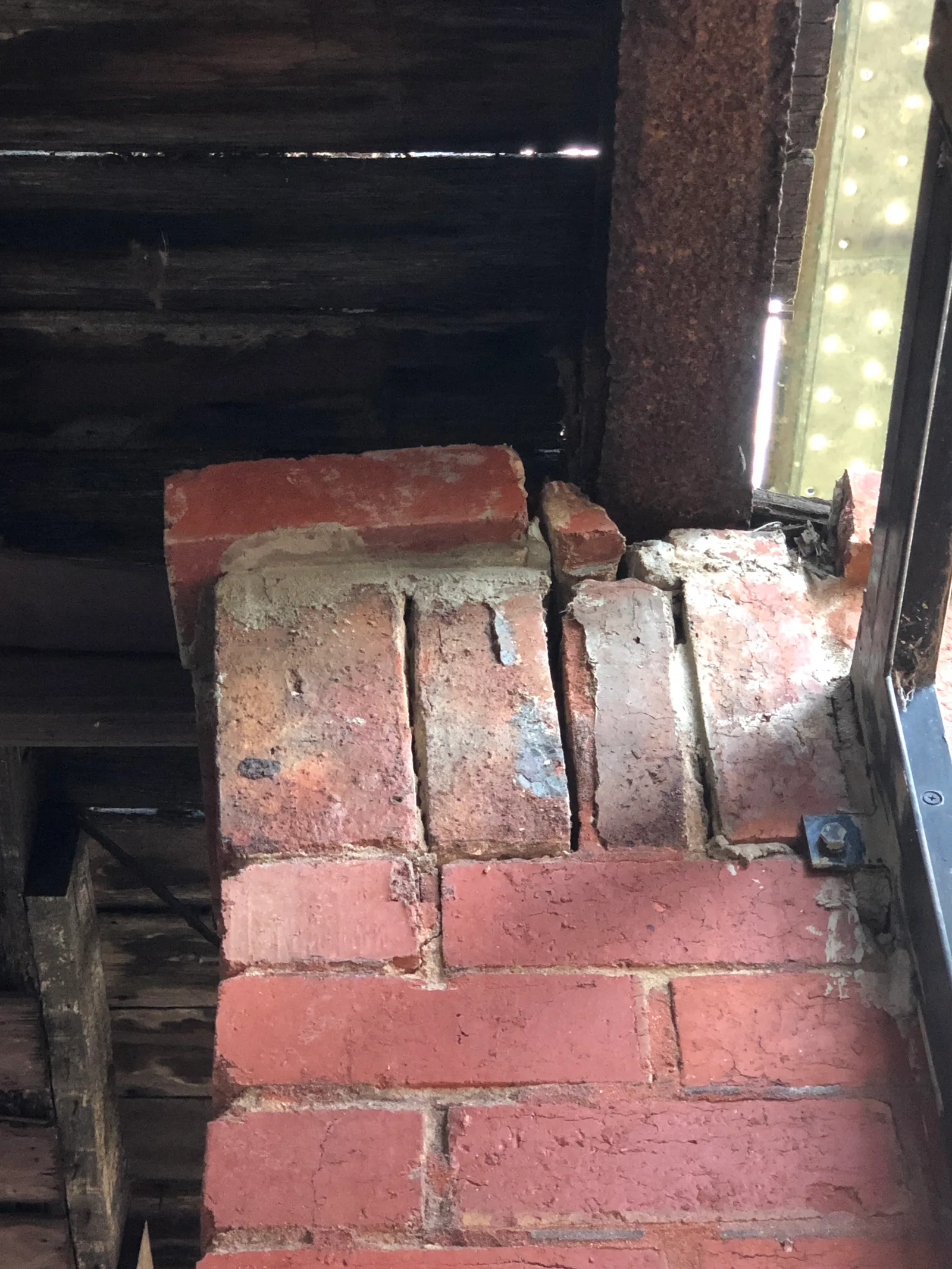
Cracked and displaced brickwork above a corroding steel lintel. On its own the photograph establishes very little. What an expert adds is the finding that the cracking follows from the lintel corroding and expanding, which is what turns a photo into evidence of a defect rather than a maintenance complaint.
In Queensland, expert witnesses in construction disputes most often give evidence at the Queensland Civil and Administrative Tribunal (QCAT), the District Court, and the Supreme Court. They may also be involved in QBCC dispute resolution, mediations, and adjudication under the Building Industry Fairness (Security of Payment) Act 2017.
How Much Does an Expert Witness Cost in Brisbane?
An expert witness in Brisbane costs $3,000 to $20,000 in total, built from a retainer of $1,000 to $3,000, a site inspection of $500 to $2,000, report preparation of $2,000 to $8,000, and hearing attendance at $1,500 to $5,000 or more per day. Most experts charge $250 to $500 per hour against those components.
| Typical Cost (AUD) | What It Covers | |
|---|---|---|
| Initial Retainer | $1,000 to $3,000 | Securing the expert's availability, initial review of documents, and preliminary assessment |
| Site Inspection | $500 to $2,000 | On-site assessment of the property, defect documentation, photographs, moisture readings and measurements |
| Report Preparation | $2,000 to $8,000 | Written report meeting rule 428 of the Uniform Civil Procedure Rules, with findings, photographs, references to standards and expert opinion |
| Expert Conclave and Joint Report | $1,000 to $3,000 | Attending the compulsory conference of experts and preparing the joint report that becomes the evidence |
| Court or Tribunal Attendance | $1,500 to $5,000+ per day | Preparation for and attendance at hearings, giving evidence, cross-examination |
| Travel and Disbursements | $200 to $1,000+ | Travel to site or hearing, accommodation if required, printing and document costs |
Complex matters with multiple site visits, destructive testing, lengthy reports and extended hearings can run past $20,000. The conclave line is the one people forget to budget for, and it is not optional once a hearing is on foot.
Note
These rates reflect what Owner Inspections sees across Queensland engagements. Always ask for a written fee schedule that separates the report from hearing attendance, so you are not committing to hearing days you may never use.
Do I Have to Lodge a QBCC Complaint Before Applying to QCAT?
Yes. For a building dispute, the QBCC states that lodging a complaint with it is a mandatory first step, and QCAT will not accept a building dispute application until you have been through that process. If the QBCC cannot assist or the matter does not resolve, it issues a letter confirming that outcome, and that letter is what lets you apply to the tribunal.
This sequence matters financially, because it determines when to spend money on an expert.
Lodge the complaint with the QBCC
Assess the work against the QBCC standards and tolerances guide and lodge a defective work complaint. A clear independent defect report at this stage often does the job on its own.
QBCC assessment and possible direction to rectify
The QBCC may inspect and issue a direction to rectify requiring the contractor to fix the work. Many disputes end here, with no tribunal and no expert witness fees at all.
Receive the QBCC outcome letter
If the QBCC cannot help or the work stays unresolved, it gives you a letter. Only then can you apply directly to QCAT.
Apply to QCAT and commission the expert report
This is the point where a full expert witness report earns its cost, because from here the matter is decided on evidence rather than negotiation.
The practical lesson is that a defect investigation report, which costs far less than a full expert witness engagement, is often the right first spend. Escalate to an expert witness report when the QBCC route is exhausted and the matter is genuinely heading to a hearing.
Heading to QCAT with a Building Dispute?
An independent report written to Queensland tribunal requirements, prepared by inspectors who have given evidence at QCAT.
What Rules Must an Expert Report Follow in Queensland?
A Queensland expert report must comply with QCAT Practice Direction No 4 of 2009 and rule 428 of the Uniform Civil Procedure Rules. It must be addressed to the tribunal, signed, and set out the expert's qualifications, every material fact relied on, what was inspected and by whom, the range of opinion on contested points, and a confirmation that the expert understands and has complied with their duty.
These are not formatting preferences. A report that misses them can be given little weight or excluded, and you will have paid for it either way.
- One expert per area of expertise. Practice Direction No 4 of 2009 limits each party to a single expert per field. You cannot commission three opinions and put forward the most favourable one, so the choice of expert is close to irreversible.
- The expert's duty runs to the tribunal, not to you. The Practice Direction states that this duty overrides any obligation to the party who pays the fee, and that nobody may instruct an expert to adopt or reject a particular opinion. You are buying an independent assessment, not an advocate.
- A conclave is compulsory. All experts engaged for a hearing must attend a conference convened by a member, adjudicator or the principal registrar, to identify what they agree and disagree on.
- The joint report becomes the evidence. Where experts have attended a conclave, the joint report is taken to be their statement of evidence, and an expert cannot later depart from an agreed position without the tribunal's leave.
- The report must satisfy rule 428. Qualifications, material facts, literature relied on, a description of every inspection, a summary of the range of opinion, conclusions, and the expert's signed confirmations.
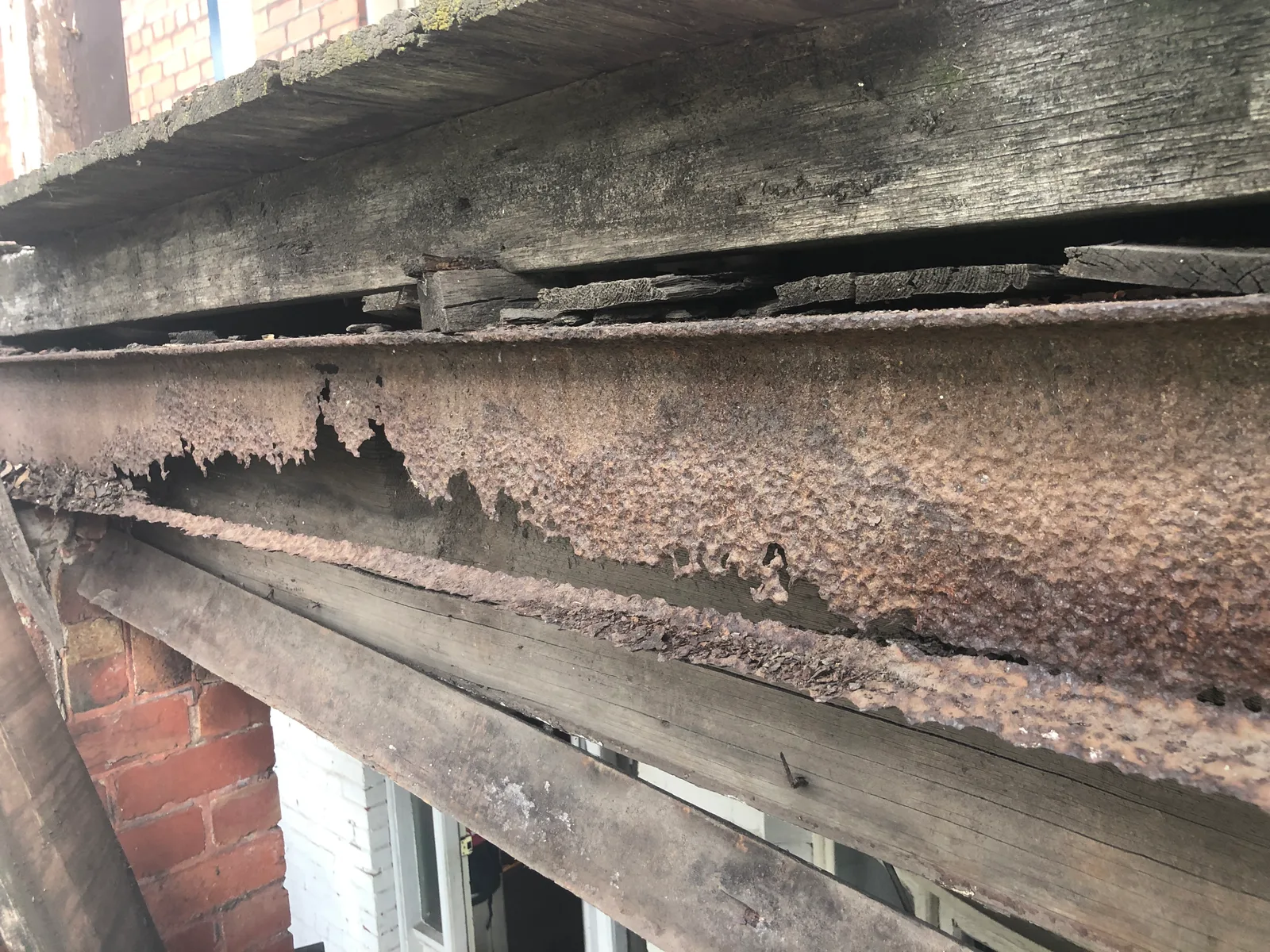
A severely corroded steel lintel, the rust layers delaminating and lifting the timber above. Rule 428 is why an expert cannot simply photograph this and call it defective. The report has to record what was inspected, what the expert relied on, and where a reasonable second opinion might differ.
What Are the Benefits of Hiring an Expert Witness?
The benefit of an expert witness is that it converts a disagreement into documented, independent evidence of cause and cost. That changes the negotiating position, gives your solicitor a defensible number to claim, and gives the tribunal something it can act on. In most matters the settlement effect arrives long before any hearing does.
Most defect disputes are contested on cause rather than existence. Both sides agree the wall is cracked. The argument is whether it cracked because of the footing design, the workmanship, or the ground, and an expert answers that in terms a tribunal can adopt. The report also puts an independent rectification figure on the claim, which matters because without one a claimed amount is an assertion and QCAT has no basis to award it. A builder facing itemised costs and code references is markedly more likely to negotiate, and avoiding a hearing removes the largest cost in the whole process.
Pros
- Provides independent evidence a tribunal can rely on
- Establishes cause, not just the existence of a defect
- Increases the likelihood of settlement before a hearing
- Quantifies damages with itemised rectification costs
- Produces a document that meets rule 428 and will not be excluded
Cons
- Fees range from $3,000 to $20,000 or more
- You get one expert per area of expertise, so the choice is close to final
- The expert's duty is to the tribunal, so the opinion may not favour you
- Conclave and hearing days add fees that accumulate quickly
- The outcome is never guaranteed, even with strong expert evidence
What Does the Whole Dispute Cost, Not Just the Expert?
The expert is one line in a larger bill. A QCAT building dispute application under section 77(1) of the QBCC Act costs $405.60 to lodge, and an appeal costs $811.30, on the fees in force from 1 July 2026. Add legal costs, which at QCAT usually require permission to be represented, and the expert fee is typically a third to a half of the total.
| Cost | Notes | |
|---|---|---|
| QBCC defective work complaint | No tribunal fee | Mandatory first step before QCAT will accept a building dispute application |
| QCAT application (QBCC Act s 77(1)) | $405.60 | Published QCAT fee in force from 1 July 2026, fee waivers can be applied for |
| QCAT appeal | $811.30 | Only relevant if you appeal the tribunal's decision |
| Expert witness report | $3,000 to $12,000 | Inspection, report to rule 428, conclave and joint report |
| Expert hearing attendance | $1,500 to $5,000+ per day | Only incurred if the matter is not settled before hearing |
| Legal representation | Varies widely | At QCAT most parties must apply for permission to be legally represented, though you can get legal advice without permission |
Owner Inspections prepares reports and gives evidence. We do not provide legal advice, and the question of whether to run a case at all is one for a solicitor.
Who Pays the Expert Witness and Can You Get the Money Back?
The party who engages the expert pays the fee, and at QCAT you should assume you will not get it back. Section 100 of the QCAT Act sets the default that each party bears its own costs. Section 102 allows the tribunal to order costs against a party where the interests of justice require it, but that is the exception rather than the routine outcome.
The higher courts behave differently. In the District Court and Supreme Court, costs more commonly follow the event, so a successful party has a better prospect of recovering expert fees. That difference is worth understanding before you choose a forum, and it is a conversation for your solicitor rather than your inspector.
Do not budget on the assumption that a win at QCAT returns your expert fees. Treat the expert cost as spent money that has to justify itself through a better outcome or an earlier settlement, not through recovery.
When Is an Expert Witness Worth It?
An expert witness is worth it when the amount in dispute clearly exceeds the fee, when the case turns on cause rather than fact, or when the other side has engaged an expert of their own. Below roughly $20,000, the fee eats too much of the claim, and QBCC dispute resolution or mediation is usually the better first move.
| Expert Witness Cost | Benefit Assessment | |
|---|---|---|
| Small Dispute (under $20,000) | $3,000 to $5,000 | Rarely cost-effective on its own. Use QBCC dispute resolution first, and consider a defect investigation report instead of a full expert engagement |
| Medium Dispute ($20,000 to $100,000) | $5,000 to $12,000 | Usually worth it. This is the band where expert evidence most often produces settlement rather than a hearing |
| Large Dispute ($100,000+) | $10,000 to $20,000+ | Strongly recommended. The fee is a small fraction of the amount at stake and the risk of running without evidence is severe |
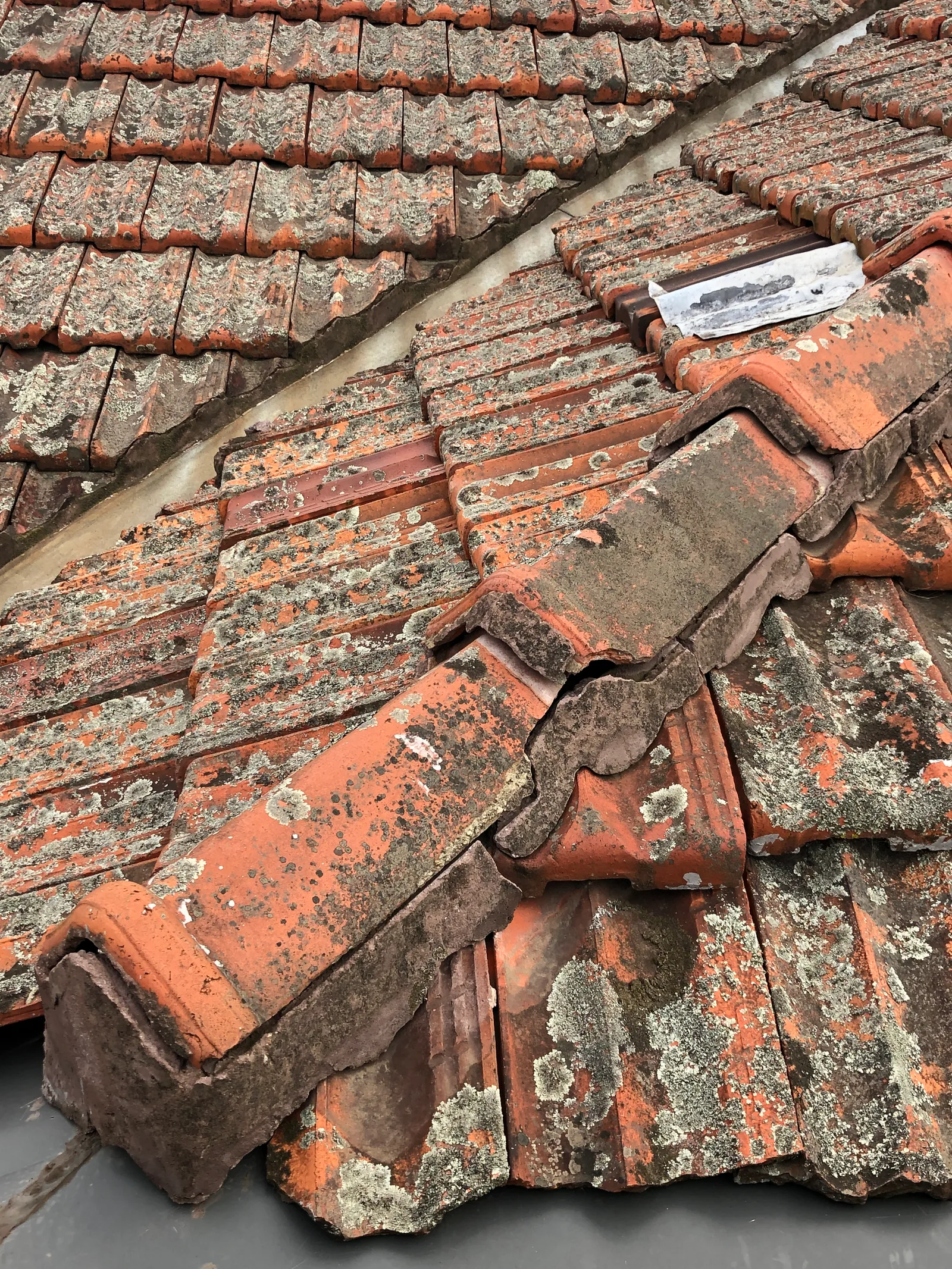
Broken and displaced ridge tiles with failed bedding. Defects like this are cheap to argue about and expensive to prove, which is why the size of the claim, not the drama of the photograph, should drive the decision to engage an expert.
How to Choose the Right Expert Witness in Brisbane
Choose an expert who is licensed in Queensland, has given evidence before, is genuinely independent of both parties, and writes reports that satisfy rule 428. Because Queensland limits you to one expert per area of expertise, this choice is effectively final, and the wrong appointment cannot be quietly replaced with a better one later.
- Licensed and qualified. Building, inspection or engineering qualifications recognised in Queensland, and a current QBCC licence where the work requires one.
- Experience giving evidence. The conclave and cross-examination have protocols that catch out first-timers.
- Genuine independence. No prior relationship with either party or the property. An expert who has already worked for you on the same building invites an attack on the whole report.
- Reports that meet the rules. Ask for a redacted sample and check it addresses qualifications, material facts, methodology, range of opinion and the signed confirmations.
- Local knowledge. Familiarity with Brisbane construction practice, Queensland soil and climate conditions, and QBCC processes.
Key Takeaways
- An expert witness in a Brisbane construction dispute costs $3,000 to $20,000, with most residential defect matters between $5,000 and $12,000.
- The main cost components are the retainer, site inspection, report preparation, the compulsory expert conclave, and hearing attendance at $1,500 to $5,000 or more per day.
- A QBCC complaint is a mandatory first step, and QCAT will not accept a building dispute application until that process has run its course.
- QCAT Practice Direction No 4 of 2009 allows only one expert per area of expertise, so the appointment is close to irreversible.
- The expert's duty is to the tribunal and overrides any obligation to the party paying the fee, which is precisely what makes the evidence worth buying.
- A QCAT building dispute application costs $405.60 on the fees in force from 1 July 2026, and section 100 of the QCAT Act means each party usually bears its own costs.
- For disputes above $20,000, the expert fee is normally a worthwhile fraction of the amount at stake. Below that, exhaust QBCC dispute resolution first.
Frequently Asked Questions
How much does an expert witness cost for a Brisbane construction dispute?
Between $3,000 and $20,000 in total. That covers a retainer of $1,000 to $3,000, a site inspection of $500 to $2,000, report preparation of $2,000 to $8,000, and hearing attendance at $1,500 to $5,000 or more per day. Hourly rates run $250 to $500.
Do I need to lodge a QBCC complaint before applying to QCAT?
Yes. The QBCC states that lodging a complaint is a mandatory first step and QCAT will not accept a building dispute application until that process is complete. If the QBCC cannot assist, it issues a letter, and that letter is what allows you to apply to the tribunal.
Can I use more than one expert witness in a QCAT building dispute?
No. QCAT Practice Direction No 4 of 2009 limits each party to one expert for each area of expertise. You cannot obtain several opinions and put forward the most favourable one, which makes the initial choice of expert close to irreversible.
What is an expert conclave at QCAT?
A compulsory conference of all experts engaged for a hearing, convened by a member, adjudicator or the principal registrar. The experts identify what they agree and disagree on, then produce a joint report which is taken to be their statement of evidence.
What does an expert witness do in a construction dispute?
They inspect the property, review the construction documents, identify defects or non-compliance, prepare a report meeting rule 428 of the Uniform Civil Procedure Rules, attend the expert conclave, and give evidence at hearing if the matter is not settled first.
Is an expert witness worth the cost for a small construction dispute?
Usually not below about $20,000, because the fee consumes too much of the claim. Try QBCC dispute resolution or mediation first. A defect investigation report costs considerably less and is often enough to resolve a smaller matter.
Can an expert witness help me settle without going to court?
Yes, and that is the most common way the cost pays for itself. A report with documented defects, established cause and itemised rectification costs gives both sides a defensible basis to negotiate, and many Brisbane disputes resolve once reports are exchanged.
Can I recover expert witness costs if I win at QCAT?
Usually not. Section 100 of the QCAT Act says each party bears its own costs, and section 102 allows a costs order only where the interests of justice require it. The District and Supreme Courts award costs more readily, so ask your solicitor about forum.
What qualifications should a construction expert witness in Brisbane have?
Relevant building, inspection or engineering qualifications recognised in Queensland, a QBCC licence where required, membership of a recognised professional body, and prior experience giving evidence at QCAT or in the courts.
What is the difference between an expert witness report and a building inspection report?
A building inspection report records condition at a point in time. An expert witness report is prepared for proceedings, states an opinion on cause, extent and rectification cost, is addressed to the tribunal, and must satisfy rule 428 of the Uniform Civil Procedure Rules.
References and Resources
- QCAT Practice Direction No 4 of 2009: Expert Evidence - Duty to the tribunal, one expert per area, conclaves, joint reports, and rule 428
- QCAT Guide to Expert Conferences - How a conclave is run
- QCAT fees and allowances - Application fees in force from 1 July 2026
- QCAT building and construction disputes - Jurisdiction over domestic and commercial building work
- QCAT appearance and representation - When permission is needed to be legally represented
- QCAT preparing evidence in your case - How written and oral evidence is given
- QBCC: apply directly to QCAT - The mandatory complaint step before a tribunal application
- QBCC defective work disputes - Standards and tolerances, and lodging a complaint
- QBCC direction to rectify - How defective work is ordered to be fixed
- Queensland Civil and Administrative Tribunal Act 2009 - Sections 100 and 102 on costs
- Uniform Civil Procedure Rules 1999 (Qld) - Rule 428, requirements for an expert report
- National Construction Code - Australian Building Codes Board
Related Articles
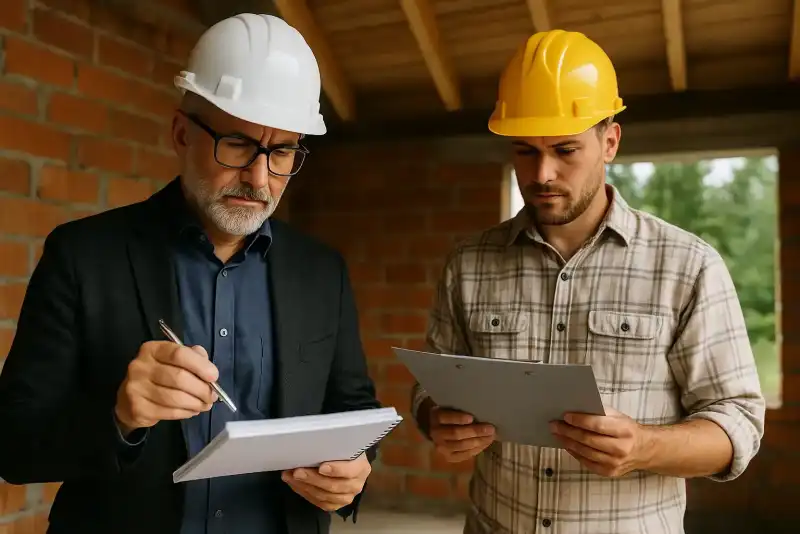
What Is the Difference Between Expert Witness and Routine Inspection Reports?
Why a standard inspection report will not stand up in a tribunal, and what has to change for it to.
Incorporating Expert Witness Testimonies in Scott Schedules
How itemised defect and cost schedules turn an expert opinion into a claim a tribunal can award.
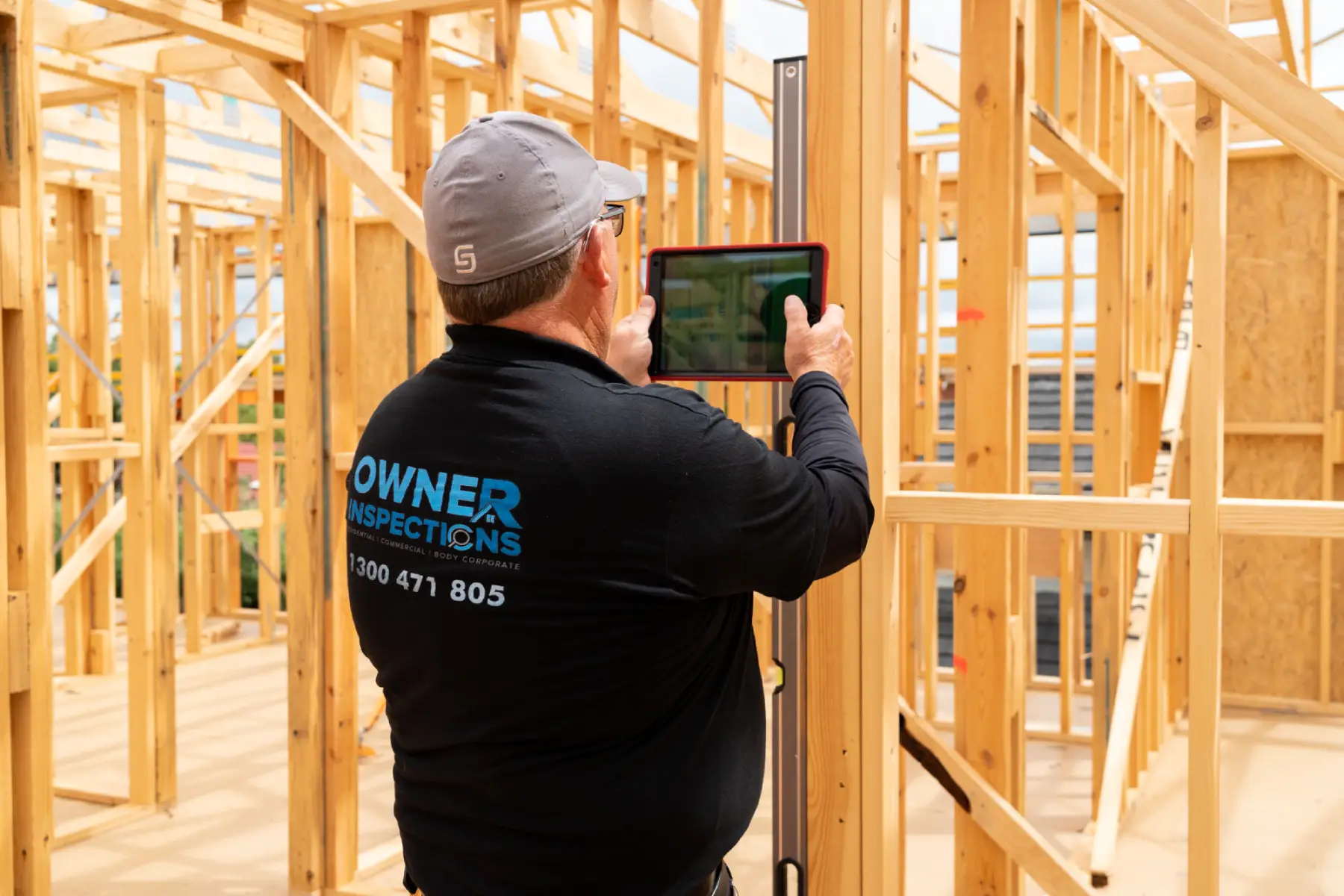
Expert Witness Testimony Process in Australia
What actually happens on a hearing day, from the conclave through to cross-examination.
Facing a construction dispute in Brisbane? Owner Inspections prepares independent expert witness reports written to Queensland tribunal requirements by licensed building inspectors with QCAT and court experience. See how our expert witness reports work or call us on 1300 471 805.
For a complete overview, see our guide to expert witness reports for building disputes.