
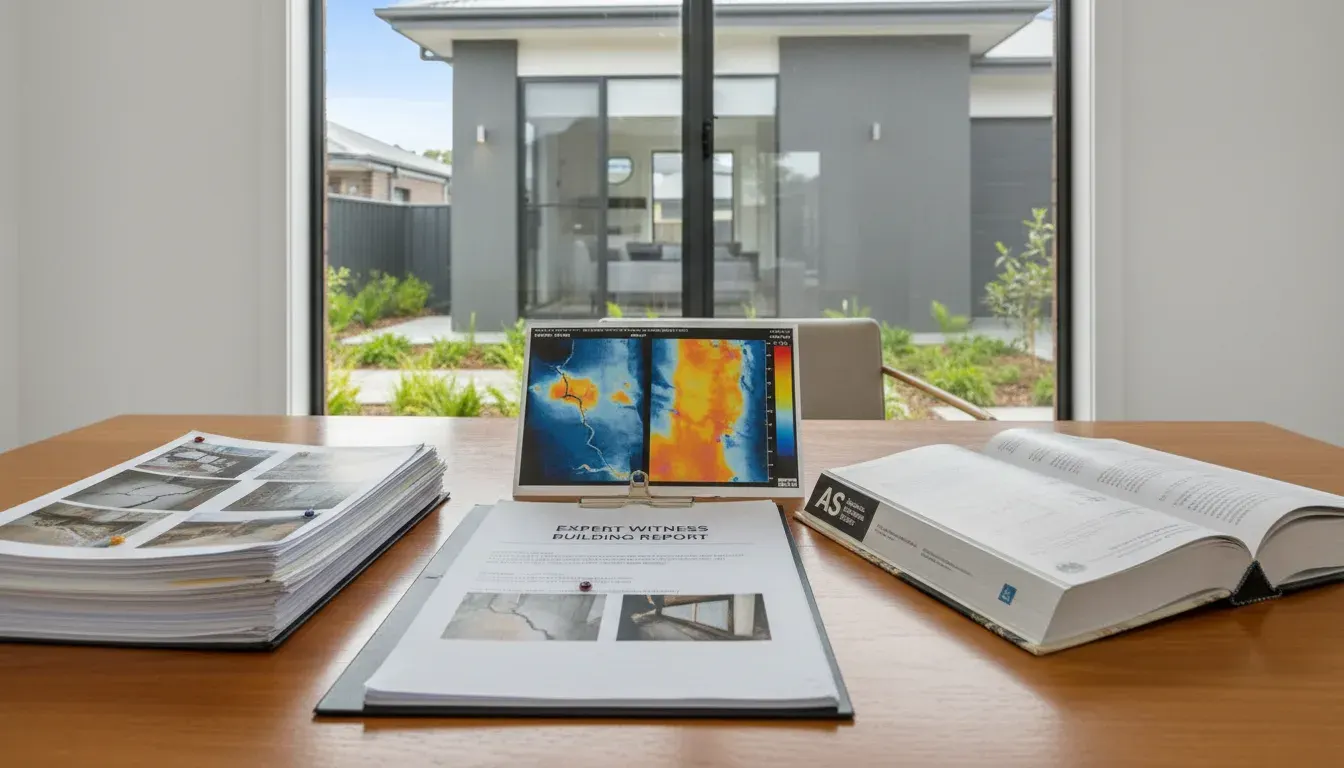
For building disputes in Australia, the best reports do more than list defects. They explain what was inspected, what documents were reviewed, what standard or code was applied, how the expert reached each opinion, and what can reasonably be done to fix the problem. They also stay independent from start to finish.
Independence and Duty to the Tribunal
The most fundamental requirement of an expert witness report is independence. The expert's primary duty is to the tribunal or court, not to the party who engaged and is paying them. This is not just a professional courtesy. It is a legal obligation that applies across all Australian jurisdictions.
A strong expert witness report includes a clear declaration that the expert understands and accepts this duty. In NSW, expert evidence at NCAT must comply with Schedule 4 of the NCAT Rules, which requires the expert to acknowledge their overriding duty to the tribunal. VCAT has similar requirements under its practice notes.
What independence looks like in practice:
- The report states findings objectively, even if some findings are unfavourable to the party who engaged the expert
- The expert does not act as an advocate or argue the client's case
- Opinions are based on evidence and professional methodology, not on instructions from the client or their lawyer
- The expert has no financial interest in the outcome of the dispute and no personal or professional relationship with any party
If a tribunal member suspects that an expert has tailored their opinions to favour the party who engaged them, the report may be given little or no weight. In serious cases, the expert's evidence may be excluded entirely.
The strongest expert witness reports are the ones that acknowledge weaknesses in the client's position. Counterintuitively, this increases the expert's credibility rather than diminishing it.
Thoroughness of Investigation
A strong expert witness report reflects a thorough, methodical investigation. This goes well beyond what a routine building inspection involves. The expert needs to examine every relevant aspect of the building work in dispute and document their findings comprehensively.
A thorough investigation typically includes:
An expert who has only conducted a brief visual inspection and then written a lengthy report is likely to have their findings challenged under cross-examination. The more thorough the investigation, the more defensible the opinions.
Compliance with Australian Standards
Building work in Australia must comply with the National Construction Code (NCC) and relevant Australian Standards. A strong expert witness report identifies exactly which standards apply to each defect and explains how the work fails to meet those standards.
Commonly referenced standards in building dispute reports include:
- NCC (National Construction Code) for overall building compliance requirements
- AS 3740 for waterproofing of domestic wet areas
- AS 2870 for residential slabs and footings
- AS 1684 for residential timber-framed construction
- AS 4654 for waterproofing membranes in external above-ground use
- AS 3600 for concrete structures
- AS 4349.1 for general building inspection methodology
Simply stating that work is "defective" or "not up to standard" is not sufficient. A strong report identifies the specific clause or requirement within the relevant standard and explains how the observed work fails to comply. This level of specificity makes the report far more persuasive to a tribunal member, who needs a clear basis for their findings.
For example, rather than stating "the shower waterproofing is defective," a strong report would say: "The shower recess waterproofing does not comply with AS 3740, Clause 5.2, which requires the waterproof membrane to extend a minimum of 150mm above the finished floor level at the hob. The observed membrane terminates at approximately 80mm, as shown in Photograph 14."
Clear and Accessible Language
Tribunal members are legally trained, but they are not building experts. That is why they rely on expert evidence. A strong report explains complex technical matters in plain language that a non-specialist can understand.
This does not mean the report should avoid technical terms. It means technical terms should be defined or explained when they are first used. The report should assume the reader has no prior knowledge of building construction and should guide them through the findings step by step.
Characteristics of clear expert report writing:
- Short, direct sentences that convey one point at a time
- Technical terms explained in plain language the first time they appear
- Each defect described with a logical structure: what was observed, what the standard requires, how the work fails to meet the standard, and what rectification is needed
- Avoidance of unnecessary jargon or industry shorthand
- Clear distinction between facts (what the expert observed) and opinions (the expert's professional assessment)
An expert who writes clearly demonstrates confidence in their findings. Reports that rely on dense technical language or vague generalisations often suggest that the expert is uncertain or is trying to obscure weaknesses in their analysis.
Photographic Evidence
Photographs are essential to any expert witness report. They provide visual proof of the defects described in the report and allow the tribunal member to see what the expert observed during their inspection.
What makes photographic evidence strong:
Poor quality photographs, such as blurry images, photos taken in poor lighting, or images without context, weaken the report significantly. The tribunal member needs to be able to see what the expert is describing. If the photographs do not clearly show the defect, the expert's written description may be questioned.
Scott Schedule Compatibility
In many building disputes, the tribunal requires the parties to present their claims using a Scott Schedule. This is a tabular document where each defect is listed as a separate item, with columns for the claimant's position, the respondent's position, the expert's assessment, and the estimated rectification cost.
A strong expert witness report is structured in a way that translates easily into a Scott Schedule. This means each defect is identified with a unique number, described individually rather than grouped together, and accompanied by its own rectification cost estimate.
Key elements for Scott Schedule compatibility:
- Each defect has a unique reference number (for example, Defect 1, Defect 2, and so on)
- Each defect is described separately with its own photographs, standards references, and analysis
- Rectification costs are broken down per defect, not presented as a single lump sum
- The numbering and descriptions are consistent throughout the report
For more detail on Scott Schedules and how they work in building disputes, read our article on how Scott Schedules strengthen construction dispute cases.
Qualifications and Experience Disclosure
A strong expert witness report includes a detailed section on the expert's qualifications, professional experience, and relevant expertise. This is not optional. Tribunal rules require experts to disclose their qualifications so the decision-maker can assess whether the expert is suitably qualified to give opinions on the matters in dispute.
This section should include:
- Formal qualifications (degrees, diplomas, trade certificates)
- Professional registrations and licences
- Years of experience in the building and construction industry
- Specific experience with the type of construction or defects in question
- Previous experience giving expert evidence at tribunals and courts
- Professional memberships and affiliations
An expert who has appeared before NCAT, VCAT, or QCAT multiple times brings credibility that a first-time expert may not. Tribunal members recognise experienced expert witnesses and give appropriate weight to their evidence.
Assumptions and Limitations
Every expert witness report should clearly state the assumptions the expert has made and any limitations on their investigation. This is both a legal requirement and a mark of professional integrity.
Common assumptions and limitations include:
- Areas that could not be inspected due to access restrictions
- Documents that were requested but not provided
- Testing that was not conducted and the reasons why
- Assumptions about concealed building elements that could not be visually verified
Stating limitations openly strengthens rather than weakens the report. It shows the tribunal that the expert is honest about the boundaries of their investigation and is not overstating their findings. An expert who claims to have examined everything without any limitations is likely to face scepticism.
Red Flags in Weak Reports
Understanding what makes a report weak can help you avoid engaging an expert who will produce substandard work.
- No declaration of independence or acknowledgement of duty to the tribunal
- Vague descriptions of defects without reference to specific standards or code requirements
- Poor quality or insufficient photographic evidence
- Language that reads like advocacy rather than independent analysis
- A single lump-sum rectification cost without a breakdown for individual defects
- No disclosure of the expert's qualifications or relevant experience
- Failure to state assumptions and limitations
- Opinions presented without supporting reasoning or evidence
Strong Report vs Weak Report
| Strong report | Weak report |
|---|---|
| Independent tone | Argumentative tone |
| Relevant expertise clearly stated | Qualifications vague or missing |
| Scope and instructions disclosed | Scope unclear |
| Facts, assumptions and opinions separated | Conclusions mixed together |
| Specific code or standard references | General statements only |
| Clear reasoning for each opinion | Bare conclusions |
| Useful photos and attachments | Poor or irrelevant images |
| Limits openly stated | Limits hidden or ignored |
| Defect-by-defect structure | Disorganised discussion |
| Practical for hearing and schedules | Hard to use in proceedings |
A Weak Report Can Harm Your Case
Submitting a poorly prepared expert witness report to a tribunal does not just fail to help your case. It can actively damage your credibility. If the tribunal gives the report little or no weight, you may be left without the technical evidence you need to prove your claims.
Frequently Asked Questions
How long should an expert witness report be?
There is no fixed length requirement. The report should be as long as it needs to be to address every defect thoroughly, but no longer. A typical report for a residential building dispute ranges from 30 to 100 pages, including photographs and appendices. Quality and clarity are more important than length.
Can I review the expert witness report before it is finalised?
You can review the report for factual accuracy, such as correcting the address, dates, or details about the building contract. However, you should not attempt to influence the expert's opinions or conclusions. The expert must form their opinions independently, and any suggestion that the client directed the findings could undermine the report's credibility.
What if the expert finds some of the builder's work is acceptable?
This is a sign of a credible, independent expert. A strong report acknowledges where work meets the required standards as well as where it falls short. This balanced approach increases the expert's credibility with the tribunal and strengthens the findings on the items that are genuinely defective.
How much does a strong expert witness report cost?
Expert witness reports for residential building disputes typically cost between $1,500 and $4,000 or more, depending on the complexity of the matter, the number of defects, and whether specialist testing is required. While this is more expensive than a routine inspection report, the investment is proportionate to the amount typically in dispute at a tribunal.
Key Takeaways
- Independence is the most important quality of an expert witness report, with the expert's primary duty being to the tribunal
- A thorough investigation involving multiple inspections, document review, and specialist testing produces the strongest reports
- Every defect should reference the specific Australian Standard or NCC requirement that has been breached
- Clear, plain language helps the tribunal member understand complex technical matters
- Strong photographic evidence with scale references and cross-referencing to the report is essential
- Reports should be structured for Scott Schedule compatibility, with individually numbered and costed defects
- Full disclosure of qualifications, assumptions, and limitations increases credibility rather than weakening it
For a complete overview, see our guide to expert witness reports for building disputes.
Need an Expert Witness Report?
Our experienced expert witnesses support cases at NCAT, VCAT, and tribunals across Australia.