
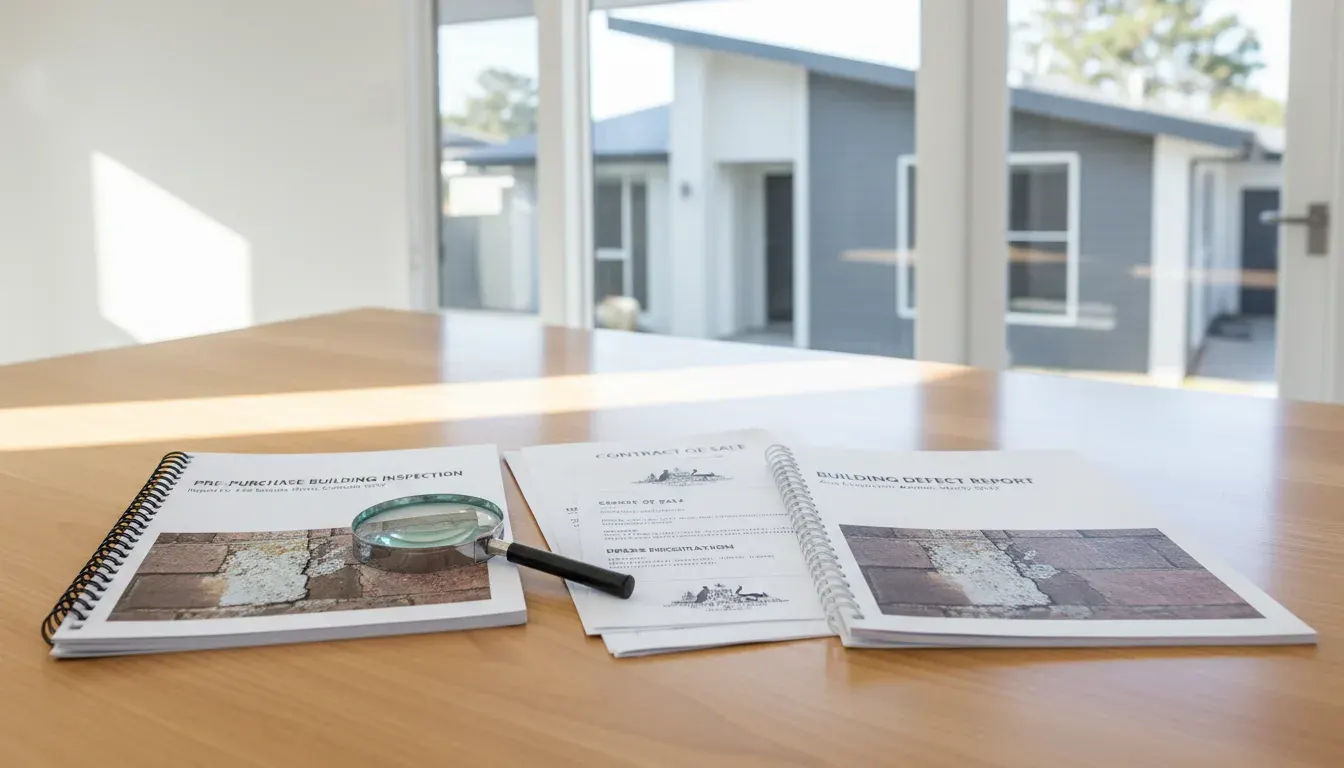
This article breaks down the differences so you can make an informed decision about which report you actually need.
The Basic Distinction
A building inspection report is a general assessment of a property's condition. It tells you what the property looks like at a point in time. A defect investigation report is a targeted analysis of specific problems. It tells you what went wrong, why it went wrong, and what it will cost to fix.
The building inspection answers: "What is the current state of this property?"
The defect investigation answers: "What caused this defect, who is responsible, and how much will it cost to rectify?"
This distinction matters because the two reports serve different audiences and different purposes. A building inspection is typically prepared for a buyer, seller, or property owner who wants a general overview. A defect investigation is prepared for a homeowner who has identified specific problems and needs professional evidence to pursue rectification or a legal claim.
Scope: What Each Report Covers
Building Inspection Report
A standard building inspection report is prepared in accordance with AS 4349.1 (Inspection of Buildings). It covers the accessible areas of a property through a visual assessment. The inspector walks through the property, inspects the interior and exterior, and records what can be seen at the time of the visit.
The scope typically includes:
- Interior areas including walls, ceilings, floors, doors, and windows
- Wet areas such as bathrooms, laundries, and kitchens (visual assessment only)
- Exterior including cladding, roofing, gutters, downpipes, and drainage
- Subfloor and roof space where accessible
- Site conditions including drainage, retaining walls, and paths
The inspection has defined limitations. The inspector does not move furniture, lift carpet, open up walls, or test concealed systems such as waterproofing membranes or structural framing. It is a snapshot of what is visible on the day.
Defect Investigation Report
A defect investigation report focuses on specific problems. Rather than covering the entire property at a surface level, it examines particular defects in depth. The scope is defined by the issues the homeowner has identified or the building consultant has been engaged to investigate.
The investigation may include:
- Detailed examination of each reported defect with root cause analysis
- Moisture testing to identify water ingress pathways and waterproofing failures
- Thermal imaging to detect concealed moisture, missing insulation, or heat anomalies
- Invasive inspection where necessary, such as opening up sections of wall or floor to assess concealed conditions
- Review of building plans, specifications, and contract documents
- Comparison of constructed work against approved plans and the National Construction Code
A building inspection report identifies that a problem exists. A defect investigation report explains why the problem exists and what it will take to fix it properly.
When Each Report Is Used
Understanding when each report is appropriate helps you avoid paying for the wrong service.
| Situation | Building Inspection Report | Defect Investigation Report |
|---|---|---|
| Buying a property | Yes. This is the standard report for pre-purchase due diligence. | Only if the building inspection flags serious concerns that need deeper analysis. |
| Selling a property | Yes. A pre-sale inspection can help you identify and address issues before listing. | Not typically needed unless you are aware of defects that require professional documentation. |
| New build with defects | Limited use. A general inspection may identify defects but will not analyse their cause. | Yes. This is the appropriate report for documenting defects, identifying causes, and supporting a warranty claim. |
| Builder refuses to fix problems | Insufficient. A general inspection lacks the detail needed for a formal complaint or legal claim. | Yes. Provides the independent evidence you need for complaints to regulators or tribunal applications. |
| Preparing for tribunal (NCAT, VCAT) | No. Building inspection reports are not prepared for legal proceedings and have limited evidentiary value. | Yes. A defect investigation report provides the foundation for expert evidence in tribunal hearings. |
| Routine maintenance planning | Yes. A periodic building inspection helps identify maintenance needs before they become costly. | No. A defect investigation is targeted at specific problems, not general maintenance. |
Level of Detail and Analysis
The depth of analysis is where the two reports differ most significantly.
Building Inspection Report
A building inspection report describes what the inspector observed. The language is typically straightforward. Defects are noted with a brief description and sometimes a photograph. The report may classify issues as minor, significant, or major, but it generally does not explain why the defect occurred or reference specific code provisions.
For example, a building inspection report might state: "Cracking observed in the living room wall, approximately 3mm wide, extending from the window head to the ceiling."
Defect Investigation Report
A defect investigation report takes the same crack and analyses it in depth. The investigator will measure the crack, examine the crack pattern to determine whether it is caused by structural movement, settlement, shrinkage, or thermal expansion, review the building plans and structural engineering details, and reference the relevant provisions of the NCC and Australian Standards.
For the same crack, a defect investigation report might state: "A diagonal crack measuring 3.2mm at its widest point extends from the window head to the ceiling junction in the living room. The crack pattern is consistent with differential foundation settlement. The footing design does not comply with AS 2870:2011 for the reactive clay soil classification at this site. The builder has failed to meet the structural adequacy provisions of NCC Volume Two, Part 3.1. Estimated rectification cost including underpinning and crack repair: $18,500."
The difference in depth is clear. The first description identifies the problem. The second explains it, attributes it, and quantifies it.
Important
If you are dealing with building defects and need to take action against a builder or developer, a general building inspection report will not give you the level of detail or the code references that a regulator, tribunal, or solicitor will expect to see.
Legal Standing and Evidentiary Value
A building inspection report is a commercial document prepared for a private client. It is not designed for use in legal proceedings. While it can be submitted as supporting material, tribunals such as NCAT and VCAT will generally give it limited weight compared to a report specifically prepared to address the issues in dispute.
A defect investigation report is closer to the type of evidence that tribunals expect. It identifies each defect, provides a cause analysis, references the codes and standards that have been breached, and estimates rectification costs. If the matter escalates to a hearing, the defect investigation report can form the basis of a formal expert witness report.
Some defect investigation reports are prepared with the explicit intent of being used as evidence. In these cases, the building consultant may include a declaration of independence, a statement of qualifications and experience, and a methodology section that meets the requirements of the relevant tribunal's practice directions.
Do not assume that a building inspection report will be sufficient if your dispute reaches a tribunal. If there is any possibility that your defect claim may become a legal matter, invest in a defect investigation report from the start. It is more cost-effective than paying for a building inspection first and then having to commission a separate defect investigation later.
Cost Comparison
The cost difference between the two reports reflects the difference in time, expertise, and depth of work involved.
| Factor | Building Inspection Report | Defect Investigation Report |
|---|---|---|
| Typical cost | $300 to $600 for a standard residential property | $800 to $3,000 or more depending on complexity |
| Inspection duration | 1 to 3 hours on site | 2 to 6 hours or more, plus possible return visits |
| Report turnaround | 1 to 3 business days | 1 to 3 weeks depending on the scope |
| Additional costs | Rarely applicable | Specialist testing (moisture, thermal imaging), subconsultant fees (structural engineer, waterproofing specialist) |
While a defect investigation report costs more upfront, it provides substantially more value when you are dealing with building defects that need to be addressed. The detailed findings, code references, and rectification costings give you a clear basis for negotiating with the builder, lodging a formal complaint, or pursuing a tribunal claim.
Can a Building Inspection Report Be Used for a Defect Claim?
A building inspection report can be a useful starting point. If you commissioned a pre-purchase or pre-settlement inspection that identified defects, those findings and photographs provide initial evidence. However, the report alone will not be sufficient for a formal warranty claim or tribunal application.
Here is why:
- Building inspection reports do not typically include root cause analysis
- They rarely reference specific clauses of the NCC or Australian Standards
- They do not provide rectification cost estimates in the detail that builders, regulators, and tribunals expect
- They are not prepared with the formality required for legal proceedings
If your building inspection has flagged defects that you want to pursue, the next step is to engage a building consultant to carry out a targeted defect investigation. The building inspection report can inform the scope of that investigation, but it cannot replace it.
Which Report Do You Need?
You are buying or selling a property
A building inspection report is the right choice. It gives you a general overview of the property's condition for your transaction.
You have found defects and want them documented
A defect investigation report is what you need. It will identify each defect, explain the cause, and provide rectification cost estimates.
Your builder is not responding or refuses to fix problems
A defect investigation report gives you the independent evidence needed to lodge a formal complaint with a regulator such as NSW Fair Trading or the Victorian Building Authority.
You are preparing for a legal claim or tribunal hearing
A defect investigation report is the foundation. If the matter proceeds to a hearing, your building consultant can build on the investigation to prepare a formal expert witness report.
Key Takeaways
- A building inspection report is a general assessment of a property's condition, prepared for buyers, sellers, or property owners.
- A defect investigation report is a targeted analysis of specific defects, including cause analysis, code references, and rectification cost estimates.
- Building inspection reports are limited to visual assessment of accessible areas and do not investigate root causes.
- Defect investigation reports may include moisture testing, thermal imaging, invasive inspection, and review of building plans and contract documents.
- Building inspection reports have limited standing in legal proceedings, while defect investigation reports are designed to support warranty claims, complaints, and tribunal applications.
- A building inspection costs $300 to $600. A defect investigation costs $800 to $3,000 or more depending on complexity.
- If you have building defects that need to be formally documented, a building inspection report is not a substitute for a defect investigation.
For a complete overview, see our guide to building defect investigations.
Concerned About Building Defects?
Our licensed inspectors cover Sydney, Melbourne, and all major Australian cities.