
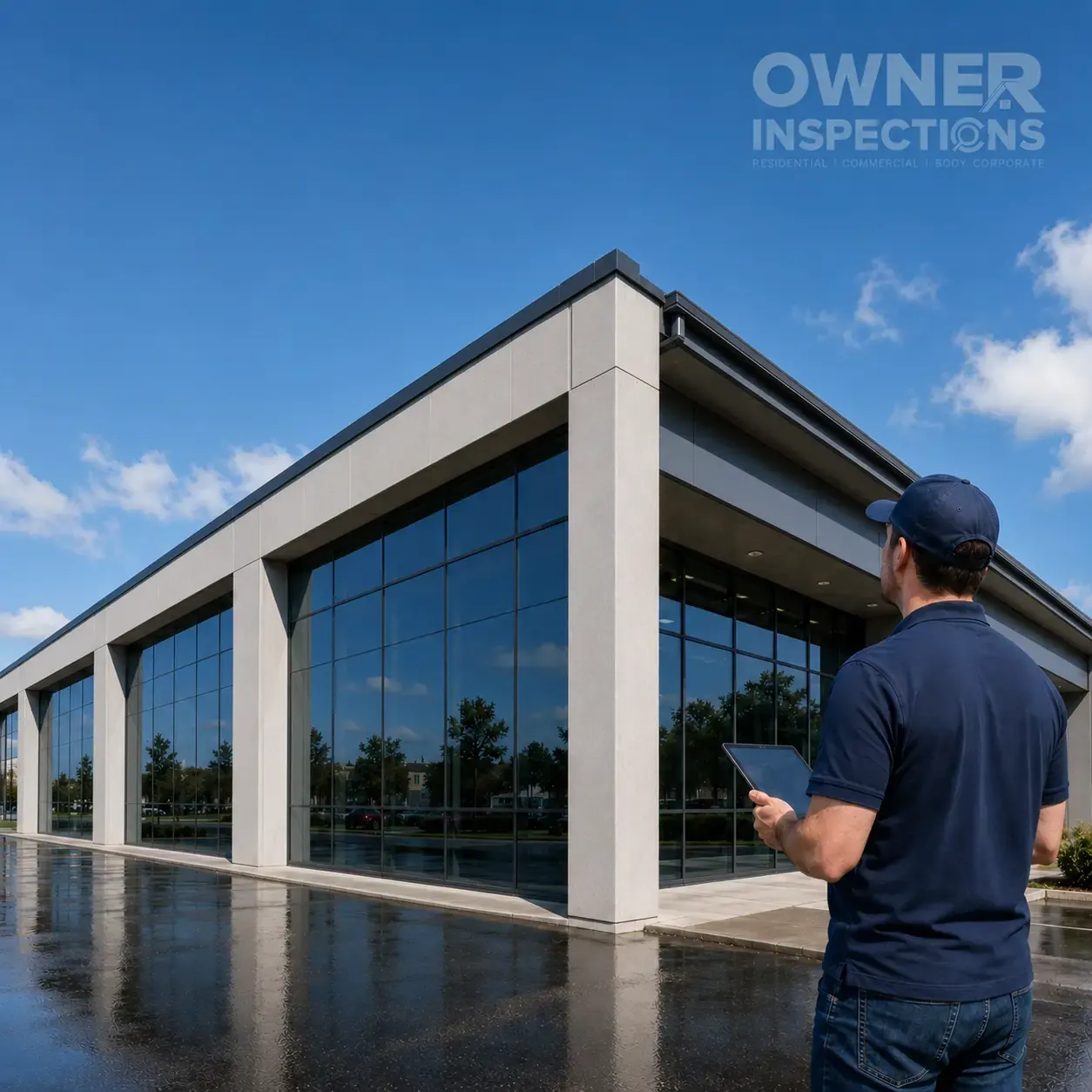
What looks clean during a commercial property walkthrough can still hide major repair risk. A fresh coat of paint, a tidy fit-out and a dry ceiling on inspection day do not always tell the full story.
Commercial building defects are often found in places buyers, tenants and managers do not see every day. Roof spaces, service penetrations, plant rooms, low-pitched roof areas, drainage points, wall cavities and older services can hide problems until rain, heavy use or tenant disruption brings them into view.
This guide explains which defects are commonly missed, why they stay hidden and how a commercial property inspection can reduce risk before purchase, lease renewal or long-term maintenance planning.
53%
Buildings with serious defects
22%
Waterproofing defects
16%
Fire safety defects
Australian defect data supports this concern. Building Commission NSW’s 2025 strata defects research reported that 53% of surveyed buildings had serious defects. The same research listed waterproofing as the most common defect type at 22%, followed by fire safety systems at 16%. While this research focuses on NSW strata buildings, the defect patterns are highly relevant to commercial owners and managers who deal with water ingress, fire safety, structure, enclosures and key services.
Found a defect that may become a legal issue?
Learn how to document building defects with clear photos, notes and reports before a claim or dispute moves further.
defect claim guide
Why Hidden Commercial Building Defects Matter
Hidden defects cost money, but they can also disrupt tenants, damage stock, affect insurance claims and create safety concerns.
A small roof leak can stain ceiling tiles today and damage insulation, wiring or internal linings later. Blocked drainage can push water towards footings, basements or loading areas. Poor roof-space ventilation can add to condensation and mould risk. Past fit-outs can also hide unsafe penetrations, non-compliant service changes or water damage behind new finishes.
The main point is simple: an inspection reduces risk, but it is not a guarantee that every concealed issue will be found. Commercial property inspections are usually visual and limited to areas that are safe and accessible at the time of inspection.
That is why the best report does more than list defects. It should explain the likely cause, severity, evidence, next steps and when a licensed specialist should be called in.
Why Do Some Commercial Building Defects Go Unnoticed?
Commercial buildings are often harder to inspect than homes. They may have tenants trading on site, locked plant rooms, ceiling grids, stored stock, restricted roof access, safety barriers or services that need a specialist trade to test.
Limited access during visual inspections
Inspectors generally assess visible and accessible areas. If a roof space is unsafe to enter, a tenancy is locked, a switch room is not accessible or stock blocks a wall, the report should record that limitation.
That limitation matters. A defect cannot always be assessed if the evidence is covered, unsafe or outside the scope of a standard visual inspection.
Recent cosmetic repairs
Paint, plaster and new flooring can hide old water stains, cracked linings and patch repairs. This does not mean every renovation is suspicious. It does mean fresh finishes should be read alongside moisture clues, roof condition, drainage and maintenance records.
A repainted ceiling under a known roof penetration needs more care than a normal clean-up before sale.
Weather-dependent defects
Some roof leaks and drainage faults only appear after heavy rain, wind-driven rain or blocked gutter overflow. A dry ceiling during summer may not reflect how the building performs during storms.
This is common in low-pitched roofs, box gutters, parapet walls, skylights, HVAC penetrations and flat roof membranes.
Layered renovations
Commercial buildings often go through many fit-outs. Each tenant may add partitions, plumbing, cabling, air conditioning, signage, exhaust systems or roof penetrations.
Over time, records can become patchy. Defects may sit above ceiling tiles, behind wall linings or around old penetrations that no longer serve a clear purpose.
The Most Common Commercial Building Defects to Watch For
The table below groups common commercial building defects by warning signs and business risk.
| Defect type | Common warning signs | Why it matters |
|---|---|---|
| Roof leaks | Stains, rusted sheets, damaged flashing, wet insulation | Can damage ceilings, stock, framing and services |
| Poor drainage | Ponding water, blocked gutters, damp external walls | Can lead to leaks, corrosion and movement near footings |
| Ventilation issues | Condensation, heat build-up, mould odours | Roof-space condensation depends on insulation, airflow and drainage |
| Water ingress | Damp patches, swelling, mould, bubbling paint | Waterproofing defects are a common serious defect category in NSW data |
| Structural movement | Cracks, uneven floors, sticking doors | May point to settlement, footing movement or water-related issues |
| Electrical concerns | Old switchboards, exposed wiring, overloaded circuits | Requires review by a licensed electrician |
| Plumbing faults | Slow leaks, stains, damp cabinetry, odours | Can damage finishes and create mould-friendly conditions |
| Fire safety defects | Damaged doors, missing seals, blocked exits, poor records | May affect safety, compliance and occupancy risk |
| Building enclosure defects | Cladding gaps, failed sealants, façade cracks | Can allow water entry and affect durability |
Roof-Space Defects Commercial Inspections Often Miss
Roof spaces deserve close attention in commercial buildings because many signs of trouble start above the ceiling line. The room may look fine below, while the roof cavity shows water entry, condensation, damaged insulation, poor airflow or staining around penetrations.
Poor ventilation and condensation
Condensation in a roof space can be caused by the way insulation, ventilation and temperature interact. YourHome explains that condensation can form under roofing materials when surface temperature falls below dew point. Moisture must be drained outside the building to avoid build-up in insulation and lining materials.
In commercial buildings, this can be made worse by warm internal air, poor airflow, sealed roof cavities, exhaust duct leaks or insulation that traps moisture where it should not.
Warning signs include damp insulation, rust staining, mould odours, water marks on sarking and corrosion on metal fixings. Where mould is suspected, a mould inspection can help assess visible moisture and mould-related concerns.
Water entry around penetrations
Commercial roofs often carry more penetrations than residential roofs. HVAC units, vents, skylights, solar mounts, exhaust systems, antenna mounts and access hatches all create points where water can enter if flashing, sealants or fixings fail.
A small gap around a penetration can become a costly leak when water tracks along framing or ceiling linings before it appears inside the tenancy. A roof inspection can help identify visible roof condition, flashing and drainage concerns before they spread.
Flat or low-pitched roof drainage
Flat and low-pitched roofs need careful drainage. Ponding water can speed up corrosion, stress membranes, expose failed joints and increase leak risk around outlets.
Box gutters and internal gutters also need close attention. If they overflow, water may enter wall cavities, ceiling voids or service zones before anyone sees a clear leak.
Pests entering through damaged roofing
Birds, rodents and insects often use damaged roof sheets, open eaves, broken vents and loose flashing as entry points.
Pests can damage insulation, wiring and stored items. They can also add odours and hygiene issues in food, medical, childcare or hospitality premises.
This is why many building owners look into solutions such as commercial roof vent installation from Airocle to properly address roof ventilation problems in commercial buildings.
Structural Warning Signs Commercial Property Owners Should Not Ignore
Not every crack means a building has serious structural movement. Many small cracks come from normal settlement, thermal movement or ageing finishes. The risk rises when cracks widen, appear with water ingress, run through structural elements or come with uneven floors.
Commercial owners should investigate:
- Cracks around doors and windows
- Bowing or leaning walls
- Uneven or sloping floors
- Sagging ceilings
- Large concrete cracks
- Cracks that reopen after repair
- Doors that stick after rain
- Movement near retaining walls or drainage lines
Defective work is faulty or unsatisfactory building work. Structural defective building work can affect structural performance, health or safety, functional use, or allow water penetration into a building. That definition matters because water and structure often overlap. A drainage issue can become a footing issue. A roof leak can damage framing. Failed waterproofing can affect safe use of an area.
Can Small Electrical or Plumbing Issues Become Major Risks?
Yes. Small service defects can become large commercial problems because tenants rely on services every day.
A slow plumbing leak inside a wall can damage plasterboard, joinery, flooring and stock. It may also create damp conditions where mould can grow. A small roof leak near electrical services can become a safety concern and needs urgent review.
Electrical issues need care because older commercial buildings may not suit current tenant loads. A building that once housed a low-load office may now support cool rooms, hospitality equipment, medical equipment, servers or heavy lighting.
Commercial fit-outs may also add circuits, data cabling, hydraulic services or exhaust systems without clear records. A building inspector can note visible concerns, but licensed electricians, plumbers, fire contractors and HVAC technicians should assess specialist systems when the report recommends it.
What Should a Commercial Property Inspection Include?
A commercial property inspection should match the building type, access conditions and client risk. A small retail shop does not need the same scope as a warehouse, medical centre or multi-storey mixed-use site.
A useful inspection may include accessible checks of:
- Building interior and exterior
- Roof exterior and roof space
- Walls, ceilings and floors
- Windows, doors and visible façade elements
- Gutters, downpipes and drainage paths
- Plumbing observations
- Electrical observations
- Underfloor areas where safe and accessible
- Car parks, driveways and loading areas
- Retaining walls
- Outbuildings
- Visible moisture, movement and safety hazards
- Maintenance issues that may become larger defects
Owner Inspections’ commercial property inspection service covers offices, retail spaces, industrial facilities and warehouses. The service is designed to identify defects that may affect investment, business use or future repair costs.
For best results, clients should arrange access before inspection day. That includes roof access, plant rooms, switch rooms, basements, service cupboards, vacant tenancies and areas behind stored goods where safe.
Need a closer look at a commercial property?
Book an independent inspection to identify visible defects, access limits and areas needing specialist follow-up before costs grow.
inspections
What Are the Limits of a Commercial Property Inspection?
A trustworthy inspection report explains its limits clearly. Most commercial inspections are visual and non-invasive unless a different scope is agreed in writing.
They may not include:
- Destructive testing
- Engineering certification
- Cost estimates
- Hidden wiring or concealed pipework
- Areas blocked by tenants, stock or unsafe access
- Specialist HVAC, lift, fire-system or electrical certification
- Testing behind walls, ceilings or floor finishes
- Checks of every service component in large plant systems
Consider a professional inspection before signing a contract. An inspection report may help buyers negotiate price and contract terms. That advice applies strongly to commercial buyers and tenants. The report should reduce uncertainty, but it should not be treated as a promise that no concealed defects exist.
How to Avoid Costly Commercial Building Repairs
The best time to manage defects is before the purchase, lease or maintenance issue becomes urgent.
Before purchase or lease
Use this checklist before signing:
- Book an independent commercial property inspection.
- Request maintenance records.
- Ask for roof, waterproofing, fire safety and service documents.
- Review the fit-out history.
- Confirm access to roof spaces, plant rooms and basements.
- Check whether any recent repairs were made after leaks or storms.
- Ask whether specialist reports are available for lifts, fire systems, HVAC and switchboards.
A clear report can support negotiation, risk planning and repair priorities. Buyers can also read Owner Inspections’ guide on how to read and use your property inspection report for practical report follow-up steps.
During ownership
Preventive maintenance should focus on areas that fail quietly.
Schedule roof and gutter inspections. Keep drainage paths clear. Monitor roof-space ventilation and moisture signs. Investigate cracking early. Act on damp odours, ceiling stains and mould concerns. For ongoing asset care, maintenance inspections can help owners and managers track issues before they become larger repair items.
Keep photos, invoices and maintenance notes. These records help owners track whether a defect is stable or getting worse. They also help when dealing with insurers, tenants, body corporate groups or future buyers.
After major weather events
After heavy rain, strong wind or hail, check roof coverings, flashing, gutters, internal ceilings, basements, drains and low points around the building.
Water may not appear immediately. Stains, odours, bubbling paint and damp carpet can show up days later.
Commercial Defect Severity Levels
| Severity | Meaning | Example | Action |
|---|---|---|---|
| Minor | Cosmetic or low-risk maintenance item | Small paint blister, minor corrosion | Monitor or schedule maintenance |
| Moderate | Defect may worsen if ignored | Blocked gutter, localised leak, minor cracking | Repair within a planned timeframe |
| Major | Safety, structural, water ingress or service risk | Active roof leak, major crack, faulty drainage | Seek urgent specialist assessment |
| Critical | Immediate safety or operational concern | Exposed wiring, unstable structure, severe water near electrical systems | Restrict access and seek urgent trade or engineer advice |
Severity should be based on evidence, not guesswork. A small stain may be minor if the source is known and fixed. The same stain may be major if water is still entering near electrical services.
Key Takeaways
- Commercial building defects are not always visible during a walkthrough.
- Roof spaces, low-pitched roofs, drainage points and service penetrations are common risk areas.
- Water ingress can lead to mould, corrosion, damaged finishes and structural deterioration.
- Structural warning signs include widening cracks, uneven floors, bowing walls and sagging ceilings.
- Electrical and plumbing concerns should be reviewed by licensed specialists.
- A professional inspection report can support negotiation, maintenance planning and risk reduction.
- Preventive maintenance is usually cheaper than reactive repair.
Getting the Most Value from Your Home and Building Investment
Commercial building defects are often easier to manage when they are found early. The most expensive problems are usually the ones that stay hidden behind ceilings, roof spaces, walls, drainage systems and old fit-outs.
A commercial property inspection cannot open every wall or test every service. It can, however, give buyers, owners, managers and investors a clearer picture of visible risk before money is committed.
Owner Inspections provides independent commercial property inspections with clear reporting, photos and practical next steps. The goal is simple: help clients understand the condition of a property before defects become major repair bills.
Request a commercial property inspection quote today.
Protect your next property decision
Speak with Owner Inspections about commercial inspection support, defect reporting and practical next steps for your building.
Frequently Asked Questions
What are the most common commercial building defects in Australia?
What defects are often missed during a commercial property inspection?
Can a commercial building inspection find hidden roof leaks?
Why are roof spaces high-risk areas in commercial buildings?
How do poor ventilation and condensation damage commercial buildings?
What are the signs of structural movement in a commercial property?
Should I get a commercial building inspected before signing a lease?
Can an inspection identify electrical or plumbing problems?
What is included in a commercial property condition report?
How often should commercial buildings be inspected?
What should property managers do after finding water ingress?
Can a commercial inspection help with purchase negotiations?
Related Articles
Ensuring Strata Building Bond Compliance: The Role of SBBIS
The Strata Building Bond and Inspection Scheme protects apartment owners in NSW by requiring developers to lodge a 2% security bond. Learn about compliance requirements, penalties, and how inspections work.
Insurance Inspection for Commercial Buildings: Affecting Premium
Insurance inspections for commercial buildings directly affect your premium by evaluating structural condition, fire safety, security features, and location-based risks. This guide covers what inspectors assess, how findings influence pricing, and practical steps Australian property owners can take to reduce insurance costs.
What Is the Difference Between a Building Inspection and a Strata Inspection?
Building inspections and strata inspections serve different purposes when buying property in Australia. Understanding these differences helps apartment buyers make informed decisions and avoid costly surprises.