
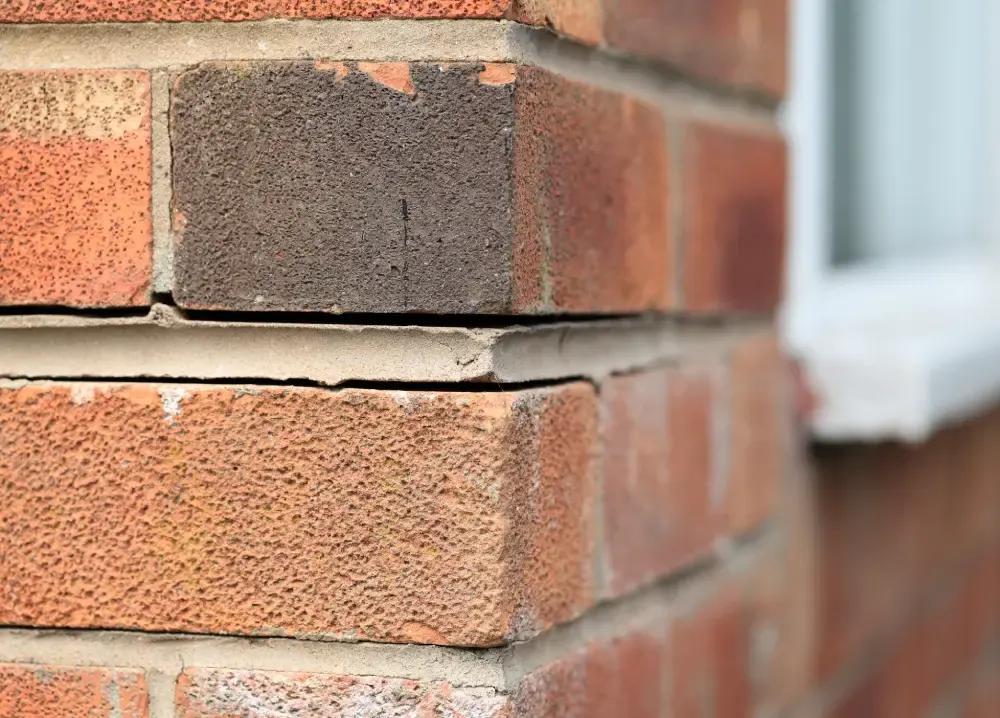
Because weep holes sit just above the damp-proof course, what is built against the wall matters. The NCC requires the damp-proof course to be at least 150mm above adjacent ground, or 75mm above paving, concrete or landscaping that slopes away from the wall. Weep holes buried by soil, concrete, render or sealant trap moisture in the wall, and they are one of the most common defects building inspectors record.
Quick Summary: Weep Holes in Brick Walls
- What they are: open perpend (vertical) joints in the brick course immediately above any flashing or damp-proof course.
- Size: at least 50mm high, by the width of the vertical mortar joint.
- Spacing: no more than 1.2m centres, which is roughly every fifth perpend joint with standard bricks.
- Ground clearance: damp-proof course at least 150mm above soil, or 75mm above paving or concrete sloping away from the wall.
- Where they are not needed: above openings less than 1.2m wide and beneath window and door sills.
- Never: seal, paint, render or bury them.
What Are Weep Holes?
Weep holes are small drainage openings in brick and masonry walls, most often a vertical mortar joint left open in the brick course just above the flashing or damp-proof course. Water that gets behind the outer brick skin runs down the cavity, lands on the flashing and drains out through them, so it cannot soak the frame or rise into the wall.
They come in a few forms: plain open perpend joints, plastic or metal weep vents fitted into the joint, and larger drainage outlets in retaining walls. Without them, moisture trapped inside a masonry wall has nowhere to go and causes long-term damage.
QWhere Are Weep Holes Found?
- Brick veneer and double brick (cavity) homes, in the course above the base flashing or damp-proof course
- Above flashings over window and door openings 1.2m wide or more
- Retaining walls, to relieve water pressure behind the wall
- Anywhere else a flashing collects water inside a cavity
Need Clear Evidence for a Building Defect?
Get an independent defect inspection report that documents visible issues, likely causes, and supporting photos.
Inspection
Purpose of Weep Holes in Brick Walls
The purpose of weep holes in brick walls is to drain water out of the wall cavity and let it dry. Rain soaks through bricks and mortar, and condensation forms inside the cavity; the flashing catches that water and the weep holes let it out, protecting the frame, wall ties and internal linings from moisture damage.
Benefits of Proper Weep Hole Drainage
- Reduces the risk of mould and mildew growth, which can affect indoor air quality.
- Prevents structural damage from prolonged moisture exposure, which can weaken walls.
- Helps maintain the integrity of the building materials, reducing long-term maintenance costs.
- Supports airflow within the cavity, promoting drying and minimising condensation.
Brick Veneer Construction
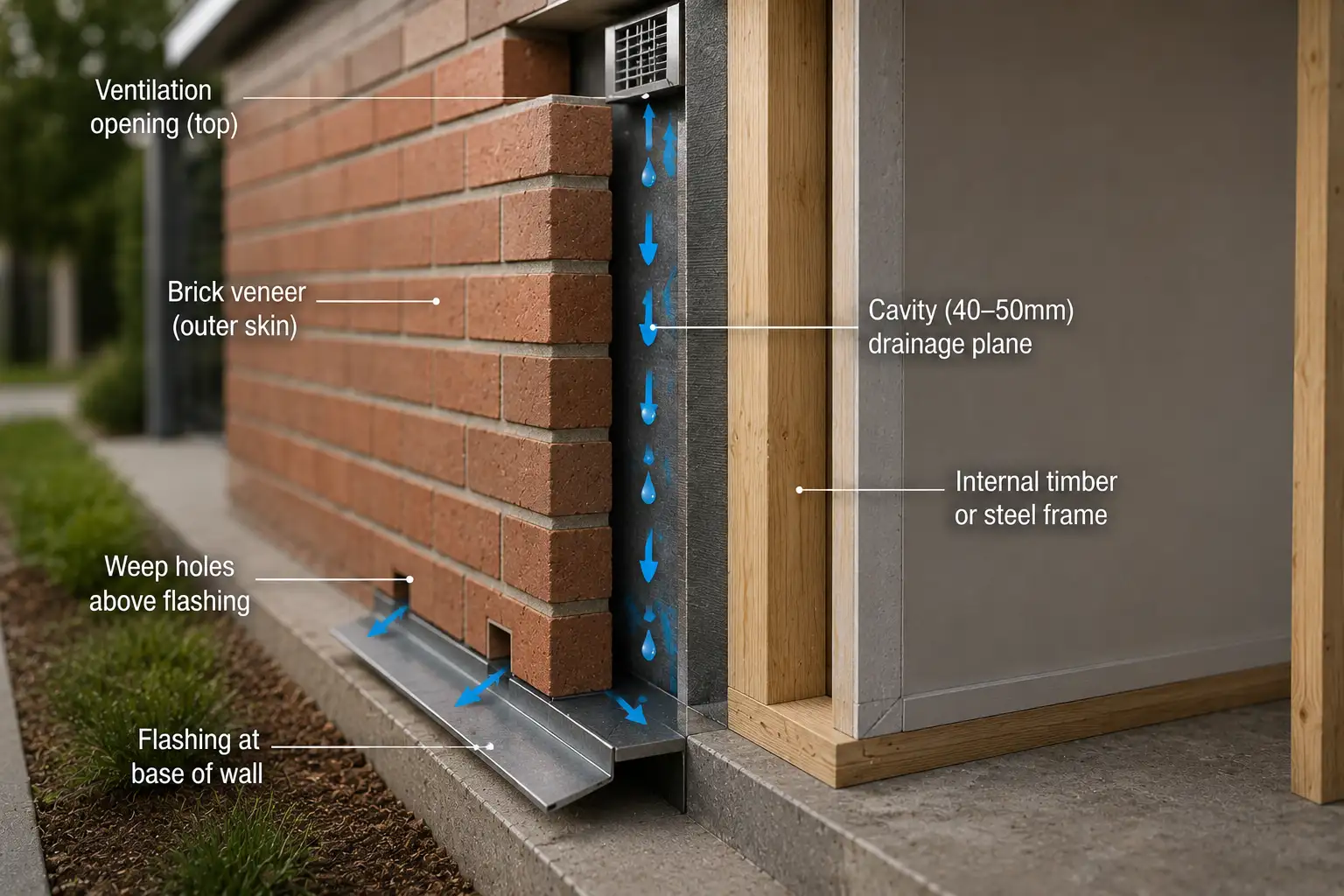
In brick veneer construction, the most common form of residential construction in Australia, a single skin of bricks is separated from the internal timber or steel frame by a cavity. The NCC Housing Provisions require that cavity to be at least 25mm and no more than 75mm clear. Any water that penetrates the outer skin runs down the back face of the bricks and collects on the flashing at the base of the wall.
Weep holes in the course immediately above the flashing let this collected water drain to the exterior before it can cause damage. The open joints also let air into the cavity, which helps it dry after rain.
Retaining Walls
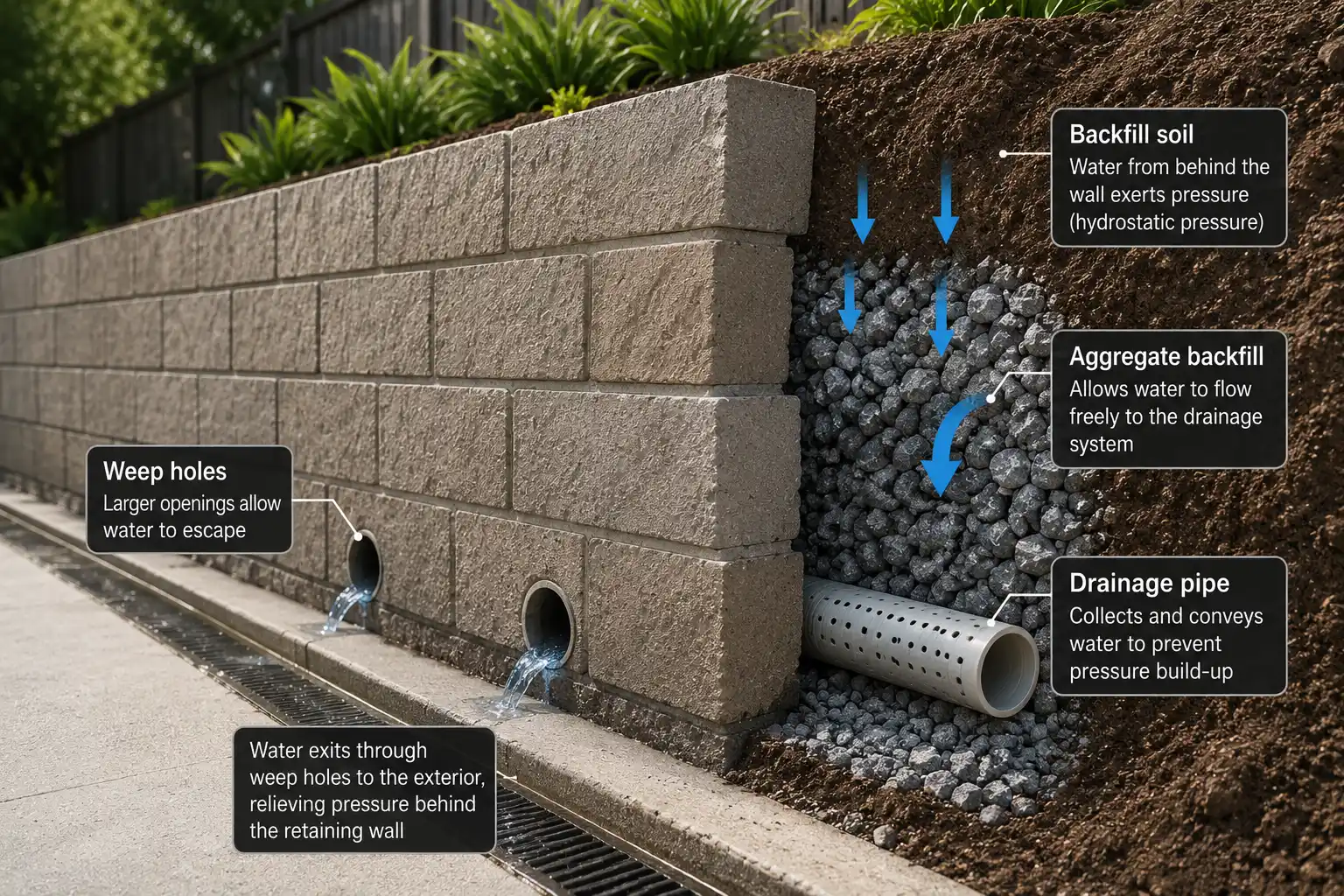
Weep holes are equally important in retaining wall construction, where they relieve water pressure behind the wall. Without drainage, water pressure can build up behind a retaining wall and contribute to movement or failure. Weep holes in retaining walls are typically larger than those in brick veneer and usually work with drainage pipes and aggregate backfill behind the wall, as set out in the wall's design.
Cavity Wall Construction
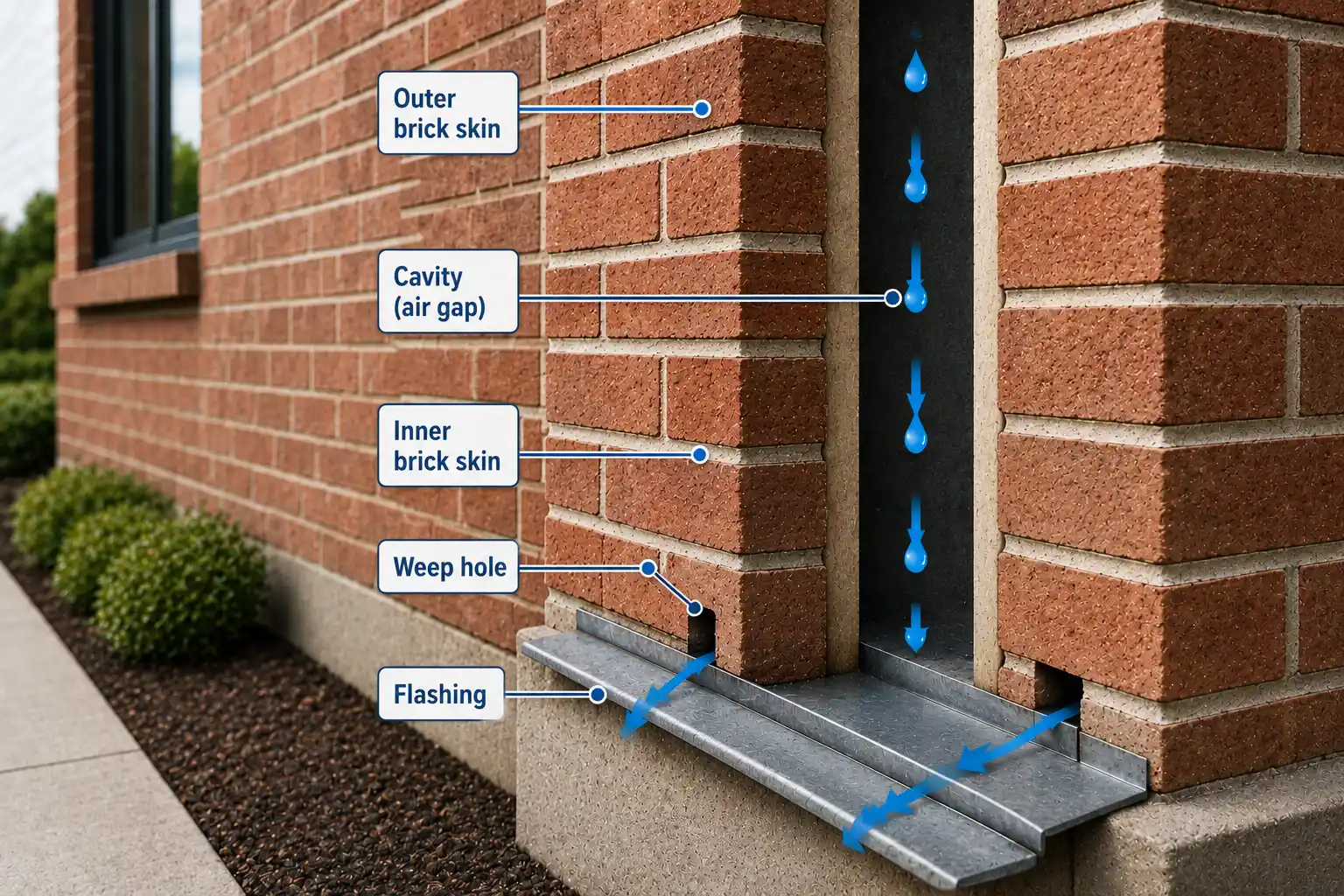
In double brick or cavity wall construction, two skins of masonry are separated by an air gap, which the NCC Housing Provisions require to be at least 35mm and no more than 75mm wide. Weep holes work the same way as in brick veneer: they drain the cavity and help it dry. Cavity walls are less common in new Australian homes but remain common in older properties and some commercial buildings.
Australian Standards for Weep Holes
In Australia, the deemed-to-satisfy rules for weep holes in houses are in the NCC Housing Provisions, Part 5.7. Weep holes must be open perpend joints in the course immediately above any flashing, including a damp-proof course acting as a flashing, at least 50mm high by the width of the joint, and spaced no more than 1.2m apart.
Masonry design more broadly is covered by AS 3700 Masonry structures. Failing to provide or maintain weep holes increases the risk of moisture ingress, hidden defects and non-compliant building work, so builders, developers and owners should check them before and after any construction or landscaping work.
Key Regulations (NCC Housing Provisions Part 5.7)
Spacing Requirements
The NCC 2022 Housing Provisions, clause 5.7.5 requires weep holes at not more than 1.2m centres. With standard 230mm bricks and 10mm joints, perpends in a course are about 240mm apart, so 1.2m works out to roughly every fifth perpend joint. Many bricklayers space them closer than the maximum.
Position and Height
Weep holes must be created in the course immediately above any flashing, including above a damp-proof course acting as a flashing. In practice that means the first course above the base flashing or damp-proof course, and the course above a head flashing over a window or door.
The NCC sets out where weep holes are not required:
- Above openings where the head opening is less than 1.2m wide
- Beneath window and door sills
- Where the external hard surface has been raised to give step-free access required under the NCC's livable housing provisions
Size and Airflow
Under the NCC deemed-to-satisfy provisions, each weep hole is an open perpend joint at least 50mm high, by the width of the vertical mortar joint. Proprietary weep vents fitted into the joint are widely used to keep the opening clear and reduce pest entry, but they should not reduce the drainage the open joint provides.
| Requirement | NCC Housing Provisions Part 5.7 | Purpose |
|---|---|---|
| Maximum Spacing | 1.2m centres | Ensures drainage along the full wall length |
| Minimum Size | 50mm high, by the width of the vertical mortar joint | Allows water to drain and air to enter |
| Position | Course immediately above any flashing or DPC | Lets water collected on the flashing drain externally |
| Window and Door Heads | Required above head flashings for openings 1.2m or wider | Drains water collected above the opening |
| Window and Door Sills | Not required beneath sills | Sill flashings are handled separately |
| DPC Height | 150mm above ground, or 75mm above paving sloping away | Keeps the weep holes and DPC clear of soil and splash |
| Cavity Width | 25mm to 75mm (veneer), 35mm to 75mm (cavity masonry) | Keeps a clear drainage path behind the bricks |
Ensuring compliance with these requirements is essential for long-term durability and moisture protection. Check for state variations too, and remember that a builder can also show compliance through a performance solution.
For the full wording, refer to the Australian Building Codes Board (ABCB) Housing Provisions Part 5.7.
Concrete Placement Near Weep Holes
Concrete, paving or landscaping that slopes away from the wall should finish at least 75mm below the damp-proof course, and therefore below the base of the weep holes above it. Soil and garden beds need more, at least 150mm. Those are the NCC Housing Provisions damp-proof course heights, and a path poured higher than that is a common defect.
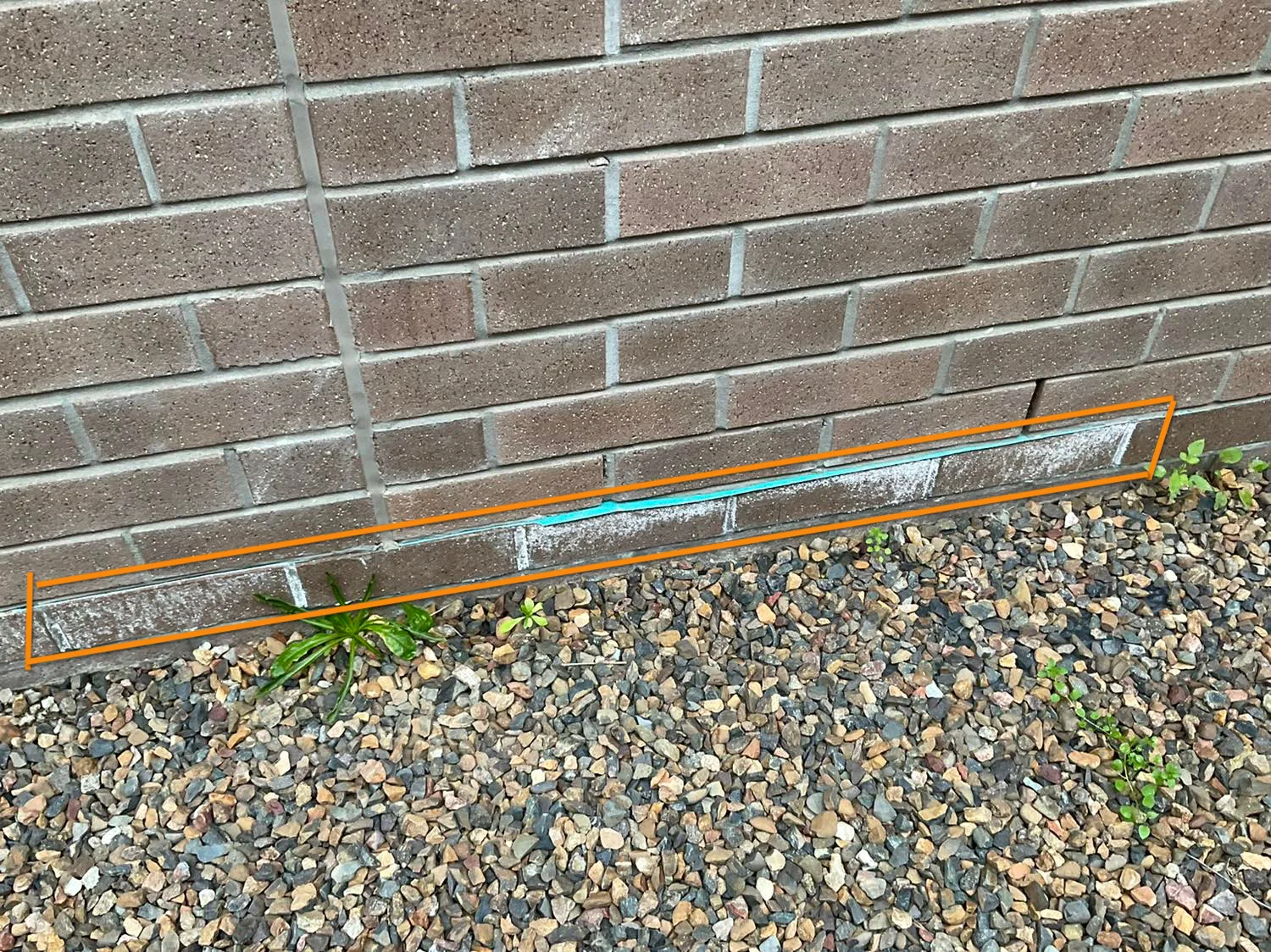
This issue is common after landscaping, driveway upgrades, paving works or external renovations where new concrete is poured too high against brick walls.
When concrete, paving, garden beds or render cover weep holes, moisture becomes trapped inside the wall cavity. Over time, this can cause damp, mould, brick deterioration, corrosion of wall ties and damage to the frame. During building inspections, blocked weep holes are regularly identified as a contributing factor to wall cavity moisture problems and internal dampness.
Minimum Clearance Requirements
The NCC Housing Provisions, clause 5.7.4, set the minimum height of the damp-proof course, or a flashing acting as one, above what surrounds the wall:
- 150mm above the adjacent ground level
- 75mm above paved, concreted or landscaped areas that slope away from the wall
- 50mm above paved or concreted areas that are protected from the weather by a carport, verandah or similar
- Smaller clearances in low rainfall intensity areas, and in some sheltered locations
Because weep holes sit in the course directly above the damp-proof course, these heights effectively set how close concrete and soil can come to them. Building inspectors often recommend more clearance where possible, particularly in areas with heavy rainfall or where garden beds may later be built up against the wall.
Best Practices for Concrete and Weep Holes
The best practice is to keep paving and concrete at least 75mm below the damp-proof course and sloping away from the wall, soil and mulch at least 150mm below it, and every weep hole visible and open. Plan paths, driveways and garden beds around the weep holes before work starts rather than fixing them afterwards.
- Keep hard surfaces at least 75mm below the damp-proof course, sloping away from the wall, so the weep holes above stay clear.
- Grade surfaces away from the house to prevent water pooling near the structure.
- Use gravel strips or drainage channels next to the wall to help water drain and keep debris away from weep holes.
Covering weep holes with concrete can lead to severe moisture-related issues, including damp and deterioration of the wall.
For the masonry design standard itself, see Standards Australia AS 3700 Masonry structures.
Common Installation Errors
The most common weep hole installation errors are concrete or paving poured too high against the wall, garage slabs built above the weep holes, garden beds piled against brickwork, and render or texture coating applied straight over the openings. Each one blocks drainage from the cavity, and all of them are easy to spot during an inspection.
During construction stage inspections and defect assessments, these errors are frequently identified:
- Concrete paths poured too high, partially or completely blocking weep holes
- Garage or carport slabs constructed above the level of weep holes
- Raised garden beds or retaining walls built against the house without adequate drainage
- Paving stones or pavers installed too close to weep hole openings
- Render or texture coating applied over weep holes during external finishing
Rectification Options
If concrete has been placed too close to weep holes, several rectification options may be available depending on the specific circumstances:
- Cutting back the concrete edge to provide adequate clearance
- Installing drainage channels or grates to redirect water away from the wall
- Creating weep slots by cutting vertical grooves in the concrete adjacent to each weep hole
- In severe cases, removing and replacing the affected concrete sections
Weep Hole Maintenance
Weep hole maintenance means checking once or twice a year, and after any landscaping, paving or painting work, that every opening is visible and clear of soil, mulch, mortar, paint, cobwebs or nests. Clear minor blockages gently from the outside, and never seal, paint or render over a weep hole.
Regular Inspection Schedule
Inspect your weep holes at least once a year, ideally before the wet season, and again after heavy rain or any outdoor works. Check each weep hole for visible blockages, damage to vents or mesh inserts, and signs of pest activity. Pay particular attention to weep holes near gardens, trees, or areas where debris may accumulate.
Cleaning Methods
When blockages are identified, they should be cleared promptly using appropriate methods. For minor blockages caused by dust, dirt or small debris, a stiff wire brush or pipe cleaner can be used to dislodge material from the opening. Work carefully to avoid pushing debris further into the cavity.
For more stubborn blockages, compressed air can be used to blow debris from the weep hole. Direct the air stream at an angle to encourage material to exit through the opening rather than being pushed deeper into the cavity. Commercial weep hole cleaning tools are also available, featuring flexible probes designed specifically for this purpose.
If mortar droppings have fallen into the cavity during construction and are blocking weep holes from the inside, the blockage usually cannot be cleared from outside. A bricklayer may need to remove a brick to access and clear the cavity, then reinstate it with the weep hole open.
What Not to Do
Certain practices should be avoided when maintaining or working around weep holes:
- Never use sealants or caulk: Sealing weep holes completely defeats their purpose and will lead to moisture accumulation within the wall cavity.
- Avoid water blasting directly into weep holes: High-pressure water can force moisture deep into the cavity, potentially causing more harm than good.
- Do not paint over weep holes: Paint can block the openings and reduce airflow, even if some drainage capacity remains.
- Avoid storing items against walls: Materials stored against external walls can block weep holes and prevent proper inspection and maintenance.
Pest-Proofing Considerations
While weep holes must remain open for drainage and ventilation, they can provide entry points for pests including mice, spiders and bees. Proprietary weep hole screens and vents are available that allow air and water to pass while reducing pest entry. They are typically made from plastic, stainless steel mesh or brass and are sized to fit standard perpend joints.
When installing pest-proofing products, ensure they do not significantly restrict airflow or drainage capacity. Products should be easily removable for inspection and cleaning, and should be made from durable materials that will not degrade over time.
Protect Your Property Before Damage Gets Worse
Arrange a defect investigation to assess moisture damage, cracking, movement or other serious concerns.
Investigation Report
Common Issues with Weep Holes
The most common weep hole issues are blockages from soil, mortar, paint or nests; weep holes that were never installed or are spaced too far apart; holes placed too high above the flashing to drain it; and damaged or missing vent inserts. Building inspectors find these during pre-purchase, construction stage and defect inspections.
Blocked Weep Holes
Blocked weep holes are the most common issue encountered, occurring when debris, mortar, paint, or other materials obstruct the openings. Blockages prevent water from draining and air from circulating, leading to moisture accumulation within the cavity. Signs of blocked weep holes include:
- Visible debris or mortar in weep hole openings
- Paint or render covering the weep hole location
- Pest nests or insect activity in openings
- Garden soil or mulch pushed up against the wall covering weep holes
Missing or Insufficient Weep Holes
Older properties may have fewer weep holes than current rules require, because construction practices have changed over time. In other cases weep holes were installed but later blocked during renovations or maintenance. Missing or insufficient weep holes need a professional assessment to work out the right remedy.
Improper Installation
Even in new construction, weep holes may be improperly installed due to errors during the building process. Common installation defects include:
- Weep holes positioned above the course that sits on the flashing, so water on the flashing cannot drain
- Spacing greater than 1.2m between weep holes
- Weep holes blocked by mortar droppings in the cavity
- Flashing installed incorrectly, preventing water from reaching weep holes
- Cavity filled with debris from construction, obstructing drainage paths
Damage and Deterioration
Over time, weep hole vents and screens can deteriorate, crack, or fall out, leaving openings vulnerable to pest entry or complete blockage. Mortar around open perpend joints may crack and crumble, potentially blocking adjacent joints. Regular inspection can identify these issues before they lead to moisture problems.
Ready to get inspected?
Signs of Weep Hole Problems
Signs that weep holes are not working include damp patches or tide marks at skirting level, white salt deposits (efflorescence) on brickwork, musty smells in rooms against external walls, peeling paint or bubbling plaster near the floor or around windows, and mould. They often show up first after heavy rain on the most exposed wall.
Water Stains and Dampness
Water staining on internal walls, particularly at skirting board level or around windows and doors, may indicate moisture penetration from the cavity. These stains often appear as darker patches on painted surfaces or as tide marks where water levels have risen and receded. Dampness may also be detected through touch, with affected areas feeling cool and moist compared to surrounding surfaces.
Efflorescence
Efflorescence is a white, powdery deposit that appears on brick or masonry surfaces when water-soluble salts are drawn to the surface through capillary action and left behind as the water evaporates. While some efflorescence is normal in new brickwork, persistent or extensive deposits may indicate excessive moisture within the wall, potentially caused by blocked weep holes.
Musty Odours
A persistent musty or damp smell, particularly noticeable in rooms adjacent to external walls, can indicate mould growth within the wall cavity or on internal surfaces. Mould thrives in moist, poorly ventilated environments, making wall cavities with blocked weep holes ideal breeding grounds. These odours are often most noticeable after rain or during humid weather.
Peeling Paint and Wallpaper
When moisture penetrates from the cavity to internal surfaces, it can cause paint to bubble, peel, or flake, and wallpaper to lift or develop mould spots. These symptoms typically appear first at the base of walls or around windows and doors where moisture accumulation is greatest.
Mould Growth
Visible mould on internal wall surfaces, particularly in corners or at the junction of walls and floors, is a serious warning sign of moisture problems. Mould may appear as dark spots or patches and can pose significant health risks, particularly for individuals with respiratory conditions or allergies.
Structural Deterioration
In severe cases, prolonged moisture exposure can lead to structural deterioration including:
- Corrosion and failure of wall ties, compromising the connection between brick skin and frame
- Rot in timber framing, wall plates, and other structural elements
- Deterioration of the damp-proof course, allowing rising damp to develop
- Cracking or movement in brickwork due to ongoing moisture damage
Additional Moisture Risks Associated With Blocked Weep Holes
Blocked weep holes leave water sitting on the flashing inside the wall, which can lead to damp at skirting level, salt deposits on bricks, rotting bottom plates, corroded wall ties, mould and damaged plasterboard. Much of this happens out of sight and may not show until the damage is well advanced.
Blocked weep holes can contribute to several hidden building defects. During building inspections, inspectors commonly identify damp-related issues connected to poor cavity drainage and restricted airflow.
Common Moisture Related Problems
- Damp near skirting boards and lower wall sections
- Salt deposits and efflorescence on brickwork
- Timber decay inside wall cavities
- Corrosion of metal wall ties and fixings
- Mould growth affecting indoor air quality
- Cracking and movement in masonry walls
- Damage to insulation and plasterboard finishes
Properties located in high rainfall or coastal environments may face increased risk due to greater moisture exposure and humidity levels.
How to Inspect Weep Holes
To inspect weep holes, walk around the outside of the house and check the brick course just above the damp-proof course on every wall. Confirm the weep holes are there, no more than 1.2m apart, open and clear of soil or concrete, then look inside on the same walls for damp, staining or mould at skirting level.
A detailed assessment by a qualified building inspector is recommended where you find problems, but regular visual checks can catch obvious issues early.
External Inspection
Walk around the perimeter of your property, examining the base of all external brick walls. Look for:
- Weep holes at regular intervals, no more than 1.2m apart, in the course just above the damp-proof course
- Clear openings or vents that are not blocked by debris, paint, or other materials
- Adequate clearance between ground level or concrete surfaces and weep hole positions
- Signs of water damage, efflorescence, or staining on the brickwork near weep holes
- Evidence of pest activity such as spider webs, wasp nests, or rodent droppings
Using a Torch and Mirror
A small torch and angled mirror can help you see into weep hole openings and assess whether they are clear. Shine the torch into the opening and use the mirror to view the cavity behind. Look for mortar droppings, debris, or other obstructions that may be blocking drainage or airflow.
Water Test
To test whether weep holes are functioning correctly, you can conduct a simple water test during or after rain. Observe the weep holes on the side of the building that was exposed to rain. Water should be visible dripping or weeping from the openings if the drainage system is working correctly. The absence of any water drainage, even after significant rainfall, may indicate blocked weep holes or problems with the flashing.
Internal Inspection
While inspecting weep holes, also check internal areas for signs of moisture penetration:
- Examine skirting boards and lower wall sections for water damage, staining, or mould
- Check around window and door frames for signs of moisture ingress
- Look for peeling paint, bubbling plaster, or other surface damage that may indicate moisture problems
- Note any musty odours, particularly in rooms adjacent to external walls
Weep Hole Placement in Exterior Walls
Weep holes in exterior walls belong in the brick course immediately above every flashing: the base flashing or damp-proof course, and the head flashing over any window or door opening 1.2m or wider. They should be no more than 1.2m apart and must sit where the water on the flashing can actually reach them.
Poorly positioned weep holes may allow water to remain trapped inside the cavity wall system. This can increase the likelihood of damp problems, salt staining, mould growth and long-term deterioration.
Weep holes also let air into the cavity, which helps moisture evaporate and reduces condensation inside the wall.
Guidelines for Proper Placement
- Spacing: No more than 1.2m centres along every flashing.
- Alignment: In the course immediately above the flashing, so water on the flashing drains straight out.
- Exposure: On walls exposed to wind-driven rain, keeping every weep hole clear matters even more.
For more on designing homes to manage moisture, refer to Your Home, the Australian Government's guide to sustainable housing.
Installing Weep Holes in Masonry Structures
In new brickwork, weep holes are created as the wall is laid by leaving perpend joints open in the course above each flashing. In an existing wall, a bricklayer can usually rake the mortar out of perpend joints just above the damp-proof course, which only helps if a flashing or damp-proof course is there to direct water out.
Many older Australian homes have poorly formed weep holes or none visible at all. Before modifying masonry walls, homeowners should seek professional advice to avoid damaging structural elements or waterproofing systems.
Retrofitting Weep Holes
- Open up perpend joints by raking out mortar in the course just above the damp-proof course, at no more than 1.2m centres.
- Drilled round holes are a common shortcut, but they do not give the 50mm high open joint the NCC describes, so ask whether they are suitable for your wall.
- Fit weep vents if pests are a concern, and confirm the flashing behind actually drains to the new openings.
How to inspect weep holes
- Walk the perimeter and locate the weep holesCheck the base of every external brick wall, in the course just above the damp-proof course. Weep holes should be no more than 1.2m apart and sit clear of garden beds, paths and concrete. Note any walls where weep holes are missing or buried.
- Use a torch and angled mirror to check inside each holeShine a small torch into the opening and angle a mirror to see into the cavity behind. You are looking for mortar droppings, leaves, spider webs, or rodent debris that would block drainage or airflow.
- Run a rain or hose testDuring or right after rain, check the side of the building that took the worst weather. Healthy weep holes will weep or drip visibly. If you see no drainage after heavy rainfall, the holes are blocked or the flashing behind them is failing.
- Inspect the matching internal walls for moisture damageInside the home, check skirting boards, lower wall sections, and the area around windows and doors on the same wall. Peeling paint, bubbling plaster, staining, mould, or musty odours all suggest moisture is entering through a failed weep system.
- Book a professional inspection if you find any of the aboveIf weep holes are blocked, missing, or you see signs of internal moisture damage, book a qualified building inspector. Owner Inspections covers Sydney, Melbourne and Brisbane and delivers a written report within 24 hours.
When to Call a Professional
Call a building inspector when weep holes are missing, buried or cannot be cleared, when you see damp, staining or mould on internal walls, before buying a brick home, or after construction, paving or landscaping work to confirm the drainage still complies. A professional can also check the flashing behind the weep holes, which you cannot see.
Professional assessment is recommended in the following situations:
- Evidence of significant moisture damage or structural issues
- Missing or insufficient weep holes requiring installation
- Blocked weep holes that cannot be cleared with simple cleaning methods
- Pre-purchase inspection to assess the overall condition of moisture management systems
- After construction or renovation work to verify compliance with standards
Why Weep Holes Matter During Building Inspections
Weep holes matter during building inspections because blocked, buried or missing weep holes point to moisture that may be sitting inside the wall where it cannot be seen. Inspectors check them on every brick home as part of pre-purchase building inspections, along with the ground and paving levels around them.
Inspectors commonly assess:
- Whether weep holes are visible and unobstructed
- Concrete and paving clearance below weep holes
- Signs of rising damp or trapped moisture
- Flashing installation and drainage design
- Moisture staining around external walls
- Ventilation performance inside cavity systems
For buyers, identifying moisture issues early may help avoid unexpected repair costs after settlement.
Preparing for a Dispute or Legal Claim?
Support your case with an expert witness report prepared by experienced building inspectors.
Witness Report
Frequently Asked Questions
What are weep holes used for in brick walls?
Weep holes let water that gets into a brick wall cavity drain out from the flashing at the base of the wall, and let air in so the cavity can dry. Without them, trapped moisture can cause damp, mould, rotting timber and corroded wall ties.
What is the Australian standard for weep holes?
For houses, the NCC Housing Provisions Part 5.7 sets the deemed-to-satisfy rules: open perpend joints in the course immediately above any flashing, at least 50mm high by the joint width, at no more than 1.2m centres. AS 3700 covers masonry design more broadly.
How far apart should weep holes be?
Weep holes must be no more than 1.2m apart under the NCC Housing Provisions. With standard bricks that is roughly every fifth vertical mortar joint, and many bricklayers space them closer. They are needed above every flashing, but not above openings under 1.2m wide or beneath sills.
How far below weep holes should concrete be placed?
Paving, concrete or landscaping that slopes away from the wall should be at least 75mm below the damp-proof course, which weep holes sit directly above. Under a carport or verandah 50mm is allowed. Soil and unpaved ground need at least 150mm under the NCC Housing Provisions.
How high should weep holes be off the ground?
Weep holes sit in the brick course just above the damp-proof course, and the NCC requires that course to be at least 150mm above adjacent ground, or 75mm above paving sloping away from the wall. If soil or mulch has built up closer than that, lower it.
What are the building regulations for weep holes in Australia?
Weep holes in houses are regulated by the NCC Housing Provisions Part 5.7, adopted by each state with possible variations. It covers weep hole size and spacing, flashings and damp-proof courses, and cavity width. A builder can also comply through an approved performance solution.
How can I tell if my weep holes are blocked?
Look for weep holes covered by soil, concrete, paint or nests, and for no water weeping out after heavy rain. Inside, damp patches at skirting level, peeling paint, musty smells, mould and white salt deposits on the bricks all suggest the cavity is not draining.
Can I install weep holes in an existing brick wall?
Often, yes. A bricklayer can rake out perpend joints in the course just above the damp-proof course to create open weep holes. It only works if a flashing or damp-proof course is there to direct water out, so have the wall assessed before cutting into it.
Are weep hole covers necessary?
Weep hole covers are not required, but plastic or metal weep vents are widely used to reduce pests, debris and insects getting into the cavity. Choose a vent that keeps the opening as clear as an open joint, and check it stays unblocked.
Are concealed weep holes as good as traditional open weep holes?
Concealed or proprietary weep vents can work, but the NCC deemed-to-satisfy rule describes an open perpend joint at least 50mm high. If a builder uses a concealed system, ask for the product's evidence of suitability and confirm water actually drains out.
What happens if I seal my weep holes?
Sealing weep holes traps water on the flashing inside the wall cavity, which increases the risk of damp, mould, timber decay, corroded wall ties and damaged internal linings. If drafts or pests are the concern, fit weep vents instead of sealing the openings.
How often should I check and clean my weep holes?
Check weep holes at least once a year, ideally before the wet season, and again after heavy rain or any landscaping, paving, painting or rendering work. Clear soil, mulch, cobwebs and debris from the outside, and get help for blockages inside the cavity.
Why do some homes not have visible weep holes?
Some older homes were built with few or no weep holes, and in many others the weep holes have been buried by paving, soil or garden beds, or covered by render or paint. Weatherboard and clad homes do not use them in the same way.
Key Takeaways
- Weep holes are open perpend joints in the brick course immediately above any flashing or damp-proof course, letting water drain out of the wall cavity.
- The NCC Housing Provisions require them to be at least 50mm high, by the joint width, at no more than 1.2m centres.
- They are not required above openings under 1.2m wide or beneath window and door sills.
- The damp-proof course must be at least 150mm above soil, or 75mm above paving or concrete sloping away from the wall.
- Check weep holes at least once a year and after any outdoor works, and clear blockages from the outside.
- Never seal, paint or render over weep holes, as this traps moisture in the wall.
- Signs of weep hole problems include water stains, efflorescence, musty odours, peeling paint and mould.
- Get a professional assessment for blockages you cannot clear, retrofitting to older properties, or visible moisture damage.
Related Articles
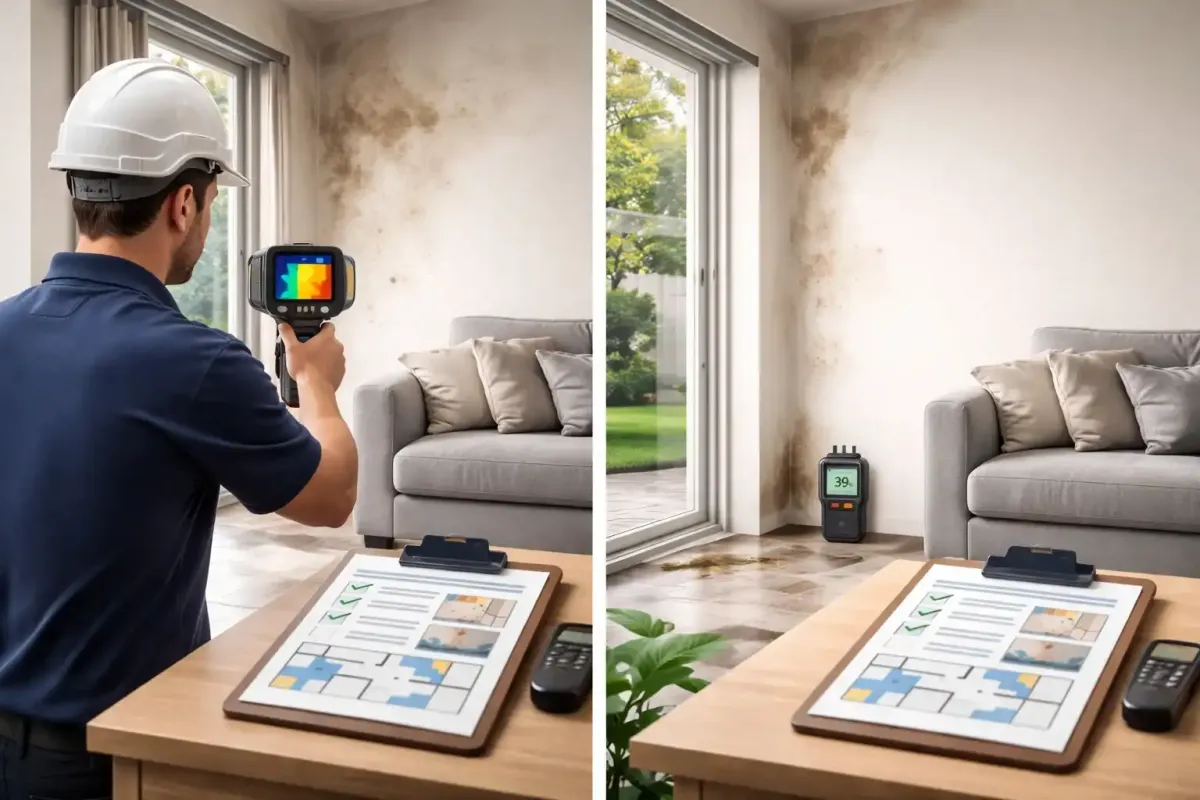
Water Damage Inspection Report to Protect Your Property
What a water damage inspection covers: causes, inspection methods, report contents and prevention.
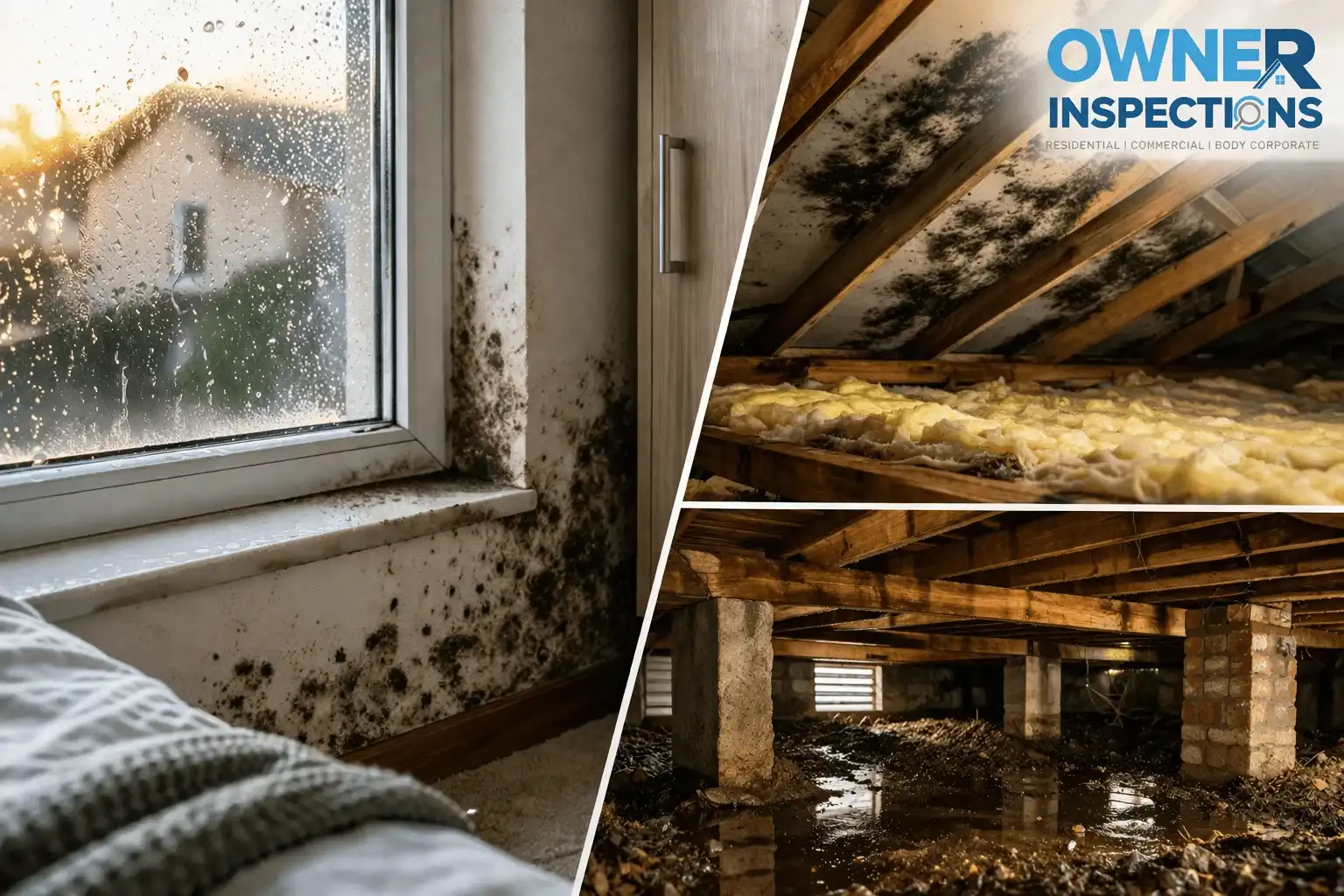
How Poor Ventilation Causes Mould, Condensation and Hidden Defects
How trapped moisture in wall cavities, roof spaces and subfloors leads to mould and hidden defects.

The Most Common Building Defects in Sydney
The defects inspectors find most often in Sydney homes and apartments, and what causes them.