
Different roof types and materials come with distinct advantages, vulnerabilities, and maintenance requirements. A flat roof in Brisbane faces very different challenges compared to a tiled hip roof in Melbourne or a metal gable roof in Perth. Knowing what to look for and when to call in a professional can save you thousands of dollars in preventable repairs.
This guide walks you through the five most common roof types found on Australian homes, compares popular roofing materials, and explains what a qualified building inspector checks during a roof assessment. Whether you are buying a new property, maintaining your current home, or planning a renovation, this information will help you make informed decisions about your roof.
A well-maintained roof can last decades longer than a neglected one. Regular inspections are the most cost-effective way to extend roof life and avoid unexpected failures during severe weather events.
Why Roof Inspections Matter
Roof inspections are not just about spotting visible damage. They are a preventative measure that identifies small issues before they become expensive problems. A cracked tile left unattended can allow moisture to penetrate the roof structure, leading to timber rot, mould growth, and even structural compromise over time.
In Australia, the National Construction Code published by the Australian Building Codes Board sets the minimum performance requirements for roofing systems. These requirements cover structural adequacy, weatherproofing, and energy efficiency. A professional inspection ensures your roof meets these standards and remains compliant.
Insurance is another important consideration. Many home insurance policies require evidence of regular maintenance. If a claim arises from a roof failure that could have been prevented through routine inspection, your insurer may reduce or deny the payout. This makes regular roof assessments a smart financial decision as well as a practical one.
For more on how weather conditions influence inspection outcomes, see our guide on weather and inspections.
The Five Common Roof Types
Gable Roof
The gable roof is one of the most recognisable roof styles in Australia. It features two sloping sides that meet at a central ridge, forming a triangular shape at each end. This simple design allows for excellent water runoff and ventilation, making it well suited to regions with heavy rainfall.
Gable roofs are relatively affordable to build and provide generous attic space. However, they can be vulnerable to wind damage in cyclone-prone areas because the flat gable end acts like a sail in strong gusts. In northern Queensland and other high-wind regions, additional bracing is often required to meet Australian standards.
Inspection focus areas: Ridge capping condition, gable end structural bracing, fascia and barge board integrity, ventilation adequacy, and flashing around the ridge line.
Hip Roof
Hip roofs have slopes on all four sides that converge at a ridge or peak. This design is inherently more stable than a gable roof in high winds because there are no flat vertical ends to catch wind. Hip roofs are extremely popular across Australia, particularly in suburban housing developments built from the 1970s onwards.
The additional slopes create more surface area, which means more material and higher construction costs compared to gable roofs. The multiple ridges and hips also create more opportunities for water ingress if flashings deteriorate.
Inspection focus areas: Hip and ridge flashing, valley gutters, uniform tile or sheet alignment, eaves condition, and the integrity of multiple junction points.
Flat Roof
Despite the name, flat roofs are not completely flat. They have a slight pitch, typically between one and five degrees, to allow water drainage. Flat roofs are common on modern architectural homes, commercial buildings, carports, and extensions in Australia.
Flat roofs require careful waterproofing because water does not run off as quickly as it does on a pitched roof. Ponding, where water collects in low spots, is a frequent issue. Over time, ponding can degrade the waterproof membrane and lead to leaks. Flat roofs also tend to accumulate debris, which can block drainage outlets and worsen ponding.
Inspection focus areas: Membrane condition and integrity, ponding areas, drainage outlet function, parapet wall flashing, and signs of UV degradation on exposed membranes.
Gambrel Roof
The gambrel roof, sometimes called a barn roof, features two slopes on each side. The lower slope is steeper than the upper slope, creating additional usable space in the upper level. While more common in rural and heritage properties, gambrel roofs do appear in Australian residential architecture, particularly in farmhouse-style homes.
The transition point between the two slopes is a critical area for potential water ingress. The steeper lower section can also shed water at higher velocity, placing additional stress on guttering systems.
Inspection focus areas: Transition point flashing, lower slope water velocity impact on gutters, structural integrity of the dual-slope framing, and weatherproofing at the slope change.
Mansard Roof
The mansard roof has slopes on all four sides, with each side having two slopes. The lower slope is almost vertical, while the upper slope is nearly flat. This design maximises interior space and is often seen on French-inspired architecture and some period homes in older Australian suburbs.
Mansard roofs are complex structures with many junction points, making them more susceptible to leaks if not properly maintained. The near-vertical lower sections can also be affected by wind-driven rain in ways that conventional pitched roofs are not.
Inspection focus areas: Dormer window flashing, near-vertical cladding condition, upper slope drainage, multiple junction point integrity, and structural adequacy of the complex framing system.
Roof Types Comparison
| Roof Type | Wind Resistance | Water Drainage | Interior Space | Construction Cost | Maintenance Level |
|---|---|---|---|---|---|
| Gable | Moderate | Excellent | Good | Low | Low |
| Hip | High | Very Good | Moderate | Moderate | Moderate |
| Flat | High | Poor to Fair | N/A | Low to Moderate | High |
| Gambrel | Low to Moderate | Good | Excellent | Moderate to High | Moderate to High |
| Mansard | Low to Moderate | Fair | Excellent | High | High |
Common Roofing Materials in Australia
Asphalt Shingles
Asphalt shingles are less common in Australia than in North America, but they are gaining popularity in some regions. They consist of a fibreglass or organic base coated with asphalt and surfaced with mineral granules. Shingles are lightweight, affordable, and available in a wide range of colours and styles.
In the Australian climate, asphalt shingles can suffer from UV degradation faster than in cooler climates. The granule surface helps reflect some solar radiation, but prolonged exposure to extreme heat can cause curling, cracking, and premature ageing.
Inspection priorities: Granule loss, curling or buckling, cracked or missing shingles, flashing condition at penetrations, and UV degradation patterns.
Metal Roofing
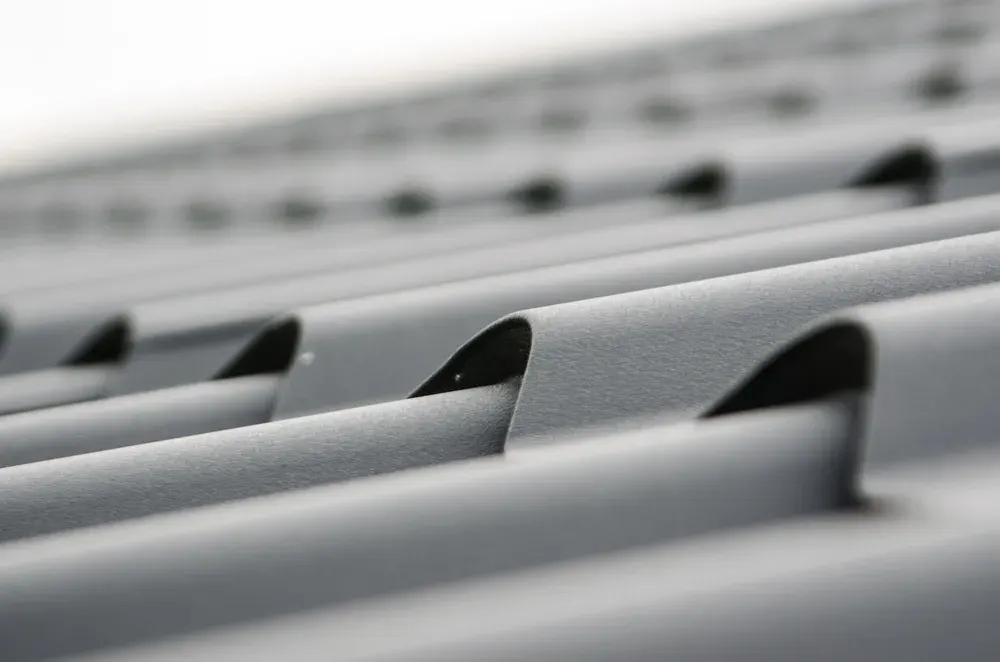
Metal roofing, particularly Colorbond steel, is arguably the most popular roofing material in Australia. It is lightweight, durable, fire resistant, and available in a broad palette of colours designed to suit the Australian landscape. Metal roofing performs well in bushfire-prone areas and meets the Bushfire Attack Level (BAL) requirements specified in AS 3959 published by Standards Australia.
Corrugated iron, standing seam, and klip-lok profiles are the most common metal roofing configurations. Each has different fixing methods and expansion tolerances. Metal roofs can last 50 years or more with proper maintenance but are susceptible to corrosion, particularly in coastal environments where salt spray is a factor.
Inspection priorities: Corrosion spots, loose or missing fasteners, sealant deterioration, expansion joint condition, flashing integrity, and gutter alignment. For details on how sarking works beneath metal roofing, see our dedicated guide.
Tile Roofing
Concrete and terracotta tiles are staples of Australian residential roofing. Terracotta tiles have been used on Australian homes for well over a century, while concrete tiles became widespread from the 1960s onwards. Both types are durable, fire resistant, and provide excellent thermal mass, helping to regulate indoor temperatures.
Tiles are heavy, which means the roof structure must be designed to support the additional load. Cracked, chipped, or displaced tiles are common issues, often caused by foot traffic during maintenance, storm damage, or thermal movement over time. Bedding and pointing (the mortar that holds ridge and hip caps in place) deteriorate with age and require periodic repointing.
Inspection priorities: Cracked or broken tiles, displaced tiles, bedding and pointing condition, sarking integrity beneath tiles, valley flashing, and structural adequacy for tile weight.
Slate Roofing
Slate is a premium natural stone roofing material with an expected lifespan of 75 to 100 years or more. It is found on heritage homes, churches, and prestige properties throughout Australia. Slate roofs are exceptionally durable, fire resistant, and virtually maintenance free when properly installed.
The main challenges with slate are cost and weight. Slate is significantly heavier than other roofing materials and requires specialist installation skills. Replacement slates can be difficult to source, particularly for heritage restoration projects where matching the original stone is important.
Inspection priorities: Cracked or delaminating slates, corroded fixings (often the fixings fail before the slate does), flashing condition, structural adequacy for the heavy load, and evidence of past repairs using incompatible materials.
Roofing Materials Comparison
| Material | Lifespan | Cost Range (per sqm) | Pros | Cons |
|---|---|---|---|---|
| Asphalt Shingles | 15 to 30 years | $25 to $50 | Affordable, lightweight, easy to install | UV degradation, shorter lifespan in hot climates |
| Metal (Colorbond) | 40 to 60+ years | $30 to $70 | Durable, fire resistant, lightweight, recyclable | Can dent, corrosion risk in coastal areas, noise in rain |
| Tile (Concrete/Terracotta) | 50 to 80+ years | $40 to $80 | Excellent thermal mass, fire resistant, long lasting | Heavy, requires strong structure, tiles can crack |
| Slate | 75 to 100+ years | $100 to $250+ | Exceptional longevity, natural beauty, fire resistant | Very expensive, heavy, specialist installation required |
What Do Inspectors Check During a Roof Assessment?
A comprehensive roof inspection covers far more than simply looking for missing tiles or visible leaks. Professional building inspectors follow a systematic process that evaluates the entire roofing system, from the external surface down to the internal ceiling lining.
External Inspection
The external inspection covers all visible roof surfaces, including:
- Roof covering condition: Checking for cracked, broken, displaced, or deteriorated roofing materials
- Flashings: Inspecting all flashing points around chimneys, vents, skylights, walls, and roof junctions
- Ridge and hip capping: Assessing the condition of mortar bedding, pointing, and mechanical fixings
- Gutters and downpipes: Checking for blockages, corrosion, incorrect falls, and secure fixings
- Eaves and fascias: Looking for rot, pest damage, paint failure, and structural adequacy
- Roof penetrations: Examining seals around pipes, aerials, air conditioning units, and solar panel mounts
Internal Inspection
Where accessible, inspectors examine the roof space from inside:
- Roof framing: Checking for cracked, bowed, or undersized structural members
- Sarking and insulation: Assessing the condition and coverage of sarking membranes and insulation batts
- Ventilation: Evaluating whether roof space ventilation is adequate to prevent condensation and heat buildup
- Signs of leaks: Looking for water staining, mould growth, or active moisture on timbers
- Pest activity: Identifying evidence of termite damage, possum access, or bird nesting
For a broader understanding of what a complete building inspection covers, refer to our comprehensive guide to house inspections.
DIY Roof Checks vs Professional Inspections
Homeowners can and should perform basic visual checks on their roof throughout the year. From ground level, you can observe missing or displaced tiles, sagging ridge lines, blocked gutters, and obvious damage after storms. These observations are valuable for catching urgent issues early.
However, DIY checks have significant limitations. Walking on a roof without proper training and safety equipment is dangerous and can cause additional damage, particularly on tile roofs where foot traffic cracks tiles. Internal roof space inspections require knowledge of structural systems, electrical hazards, and safe access methods.
Professional inspectors bring specialised tools such as moisture meters, thermal imaging cameras, and drone technology for hard-to-access areas. They understand the relevant Australian Standards and can identify issues that an untrained eye would miss entirely.
When DIY is appropriate:
- Ground-level visual checks after storms
- Clearing accessible gutters (with proper ladder safety)
- Observing ceiling stains or drips from inside the home
When you need a professional:
- Pre-purchase property inspections
- After significant weather events (see our guide on resilient home construction)
- Suspected structural issues or persistent leaks
- Insurance claim documentation
- Periodic maintenance inspections (recommended every two to three years)
How Much Does a Roof Inspection Cost?
Roof inspection costs in Australia generally range from $100 to $500, depending on several factors:
- Property size: Larger homes with more roof area take longer to inspect
- Roof complexity: Multi-level homes with numerous penetrations, valleys, and junctions require more time
- Access difficulty: Steep pitches, multi-storey buildings, or roofs requiring drone access may incur additional fees
- Scope of inspection: A standalone roof inspection is less expensive than a full building inspection that includes the roof
- Location: Metropolitan areas typically have more competitive pricing than regional or remote locations
A standalone visual roof inspection for a standard three-bedroom home typically costs between $150 and $300. A comprehensive roof inspection including thermal imaging and a detailed written report may cost $300 to $500. These costs are modest compared to the potential expense of undetected roof failures, which can run into tens of thousands of dollars.
Insurance Implications of Roof Condition
Your roof's condition directly affects your home insurance in several ways. Insurance companies assess risk based on the age, type, and condition of your roof when setting premiums. A roof in poor condition or made from materials with known vulnerabilities may attract higher premiums or specific exclusions.
If you lodge a claim for water damage or storm damage, your insurer will investigate whether the damage resulted from a sudden event or from gradual deterioration due to lack of maintenance. Claims arising from deferred maintenance are commonly denied. Having documented evidence of regular professional inspections strengthens your position in the event of a claim.
Some insurers offer premium discounts for homes with newer roofs or roofs made from resilient materials such as Colorbond steel. If you are replacing your roof, it is worth discussing material choices with your insurer to understand any potential premium benefits.
When to Call a Professional
Certain signs warrant an immediate call to a qualified building inspector or roofing professional:
- Water stains appearing on ceilings or walls
- Visible sagging in the roof line
- Missing, cracked, or displaced roofing materials after storms
- Persistent musty smells suggesting hidden moisture or mould
- Evidence of pest activity in the roof space
- Roof age exceeding 25 years without a recent professional assessment
- Before purchasing a property (always include a roof inspection in your pre-purchase assessment)
Acting quickly when you notice these signs can prevent minor issues from escalating into major structural problems. For more on what to expect from a professional assessment, visit our house inspections guide.
Key Takeaways
- Different roof types have different vulnerabilities. Gable roofs are susceptible to wind, flat roofs to ponding, and complex designs like mansard roofs to junction leaks.
- Material choice affects lifespan and maintenance. Metal roofing offers the best balance of durability and cost for most Australian conditions.
- Regular inspections prevent costly repairs. Small issues caught early cost a fraction of what major failures cost to fix.
- Professional inspections are essential. DIY checks complement but cannot replace qualified assessments with proper tools and expertise.
- Insurance depends on maintenance. Documented inspection history supports insurance claims and may reduce premiums.
- Australian conditions are demanding. UV exposure, extreme heat, coastal salt, and severe storms all accelerate roof deterioration.
- Inspection costs are modest. Expect to pay between $100 and $500, a small investment compared to the cost of roof failure.
Frequently Asked Questions
QHow often should I have my roof inspected?
Most roofing professionals and building inspectors recommend a full roof inspection every two to three years. Homes in harsh environments such as coastal areas, cyclone regions, or bushfire zones may benefit from annual inspections. You should also arrange an inspection after any significant weather event.
QCan I inspect my own roof?
You can perform basic visual checks from ground level, which is helpful for spotting obvious issues like missing tiles or blocked gutters. However, a professional inspection is necessary for a thorough assessment. Walking on roofs without training is dangerous and can cause damage, particularly on tile roofs.
QWhat is the most durable roofing material for Australian conditions?
For most Australian conditions, Colorbond steel offers the best combination of durability, fire resistance, weight, and value. Slate is the most durable overall but comes at a significantly higher cost. Terracotta tiles also perform exceptionally well and can last 80 years or more.
QHow long does a roof inspection take?
A typical roof inspection for a standard residential property takes between one and two hours. Larger or more complex properties may take longer. The inspector will examine external surfaces, internal roof spaces (where accessible), gutters, flashings, and all associated components.
QDoes a building inspection include the roof?
Yes. A standard pre-purchase building inspection in Australia includes an assessment of the roof. However, the depth of the roof assessment can vary between providers. If roof condition is a particular concern, consider requesting a dedicated roof inspection in addition to the general building inspection.
QWhat are the signs that my roof needs replacing rather than repairing?
Signs that suggest replacement include widespread deterioration across more than 30 percent of the roof surface, structural sagging, repeated leaks in multiple locations despite repairs, and roof age approaching or exceeding the expected lifespan for the material. A qualified inspector can advise whether repair or replacement is the more cost-effective option.
QAre metal roofs noisier than tile roofs?
Metal roofs can be noisier during heavy rain, but modern installation techniques significantly reduce this issue. Proper sarking, insulation, and ceiling linings absorb much of the sound. Many homeowners with well-insulated metal roofs report no noticeable noise difference compared to tile.
QDo flat roofs leak more than pitched roofs?
Flat roofs are not inherently more prone to leaking, but they do require more diligent maintenance. Because water drains more slowly on flat roofs, any defect in the waterproof membrane or drainage system can lead to ponding and eventual leaks. Regular inspection and prompt repairs are critical for flat roof longevity.
QWhat qualifications should a roof inspector have?
In Australia, building inspectors should hold a relevant licence issued by their state or territory building authority. Look for inspectors with qualifications in building inspection or construction management, professional indemnity insurance, and membership in a recognised industry body. Experience with your specific roof type is also valuable.
QCan roof damage affect my home's structural integrity?
Yes. Prolonged roof leaks can cause timber framing to rot, weaken structural connections, and allow mould to spread through wall and ceiling cavities. In severe cases, undetected roof damage has led to partial ceiling collapses. This is why routine inspections are so important for maintaining overall structural integrity.
QHow does extreme weather affect roof inspection timing?
Inspections should ideally be conducted in dry, calm conditions for safety and accuracy. However, post-storm inspections are sometimes necessary regardless of conditions. Inspectors may use drones or other remote methods when direct roof access is unsafe. For more on this topic, see our article on weather and inspections.
Protect Your Home With a Professional Roof Inspection
Your roof is one of the most critical components of your home, and it deserves regular professional attention. Whether you are concerned about an ageing roof, planning to buy a property, or simply want peace of mind ahead of storm season, a qualified inspection is the best place to start.
Our licensed building inspectors have extensive experience assessing all roof types and materials across Australia. We provide detailed, easy-to-understand reports with photographic evidence and clear recommendations.
Contact us today to book your roof inspection and protect your most valuable asset.
Related Articles
How Do Roof Inspections Protect and Extend the Life of Brisbane Homes?
Brisbane's intense summers, severe storms, and high humidity put roofs under constant stress. Regular roof inspections catch small problems before they become expensive repairs, extending your roof's lifespan and protecting your home.
A Comprehensive Guide to House Inspections
House inspections are detailed professional assessments evaluating structural integrity, safety systems, and component functionality. Learn everything you need to know.
Building Inspection Stages: A Comprehensive Guide
With new home starts projected to exceed 190,000 annually by 2025, quality assurance at each construction phase is increasingly important. Learn the six key stages.