
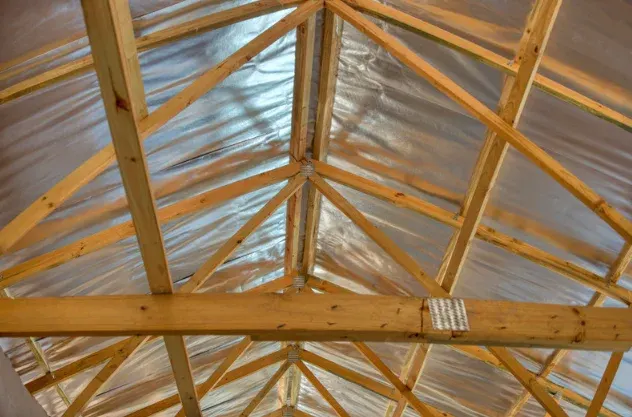
Hidden beneath every well-constructed roof lies a critical layer of protection that many homeowners never see but cannot afford to ignore. Sarking, the protective membrane installed beneath roof tiles or metal roofing, serves as your home's first line of defence against moisture, heat, and fire.
In Australia's diverse climate, from scorching summers to torrential rain events, sarking plays an indispensable role in maintaining building integrity and energy efficiency. This material barrier prevents moisture, dust, and radiant heat from penetrating the home, contributing significantly to indoor comfort and structural longevity.
Whether you are building a new home, renovating an existing property, or simply want to understand what protects your family from the elements, this comprehensive guide explores everything you need to know about sarking, its benefits, types, and why skipping this essential component can lead to costly consequences.
What is Sarking?
Sarking is a protective sheeting material installed directly beneath roof cladding, whether that be tiles, metal sheets, or other roofing materials. It creates a continuous barrier across the roof structure, sitting above the rafters or trusses and below the battens that support the roof covering.
The primary function of sarking is to prevent the infiltration of water, dust, and embers while also reflecting radiant heat away from the building. In Australian construction, sarking has become increasingly important as building standards have evolved to address our unique climate challenges and bushfire risks.
In Australian standards, sarking sits under the broader category of pliable building membranes and underlays, with material requirements covered by AS/NZS 4200.1 and installation requirements covered by AS 4200.2.
Types of Sarking Materials
The Australian market has several sarking material options. The right one depends on climate, roof type, and what you are trying to control: water, vapour, air, heat, or ember entry.
Below is a simple comparison table to help homeowners and builders understand the common options.
| Sarking Type | Material Composition | Key Properties | Best Applications |
|---|---|---|---|
| Reflective Foil Laminate | Aluminium foil bonded to polyethylene or kraft paper | High reflectivity, vapour barrier, lightweight | Hot climates, energy efficiency focus |
| Breathable Membrane | Microporous polyethylene or polypropylene | Water resistant, vapour permeable, durable | High humidity areas, condensation prone regions |
| Composite Reflective Membrane | Foil laminate with breathable backing | Combined reflectivity and breathability | Variable climates, versatile applications |
| Perforated Foil | Aluminium foil with micro perforations | Some breathability, good reflectivity, cost effective | Mild climates, budget conscious projects |
| Woven Polyethylene | Woven high density polyethylene | High tear strength, water resistant, UV stable | Construction phase protection, temporary coverage |
| Fire Rated Sarking (BAL Rated) | Specially treated materials meeting AS 3959 | Ember resistance, radiant heat protection, fire retardant | Bushfire prone areas, high risk zones |
Tip
The label on the roll does not tell the full story. If a roof has condensation issues, the deciding factor is often the membrane’s vapour behaviour and how the whole roof space is designed to ventilate and dry.
If you are building, this is a good item to check during construction stage inspections, and to confirm again during a pre-handover inspection before you accept handover.
Building a new home? Stage inspections help catch defects before they get covered up.
Stage Inspections
How Sarking Works
People often ask “what does sarking do” because it sounds like a single product with a single job. In reality, sarking can do several jobs at once, depending on the type and installation.
Water control and drainage
A roof is not perfectly sealed. Wind-driven rain can be pushed under tile laps. Condensation can form under metal roofing when the underside of the sheet cools quickly overnight.
Roof sarking provides a secondary layer that can catch and direct incidental water down toward the eaves, where it can drain away, instead of soaking insulation or ceiling linings.
Vapour control and drying potential
Some membranes slow vapour movement. Others allow vapour to escape.
This matters because trapped moisture can lead to mould, damp insulation, and timber deterioration. If there is a musty smell, staining, or ongoing dampness, a targeted mould inspection can help confirm what is happening and where the moisture is coming from.
Thermal control
Reflective membranes reduce radiant heat transfer, but they need an adjacent air space to perform well. If a reflective foil is pressed hard against another surface, performance drops.
Reducing dust and debris pathways
Many tiled roofs allow fine dust into the roof cavity through small gaps. Sarking can reduce dust entry and keep insulation cleaner for longer. In bushfire-prone areas, good roof detailing aims to reduce ember pathways at edges and penetrations. Sarking may assist as one layer within a compliant roof system, but it should not be treated as a stand-alone shield.
Is sarking required in a domestic roof?
Sometimes yes, sometimes no.
Whether roof sarking is required depends on the National Construction Code pathway used, your climate zone, roof type, and any bushfire attack level requirements for the site. Condensation management provisions and roof space ventilation requirements can influence whether you use sarking and what type is suitable.
Requirements vary with design and location. Requirements can change with climate zone, roof construction, and bushfire conditions even within the same state.
The Benefits of Sarking
The roof sarking benefits are easiest to understand when you think about what typically damages roof spaces over time: water, trapped moisture, heat, and dust.
1. Better protection from moisture
Sarking helps keep incidental water off insulation and ceiling linings. That matters because wet insulation loses performance, and damp ceiling materials can stain or sag. Moisture infiltration is one of the most damaging forces affecting Australian homes. Sarking serves as a critical moisture barrier in several ways:
- Wind driven rain protection: During storms, rain can be forced under roof tiles and metal sheets by strong winds. Sarking catches this water before it can reach insulation or ceiling materials.
- Condensation management: In regions with significant temperature differentials between day and night, condensation can form on the underside of metal roofing. Sarking prevents this moisture from dripping onto ceiling materials.
- Leak mitigation: If a tile cracks or a metal sheet develops a hole, sarking provides a secondary barrier that channels water to the gutters rather than into the building.
The consequences of inadequate moisture protection include mould growth, timber rot, insulation degradation, and potential structural damage. These issues can remain hidden for years while causing progressive damage to your home. It also gives the roof system more resilience during short-term issues like cracked tiles, lifting flashings, or heavy wind-driven rain. It does not replace maintenance, but it can buy time before damage shows inside.
If you suspect roof leaks or storm damage, a dedicated roof inspection can help confirm what is happening before minor water entry turns into ceiling and insulation damage.
2. Improved Energy Efficiency
In Australian conditions, reflective sarking can make a substantial difference to your home's energy performance and comfort levels.
Improved comfort in hot weather
During summer, metal roofs can reach temperatures exceeding 80 degrees Celsius. Without sarking, this heat radiates directly into the roof space, raising ceiling temperatures and forcing air conditioning systems to work harder. Reflective sarking can reduce heat transfer through the roof by up to 40 percent.
Reflective roof sarking can reduce radiant heat entering the roof space. That can reduce heat build-up, especially in homes with limited roof ventilation or darker roof colours that absorb more heat.
Winter Heating Benefits
In winter, sarking helps retain warmth within the building by preventing heated air from escaping through the roof structure. The air barrier created by sarking reduces convective heat loss, complementing ceiling insulation performance.
Energy Cost Savings
Studies conducted by the CSIRO have demonstrated that properly installed reflective sarking can reduce air conditioning energy consumption by 15 to 25 percent in summer. Over the lifetime of a building, these savings can amount to thousands of dollars while reducing the home's carbon footprint.
| Climate Zone | Estimated Summer Energy Savings | Primary Benefit |
|---|---|---|
| Tropical (Darwin, Cairns) | 20 to 25 percent reduction | Radiant heat reflection |
| Subtropical (Brisbane, Sydney) | 15 to 20 percent reduction | Combined heat and moisture control |
| Temperate (Melbourne, Adelaide) | 10 to 15 percent reduction | Year round thermal performance |
| Cool Temperate (Hobart, Canberra) | 10 to 12 percent reduction | Winter heat retention |
3. Supports roof performance in bushfire-prone areas
For homes in bushfire-prone areas, sarking is not merely beneficial but often mandatory. Australian Standard AS 3959 Construction of Buildings in Bushfire Prone Areas specifies requirements for sarking based on the Bushfire Attack Level (BAL) rating of the property.
Ember Attack Protection
During bushfires, burning embers can travel kilometres ahead of the fire front. These embers can enter roof spaces through gaps in tiles, ridge capping, and roof vents. Once inside, they can ignite accumulated leaf litter, insulation, and timber framing. Fire-rated sarking creates a barrier that prevents ember entry and resists ignition from radiant heat.
BAL Rating Requirements
- BAL 12.5: Sarking recommended but not mandatory under roof tiles
- BAL 19: Non combustible sarking required beneath all roofing materials
- BAL 29: Fire rated sarking mandatory with specific ember guard requirements
- BAL 40 and BAL FZ (Flame Zone): Stringent sarking requirements with fire tested materials
The Building Code of Australia (NCC Volume 2) references AS 3959 for bushfire construction requirements. Non-compliance with these requirements can invalidate building insurance and create significant legal liability.
4. Dust and Pest Control
Sarking creates a sealed barrier that prevents various unwanted elements from entering your home through the roof structure.
Dust Exclusion
In many Australian regions, dust storms and high winds can carry fine particles that infiltrate homes through gaps in roofing materials. This dust settles on ceiling insulation, reducing its effectiveness, and can penetrate into living spaces through downlights and ceiling penetrations. Sarking significantly reduces this dust infiltration.
Pest Prevention
The roof space can be an attractive habitat for various pests including possums, birds, rodents, and insects. Sarking helps exclude these pests by eliminating entry points and creating a barrier that is difficult to penetrate. Common pests deterred by proper sarking include:
- Possums seeking shelter in roof cavities
- Birds nesting under tiles or in roof spaces
- Rats and mice entering through gaps in roofing
- Wasps and bees building hives in protected roof areas
- Cockroaches and other insects accessing the building
5. Structural Integrity
Beyond immediate protective benefits, sarking contributes to the long term structural integrity of the roof system and the building as a whole.
Roof Stability
Sarking, particularly when properly installed and taped at seams, adds rigidity to the roof structure. It helps distribute wind loads across a larger area of the roof frame, reducing stress on individual components. During high wind events, this can help prevent localised uplift damage.
Insulation Protection
Ceiling insulation performs optimally when kept dry and clean. Sarking protects insulation batts from moisture that would cause compression and reduce R value, dust accumulation that decreases thermal performance, and pest damage from animals nesting in roof spaces. By maintaining insulation integrity, sarking ensures your home continues to perform at its designed energy efficiency levels for decades.
Timber Preservation
By keeping moisture away from roof timbers, sarking helps prevent fungal decay and timber rot. This is particularly important in humid climates where condensation and moisture ingress can lead to significant structural degradation over time.
Why You Should Not Skip Sarking
Skipping sarking can look like an easy saving during a build or re-roof, but it often creates avoidable problems that are expensive to diagnose later. Some builders or homeowners consider sarking an optional extra that can be eliminated to reduce construction costs. This approach often proves to be a false economy with serious long-term consequences.
Here are the issues an unsarked roof commonly faces:
- Higher chance of wet or dusty insulation, which reduces thermal performance.
- Greater likelihood of ceiling stains after wind-driven rain events.
- More roof space condensation risk when the roof build-up is not designed to dry out.
- More dust, pollen, and debris in the roof cavity.
- More pathways for fine debris and embers in higher-risk areas, depending on roof detailing.
This is not about fear. It is about avoiding predictable failure points in roof spaces. If you are building, a stage inspection can confirm the roof wrap and sarking installation is consistent with the intended system before it gets covered.
If moisture damage keeps returning and the cause is unclear, a defect investigation report can be the right next step because it focuses on why the issue is happening, not just what is visible on the day.
Want to know what inspectors actually find on site? See real case studies from Australian builds.
Case Studies
When to Use Sarking
If you are asking when to use sarking, the most practical answer is tied to timing and risk.
You get the best value when it is installed during new builds or when the roof covering is already being removed. Roof sarking is most often specified in these situations:
- New builds: When the roof cladding is not installed yet.
- Re-roofing and major renovations: When tiles or sheets are coming off anyway.
- Metal roofing: Where condensation can form on the underside of roof sheets.
- Homes in cooler climate zones: Where condensation management is a bigger concern.
- Exposed sites (coastal, high wind, heavy weather): Added protection against wind-driven rain is a common reason sarking is specified.
- Low-pitch tiled roofs: Where water can be driven under tiles in heavy weather.
- Bushfire-prone areas: Where the roof system detailing calls for it.
If you are maintaining an established home, a routine maintenance inspection can help spot early roof and roof space issues, including damp insulation, poor ventilation, and signs of water entry before they become expensive repairs.
| Situation | Use sarking? | Why |
|---|---|---|
| Building a new home | Usually yes | Easy access, better sealing and drainage outcomes |
| Re-roofing a tiled roof | Often yes | Improves resilience to wind-driven rain and dust |
| Metal roof in a condensation-prone area | Often yes | Helps manage dripping and moisture pathways |
| Cool climate roof spaces | Often yes, choose carefully | Condensation risk increases if vapour is trapped in the wrong build-up |
| Budget is tight | Compare total roof system risk | Skipping can increase the chance of repairs and insulation replacement later |
Long Term Financial Value
While sarking adds to initial construction costs, typically between $1,500 and $4,000 for a standard residential home, the return on investment is substantial. Consider the following financial implications of skipping sarking:
- Energy costs: Without reflective sarking, expect 15 to 25 percent higher cooling costs over the life of the building
- Insulation replacement: Moisture damaged insulation may need replacement within 10 to 15 years, costing $3,000 to $8,000
- Ceiling repairs: Water damage to ceilings from condensation or leaks can cost $2,000 to $10,000 to repair
- Mould remediation: Professional mould removal and treatment can exceed $5,000 for significant infestations
Risks of Poor Insulation Performance
Without sarking protecting your insulation, its effectiveness degrades over time. Wet insulation loses up to 90 percent of its thermal resistance. Even after drying, it may never regain full performance. The result is a home that is uncomfortable in extreme temperatures and expensive to heat and cool.
Water Damage Consequences
Water entering through an unsarked roof can cause:
- Staining and deterioration of ceiling plasterboard
- Electrical hazards from water contacting wiring and fixtures
- Damage to stored items in roof spaces
- Structural timber decay requiring expensive repairs
- Health issues from mould and mildew growth
Pest Infestation Costs
An unsarked roof is an open invitation to pests. The costs of dealing with pest infestations include:
- Professional pest removal services, ranging from $200 to $1,500
- Repair of damage caused by gnawing and nesting
- Cleaning and sanitising contaminated areas
- Ongoing monitoring and prevention treatments
- Health treatment for family members affected by pest related diseases
Insurance and Compliance Issues
In bushfire-prone areas, lack of compliant sarking can void building insurance coverage and create legal liability issues. Insurance claims for fire damage may be denied if the building did not meet AS 3959 requirements at the time of construction.
Choosing the Right Sarking
Choosing roof sarking is not about buying the thickest roll. It is about matching the membrane to the roof design, climate, and what you are trying to control. The wrong choice can result in condensation problems, inadequate protection, or unnecessary expense.
A simple selection process is to ask:
- Is the main risk water entry, condensation, summer heat, or all three?
- Is the roof tiled or metal?
- Is the home in a bushfire-prone area with a defined BAL requirement?
- Does the roof space have the right ventilation design for the selected membrane?
- Does the product suit its intended control function for water, vapour, air, or thermal control?
| Your priority | What to look for | Typical product direction |
|---|---|---|
| Reduce summer heat gain | Thermal control with reflective surface, installed with an air space | Reflective foil or composite reflective membranes |
| Reduce condensation risk | Higher vapour permeance in suitable assemblies | Vapour-permeable membranes (when the design supports drying) |
| Improve weather resilience | Water control performance and correct drainage laps | Membranes installed as a water control layer with correct overlaps |
| Reduce dust and draughts | Air control with sealed overlaps | Taped and sealed membranes where specified by the system |
Climate Considerations
Australia's diverse climate zones demand different sarking approaches. Each zone presents unique challenges that influence material selection.
Hot and Humid Climates (Climate Zones 1 and 2)
In tropical and subtropical regions like Darwin, Cairns, and Brisbane, the primary concerns are heat gain and moisture management. Recommended sarking for these areas includes breathable reflective membranes that allow moisture vapour to escape while reflecting radiant heat. Avoid non-breathable vapour barriers that can trap moisture and cause condensation.
Temperate Climates (Climate Zones 5 and 6)
Sydney, Melbourne, and Adelaide experience both hot summers and cool winters. Composite sarking products that offer reflectivity for summer and vapour permeability for winter condensation control are ideal for these regions.
Cool and Cold Climates (Climate Zones 7 and 8)
In areas like Hobart, the alpine regions, and parts of Canberra, winter condensation is the primary concern. Breathable membranes are essential to allow moisture vapour from inside the home to escape through the roof structure without causing condensation damage.
Roof Type Considerations
The type of roof covering influences sarking selection and installation requirements.
Metal Roofing
Metal roofs are particularly prone to condensation due to their rapid temperature changes. Metal roofs can form condensation on the underside when temperatures swing, especially overnight. Sarking is especially important under metal roofing to prevent moisture dripping onto ceilings.
For metal roofing, breathable membranes are often chosen so the roof system can dry outward. Roof space ventilation design also matters, particularly in cooler regions.
Tiled Roofing
While tiles provide some natural ventilation through their overlapping profile, they also allow wind driven rain entry. Sarking beneath tiles should be water-resistant to catch infiltrating rain, secured to withstand wind uplift, and compatible with tile battens and fixing methods.
Tiles are not a sealed sheet system. In heavy weather, wind can push water under tile laps. Sarking helps manage that risk by forming a secondary water-shedding layer.
Pay close attention to valleys, hips, ridges, and penetrations. Those areas are where small installation shortcuts tend to turn into leaks.
Flat or Low Pitch Roofs
Low-pitch roofs and roofs with lots of valleys, skylights, dormers, and penetrations have more points where water and debris can enter. That is where careful sarking selection and detailing makes the biggest difference.
Building Regulations and Standards
Australian building regulations specify minimum sarking requirements based on location and building class.
National Construction Code Requirements
The NCC Volume 2 (Housing Provisions) addresses sarking requirements through energy efficiency provisions in Section J and bushfire construction requirements referencing AS 3959. Compliance with these requirements is mandatory for building approval.
State and Territory Variations
Some states have additional requirements. For example, Queensland's Building Act includes specific provisions for cyclone regions that affect sarking installation methods and materials. Always verify local requirements with your building certifier.
Bushfire Zone Requirements (AS 3959)
Properties in designated bushfire-prone areas must comply with AS 3959 Construction of Buildings in Bushfire Prone Areas. The standard specifies sarking requirements based on BAL rating:
| BAL Rating | Sarking Requirement | Additional Requirements |
|---|---|---|
| BAL LOW | Standard sarking acceptable | General building code compliance |
| BAL 12.5 | Sarking recommended beneath tiles | Ember protection measures |
| BAL 19 | Non combustible sarking required | All gaps greater than 3mm must be screened |
| BAL 29 | Fire tested sarking mandatory | Metal or non combustible roof covering |
| BAL 40 | AS 1530.8.1 compliant sarking required | Complete ember and radiant heat protection |
| BAL FZ (Flame Zone) | High performance fire rated sarking | Specialist fire engineering may be required |
Installation Best Practices
Proper installation is critical to sarking performance. Even the highest quality sarking material will fail to protect your home if installed incorrectly. Understanding best practices helps ensure you get value from your investment.
These checkpoints are a practical guide for homeowners and site supervisors.
- Laps must be set to shed water down the roof, not funnel it into the structure.
- Overlaps should be consistent and taped where required for air control.
- The membrane should not be drum-tight. Controlled sag is often needed where it acts as a drainage layer.
- Penetrations such as vents, skylights, and pipes need careful detailing so water cannot track inside.
- Tears and punctures should be repaired before roof cladding is installed.
- Intended air gaps should be kept clear so thermal control and drying pathways still work.
If you are in the middle of a build, this is a good stage to book independent stage inspections so key details are checked before the roof is fully closed up.
Preparation and Planning
- Review specifications: Confirm sarking type meets NCC requirements, climate zone needs, and any bushfire provisions
- Calculate quantities: Allow 10 to 15 percent extra for overlaps, cuts, and waste
- Check weather forecast: Avoid installation during rain or high winds
- Inspect substrate: Ensure rafters and trusses are clean, dry, and properly aligned
Installation Sequence
- Start at the eaves: Roll sarking horizontally across rafters, beginning at the lowest point of the roof
- Maintain sag: Allow approximately 20 to 25mm sag between rafters to create a drainage channel if water penetrates
- Overlap correctly: Horizontal overlaps should be minimum 150mm; vertical overlaps minimum 100mm
- Secure properly: Use staples or cap head nails at maximum 300mm centres along rafters
- Seal penetrations: Tape all joints, cuts, and penetrations with appropriate sealing tape
- Extend to gutters: Sarking should extend into gutters to direct any water runoff away from fascia
Critical Installation Points
Ridge and Hip Junctions
At ridges, sarking from each side should overlap by at least 150mm and be taped. For hips, cut sarking neatly and seal all joints. These junctions are common failure points if not properly addressed.
Valley Gutters
Valleys require particular attention as they channel significant water flow. Sarking should extend beneath valley gutter flashing and be sealed to prevent water ingress at edges.
Penetrations
Roof penetrations for vents, skylights, and pipes must be carefully detailed. Cut sarking neatly around penetrations and seal with appropriate flashing tape or purpose made accessories.
Wall Junctions
Where roofs meet walls, sarking should extend up the wall behind cladding or be sealed to wall wrap to create a continuous barrier.
Quality Control Checks
Before roof cladding is installed, verify the following:
- All overlaps meet minimum requirements
- Seams and penetrations are properly taped
- No tears or damage occurred during installation
- Sarking extends correctly at eaves, ridges, and wall junctions
- Appropriate sag exists for drainage
- Fastening is secure without penetrating the sarking unnecessarily
What a Building Inspector Looks for With Roof Sarking
During a pre-purchase inspection, a roof inspection, or a construction stage inspection, roof sarking checks usually focus on coverage, condition, and signs of moisture. What inspectors commonly look for:
| What inspectors check | Why it matters | What it can lead to |
|---|---|---|
| Missing or incomplete coverage at eaves, valleys, ridges | Weak points for water and debris entry | Ceiling stains, damp insulation, mould |
| Tears, punctures, loose sections | Allows water to reach insulation and timbers | Reduced insulation performance, timber deterioration |
| Incorrect laps or poor drainage direction | Water tracks into the structure | Hidden leaks and repeated repair work |
| Poor detailing around penetrations | Common leak and ember entry points | Localised damage and ongoing moisture issues |
| Signs of damp insulation or staining | Evidence the roof system is not managing moisture | Repair costs and indoor air quality issues |
| Roof space ventilation concerns | Can increase condensation risk in some climates | Moisture build-up and mould risk |
If you are building, a stage inspection can check sarking before the roof is completed. If you are buying, the best fit is usually a pre-purchase inspection or a building and pest inspection, depending on how much coverage you want. If defects have been repaired by the builder, a reinspection can confirm the rectification work has been completed properly.
If the roof covering is tiled, inspectors also consider the practical reality: cracked tiles or failed pointing can allow water entry. Sarking often becomes the last line of defence before damage reaches ceilings and insulation.
Sarking vs Roof Insulation
Sarking and roof insulation serve different but complementary functions. Understanding the distinction helps ensure your home has appropriate thermal protection.
Functional Differences
Many people search roof sarking insulation when they are trying to work out whether sarking replaces insulation. It does not.
Roof sarking is a membrane layer that can control water, vapour, airflow, and radiant heat depending on the product and installation. Ceiling insulation mainly slows heat transfer through the ceiling.
| Characteristic | Sarking | Ceiling Insulation |
|---|---|---|
| Primary Function | Reflects radiant heat, provides weather barrier | Resists conductive heat transfer |
| Installation Location | Under roof cladding, above rafters | On ceiling joists or between rafters |
| Heat Transfer Mode | Addresses radiant and convective heat | Addresses conductive heat primarily |
| Moisture Protection | Yes, primary function | No, can be damaged by moisture |
| Performance Metric | Reflectivity percentage, vapour permeability | R value (thermal resistance) |
| Fire Protection | Available in fire rated versions | Generally requires additional fire protection |
Why You Need Both
For optimal thermal performance, buildings require both sarking and ceiling insulation. Each addresses different heat transfer mechanisms:
- Sarking alone: Reduces radiant heat gain by up to 97 percent but does not prevent conductive heat transfer through the ceiling
- Insulation alone: Resists conductive heat transfer but allows radiant heat to warm the roof space, reducing insulation effectiveness
- Both combined: Sarking keeps the roof space cooler while insulation provides the final thermal barrier, maximising energy efficiency
Combined System Performance
When properly installed together, sarking and insulation can achieve total system R values significantly higher than either product alone. The reflective air space created by sarking can add an effective R value of up to R1.5 to the ceiling insulation system.
Getting the Most Value from Your Home and Building Investment
Roof sarking is simple in concept, but it needs the right product choice and correct installation to work properly.
If you are building, renovating, or buying, focus on the basics. Choose a membrane suited to your climate and roof type, make sure laps and penetrations are detailed properly, and confirm roof space ventilation is doing what it should.
To keep exploring your options, you can view the full range of Owner Inspections services or continue reading in our articles library.
Have questions about roof sarking or worried about your roof space? Contact Owner Inspections for expert help.
Frequently Asked Questions
What is sarking on a roof?
Roof sarking is a pliable membrane installed under roof tiles or metal sheets. It acts as a secondary layer that helps manage incidental water entry, dust, airflow, and moisture movement, depending on the product and installation.
Is sarking waterproof?
Most sarking products are water-resistant rather than fully waterproof. They are designed to manage incidental water that gets past roof cladding and direct it toward drainage, not replace the outer roof covering.
What does sarking do?
Sarking can act as a water barrier, vapour control layer, air barrier, and thermal control layer. The exact function depends on the membrane type, the roof design, and how it is installed.
Is sarking required?
Sometimes. Whether it is required depends on your roof design, climate zone, and any bushfire compliance requirements. If you are unsure, a designer or certifier should confirm the compliant roof build-up for your site.
Is sarking required for tiled roof?
Not always, but tiled roofs commonly benefit from sarking because tiles are not a sealed sheet system. Sarking helps manage wind-driven rain that can get under tile laps.
Is sarking mandatory in Victoria?
It depends on the project. Climate zone, roof construction, roof ventilation design, and bushfire requirements can change what is needed. A site-specific compliance answer is better than a blanket yes or no.
Is sarking mandatory in NSW?
It depends on the project for the same reasons. Your design and certification pathway, roof type, and climate zone influence whether and what type of sarking is used.
What are roof sarking Australian standards?
Sarking is generally treated as a pliable building membrane and underlay. In Australia, material and installation requirements are commonly referenced under AS 4200.1 and AS 4200.2. Product selection should match the intended control function within the roof system.
What are wall sarking Australian standards?
Wall sarking products are also treated as pliable building membranes and underlays, but wall systems are designed differently to roofs. The right installation method depends on whether the membrane is being used for water control, vapour control, or air control in that wall system.
How much does roof sarking cost?
Roof sarking cost varies based on roof size, access, roof type, and the membrane selected. It is usually cheapest to install during a new build or re-roof because the roof covering is already off.
Can I buy sarking from Bunnings?
Many homeowners search “sarking Bunnings” when planning a project. Sarking is commonly available through major hardware retailers and building suppliers. Selection should still match the roof design and any compliance needs, and roof work carries safety risks that should not be underestimated.
Key Takeaways
- Sarking is protective sheeting installed beneath roof cladding that prevents moisture, heat, and ember infiltration into your home.
- Reflective sarking can reduce summer cooling costs by 15 to 25 percent by reflecting up to 97 percent of radiant heat.
- In bushfire prone areas with BAL 19 rating or higher, non combustible sarking is mandatory under AS 3959.
- Different sarking types suit different climates: breathable membranes for humid and cold regions, reflective foils for hot climates.
- Proper installation is critical, including adequate overlaps, sealed penetrations, and appropriate sag for drainage.
- Sarking and ceiling insulation serve complementary functions and should be used together for optimal thermal performance.
- Quality sarking typically lasts 30 to 50 years with minimal maintenance when properly installed.
- Skipping sarking to save costs often leads to expensive repairs from moisture damage, insulation degradation, and pest infestations.
- Total installed costs of $1,500 to $4,000 for a standard home represent excellent value considering lifetime energy savings and protection benefits.
Related Articles
How to Build a Resilient Home for Extreme Weather in Australia
Climate change is making extreme weather events more frequent and intense across Australia. This guide covers how resilient construction methods protect homes from bushfires, floods, storms, and other climate-driven hazards.
Cost-Saving Strategies for the Lock Up Stage in Construction
The lock up phase involves substantial expenses for windows, doors, and insulation. Learn proactive planning strategies and cost reduction tactics.
All You Need to Know About Fixing Inspections
A fixing stage inspection evaluates internal components before they are concealed, including cladding, architraves, doors, and built-in shelves. Learn what to expect.