
So the end of the defects period in your contract is not the end of the builder's liability. The builder's warranties under the Domestic Building Contracts Act 1995 are part of every domestic building contract, and a clause that excludes them is void. Which period matters to you depends on your dates and your contract.
Important
This is general information, not legal advice. We are building inspectors, not lawyers: an inspection report can establish what is wrong and when it was seen, but whether a claim is still in time is a question for a construction solicitor.
How long is a builder liable for his work in Victoria?
The 10 years is a limit on bringing a building action, which section 129 of the Building Act 1993 defines as a claim for damages over defective building work. Section 134 says that action cannot be brought more than 10 years after the date of issue of the occupancy permit, or, if no occupancy permit was issued, the date the certificate of final inspection was issued.
Three things follow from the wording:
- The clock starts on a document, not on the day you moved in. You will sometimes see "10 years from completion" as shorthand. The Act ties the date to the occupancy permit first, and only to the certificate of final inspection where there is no occupancy permit.
- It covers defective work generally, not only major or structural defects. There is no major and minor split in section 134. That split belongs to insurance, covered below. Claims for death or personal injury sit outside this part of the Act.
- It is a deadline for starting a claim, not a promise that every defect is covered for 10 years. You still have to show the work was defective.
To find your start date, look for the occupancy permit or certificate of final inspection in your handover documents. If you cannot find it, the building surveyor named on your building permit is the first place to ask, and your local council may also hold a copy.
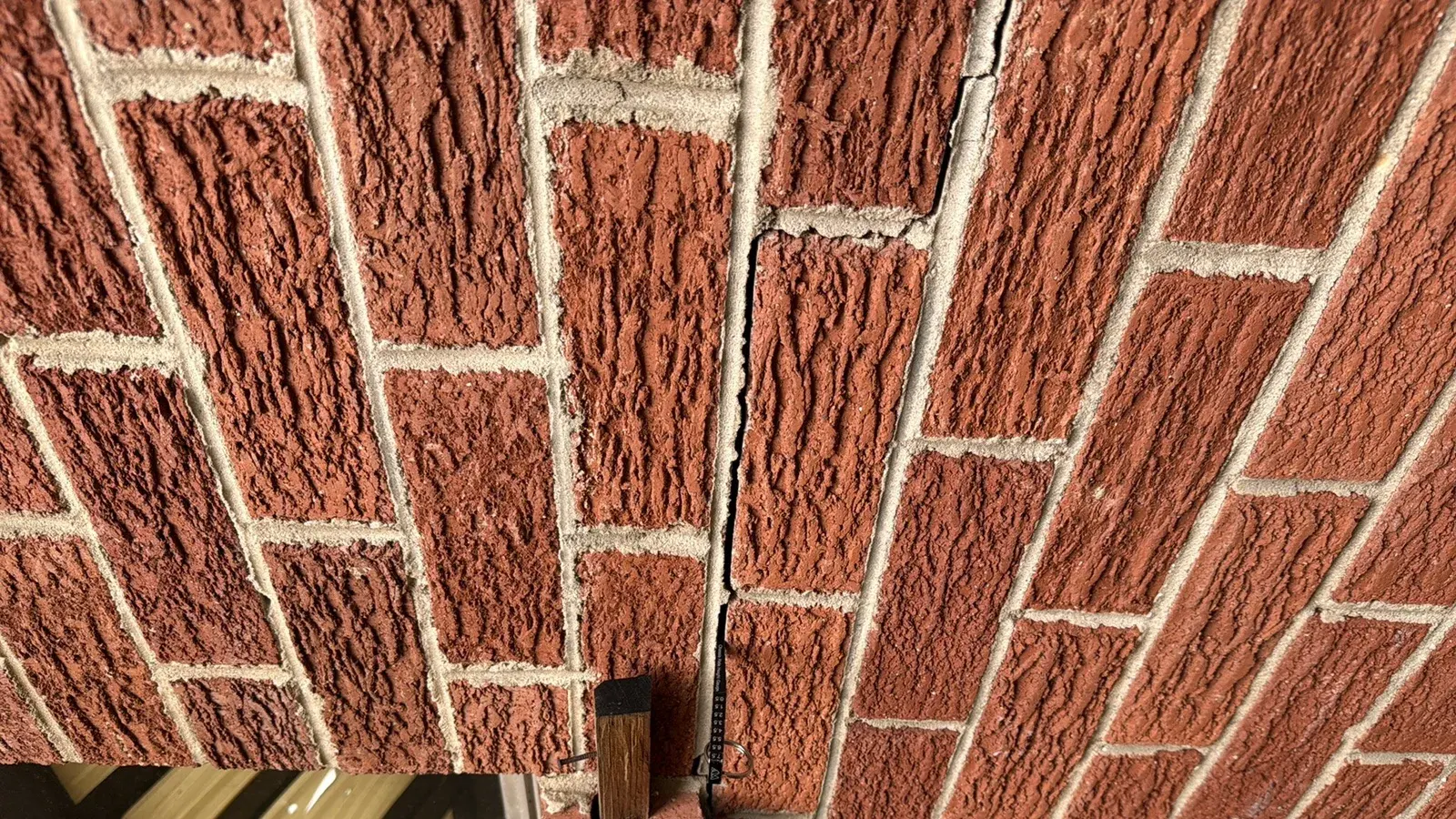
The date matters because many defects show up after the contract's defects period has ended: cracking as the frame and plasterboard dry out and the house settles, a shower that starts leaking into the next room once the waterproofing has been through a few years of use, or drainage that only fails in a wet winter.
A dated photograph of each defect, with its location recorded, is what lets you show later when it was first seen.
How long does a builder have to rectify defects?
That depends on your contract. Consumer Affairs Victoria defines a defect liability clause as one that "gives the builder three, six or nine months to fix defects arising out of contracted works", and says it should not be used for defects already known at completion. Those should be fixed before you make the final payment.
When that period ends, the builder's warranties and the 10 year limit still apply. The deadline you set in your own written notice to the builder is a third, separate thing. For how to write that notice and what comes after it, see how to document defects and escalate when a builder will not fix them.
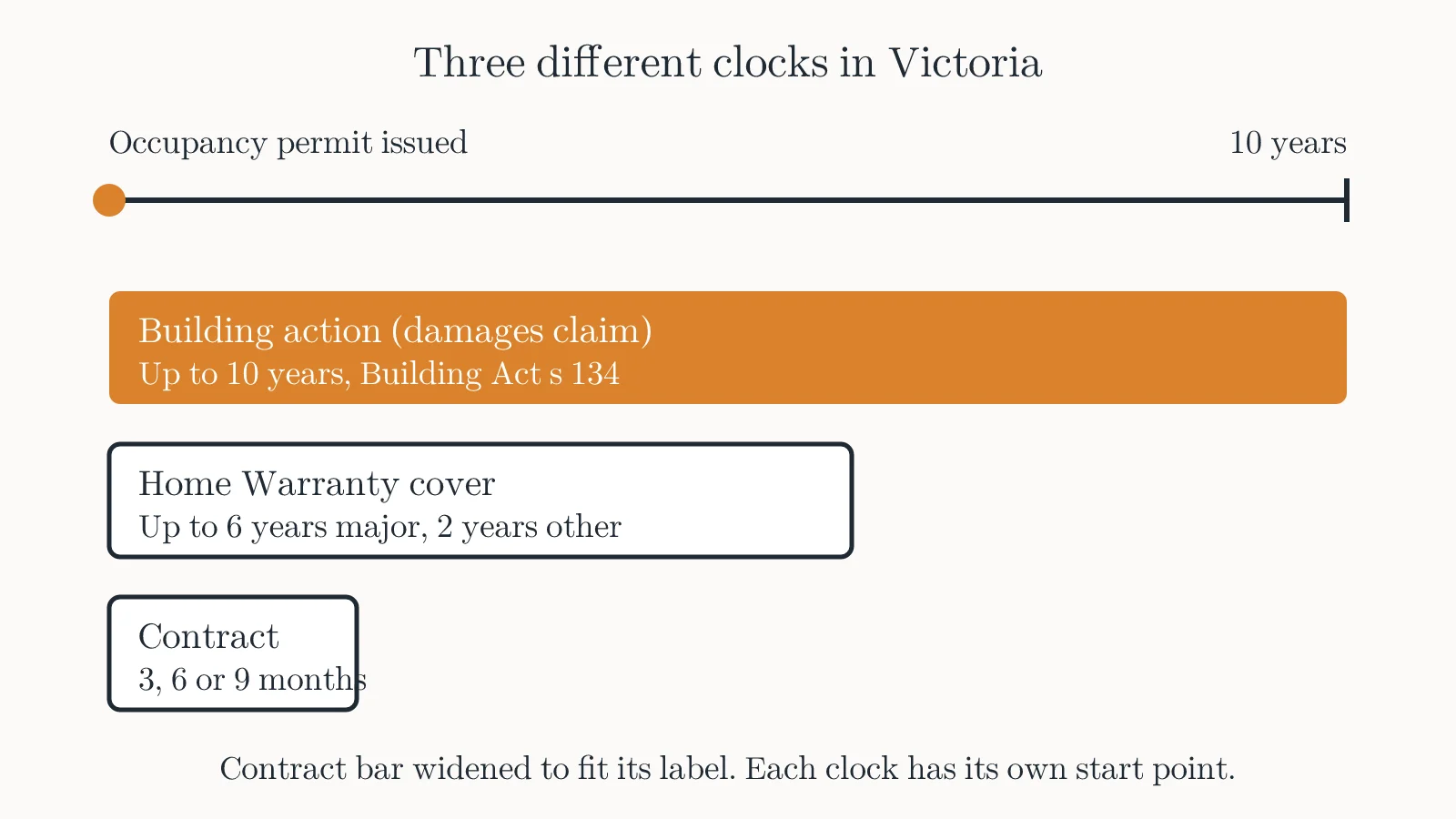
The diagram shows why owners get caught out. The contract period is the shortest of the three, but it is the one most people remember.
How long does a builder have to warranty their work?
Section 8 of the Domestic Building Contracts Act 1995 implies a set of warranties into every domestic building contract. In plain words, the builder warrants that:
- the work will be done in a proper and workmanlike manner and in line with the plans and specifications in the contract
- materials will be good and suitable for their purpose, and new unless the contract says otherwise
- the work will comply with all laws and legal requirements, including the Building Act 1993 and its regulations
- the work will be done with reasonable care and skill and finished by the date or within the period in the contract
- a new home, or a home being altered, will be suitable for occupation when the work is finished
- where the contract states a particular purpose or result, the work and materials will be reasonably fit for it
Section 132 makes void any term that tries to annul, vary or exclude a provision of the Act, so a contract clause cannot take these warranties away. There is one practical exception: under section 10, you can settle a defect you already knew about, or ought reasonably to have known about, when you signed the settlement.
The Act does not give the warranties their own expiry date. The 10 years comes from section 134 of the Building Act, which limits how long you have to bring a claim for breaching them.
Is there a 10-year building warranty in Victoria?
Not as a product. The 10 years in Victorian law is a time limit for bringing a claim, not an insurance policy or a guarantee document you are issued.
Some builders market a "10 year structural warranty" or a "10 year building guarantee". That is a promise in the builder's own contract or marketing, layered on top of your statutory rights, and it cannot reduce them. If you have one, read what it actually says: who gives it, what it excludes, what counts as "structural", and who stands behind it if the builder stops trading.
What is builders warranty insurance in Victoria?
It depends on when your contract was signed, as the Building and Plumbing Commission explains.
- Contracts signed before 1 July 2026: domestic building insurance. It generally covers you if the builder has died, disappeared or become insolvent, and, for policies issued by the VMIA on or after 1 July 2015, if the builder does not follow a final VCAT or court order. If that has happened, see what to do if your builder has gone into liquidation.
- Eligible contracts signed on or after 1 July 2026: Home Warranty. The Commission says it may apply where eligible work is incomplete, defective or non-compliant and the builder fails or refuses to complete or fix it, and that it "is not limited to situations where the builder has died, disappeared or become insolvent".
Insurance runs on its own clock. Under Home Warranty, cover is limited to up to 6 years for major defects and up to 2 years for other defects, and a defect claim must be made within 12 months of becoming aware of the problem. Those are insurance periods. They do not shorten the 10 year limit for a claim against the builder. Check your certificate of insurance or notice of cover for the terms that apply to you.
Defects showing up after the contract period?
A defect investigation report records each defect with photographs, its location, the likely cause and the standard it fails, dated to the day of inspection.
What should I do if my builder isn't fixing defects in Victoria?
Give the builder written notice of each defect with a deadline. Get an independent defect investigation report while you are still inside the 10 years, and before any repair removes the evidence. A report from Owner Inspections numbers each defect and ties it to a photograph, so your notice, the builder's reply and any later claim can all refer to the same item.
If that fails, the next step is the Building and Plumbing Commission, formerly the VBA. Its dispute resolution service, previously known as Domestic Building Dispute Resolution Victoria, expects you to have tried to resolve the dispute with the builder yourself first. VCAT expects a domestic building dispute to have been through that service before you apply, except where you need an injunction.
When does the 10 year rule not apply?
Some situations sit outside the answer above:
- Work done without a permit. If neither an occupancy permit nor a certificate of final inspection was ever issued, section 134 gives no start date. In one reported case, VCAT held the 10 year rule did not apply and the ordinary six year limitation period is likely to apply instead. Get legal advice early.
- Plumbing work. Section 134A gives plumbing its own 10 years, running from the plumbing compliance certificate.
- Owner-builder work. If you bought from an owner-builder, different rules may apply, so check before relying on anything here.
Frequently Asked Questions
Does the builder's liability transfer if I buy the house second-hand?
Generally, yes. Section 9 of the Domestic Building Contracts Act 1995 lets a later owner take action for a breach of the section 8 warranties as if they had been a party to the original contract. The 10 years does not restart when the house is sold. It still runs from the occupancy permit or certificate of final inspection.
Who do I complain to if the builder will not come back?
The Building and Plumbing Commission's dispute resolution service, after you have tried to resolve it with the builder in writing. VCAT generally expects the dispute to have been through that service before you apply.
Is this legal advice?
No. It explains the time limits in general terms. Whether your own claim is in time depends on your documents and your contract, so speak to a construction solicitor if a dispute is live.
Related Articles
What to Do When Your Builder Won't Fix Defects
If your builder will not fix defects, documentation is the first step: a written defect list with photos, locations and a deadline, backed by an independent report.

Victorian Building Authority (VBA): An Essential Guide
The Victorian Building Authority (VBA) regulates the building and plumbing industries in Victoria.
What happens if my builder goes into liquidation?
A builder entering liquidation mid-build does not usually end your contract on its own.