
Can you identify asbestos just by looking at it?
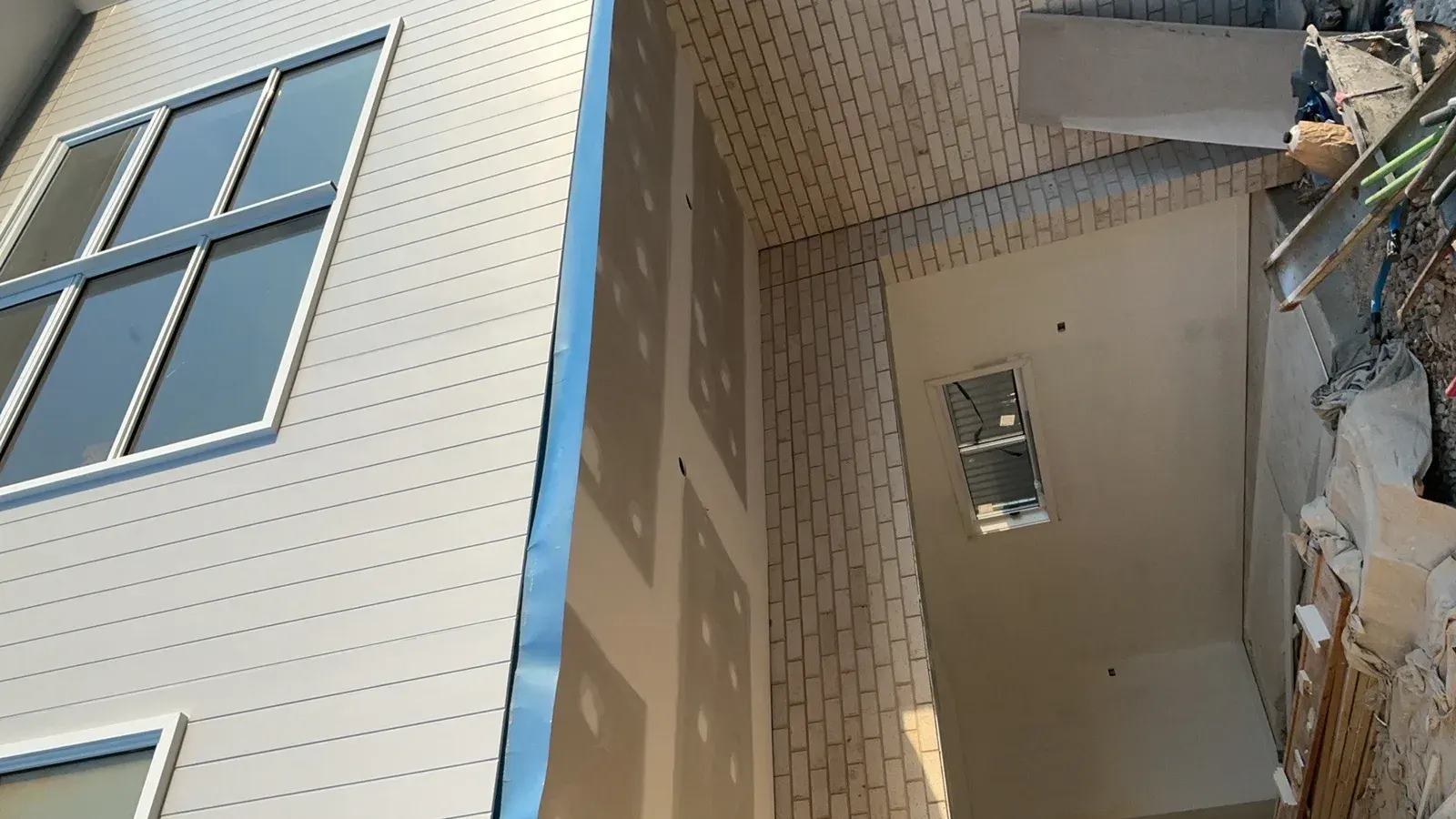
No. Asbestos cement was made to look like ordinary building material, and the asbestos-free products that replaced it look almost the same on the wall. Modern fibre cement sheet, plasterboard and cement render are all mistaken for asbestos sheeting, and asbestos sheeting is regularly mistaken for them.
Age, colour and texture are clues about where to look. They are not evidence. Paint, weathering and forty years of dust change the appearance of the same product from one house to the next, and two sheets that look identical can have come from different decades.
Confirmation comes from laboratory analysis, usually polarised light microscopy, performed on a physical sample of the material. That is the whole reason the safe approach is to assume rather than guess.
What are the first signs of asbestos in a house?
The first sign is the age of the building or its last major renovation, not anything you can see. After that, the material type matters more than its condition:
- Flat or corrugated sheeting, often called fibro, on walls, eaves, sheds and fences
- Wall and ceiling linings in bathrooms, laundries and around older wet areas
- Vinyl floor tiles, and the backing and adhesive underneath sheet vinyl
- Lagging on old pipework, and the flue of an older heater
- Textured or patterned ceiling coatings in homes from the 1960s to the 1980s
Where you can see a material without touching it, two things are worth noticing: how the sheets are fixed, since asbestos cement was typically nailed at regular centres with the joins covered by timber cover strips, and whether the sheet is thin and brittle rather than soft. Do not snap a corner off to look at the edge. Breaking the material is the moment the risk starts.
Which houses are most likely to have asbestos?
Homes built or renovated before 1990 are the practical risk group. Asbestos cement manufacture in Australia wound down through the 1980s, and a total ban on the manufacture, supply and use of all forms of asbestos took effect on 31 December 2003, as the Asbestos and Silica Safety and Eradication Agency records. The gap between those two dates is why 1990 is a rule of thumb and not a guarantee.
A house built after 1990 is not automatically clear. Leftover sheeting was used up on sheds and fences for years after it stopped being sold, an extension can be decades older than the front of the house, and a fence or garage often predates everything around it.
For the detail on the three asbestos types, the friable and non-friable distinction and how removal is regulated, see our guide to asbestos inspections and the health hazards they identify.
Where is asbestos usually found in an Australian home?
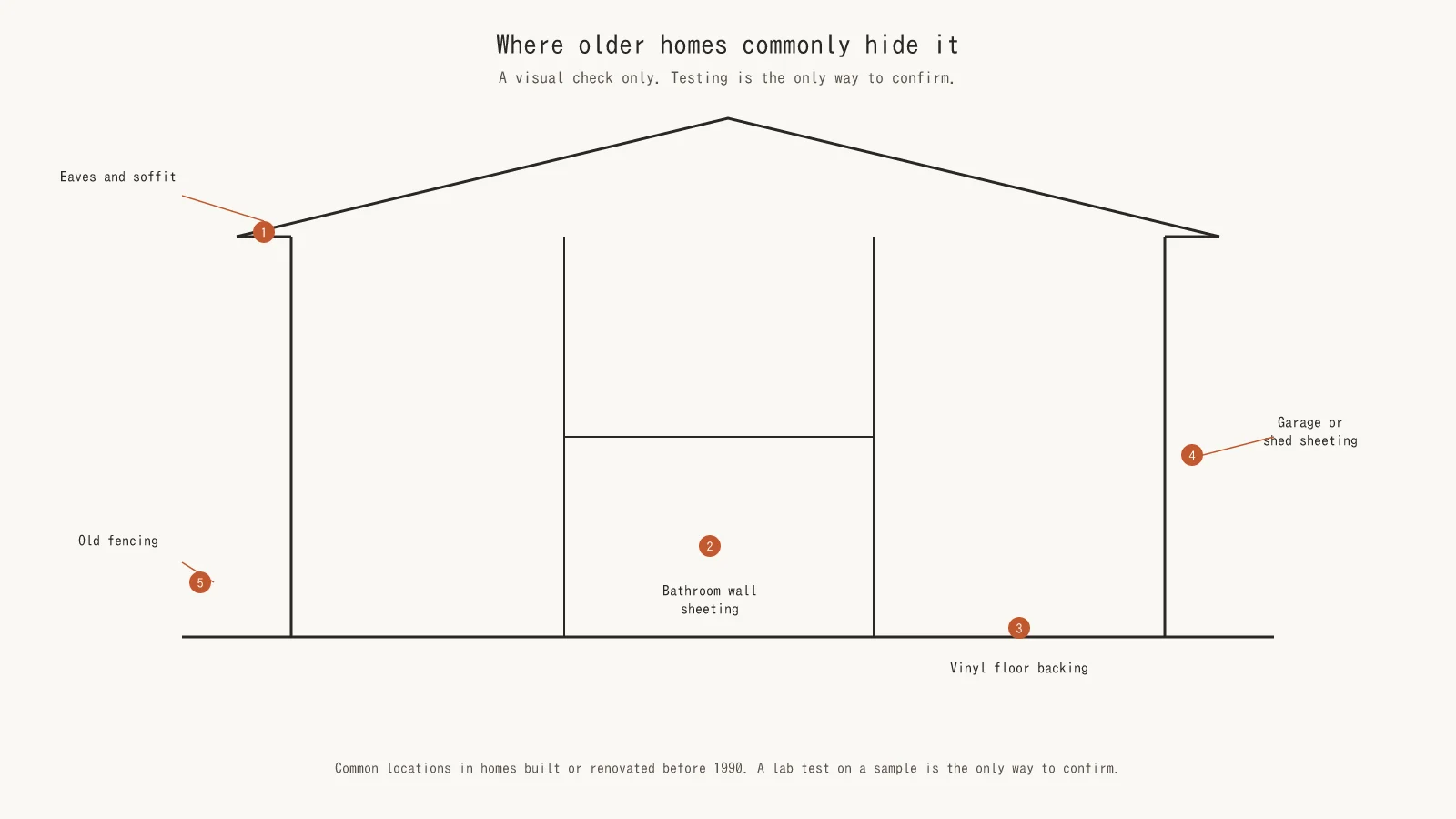
Working from outside in, the usual places are eaves and soffit linings, garage and shed walls, corrugated roofing on outbuildings, boundary fencing, bathroom and laundry wall sheeting, the backing under vinyl flooring, and lagging on old hot water pipes.
Then there is the renovation trap. A 1970s bathroom can sit inside a house whose main structure is much newer, because that one room was the only part nobody ever touched. This is the same pattern as any other concealed defect: what a later renovation covered is what nobody looks at. Our guide to hidden building defects names asbestos concealed behind later work specifically.
The places nobody thinks to check are the ones that cause trouble on a DIY weekend: the adhesive under vinyl tiles, the sheet behind a laundry tub, the flue of an old heater, and a fence that has stood untouched since 1984.
How do I get asbestos tested, and who is allowed to take the sample?
A licensed asbestos assessor or occupational hygienist takes the sample. They wet the material down, cut or lift a small piece under controlled conditions, seal it, and seal the spot they took it from. The sample then goes to a laboratory accredited by NATA for asbestos identification, and the result is a written test report naming the material and the sample location.
Taking the sample yourself is the risky part of the whole process, because sampling means deliberately disturbing the one material you are worried about, at the one moment you have no protection in place. Who is permitted to take a sample varies between states, so the permission question is worth asking your state regulator before the practical one.
A pre-purchase report from Owner Inspections records suspect materials by room and photograph, which means you can hand a licensed assessor a list of locations rather than paying someone to walk the house deciding where to start. On what a qualified assessor should look like, see what to expect from a good asbestos inspector.
What should I do if I think I have found asbestos?
Stop. If you were drilling, cutting, sanding or pulling something apart, stop at once and leave the area.
Then do none of the things that feel like cleaning up. Do not sweep it, do not vacuum it with a domestic vacuum cleaner, do not hose it down and do not use a pressure washer. Each of those either lifts fibres back into the air or spreads contaminated water across ground you will walk on later.
Close the room off, keep children and pets out, and get the material assessed. What happens next depends on your state. Friable asbestos always requires a licensed removalist. For non-friable material, most states allow an unlicensed person to remove only a small quantity under set conditions, but the quantity, the conditions and whether the work must be notified are set state by state, so check the rule that applies to you rather than a figure you read somewhere: NSW, Victoria and South Australia each publish their own.
Is a small amount of asbestos exposure dangerous?
Asbestos-related disease risk rises with the amount and duration of exposure, but there is no exposure level anyone can tell you is safe, and we are not a medical provider. If you think you have been exposed, that is a conversation with your GP, who can record it and advise you.
You can also record the exposure on the National Asbestos Exposure Register, maintained by the Asbestos and Silica Safety and Eradication Agency, so that it sits on file if it is ever needed.
Can asbestos dust be washed off or will it settle on its own?
Not in any way that makes the area safe. Dust that has settled is still dust that can be disturbed again, and sweeping or vacuuming with household equipment mostly returns fibres to the air rather than capturing them. Hosing moves the problem into the soil and the stormwater.
Decontamination is done wet, with surfaces damped down rather than dry-cleaned, and with an H class industrial vacuum of the kind licensed removalists use. It is work for a removalist, not a resident with a broom.
Does a building and pest inspection identify asbestos?
Not in the sense most buyers assume. A standard pre-purchase inspection is a visual appraisal carried out to AS 4349.1. An inspector can and should note materials that appear to contain asbestos, with their location, and recommend testing. What the inspector cannot do is confirm it, because confirmation requires taking a sample and having it analysed, and that is a separate service performed by a licensed assessor.
That distinction matters most to buyers. A clear building and pest report has not cleared the house for asbestos, and it was never testing for it. If asbestos is the specific question you need answered before settlement or before renovating, it needs its own inspection and a laboratory result. For the scope of the standard report, see what a building inspection covers.
Get suspect materials recorded before you renovate
A building and pest inspection documents materials that appear to contain asbestos, with locations and photographs, so you know what needs testing before any work starts.
Frequently Asked Questions
Can I use a home asbestos test kit?
A test kit does not remove the hard part. Someone still has to cut or break a piece off the material, which is the step that releases fibres, and it is the step a licensed assessor does with controls in place. The laboratory analysis is the easy half.
Is asbestos safe if it is painted and in good condition?
Non-friable asbestos that is sealed, undamaged and left alone is generally managed in place rather than removed, and that is the usual advice from state asbestos authorities. The risk comes from disturbing it. Painting is not a reason to skip testing before you drill into it.
Can I remove asbestos myself?
Sometimes, for a limited quantity of non-friable material, and never for friable asbestos. The allowance, the conditions and any notification requirement differ between states and territories, so the only reliable answer comes from your state regulator.
What year did Australia ban asbestos?
A total ban on the manufacture, supply and use of all forms of asbestos took effect on 31 December 2003. Manufacture of asbestos cement products had already wound down through the 1980s, which is why pre-1990 homes are treated as the risk group.
Related Articles
Asbestos Inspections: Identifying Health Hazards in Australian Homes
Asbestos inspections identify hazardous asbestos-containing materials in properties built before 2000. This guide covers the health risks, Australian legal requirements, inspection processes, and safe removal practices to protect occupants.

What Should You Expect from a Good Asbestos Inspector?
A qualified asbestos inspector should hold a SafeWork or state-equivalent licence, use calibrated detection equipment, and provide a comprehensive report detailing asbestos locations, condition, and risk assessment.
Hidden Building Defects: How to Identify Them and Protect Your Property
Hidden building defects cost Australian property owners billions of dollars each year. From concealed waterproofing failures and structural cracking to faulty plumbing and non-compliant electrical work, many defects remain invisible during a standard walkthrough.