
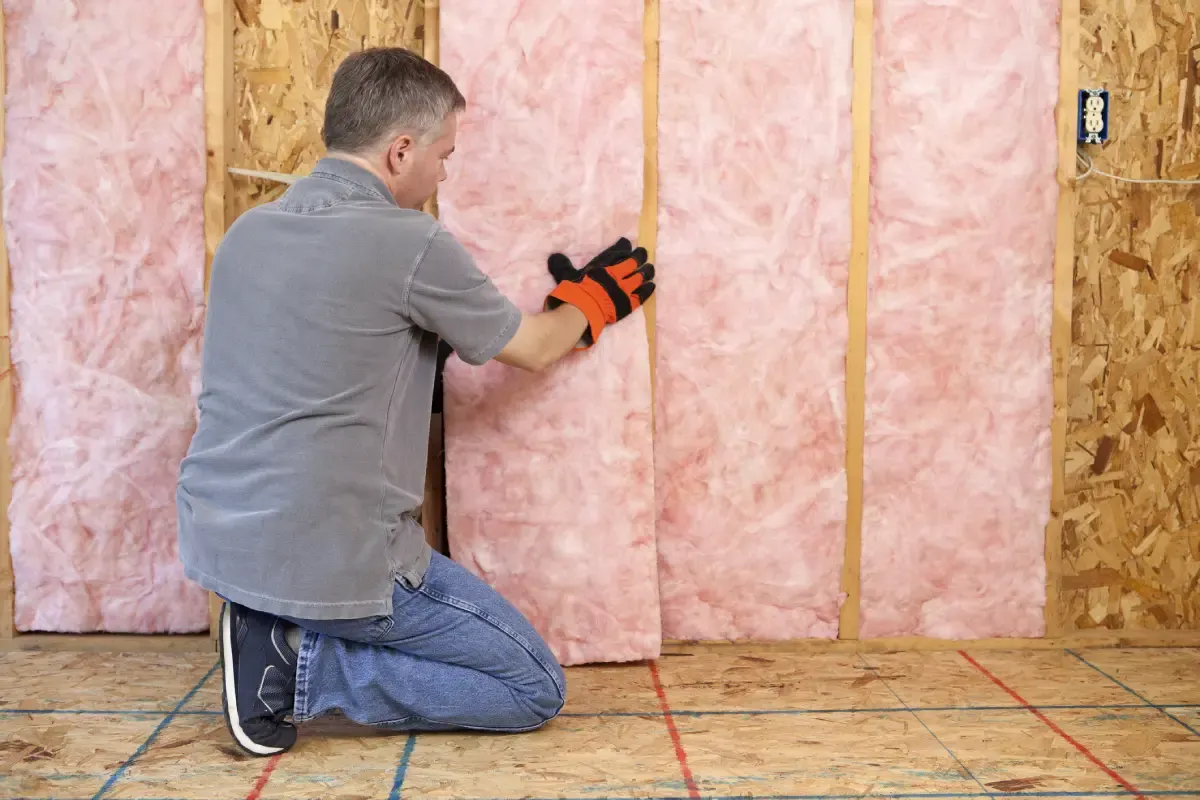
Asbestos-related diseases claim the lives of around 4,000 Australians each year, making it one of the most significant occupational and residential health hazards in the country. For anyone planning renovations, purchasing an older property, or managing a commercial building, an asbestos inspection is a practical and often legally required step to protect occupants, workers, and the broader community.
This guide explains who needs an asbestos inspection, the types of asbestos found in Australian buildings, the health risks, where asbestos is commonly located, the legal requirements across states, what the inspection process involves, and how safe removal works. If you are choosing someone to do the work, see what to expect from a good asbestos inspector.
Who Needs an Asbestos Inspection?
Not every property owner will need an asbestos inspection, but several groups should treat it as a priority.
Homeowners planning renovations on any property built before 2000 should have an inspection before work begins. Drilling, cutting, sanding, or removing materials that contain asbestos releases fibres into the air. Even minor projects like replacing a bathroom vanity or pulling up old vinyl tiles can disturb ACMs.
Property buyers considering homes built before 2000 should request an asbestos assessment as part of their pre-purchase inspection checklist. Knowing the location and condition of any ACMs allows buyers to factor management or removal costs into their purchase decision.
Commercial property managers have a legal obligation under the Work Health and Safety Act 2011 to maintain an asbestos register for any workplace building constructed before 2004. This register must be reviewed and updated regularly.
Government bodies and councils managing public assets, schools, and community buildings are required to identify and manage asbestos risks across their property portfolios.
Three Primary Types of Asbestos
Asbestos is not a single material. It is a group of naturally occurring silicate minerals that were valued for their heat resistance, tensile strength, and insulating properties. Three types were commonly used in Australian construction.
Chrysotile (White Asbestos)
Chrysotile is the most commonly used form of asbestos worldwide and accounts for roughly 95% of asbestos found in Australian buildings. Its flexible, curly fibres made it suitable for a wide range of products. It is found in roofing sheets, ceiling panels, vinyl floor tiles and backing, wall cladding, brake linings, and cement pipes. While all forms of asbestos are hazardous, chrysotile fibres are generally considered less persistent in lung tissue than amphibole varieties. They remain dangerous and can cause all asbestos-related diseases with sufficient exposure.
Amosite (Brown Asbestos)
Amosite was the second most commonly used type in Australia. Its straight, needle-like fibres made it particularly effective as thermal insulation. It is found in cement sheets, pipe insulation, ceiling tiles, and thermal insulation boards. Amosite fibres are more durable in lung tissue than chrysotile and are associated with a higher risk of mesothelioma.
Crocidolite (Blue Asbestos)
Crocidolite is regarded as the most hazardous form of asbestos. Its extremely fine, sharp fibres penetrate deep into lung tissue and are highly resistant to the body's natural clearance mechanisms. It was used in pipe lagging, spray-on coatings, insulation for steam engines, and some cement products. Crocidolite was mined extensively at Wittenoom in Western Australia until the mine closed in 1966. Its use in construction declined earlier than other types due to recognised health concerns.
| Asbestos Type | Common Name | Fibre Shape | Common Locations | Relative Risk |
|---|---|---|---|---|
| Chrysotile | White | Curly, flexible | Roofing, ceilings, vinyl tiles, wall cladding | Lower (still hazardous) |
| Amosite | Brown | Straight, needle-like | Cement sheets, pipe insulation, thermal boards | Higher |
| Crocidolite | Blue | Very fine, sharp | Pipes, spray coatings, insulation | Highest |
Health Risks of Asbestos Exposure
Asbestos fibres are so small that they are invisible to the naked eye. When inhaled, they lodge in the lung tissue and remain there permanently. The body cannot break them down or expel them. Over time, these fibres cause inflammation, scarring, and cellular damage that can lead to three primary diseases.
Asbestosis
Asbestosis is a chronic, progressive lung disease caused by the inhalation of asbestos fibres over an extended period. The fibres cause scarring (fibrosis) of the lung tissue, which reduces the lungs' ability to expand and contract. Symptoms include shortness of breath, a persistent dry cough, chest tightness, and fatigue. There is no cure for asbestosis, and the condition worsens over time. It is most commonly seen in workers who had prolonged occupational exposure, but it can also develop from sustained residential exposure.
Lung Cancer
Asbestos exposure significantly increases the risk of developing lung cancer, particularly in individuals who also smoke. The combination of asbestos exposure and smoking creates a multiplicative rather than additive increase in risk. Lung cancer from asbestos exposure typically develops 15 to 35 years after initial exposure, making it difficult to trace the source without a thorough occupational and residential history.
Mesothelioma
Mesothelioma is a rare and aggressive cancer that develops in the lining of the lungs (pleural mesothelioma), abdomen (peritoneal mesothelioma), or heart (pericardial mesothelioma). It is almost exclusively caused by asbestos exposure. Australia has one of the highest per capita rates of mesothelioma in the world, a direct consequence of the country's extensive asbestos mining and construction history. The latency period for mesothelioma can be 20 to 50 years, meaning individuals exposed decades ago are still being diagnosed today. The median survival time after diagnosis is 12 to 18 months.
Common Locations of Asbestos in Buildings
Asbestos was used in over 3,000 different products in Australia. Knowing where to look is the first step in managing the risk.
Residential Properties
In homes built before 1990 (and some built up to 2000), asbestos-containing materials are commonly found in:
- Flat and corrugated roofing sheets (fibro)
- Eave linings and soffit panels
- Internal and external wall cladding
- Vinyl floor tiles and the backing of sheet vinyl
- Cement sheet flooring (particularly in wet areas)
- Ceiling materials, including flat sheets and textured coatings
- Pipe lagging and insulation around hot water systems
- Fencing (fibro cement fence panels)
- Backing boards behind electrical switchboards
- Bathroom and laundry splashbacks
Commercial Properties
In commercial buildings, asbestos was used more extensively due to its fireproofing and insulating properties:
- Spray-applied fireproofing on structural steel
- Acoustic ceiling tiles
- Boiler and plant room insulation
- Fire doors and fire-rated partition walls
- Textured paints and decorative coatings
- Lift shaft linings
- Cable trays and electrical conduit
- HVAC duct insulation and gaskets
For a broader understanding of what building inspections cover, see our guide on what a building inspection covers.
Friable vs Non-Friable Asbestos
The risk posed by asbestos-containing materials depends largely on whether the material is friable or non-friable.
Friable Asbestos
Friable asbestos can be crumbled, pulverised, or reduced to powder by hand pressure when dry. This means fibres can become airborne with minimal disturbance. Friable materials include loose-fill insulation (such as "Mr Fluffy" loose-fill, which affected thousands of homes in the ACT and NSW), spray-on insulation and fireproofing, pipe lagging, and damaged or deteriorating asbestos products that were originally non-friable.
Friable asbestos presents the highest risk and requires the most stringent handling, removal, and disposal procedures. Only Class A licensed removalists are permitted to remove friable asbestos in Australia.
Non-Friable (Bonded) Asbestos
Non-friable asbestos has the fibres firmly bound within a matrix, typically cement or vinyl. In good condition and left undisturbed, non-friable asbestos poses a low risk because the fibres are locked in place. Common examples include fibro cement sheeting (flat and corrugated), vinyl floor tiles, and cement pipes.
However, non-friable asbestos becomes hazardous when it is cut, drilled, sanded, broken, or allowed to deteriorate through weathering. Power tools used on non-friable asbestos can generate large quantities of airborne fibres in seconds. Class B licensed removalists handle non-friable asbestos removal.
| Classification | Description | Examples | Risk Level | Removal Licence Required |
|---|---|---|---|---|
| Friable | Crumbles easily by hand when dry | Loose-fill insulation, spray-on coatings, pipe lagging | High | Class A |
| Non-Friable (Bonded) | Fibres bound in cement or resin matrix | Fibro sheets, vinyl tiles, cement pipes | Low (when intact) | Class B |
Legal Requirements Across Australia
Australian law imposes specific obligations on property owners, employers, and anyone involved in construction or demolition work where asbestos may be present.
Work Health and Safety Act 2011
The model Work Health and Safety (WHS) Act, adopted by most states and territories, requires that any person conducting a business or undertaking (PCBU) must identify asbestos or ACMs at the workplace and maintain an asbestos register. Before any demolition or renovation work on a building constructed before 2004, the person commissioning the work must arrange for an asbestos inspection to identify any ACMs that may be disturbed.
State and Territory Variations
While the WHS framework provides national consistency, state-specific regulations add further requirements:
New South Wales: SafeWork NSW oversees asbestos regulations. The Work Health and Safety Regulation 2017 (NSW) requires an asbestos register for all workplaces and mandates that a competent person identify ACMs before renovation or demolition. The NSW Government's Loose Fill Asbestos Insulation Taskforce addressed the "Mr Fluffy" contamination affecting homes in the state.
Victoria: WorkSafe Victoria administers the Occupational Health and Safety Regulations 2017 (Vic). The regulations require workplace asbestos identification, registers, and management plans. Victoria also requires asbestos removal to be carried out by licensed removalists and notification to WorkSafe before removal begins.
Queensland: Workplace Health and Safety Queensland and the QBCC regulate asbestos in workplaces and residential properties. Queensland's regulations require that a competent person identify ACMs before any refurbishment or demolition work.
Seller Disclosure Obligations
In most Australian states, sellers are required to disclose known information about the presence of asbestos in a property. While the extent of disclosure obligations varies, failure to disclose known asbestos can expose sellers to legal liability. Buyers should always request a comprehensive building inspection that includes an assessment of potential ACMs.
The Asbestos Inspection Process
A professional asbestos inspection follows a structured process designed to identify all ACMs within a property and assess the risk they pose.
Step 1: Engage a Qualified Inspector
The inspector should be a competent person as defined under the WHS Regulations. In practice, this means someone with formal training in asbestos identification and assessment, typically holding a qualification such as the Identification of Asbestos in the Workplace (or equivalent). Many building inspectors hold this qualification alongside their building inspection licence.
Step 2: Initial Property Assessment
The inspector conducts a thorough visual assessment of the entire property, noting the age and construction type, the condition of materials, and any areas where asbestos is likely to be present based on the building's era and construction methods. The inspector examines both accessible and semi-accessible areas including roof spaces, subfloor areas, wall cavities (where accessible), and external structures.
Step 3: Material Sampling and Laboratory Testing
Where materials are suspected of containing asbestos, the inspector collects small samples using controlled methods that minimise fibre release. Samples are sealed in labelled containers and sent to a NATA-accredited laboratory for analysis. The laboratory uses polarised light microscopy (PLM) or other approved methods to confirm the presence and type of asbestos fibres. Visual identification alone is not reliable, as many ACMs are visually indistinguishable from non-asbestos alternatives.
Step 4: Detailed Report and Risk Assessment
The inspector produces a comprehensive report that includes:
- The location and description of each identified or suspected ACM
- The type of asbestos present (chrysotile, amosite, or crocidolite)
- The condition of each material (good, fair, poor, or damaged)
- Whether each material is friable or non-friable
- A risk rating for each identified ACM
- Recommendations for management, encapsulation, or removal
- Photographic evidence of each identified material
- Laboratory analysis certificates
Safe Removal of Asbestos
Once asbestos has been identified, the property owner must decide whether to manage it in place or have it removed. Removal is recommended when the material is damaged, deteriorating, friable, or likely to be disturbed by planned works.
Professional Removal Is Mandatory
In Australia, asbestos removal must be carried out by licensed removalists. DIY removal is strongly discouraged and, for friable asbestos and quantities exceeding 10 square metres of non-friable material, is illegal. Licensed removalists follow strict procedures that include:
- Notification to the relevant state authority before removal begins
- Establishment of containment areas using plastic sheeting and negative air pressure
- Use of personal protective equipment (PPE) including P2 respirators and disposable coveralls
- Wetting of materials to suppress fibre release during handling
- Double-bagging of asbestos waste in labelled, heavy-duty polyethylene bags
- Transport and disposal at a licensed waste facility
- Air monitoring and clearance inspection before the containment is removed
Removal Cost Considerations
Asbestos removal costs vary depending on the type (friable vs non-friable), quantity, accessibility, and location. As a general guide:
| Removal Type | Typical Cost Range (AUD) | Licence Required |
|---|---|---|
| Non-friable (small area, e.g. bathroom splashback) | $500 to $1,500 | Class B |
| Non-friable (full roof replacement) | $5,000 to $15,000 | Class B |
| Non-friable (whole house re-cladding) | $10,000 to $30,000 | Class B |
| Friable (pipe lagging, insulation) | $5,000 to $20,000+ | Class A |
| Friable (loose-fill removal, e.g. Mr Fluffy) | $50,000 to $150,000+ | Class A |
These costs should be factored into any renovation budget or purchase price negotiation for pre-2000 properties.
Asbestos Management Plans
For commercial properties and workplaces, a formal asbestos management plan is required under WHS legislation. The plan must include:
- The asbestos register identifying all known or assumed ACMs
- A schedule for regular condition assessments (recommended annually)
- Procedures for safe work in areas where ACMs are present
- Emergency procedures for accidental disturbance or damage
- Information, training, and induction requirements for workers and contractors
- Procedures for review and update of the register and management plan
The management plan must be readily accessible to workers and anyone who may disturb ACMs during maintenance or renovation work.
Frequently Asked Questions
Frequently Asked Questions
What health risks does asbestos exposure cause?
Asbestos exposure can cause three primary diseases: asbestosis (chronic lung scarring), lung cancer, and mesothelioma (an aggressive cancer of the lung or abdominal lining).
These diseases develop after asbestos fibres are inhaled and lodge permanently in lung tissue. Symptoms typically appear 15 to 50 years after the initial exposure. There is no safe level of asbestos exposure, though the risk increases with the duration and intensity of exposure. Asbestos-related diseases are responsible for approximately 4,000 deaths per year in Australia. Smokers who are also exposed to asbestos face a significantly higher risk of lung cancer than non-smokers.
How is asbestos detected in a building?
Asbestos is detected through a combination of visual inspection by a trained professional and laboratory analysis of material samples.
A competent inspector assesses the building based on its age, construction type, and the appearance and location of suspect materials. Samples are collected using controlled techniques to minimise fibre release and are sent to a NATA-accredited laboratory for analysis using polarised light microscopy. Visual identification alone is unreliable because many asbestos-containing materials look identical to non-asbestos products. Only laboratory testing can confirm whether asbestos is present and identify the specific type (chrysotile, amosite, or crocidolite).
Are property sellers required to disclose asbestos in Australia?
In most Australian states, sellers must disclose known information about asbestos in a property. The extent of these disclosure obligations varies between jurisdictions.
In NSW, for example, vendors must complete a property disclosure statement that includes questions about known hazardous materials. In Victoria, vendors are required to disclose material facts that could affect a buyer's decision. Failure to disclose known asbestos can result in legal action by the buyer after settlement. Buyers should not rely solely on vendor disclosure and should arrange their own building inspection that includes an assessment of potential asbestos-containing materials.
Is professional asbestos removal always necessary?
Professional removal is mandatory for friable asbestos and for non-friable asbestos exceeding 10 square metres. For smaller quantities of non-friable asbestos in good condition, management in place may be appropriate.
If the asbestos-containing material is in good condition, undamaged, and will not be disturbed by renovation or demolition, it can often be left in place and managed through regular condition monitoring. However, any material that is damaged, deteriorating, or likely to be disturbed during works must be removed by a licensed removalist. DIY removal of asbestos is strongly discouraged due to the serious health risks and is illegal for friable asbestos and larger quantities of non-friable asbestos.
How often should commercial properties be inspected for asbestos?
Commercial properties with identified or assumed asbestos-containing materials should have their asbestos register and management plan reviewed at least annually or whenever changes occur to the building.
The Work Health and Safety Regulations require that the asbestos register is kept up to date and reviewed whenever there are changes to the building that may affect the condition or location of ACMs. In practice, annual condition assessments are considered best practice. Any time maintenance, renovation, or demolition work is planned, the asbestos register should be consulted and a fresh assessment may be required for the specific areas affected.
What should an asbestos management plan include?
An asbestos management plan must include the asbestos register, a schedule for condition assessments, safe work procedures, emergency response procedures, training requirements, and a process for regular review and updates.
The plan must identify every known or assumed ACM in the building, its location, type, condition, and the risk it presents. It must set out how workers and contractors will be informed about the presence of asbestos before they start work. Emergency procedures must address what to do if ACMs are accidentally damaged or disturbed. The plan must be readily accessible to all workers at the workplace and must be reviewed whenever the asbestos register is updated or when a control measure is reviewed.
What are the penalties for non-compliance with asbestos regulations?
Penalties for non-compliance with asbestos regulations in Australia are severe, including substantial fines and potential imprisonment for the most serious offences.
Under the model WHS Act, a Category 1 offence (reckless conduct that exposes a person to a risk of death or serious injury) carries a maximum penalty of $3 million for a body corporate and $600,000 or five years imprisonment for an individual. Unlicensed asbestos removal, failure to maintain an asbestos register, and failure to notify the regulator of planned removal work are all offences that attract significant penalties. State and territory regulators actively enforce these provisions, and prosecution rates have increased in recent years.
Can I renovate a home that contains asbestos?
Yes, but you must have an asbestos inspection before starting any renovation work on a property built before 2000. Any ACMs that will be disturbed by the renovation must be removed by a licensed removalist before other trades begin work.
Renovation is one of the most common triggers for asbestos exposure in residential settings. Activities such as removing wall cladding, pulling up floor tiles, replacing roofing, and knocking out walls can all disturb ACMs. The safe approach is to identify all ACMs in the renovation area through a professional inspection, engage a licensed removalist to remove or encapsulate the materials, obtain a clearance certificate, and only then proceed with the renovation works.
What is the difference between friable and non-friable asbestos?
Friable asbestos can be crumbled or reduced to powder by hand pressure, releasing airborne fibres easily. Non-friable asbestos has fibres firmly bound in a matrix (such as cement) and does not release fibres unless it is cut, drilled, broken, or allowed to deteriorate.
The distinction is significant because friable asbestos presents a much higher immediate health risk. It can release fibres with minimal disturbance, such as air movement or vibration. Non-friable asbestos in good condition poses a low risk because the fibres are trapped within the binding material. However, power tools, weathering, fire damage, or physical impact can make non-friable asbestos friable. Different licensing requirements apply to the removal of each type, with Class A licences required for friable and Class B for non-friable asbestos.
How much does an asbestos inspection cost in Australia?
An asbestos inspection for a standard residential property typically costs between $300 and $800, depending on the property size, number of samples collected, and the laboratory analysis required.
The inspection fee covers the site visit, visual assessment, sample collection, and the detailed report. Laboratory analysis of each sample usually costs $30 to $80 per sample, and multiple samples are often required to cover different materials and locations throughout the property. Commercial properties and larger residential properties may cost more due to the greater number of areas and materials that need to be assessed. The inspection cost is a small fraction of what asbestos removal or, worse, asbestos-related disease treatment may cost.
Does asbestos in good condition need to be removed?
No. Asbestos-containing materials in good condition that will not be disturbed do not necessarily need to be removed. They can be managed in place through regular condition monitoring.
The decision to remove or manage depends on the material's condition, its location, the likelihood of disturbance, and whether renovation or demolition is planned. Many homeowners live safely in properties that contain asbestos because the materials are in good condition and left undisturbed. The key is to know where the asbestos is, monitor its condition, and arrange removal before any work that would disturb it. An asbestos management approach is often more practical and cost-effective than immediate removal for materials that are intact and pose no current risk.
Who is qualified to conduct an asbestos inspection?
An asbestos inspection should be carried out by a competent person with specific training in asbestos identification, such as a holder of the Identification of Asbestos in the Workplace qualification or an occupational hygienist.
Under WHS Regulations, a "competent person" for asbestos identification means someone who has acquired knowledge, training, and experience to identify asbestos and ACMs. Many licensed building inspectors hold this qualification alongside their building inspection credentials. For commercial properties, occupational hygienists with asbestos specialisation are often engaged to carry out comprehensive surveys and prepare management plans. The inspector should be independent of any removal company to avoid conflicts of interest in their assessment and recommendations.
Key Takeaways
- An estimated one in three Australian homes built before 2000 contains asbestos-containing materials that require professional identification
- Asbestos exposure causes asbestosis, lung cancer, and mesothelioma, with symptoms appearing 15 to 50 years after exposure and approximately 4,000 Australian deaths annually
- Chrysotile (white), amosite (brown), and crocidolite (blue) are the three types of asbestos found in Australian buildings, each with different risk profiles
- Friable asbestos releases fibres with minimal disturbance and requires Class A licensed removal, while non-friable asbestos in good condition can often be managed in place
- The Work Health and Safety Act 2011 requires asbestos identification before renovation or demolition of pre-2004 buildings and mandates workplace asbestos registers
- Professional asbestos inspections cost between $300 and $800 for residential properties, far less than the health and financial consequences of unmanaged asbestos
- Only laboratory testing by a NATA-accredited facility can confirm the presence and type of asbestos in building materials
- Licensed removalists (Class A for friable, Class B for non-friable) must carry out asbestos removal, and DIY removal is illegal for friable asbestos and larger quantities
References and Resources
Related Articles
A Comprehensive Guide to House Inspections
House inspections are detailed professional assessments evaluating structural integrity, safety systems, and component functionality. Learn everything you need to know.
What Does a Building Inspection Cover?
Building inspections serve as a critical investment safeguard, examining structural integrity, electrical systems, plumbing, and more before property purchase.

Pre-Purchase Inspection Checklist for Buyers
A pre-purchase inspection checklist helps buyers assess property condition before committing. Covers structural, electrical, plumbing, roofing, and pest checks.
Concerned About Asbestos in Your Property?
Book a building inspection with Owner Inspections to identify potential asbestos hazards before they become a health risk. Our qualified inspectors assess properties built before 2000 for asbestos-containing materials.