
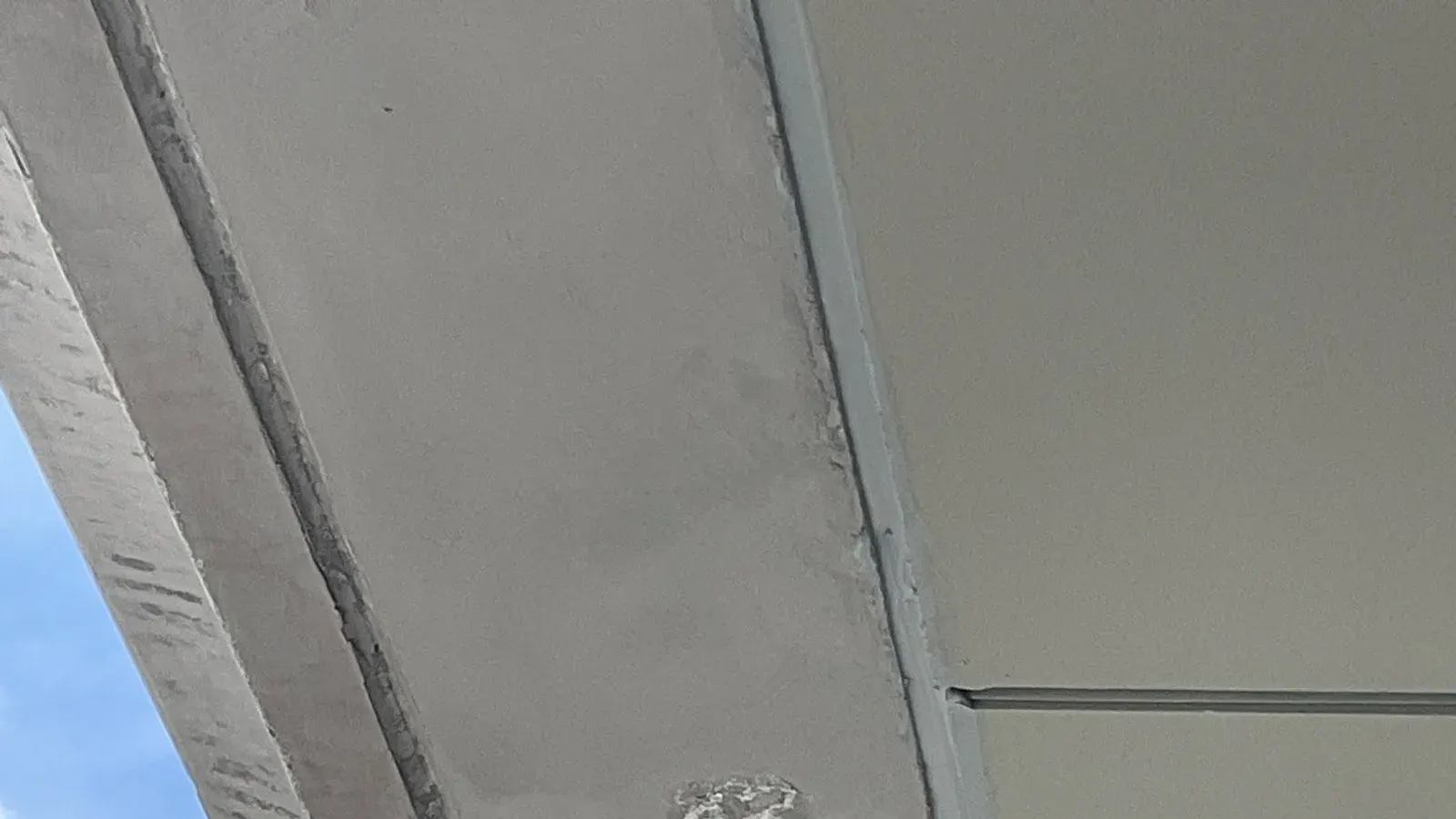
Do apartments need a building and pest inspection before buying?
No state requires the buyer to get one, for a unit or for a house. In the ACT, the seller of an established house or townhouse must attach building and pest inspection reports to the contract, but apartments (class A units) are exempt. The protection is in the contract. An inspection condition, or a cooling-off period, gives you a short window to inspect and then pull out or renegotiate. How long that window lasts depends on your state and on how you buy, and an auction purchase usually comes with no cooling-off at all, so check the current rule with your state's fair trading office before you sign.
For an apartment, the decision comes down to three lines:
- Inspect the unit, always. A building and pest inspection is the only independent look at the walls, wet areas, windows and balcony of the unit you are buying.
- Read the strata records, always. They cover the parts of the building you will pay for through levies but that nobody inspects for you.
- Scale the pest part to the building. It matters a great deal in some apartment types and very little in others, as set out below.
Should you get a building inspection for an apartment in NSW?
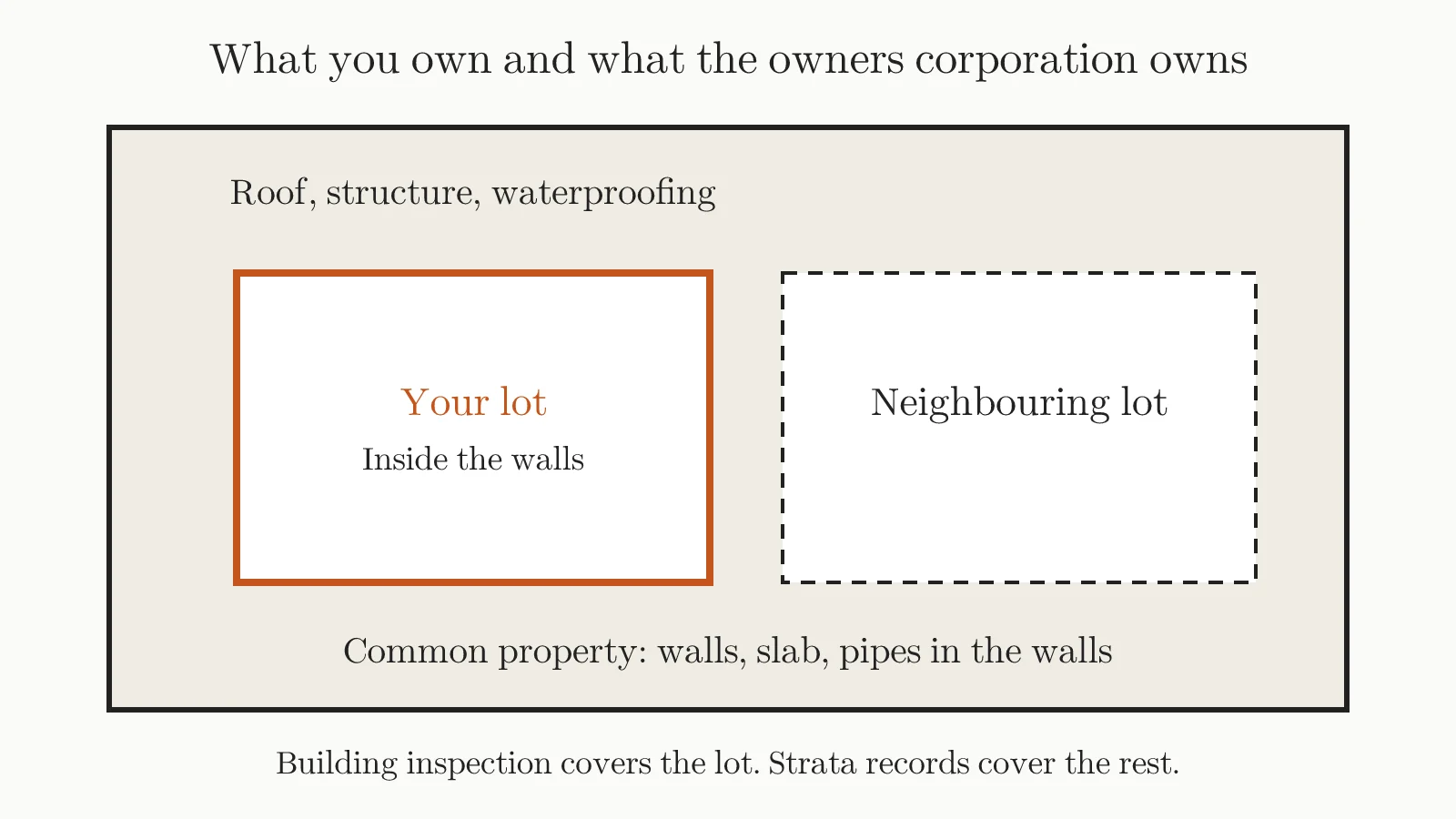
Yes, for the same reasons. In NSW you are buying a lot in a strata scheme, and the strata plan sets its boundaries. In most buildings the boundary is the inner face of the walls, floor and ceiling, so the space inside and most of its fittings are generally yours, while the structural slab, the boundary walls and the roof are generally common property. A building inspection reports on the lot. It cannot tell you what the owners corporation is facing on everything else. The difference between common property and lot property decides who pays when something fails.
Other states use different machinery. Victoria has owners corporations and Queensland has bodies corporate, and who owns what, and which records you can see, differ between them. Check the rules where you are buying rather than assuming the NSW position.
What does an apartment building inspection actually cover, and what can it not?
A unit inspection covers what sits inside your lot and what can be seen from it: internal walls, ceilings and floors, the kitchen, bathrooms and laundry, windows and doors, the balcony, and whatever part of the building's exterior is visible from the balcony or the windows.
It does not cover the roof, the plant rooms, the basement car park, locked service risers or anyone else's unit. Those areas are usually locked, off limits without the owners corporation's permission, or simply outside what was booked. The classic case is a leak from the unit above. The inspector can record the stain in your ceiling and take moisture readings across it, but cannot go upstairs to find the source, and the fix may sit in someone else's bathroom or in the building's own waterproofing.
A unit report from Owner Inspections lists each area that was outside the lot or could not be reached, and the reason, which tells you which questions still belong to the strata records.
| Building and pest inspection | Strata report | |
|---|---|---|
| Balcony and wet-area waterproofing | Signs inside the lot: staining, loose or hollow-sounding tiles, failed seals, moisture readings | Past leak complaints, repair works and defect reports recorded by the owners corporation |
| Roof and facade | Only what is visible from the unit | Defect reports, maintenance history and planned works |
| Car park and slab | Cracking or staining visible inside the lot | Concrete repair, flooding or structural reports the owners corporation has commissioned |
| Levies and sinking fund | Not covered | Levy history, the fund balance, and any special levy raised or proposed |
| Defect history | Defects present on the day | Defects already reported, disputed or in litigation |
| Termite activity | Timber pest signs in the lot and the areas the inspector can reach | Termite treatment or damage in common property, where the minutes record it |
Do you need a pest inspection for an apartment?
It depends on the building. In a concrete high rise the risk is lower, but not nil, because a tower unit still has timber skirting boards, door frames and joinery that termites can reach. A walk-up with timber floors, a low-rise block, or a timber-framed townhouse complex carries a real risk, much as a house does. In any building, a ground-floor lot with garden beds against the walls and a subfloor below is the highest-risk unit, because it is where the soil meets the structure.
A pest inspection covers your lot and the areas the inspector can get to. Termites in common property are usually the owners corporation's to deal with, and if it has dealt with them, the minutes are where you will usually find it. For what a pest inspection finds and what to do with a bad report, the house guide covers it in full.
What are the red flags when buying an apartment?
A red flag is anything that changes whether you buy, or what you should pay. In an apartment they turn up in three places.
In the unit
- Staining, bubbling paint or efflorescence (the white, salty deposit water leaves as it moves through concrete or masonry) on a ceiling below a balcony or bathroom.
- Water marks or swelling around window frames and balcony doors.
- Cracking in slab soffits, the underside of the concrete slab, or above door heads.
- A bathroom with fresh paint and new silicone but floor tiles that sound hollow when tapped.
- A musty smell that does not clear with the windows open.
In the building
- Damp, staining or efflorescence in the car park.
- Unresolved questions about the cladding.
- Cracked podium or courtyard areas, or water ponding on them.
In the strata records
- Repeated special levies.
- A sinking fund that looks low relative to the works the minutes discuss.
- Defect litigation against the builder or developer.
- Repeated insurance claims for water damage.
Building inspection or strata report: do you need both?
Yes, for most purchases. They answer different questions. The inspection is someone looking at the physical unit, and the strata report is someone reading what the owners corporation already knows and plans to spend, so neither can stand in for the other. The honest exception is a concrete tower with a clean strata history, where the building inspection is the smaller of the two jobs, though it is still the only look inside the unit. The full comparison of a building inspection and a strata inspection sets out what each one finds and how to fit both inside a contract deadline.
Buying an apartment and weighing up the inspection?
A building and pest inspection covers the unit itself, before your contract window closes.
Do I need to be present for a building and pest inspection?
No. The written report is the record whether you attend or not. If you can come, the most useful part is the end, when the inspector walks you through what they found. Before the day, ask the agent to arrange access to the balcony, any storage cage, the roof hatch if the unit has one, and a clear path to the switchboard. Ask for the strata records early too, so you have read them before the inspection and can point the inspector at anything they mention, such as a past leak in your unit.
Is a building inspection worth it on a brand-new apartment?
Yes, and the useful moment is just before settlement rather than when you sign. Off the plan, there is nothing finished to inspect at contract. What matters is the finished unit, which buyers typically see in the days before settlement. New buildings are where waterproofing and finishing defects tend to show up: missing or failed sealant at wet-area junctions, chipped or hollow tiles, doors that bind, and unsealed gaps around pipes and fittings.
A pre-settlement inspection turns those into a written list the developer can be asked to fix before you settle, which is easier than chasing them afterwards. The guide to defects common in new apartments covers the usual list. In NSW, new strata buildings also carry statutory warranties and, for many residential buildings, a strata building bond, and the guide to who is responsible for strata defects in NSW explains how those work.
Related Articles
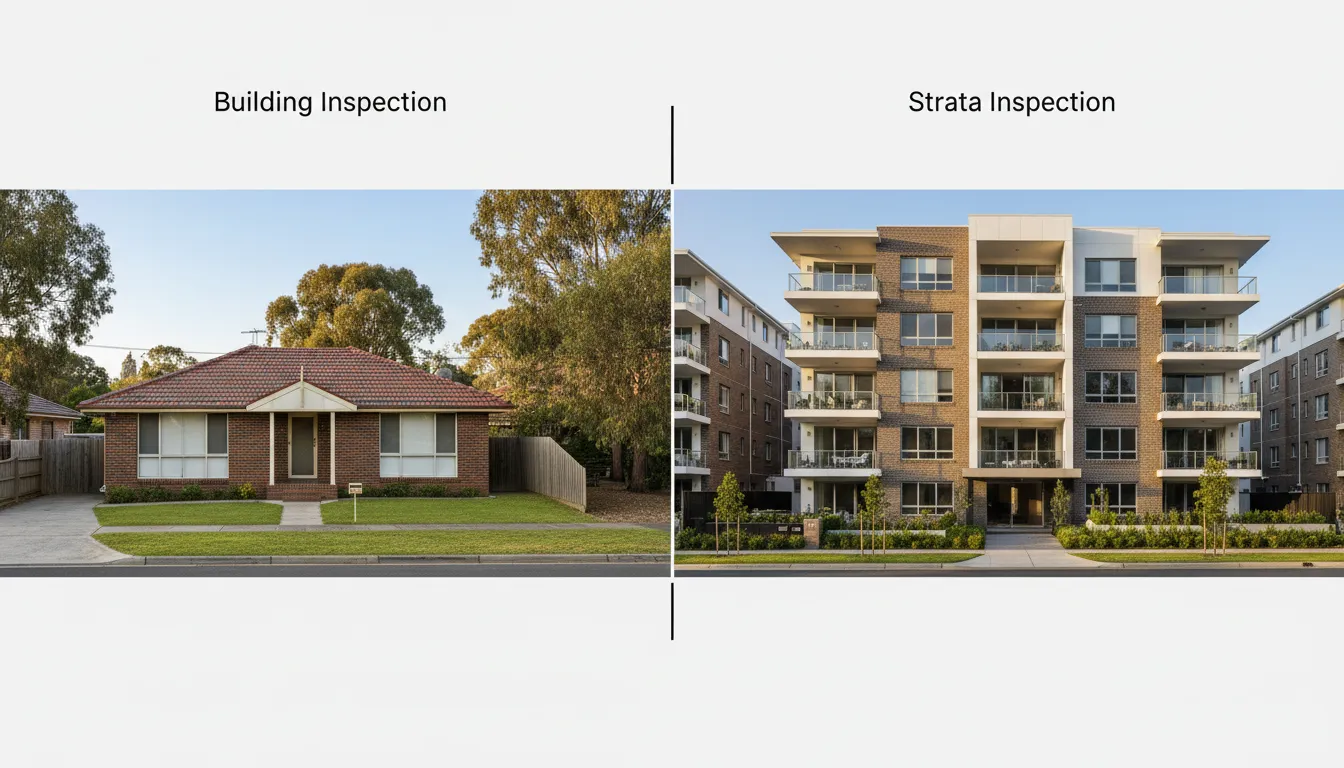
What Is the Difference Between a Building Inspection and a Strata Inspection?
A building inspection is a physical examination of the unit you are buying. A strata inspection is a document review of the owners corporation records behind it.
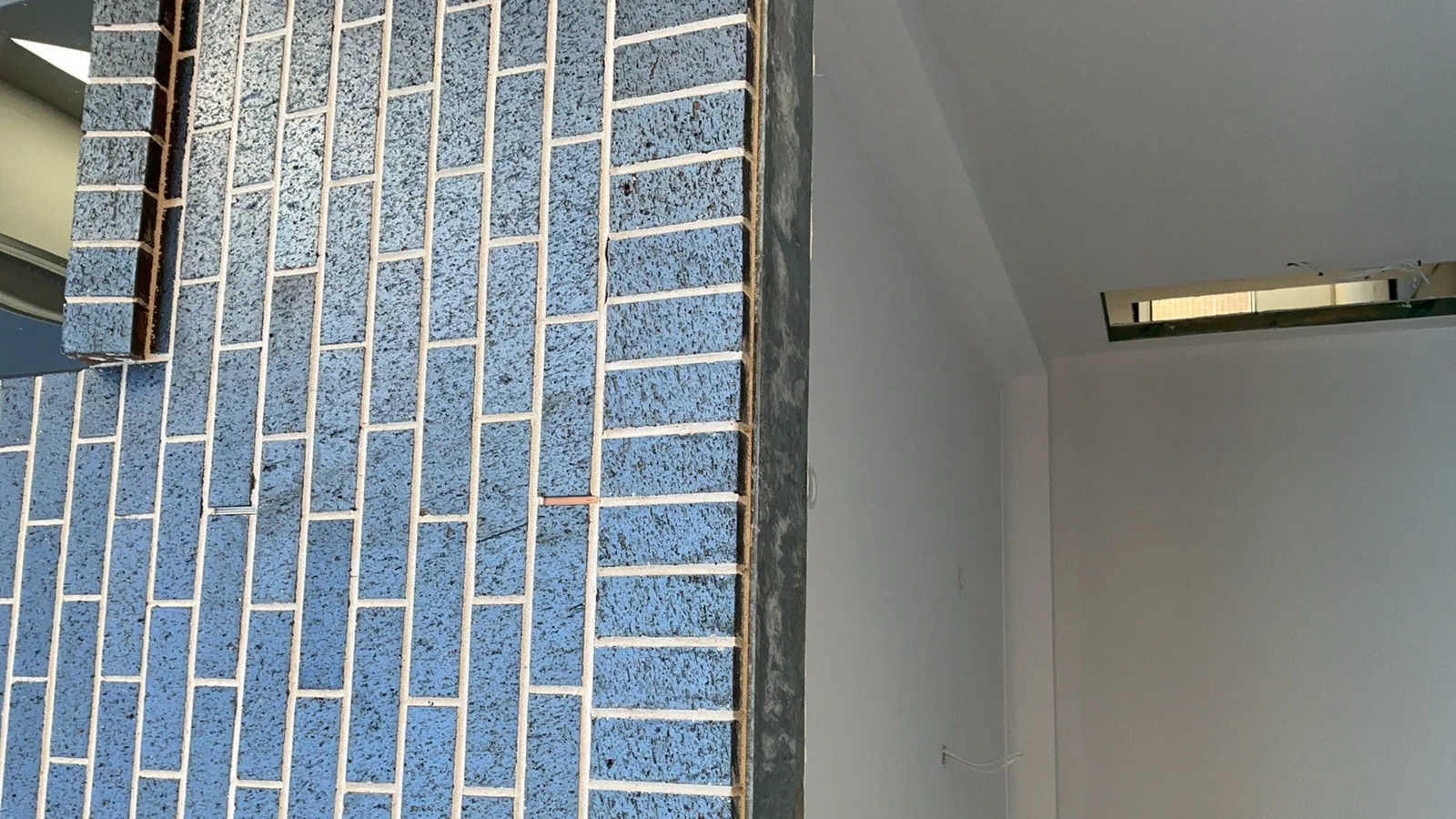
Do You Need a Pest Inspection Before Buying a House?
No law makes a buyer get a pest inspection, but it is the only chance to find termite activity before you are locked into the contract. Here is when to book one, who pays, what a bad report means and when skipping it is defensible.
Who Is Responsible for Strata Building Defects in NSW?
In a NSW strata scheme, responsibility for a defect depends on where it is and where it came from. This guide sorts common property from lot property, and repairs from builder liability.