
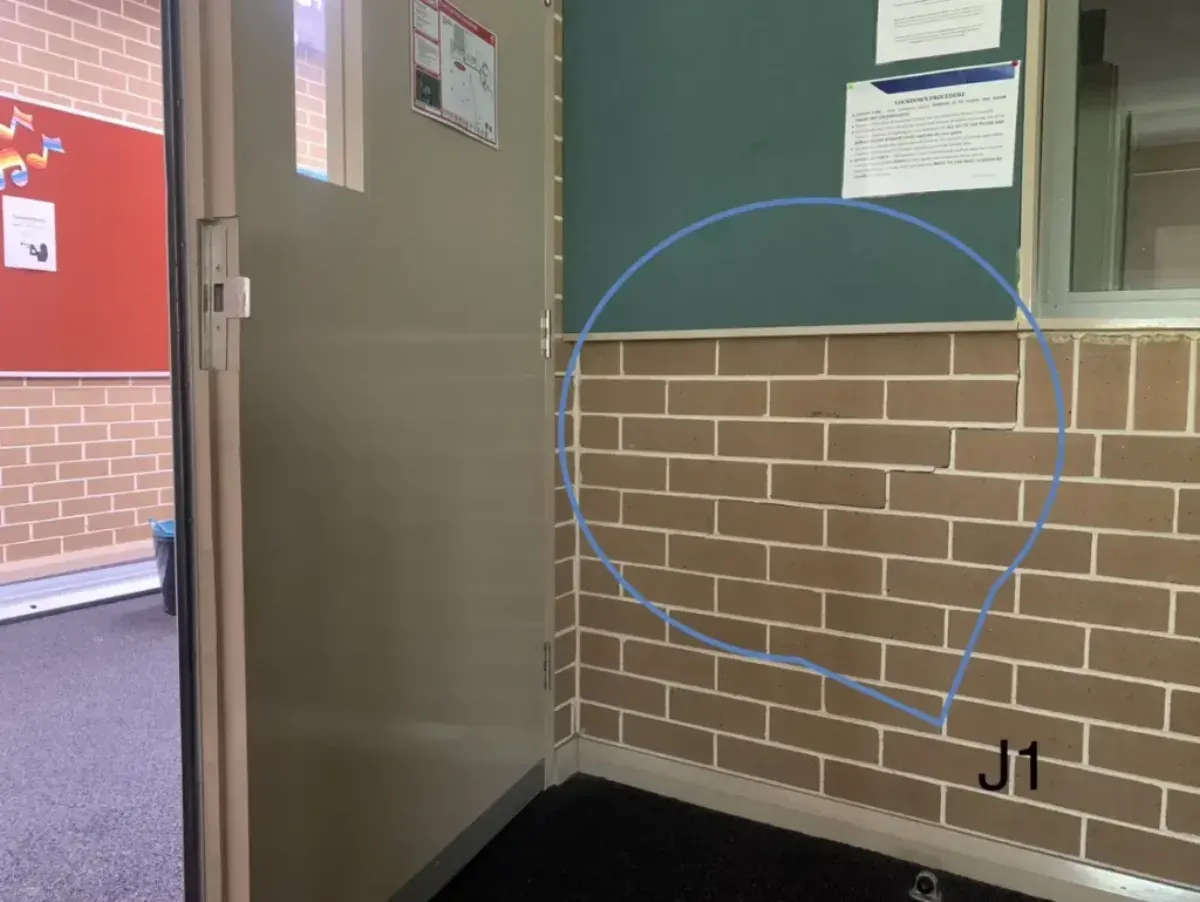
A dilapidation assessment is a detailed property inspection carried out before and after nearby construction to document the existing structural condition of a building. In Australia, it is commonly required by local councils for developments that involve excavation, demolition, or heavy machinery near neighbouring properties. The assessment creates a photographic and written record of any pre-existing defects, cracks, and damage, giving property owners a clear baseline to reference if a dispute arises about construction-related harm. Residential assessments typically start from $500 plus GST, while commercial assessments begin at around $800 plus GST.
Whether you are a homeowner worried about a high-rise going up next door, a developer seeking council approval, or a government body overseeing infrastructure works, a dilapidation assessment provides the evidence you need to resolve disputes quickly and fairly. This guide covers what the assessment involves, when it is required, who should carry it out, and how it protects your interests under Australian law.
What Is a Dilapidation Assessment?
A dilapidation assessment is a systematic inspection that records the physical condition of a property at a specific point in time. The inspector examines the building's exterior and interior surfaces, structural elements, landscaping, driveways, fences, retaining walls, and any other features that could be affected by nearby construction activity.
The resulting report contains high-resolution photographs, written descriptions of all visible defects, measurements of crack widths, and a professional opinion on the building's overall condition. This documentation serves as a baseline. If the property suffers damage during or after construction, the owner can compare the current state against the original report to determine whether the damage is new or pre-existing.
The assessment is sometimes referred to as a dilapidation report, a condition report, or a pre-construction condition survey. Regardless of the name, the purpose is the same: to protect all parties by creating an objective record of the property's condition before construction begins.
Why a Dilapidation Assessment Matters
Construction Vibrations and Structural Risk
Construction activities including pile driving, excavation, demolition, and heavy vehicle movements generate vibrations that travel through the ground and can affect nearby structures. These vibrations may cause new cracks in walls, shift foundations, damage plumbing, or worsen existing defects.
Without a dilapidation assessment, it becomes extremely difficult to prove whether damage was caused by construction or was already present. This leaves property owners vulnerable to bearing the cost of repairs themselves, even when the construction next door is clearly the likely cause.
Growing Infrastructure Demand Across Australia
Australia has seen a significant increase in infrastructure and construction activity in recent years. Major transport projects, residential high-rise developments, road widening works, and commercial precincts are under construction in every capital city and many regional centres. This surge in building activity has led to a corresponding rise in dilapidation disputes and a stronger demand for pre-construction assessments.
Council and Regulatory Requirements
Many local councils across Australia now require dilapidation assessments as a condition of development consent. This is particularly common for large-scale developments, excavation works near property boundaries, and projects that involve heavy machinery or vibration-intensive processes. Failing to comply with a council's dilapidation reporting requirements can result in stop-work orders, fines, or complications during the final occupation certificate process.
Who Needs a Dilapidation Assessment?
A dilapidation assessment benefits a broad range of stakeholders. Understanding who typically requires or benefits from one helps clarify when to arrange an inspection.
| Stakeholder | Why They Need an Assessment |
|---|---|
| Homeowners | Protect their property from damage caused by nearby construction |
| Builders and contractors | Demonstrate pre-existing conditions and limit liability for damage claims |
| Property developers | Meet council consent conditions and protect against third-party claims |
| Government entities | Document road, rail, and infrastructure project impacts on adjacent properties |
| Commercial property managers | Preserve asset value and maintain lease obligations |
| Real estate agents | Provide buyers with transparency about a property's condition near active construction zones |
What Does a Dilapidation Assessment Cover?
A thorough dilapidation assessment examines and documents every accessible area of a property. The inspector's goal is to capture a complete picture of the building's existing condition so that any future changes can be identified and attributed accurately.
External Inspection
The external inspection covers all visible surfaces and features outside the building. This includes:
- Exterior walls (brickwork, render, cladding, and paint finishes)
- Roof condition (tiles, metal sheeting, gutters, fascia, and downpipes)
- Driveways, paths, and paving
- Retaining walls and boundary fences
- Landscaping, garden beds, and trees
- Swimming pools, decks, and pergolas
- Garage structures and outbuildings
Internal Inspection
The internal inspection documents the condition of all accessible rooms and internal surfaces. This includes:
- Walls, ceilings, and floors in every room
- Door and window frames, including operation and alignment
- Wet areas (bathrooms, kitchens, and laundries)
- Visible plumbing and drainage
- Stairwells, hallways, and common areas
Defect Analysis
The inspector records all visible defects with detailed descriptions and measurements. Common defects documented during a dilapidation assessment include:
- Cracking in walls, ceilings, and floors (with crack width measurements)
- Foundation movement or settlement signs
- Roof damage including broken or displaced tiles
- Water staining, dampness, and moisture ingress
- Corrosion of metal elements
- Deterioration of timber components
- Movement in retaining walls or fencing
Structural Assessment
Where concerns about structural integrity are identified, the inspector provides a professional assessment of the building's structural condition. This may include commentary on load-bearing walls, foundation systems, and any evidence of prior structural repairs or modifications.
Photographic Record
High-resolution photographs form the backbone of every dilapidation assessment. Each defect, crack, surface, and feature is photographed with clear labelling and, where appropriate, measurement references. The photographic record is time-stamped and typically includes hundreds of images for a standard residential property.
When Is a Dilapidation Assessment Required?
While a dilapidation assessment can be arranged voluntarily by any property owner, certain situations make it either mandatory or strongly recommended.
Mandatory Scenarios
- High-rise developments: Councils routinely require assessments for all properties within a defined radius of high-rise construction
- Road and railway expansions: State government transport projects often mandate assessments for properties along the construction corridor
- Deep excavation works: Any excavation near property boundaries, particularly below the level of existing foundations, typically triggers a council requirement
- Major demolition projects: Large-scale demolition involving heavy machinery and vibration may require assessments for adjacent properties
Strongly Recommended Scenarios
- Renovations involving structural work on adjoining or party walls
- Basement construction in established neighbourhoods
- Utility installation works (water, sewer, gas) near property boundaries
- Any construction that requires piling or ground compaction
For more detail on when councils require dilapidation assessments, see our guide on council requirements for dilapidation reports.
The Dilapidation Assessment Process
Understanding the dilapidation report process helps property owners prepare and know what to expect.
Step 1: Engagement and Scheduling
The property owner, developer, or council contacts a qualified inspector and arranges a suitable date for the assessment. Both the property owner and the party responsible for the construction should be notified.
Step 2: Pre-Construction Inspection
The inspector visits the property and conducts a thorough inspection of all accessible areas. They photograph every surface, record all defects, and take measurements. This visit typically takes between one and three hours for a residential property, depending on its size and complexity.
Step 3: Report Preparation
After the inspection, the inspector compiles the findings into a detailed written report. This includes the photographic record, defect descriptions, structural commentary, and a summary of the property's overall condition. The report is typically delivered within five to ten business days.
Step 4: Post-Construction Inspection
After the nearby construction is complete, a follow-up inspection is conducted using the same methodology. The inspector compares the property's current condition against the original baseline report and identifies any new damage or changes.
Step 5: Comparison Report
If new damage is identified, the inspector prepares a comparison report that highlights the differences between the pre-construction and post-construction conditions. This report forms the basis for any damage claims or dispute resolution.
Who Should Conduct a Dilapidation Assessment?
The quality and defensibility of a dilapidation assessment depends heavily on who carries it out. In Australia, the following professionals are qualified to conduct dilapidation assessments:
- Licensed building inspectors with experience in structural condition reporting
- Registered structural engineers who can provide engineering-grade assessments
- Professional surveyors with building condition survey qualifications
- Council-approved consultants listed on local authority panels
It is important to select an independent inspector who has no commercial relationship with the party responsible for the construction. Independence strengthens the credibility of the report, particularly if it is later used in legal proceedings.
For guidance on who needs a pre-construction dilapidation report, we have a dedicated article covering the topic in more detail.
Dilapidation Report Melbourne Quick Facts
Best time to book: 1–2 weeks before demolition/excavation starts (and again after completion for a post-works comparison).
Common Victorian triggers:
- Protection works process where a Registered Building Surveyor (RBS) identifies a risk of significant damage to an adjoining property
- City/council asset protection requirements (bond/security) for footpaths, kerbs, pits, and stormwater assets
What your Melbourne report should clearly show:
- Written notes and a photo schedule of cracks/defects (internal and external near the works)
- Defect locations mapped (elevations/floor plan) plus crack measurements with a gauge/ruler in frame
- A limitations section (areas blocked, unsafe, or not accessed)
On-site access (protection works survey): At least 24 hours’ notice, typically between 8am–6pm for survey/protection work entry.
Dilapidation Assessment Costs in Australia
The cost of a dilapidation report varies depending on the property type, size, location, and scope of the inspection.
| Property Type | Estimated Cost (incl. GST) |
|---|---|
| Apartment or unit | $550 to $770 |
| Standard residential house | $770 to $1,320 |
| Large or luxury residential property | $1,320 to $1,650+ |
| Small commercial property | $1,650 to $2,750 |
| Large commercial or industrial property | $2,750 to $5,500+ |
These figures are indicative. The final cost depends on factors such as urgency, travel requirements, the number of properties to be inspected, and the level of structural assessment required. Some providers offer discounted rates for bulk inspections covering multiple properties on the same street or development zone.
QWho Pays for the Report?
In most cases, the party responsible for the construction project pays for the dilapidation assessment. This is often a condition of development consent imposed by council. However, homeowners may choose to commission their own independent report for added protection, particularly if they have concerns about the impartiality of the developer's chosen inspector.
Legal Protection and Dispute Resolution
One of the most significant benefits of a dilapidation assessment is the legal protection it provides. In Australia, dilapidation reports are admissible as evidence in courts and tribunals, including:
- NCAT (NSW Civil and Administrative Tribunal)
- VCAT (Victorian Civil and Administrative Tribunal)
- QCAT (Queensland Civil and Administrative Tribunal)
- SAT (State Administrative Tribunal, Western Australia)
A properly prepared dilapidation report provides an objective, time-stamped record that can be used to establish liability for construction-related damage. Without this evidence, property owners face an uphill battle in proving that damage was not pre-existing.
Compliance with Australian Standards
Dilapidation assessments conducted by licensed professionals align with Australian Building Code standards and relevant Australian Standards for building inspections. The report methodology follows industry best practice and meets the evidentiary requirements expected by tribunals and courts.
Benefits of a Dilapidation Assessment
Risk Mitigation
By documenting the property's condition before construction begins, a dilapidation assessment removes ambiguity about the cause of any damage that appears during or after construction. This protects both the property owner and the builder.
Financial Protection
The cost of a dilapidation assessment is a small fraction of the potential repair bills and legal fees that can arise from unresolved damage disputes. Properties near large construction projects face a real risk of damage to foundations, walls, plumbing, and external features.
Structural Preservation
Early identification of pre-existing defects allows property owners to address issues before they are worsened by construction vibrations. The assessment may reveal problems such as deteriorating mortar joints, minor foundation settlement, or water ingress that warrant attention regardless of nearby construction activity.
Stronger Negotiating Position
Whether you are dealing with a builder, developer, insurer, or council, a professional dilapidation report gives you a documented basis for your claims. Disputes that might otherwise drag on for months can often be resolved quickly when both parties have access to clear before-and-after evidence.
Common Mistakes to Avoid
- Waiting until after construction has started to arrange an assessment
- Using an inspector who is connected to the construction company
- Accepting a verbal or informal condition report instead of a detailed written assessment
- Failing to include all relevant areas of the property (fences, retaining walls, driveways)
- Not arranging a follow-up post-construction inspection
Which professionals should I hire for a dilapidation survey before starting a new construction near my property?
For a dilapidation survey before nearby construction, hire someone who can produce an independent condition record with clear photos and measurements. In Australia, that usually means:
- Structural engineer: Often specified in consent conditions for adjoining buildings/public land, especially on higher-risk works.
- Experienced building inspector / building consultant: Common for residential properties where you need strong photo evidence, crack measurements, and mapped defect locations.
- Registered Building Surveyor (Victoria): Relevant where the protection works process applies and an adjoining property survey/record is required.
If you want the report to stand up in a dispute, choose a professional who can document findings clearly and act impartially if the matter escalates.
Owner Inspections Can Help
If you want a thorough, easy-to-follow condition record (photos, crack gauges, mapped locations), Owner Inspections can complete the inspection and documentation, and coordinate with a qualified engineer where the project or approvals call for it.
Frequently Asked Questions
What is a dilapidation assessment?
A dilapidation assessment is a detailed inspection that records the existing condition of a property before nearby construction begins.
The assessment documents all visible defects, cracks, structural features, and surface conditions using high-resolution photographs and written descriptions. It creates a baseline record so that any damage caused by nearby construction can be identified and attributed accurately. The assessment covers both the exterior and interior of the property, including driveways, fences, retaining walls, and landscaping. It is commonly required by local councils as a condition of development consent in Australia.
Is a dilapidation report legally required in Australia?
It depends on the local council and the type of construction being carried out. Many councils require dilapidation reports as a condition of development approval for large-scale projects.
In NSW, for example, councils routinely impose dilapidation reporting conditions on developments involving excavation, demolition, or multi-storey construction near existing properties. In Victoria, the Victorian Building Authority (VBA) and local councils may require them for projects with the potential to affect neighbouring buildings. In Queensland, the QBCC framework supports requirements for condition documentation on certain project types. Even where a report is not legally mandated, it is strongly recommended for any property near active construction.
Can homeowners request their own dilapidation report?
Yes. Any property owner can commission a dilapidation report at any time, regardless of whether the council or the developer has already arranged one.
Commissioning your own independent report gives you direct control over the inspector selection, scope, and timing. This is particularly valuable when the developer or builder has arranged their own assessment, as having an independent report provides a second opinion and a stronger basis for any future claim. The cost for a residential property typically starts from around $500 plus GST.
How long does a dilapidation inspection take?
A standard residential dilapidation inspection takes between one and three hours on site.
The duration depends on the size of the property, the number of buildings and structures included in the assessment, and the extent of existing defects that need to be documented. A small apartment or unit may take around an hour, while a large house with multiple outbuildings, retaining walls, and extensive outdoor areas can take up to three hours. Commercial properties and multi-unit developments may take a full day or more depending on scale.
What happens if damage occurs after nearby construction?
If your property sustains damage during or after nearby construction, the dilapidation report provides the evidence needed to pursue a claim against the responsible party.
You should arrange a post-construction inspection as soon as possible using the same inspector or a similarly qualified professional. The inspector compares the current condition against the pre-construction baseline and prepares a comparison report highlighting any new damage. This comparison report can be submitted to the builder, developer, insurer, or relevant tribunal (such as NCAT, VCAT, or QCAT) as evidence to support your claim for repair costs.
Who pays for a dilapidation report?
In most cases, the party responsible for the construction project pays for the dilapidation assessment.
This is typically required as a condition of development consent imposed by the local council. The developer or builder commissions the report and provides copies to affected property owners. However, homeowners can also commission their own independent report at their own expense if they want an additional layer of protection or have concerns about the impartiality of the developer-appointed inspector.
How much does a dilapidation assessment cost?
Residential dilapidation assessments in Australia typically cost from $500 plus GST, while commercial assessments start from around $800 plus GST.
The final price depends on the property's size, location, the number of structures included, and the level of detail required. Large residential properties with pools, retaining walls, and multiple outbuildings cost more than a standard apartment. Commercial and industrial properties can range from $1,500 to over $5,000 depending on their complexity. For a full cost breakdown, refer to our dilapidation report cost guide.
What qualifications should the inspector have?
The inspector should be a licensed building inspector, registered structural engineer, professional surveyor, or council-approved consultant.
In Australia, building inspection licensing requirements vary by state. In NSW, inspectors should hold appropriate qualifications recognised by NSW Fair Trading. In Victoria, the VBA oversees building practitioner registration. In Queensland, the QBCC regulates building inspection professionals. Regardless of state, the inspector should carry professional indemnity insurance and have demonstrated experience in preparing dilapidation reports that meet the evidentiary standards expected by courts and tribunals.
Can a dilapidation report be used in court?
Yes. A properly prepared dilapidation report is admissible as evidence in Australian courts and tribunals.
The report is treated as an expert document that provides an objective record of a property's condition at a specific point in time. It is commonly used in proceedings before NCAT (NSW), VCAT (Victoria), QCAT (Queensland), and other state tribunals. For the report to carry maximum weight, it should be prepared by a qualified and independent professional, contain detailed photographic evidence, and follow a consistent, repeatable methodology.
When should a dilapidation assessment be arranged?
A dilapidation assessment should be completed before any construction, demolition, or excavation work begins on a neighbouring site.
The timing is important. If the assessment is conducted after construction has already started, its value as a baseline is compromised because early-stage vibrations may have already caused damage that goes unrecorded. Ideally, the assessment should be completed at least two to four weeks before construction commences, allowing time for the report to be prepared and distributed to all relevant parties.
What is included in a dilapidation report?
A dilapidation report includes property identification details, high-resolution photographs, a written defect analysis, structural condition commentary, and recommendations.
The report documents every accessible area of the property, both internally and externally. It records the location, type, and severity of all visible defects, including cracks (with width measurements), water damage, foundation movement, roof condition, and the state of fences, retaining walls, driveways, and landscaping. The report is presented in a structured format that allows easy comparison with a post-construction assessment.
Key Takeaways
- A dilapidation assessment creates a baseline record of a property's condition before nearby construction begins
- Construction vibrations from excavation, demolition, and piling can cause structural damage to adjacent properties
- Many Australian local councils require dilapidation assessments as a condition of development consent
- Both property owners and builders benefit from having an objective pre-construction record
- Residential assessments typically start from $500 plus GST, with commercial properties starting from $800 plus GST
- Dilapidation reports are admissible as evidence in NCAT, VCAT, QCAT, and other Australian tribunals
- The assessment should be completed at least two to four weeks before construction begins
- Always use a licensed, independent inspector with professional indemnity insurance
References and Resources
Related Articles
Ultimate Guide to Dilapidation Reports
Dilapidation reports document a property's condition before nearby construction begins. This guide covers their purpose, process, and how they protect property owners from construction-related damage claims in Australia.
Dilapidation Report Cost: Factors That Affect Pricing
Dilapidation report costs vary based on property size, location, scope, and urgency. This guide breaks down pricing factors across Australian cities and helps you budget for pre-construction property documentation.

Independent Dilapidation Report Services: Why You Need One
Independent dilapidation reports provide unbiased, third-party assessment of property condition before and after construction, preventing legal and financial conflicts.
Protect Your Property Before Construction Starts
Book a dilapidation assessment with Owner Inspections to document your property's condition before nearby construction begins. Our detailed reports provide the evidence you need to resolve any damage disputes.