
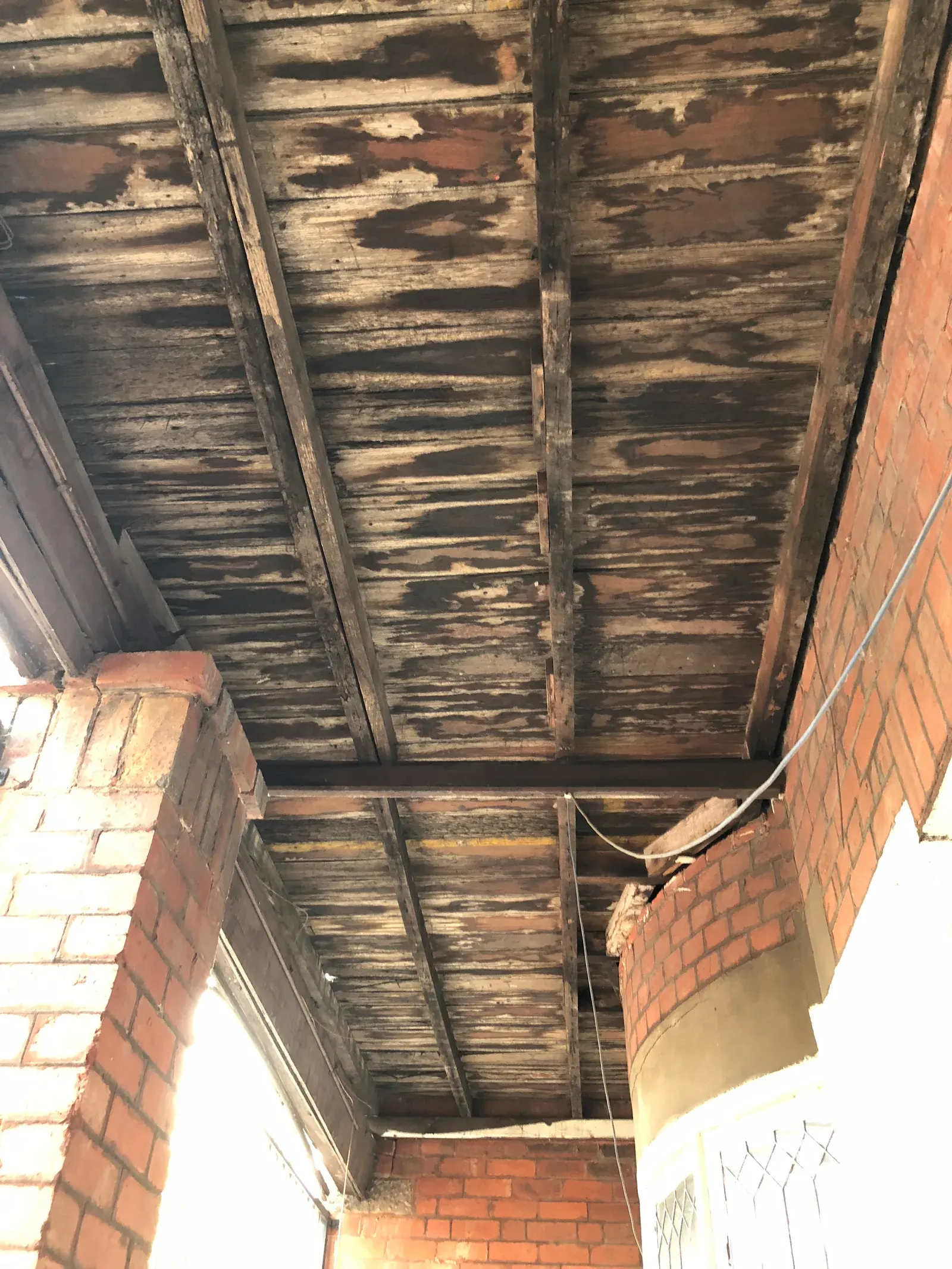
Who Pays for a Leak From the Apartment Above?
Responsibility follows the source of the water, not the ceiling it ruined. Three parties can end up paying: the owner of the lot above, the owners corporation or body corporate, or an insurer standing behind one of them. Which one it is depends on whether the failed component sits inside the upstairs lot or forms part of common property, and that is a question of fact rather than opinion.
The three most common sources in Australian apartments behave quite differently.
- A burst flexible braided hose under a vanity or a kitchen sink. This is nearly always inside the lot above, and it is far more common than people expect. IAG's analysis of 15,000 household water damage claims found flexible hose failures accounted for 22 per cent of them, with the hoses lasting only around ten years.
- A failed shower or bathroom waterproofing membrane. Whether this is the upstairs owner or the scheme depends entirely on the state and on how the plan defines the boundary, which is the next section.
- A shared pipe, riser, stack or slab penetration. These almost always sit in a boundary structure or serve more than one lot, which puts them with the scheme.
Note
Being liable for the leak and being liable for your damage are not automatically the same thing. An owner is generally responsible for damage their lot causes, but where the argument is about negligence rather than a statutory repair duty, that is a question for a solicitor rather than for a building consultant.
Is the Leak Common Property or the Lot Above?
The boundary between the upstairs lot and common property is set by the state's strata law and by the registered plan, and it decides who repairs the source. The three east coast states draw that line in genuinely different places, so the same shower failure can be the owner's problem in one state and the scheme's in another.
| Where the Boundary Sits | Who Repairs the Source | |
|---|---|---|
| NSW | Schemes registered after 1 July 1974 stop at the inner surfaces, so the slab, boundary walls and the original waterproofing under the tiles are common property | Owners corporation for the structure and membrane, the owner for their own fixtures, appliances and hoses |
| VIC | Set by the plan of subdivision, so it has to be read rather than assumed | Owners corporation maintains common property, the lot owner maintains their own lot |
| QLD | In a building format plan the boundary is the centre of the floor, wall or ceiling separating the lots | Body corporate for structure and shared utility infrastructure, the owner for finishes, fittings and pipes serving only their lot |
In NSW, the owners corporation's duty to maintain and repair common property sits in section 106 of the Strata Schemes Management Act 2015, and NSW Fair Trading publishes a common property memorandum that lists component by component who repairs what. Victoria's split is set out by Consumer Affairs Victoria across its guidance on maintaining common property and on maintaining individual lots. Queensland publishes the clearest diagrams of the three, for building format plans and separately for utility infrastructure.
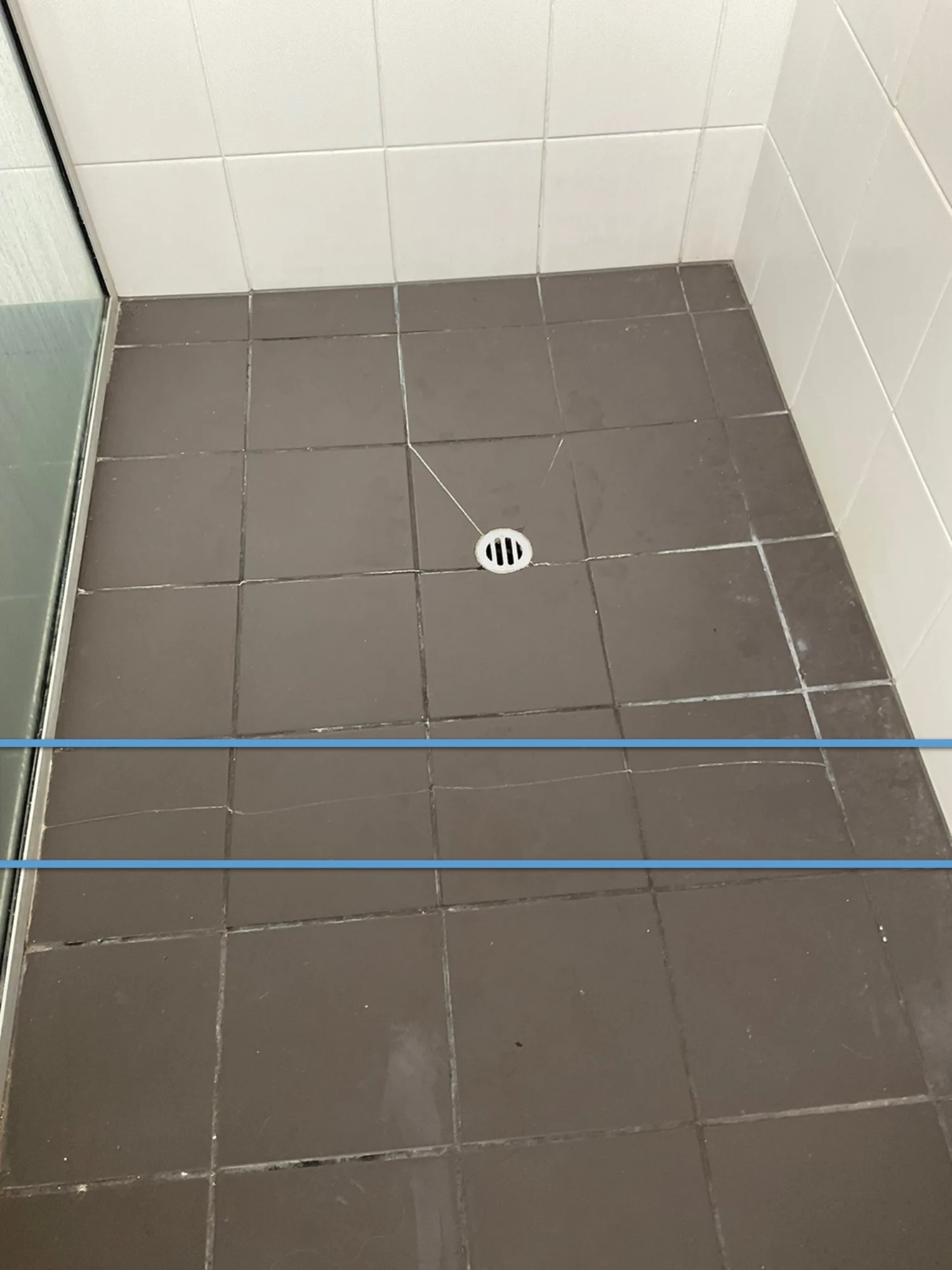
Cracked tiles running out from a floor waste, like the ones marked above, are one of the ordinary ways a bathroom above starts leaking into the ceiling below. The tile is rarely the real problem. What matters is whether the membrane underneath has failed with it, because that is the layer the boundary rules are actually about.
Are Water Leaks Covered by Strata Insurance?
Usually yes for the building itself, and this surprises people who assume they need to claim on their own policy. Strata insurance covers the building and common property, which includes the ceiling lining, cornices and paintwork the water destroyed. Your own contents insurance covers your possessions, so a soaked sofa, rug or television is your claim rather than the scheme's.
Two practical points decide how smoothly it runs.
- The strata policy carries an excess, and schemes frequently seek to recover it from whoever caused the leak. That recovery, not the repair itself, is where most disputes between neighbours actually start.
- Sudden and accidental escape of water is normally covered. Gradual seepage that has been happening for months often is not, because most policies exclude gradual deterioration. This is exactly why the date you first reported the stain matters.
What Should I Do if Water Is Coming Through My Ceiling?
Act in the first hour, because the evidence disappears as the ceiling dries. The order below protects both the building and your position if the claim is later disputed.
Deal with the immediate danger
Turn off power to affected circuits if water is near lights or fittings. A saturated plasterboard ceiling can also collapse, so stay out from under a sagging or bulging section.
Photograph everything before anyone touches it
Date stamped photos and a short video of the active leak are worth more than any description written afterwards. Capture the ceiling, the floor, your contents and the water itself.
Notify the strata manager and the lot above in writing
Email, not a phone call. Reporting in writing starts the clock on the scheme's repair duty and fixes the date the damage was first observed.
Ask for the leak to be traced, not just patched
A plumber called out to stop the water will stop the water. Establishing where it came from, and therefore who pays, is a separate exercise.
Keep your own record of costs and disruption
Accommodation, drying equipment and damaged contents all form part of the loss, and they are far harder to reconstruct months later.
How Much Does It Cost to Repair a Ceiling After Water Damage?
There is no single figure, because the cost is driven by how far the water travelled rather than by the size of the stain. A cosmetic stain on an otherwise sound ceiling is a paint job. A ceiling where the plasterboard has lost its strength, the insulation is saturated and the light fittings have been wet is a strip out, a dry out and a rebuild.
The variables that actually move the number are the extent of saturated lining and insulation, whether electrical work is involved, whether mould has established in the cavity, and whether you have to move out while the space dries. That last one is often the largest single item and the one people forget to claim.
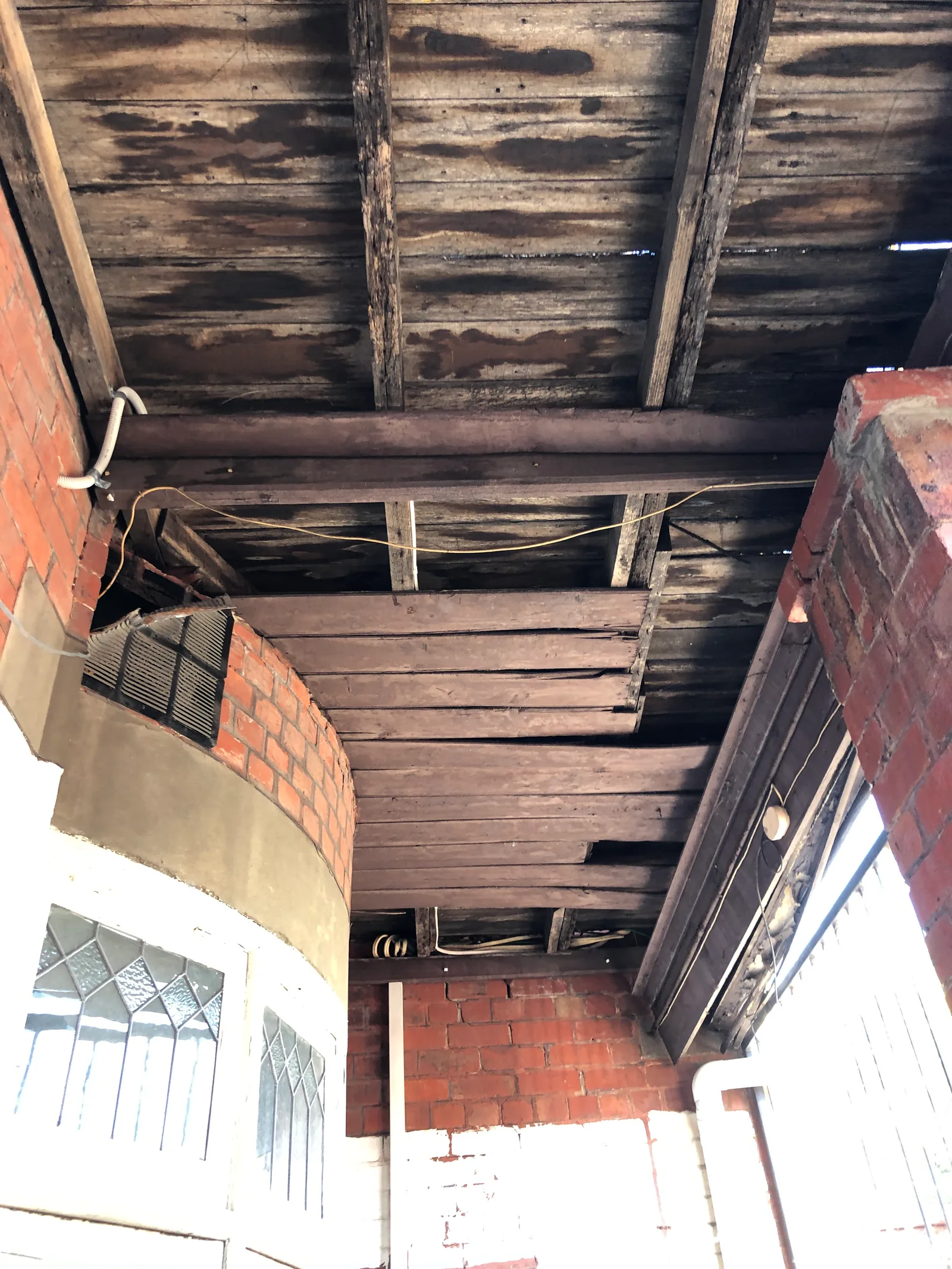
Once a damaged ceiling is opened up, the affected area is routinely larger than the visible stain suggested. This is the practical reason not to settle a figure before the extent has been established.
Get the Source and the Scope Documented
An independent report records where the water came from and how far it went, which is the evidence a strata committee, an insurer or a tribunal actually weighs.
Can Strata Make Me Pay for the Repairs?
Yes, if the source of the water is inside your lot and is your responsibility to maintain. A scheme can pursue you for the repair of the building and commonly for the policy excess as well, and a burst flexible hose or a failed shower screen inside your own bathroom is the standard example.
The obligation runs the other way too. In NSW, where the leak came from common property and the owners corporation failed in its repair duty, section 106 of the Strata Schemes Management Act 2015 lets an affected owner recover reasonably foreseeable loss as damages for breach of statutory duty, subject to a time limit that runs from when the owner first became aware of the loss. Missing that window is a real risk in slow moving strata disputes, so get advice on timing early rather than late.
Where a leak persists and the scheme will not act, the escalation path is the state tribunal: NCAT in NSW, VCAT in Victoria, and the Body Corporate and Community Management Commissioner's dispute resolution service in Queensland. Owner Inspections produces the evidence those bodies rely on. Whether to bring the application, and under which section, is a question for a solicitor.
Where an Independent Report Changes the Outcome
Most ceiling leak disputes stall because nobody has proven the source, and everybody has an opinion. The strata manager suspects your neighbour, your neighbour blames the building, and the insurer's assessor writes a conclusion without the moisture readings that would support it.
An independent inspection settles the three things the argument is actually about. It identifies where the water entered, using moisture mapping and thermal imaging rather than assumption. It separates the failed component from the damage it caused, so the boundary rules can be applied to the right item. And it records the full extent with measurements and dated photographs, which is what stops a scope being negotiated down to the visible stain. A strata report covering the building's condition is a different product from a targeted insurance claim assessment of one event, and for a live leak it is the second one you want.
Key Takeaways
- Liability follows the source of the leak, not the room the water landed in.
- The lot and common property boundary decides who repairs the source, and NSW, Victoria and Queensland draw that line differently.
- Strata insurance normally covers the building including your ceiling lining. Your contents are your own policy.
- Report it in writing immediately. A gradual leak is much harder to claim than a sudden one, and the report date is what separates them.
- Prove the source before arguing about cost. Without it, every party keeps blaming the other and nothing gets repaired.
Frequently Asked Questions
Who pays for a leak from the flat above?
Are water leaks covered by strata insurance?
Does home insurance cover water damage to the ceiling?
What should I do first if water is leaking through my ceiling?
Can strata make me pay for repairs if the leak came from my apartment?
How do I prove where the leak came from?
Related Articles
What Damage Does Home Insurance Actually Cover in Australia?
What a standard Australian policy pays for, and the exclusions that catch water damage claims out.
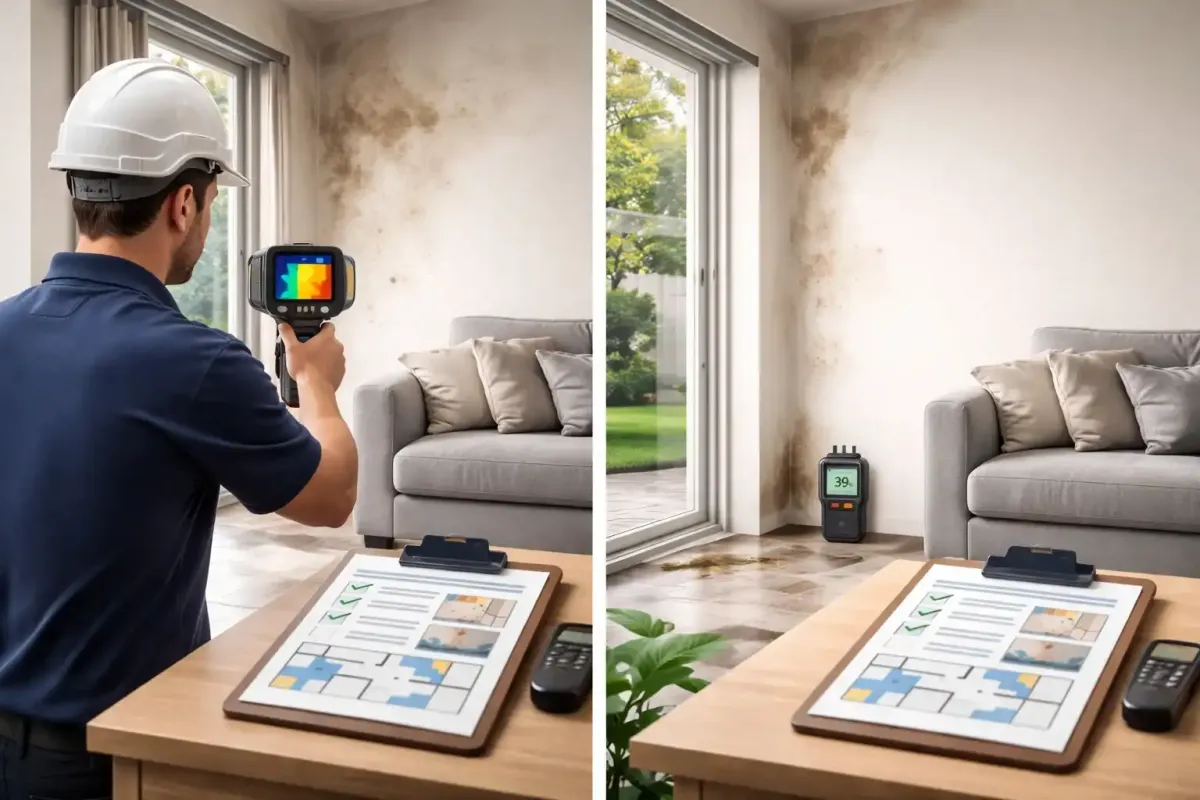
Water Damage Inspection Report to Protect Your Property
What a water damage report records, and why the scope matters more than the stain.

How to Make a Warranty Claim for Defects in Your Apartment
The route to take when the leak is a building defect rather than a one off accident.