
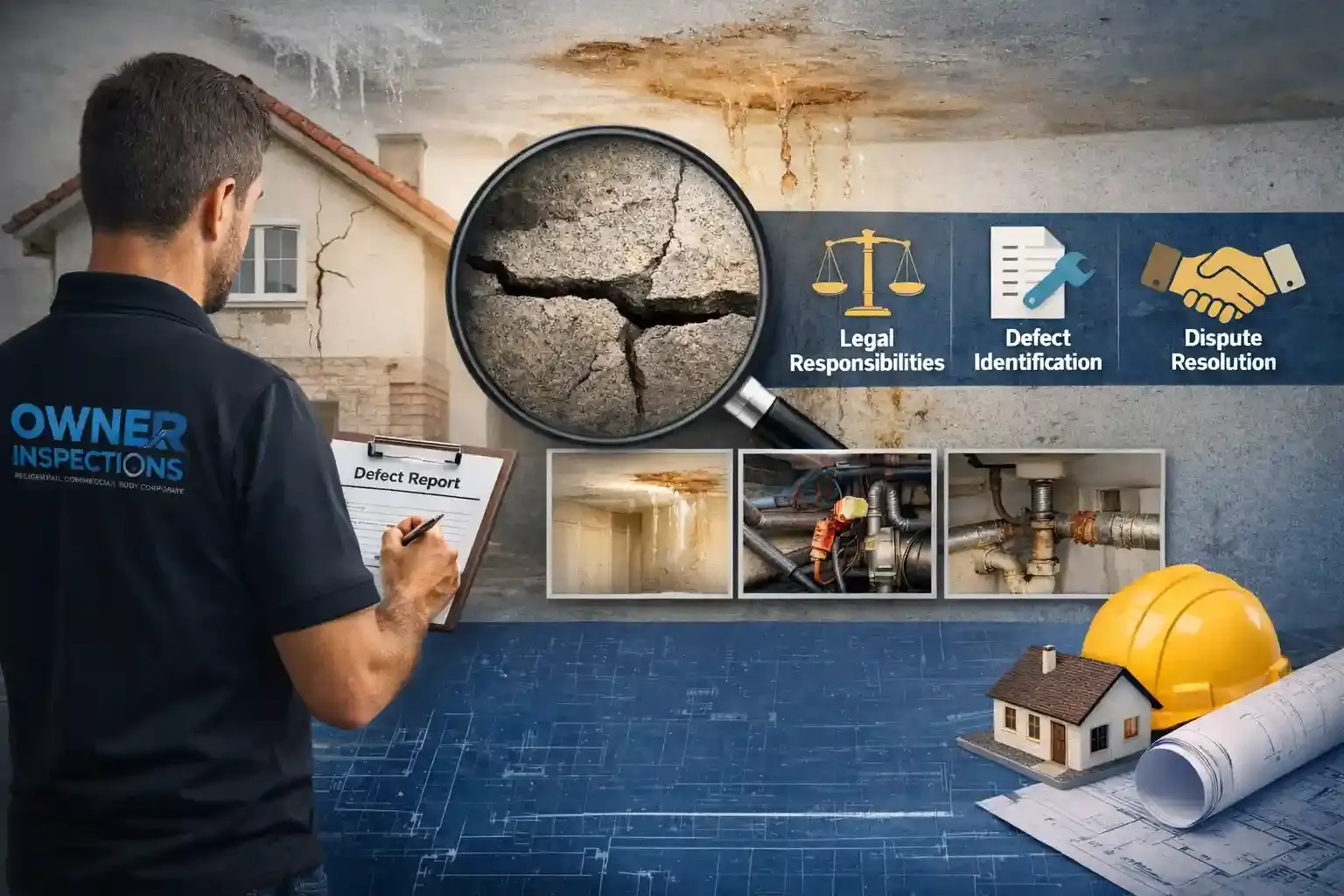
For homeowners, a proper builders warranty report can be the difference between a clear warranty claim and a long dispute with missing evidence. In NSW, homeowners have statutory warranties of 6 years for major defects and 2 years for all other defects, and a further 6 months may apply if the breach becomes known in the last 6 months of the warranty period.
This guide explains what a warranty report includes, how construction warranty defect tracking works, what warranty periods apply in NSW, Victoria and Queensland, and how an independent report can support warranty disputes in construction projects.
Need Clear Evidence for a Warranty Defect?
Owner Inspections can assess visible defects, document the issue, and prepare a clear report to support builder communication, warranty claims or dispute preparation.
Investigation Report
What Is a Construction Warranty Defect Report?
A construction warranty defect report is a formal inspection document that records defects that may be covered by statutory warranties, implied warranties, contractual warranties or home warranty insurance.
It should not be a loose list of complaints. A strong warranty report should give the builder, insurer, regulator or tribunal enough detail to understand the issue and decide what needs to happen next.
| Report item | Why it matters |
|---|---|
| Defect location | Shows exactly where the issue is found |
| Description of the defect | Explains what is wrong in plain language |
| Photos and evidence | Supports the claim with visual proof |
| Likely cause | Helps link the issue to workmanship, materials, design or compliance |
| Severity | Separates minor defects from possible major structural defects |
| Recommended next step | Gives the owner a clear action path |
In NSW, Building Commission NSW deals with home building defects, incomplete work and damage caused by building work, and it advises owners to try to resolve the matter with the builder before making a formal complaint.
Types of Warranties in Australia
| What They Cover | Examples | |
|---|---|---|
| Statutory Warranties | Enforced under Australian Consumer Law (ACL) and state Building Acts. They require builders to construct properties free from major defects and in compliance with building standards. | Home Building Act 1989 (NSW), Domestic Building Contracts Act 1995 (VIC), QBCC Home Warranty Scheme (QLD) |
| Contractual Warranties | Additional warranties provided by some builders beyond statutory requirements, covering aspects such as finishing quality, fixtures, and fittings. | Extended appliance warranties, specific material guarantees, and workmanship commitments written into the building contract |
When Do You Need a Builders Warranty Report?
You may need a builders warranty report when defects appear after practical completion, during the defect liability period, before the 2-year non-major defect period ends, or when there are signs of possible structural movement.
A report is also useful when a builder says the issue is normal wear and tear, poor maintenance or owner damage. The report gives a technical view before the matter becomes a bigger dispute.
Common times to book a warranty defect inspection include:
| Timing | Why book an inspection |
|---|---|
| Soon after handover | Catch incomplete or poor-quality work early |
| Before the defect liability period ends | Give the builder a clear defect list |
| Before the 2-year warranty period ends | Record minor and workmanship defects before time runs out |
| When cracking, leaks or movement appear | Check whether the issue may be a major defect |
| Before lodging a complaint | Prepare evidence for a regulator, insurer or tribunal |
Owners should review the contract, talk to the builder, then confirm concerns in writing by letter or email and keep a copy.
Construction Warranty Periods in Australia
Warranty timeframes differ between states, so the report should always be written with the property location in mind.
- Major defects (structural issues): Covered for up to 6 years from completion. These defects affect the stability, safety, or structural integrity of the building.
- Minor defects: Covered for 2 years from project completion. These include cosmetic issues and minor operational faults.
- State variations: Warranty periods and claim procedures differ across NSW, Victoria, and Queensland. Check your state's specific legislation for exact requirements.
| State | Main warranty or insurance period | What owners should know |
|---|---|---|
| NSW | 6 years for major defects and 2 years for all other defects | Building Commission NSW says homeowners may get an extra 6 months to start proceedings if the breach becomes known in the last 6 months of the warranty period. |
| Victoria | Implied warranties transfer to new owners for up to 10 years from completion | Consumer Affairs Victoria says implied warranties apply by law and cannot be signed away. |
| Victoria domestic building insurance | 6 years for structural defects and 2 years for non-structural defects, up to policy limits | Consumer Affairs Victoria says domestic building insurance covers up to $300,000 for structural defects for 6 years and non-structural defects for 2 years. |
| Queensland | Structural defect cover generally runs for 6 years and 6 months | QBCC says structural defect claims must be lodged within 3 months of noticing the defect. |
| Queensland non-structural defects | Cover extends for 6 months from completion | QBCC says non-structural defect claims must be lodged within 7 months of completion. |
QWhat Is Not Covered?
- Normal wear and tear such as fading paint or minor surface scratches
- Damage caused by the homeowner's neglect, accidental incidents, or misuse
- Maintenance-related issues arising from a lack of routine care
- Modifications made by the homeowner after construction was completed
This is why a generic warranty report is not enough. A useful report should match the defect type, warranty period and complaint process for the state where the property is located.
Common Types of Construction Defects
A structural defects warranty usually relates to problems that affect the stability, safety or use of major building elements.
Major vs Minor Defects
| Description | Examples | |
|---|---|---|
| Major Defects | Compromise the building's safety, structural integrity, or livability | Foundation settlement, major structural cracks, load-bearing wall failures, roof structural failure |
| Minor Defects | Aesthetic issues or minor malfunctions that do not affect structural integrity | Paint chips, cabinet misalignment, surface scratches, minor tiling issues |
Common Defect Categories
- Structural defects: Foundation settlement causing cracked walls or floors, roof truss misalignment leading to leaks or sagging
- Material failures: Premature deterioration of timber, cement, or steel due to poor-quality materials; tiles lifting or breaking from improper adhesion
- Workmanship issues: Inadequate waterproofing causing leaks and mould growth; faulty insulation resulting in heat loss and condensation
- Plumbing and electrical problems: Leaking pipes from poor sealing or material failure; faulty wiring causing short circuits or fire hazards
Identifying and Documenting Defects
Warning Signs to Watch For
- Cracks in walls, ceilings, or flooring that may indicate foundation movement
- Water stains and moisture patches signalling leaks or waterproofing failures
- Flickering lights or electrical surges suggesting wiring problems
- Doors or windows that no longer close properly, indicating structural movement
- Mould growth in wet areas or behind walls
Why Engage a Professional Inspector
Hiring a licensed building inspector ensures:
How to Document Defects Yourself
Photograph everything
Take high-resolution photos of each defect from multiple angles to provide clear visual evidence.
Record details
Note the date each defect was first noticed, its exact location in the property, and a description of the issue.
Keep all documents
Retain your original building contract, warranty documents, and any correspondence with the builder for reference in claims.
Construction Warranty Defect Tracking: How to Build a Clear Defect List
Construction warranty defect tracking means keeping a live record of each defect from the day it is found until the day it is fixed. This helps avoid missing deadlines, repeating the same complaint, or losing track of what the builder agreed to fix.
Use a simple defect list like this:
| Defect no. | Location | Defect | Date found | Evidence | Status |
|---|---|---|---|---|---|
| 1 | Ensuite shower | Water leak near screen | 10 March 2026 | Photos, moisture reading | Sent to builder |
| 2 | Living room wall | Crack above window | 12 March 2026 | Photos, marked measurement | Monitoring |
| 3 | Kitchen cabinet | Door misaligned | 13 March 2026 | Photos | Rectification requested |
For better defect reporting, keep photos, videos, emails, builder replies, inspection reports, invoices, warranty documents and the building contract together in one folder.
NSW Government advises owners to send written correspondence after speaking with the builder and to keep dated copies, using email or registered post where proof of sending is needed.
What Should a Warranty Defect Report Include?
A good building defect report for warranty claims should do more than say “defective” or “poor workmanship”. It should explain the issue in a way that a builder, insurer, regulator or tribunal can understand.
| Section | What to include |
|---|---|
| Property details | Address, inspection date, owner details and project type |
| Scope of inspection | Areas inspected and any access limits |
| Defect summary | Short list of defects ranked by risk |
| Detailed findings | Photos, notes, location and defect description |
| Likely cause | Workmanship, materials, design, maintenance, movement or water entry |
| Warranty relevance | Whether the issue may fit a major defect, non-major defect or contractual warranty issue |
| Recommended action | Builder rectification, further testing, monitoring or expert report |
In Victoria, implied warranties require builders and tradespeople to carry out work in a proper and workmanlike manner, use suitable materials, follow laws and legal requirements, and complete work with reasonable care and skill.
Reporting Defects and Submitting Warranty Claims
Preparing Your Defect Report
- Provide a detailed description of each defect, including when it was first noticed
- Reference the relevant warranty clauses that apply to the defect
- Attach supporting evidence: photographs, videos, and any professional inspection reports
Where to Submit Your Claim
Submit directly to the builder
The first step is always to notify the builder in writing. Provide the defect report and request a response within a reasonable timeframe.
Escalate to state authorities if needed
If the builder does not respond or refuses to rectify valid defects, escalate your complaint to the relevant state building authority or consumer protection agency.
Preparing Evidence for a Building Defect Claim?
Learn how to record defects, organise photos, keep written communication, and prepare stronger evidence before raising the issue with a builder, insurer or tribunal.
Defect Guide
Builder Obligations and the Rectification Process
Legal Obligations
Builders in Australia are required to:
The Rectification Process
Notify the builder in writing
Submit a formal defect report with photographs, descriptions, and references to the relevant warranty clauses.
Builder responds
The builder must acknowledge the report and respond within a reasonable timeframe as required by local regulations.
Rectification is carried out
Repairs are completed under professional supervision, using appropriate materials and workmanship.
Homeowner inspects the repairs
The homeowner conducts a final inspection (or engages a professional inspector) to confirm the repairs have been completed to a satisfactory standard before signing off.
Homeowner Responsibilities
- Grant reasonable access to the property for the builder to carry out inspections and repairs
- Maintain accurate records of all defect reports and communications with the builder
- Report defects promptly, within the warranty period
Warranty Disputes in Construction Projects
Warranty disputes in construction projects often happen because the owner and builder disagree about the cause, seriousness or timing of the defect.
A builder may argue that the problem is cosmetic, caused by owner maintenance, outside the warranty period, or not part of the original work. An independent report helps bring the conversation back to evidence.
A strong report can support:
| Situation | How the report helps |
|---|---|
| Builder refuses to fix defects | Shows what was found and why it matters |
| Builder offers a poor repair | Gives a record for checking whether the fix is suitable |
| Complaint to a regulator | Gives clear details for the complaint file |
| Insurance claim | Helps show the defect type and timing |
| Tribunal matter | Gives independent technical evidence |
Building Commission NSW says it may inspect major building defects and can issue a Rectification Order if there are matters the contractor needs to rectify.
Your Legal Rights
Property owners can seek recourse under:
- Australian Consumer Law (ACL): Provides guarantees on services including building work
- State-specific Building Acts: The Home Building Act 1989 (NSW), Domestic Building Contracts Act 1995 (VIC), and the QBCC Home Warranty Scheme (QLD) each set out builder obligations and homeowner protections
Dispute Resolution Options
- Mediation: Informal negotiations to reach a mutual agreement between homeowner and builder
- Tribunals: Cases can be escalated to NCAT (NSW), VCAT (VIC), or QCAT (QLD) for formal resolution
- Expert witness reports: An independent building inspection report provides professional evidence to support your case in tribunal proceedings
Preventative Measures for Future Projects
Choosing the Right Builder
Post-Construction Maintenance
- Regularly inspect plumbing, electrical, and HVAC systems
- Address minor repairs quickly to prevent them from developing into larger problems
- Schedule a professional inspection before the 2-year minor defect warranty expires to catch any remaining issues
Construction Defect Claims NSW: What Owners Should Do
For construction defect claims NSW, the process should usually start with evidence, written notice and a clear chance for the builder to inspect and respond.
A practical sequence is:
- Review the building contract and warranty details.
- List each defect with photos and dates.
- Get an independent warranty defect report if the issue is technical, repeated or disputed.
- Send the report to the builder in writing.
- Ask for a written rectification plan and timeframe.
- Keep all replies and site visit notes.
- Escalate to Building Commission NSW, NCAT or another pathway if the matter is not resolved.
If a dispute is not resolved with the contractor, owners can contact Building Commission NSW for help with dispute resolution.
Defect Liability Period vs Builder Warranty
The defect liability period is usually a contract period after practical completion where the builder returns to fix listed defects.
A builder warranty is broader. It may include statutory warranties, implied warranties, consumer guarantees, contractual promises and insurance protections, depending on the state and project.
| Term | Meaning |
|---|---|
| Defect liability period | Contract period for early defect rectification after handover |
| Statutory warranty | Legal protection for defects under state building law |
| Implied warranty | Warranty that applies by law, even if not written into the contract |
| Consumer guarantee | Australian Consumer Law protection for services |
| Home warranty insurance | Insurance that may apply in limited cases, such as insolvency or failure to comply with orders |
Implied warranties apply automatically to all domestic building work, regardless of cost or whether there is a written contract.
Common Warranty Defects Found in New Homes and Renovations
Warranty defects can appear in almost any part of a building, but some issues come up often in new homes, renovations and commercial fitouts.
Common examples include:
| Defect category | Examples |
|---|---|
| Waterproofing | Shower leaks, balcony leaks, wet area moisture |
| Structural movement | Cracking, sticking doors, uneven floors |
| Roofing | Leaks, poor flashing, sagging roof elements |
| Plumbing | Leaks, poor drainage, loose fixtures |
| Electrical | Unsafe or incomplete fittings, tripping circuits |
| Finishes | Poor paint, cracked grout, uneven tiling |
| Joinery | Misaligned cabinets, loose doors, poor hardware installation |
A warranty report should not overstate minor issues as major defects. It should explain the likely risk and give the owner a practical next step.
Getting the Most Value from Your Home and Building Investment
A construction warranty defect report gives owners a clear record before warranty periods expire. It supports a builders warranty report, improves defect reporting, helps with construction warranty defect tracking, and gives stronger evidence if the matter turns into a dispute.
Book an Independent Warranty Defect Inspection
If defects are disputed, repeated, structural, moisture-related or close to a claim deadline, Owner Inspections can help you get clear documentation before you take the next step.
Key Takeaways
- Construction warranty defect reports formally document faults that the builder is legally required to fix.
- Major structural defects are covered for up to 6 years; minor defects for 2 years from completion.
- Common defects include foundation settlement, waterproofing failures, material deterioration, and faulty wiring.
- Professional inspection reports provide unbiased evidence that strengthens warranty claims and legal proceedings.
- Defects must be reported within the warranty period, or you may lose the right to have them rectified at the builder's cost.
- If the builder does not respond, you can escalate through mediation or state tribunals such as NCAT, VCAT, or QCAT.
- Schedule an inspection before the 2-year minor defect warranty expires to catch any remaining issues.
Frequently Asked Questions
What is a construction warranty defect report?
What is a builders warranty report?
How long does a builder have to fix defects?
How long does a builder have to fix defects in NSW?
What is the difference between a defect liability period and a warranty?
What is covered under a structural defects warranty?
What is the building defect warranty period in NSW?
What is the construction warranty period in Queensland?
Do I need an independent inspection for a warranty defect?
Can a warranty defect report help with tribunal evidence?
Related Articles
Effective Defect Rectification Strategies in Construction
Defect rectification in construction is a structured process of identifying, documenting, and repairing faults in a building to meet quality, safety, and compliance standards. This guide covers early detection, legal obligations, prioritisation methods, and preventive strategies for Australian property owners and developers.

Australia's Top 10 Most Common Building Defects
Building defects remain one of the biggest concerns for Australian property owners and buyers. From water leaks and waterproofing failures to building movement and subsidence, these are the ten most common defects found during professional building inspections across the country.
Builder Obligations in Pre-Settlement Inspections
Pre-settlement inspections verify builders have fulfilled contractual and statutory obligations. Learn about defect rectification, timelines, and warranty coverage.