
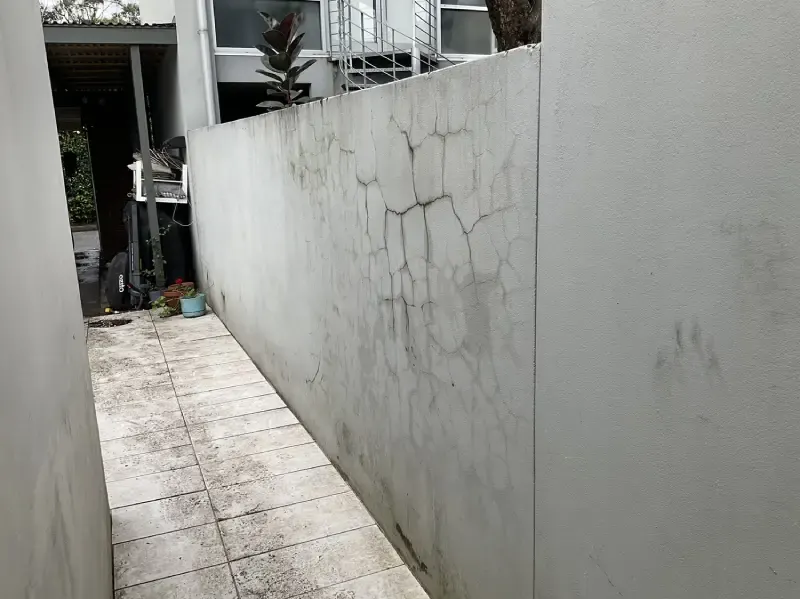
When construction, excavation, demolition, or major infrastructure projects take place near your property, the risk of structural damage increases significantly. Vibrations from heavy machinery, soil movement from deep excavation, and changes to drainage patterns can all affect neighbouring buildings. A dilapidation report completed before works begin gives you a clear, time-stamped record that protects your interests if you need to lodge an insurance claim later.
This guide explains what dilapidation reports contain, how they support insurance claims, the Australian standards they must follow, and the steps involved in getting one done properly.
For a complete overview, see our guide to insurance claim assessments.
What Is a Dilapidation Report?
A dilapidation report is an independent, legally recognised property condition survey prepared by a licensed building inspector. It captures the exact state of a property at a specific point in time, typically before nearby construction, demolition, or infrastructure work begins.
The report provides an objective, factual record that can be referred to later if any damage is alleged to have occurred during or after the works. Courts, insurers, and local councils across Australia accept these reports as evidence, making them a practical tool for resolving disputes without drawn-out legal proceedings.
Unlike a general building inspection, which focuses on the overall condition and habitability of a property, a dilapidation report specifically targets the documentation of existing damage, wear, and structural issues so that any new damage can be clearly identified by comparison.
Why Dilapidation Reports Matter for Insurance Claims
Insurance claims related to construction damage are among the most disputed categories in property insurance. Without a pre-works condition record, insurers often argue that reported damage was pre-existing. Property owners, in turn, struggle to prove the damage was caused by external works. This standoff frequently leads to denied claims, reduced payouts, and lengthy disputes.
A dilapidation report resolves this problem by providing a clear "before" snapshot. When combined with a post-construction inspection, it creates a direct comparison that shows exactly what changed.
- It establishes the baseline condition of your property before any nearby works start
- It gives insurers a clear reference point when assessing whether new damage has occurred
- It reduces the chance of a claim being denied due to lack of evidence
- It speeds up the claims process by removing ambiguity about the source of damage
- It protects developers and builders from false or exaggerated claims against them
A property owner in Sydney attempted to claim for structural cracking caused by nearby excavation work. Without a dilapidation report, the insurer classified the cracks as pre-existing settlement and denied the claim. A pre-works survey would have clearly shown whether those cracks existed before excavation began.
What a Dilapidation Report Includes
A thorough dilapidation report documents every observable condition of a property at the time of inspection. The level of detail is what makes these reports effective in insurance claim scenarios.
- High-resolution, time-stamped photographs of all interior and exterior surfaces
- Written descriptions of pre-existing cracks, settlement, staining, and material deterioration
- Location mapping that ties each observed issue to a specific area of the property
- Notes on the condition of walls, ceilings, floors, foundations, driveways, fencing, and landscaping
- Inspector credentials and confirmation of compliance with Australian Standard AS 4349.0
- Date and time of the inspection for legal traceability
The combination of photographic evidence and written commentary creates a comprehensive record that holds up in insurance assessments, legal proceedings, and council reviews.
Australian Standards for Dilapidation Reports
Dilapidation reports in Australia must comply with AS 4349.0, the general standard for property inspections. This standard sets out requirements for inspection methodology, reporting format, and inspector qualifications. Compliance with this standard is what gives a dilapidation report its legal weight in insurance disputes and court proceedings.
Why Compliance with AS 4349.0 Matters
- Reports that follow AS 4349.0 are admissible as evidence in insurance disputes and legal cases
- Standardised inspections ensure consistent detail and thoroughness across different inspectors
- Some local councils and state governments require compliant reports before issuing construction permits
- Non-compliant reports may be rejected by insurers, leaving property owners without supporting evidence
Key regulatory bodies that oversee property assessment standards include local councils, state government planning departments, and the Australian Building Codes Board (ABCB). In NSW, the Environmental Planning and Assessment Act 1979 often requires dilapidation reports for development applications near existing structures. Victoria's Building Act 1993 and Queensland's Building Act 1975 contain similar provisions.
Always confirm that your inspector is licensed and produces reports compliant with AS 4349.0. A non-compliant report may not be accepted by your insurer or in legal proceedings, regardless of how thorough it appears.
Common Scenarios Where Dilapidation Reports Support Claims
Dilapidation reports are not limited to one type of project or property. They apply across a wide range of construction and development scenarios where neighbouring properties may be affected.
| Risk to Your Property | How the Report Helps | |
|---|---|---|
| Adjacent Excavation | Foundation movement, wall cracking, soil subsidence from deep digging | Documents pre-existing foundation and wall condition for direct comparison after works |
| Demolition Works | Vibration damage, dust infiltration, structural stress from shared walls | Records the state of shared walls, party walls, and nearby structures before demolition begins |
| Road and Infrastructure Projects | Ground vibration from heavy machinery, changes to drainage affecting foundations | Provides baseline evidence for claims against government bodies or contractors |
| High-Rise Development | Piling, dewatering, and crane operations causing ground movement | Documents conditions across multiple neighbouring properties for large-scale projects |
| Commercial Fit-Outs | Noise, vibration, and structural load changes in shared commercial buildings | Protects tenants and landlords by documenting conditions before fit-out works begin |
In each of these scenarios, the dilapidation report acts as the single point of reference for determining what damage, if any, was caused by the works.
The Dilapidation Report Process Step by Step
A structured process ensures that the report captures everything needed to support an insurance claim. Here is what to expect from a professional dilapidation inspection.
Engage a licensed building inspector
Choose an inspector who is licensed in your state and experienced in dilapidation assessments. Confirm they produce reports compliant with AS 4349.0.
Schedule the pre-works inspection
The inspection must take place before any construction, demolition, or excavation begins on the neighbouring site. Timing is everything. A report completed after works have started loses much of its value.
Full property inspection
The inspector conducts a thorough visual and structural examination, covering walls, ceilings, floors, foundations, fencing, driveways, landscaping, and any other relevant features. Every existing crack, stain, or defect is recorded.
Photographic documentation
Time-stamped, high-resolution photographs are taken of every area inspected. These images form the visual backbone of the report and are referenced alongside written observations.
Written report compilation
The inspector compiles all findings into a formal report, structured according to AS 4349.0. This report includes written descriptions, photographic evidence, location references, and the inspector's professional assessment.
Client review and sign-off
The property owner reviews the completed report and confirms its accuracy. This step adds another layer of verification and ensures both parties agree on the recorded conditions.
Post-works inspection (if required)
After construction or development work is completed, a follow-up inspection compares the current condition against the original report. Any new damage is documented and can be used to support an insurance claim.
Dilapidation Reports vs Standard Building Inspections
Property owners sometimes confuse dilapidation reports with standard building inspections. While both involve a licensed inspector examining a property, their purpose, scope, and output are different.
| Dilapidation Report | Standard Building Inspection | |
|---|---|---|
| Purpose | Documents the condition of a property at a specific point in time, usually before nearby works | Assesses the overall condition, safety, and habitability of a property |
| Timing | Conducted before and sometimes after nearby construction or development | Conducted during property purchase, sale, or routine maintenance checks |
| Focus | Pre-existing damage, cracks, settlement, and wear that could be confused with construction damage | Structural integrity, pest damage, waterproofing, compliance with building codes |
| Use in Insurance Claims | Directly supports claims by proving what damage existed before works began | May support claims but is not specifically designed for before-and-after comparison |
| Australian Standard | AS 4349.0 | AS 4349.1 (residential), AS 4349.3 (timber pests) |
Both reports have value, but for insurance claims related to construction damage, the dilapidation report is the more appropriate document.
Who Benefits from Dilapidation Reports
Dilapidation reports protect multiple parties in any construction or development scenario. The benefits extend well beyond insurance claims.
Homeowners and Property Buyers
For homeowners living near an upcoming construction project, a dilapidation report is the most effective way to protect your property and your claim rights. If damage occurs during the works, you have timestamped proof of what your property looked like before the project started.
Buyers purchasing a property near an active construction site should also request a dilapidation report as part of their due diligence. This prevents inheriting disputes about pre-existing damage.
Builders and Developers
Builders and developers benefit from dilapidation reports because they provide protection against unjustified claims from neighbouring property owners. If a neighbour alleges that construction caused damage, the pre-works report can demonstrate that the damage was already present.
Many councils in NSW, Victoria, and Queensland now require dilapidation reports as part of the development application process, making them a compliance requirement rather than just a precaution.
Commercial Property Managers
For commercial properties, dilapidation reports protect investment assets from adjacent construction impacts. They also provide documented evidence for lease negotiations, maintenance disputes, and insurance claims related to commercial developments.
Government and Infrastructure Authorities
Public infrastructure projects, such as road widening, bridge construction, or utility upgrades, often affect surrounding properties. Government bodies use dilapidation reports to document conditions along project corridors, reducing the risk of disputed claims from affected residents and businesses.
Cost of a Dilapidation Report in Australia
The cost of a dilapidation report varies depending on the size and type of property, the level of detail required, and the location of the inspection.
| Typical Cost (AUD) | What Affects the Price | |
|---|---|---|
| Standard Residential Property | $500 to $1,200 | Property size, number of rooms, access to all areas |
| Large Residential or Multi-Unit | $1,200 to $3,000 | Number of units, common areas, shared infrastructure |
| Commercial Property | $2,000 to $5,000+ | Building complexity, floor area, specialist equipment access |
| Post-Works Follow-Up | $400 to $1,000 | Scope of comparison, number of areas requiring re-inspection |
While these costs represent an upfront investment, the expense is minor compared to the potential losses from a denied insurance claim or an unresolved property dispute. A denied claim for structural damage can easily exceed tens of thousands of dollars in repair costs alone.
How to Choose a Qualified Dilapidation Inspector
Not all building inspectors have the same experience with dilapidation assessments. Choosing the right inspector directly affects the quality and legal standing of your report.
Owner Inspections provides dilapidation reports across NSW, Victoria, and Queensland. All reports are prepared by licensed building inspectors and comply with AS 4349.0, ensuring they are accepted by insurers, councils, and courts.
Key Takeaways
- A dilapidation report records the condition of your property before nearby construction begins, providing baseline evidence for insurance claims.
- Without a pre-works report, insurers can classify new damage as pre-existing and deny your claim.
- Reports must comply with Australian Standard AS 4349.0 to be accepted in insurance disputes and legal proceedings.
- The report includes time-stamped photographs, written descriptions, location mapping, and inspector credentials.
- Common scenarios include adjacent excavation, demolition, road works, high-rise development, and commercial fit-outs.
- A post-works follow-up inspection creates a direct before-and-after comparison that strengthens your claim.
- Costs range from $500 to $5,000+ depending on the property type and complexity.
- Always engage a licensed building inspector with specific experience in dilapidation assessments.
Frequently Asked Questions
What is a dilapidation report used for in insurance claims?
A dilapidation report provides documented evidence of a property's condition before nearby construction or development work begins. When damage occurs during or after the works, the report allows you to prove that the damage did not exist beforehand. Insurers use this comparison to assess whether a claim is valid and to determine the extent of damage caused by the construction activity.
Do I need a dilapidation report before my neighbour starts building?
Yes, getting a dilapidation report before your neighbour starts any significant construction, demolition, or excavation work is strongly recommended. If their works cause damage to your property, you will need evidence of the pre-existing condition to support an insurance claim or compensation request. Without this evidence, proving the works caused the damage becomes very difficult. Some councils in NSW, Victoria, and Queensland require developers to arrange dilapidation reports for neighbouring properties as part of their development approval conditions.
Who pays for a dilapidation report in Australia?
It depends on the circumstances. In many cases, the developer or builder is required by council to arrange and pay for dilapidation reports on neighbouring properties as a condition of their development consent. If no such condition exists, the property owner concerned about potential damage would typically arrange and pay for their own report. The cost is generally considered a worthwhile investment given the protection it provides for insurance claims and dispute resolution.
Can a dilapidation report help if my insurance claim is denied?
Yes. If your insurance claim is denied on the basis that the damage was pre-existing, a dilapidation report completed before the works began provides direct evidence to challenge that decision. You can present the report during the insurer's internal dispute resolution process or escalate to the Australian Financial Complaints Authority (AFCA). The before-and-after comparison documented in the report is often the deciding factor in overturning claim denials.
What Australian standard applies to dilapidation reports?
Dilapidation reports in Australia should comply with AS 4349.0, which covers the general requirements for property inspections. This standard ensures that reports follow a consistent methodology, include sufficient detail, and are prepared by qualified inspectors. Compliance with AS 4349.0 is what gives the report its legal standing in insurance disputes, court proceedings, and council assessments.
How much does a dilapidation report cost in Australia?
For a standard residential property, a dilapidation report typically costs between $500 and $1,200. Larger residential properties or multi-unit buildings may cost $1,200 to $3,000, while commercial properties can range from $2,000 to $5,000 or more. A post-works follow-up inspection usually costs between $400 and $1,000. The price depends on the property size, complexity, number of areas to inspect, and your location.
What happens if I do not get a dilapidation report before construction starts?
Without a pre-works dilapidation report, you have no documented baseline showing what your property looked like before construction began. If damage occurs during the works, your insurer may argue that the damage was pre-existing, making it difficult to prove your claim. You may still be able to lodge a claim using other evidence such as photos, maintenance records, or witness statements, but these are generally less convincing than a formal, independent report from a licensed inspector.
Is a dilapidation report legally binding in Australia?
A dilapidation report is not a contract, so it is not "legally binding" in that sense. However, it is recognised as admissible evidence in Australian courts, tribunal proceedings, and insurance disputes when it complies with AS 4349.0 and is prepared by a licensed inspector. Courts and insurers treat compliant dilapidation reports as reliable, independent evidence of property conditions at a specific point in time.
When should a post-works dilapidation inspection be done?
A post-works dilapidation inspection should be conducted as soon as possible after the nearby construction, demolition, or development project is completed. Ideally, the follow-up inspection occurs within a few weeks of works finishing, before any repairs are carried out or conditions change due to weather or occupancy. The post-works report is compared against the original pre-works report to identify any new damage.
Can I use a dilapidation report for a strata insurance claim?
Yes. Strata schemes benefit significantly from dilapidation reports, particularly when construction or development occurs near the building. The owners corporation can use the report to support a strata insurance claim for damage to common property areas. Individual lot owners can also reference the report for claims related to damage within their lot caused by external construction works.
What is the difference between a dilapidation report and a building inspection?
A dilapidation report documents the condition of a property at a specific point in time, usually before nearby construction begins, for the purpose of comparison later. A standard building inspection assesses the overall condition, safety, and habitability of a property, typically for purchase, sale, or maintenance purposes. While both are conducted by licensed inspectors, they serve different purposes. For insurance claims related to construction damage, the dilapidation report is the appropriate document because it provides the before-and-after evidence insurers require.
Do councils in NSW require dilapidation reports?
Many councils in NSW require dilapidation reports as a condition of development consent, particularly for projects involving excavation, demolition, or construction near existing buildings. The requirement is typically set out in the conditions of the development application (DA) approval. Under the Environmental Planning and Assessment Act 1979, councils can impose conditions to protect neighbouring properties. Check with your local council or review the development consent conditions to confirm whether a report is required for a specific project near you.
References and Resources
- Australian Building Codes Board (ABCB) - National Construction Code and building standards
- NSW Fair Trading - Home Building - Building regulations and consumer protection in NSW
- Victorian Building Authority (VBA) - Building regulation and compliance in Victoria
- Queensland Building and Construction Commission (QBCC) - Building industry regulation in Queensland
- Standards Australia - Publisher of AS 4349.0 and related property inspection standards
- Australian Financial Complaints Authority (AFCA) - Free dispute resolution for insurance complaints
Related Articles
Dilapidation Reports
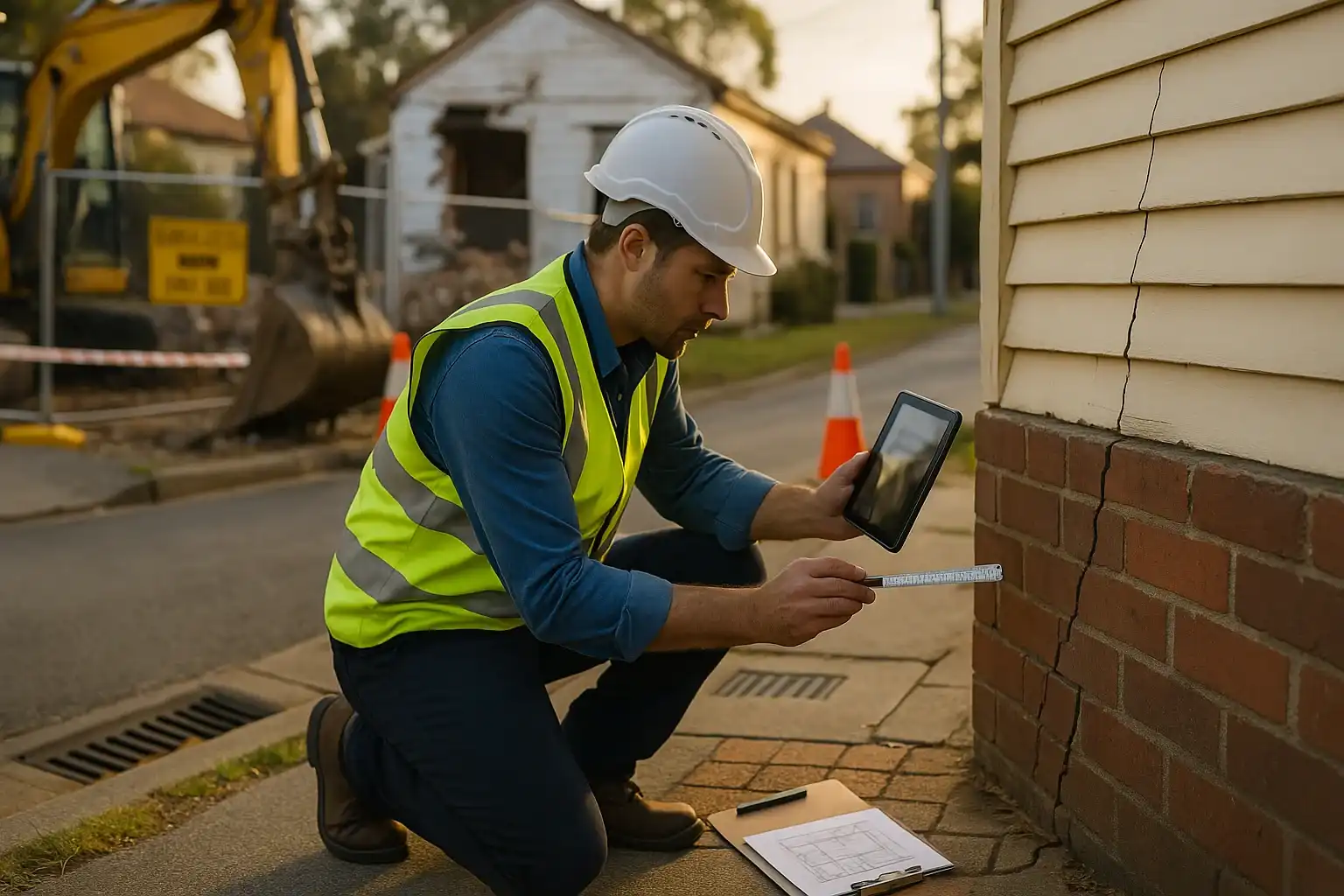
Why Dilapidation Reports Are Essential Before Demolition
A dilapidation report before demolition records the existing condition of neighbouring properties and public assets, creating a baseline that protects builders, developers, and property owners from costly disputes. This guide covers when these reports are required in NSW and VIC, what inspectors document, costs, and the full pre- and post-demolition workflow.
Dilapidation Inspections for Renovations: Protection and Compliance
A dilapidation inspection records the existing condition of surrounding properties before renovation work begins, protecting owners and builders from damage disputes. This guide covers the full inspection process, Australian legal requirements, council obligations, and how to choose a qualified inspector.
Need a dilapidation report to protect your property before nearby construction begins? Owner Inspections provides independent, AS 4349.0 compliant dilapidation reports across NSW, Victoria, and Queensland. Our licensed building inspectors deliver detailed, time-stamped reports that support insurance claims and protect your property rights. Get a quote today or call us on 1300 471 805.
For a complete overview, see our guide to insurance claim assessments.
Need an Insurance Claim Assessment?
Our independent assessors cover Sydney, Melbourne, and all major Australian cities.