
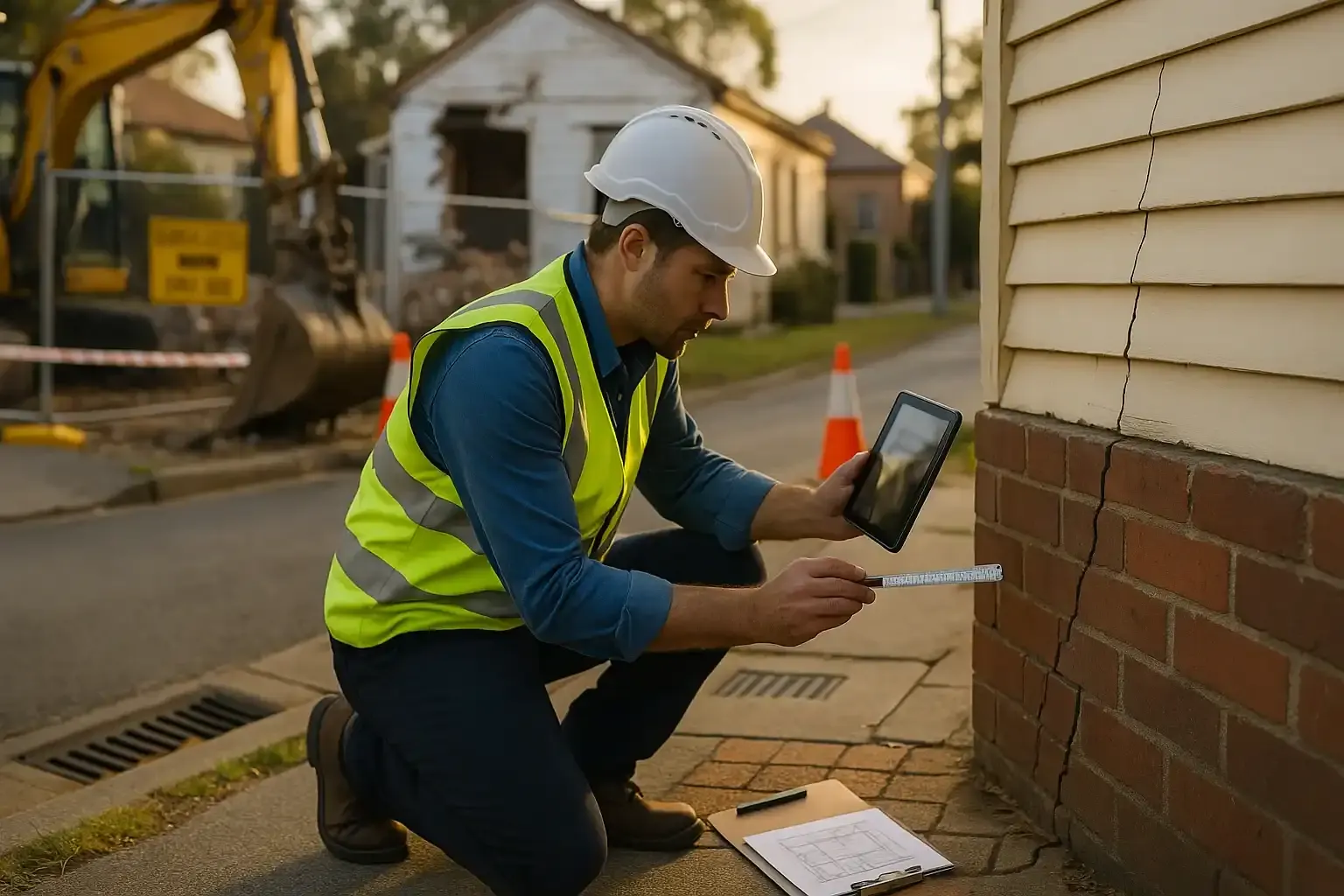
Whether you are a homeowner planning a knockdown rebuild, a developer managing a multi-lot demolition, or a neighbour concerned about nearby works, understanding how dilapidation reports fit into the demolition process can save you thousands of dollars and months of stress. This guide breaks down the state-by-state requirements, explains what inspectors actually look for, and walks you through the full workflow from booking to post-demolition comparison.
What Is a Dilapidation Report?
A dilapidation report, also called a pre-construction condition report or adjoining property survey, records the existing condition of neighbouring structures and public assets before demolition or excavation begins. The report provides photographic evidence and written notes on cracks, movement, surface finishes, and site features so any changes can be identified after the works are complete.
The scope typically covers interior and exterior surfaces, fences, driveways, retaining walls, outbuildings, and council assets such as kerbs, footpaths, and stormwater pits.
| Typical arrangement | Exceptions | |
|---|---|---|
| Who pays? | The builder or developer commissioning the demolition pays for the report | Some property owners order their own report for additional assurance |
| When is it used? | Before demolition, excavation, or protection works commence | Also used before major construction, road works, and infrastructure projects |
| What happens after? | A post-demolition inspection compares conditions against the baseline | In NSW, the post-construction report is often required before the Occupation Certificate |
Is It Required Before Demolition in Australia?
Requirements vary by state and local council. Here is what applies in the two most common jurisdictions.
NSW
Most residential development consents include a dilapidation report condition before any site work begins. The report must be prepared by a suitably qualified professional and accepted by the principal certifier (PC) or council.
- Where neighbours refuse access, councils accept an external-only survey plus proof of reasonable attempts to obtain access
- Copies must be provided to adjoining owners and to council within the timeframe specified in the consent
- Many consents also require a post-construction dilapidation report before the Occupation Certificate is issued
NSW's standard conditions programme confirms that councils should use these standard consent conditions under the Environmental Planning and Assessment Act (Part 4), which is why you will often see the same wording across different local government areas.
The principal certifier (PC) is an independent regulator who inspects building work and confirms compliance. They are not your builder or site supervisor.
Victoria
Demolition commonly triggers a Section 29A Report and Consent from the responsible authority (usually council) before a building permit for demolition is issued. Guidance from the Victorian Building Authority and state planning guides set out the timing and tests, including whether more than half the volume is being removed or whether a street-facing facade is affected.
Where protection works apply, the Building Act provides for a Section 94 survey of adjoining property. This is a signed record of the pre-existing condition, and it includes rights of entry to carry out the survey and works. Councils like the City of Melbourne also publish specific guidance on the Section 29A process for proposed demolitions.
Why It Matters Before Demolition
Demolition generates vibration, ground movement, and airborne debris. It can stress older structures next door and shift foundations. Without a baseline record, even minor pre-existing cracks can become the subject of expensive disputes.
A pre-demolition dilapidation report helps you in three clear ways.
- Prove compliance with development consent conditions or building approvals
- Reduce dispute risk with neighbours, councils, and insurers by establishing a documented starting point
- Support safety planning alongside your Safe Work Method Statements (SWMS) and demolition method statements
Without a baseline dilapidation report, you have no independent evidence to show that cracks or damage existed before your demolition work started. This leaves you exposed to claims from neighbours and potential non-compliance with your development consent.
What Inspectors Document
A thorough dilapidation inspection produces a photo-rich, geo-tagged record covering every relevant surface and structure. Expect the report to document the following areas.
Good reports include crack measurements, sketch plans, and clear location references so a post-demolition inspection can be aligned accurately with the original baseline.
Tip
Use independent, licensed inspectors who are separate from your builder or demolition contractor. This avoids conflicts of interest and gives the report more weight if a dispute arises.
Pre- and Post-Demolition Workflow
Before Works
Book early
Schedule the inspection 7 to 14 days before the planned demolition date. Brief your inspector on the scope, neighbouring lots, and council assets that need coverage.
Notify neighbours and arrange access
Contact adjoining property owners in writing to arrange access for the inspection. Keep records of all communication attempts, including emails and letters.
Conduct the inspection
The inspector surveys interiors (where access is granted), exteriors, and public assets. Every area is photographed and documented.
Deliver the report
Provide copies of the completed report to neighbours and to council or the principal certifier if required by your consent conditions. NSW consents often specify a delivery timeframe.
Share with your project team
Distribute the report to your builder, demolition contractor, and any other relevant parties. Keep it accessible throughout the works.
After Demolition
Re-inspect the same areas
Use the same routes, angles, and reference points as the original inspection so comparisons are accurate.
Compare with the baseline
Flag any changes, new cracks, movement, or damage that was not present in the original report.
Resolve any issues
If changes are attributable to your works, the documented evidence shortens the path to a fair resolution with the affected property owner.
Submit the post-construction report
If your consent requires it, provide the post-construction dilapidation report before the Occupation Certificate is issued. This is common in NSW.
NSW and VIC Compliance Cheat-Sheet
| What is expected | Document required | Who receives it | |
|---|---|---|---|
| NSW: Before site work | Standard consent conditions require a pre-construction dilapidation report prepared by a suitably qualified professional. If access is refused, conduct an external-only survey and document reasonable attempts for access. | Pre-construction dilapidation report | Adjoining owners and council or the PC, before works commence |
| NSW: Before occupation | Many consents require a post-construction dilapidation report confirming any changes compared to the baseline. | Post-construction dilapidation report | Council or the PC and adjoining owners, before the Occupation Certificate |
| VIC: Demolition | Section 29A Report and Consent is often needed before a demolition permit. The responsible authority is usually the council. | Section 29A Report and Consent | Council (responsible authority), prior to the demolition permit |
| VIC: Protection works | Where protection works apply, a Section 94 survey of adjoining property (dilapidation record) is part of the process. Provides entry rights for survey and works. | Section 94 survey (adjoining property condition) | Adjoining owner and relevant building surveyor, before works that risk adjacent damage |
Who Should Do It and Why Independence Matters
Your principal certifier (NSW) or relevant building surveyor (VIC) has regulatory duties and cannot act as your advocate. Their role is different from the inspector who documents property condition for comparison.
When selecting a dilapidation report provider, look for these qualities.
An independent inspection firm produces a report that carries more weight in disputes because it is not influenced by any party with a financial interest in the project outcome.
Costs, Timing, and Practical Tips
Costs vary depending on property size, the number of neighbouring properties, access constraints, and whether council assets are included in the scope. As a general guide, expect to pay between $500 and $1,500 for a standard residential dilapidation report, with multi-property or commercial inspections costing more.
| Typical cost range | Turnaround | |
|---|---|---|
| Standard residential (1 to 2 neighbours) | $500 to $1,000 | 24 to 48 hours |
| Multi-property or streetscape survey | $1,000 to $3,000+ | 48 to 72 hours |
| Commercial or council asset survey | $1,500 to $5,000+ | Varies by scope |
- Schedule the inspection 7 to 14 days before demolition to allow time for access arrangements and report delivery
- If a neighbour will not grant access, document your reasonable attempts in writing (emails and letters) and proceed with an external-only survey. This still satisfies many NSW consent conditions when properly evidenced.
- Copy all stakeholders: builder, demolition contractor, PC or building surveyor, and council if listed in your consent
Builder and Neighbour Playbooks
Builder and PCBU Checklist
Neighbour Checklist
Key Takeaways
- A dilapidation report before demolition creates an independent baseline of neighbouring property condition, protecting all parties from unsubstantiated damage claims.
- In NSW, pre-construction dilapidation reports are a standard condition of most development consents, with post-construction reports often required before the Occupation Certificate.
- In Victoria, demolition commonly triggers Section 29A Report and Consent, and protection works may require a Section 94 survey of adjoining property.
- Without a baseline report, even minor pre-existing cracks can become the basis for costly neighbour disputes.
- Choose an independent inspector who is separate from your builder or demolition contractor to avoid conflicts of interest.
- Schedule the inspection 7 to 14 days before demolition and allow time to arrange neighbour access and deliver the report to all required parties.
- If a neighbour refuses access, conduct an external-only survey and document all reasonable attempts to obtain access in writing.
- Retain the report on-site throughout demolition and distribute copies to your builder, PC or building surveyor, and council as required by your consent conditions.
Frequently Asked Questions
Is a dilapidation report mandatory before demolition in NSW?
In most cases, yes. Standard development consent conditions in NSW commonly require a pre-construction dilapidation report before any site work begins. The report must be prepared by a suitably qualified professional and copies provided to adjoining owners and to the council or principal certifier within the timeframe set out in the consent. Many consents also require a matching post-construction report before the Occupation Certificate is issued. Always check the specific conditions of your development consent.
Do Victorian councils require a dilapidation report before demolition?
Demolition in Victoria generally triggers a Section 29A Report and Consent from the responsible authority, which is usually the council. This must be obtained before a building permit for demolition is issued. Where protection works apply, a Section 94 survey of adjoining property (effectively a dilapidation record) is also expected. The Victorian Building Authority and local councils like the City of Melbourne publish specific guidance on the process.
Who pays for a dilapidation report before demolition?
The builder or developer commissioning the demolition typically pays for the dilapidation report. This cost is considered part of the project's compliance expenses. However, some property owners choose to commission their own report for additional assurance, particularly if they are concerned about the scope or independence of the report arranged by the builder.
What happens if my neighbour refuses access for a dilapidation inspection?
If a neighbour will not grant access, you should document all reasonable attempts to arrange access in writing, including emails and letters. You can then proceed with an external-only survey of the property. This approach still satisfies many NSW consent conditions when the attempts are properly recorded and evidenced. Provide copies of the external-only report to the neighbour and council as directed by your consent.
What does a dilapidation inspector actually document?
A thorough dilapidation inspection produces a photo-rich, geo-tagged record covering wall and ceiling cracks (with measurements), masonry and render condition, roof and gutters, windows and doors, driveways and pathways, fences and retaining walls, outbuildings, pools, and council assets such as kerbs, footpaths, and stormwater pits. Good reports also include sketch plans and clear location references so the post-demolition inspection can be directly compared to the baseline.
When should I book a dilapidation report before demolition?
Book the inspection 7 to 14 days before your planned demolition date. This allows enough time to arrange access with neighbours, complete the inspection, deliver the report to all required parties (neighbours, council, principal certifier), and share it with your builder and demolition contractor before site work begins. In NSW, your consent conditions often specify that the report must be provided before any works commence.
Do I need a post-demolition dilapidation report as well?
Yes, in many cases. NSW development consents frequently require a post-construction dilapidation report to confirm any changes compared to the baseline. This report must usually be submitted before the Occupation Certificate is issued. Even where it is not a formal consent condition, a post-demolition report is strongly recommended because it provides clear evidence of whether any new damage occurred during the works.
Can a dilapidation report help with insurance claims or neighbour disputes?
Yes. The report serves as strong independent evidence for liability decisions and claim support. If a neighbour alleges damage was caused by your demolition works, the pre-demolition baseline allows a direct comparison with post-demolition conditions. This documented evidence can resolve disputes quickly and is accepted by insurers, councils, and dispute resolution bodies. NSW Fair Trading publishes complaint data that highlights the value of proper documentation in building disputes.
How much does a dilapidation report cost in Australia?
Costs vary depending on the property size, number of neighbouring properties, access constraints, and whether council assets are included. A standard residential report covering one to two neighbours typically costs between $500 and $1,000. Multi-property or streetscape surveys range from $1,000 to $3,000 or more. Commercial or council asset surveys can cost $1,500 to $5,000 or more depending on scope. Reports are generally delivered within 24 to 48 hours.
Which code of practice covers demolition safety in Australia?
Safe Work Australia publishes the Model Code of Practice: Demolition Work, which sets out the safety requirements for demolition projects. Each state and territory also has its own regulator. For example, SafeWork NSW administers demolition safety requirements in New South Wales. The code covers planning, risk assessment, public protection controls, and the responsibilities of the person conducting the business or undertaking (PCBU).
Can Owner Inspections handle multi-property reports on tight timelines?
Yes. Owner Inspections can scope multi-dwelling or streetscape surveys with staged access arrangements. Reports are photo-rich, independent, and typically delivered within 24 to 48 hours. The team covers NSW, VIC, and QLD, and can coordinate inspections across multiple neighbouring properties to meet tight demolition schedules.
Why does independence matter when choosing a dilapidation report provider?
An independent inspection firm produces a report that is not influenced by any party with a financial interest in the demolition project. If the inspector is employed by or affiliated with the builder or demolition contractor, the report may be perceived as biased, which weakens its value in disputes. Independent reports carry more weight with councils, insurers, and dispute resolution bodies because they are seen as impartial records of the property's condition.
References and Resources
- NSW Department of Planning and Environment - Standard Conditions of Development Consent - Framework for standard consent conditions including dilapidation report requirements
- Victorian Building Authority - Demolition - Guidance on Section 29A Report and Consent requirements for demolition in Victoria
- City of Melbourne - Demolition Applications - Local council guidance on Section 29A consent for proposed demolitions
- Safe Work Australia - Model Code of Practice: Demolition Work - National code covering demolition safety, planning, and public protection
- SafeWork NSW - Demolition Work - NSW-specific guidance on demolition safety requirements
- NSW Fair Trading - Home Building Complaints - Complaint data and dispute resolution resources for building work in NSW
Related Articles
Dilapidation Reports
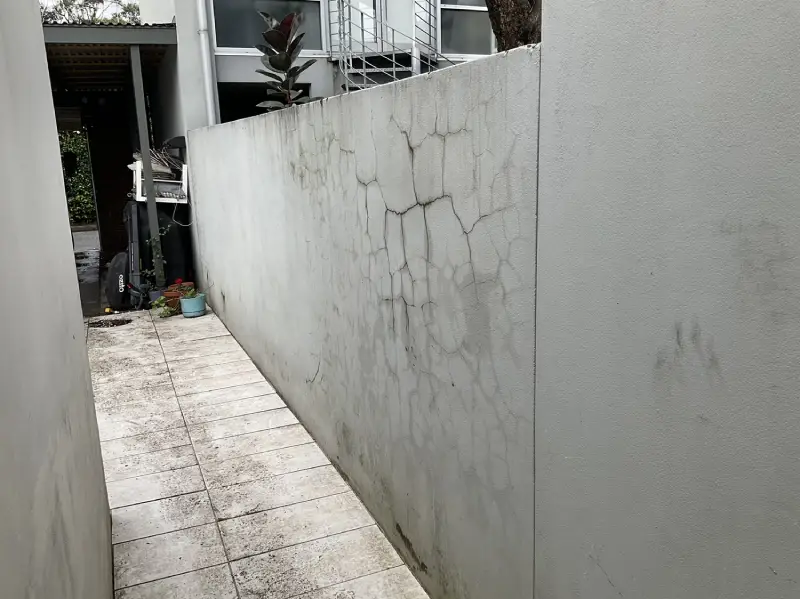
Dilapidation Reports for Insurance Claims: Why They Matter
A dilapidation report documents a property's condition before and after nearby construction work, providing strong evidence for insurance claims. This guide covers what reports include, Australian standards, and how they protect property owners from disputes and financial loss.
Dilapidation Inspections for Renovations: Protection and Compliance
A dilapidation inspection records the existing condition of surrounding properties before renovation work begins, protecting owners and builders from damage disputes. This guide covers the full inspection process, Australian legal requirements, council obligations, and how to choose a qualified inspector.
Protect your project and your neighbours before demolition begins. Owner Inspections provides independent, photo-rich dilapidation reports delivered within 24 to 48 hours, covering interiors, exteriors, and council assets across NSW, VIC, and QLD. Our certified inspectors produce impartial reports that satisfy council consent conditions and give you documented evidence if disputes arise. Get a fixed quote today or call us on 1300 471 805.