
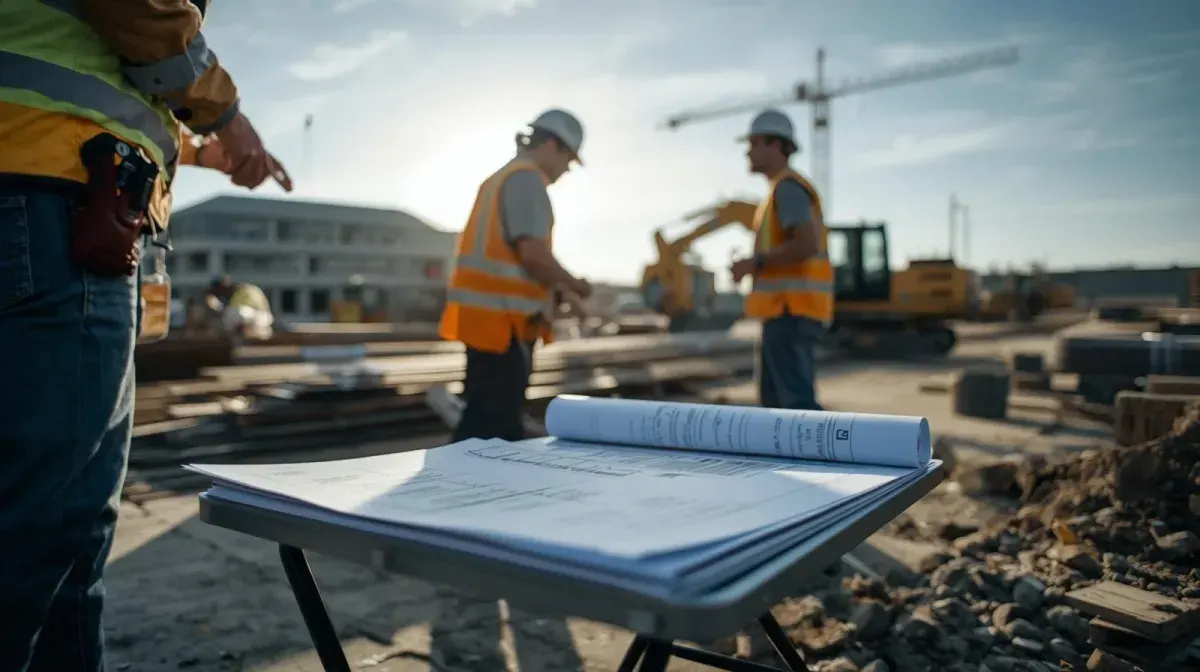
Whether you are building a new home, managing a renovation or overseeing a multi-unit development, the gap between what gets planned on paper and what actually happens on site can be significant. Construction projects across Australia regularly face challenges including subcontractor coordination issues, material supply delays, weather interruptions and quality shortfalls. Without structured monitoring, these problems compound. A missed defect during the slab stage can become a $30,000 rectification job by the time finishes are applied. A week of unchecked delays at framing can push the entire project timeline out by months.
This guide explains what construction project monitoring involves, why it matters for Australian property owners, the role of inspections and technology, and how to set up a monitoring framework that protects your investment from start to finish.
What Is Construction Project Monitoring?
Construction project monitoring is a structured approach to tracking and verifying the progress, quality and compliance of a building project throughout its lifecycle. It covers everything from the initial site preparation through to practical completion and handover.
Monitoring goes beyond simply visiting the site occasionally. It involves systematic assessments at defined milestones, ongoing communication between stakeholders, documented reporting and proactive identification of risks before they become problems.
- Verifying that construction work aligns with approved plans, engineering drawings and building contracts
- Confirming compliance with the NCC, relevant Australian Standards and local council requirements
- Tracking progress against the agreed construction timeline and identifying potential delays
- Assessing workmanship quality and material standards at each construction stage
- Documenting the condition of work through photographs, reports and digital records
- Flagging safety hazards, environmental concerns and non-compliant work for immediate action
In Australia, monitoring responsibilities are shared across several parties. The builder manages day-to-day site operations, council certifiers verify minimum code compliance at mandatory hold points, and independent inspectors provide impartial quality assessments on behalf of the property owner. Each plays a different role, and relying on only one leaves gaps.
Why Monitoring Matters for Australian Building Projects
The Australian construction industry has seen a sharp increase in reported defects in new residential builds. Data from state consumer protection bodies including NSW Fair Trading and the QBCC shows that building complaints remain high, with waterproofing failures, structural cracking and incomplete work among the most common issues.
According to industry data, defect rectification in completed homes can cost anywhere from $10,000 for minor issues to over $100,000 for significant structural or waterproofing failures. Early detection through structured monitoring reduces these costs dramatically.
Protecting Your Investment
For most Australians, building a home is their single largest financial commitment. Without independent oversight, property owners are relying entirely on the builder to self-assess their own quality. Project monitoring introduces accountability and transparency into the process.
Keeping Projects on Schedule
Construction delays are common in Australia, driven by factors such as weather, material shortages, subcontractor availability and regulatory approvals. Monitoring provides early visibility into schedule risks, allowing corrective action before a minor delay becomes a major timeline blowout.
Maintaining Compliance
The NCC sets minimum performance standards for structural adequacy, fire safety, accessibility, moisture control and energy efficiency. State legislation including the Home Building Act 1989 (NSW), the Domestic Building Contracts Act 1995 (VIC) and the Queensland Building and Construction Commission Act 1991 (QLD) adds further requirements. Monitoring verifies that all work meets these standards throughout the build.
The Role of Stage Inspections in Project Monitoring
Stage inspections are one of the most effective components of construction project monitoring. These are formal assessments carried out by qualified inspectors at defined construction milestones, where work that will soon be concealed by subsequent building activity is examined in detail.
Pre-Slab Inspection
Conducted before concrete is poured, this inspection checks site preparation, formwork, reinforcement placement, plumbing rough-ins, termite management systems and drainage. Defects at this stage are buried permanently once the slab is poured.
Frame Inspection
Carried out once the structural frame is erected but before cladding or lining. Assesses timber or steel framing for correct sizing, spacing, bracing, tie-downs and alignment with engineering specifications.
Lock-Up Inspection
Performed when the building is enclosed with roofing, external cladding, windows and external doors installed. Checks weatherproofing, window and door installation, flashing, sarking and external finishes.
Pre-Plaster Inspection
Conducted after internal services (electrical, plumbing, insulation) are roughed in but before plasterboard is installed. This is the last opportunity to identify issues with internal framing, services and insulation before they are sealed behind walls.
Fixing and Fit-Off Inspection
Assesses installed fixtures, fittings, cabinetry, tiling, wet area waterproofing, painting and internal finishes. Checks that all work matches contract specifications and approved plans.
Handover Inspection
A comprehensive assessment of the completed property before practical completion. Identifies any outstanding defects, incomplete work or items that do not match the approved plans or contract.
Important
Each stage inspection should occur before the next phase of construction begins. Once subsequent work covers earlier stages, defects become far more expensive to identify and rectify.
Key Areas Covered by Construction Monitoring
Effective construction monitoring covers four main areas: quality, timeline, budget and safety. Each requires different assessment methods and reporting approaches.
| Area | What It Involves | How It Is Done |
|---|---|---|
| Quality Monitoring | Workmanship assessments, material verification, compliance checks against NCC and Australian Standards | Stage inspections, defect reporting, photographic documentation, material testing |
| Timeline Monitoring | Tracking progress against the construction schedule, identifying delays and assessing impacts | Progress reports, milestone tracking, site visits, project management software |
| Budget Monitoring | Tracking actual costs against approved budgets, monitoring variations and change orders | Cost tracking systems, variation documentation, progress claim verification |
| Safety Monitoring | Identifying workplace health and safety hazards, verifying WHS compliance on site | Site safety inspections, incident reporting, WHS documentation review |
Quality Assurance in Practice
Maintaining consistent quality across a building project requires ongoing attention, not just a single check at the end. Quality monitoring includes verifying that materials match specifications, checking that tradespeople follow correct installation methods and confirming that finished work meets acceptable standards.
Digital Tools and Technology in Construction Monitoring
Construction project monitoring has moved well beyond clipboards and handwritten notes. Digital tools now provide real-time visibility into project progress, quality and communication across all stakeholders.
Project Management Platforms
Cloud-based project management platforms serve as a central hub where builders, inspectors, project managers and property owners can access progress reports, documentation, photographs and communications in real time. These systems create a permanent audit trail of all project activity.
Drone Site Surveys
Drone technology allows inspectors and project managers to capture high-resolution aerial imagery of construction sites. This is particularly useful for monitoring large sites, tracking earthworks progress, documenting roof installations and identifying issues that are difficult to see from ground level.
Building Information Modelling (BIM)
BIM creates a three-dimensional digital model of the building that integrates design, structural, mechanical and electrical information. During construction, the BIM model can be compared against actual site conditions to identify deviations from the approved design.
Digital monitoring tools complement physical inspections but do not replace them. Technology provides data and visibility, while qualified inspectors provide professional judgement about whether the work meets required standards.
Automated Reporting and Quality Tracking
Modern inspection software allows inspectors to generate standardised reports directly from site using tablets and smartphones. These reports include geotagged photographs, defect classifications, compliance assessments and recommended actions, all delivered to the property owner within 24 to 48 hours of the inspection.
On-Site Supervision and Reporting
On-site supervisors play a direct role in construction monitoring by verifying that day-to-day work follows the project specifications and schedule. The site supervisor is often the first person to identify deviations from the plan, quality issues or safety concerns.
What Good On-Site Supervision Looks Like
- Regular walkthrough inspections of active work areas throughout each day
- Verification that subcontractors are following approved methods and specifications
- Documentation of work completed, materials used and any variations from the plan
- Coordination of inspections with council certifiers and independent inspectors
- Prompt reporting of defects, delays or safety issues to the project manager
Reporting Standards
Monitoring reports should be clear, factual and consistent. Each report should document the date and time of the assessment, the areas inspected, findings including any defects or non-compliance, photographic evidence and recommended actions. Reports should reference specific clauses from the NCC, relevant Australian Standards or the building contract where applicable.
Common Challenges in Construction Project Monitoring
Even well-planned monitoring programmes face challenges. Understanding these helps property owners and project managers prepare for them.
Pros
- Early detection of defects before they become expensive to fix
- Clear documentation that supports warranty claims and dispute resolution
- Improved accountability from builders and subcontractors
- Better communication between all parties involved in the project
- Reduced risk of timeline blowouts and budget overruns
Cons
- Weather delays disrupting planned inspection schedules
- Material shortages causing work stoppages and programme changes
- Coordinating multiple subcontractors with different schedules
- Builders who are resistant to independent oversight
- Regulatory approval delays that impact project milestones
Dealing with Builder Resistance
Some builders view independent monitoring as an intrusion rather than a quality assurance measure. However, reputable builders generally welcome third-party oversight because it confirms the quality of their work and reduces the risk of post-completion disputes.
Warning
If your builder actively discourages or obstructs independent inspections, treat this as a significant red flag. Under Australian consumer protection law, property owners have the right to engage independent inspectors to assess construction work on their property.
How to Set Up an Effective Monitoring Plan
A monitoring plan does not need to be complicated, but it does need to be structured. Setting clear expectations from the start of the project helps all parties understand their responsibilities.
Define Your Monitoring Objectives
Determine what matters most: quality assurance, timeline tracking, budget control or a combination. This shapes the type and frequency of monitoring activities needed.
Engage an Independent Inspector Early
Select and engage a qualified, licensed building inspector before construction begins. This allows them to review the approved plans and specifications so they know exactly what to assess at each stage.
Establish Communication Protocols
Set up clear channels for reporting between the builder, inspector, project manager and property owner. Define how often progress updates are provided and in what format.
Schedule Inspections at Each Stage
Book stage inspections in advance and ensure the builder provides adequate notice before each milestone is reached. Inspections must occur before subsequent work begins.
Track Issues and Resolutions
Maintain a defect register that logs every identified issue, its location, severity, the responsible party and the resolution status. This creates accountability and a clear audit trail.
Review and Adjust
Regularly review the monitoring plan against actual project progress. Adjust the frequency or scope of monitoring activities if issues are found or conditions change.
Construction Monitoring Costs in Australia
The cost of construction monitoring depends on the scope of services, property size, location and the number of inspection stages. For standard residential projects in Australian capital cities, the following provides a general guide.
| Package | Typical Cost | What You Get |
|---|---|---|
| Single Stage Inspection | $300 to $600 | Detailed assessment of one construction stage with photographic report |
| Full Stage Inspection Package | $2,000 to $4,500 | Inspections at all major construction milestones from pre-slab to handover |
| Progress Monitoring (Periodic Visits) | $500 to $1,000 per visit | Scheduled site visits with progress reports, quality checks and timeline assessment |
| Comprehensive Monitoring Package | $5,000 to $12,000 | Full stage inspections plus regular progress monitoring, defect tracking and reporting throughout the build |
These monitoring costs represent a fraction of the total construction budget. For a typical new home build costing $350,000 to $600,000, a full stage inspection package represents roughly 0.5% to 1.5% of the total cost. Compared to potential defect rectification costs that can reach tens of thousands of dollars, monitoring provides a strong return on investment.
Regulatory Framework and Compliance
Construction monitoring in Australia operates within a regulatory framework set by national codes and state-specific legislation. Understanding this framework helps property owners know what standards apply and where to seek assistance if issues arise.
- The National Construction Code (NCC), maintained by the Australian Building Codes Board (ABCB), sets minimum performance requirements for all building work across Australia
- Australian Standard AS 4349.1 governs building inspections and provides the framework for inspection methodology and reporting
- AS 3740 sets requirements for waterproofing of domestic wet areas
- State legislation such as the Home Building Act 1989 (NSW), Domestic Building Contracts Act 1995 (VIC) and Queensland Building and Construction Commission Act 1991 (QLD) governs builder licensing, insurance and consumer protection
- State regulatory bodies including NSW Fair Trading, the QBCC, the VBA and Consumer and Business Services SA administer complaint processes and dispute resolution
State Regulatory Bodies
If you have concerns about your builder's compliance or quality of work, you can lodge a complaint with the relevant state body: NSW Fair Trading (NSW), QBCC (QLD), VBA (VIC), Consumer and Business Services (SA), or ACT Planning and Land Authority (ACT). These bodies investigate complaints and can take enforcement action against non-compliant builders.
Key Takeaways
- Construction project monitoring involves systematic oversight of quality, timelines, budget and safety throughout the building process.
- Stage inspections at pre-slab, frame, lock-up, pre-plaster, fixing and handover are the most effective way to catch defects before they are concealed.
- Digital tools such as project management platforms, drone surveys and BIM improve monitoring visibility but do not replace physical inspections by qualified professionals.
- Monitoring costs represent a small fraction of total build costs but can prevent defect rectification expenses that run into tens of thousands of dollars.
- The NCC and relevant Australian Standards set the minimum performance requirements that monitoring verifies throughout the build.
- Property owners have the right to engage independent inspectors under Australian consumer protection law, and builder resistance to oversight should be treated as a red flag.
- An effective monitoring plan includes defined objectives, scheduled inspections, clear communication protocols and a defect register that tracks all issues to resolution.
- Early engagement of a qualified independent inspector before construction starts gives the best foundation for effective project monitoring.
Frequently Asked Questions
What is construction project monitoring?
Construction project monitoring is the process of systematically overseeing a building project from planning through to completion. It involves regular inspections, progress tracking, quality assessments and compliance verification to confirm that work meets the approved plans, the National Construction Code and applicable Australian Standards. Monitoring covers quality, timelines, budget and safety, and it is conducted by a combination of on-site supervisors, council certifiers and independent building inspectors.
Why is construction monitoring important for new home builds in Australia?
Construction monitoring protects your investment by identifying defects, non-compliant work and quality issues while they are still affordable to fix. Without monitoring, problems with foundations, framing, waterproofing or finishes can go undetected until the building is complete, at which point rectification can cost tens of thousands of dollars. Monitoring also keeps the project on schedule and verifies compliance with the NCC and state building legislation.
How much does construction project monitoring cost in Australia?
Costs vary depending on the scope and property type. A single stage inspection typically costs $300 to $600, while a full package covering all construction stages ranges from $2,000 to $4,500 for standard residential properties. Comprehensive monitoring packages that include regular progress visits and reporting can cost $5,000 to $12,000. These costs are modest compared to the potential expense of undetected defects.
What construction stages should be inspected during a new build?
The six key construction stages where inspections should occur are pre-slab, frame, lock-up, pre-plaster, fixing and handover. Each inspection examines work that will be covered by subsequent construction activity, making it the last opportunity to identify and fix defects at that stage. Pre-slab and frame inspections are particularly important because the elements assessed will be permanently concealed once the build progresses.
What is the difference between council inspections and independent inspections?
Council inspections verify minimum regulatory compliance with the NCC at mandatory hold points. They are typically brief, lasting 20 to 40 minutes, and focus on whether the work meets code requirements. Independent inspections are engaged by the property owner and provide a more detailed assessment of workmanship quality, material compliance, contract adherence and overall build standards. Both serve different purposes and are not interchangeable.
Can my builder prevent me from having independent monitoring inspections?
No. Under Australian consumer protection law, property owners have the right to engage independent inspectors to assess construction work on their property. Most standard building contracts include provisions allowing reasonable access for independent inspections. If your builder tries to restrict access, raise the matter formally in writing and contact your state regulatory body such as NSW Fair Trading or the QBCC for guidance.
How do digital tools improve construction project monitoring?
Digital tools such as cloud-based project management platforms, drone site surveys and Building Information Modelling (BIM) provide real-time visibility into project progress. They allow all stakeholders to access documentation, progress reports and photographs from a single platform. Drones capture aerial imagery for tracking earthworks and roof installations, while BIM enables comparison between the approved design and actual site conditions. These tools complement physical inspections by providing data and communication support.
What should I look for in a construction monitoring inspector?
Look for an inspector who holds a current building inspector licence in your state, carries professional indemnity and public liability insurance, and has experience with your type of construction project. They should provide detailed written reports with photographic evidence that reference the NCC and relevant Australian Standards. Membership of a recognised industry association is also a positive indicator of professional standards.
What are common defects found during construction monitoring inspections?
Common defects include incorrect reinforcement placement in concrete slabs, misaligned or undersized framing members, missing or incorrectly installed tie-down connections, inadequate waterproofing in wet areas, non-compliant electrical or plumbing rough-ins, poor brickwork or cladding installation, and missing flashing or sarking at roof and wall junctions. Early detection of these defects through regular monitoring prevents them from becoming expensive rectification issues after completion.
How long does a construction stage inspection take?
A typical stage inspection for a standard residential property takes between 1 and 2 hours, depending on the stage and the complexity of the build. Frame and pre-plaster inspections tend to take longer because there are more elements to assess. Handover inspections also require significant time as the inspector reviews all finishes, fittings and systems. Reports are generally delivered within 24 to 48 hours of the inspection.
Is construction monitoring worth it for small residential projects?
Yes. Defects occur on projects of all sizes, and the cost of rectifying a missed defect does not scale down with the size of the project. A waterproofing failure or structural issue in a smaller home can still cost tens of thousands of dollars to fix after completion. At a minimum, engaging an independent inspector for the pre-slab, frame and handover stages provides strong protection for your investment regardless of project size.
What happens if defects are found during a monitoring inspection?
The inspector documents all identified defects in a detailed report that includes photographs, locations and recommended rectification actions. This report is then provided to the builder for resolution. Most defects are resolved through direct discussion between the property owner and builder. If the builder disputes the findings or refuses to rectify, the inspection report serves as evidence in formal dispute resolution through bodies such as NCAT (NSW), QCAT (QLD) or VCAT (VIC).
References and Resources
- National Construction Code (NCC) - Minimum performance standards for building work in Australia
- Australian Building Codes Board (ABCB) - Maintains the NCC and provides guidance on building regulation
- NSW Fair Trading: Home Building - Builder licensing, consumer protection and complaint resolution in NSW
- Queensland Building and Construction Commission (QBCC) - Builder licensing, insurance and dispute resolution in Queensland
- Victorian Building Authority (VBA) - Building practitioner registration and compliance in Victoria
- Standards Australia - Publisher of Australian Standards including AS 4349.1 and AS 3740
Related Articles
Independent Construction Inspections and Why They Matter
Independent construction inspections provide unbiased assessments of build quality and compliance. Learn why third-party inspections protect homeowners and investors.
Ensuring Quality at Every Step in Construction Stage Inspections
Construction stage inspections provide independent assessments at each building phase to ensure compliance with Australian Standards and the National Construction Code. This guide covers all five key stages, who conducts them, and their benefits.
Building Inspection Stages: A Comprehensive Guide
Looking for independent construction monitoring for your building project? Owner Inspections provides professional stage inspections, progress monitoring and quality assurance assessments across NSW, Victoria and Queensland. Our licensed building inspectors deliver detailed reports within 24 hours, giving you confidence that your project meets all required standards. Get a quote today or call us on 1300 471 805.
For a complete overview, see our guide to construction stage inspections.
Need Construction Stage Inspections?
Our licensed inspectors cover Sydney, Melbourne, and all major Australian cities.