
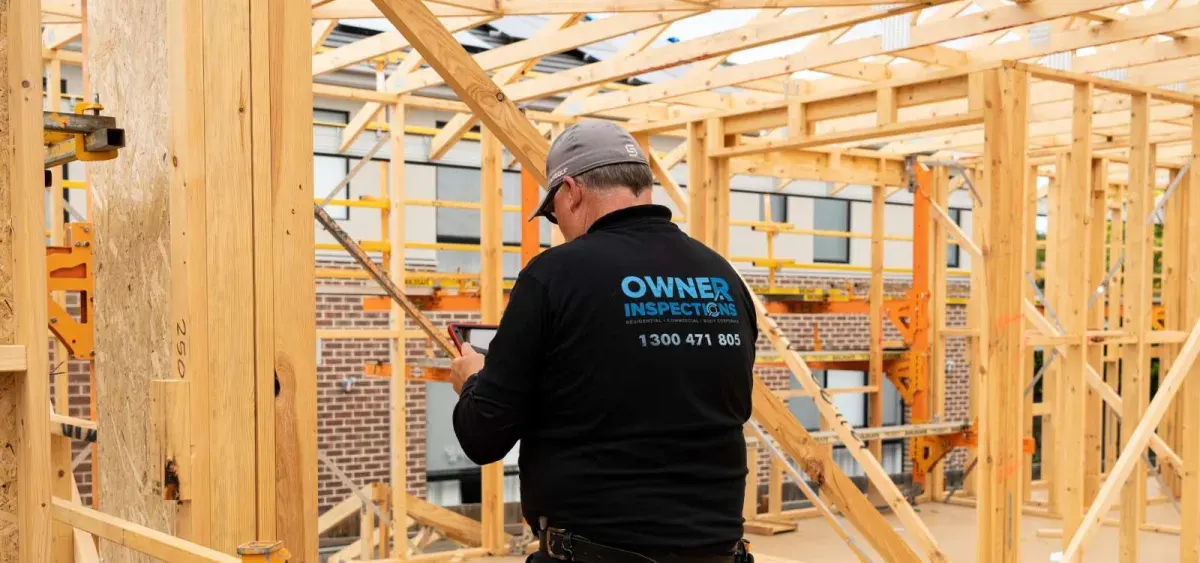
A frame stage inspection is an independent examination of a building's structural framework carried out after the frame is erected and before internal linings, cladding, or insulation are installed. In Australia, this inspection assesses whether the timber or steel framing complies with the approved building plans, engineering specifications, and the National Construction Code (NCC). Frame stage inspections typically cost from $490 AUD and take between one and two hours on site. They are one of the most important checkpoints in residential construction because the frame supports the entire weight of the building, and any defects concealed behind plasterboard become extremely expensive to fix later.
If you are building a new home or overseeing a construction project, the frame stage represents a brief window of opportunity. Once the walls are lined and the cladding is fixed, the structural skeleton of your home becomes invisible. Defects in bracing, connections, member sizing, or material quality will be hidden for decades, potentially compromising the safety and durability of the entire structure. A frame stage inspection catches these problems while they are still visible and affordable to correct.
This guide covers everything you need to know about frame stage inspections in Australia, including what inspectors look for, common defects found at this stage, the costs involved, and answers to frequently asked questions from homeowners and builders.
What Is a Frame Stage Inspection?
A frame stage inspection is a detailed assessment of every structural component that makes up the skeleton of a building. This includes wall frames, roof trusses, floor joists, beams, lintels, bracing, and tie-down connections. The purpose of the inspection is to confirm that the frame has been built in accordance with the approved construction drawings, the engineer's specifications, and the requirements of the NCC and relevant Australian Standards such as AS 1684 (Residential Timber-Framed Construction).
The inspection occurs at a specific point in the construction timeline. The frame must be fully erected, including roof trusses and any structural steelwork. However, internal wall linings (plasterboard), external cladding, and insulation must not yet be installed. This gives the inspector unobstructed access to every framing member, connection, and bracing element.
In most Australian states and territories, a frame inspection by the building surveyor (also called a building certifier) is a mandatory hold point. This means construction cannot legally proceed past the frame stage until the surveyor has inspected and approved the work. An independent frame stage inspection by a private building inspector provides an additional layer of scrutiny beyond what the building surveyor covers.
Why Frame Stage Inspections Matter
The frame is the structural backbone of any building. Every load, from the weight of the roof to wind forces and even earthquake loads in certain regions, transfers through the frame to the foundations. If the frame contains defects, the consequences can range from cracked plasterboard and sticking doors through to serious structural failure.
Structural Safety
Incorrect bracing, undersized members, missing tie-down straps, and improper connections all compromise the ability of the frame to resist loads. In high-wind regions and cyclone-prone areas of northern Australia, these defects can have life-threatening consequences. A frame inspection verifies that every structural element is correctly sized, positioned, and connected to safely carry the loads specified in the engineering design.
Building Code Compliance
All residential framing in Australia must comply with the NCC and the applicable Australian Standards. For timber framing, this is primarily AS 1684, which sets out requirements for member sizes, spans, spacing, bracing, and connections based on wind classification and load conditions. Steel framing must comply with the engineer's design and AS 4100 (Steel Structures). A frame inspection confirms compliance with these standards and identifies any deviations from the approved plans.
Cost Efficiency
Fixing a framing defect while the frame is exposed is relatively straightforward and inexpensive. Adding an extra brace, replacing an undersized lintel, or installing a missing tie-down strap might cost a few hundred dollars at most. The same defects discovered after the home is completed can cost $8,000 to $20,000 or more to rectify, because walls, linings, and finishes must be removed and replaced to access the frame.
| Defect | Cost to Fix at Frame Stage | Cost to Fix After Completion |
|---|---|---|
| Missing or incorrect bracing | $100 to $400 | $5,000 to $12,000 |
| Undersized lintel or beam | $200 to $600 | $8,000 to $20,000 |
| Missing tie-down straps | $50 to $200 | $3,000 to $8,000 |
| Incorrect stud spacing | $150 to $500 | $6,000 to $15,000 |
| Improper truss connections | $100 to $300 | $4,000 to $10,000 |
When Should a Frame Stage Inspection Be Conducted?
The timing of a frame stage inspection is specific and non-negotiable. The inspection must be carried out:
- After all wall frames, roof trusses, floor joists, beams, and structural steelwork are fully erected and fixed in position
- After all bracing, tie-down straps, and structural connections are installed
- After window and door openings are framed out (including lintels)
- Before any internal wall linings (plasterboard or fibre cement sheet) are fixed
- Before external cladding (brick, weatherboard, or sheet cladding) is installed
- Before insulation batts or blankets are placed in wall or ceiling cavities
This window is typically quite short on a busy construction site. Builders often move quickly from frame completion to cladding and lining, so it is important to book the inspection as soon as the frame is complete. Most inspection providers, including Owner Inspections, can arrange a frame stage inspection within 24 to 48 hours of the request.
What Do Inspectors Check During a Frame Inspection?
A frame stage inspection is thorough and systematic. The inspector works through every element of the frame, comparing what has been built against the approved plans and engineering specifications. The key areas of assessment include:
Structural Members
The inspector checks that all beams, lintels, joists, studs, top plates, bottom plates, and rafters are the correct size, grade, and species as specified in the plans. Undersized members are one of the most common defects found at frame stage. A lintel that is too small for the span it carries, for example, will deflect under load and cause cracking in the finished walls above windows and doors.
Bracing and Tie-Downs
Bracing resists lateral forces such as wind. The inspector verifies that bracing is installed in the correct locations, at the correct angles, and using the correct fixing methods. Tie-down straps connect the frame to the foundations and resist uplift forces. Every tie-down must be correctly positioned, properly tensioned, and fixed to both the frame and the foundation as specified in the engineering design.
Connections and Fixings
Every joint in the frame must be connected using the specified method. This includes nail patterns, bolt sizes, framing brackets, and proprietary connectors. The inspector checks that connections are complete, correctly positioned, and adequately fixed. Loose or missing connections are a common finding during frame inspections.
Material Verification
The inspector confirms that the materials used match what was specified in the approved plans and building contract. This includes verifying timber species and grade markings, steel member sizes and protective coatings, and truss manufacturer's certification tags. Material substitutions without engineering approval are a serious compliance issue.
Window and Door Openings
All openings must be correctly sized and positioned according to the plans. Lintels above openings must be the correct size for the span and load they carry. Jamb studs must be properly fixed, and openings must be square and plumb to ensure windows and doors fit and operate correctly when installed.
Roof Structure
Roof trusses are inspected for correct installation, spacing, and connection to the wall frames. The inspector checks that trusses are plumb, correctly braced, and fixed to the top plates using the specified connectors. Any modifications or cuts to trusses (which are strictly prohibited without engineering approval) are identified and reported.
Common Defects Found at Frame Stage
Frame stage inspections consistently reveal defects across a range of categories. Understanding these common issues helps homeowners appreciate the value of having an independent inspection carried out at this stage.
Structural Deficiencies
Structural deficiencies are the most serious category of frame defects. They include:
- Inadequate bracing: Bracing walls missing, installed in the wrong location, or using incorrect fixing methods
- Improper connections: Framing brackets missing, nails or bolts undersized or insufficient in number, and tie-down straps not connected to the foundation
- Undersized members: Beams, lintels, or studs that are smaller than specified in the engineering design
- Incorrect truss installation: Trusses not plumb, incorrectly spaced, or missing lateral restraint bracing
Material Discrepancies
Material discrepancies occur when the materials used on site do not match the specifications in the approved plans. Common examples include:
- Lower grade timber substituted for the specified grade
- Steel members with incorrect dimensions or missing galvanised coating
- Trusses manufactured with different specifications than what was engineered for the project
- Fixings and connectors that do not match the engineer's requirements
Workmanship Issues
Even when the correct materials are used, poor workmanship can compromise the frame's performance. Common workmanship issues include:
- Studs not plumb or not evenly spaced
- Top plates not straight or not properly joined
- Notches or holes cut in members without engineering approval (weakening the timber)
- Nails driven too close to the edge of timber, causing splits
| Defect Category | Examples | Frequency |
|---|---|---|
| Structural deficiencies | Missing bracing, improper connections, undersized members | Very common |
| Material discrepancies | Wrong timber grade, incorrect steel sizes | Common |
| Workmanship issues | Out-of-plumb studs, split timber, poor nail placement | Common |
| Plan deviations | Openings in wrong location, wall lengths changed | Occasional |
| Missing elements | Tie-down straps not installed, lintels omitted | Common |
The Frame Inspection Report
After completing the on-site inspection, the inspector compiles a detailed report that documents every finding. A typical frame inspection report includes:
- A summary of the overall frame condition and compliance status
- Photographs of every defect or area of concern
- References to the specific clause of the NCC, Australian Standard, or engineering specification that each defect relates to
- A clear description of the required rectification for each item
- A severity rating for each defect (structural, non-structural, or minor)
This report gives the homeowner or builder a clear record of the frame's condition and a checklist of items that must be addressed before construction proceeds. The report can also be used as evidence in any future dispute about construction quality.
Frame Stage Inspection Costs in Australia
Frame stage inspection fees vary depending on the size and complexity of the property. As a general guide:
| Property Type | Typical Inspection Cost (AUD) |
|---|---|
| Standard single-storey home | $490 to $600 |
| Double-storey home | $550 to $750 |
| Large or architecturally designed home | $700 to $1,000+ |
| Duplex or dual occupancy | $600 to $900 |
These costs represent a small fraction of the overall building budget and are insignificant compared to the cost of rectifying frame defects after the home is finished. A single missed defect at frame stage can result in rectification costs that are 10 to 50 times the inspection fee.
How Frame Inspections Fit Into the Broader Construction Process
The frame stage is one of several inspection hold points during the construction of a new home. Understanding where it sits in the overall sequence helps homeowners plan their inspection schedule. For a complete overview, see our building inspection stages guide.
The typical sequence of construction stage inspections is:
- Base/slab stage: Before the concrete slab is poured
- Frame stage: After the frame is erected, before linings and cladding
- Lock-up stage: After external cladding, roofing, windows, and doors are installed. See our lock-up and pre-plaster inspection guide for details on this stage
- Fixing stage: After internal fittings, cabinetry, and fixtures are installed
- Pre-handover/final stage: Before the builder hands the completed home to the owner
Each stage offers a specific window to inspect work that will soon be concealed. Missing any stage means losing the opportunity to identify defects while they are still accessible and affordable to fix.
Frequently Asked Questions
What is a frame stage inspection?
A frame stage inspection is an independent examination of a building's structural framework to verify it complies with approved plans, engineering specifications, and the National Construction Code.
The inspection is carried out after the frame is fully erected, including wall frames, roof trusses, floor joists, beams, and all structural connections. It must occur before internal linings, external cladding, or insulation are installed. The inspector checks every structural member, bracing element, tie-down connection, and fixing against the approved documentation. A detailed report is provided listing any defects, their severity, and the required rectification. This inspection is one of the most important quality checkpoints in residential construction because the frame supports all loads transferred through the building.
Does a frame stage inspection include roof trusses and windows?
Yes. A frame stage inspection covers roof trusses, including their installation, spacing, bracing, and connections to the wall frames. Window openings are also inspected to confirm correct sizing, positioning, and lintel adequacy.
While the actual window units may or may not be installed at frame stage (this depends on the builder's programme), the framed openings for windows and doors are assessed. The inspector checks that openings are square, plumb, correctly sized according to the plans, and that lintels above openings are the correct grade and span for the loads they carry. Roof trusses are checked for plumb alignment, correct spacing, lateral restraint bracing, and proper connection to the top plates of the wall frames.
What is the main purpose of a frame stage inspection?
The main purpose is to identify any structural defects, material discrepancies, or code non-compliance in the building frame while it is still exposed and accessible for rectification.
Once internal linings and external cladding are installed, the frame becomes hidden. Any defects present at that point will remain concealed until they manifest as visible problems such as cracked walls, sticking doors, sagging ceilings, or in serious cases, structural failure. By inspecting the frame while it is fully visible, defects can be identified and fixed at a fraction of the cost that would be required after the home is completed. The inspection also provides documented evidence of the frame's condition for future reference.
How long does a frame stage inspection take?
A frame stage inspection on a standard residential home typically takes between one and two hours on site.
The duration depends on the size and complexity of the property. A single-storey home with a simple rectangular floor plan may take around one hour. A double-storey home or a property with complex roof geometry, multiple levels, or extensive structural steelwork may require up to two hours or more. The inspector needs sufficient time to check every framing member, connection, bracing element, and tie-down strap. The inspection report is usually delivered within 24 to 48 hours of the site visit.
How much does a frame stage inspection cost in Australia?
Frame stage inspections in Australia start at approximately $490 AUD for a standard single-storey home. Larger or more complex properties may cost $600 to $1,000 or more.
The fee varies based on the property size, number of storeys, complexity of the frame design, and the location of the construction site. Some inspection providers charge a flat fee per stage, while others adjust based on floor area. Regardless of the specific cost, a frame inspection represents excellent value when compared to the potential cost of rectifying concealed frame defects after completion, which can run into tens of thousands of dollars.
What happens if the frame inspection fails?
If a frame inspection identifies defects, construction should not proceed with internal linings or cladding until the defects are rectified. The builder must direct the framing contractor to fix all identified issues.
The inspection report will list each defect with photographs, a description of the problem, and a reference to the applicable standard or specification. The builder is responsible for ensuring that all rectification work is completed to the required standard. In some cases, a re-inspection may be recommended to confirm that defects have been properly addressed. The cost of rectification at this stage is borne by the framing contractor or builder, not the homeowner. Depending on the severity of the defects, the building surveyor may also need to re-inspect before issuing approval to proceed.
Is a frame stage inspection mandatory in Australia?
A frame inspection by the building surveyor (certifier) is mandatory in all Australian states and territories. It is a prescribed hold point, meaning construction cannot legally proceed past the frame stage without surveyor approval.
An independent frame stage inspection by a private building inspector is not mandatory but is strongly recommended. The building surveyor's inspection confirms compliance with the building permit at a broad level. An independent inspection provides a more detailed, homeowner-focused assessment that often identifies additional defects missed by the mandatory inspection. Many building contracts in Australia allow the homeowner to engage independent inspectors at each construction stage, and this right is supported by legislation in several states, including under the Home Building Act 1989 (NSW) and the Domestic Building Contracts Act 1995 (VIC).
Can construction continue if there are pending rectifications from a frame inspection?
No. Construction should not proceed past the frame stage until all identified structural defects and code non-compliance issues have been rectified.
Proceeding with internal linings or cladding before frame defects are fixed will conceal the problems and make rectification significantly more expensive. If the building surveyor has identified non-compliant items, they will withhold approval to proceed until those items are addressed. If an independent inspector has identified defects, the homeowner should insist that all items are rectified before authorising the next progress payment. The construction contract typically ties progress payments to satisfactory completion of each stage, giving the homeowner leverage to ensure defects are fixed before the build moves forward.
Do I receive a detailed report after the frame inspection?
Yes. A professional frame stage inspection includes a comprehensive written report delivered to the client, usually within 24 to 48 hours of the inspection.
The report typically includes an overall assessment of the frame's condition, photographs of every defect or area of concern, references to the specific NCC clause or Australian Standard that applies to each finding, a description of the required rectification for each item, and a severity rating. This report serves as a record of the frame's condition at the time of inspection and can be used when discussing rectification requirements with the builder, or as evidence in any future dispute about construction quality.
What preparation is needed before a frame stage inspection?
The main preparation required is ensuring the frame is fully complete and accessible. The homeowner should also have a copy of the approved building plans and engineering specifications available for the inspector.
All wall frames, roof trusses, floor joists, beams, bracing, and tie-down connections must be installed before the inspection. Internal linings and external cladding must not yet be fixed. The site should be safe to access, with scaffolding or ladders available if the inspector needs to examine elevated areas such as roof trusses. If there are any variations or amendments to the original plans, the homeowner should provide copies of the updated documentation so the inspector can assess the frame against the correct specifications.
What are common frame defects found in Australian homes?
The most common frame defects found during inspections include missing or incorrectly installed bracing, undersized lintels, missing tie-down straps, and studs that are out of plumb.
Other frequently identified issues include incorrect nail patterns at connections, timber members with excessive notching or drilling that weakens them, material substitutions (lower grade timber or incorrect steel sizes), trusses that are not properly braced or spaced, and wall frames that deviate from the approved plan layout. These defects are found on projects of all sizes and across all price ranges. Even experienced framing contractors can make errors, which is why independent inspection at this stage provides significant value.
Can I attend the frame stage inspection with the inspector?
Yes. Most inspection providers welcome the homeowner to attend the frame stage inspection. Being on site allows you to see the condition of the frame first-hand and ask questions as the inspector works through the assessment.
Attending the inspection is not compulsory, and you will receive a full written report regardless. However, being present gives you the opportunity to understand the inspector's findings in context, see any defects as they are identified, and gain a better understanding of the construction quality of your home. If you plan to attend, wear enclosed shoes and appropriate clothing for a construction site. The builder should be notified in advance, and you should follow all site safety requirements.
Key Takeaways
Key Takeaways
- A frame stage inspection is an independent assessment of a building's structural framework carried out after the frame is erected and before internal linings or cladding are installed
- Frame inspections verify compliance with approved plans, engineering specifications, the National Construction Code, and Australian Standard AS 1684 for timber framing
- Common defects found at frame stage include missing bracing, undersized lintels, improper connections, and missing tie-down straps
- Fixing a frame defect during construction costs a few hundred dollars, while the same defect discovered after completion can cost $5,000 to $20,000 or more to rectify
- Frame stage inspections in Australia start at approximately $490 AUD and take between one and two hours on site
- A mandatory frame inspection by the building surveyor is required in all states, but an independent inspection provides additional scrutiny and a homeowner-focused report
- The inspection report includes photographs, code references, severity ratings, and rectification requirements for every identified defect
- Construction should not proceed past the frame stage until all structural defects and non-compliance issues are rectified
References
References and Resources
- National Construction Code (NCC) - Australian Building Codes Board
- AS 1684 Residential Timber-Framed Construction - Standards Australia
- Home Building Act 1989 - NSW Legislation
- Domestic Building Contracts Act 1995 - Victorian Legislation
- Victorian Building Authority (VBA) - Building Permits and Inspections
- Queensland Building and Construction Commission (QBCC) - Building Inspections
Related Articles
Building Inspection Stages: A Comprehensive Guide
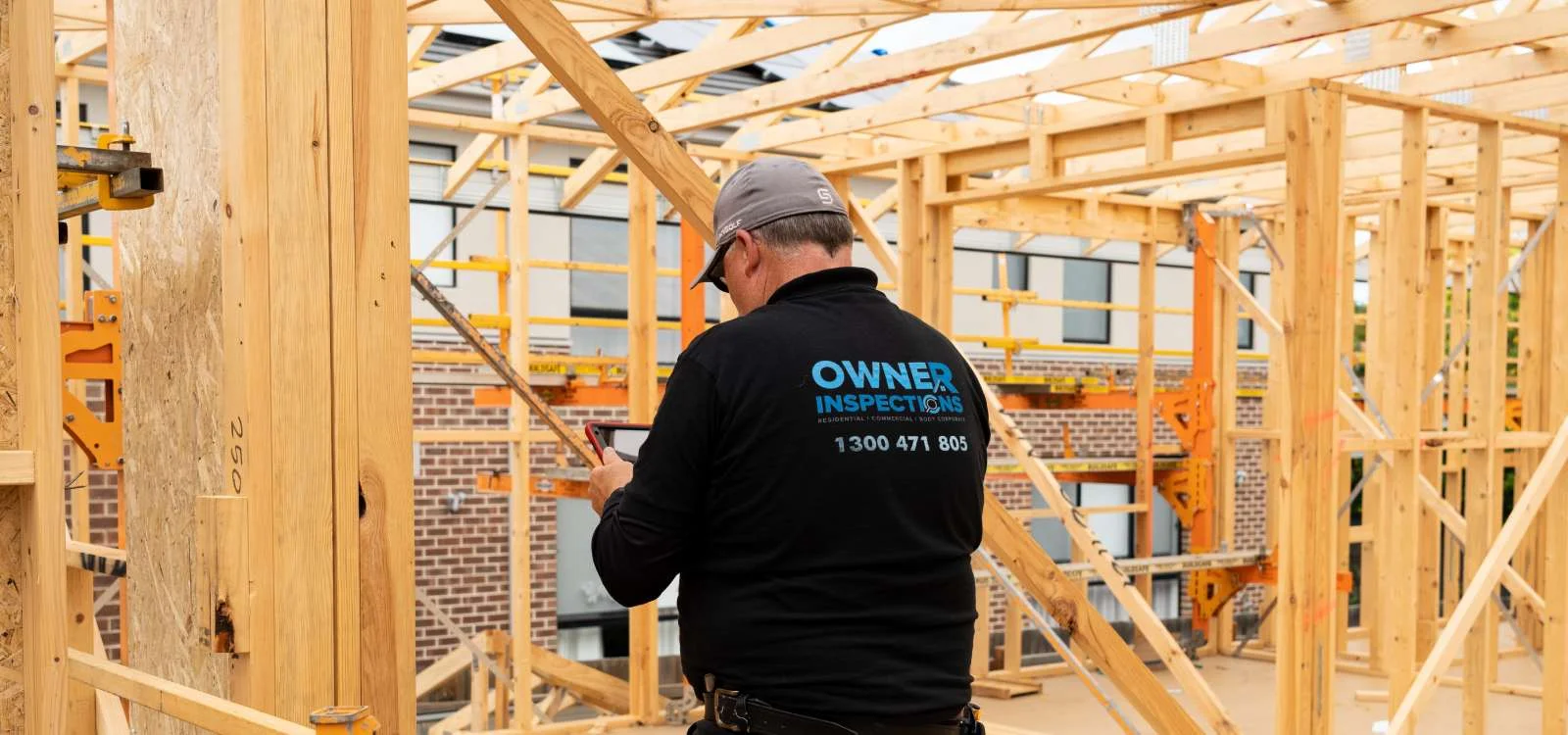
Common Frame Defects and How to Address Them
A home's framing system serves as its structural skeleton. This guide covers common frame defects in Australian homes, their causes, and how to identify and address them during construction inspections.
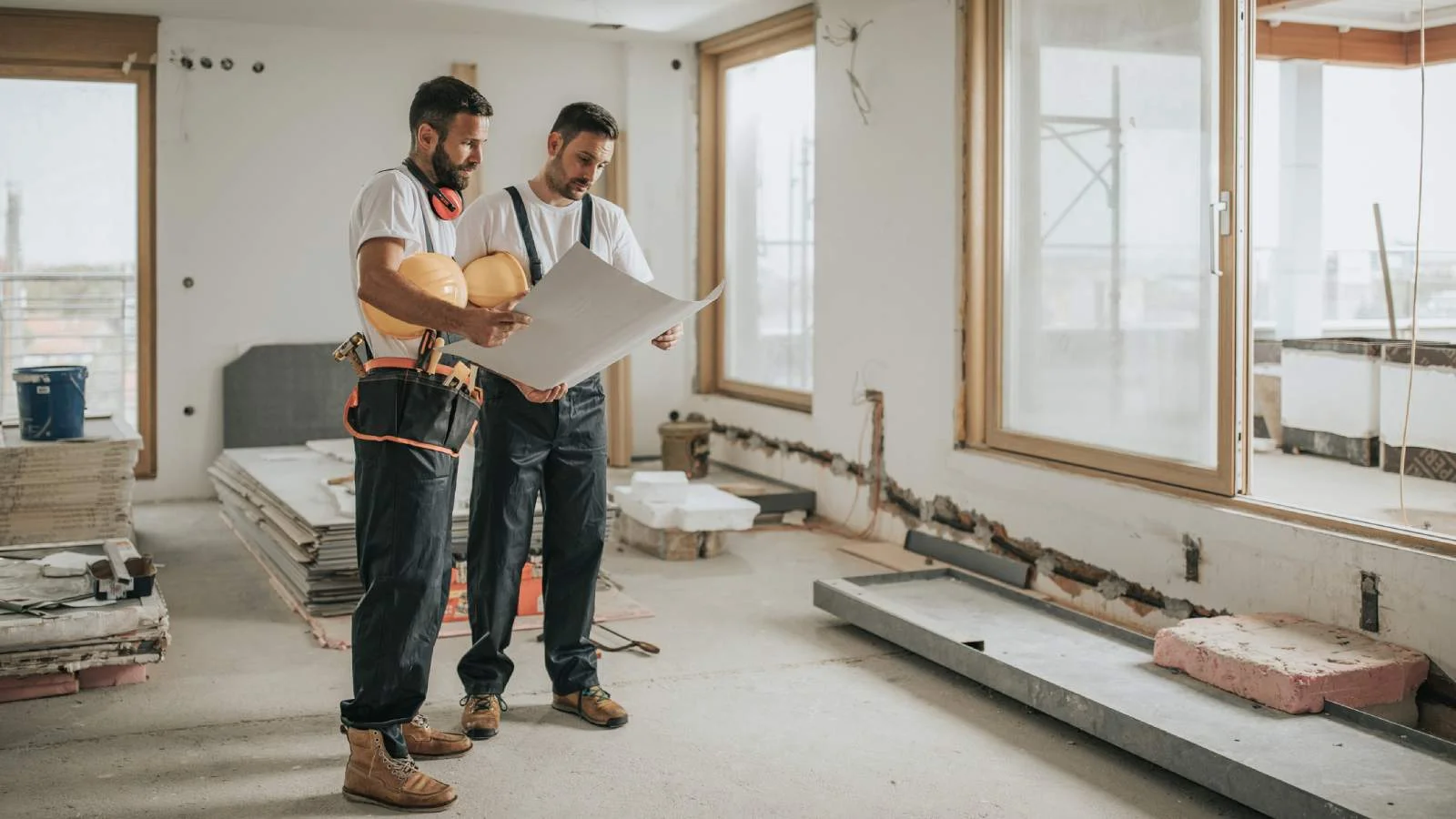
Lock-Up and Pre-Plaster Inspection Guide
The lockup stage is a critical phase where structures are secured with windows, doors, and external cladding before plastering begins. Learn what inspectors check.
Get an Independent Frame Stage Inspection
Book a frame stage inspection with Owner Inspections to catch structural defects, bracing issues, and non-compliant framing before your walls are lined.
For a complete overview, see our guide to construction stage inspections.
Need Construction Stage Inspections?
Our licensed inspectors cover Sydney, Melbourne, and all major Australian cities.