
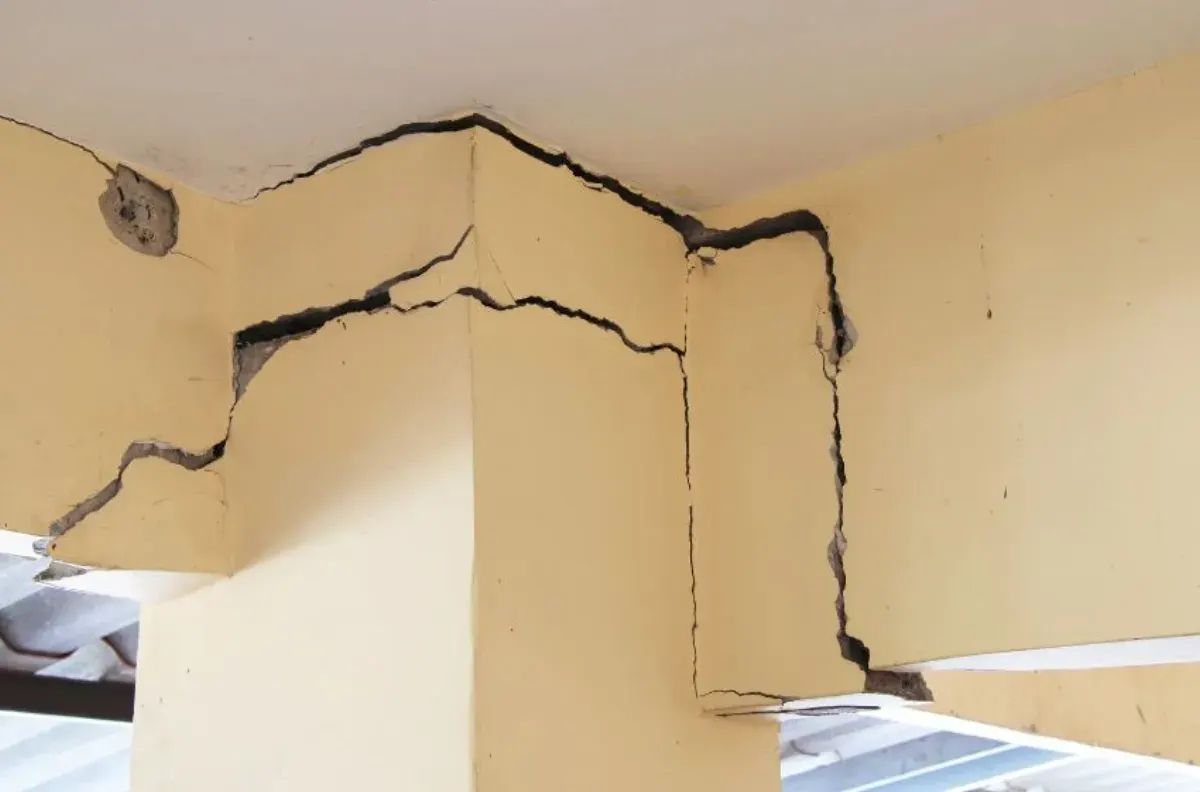
This guide covers the four main categories of wall defects, what to look for, what causes them, and how to prevent them from developing or worsening. For a complete overview, see our guide to building defect investigations.
Cracking
Cracking is the most common wall defect encountered in Australian buildings. Not all cracks are equal, and understanding the type of crack helps determine the severity and appropriate response.
Hairline Cracks
Hairline cracks are very fine cracks, typically less than 0.1mm in width. They commonly appear in rendered surfaces, plasterboard walls, and painted finishes. Hairline cracks are generally cosmetic and result from the normal drying and curing of building materials, minor thermal expansion and contraction, or slight vibration from traffic or nearby construction.
What to look for:
Prevention: Use quality paint and render products that accommodate minor movement. Ensure render coats are applied in appropriate conditions and allowed to cure properly. Apply flexible acrylic fillers to hairline cracks before repainting.
Structural Cracks
Structural cracks are wider (typically greater than 2mm), often follow a diagonal pattern, and indicate that the building is experiencing movement or load-bearing stress beyond what the structure can accommodate.
What to look for:
Causes:
- Inadequate footing design for the soil conditions
- Overloading of structural elements
- Removal of load-bearing walls without proper engineering
- Impact damage or adjacent excavation
Prevention: Engage a structural engineer during the design phase to ensure footings and walls are designed for the site conditions. Avoid removing or modifying load-bearing walls without engineering advice. Monitor existing structural cracks with crack monitors to determine whether movement is ongoing.
Settlement Cracks
Settlement cracks occur as a building settles onto its foundations over the first few years after construction. They are particularly common on reactive clay soils found across Melbourne, Adelaide, and parts of Sydney and Brisbane.
What to look for:
Prevention: Proper site classification under AS 2870 and appropriate footing design for the soil class are the primary prevention measures. Maintaining consistent moisture levels around the perimeter of the building by avoiding excessive watering on one side and ensuring drainage moves water away from footings also helps manage settlement.
Bowing and Bulging
Bowing and bulging walls are a serious structural defect that indicates a wall is being displaced from its original position. This can occur in brick, block, rendered, or timber-framed walls.
What to look for:
Causes:
- Missing or corroded wall ties in brick veneer construction
- Lateral pressure from retained earth or water
- Inadequate bracing in timber-framed walls
- Foundation movement causing differential settlement
- Overloading from roof or floor loads
Prevention: Ensure wall ties are correctly installed and of appropriate material for the environment (stainless steel in coastal areas). Provide adequate bracing to timber-framed walls in accordance with AS 1684. Design retaining walls with proper drainage to prevent lateral water pressure buildup. Conduct regular inspections of older brick veneer walls to check for tie corrosion.
Bowing or bulging walls require urgent professional assessment. A wall that has moved significantly from its original position can be at risk of collapse, particularly during storms or earthquakes. Do not attempt to rectify bowing walls without engineering advice.
Water Seepage and Stains
Water seepage through walls is a common and damaging defect that affects both the structure and the livability of a building. Staining on walls is often the first visible sign of a moisture problem.
What to look for:
Causes:
- Failed or missing flashing around windows and wall penetrations
- Cracked or deteriorated external render
- Blocked weep holes in brick veneer construction
- Rising damp from inadequate or failed damp-proof courses
- Condensation from poor ventilation and insulation
- Plumbing leaks within the wall cavity
Prevention: Maintain external render and paintwork in good condition. Ensure weep holes remain clear and functional. Check and replace deteriorated flashing. Provide adequate ventilation to reduce condensation, particularly in bathrooms, kitchens, and laundries. Address rising damp by installing or repairing the damp-proof course.
Spalling and Degrading
Spalling refers to the flaking, peeling, or breaking away of the surface material from a wall. It is most commonly seen in brickwork, concrete, and rendered surfaces.
What to look for:
Causes:
- Salt attack, particularly in coastal areas or from rising damp
- Freeze-thaw cycles in alpine and cold-climate regions
- Poor quality bricks with high moisture absorption rates
- Carbonation and corrosion of reinforcement in concrete (concrete cancer)
- Chemical attack from acidic soils or polluted environments
Prevention: Select appropriate materials for the environment during construction. Use bricks rated for the exposure conditions (salt-resistant grades for coastal locations). Ensure adequate concrete cover to reinforcement. Apply protective coatings to concrete and render surfaces in aggressive environments. Address the source of moisture if spalling is associated with rising damp or water penetration.
Prevention Strategies
Preventing wall defects is far more cost-effective than rectifying them. The following strategies apply broadly across all wall defect types:
Design and Build Correctly
Engage qualified professionals for design and construction. Ensure footings, wall ties, bracing, and waterproofing are designed and installed to meet Australian Standards and the National Construction Code.
Manage Moisture
Maintain gutters, downpipes, and drainage systems. Keep ground levels below the damp-proof course. Ensure adequate ventilation in subfloor areas and inside the building.
Maintain Regularly
Repaint and re-render external walls before coatings have deteriorated. Repoint mortar joints when they show signs of erosion. Clear weep holes and check flashings annually.
Monitor Movement
Install crack monitors on existing cracks to track whether they are active. Maintain consistent moisture levels around the building perimeter. Avoid planting large trees close to foundations.
Inspect Professionally
Have a qualified building inspector assess your property at regular intervals, particularly if defects have been identified previously or the property is in an area with reactive soils or coastal exposure.
Frequently Asked Questions
How often should I have my walls inspected for defects?
A professional inspection every three to five years is recommended for most properties. Properties on reactive soils, in coastal areas, or with known previous defects should be inspected more frequently, ideally every two to three years.
Are hairline cracks in walls something to worry about?
Hairline cracks less than 0.1mm wide are generally cosmetic and not a structural concern. However, if multiple hairline cracks appear in a pattern, or if they grow over time, they should be assessed by a professional to rule out underlying structural movement.
Can wall defects be repaired without major renovation?
Many wall defects can be repaired without major renovation. Hairline cracks can be filled and repainted. Minor water seepage can be addressed by improving drainage and resealing. However, structural cracks, bowing walls, and severe spalling often require specialist intervention.
Is it safe to do DIY repairs on wall cracks?
Cosmetic hairline cracks can be filled with acrylic filler and repainted as a DIY task. However, any crack wider than 2mm, or any crack showing signs of ongoing movement, should be assessed by a qualified building inspector or structural engineer before repair. Incorrect repair can mask a serious problem.
What is the best season to carry out wall repairs?
Autumn and spring are generally the best seasons for wall repairs in most parts of Australia. These periods offer moderate temperatures and lower humidity, which are ideal conditions for rendering, painting, and sealant application. Avoid repairs during extreme heat, heavy rain, or high humidity.
How do coastal conditions affect building walls?
Coastal environments expose walls to salt-laden air, higher humidity, and more intense weather events. Salt attack causes spalling in brickwork and corrosion of wall ties and metal fixings. Coastal properties require more frequent maintenance, salt-resistant materials, and stainless steel wall ties.
What causes efflorescence on walls?
Efflorescence is the white powdery deposit that appears on brickwork and render when moisture carries salts to the surface and evaporates. It indicates that moisture is moving through the wall, which may be caused by rising damp, rain penetration, or condensation. While efflorescence itself is not structurally harmful, the underlying moisture problem needs to be addressed.
How do I know if my bowing wall is dangerous?
A bowing wall should always be treated seriously. If the bow is visible to the naked eye, if it is accompanied by cracking at wall junctions, or if the wall feels unstable when pushed, seek immediate professional assessment. A structural engineer can determine whether emergency stabilisation is needed.
What is the difference between rising damp and condensation?
Rising damp moves upward from the ground through walls by capillary action and typically leaves a tide mark up to about one metre high. Condensation occurs when warm moist air contacts a cooler wall surface, causing water droplets to form. Condensation tends to appear on external walls, in corners, and behind furniture where air circulation is poor.
Can trees near my house cause wall defects?
Yes. Large trees near foundations can draw moisture from the soil, causing it to shrink and leading to foundation movement and wall cracking. Tree roots can also exert direct pressure on footings and underground services. As a general rule, trees should be planted at least as far from the building as their expected mature height.
Key Takeaways
- Cracking is the most common wall defect, ranging from cosmetic hairline cracks to serious structural fractures
- Structural cracks wider than 2mm or showing a diagonal pattern require professional assessment
- Bowing and bulging walls are a serious safety concern and need urgent engineering evaluation
- Water seepage through walls causes hidden damage to framing, insulation, and internal linings
- Spalling is accelerated by salt attack in coastal areas and by moisture-related deterioration
- Proper design, moisture management, regular maintenance, and professional inspections are the key prevention strategies
- Most wall defects worsen over time if left unaddressed, making early detection critical
References and Resources
Related Articles
Structural Defect Inspections to Prevent Future Problems
Approximately one in five Australian homes experience structural issues. Learn how structural defect inspections can prevent expensive repairs and ensure safety.
Structural Defects in New Builds: Warning Signs
Nearly 70% of newly built Australian homes show major defects. Learn the eight key warning signs of structural issues and how to protect your investment.
A Comprehensive Guide to House Inspections
House inspections are detailed professional assessments evaluating structural integrity, safety systems, and component functionality. Learn everything you need to know.
Worried About Wall Defects?
Our licensed building inspectors assess wall defects across residential and commercial properties throughout Australia. Get a professional opinion today.