
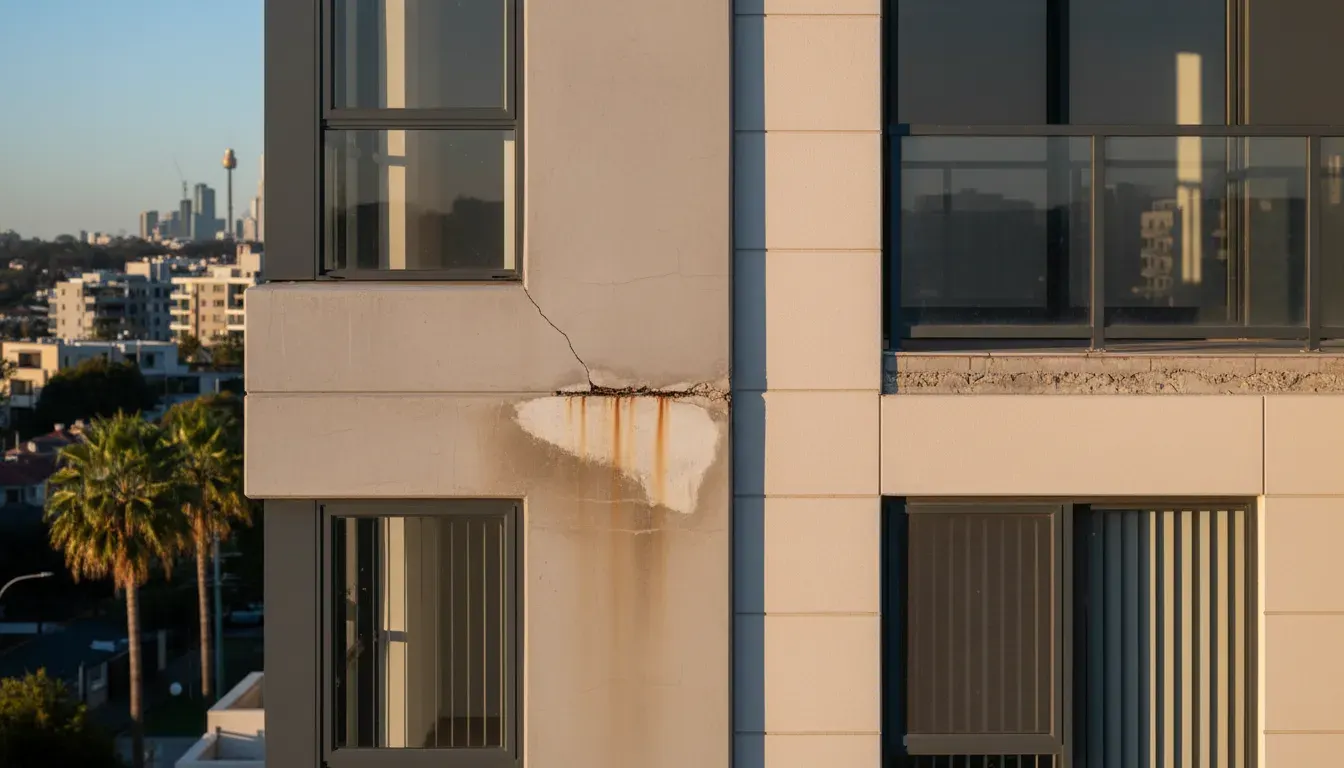
If you own, live in, or are considering purchasing an apartment built during this period, understanding these defects is essential for protecting your investment. The NSW Building Commissioner's audit programme has identified systemic issues across the sector, leading to new legislation requiring building certifiers to lodge certificates with the state government.
This article draws on our experience inspecting hundreds of Sydney apartments from this era. We cover the defects we see most often, their causes, and what you can do about them. For a complete overview, see our guide to building defect investigations.
85%
Buildings with waterproofing defects
$300K+
Average rectification cost per building
180,000
Units approved 2010-2018
The Scale of Sydney's Apartment Defect Crisis
The NSW Building Commissioner's investigations have revealed the extent of problems in recently constructed apartments. A 2019 audit of 225 buildings found that 39% had serious defects, while industry research suggests the actual figure is considerably higher when minor defects are included.
| Building Age | Defect Rate | Average Rectification Cost |
|---|---|---|
| 0-2 years old | 97% | $83,000 |
| 3-5 years old | 74% | $215,000 |
| 6-10 years old | 42% | $380,000 |
The older the building from this era, the higher the rectification costs tend to be. This is because defects that go unaddressed for years cause cascading damage. Water ingress through failed waterproofing, for instance, eventually damages structural steel, electrical systems, and internal finishes.
Most Common Defects in 2010s Apartments
Waterproofing Failures
Waterproofing defects are the single most common issue in 2010s apartments. These failures occur in bathrooms, balconies, rooftops, and basement car parks. Water finds its way through inadequate membranes, poorly sealed penetrations, and failed joints.
Warning Signs of Waterproofing Failure
Look for paint bubbling, musty odours, efflorescence (white salt deposits), and staining on ceilings below wet areas. By the time these signs appear, damage has often spread significantly.
The National Construction Code requires waterproofing to comply with AS 3740. During the boom, many installers cut corners or used inferior products. Rectifying waterproofing in an occupied building is expensive and disruptive.
Structural Cracking and Concrete Defects
Structural issues range from cosmetic cracking to serious concerns affecting building safety. We regularly find:
- Concrete cancer from insufficient cover to reinforcement
- Cracking at beam and column junctions
- Spalling concrete in basement car parks
- Settlement cracks from inadequate foundations
A defect investigation report can determine whether cracks are structural or cosmetic, and what remediation is required.
Fire Safety Non-Compliance
Fire safety defects are particularly concerning because they put lives at risk. Common issues include:
| Defect Type | Prevalence | Risk Level |
|---|---|---|
| Combustible cladding | 23% of buildings | Critical |
| Inadequate fire doors | 45% of buildings | High |
| Missing fire collars | 38% of buildings | High |
| Faulty smoke detection | 31% of buildings | Moderate |
Since the Grenfell Tower disaster in 2017 and the Neo200 fire in Melbourne, combustible cladding has received significant attention. NSW maintains a register of buildings with combustible cladding, and owners are required to remediate.
Defective Windows and Facades
Window and facade defects allow water and air infiltration. Common problems include poor installation, inadequate flashing, and incompatible materials that expand and contract at different rates.
Thermal Expansion
Sydney's temperature variations cause significant thermal movement in building facades. If expansion joints are inadequate or sealants are poor quality, cracks and gaps develop within a few years.
Why the 2010s Boom Produced So Many Defects
Several factors combined to create widespread quality problems:
Developer Cost Pressure
Intense competition led developers to squeeze construction costs. Subcontractors were selected on price rather than quality.
Skills Shortage
The construction boom outstripped the available workforce. Inadequately trained workers performed critical tasks like waterproofing.
Regulatory Gaps
Private certification created conflicts of interest. Certifiers were paid by developers, creating pressure to approve work.
Complex Building Designs
Modern apartments feature balconies, rooftop gardens, and intricate facades. Each junction and penetration is a potential failure point.
The NSW government has since introduced the Design and Building Practitioners Act 2020 and Residential Apartment Buildings Act 2020 to address these systemic issues.
What Apartment Owners Can Do
If you own or are buying an apartment from the 2010s construction boom, take these steps:
Before purchasing a 2010s apartment, a thorough apartment pre-settlement inspection can identify defects affecting your specific unit. For strata committees investigating building-wide issues, a comprehensive strata report documents defects and provides a basis for pursuing builders or developers.
Frequently Asked Questions
How do I know if my apartment building has defects?
Request the building's defect register and any building reports from your strata manager. Commission an independent inspection if concerns exist.
Strata schemes are required to maintain records of building defects and any reports commissioned. Your strata manager can provide these on request. Visible signs like water staining, cracking, or musty odours indicate problems, but many defects are hidden in wall cavities, roofs, and basement areas. Professional inspectors use thermal imaging and moisture meters to detect issues not visible to the naked eye.
Can I sue the developer for building defects in NSW?
Yes, but strict time limits apply. Major defects must be claimed within 6 years, and minor defects within 2 years of completion.
The Home Building Act 1989 provides statutory warranties that builders and developers must honour. For major defects affecting structural integrity or making the building uninhabitable, owners have 6 years from completion. For minor defects, the limit is 2 years. After these periods, claims become significantly more difficult. Many strata schemes from the early 2010s are now out of time for minor defect claims.
What is the most expensive defect to fix in apartments?
Combustible cladding replacement is typically the most expensive, often costing $20,000 to $50,000 per apartment to rectify.
Cladding remediation requires scaffolding the entire building, removing dangerous materials, and installing compliant replacements. For a 10-storey building, total costs can exceed $5 million. Waterproofing remediation is the second most expensive category, particularly when it requires removing tiles, replacing membranes, and repairing water-damaged structure.
Are all Sydney apartments from the 2010s defective?
Not all apartments have serious defects, but the majority have some issues. Buildings by reputable developers with quality builders generally perform better.
Research the developer and builder before purchasing. Some companies maintained high standards throughout the boom, while others consistently produced problematic buildings. Strata committee members often know the building's history and can provide valuable insight. Online forums also contain owner experiences with specific buildings.
What does a strata defect inspection cover?
A strata defect inspection covers all common property including the structure, facade, roof, basement, fire safety systems, and mechanical services.
The inspection follows Australian Standard AS 4349.1 and examines all accessible areas of common property. Inspectors document defects with photographs and assess their severity. The report typically categorises issues as critical, major, or minor, and provides estimated rectification costs. This document forms the basis for warranty claims, insurance claims, or legal action against builders.
How much does it cost to get an apartment building inspected for defects?
A comprehensive strata defect inspection typically costs $5,000 to $15,000 depending on building size and complexity.
The cost varies based on the number of storeys, total units, and accessibility of building components. Most strata schemes pay for these inspections from the administrative fund. Given that rectification costs often run into hundreds of thousands of dollars, the inspection cost represents excellent value. Some schemes stage inspections, starting with a preliminary assessment before commissioning detailed investigations of specific defects.
What is the NSW Building Commissioner doing about apartment defects?
The Building Commissioner audits new buildings, maintains a register of serious defects, and can issue stop-work orders and prohibition orders against practitioners.
Since 2019, the Building Commissioner has significantly increased regulatory oversight of the construction industry. New buildings must now have registered designs, and building practitioners face personal accountability for defective work. The Commissioner also runs an occupation certificate audit programme, inspecting buildings before residents move in. These measures aim to prevent the problems of the 2010s from recurring.
Should I buy an apartment built between 2010 and 2018?
You can buy safely with proper due diligence, but thorough inspections and strata record reviews are essential before committing.
Many apartments from this era are perfectly sound investments, particularly those built by established developers with good track records. However, buyer beware applies strongly. Review strata meeting minutes for discussions of defects, check the capital works fund balance, and commission a pre-purchase inspection that includes common property where possible. Buildings with active legal proceedings against developers warrant particular caution.
What are the warning signs when inspecting a 2010s apartment?
Look for water stains, cracking at corners and junctions, bubbling paint, rusty stains on concrete, and gaps around windows and doors.
In bathrooms, check for hollow-sounding tiles, grout cracks, and water pooling that does not drain towards the floor waste. On balconies, examine the junction between tiles and sliding doors, and look for cracking in rendered surfaces. In car parks, check for concrete spalling and rust staining. These visible indicators often point to larger hidden problems.
Can strata committees refuse to fix building defects?
No. Strata committees have a legal obligation to maintain and repair common property. Owners can compel action through NSW Civil and Administrative Tribunal.
If your strata committee is not addressing known defects, you can raise a motion at a general meeting. If that fails, an application to NCAT can force the owners corporation to take action. Defects that affect safety or habitability require prompt attention. Some committees delay repairs due to inadequate funds, which is why reviewing the capital works fund before purchase is important.
Key Takeaways
- Sydney apartments from 2010-2018 have high defect rates due to construction boom pressures
- Waterproofing failures affect approximately 85% of buildings from this era
- Statutory warranty periods of 2 years (minor) and 6 years (major) limit claim windows
- Always obtain strata records and commission independent inspections before purchasing
- Combustible cladding and fire safety defects require urgent attention and professional assessment
- The NSW Building Commissioner now maintains defect registers and audits buildings
- Rectification costs can exceed $300,000 per building for serious defects
- Buildings by reputable developers generally have fewer issues than those built on tight budgets
References and Resources
Related Articles
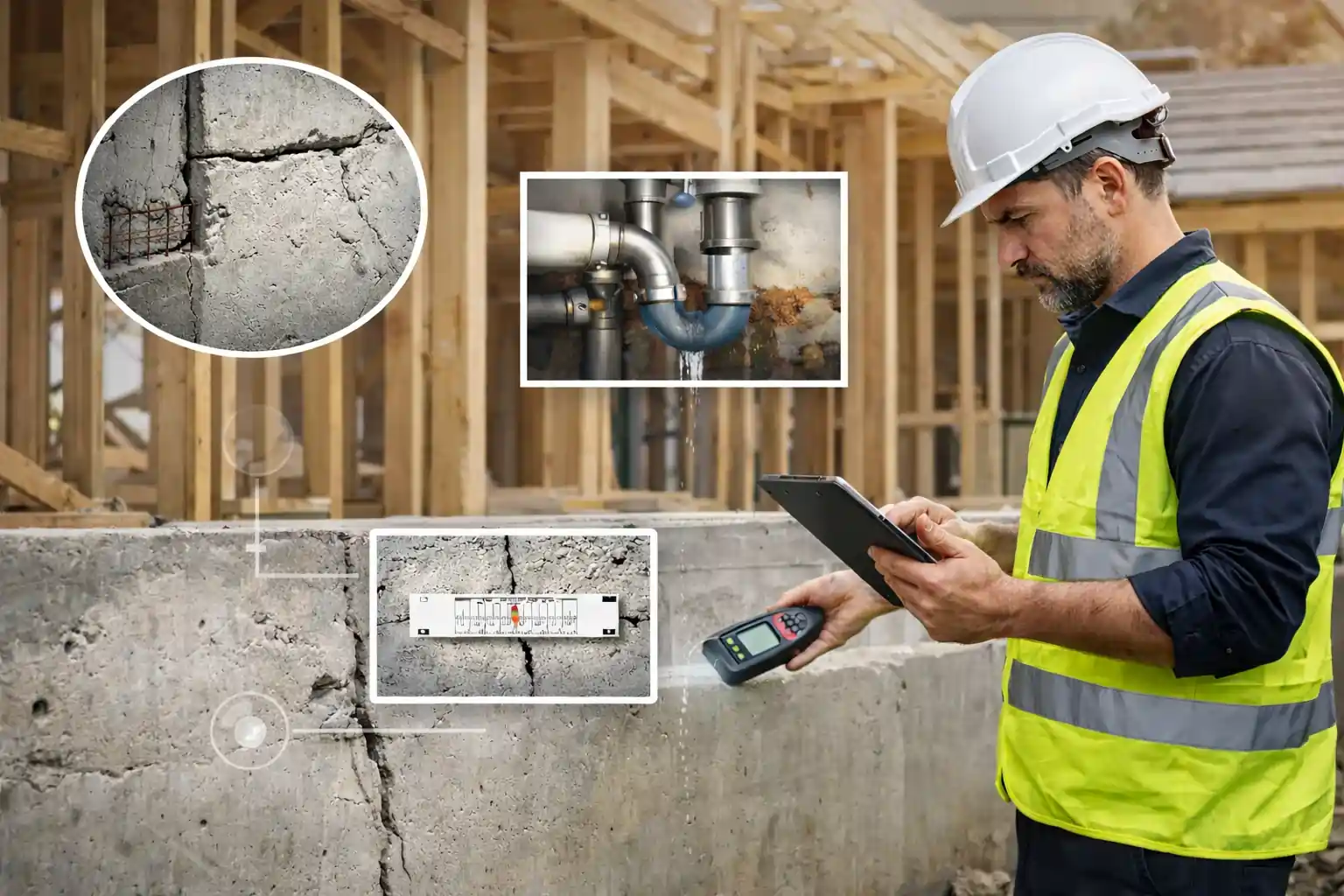
Construction Stage Defect Assessment for Early Fixes
Construction stage defect assessments are vital for protecting structural integrity. Defects caught early prevent escalation into costly issues that can increase project costs by up to 20%.
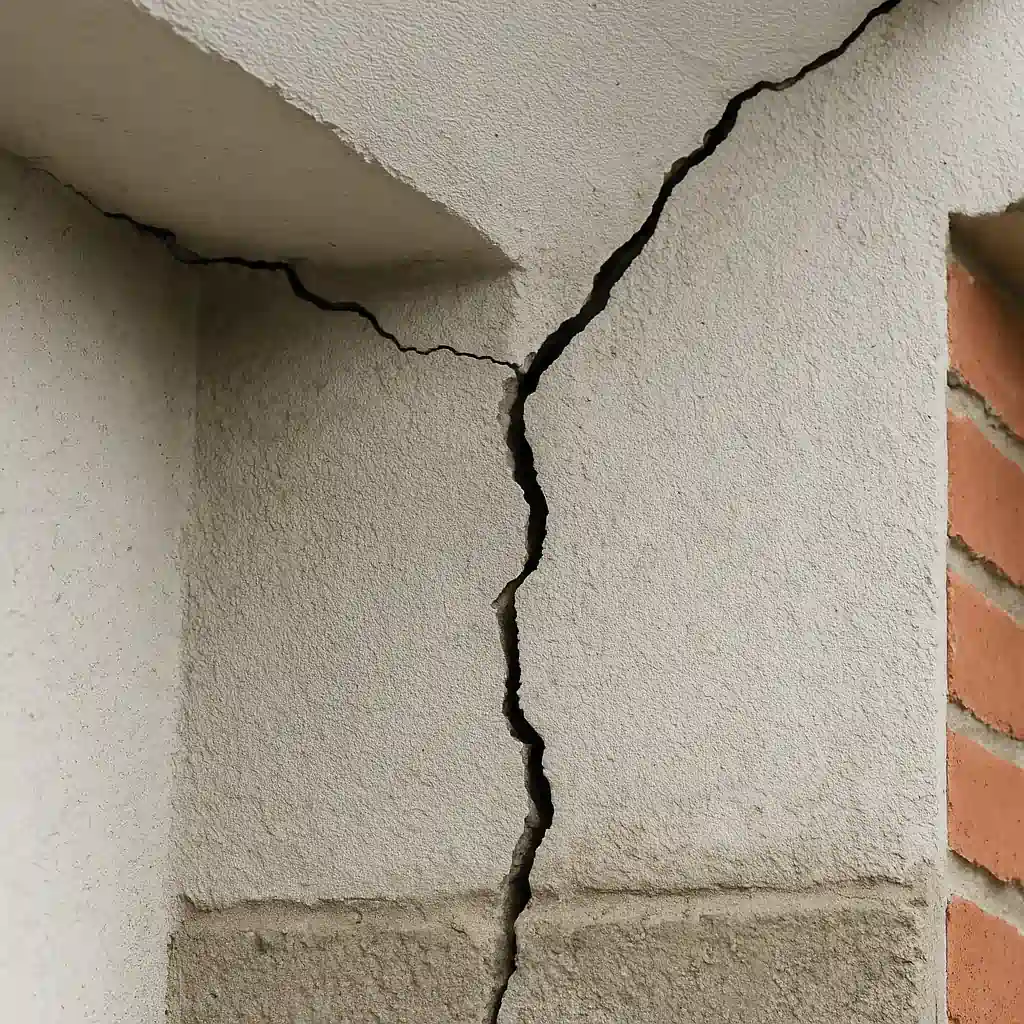
Top Warning Signs of Structural Defects in New Builds
Nearly 70% of newly built Australian homes show major defects. Learn the eight key warning signs of structural issues and how to protect your investment.
Structural Defect Inspections to Prevent Future Problems
Approximately one in five Australian homes experience structural issues. Learn how structural defect inspections can prevent expensive repairs and ensure safety.
Concerned About Your Apartment Building?
Our licensed inspectors have extensive experience identifying defects in 2010s Sydney apartments. Get the facts before problems escalate.