
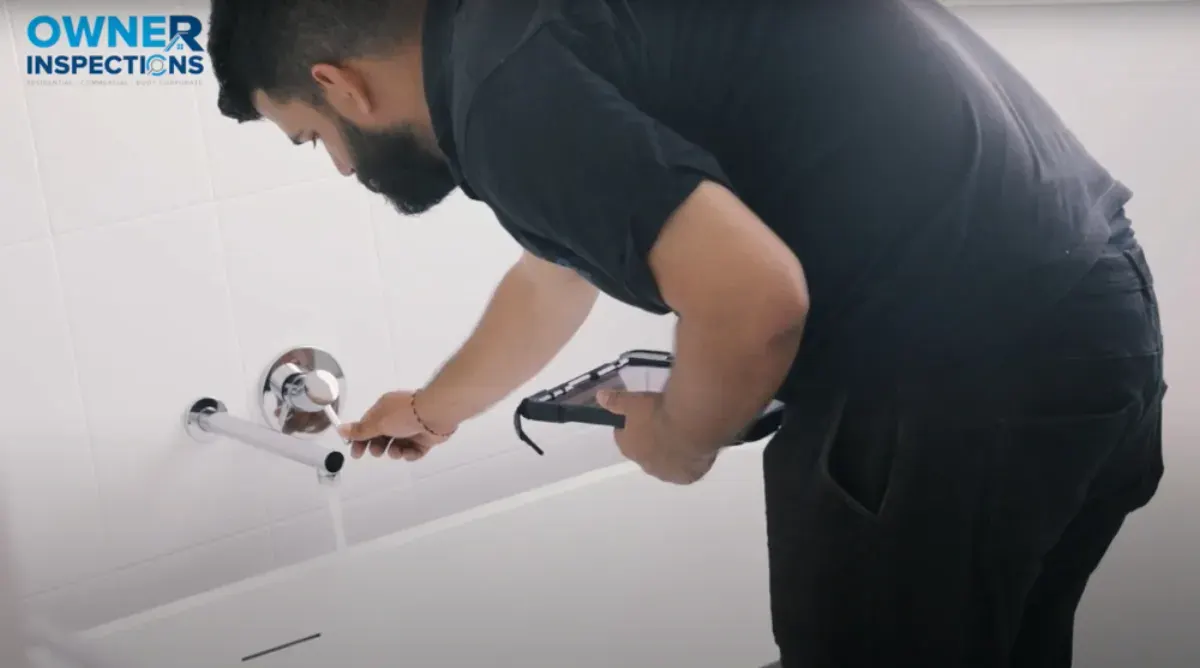
What is a building inspector?
A building inspector is someone who examines the condition of a building and writes down what they find. In the pre-purchase context, which is what most people mean by the term, the inspector has no statutory authority: they cannot order work, issue a notice, or stop a sale. Their power is entirely in the report, and in what you do with it.
That is worth separating from a building surveyor, who is a very different role. A building surveyor in Victoria is a statutory officer who issues building permits and occupancy permits, and who can issue building notices and orders under the Building Act 1993. An inspector tells you the balustrade is 830mm high and unsafe. A surveyor is part of the system that can compel someone to fix it. Readers conflate the two constantly, usually at exactly the moment they are trying to work out who to call.
What does a building inspector do in Australia?
Across Australia the job is broadly consistent. A pre-purchase inspector carries out a visual, non-invasive inspection to AS 4349.1, the Australian Standard for pre-purchase inspections of residential buildings, published by Standards Australia, and produces a written report identifying defects, safety hazards and areas requiring further investigation. Non-invasive is the load-bearing word: the inspector does not lift floor coverings, cut into walls, move heavy furniture, or dismantle anything. They report what can be seen, plus what the visible evidence reasonably implies.
What varies between states is not the method but the regulation around it, and the compliance code the inspector references. Registration and licensing of building inspectors are not uniform nationally. Queensland licenses completed residential building inspections through the QBCC. New South Wales does not license pre-purchase inspectors as such. Victoria registers building inspectors as a class of building practitioner, which is covered further down. If you are reading this outside Victoria, check your own state regulator rather than assuming the Victorian position applies.
One scope point to settle early: a standard building inspection is not a termite inspection. Timber pest work is carried out under a separate standard, AS 4349.3, and is usually quoted as a separate or combined service. If you want both, you have to ask for both. Our guide to how a building and pest inspection differs from a building inspection sets out exactly what each one covers.
What a building inspector does in Victoria specifically
In Victoria the inspector's work sits inside a particular conveyancing rhythm, and that rhythm is what makes timing so tight.
A Victorian vendor must give you a section 32 statement (the vendor statement, under section 32 of the Sale of Land Act 1962) before you sign. It discloses things like building permits issued for the property in the preceding seven years, rates, easements and title particulars. What it does not tell you is the condition of anything. A section 32 can be complete, accurate and entirely compliant while the house has a failed subfloor and a leaking shower. That gap is the inspector's whole job.
If you buy at a private sale, you generally have a cooling-off period of three clear business days after signing, and ending it costs you $100 or 0.2% of the purchase price, whichever is greater. If you buy at auction, there is no cooling-off period at all, and the same exclusion applies to a sale made within three clear business days before or after a publicly advertised auction. In practice this means Victorian buyers inspect before the auction, or they inspect inside a three business day window while already contractually exposed. Book the inspector before you bid, not after. Cooling off is also not a substitute for a building inspection clause: ending a contract in the cooling-off period costs you the penalty regardless of what the report found.
Victorian inspectors also do a job that has no equivalent in most other states: the section 137B report. If an owner-builder sells a home within six years and six months of the occupancy permit or certificate of final inspection, section 137B of the Building Act 1993 requires them to obtain a report on the condition of the building work from a prescribed practitioner, being a registered building inspector or building surveyor, and to hold the required insurance where the work exceeded the relevant threshold. That threshold moved recently: domestic building insurance applied to work over $16,000 under contracts signed before 1 July 2026, and the Home Warranty scheme applies to eligible work valued over $20,000 from that date. Anything you read that still quotes $16,000 as the current threshold is out of date. If you are buying from an owner-builder in Victoria, that report should exist. If it does not, that is a problem for the vendor before it is a problem for you, and it is worth raising with your conveyancer immediately.
What does a building inspector check in Victoria?
Here is what actually happens in the two hours or so an inspector is at the property, roughly in the order it happens. This is the part most definition pages leave out. It is the same process Owner Inspections follows for building inspections across Victoria, whether the property is in Melbourne, Geelong, Ballarat or Bendigo.
The exterior and the site, first. The inspector walks the perimeter before going inside, because the outside usually explains the inside. They are looking at ground levels against the weep holes and the damp proof course, at surface drainage and where stormwater discharges, at cracking in brickwork and its pattern (stepped cracking at a corner reads very differently from a hairline crack mid wall), at retaining walls, and at the condition of paths and driveways where they abut the house. Cracks get measured, not just noted: AS 2870 classifies damage in masonry from Category 0 (hairline, under 0.1mm) through Category 1 (fine, under 1mm) and Category 2 (noticeable, up to 5mm) to Category 3 (5mm to 15mm) and Category 4 (extensive, 15mm to 25mm). That number is what separates a cosmetic patch from an engineer's referral, so if a report says "some cracking noted" without a width, it is not doing its job. Melbourne's reactive clay soils, particularly through the west and the north, produce the seasonal movement that shows up here first.
The roof exterior and roof space. From ground level or a ladder, the inspector assesses tile or sheet condition, ridge capping and pointing, flashings, valleys, and the gutters and downpipes. Then, if there is safe access, they enter the roof void. This is where an inspection earns its fee: sagging or cut roof timbers, water staining on the underside of the sarking, daylight through the roof, undersized or bowed ceiling battens, and old wiring are all visible up there and nowhere else.
The interior, room by room. Walls, ceilings and cornices for cracking and movement, floors for level and springiness, windows and doors for operation and for whether they still sit square in their frames. Wet areas get particular attention: the inspector will use a moisture meter around shower bases, at the base of walls adjoining showers, and under sinks. A failed shower is one of the most common significant findings in an established Victorian home, and one of the most expensive: a failed waterproofing membrane in a second storey bathroom is, as at 2026, typically eight to fifteen thousand dollars to rectify, because the floor has to come up and everything above it has to be reinstated.
Safety items. Smoke alarm presence and placement. Every Victorian home must have working smoke alarms; homes built after 1 August 1997 must have mains powered alarms rather than battery only ones, and homes constructed or largely renovated after 1 May 2014, where more than one alarm is required, must also have them interconnected, so that one alarm sounding sets off the rest. Also balustrade height and gaps, the condition of the switchboard and whether safety switches are present, and pool or spa barriers where they exist. Note the limit here: an inspector reports what they can see, and a pre-purchase report is not a compliance certificate. In Victoria a pool or spa barrier certificate is a separate document, issued by a registered building surveyor, building inspector, pool inspector or municipal building surveyor, and lodged with the council on a four year cycle.
The subfloor. For the many Victorian homes on stumps or piers, the subfloor is where the structural truth lives: stump condition and settlement, bearer and joist condition, ventilation, ground moisture and drainage, and any evidence of timber pest activity. Weatherboard homes across Melbourne's inner north, inner west and bayside suburbs frequently have original timber stumps well past their design life, and you cannot see any of it from the living room.
What stops an inspection cold
Worth knowing before the day, because these are the things that turn a full report into a report full of caveats:
- A locked or inaccessible subfloor. If the access hatch is screwed shut, blocked by stored goods, or the crawl space is under 400mm of clearance, the inspector cannot safely enter and will note the subfloor as not inspected.
- No roof void access, or insulation covering the manhole. Loose fill insulation over the manhole, or a manhole located inside a built-in wardrobe with a full shelf across it, both end the roof inspection.
- A tenant who was not told. If the property is tenanted and proper notice was not given, the inspector may be refused entry at the door. This is the single most common reason an inspection is rebooked.
- Weather. Inspectors will not go onto a wet roof or into a roof void during a storm. Safety limits are not negotiable and a rescheduled inspection is better than a rushed one.
- Solar panels and stored goods. A roof covered in panels limits what can be assessed underneath; a garage stacked to the ceiling limits what can be assessed behind.
Every one of these appears in the report as a limitation. A report with four limitations is a much weaker document than a report with none, and it is usually fixable with one phone call to the agent beforehand.
What would fail a building inspection?
Nothing, strictly, and this is the most useful thing on this page.
A pre-purchase building inspection does not issue a pass or a fail. That framing is imported from council and occupancy inspections, where a statutory inspector genuinely does approve or reject work at a stage of construction. A pre-purchase report does something different: it lists what was found and grades each item by severity, typically as a major defect, a minor defect, or a safety hazard, along with anything requiring further investigation by a specialist. There is no threshold at which a house is declared to have failed. There is only a report, and your judgment about what it means for your offer.
That said, the findings that most often change a buyer's mind are consistent:
- Major structural defect. Significant footing or stump movement, cracked or displaced brickwork with a structural pattern, sagging or failed roof framing. These usually attract a recommendation for a structural engineer, and the engineer's report is what determines the cost.
- Active termite activity. Live termites or fresh workings found during a combined inspection. Victoria has lower termite pressure than Queensland or northern New South Wales, but activity is well documented in parts of Melbourne's outer east, north east and the Yarra Valley, including Yarra Ranges and Manningham, both designated termite-prone areas under the Building Regulations 2018 (Yarra Ranges' designation excludes garages, carports and non-habitable outbuildings).
- Unsafe electrical work. No safety switch on power circuits, a fuse board still running rewireable ceramic fuses, visible unenclosed or damaged wiring, or obvious unlicensed work. Reported as a safety hazard with a licensed electrician recommendation.
- Non-compliant balustrades and decks. Where it is possible to fall one metre or more, the National Construction Code requires a barrier at least one metre high at landings and balconies, 865mm above stair nosings, with openings that will not pass a 125mm sphere. Older decks routinely fail both tests, and elevated decks with corroded fixings are a genuine collapse risk rather than a paperwork issue.
- Water ingress. Failed shower waterproofing, roof leaks, rising or lateral damp, and inadequate site drainage. Cheap to find, expensive to fix, and the most common reason a buyer renegotiates.
None of these stop a sale by themselves. They change the number, or they change your mind. If you are weighing up whether a finding is serious enough to walk, our piece on defects serious enough to walk away from a purchase works through where that line usually sits.
How long does a building inspection take in Victoria?
Budget one and a half to two and a half hours on site for a standard three bedroom home, and expect the written report within 24 hours of the inspection, often the same evening.
What pushes it longer: floor area and the number of separate structures (a house plus a bungalow plus a garage is three inspections, not one), difficult roof or subfloor access, a period home with multiple additions from different eras, extensive landscaping or retaining walls, and whether a timber pest inspection is being carried out at the same time. A combined building and pest inspection on a large or complex property can run beyond three hours.
What makes it shorter is rarely good news. An inspection that finishes in 45 minutes generally means the inspector could not get into the roof or under the floor.
How much does a building inspection typically cost in Melbourne?
As at August 2026, a standalone pre-purchase building inspection in metropolitan Melbourne typically falls in the $400 to $700 range, with a combined building and timber pest inspection generally $550 to $900. A large, multi-storey or heavily extended period home can sit above both. Treat those as ranges rather than quotes, and get a written price for the specific address before you book.
For context, our national article on typical pre-purchase inspection costs across Australia puts the range at $300 to $800. That figure is national, not Melbourne specific, and Melbourne sits within it rather than below it.
What moves the price:
- Property size and type. Priced on floor area and number of bedrooms. Apartments are usually cheaper; a large double storey home with outbuildings costs more.
- Combined building and pest. Adding timber pest typically adds $150 to $250 rather than doubling the fee, because the inspector is already on site.
- Distance. Outer metropolitan and regional Victorian addresses often carry a travel component.
- Timing. A pre-auction inspection booked for tomorrow morning, or a weekend inspection inside a three business day cooling-off window, can attract a priority fee. Booking early is the cheapest thing you can do.
Be wary of anything priced conspicuously below the range. The cost difference between a thorough inspection and a cursory one is a couple of hundred dollars. The cost difference between finding a failed second storey shower and not finding it is measured in tens of thousands, because rectification means removing the floor, replacing the waterproofing membrane and reinstating everything above it.
Who pays for a building inspection?
The buyer, in almost all cases. You commission the inspector, you pay the fee, the report is yours, and the inspector owes their duty to you. That is the arrangement worth paying for.
You will sometimes be offered a report the vendor or agent already has, and it may well be a competent report by a competent inspector. The problem is not quality, it is who it was written for. A vendor-supplied report was commissioned by the seller, its scope was set by the seller, and it may be months old. You generally have no contractual relationship with the inspector who wrote it, which means limited recourse if something material was missed. Read it if it is offered, treat it as useful background, and then engage your own inspector anyway.
If you are buying, book an independent pre-purchase building inspection in your own name and to your own brief, and be there for the walkthrough at the end if you can. Twenty minutes with the inspector on site is worth more than an hour re-reading the report. For a property anywhere in the state, our Victorian inspection team covers Melbourne and the regional centres.
The exception worth knowing: for owner-builder sales in Victoria, the section 137B report is obtained and paid for by the vendor, because the obligation sits on them. You should still commission your own inspection on top of it.
Frequently Asked Questions
What is a building inspector?
What does a building inspector do in Australia?
What would fail a building inspection?
How long does a building inspection take in Victoria?
Who pays for a building inspection?
What qualifications does a building inspector need?
What qualifications does a building inspector need?
This is where the honest answer is "it depends on the state", and where Victorian buyers are usually told something misleading.
In Victoria, building inspector is a registered class of building practitioner under the Building Act 1993, administered by the Building and Plumbing Commission, which is the trading name the Victorian Building Authority now operates under. The classes are Building Inspector (unlimited) and Building Inspector (limited), and registered inspectors appear on a public register anyone can search. What that registration actually covers is statutory work: inspecting building work at permit stages on behalf of the relevant building surveyor, and preparing section 137B reports.
Here is the part that matters to a buyer. A pre-purchase inspection is not a permit function, and Victoria has no licence class that exists for it. Anyone may legally inspect a house you are thinking of buying and write you a report about it. Queensland is the outlier that does license this work, through the QBCC's completed residential building inspection licence; New South Wales, like Victoria, does not. So in Victoria the quality floor is set by who you choose rather than by the law, and the checks below are not optional extras. What to look for:
- Registration with the BPC as a building inspector, or registration as a builder, or membership of a recognised inspection body.
- Current professional indemnity insurance, and ask for the certificate of currency rather than taking it on trust. This is your only real recourse if something material is missed.
- A sample report you can read before booking. If it is four pages of tick boxes and stock photos, look elsewhere.
- Explicit confirmation that the inspection is carried out to AS 4349.1.
Outside Victoria the rules genuinely differ, so do not carry this answer across a border. Our comparison of how a building surveyor's role differs from an inspector's covers the regulated and unregulated boundary in more detail, which is the part most people get wrong when they are deciding who to engage.
How do I become a building inspector in Australia?
Briefly, because most people reading this page are buying a house rather than changing careers.
The common route is a trade or construction background followed by a qualification such as a Diploma of Building and Construction (Building), CPC50220, or an Advanced Diploma, then documented industry experience, then registration with the state regulator where the state requires it. In Victoria that means applying to the Building and Plumbing Commission for registration in the inspector category, which involves demonstrating qualifications and experience, passing the relevant assessment, and holding required insurance. Registration is what lets you do permit-stage and section 137B work; it is not what lets you carry out pre-purchase inspections, which is why many practising pre-purchase inspectors are registered builders rather than registered inspectors. Requirements, categories and assessment processes vary by state, so start with your own regulator rather than a generic national description.
How clean does my house need to be for an inspection?
Not very. Tidiness is almost irrelevant. Access is everything.
If you are the owner or the vendor, the useful preparation list is short:
- Clear the roof void manhole. Empty the wardrobe shelf underneath it, move whatever is stacked below it, and make sure a ladder can be set up beneath it.
- Unlock and clear the subfloor access. Move the stored boxes, unscrew the hatch, and unchain the gate that leads to it.
- Open access to the meter box and switchboard, and unlock the side gates so the inspector can walk the full perimeter.
- Move cars off the driveway and clear the garage floor enough to see the slab and the walls.
- Have keys for everything, including the shed, the bungalow, the garage and any external laundry.
- If the property is tenanted, give proper notice. This is the one that actually derails inspections.
Nobody is grading your kitchen. The inspector wants to get into the four places you never go.
Frequently asked questions
QIs a building inspection compulsory in Victoria?
No. There is no legal requirement for a buyer to obtain a pre-purchase building inspection in Victoria, and no requirement for a vendor to supply one in an ordinary sale. It is voluntary and it is entirely on you to arrange. The exception is the owner-builder situation described above, where section 137B of the Building Act 1993 imposes an obligation on the vendor.
QCan I attend the building inspection?
Yes, and you should. Most inspectors are happy for you to arrive for the last 20 or 30 minutes and walk the property with them. Seeing the crack they are describing, standing in front of the shower with the moisture meter reading, changes how you read the report. Ask when you book, because it needs to be arranged with the agent.
QWhat is excluded from a standard building inspection report?
More than people expect. A standard AS 4349.1 inspection is visual and non-invasive, so it excludes anything concealed within walls, floors or ceilings, and anything the inspector could not safely reach. It also generally excludes timber pest activity (separate service), the operation of plumbing, electrical, gas and air conditioning systems (licensed trades), swimming pool and spa shells and their barrier certification, asbestos identification, and any estimate of what rectification will cost. Read the limitations and exclusions section of your report first, not last. It tells you what you still do not know.
Pre-Purchase House Inspection Cost in Australia
Pre-purchase house inspection costs in Australia range from $300 to $800 depending on property size, location, and inspection type.
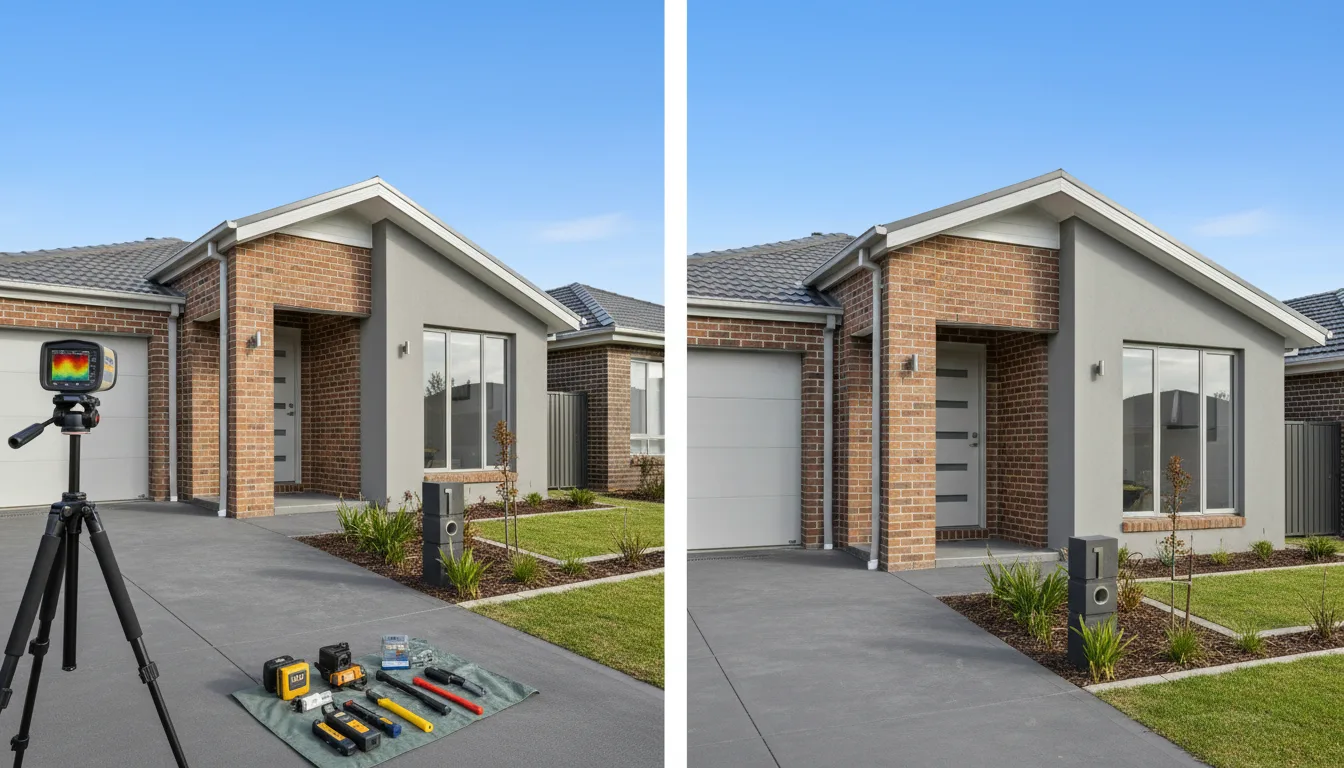
Building Inspection vs Building and Pest Inspection: Which Do You Need?
A building inspection covers structural and safety defects, while a building and pest inspection adds a full termite and timber pest check.
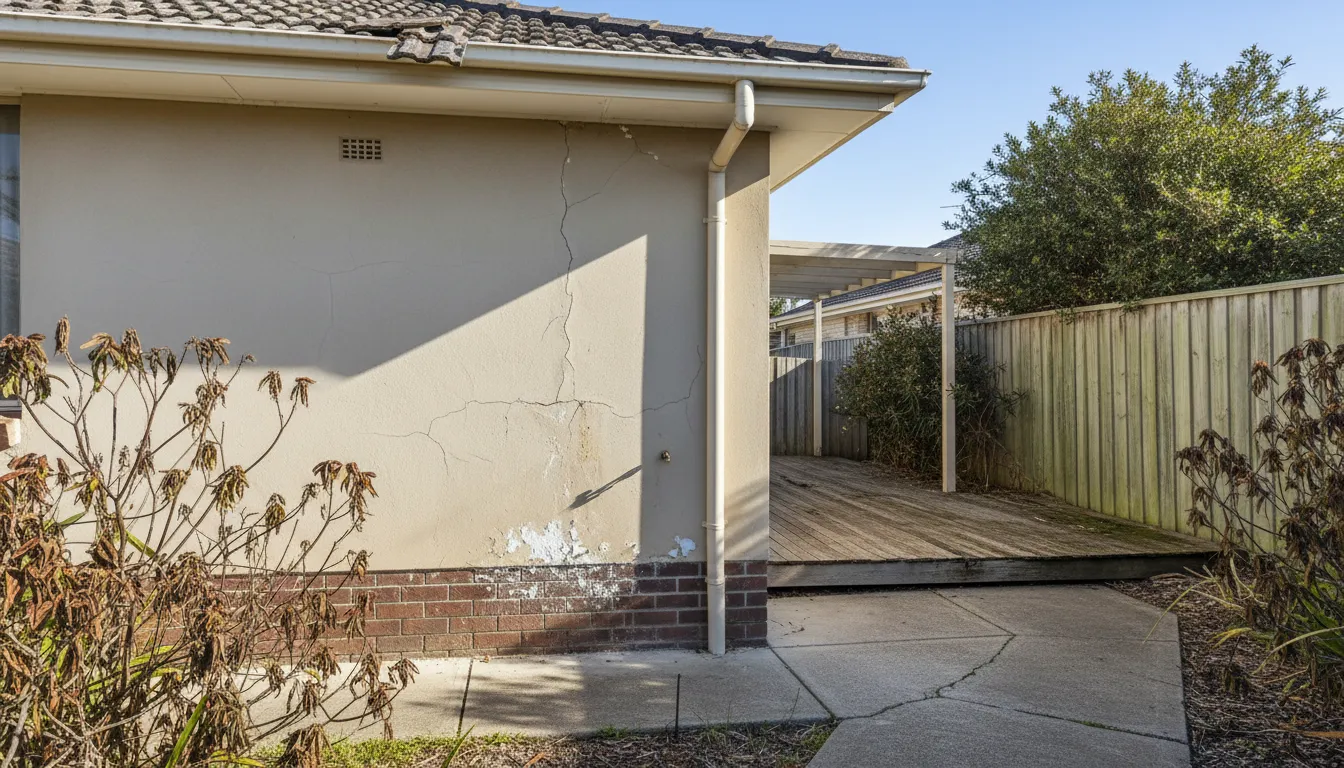
What Defects in a 10-Year-Old Property Should Make You Walk Away?
Buying a 10-year-old property in Australia comes with specific risks. Learn which defects found during building inspections are serious enough to reconsider.