
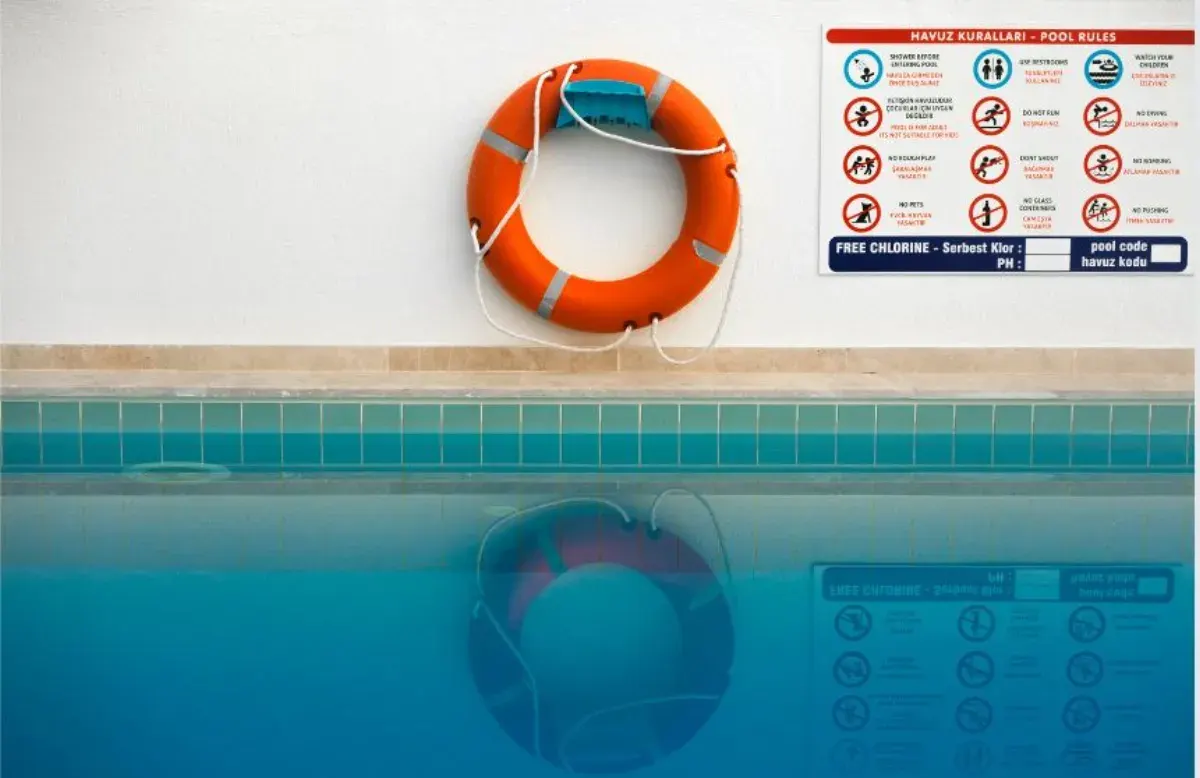
Whether you are a homeowner, a buyer considering a property with a pool, or a landlord, understanding the pool inspection process helps you prepare and ensures nothing is overlooked.
Queensland Pool Safety Laws
Queensland pool safety legislation requires all pools and spas associated with residential properties to have a valid pool safety certificate. The key requirements include:
Barrier (Fencing) Requirements
Non-Climbable Zone (NCZ)
The NCZ is one of the most critical and frequently failed aspects of pool safety compliance. The NCZ extends 900mm from the inside of the pool barrier and 300mm from the outside. Within this zone, there must be no objects that a child could use to climb over the barrier, including:
- Pot plants, garden furniture, or equipment stored near the fence
- Tree branches or vegetation within climbing distance
- Horizontal rails or decorative features that provide footholds
- Retaining walls, garden beds, or structures adjacent to the barrier
Additional Requirements
- A CPR sign must be displayed prominently in the pool area
- Windows opening into the pool area must be restricted to 100mm opening or fitted with a compliant screen
- Doors opening directly into the pool area must be self-closing and self-latching
- Pool safety certificates must be current when selling or leasing a property with a pool
Scheduling Your Inspection
Determine When an Inspection Is Required
A pool safety inspection is required before selling or leasing a property with a pool, when a pool safety certificate has expired, or when you want to confirm your pool meets current safety standards. Certificates are valid for one year for shared pools and two years for non-shared pools.
Choose a Licensed Pool Safety Inspector
In Queensland, pool safety inspections must be carried out by a licensed pool safety inspector. Check the QBCC register to confirm the inspector holds the appropriate licence. Look for inspectors with local Brisbane experience who understand the specific challenges of the region.
Book the Inspection
Contact the inspector to arrange a suitable time. Most inspections take between 30 minutes and one hour depending on the pool size and complexity. Ensure you will be available or that someone can provide access to the property.
Preparing for the Inspection
Proper preparation can help the inspection run smoothly and increase the likelihood of a pass on the first visit.
During the Inspection
During the inspection, the licensed inspector will systematically assess all aspects of the pool safety barrier and the pool environment. The inspection typically covers:
Barrier assessment:
- Height of the barrier at all points around the pool
- Spacing between vertical members
- Condition and integrity of barrier materials
- Gaps beneath the barrier and at junction points
Gate and door assessment:
- Self-closing mechanism function from multiple opening angles
- Self-latching mechanism engagement
- Latch height and shielding compliance
- Hinge condition and alignment
NCZ assessment:
- Objects within the 900mm internal zone and 300mm external zone
- Climbable features on or near the barrier
- Adjacent structures, retaining walls, and garden features
General assessment:
- CPR signage presence and condition
- Window and door compliance where they open to the pool area
- Overall condition of the pool surrounds
After the Inspection
Following the inspection, one of two outcomes occurs:
If the pool passes: The inspector issues a pool safety certificate. This certificate is valid for one year (shared pools) or two years (non-shared pools) and must be registered on the Queensland pool safety register.
If the pool fails: The inspector provides a non-conformity notice detailing each item that does not meet the standard. The property owner is given a reasonable timeframe to rectify the issues. Once rectification is complete, a re-inspection is conducted to confirm compliance before a certificate is issued.
Common rectification items are often straightforward and inexpensive to address. Clearing the NCZ, adjusting a gate latch, or installing a CPR sign are all tasks that can typically be completed quickly. More significant items such as replacing barrier sections or modifying gates may require a tradesperson.
Common Inspection Findings
Structural Issues
- Cracked or deteriorated pool coping
- Damaged or rusted fence panels and posts
- Settled or uneven pool surrounds creating trip hazards
- Cracking in the pool shell or deck area
Barrier Non-Compliance
- NCZ violations from objects, vegetation, or structures near the barrier
- Gate mechanisms that fail to self-close or self-latch reliably
- Gaps exceeding 100mm beneath the barrier or at intersections
- Barrier height less than 1,200mm at any point
Equipment and Filtration
- Non-functional or inadequately sized filtration equipment
- Missing or damaged skimmer baskets and grate covers
- Non-compliant suction outlet covers posing entrapment risk
- Electrical equipment not compliant with AS/NZS 3000
Water Quality
- Algae growth indicating inadequate sanitation or filtration
- Water clarity issues reducing visibility of the pool floor
- Chemical levels outside recommended ranges
Hiring a Pool Inspector
When selecting a pool safety inspector in Brisbane, consider the following criteria:
Frequently Asked Questions
How often do I need a pool safety certificate in Queensland?
Pool safety certificates are valid for one year for shared pools and two years for non-shared pools. You need a current certificate to lease. You can sell without one by giving the buyer a Form 36 notice, and the buyer then has 90 days from settlement to get one.
What happens if my pool fails the inspection?
The inspector will issue a non-conformity notice listing all items that do not meet the standard. You are given time to rectify these items. Once completed, a re-inspection is conducted. If all items pass, the certificate is issued.
How much does a pool inspection cost in Brisbane?
Pool safety inspections in Brisbane typically cost between $150 and $300 depending on the inspector and the complexity of the pool and barrier setup. Re-inspection fees, if required, are usually lower.
What is the non-climbable zone and why does it matter?
The non-climbable zone (NCZ) is the area around the pool barrier that must be kept clear of objects a child could use to climb over the fence. It extends 900mm from the inside and 300mm from the outside of the barrier. NCZ violations are one of the most common reasons for inspection failure.
Can I sell a property without a pool safety certificate?
In Queensland, a pool safety certificate must generally be provided before settlement when selling a property with a pool. Alternatively, a notice of no pool safety certificate can be given, but the buyer must obtain a certificate within a specified timeframe after purchase.
Do I need a pool fence if I have a spa?
Yes. In Queensland, spas with a depth greater than 300mm are classified as swimming pools and must comply with the same fencing and safety requirements. A lockable, compliant safety cover may be accepted as an alternative barrier for some spas.
What is the penalty for not having a pool safety certificate?
Penalties for non-compliance with Queensland pool safety laws can include fines exceeding $2,000 for individuals. More importantly, non-compliant pools pose a genuine drowning risk, particularly to young children.
Can my house wall be used as part of the pool barrier?
Yes, a house wall can form part of the pool barrier provided that any windows or doors in the wall that open to the pool area comply with the relevant safety requirements. Windows must be restricted to 100mm opening or fitted with compliant screens, and doors must be self-closing and self-latching.
How long does a pool inspection take?
Most pool safety inspections take between 30 minutes and one hour, depending on the size and complexity of the pool, barrier, and surrounds. Larger properties with multiple access points or complex barrier arrangements may take longer.
Do above-ground pools need to comply with fencing laws in Queensland?
Yes. Above-ground pools with a depth greater than 300mm must comply with Queensland pool safety laws. The pool wall itself may form part of the barrier if it meets the height and non-climbable zone requirements, but a compliant gate and access restriction are still required.
Key Takeaways
- Approximately 18% of Brisbane households have a swimming pool, above the national average of 13%
- Queensland requires a valid pool safety certificate when selling or leasing a property with a pool
- Pool barriers must be at least 1,200mm high with self-closing, self-latching gates
- The non-climbable zone is the most commonly failed aspect of pool safety inspections
- Pool safety certificates are valid for one year (shared pools) or two years (non-shared pools)
- Preparation before the inspection, including clearing the NCZ and testing gates, improves first-pass rates
- Only licensed pool safety inspectors can issue pool safety certificates in Queensland
References and Resources
Related Articles
Common Swimming Pool Defects: What You Need to Know
With approximately one in seven Australian households owning a pool or spa, pool defects are a widespread concern. Cracks, leaks, staining, scaling, corrosion, and algae growth can all compromise pool safety and lead to expensive repairs. This guide covers the most common defects, their causes, and how regular inspections help catch problems early.
Pool Fence Regulations in NSW
Every NSW pool or spa that can hold more than 30cm of water needs a child-resistant barrier at least 1.2m high, with gaps under 10cm, a 90cm non-climbable zone and a gate that self-closes and self-latches. This guide covers the measurements, which standard applies to your pool, exemptions, fines, and what you need to sell or lease.

What Does a Building Inspection Cover?
Building inspections serve as a critical investment safeguard, examining structural integrity, electrical systems, plumbing, and more before property purchase.
Need a Pool Inspection in Brisbane?
Our licensed inspectors conduct thorough pool safety inspections across Brisbane and South East Queensland. Ensure your pool is compliant and safe.