
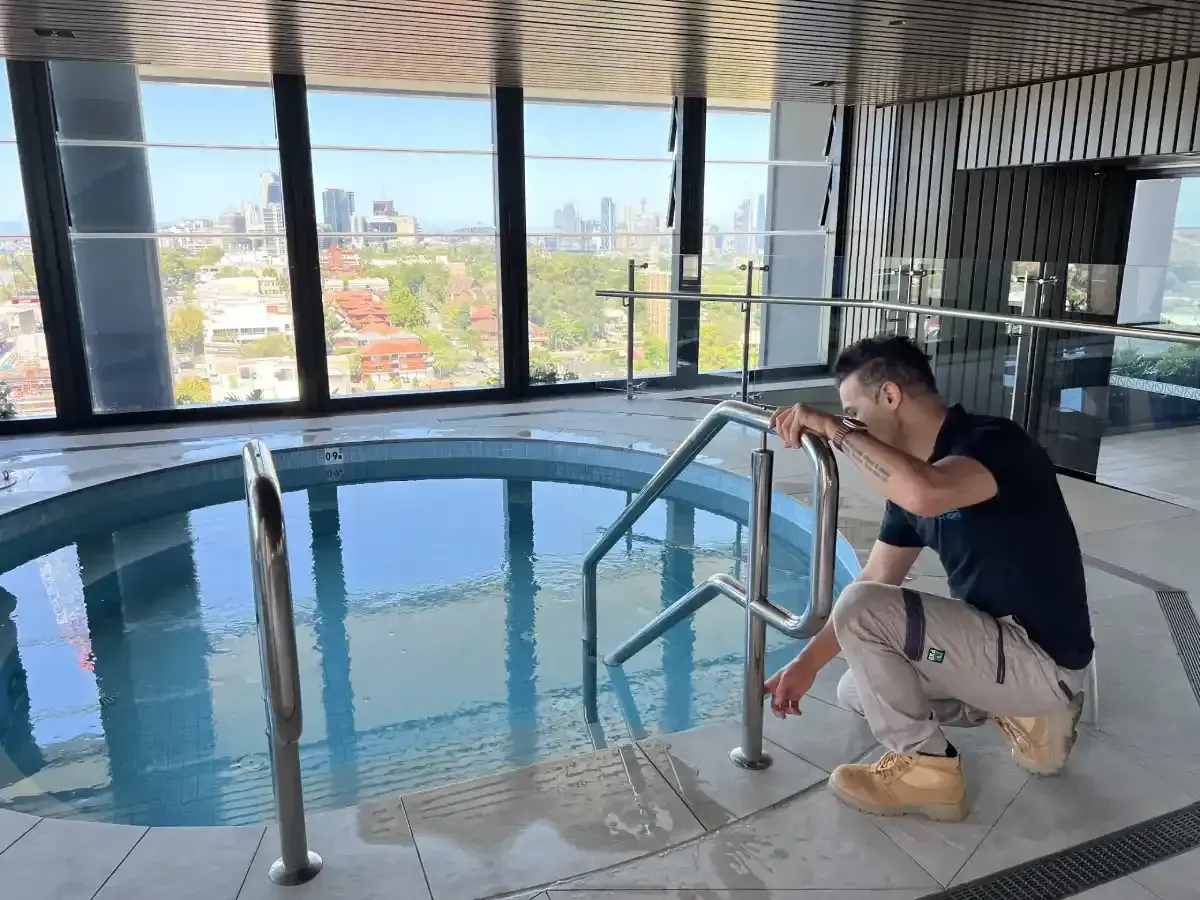
These rules come from the Swimming Pools Act 1992 and Australian Standard AS 1926.1, and the version of the standard that applies depends on when your pool was built. The pool must also be registered on the NSW Swimming Pool Register, and you need certificates to sell or lease. A penalty notice for most barrier offences is $550, and a court can impose more.
Quick Summary: NSW Pool Fence Rules Every Homeowner Should Know
- Who it applies to: any pool or spa that can hold more than 30cm of water, including portable and inflatable pools.
- Height: at least 1.2m from finished ground level, or 1.8m where a boundary fence is part of the barrier.
- Gaps: no more than 10cm under the fence or between vertical bars.
- Non-climbable zone: 90cm clear of footholds, measured in an arc from the top of the fence, plus 30cm inside the pool area.
- Gate: swings outward away from the pool, self-closes from any open position, and self-latches.
- Paperwork: registration on the NSW Swimming Pool Register, plus certificates when you sell or lease.
Why NSW Pool Fence Regulations Matter
NSW pool fence regulations exist because a child can drown in a backyard pool in seconds and without a sound, and a compliant barrier that keeps them out is the most reliable protection. According to Royal Life Saving Australia, backyard swimming pools remain one of the leading locations for drowning incidents involving children under five years old.
For homeowners, understanding NSW pool fence regulations is more than a legal requirement. Pool safety laws affect:
- Property compliance
- Insurance obligations
- Property sales and leasing
- Renovation approvals
- Child safety responsibilities
Many homeowners incorrectly assume their existing pool barriers still comply with current regulations. However, landscaping changes, deteriorating fences, faulty gates, and outdated barrier designs can all lead to non-compliance.
NSW homeowners, builders, developers, property managers, and real estate professionals should regularly review pool fence compliance requirements to avoid penalties and improve safety outcomes.
Understanding Pool Fence Regulations in NSW
NSW pool fencing is governed by the Swimming Pools Act 1992 and the Swimming Pools Regulation 2018, which call up Australian Standard AS 1926.1 for the barrier itself. The rules apply to any pool or spa that can hold more than 30cm of water, and every such pool must be registered on the NSW Swimming Pool Register.
The regulations apply to:
- In ground swimming pools
- Above ground pools
- Inflatable pools
- Portable pools
- Outdoor spas holding more than 30cm of water
The primary goal of NSW pool fence regulations is to prevent unsupervised access by young children.
Pool regulations NSW homeowners need to understand cover fence height, gate operation, non climbable zones, pool registration, and compliance certification.
NSW Pool Fence Legal Requirements
Pool owners must ensure their swimming pool barriers comply with current NSW pool fencing regulations.
| NSW Pool Fence Requirement | NSW Standard |
|---|---|
| Minimum pool fence height | 1.2m |
| Boundary fence height | 1.8m |
| Maximum gap beneath fence | 100mm |
| Maximum spacing between vertical bars | 100mm |
| Pool gate operation | Self closing and self latching |
| Non climbable zone clearance | 900mm |
Consequences of Non-Compliance with NSW Pool Fence Rules
Failure to comply with NSW pool fence regulations can lead to:
- Council penalties
- On-the-spot fines
- Delayed property settlements
- Legal action
- Insurance complications
- Increased liability following accidents
Non-compliant pool barriers also increase the risk of child drownings and serious injuries.
Note
These are listed by NSW Government on its pool owner obligations page. The exact standard that applies can vary based on when the pool was built and whether the barrier was altered later.
NSW Pool Fence Requirements for Homeowners
A NSW pool fence must be at least 1.2m high from finished ground level, leave no gap over 10cm at the bottom or between vertical bars, keep a 90cm non-climbable zone clear, and use a gate that swings away from the pool and closes and latches by itself. Where a boundary fence forms part of the barrier, it must be 1.8m high.
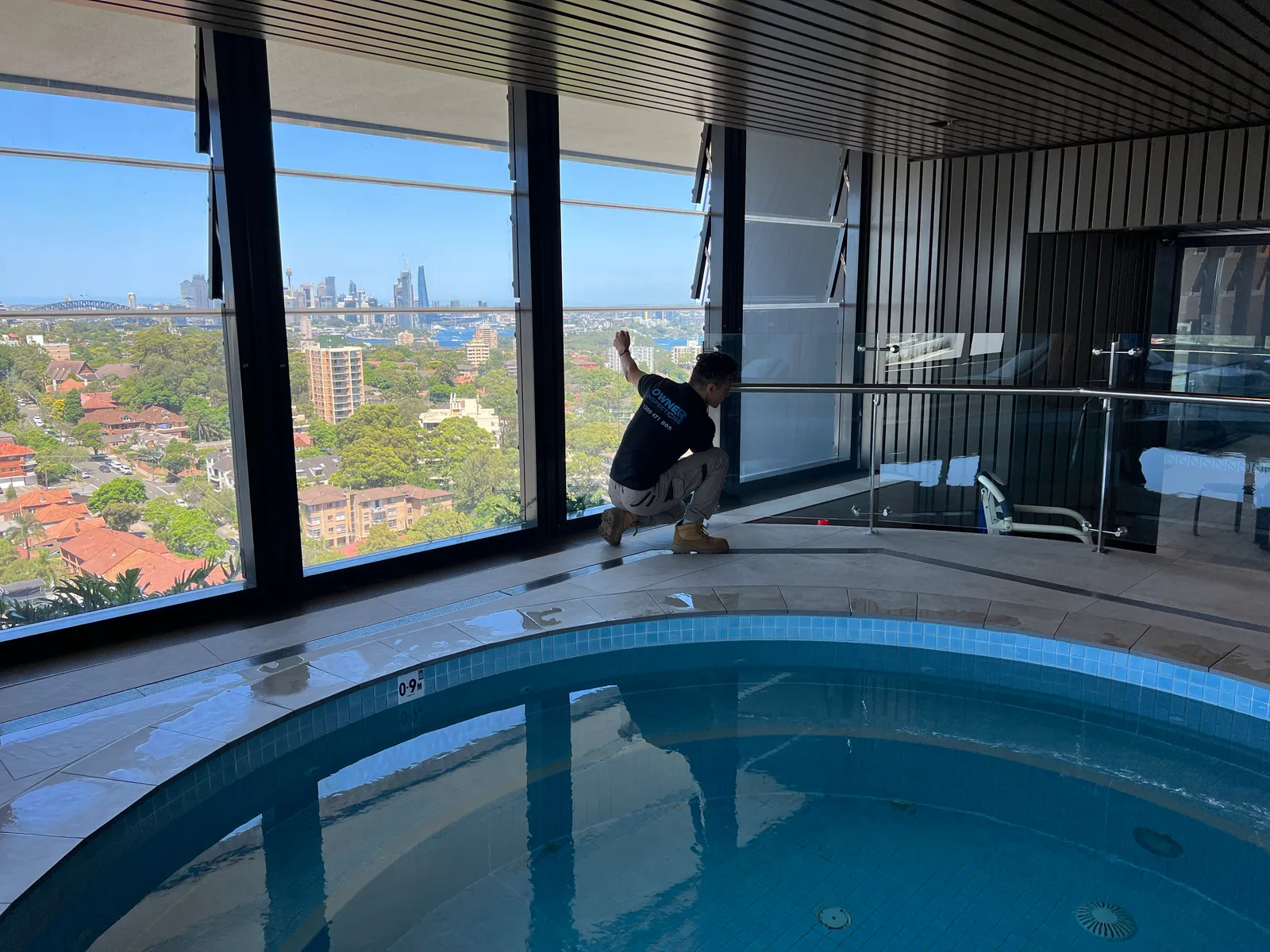
Older fences that once complied with previous standards may no longer meet current NSW pool fence regulations, particularly after renovations.
Pool Fence Height Regulations NSW
The minimum pool fence height in NSW is 1.2m measured from finished ground level.
Boundary fences used as part of the pool barrier must be at least 1.8m high. Council self-assessment checklists measure this on the pool side, and the non-climbable zone sits at the top on the inside of the boundary fence, so the neighbour's side can be climbable.
Landscaping changes can affect compliance. Raised garden beds, retaining walls, paving, and decking can reduce effective fence heights and create climbable surfaces.
Maximum Pool Fence Gaps and Spacing
NSW pool fencing requirements also regulate openings within barriers.
| Pool Fence Measurement Requirement | NSW Compliance Rule |
|---|---|
| Gap beneath fence | Maximum 100mm |
| Gap between vertical bars | Maximum 100mm |
| Perforated material openings | Maximum 13mm |
These requirements help prevent children from squeezing through pool barriers.
Boundary Fence Rules in NSW
Boundary fences can form part of a compliant pool barrier if they meet specific conditions.
Requirements include:
- Minimum height of 1.8m
- Compliant non climbable zones
- No climbable structures nearby
- Structurally sound materials
Many inspection failures occur because homeowners overlook climbable objects positioned beside boundary barriers.
Do You Legally Need a Fence Around Your Pool in NSW?
In most cases, yes.
The NSW Swimming Pools Act 1992 requires owners to ensure a swimming pool is surrounded by a child-resistant barrier and maintained in line with prescribed standards. The Act also requires barriers to be kept in good repair and access points to be kept securely closed.
There are limited exemptions. Coonamble Shire Council lists them as pools built before 1 August 1990, and pools built before 1 July 2010 on waterfront properties, properties under 230 square metres, or properties of 2 hectares or more, provided access from the house to the pool is always restricted. These exemptions do not last for the life of the pool: they end if the access or barrier is substantially altered or rebuilt, if restricted access is not maintained, or if the pool is later fenced voluntarily. NSW Government also says that once a barrier is modified, AS 1926.1-2012 applies. Councils can grant individual exemptions where the normal rules are impractical and an alternative is no less effective.
Pool Fence Compliance NSW Explained
A NSW pool barrier is compliant only while it still meets the standard that applies to it, so compliance is ongoing rather than a one-off. A fence that passed years ago can fail today because of a sagging gate, rust, a new garden bed or furniture left in the non-climbable zone.
Common Reasons Pool Fences Fail Compliance Inspections
Property inspectors commonly identify:
- Faulty self closing gates
- Damaged hinges
- Rusted fencing components
- Excessive gaps beneath barriers
- Climbable landscaping
- Loose fence panels
- Broken latches
Pool fence inspections help identify these issues before they create serious safety risks.
Need a Practical Pool Safety Check Before you Book a Certifier?
Get a professional pool condition and compliance risk assessment from Owner Inspections before sale, lease, or renovation work.
Pool Inspections
What are the Rules for Pool Fencing in Australia?
There is no single one size fits all rule for all of Australia.
Each state and territory has its own pool safety laws and enforcement process. In NSW, the main legal framework is the NSW Swimming Pools Act 1992 and the Swimming Pools Regulation 2018, with compliance linked to applicable standards and building code requirements.
NSW Government explains that the relevant versions of AS1926 used in NSW are 1986, 2007 and 2012, and the requirements vary depending on when the pool was built, where it is located, and whether modifications or renovations have occurred. NSW also states that if the barrier is modified or altered, current law and AS1926.1-2012 apply and previous exemptions cease.
NSW pool safety standards timeline:
- AS 1926-1986 may apply to some pools built before 30 August 2008
- AS 1926.1-2007 may apply to some pools built between 1 September 2008 and 30 April 2013
- AS 1926.1-2012 generally applies to pools built after 1 May 2013
- AS 1926.1:2024 was introduced to clarify and modernise pool barrier guidance, although NSW compliance requirements may still depend on the original construction approval date
- Barrier alterations, upgrades, or rebuilds can trigger compliance with newer standards
How Close Can Something be to a Pool Fence?
NSW requires a non-climbable zone around the barrier. NSW Government says trees, shrubs and objects such as barbecues, pot plants, toys, ladders and chairs must not be within the 90cm non-climbable zone. The zone is measured in an arc from the top of the fence towards the ground and also includes a 30cm clear space inside the pool area.
Common items to move before an inspection:
- Outdoor chairs and tables
- Pot plants and décor
- Barbecues
- Pool toys and storage tubs
- Ladders
- Tree branches near the fence line
- Pump or filter items placed too close to the barrier
If your pool area has a modern glass fence or frameless glass barrier for unobstructed views, the same non-climbable zone rules still apply. Appearance does not replace compliance.
Legal Requirements for Pool Owners
A NSW pool owner must keep the pool surrounded by a compliant child-resistant barrier, keep that barrier in good repair with gates kept closed, register the pool on the NSW Swimming Pool Register, and hold the right certificates before selling or leasing. The key legal requirements include:
- All private pools and spas must have a compliant safety barrier that restricts access
- The barrier must meet the version of AS 1926 that applies to the pool's build date, or AS 1926.1-2012 if it has since been altered
- A sale contract needs a pool register certificate plus a certificate of compliance, a recent occupation certificate, or a certificate of non-compliance. A lease needs a certificate of compliance or occupation certificate
- Inspections and maintenance of pool fences should be conducted regularly to address potential hazards and wear over time
Consequences of Non-Compliance
Under the Swimming Pools Regulation 2018, a penalty notice for most barrier offences is $550. If a matter goes to court, the maximum penalty is higher, up to 50 penalty units ($5,500) for an individual. Councils can also issue directions requiring the barrier to be fixed.
Non-compliance is not just a financial risk. Drowning remains a leading cause of accidental death in young children, with many incidents occurring in backyard pools. A compliant fence is your first line of defence.
Key Pool Fence Measurements and Specifications
The key NSW pool fence measurements are a 1.2m minimum height, 1.8m for a boundary fence used as the barrier, a maximum 10cm gap under the fence and between vertical bars, horizontal climbable rails at least 90cm apart, and mesh holes no larger than 13mm on a 1.2m fence.
| Specification | Requirement |
|---|---|
| Minimum fence height | 1.2 metres above ground level |
| Maximum gap underneath fence | 10cm |
| Maximum spacing between vertical bars | 10cm |
| Boundary fence height (when used as barrier) | 1.8 metres minimum |
| Horizontal climbable bars | 90cm apart |
| Mesh and perforated barriers | Holes no larger than 13mm on a 1.2m fence; up to 100mm on a 1.8m fence |
These measurements are designed to stop children from climbing over, crawling under, or squeezing through the fence.
Non Climbable Zone Requirements in NSW
The NSW non-climbable zone (NCZ) is a 90cm area, measured in an arc from the top of the pool fence down towards the ground, that must be free of anything a child could climb. NSW Government also requires 30cm of clear space inside the pool area, and on a boundary fence the zone sits on the pool side.
Common Non Climbable Zone Compliance Failures
Inspectors frequently identify:
- Outdoor furniture beside fences
- BBQ equipment near barriers
- Pot plants close to pool fencing
- Retaining walls acting as steps
- Overhanging tree branches
- Decorative rails creating footholds
Even small objects can create compliance breaches.
Homeowners should regularly inspect pool areas after landscaping work or outdoor renovations.
- A 900mm NCZ must be maintained on the climbable side of the fence
- Objects such as furniture, planters, toys, and trees should be kept out of this zone to remove footholds
- Horizontal bars or decorative features on the fence must be positioned in a way that does not create climbing opportunities
- Homeowners should conduct regular inspections to ensure compliance with the NCZ requirement and remove any objects that may compromise safety
Pool Gates and Latching Mechanisms
A NSW pool gate must swing outwards away from the pool, shut by itself from any open position without being pushed, and latch automatically when it closes. A fence that is otherwise compliant still fails if the gate does not do all three, which makes the gate the most common failure point.
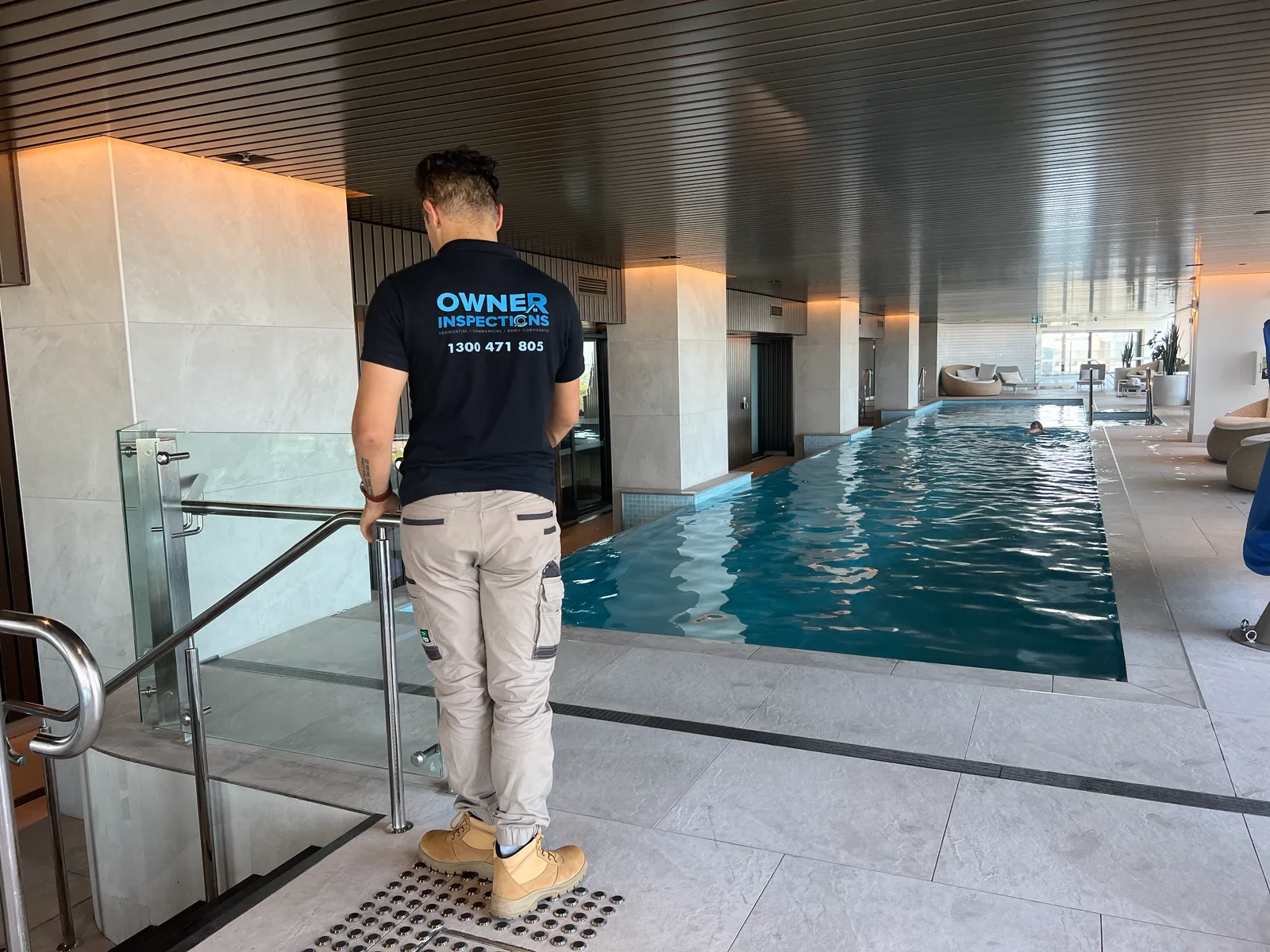
NSW Government says pool owners should check that the gate is never propped open, swings outwards away from the pool area, shuts automatically from any open position, and self-latches when closed. NSW also recommends routine maintenance of hinges, latches, and fixings.
What to test before booking an inspection
- Open the gate a few centimetres and let go
- Open it halfway and let go
- Open it fully and let go
- Confirm it latches each time
- Check latch and hinges for sticking or sagging
NSW Pool Fence Rules for Gates and Barriers
In NSW, gates and barriers must work together as one continuous child-resistant enclosure: the gate opens away from the pool, closes and latches itself, and nothing else in the barrier gives a child a way in. Doors and windows from the house are no longer allowed to form part of the pool barrier.
| Pool Gate Requirement | NSW Standard |
|---|---|
| Gate opening direction | Away from pool |
| Gate mechanism | Self closing from any open position |
| Latch system | Self latching |
| Latch height | Generally at least 1.5m above ground, unless shielded on the pool side as the standard allows |
Common Pool Gate Defects
Inspectors frequently identify:
- Gates that do not self close
- Misaligned latches
- Damaged gate hinges
- Gates propped open
- Loose hardware
- Excessive clearance gaps
Faulty gates significantly increase pool safety risks.
Want to know what usually fails first?
See common barrier and pool issues before they turn into a failed inspection or urgent repair.
Swimming Pool Defects
Materials and Construction Standards for Pool Fences
Pool fences must be constructed from durable, child-resistant materials that withstand weather exposure and regular wear. These materials must meet Australian safety standards to provide long-term security.
Common Pool Fence Materials in NSW
| Pool Fence Material | Benefits | Considerations |
|---|---|---|
| Glass fencing | Modern appearance and visibility | Requires regular cleaning |
| Aluminium fencing | Low maintenance and corrosion resistant | Must maintain compliant spacing |
| Steel fencing | Strong and durable | Requires corrosion protection |
| Timber fencing | Natural appearance | Requires ongoing maintenance |
| Mesh fencing | Flexible and affordable | Must remain tightly secured |
Damaged or deteriorated barriers may fail compliance inspections even if the original installation met regulations.
NSW Pool Fence Compliance Checklist
A quick NSW pool fence check covers height (1.2m, or 1.8m on a boundary), gaps (10cm or less), a clear non-climbable zone, a gate that self-closes and self-latches, sound panels and fixings, and current registration. Use it before a certifier visits; official self-assessment checklists by build date are on the NSW Swimming Pool Register.
| NSW Pool Fence Compliance Checklist | Yes / No |
|---|---|
| Pool fence height is at least 1.2m | |
| Boundary fence is at least 1.8m on the pool side | |
| Pool gate self closes correctly | |
| Pool gate self latches correctly | |
| No fence gaps exceed 100mm | |
| Non climbable zone remains clear | |
| Fence panels are structurally secure | |
| No climbable objects are nearby | |
| Hinges and latches function correctly | |
| Pool is registered on the NSW Swimming Pool Register | |
| CPR sign is displayed and readable |
Inspection and Certification Process
In NSW, a certificate of compliance can be issued only by a local council or a registered swimming pool certifier, and it lasts 3 years. The usual path is a self-check, an inspection, any repairs, and then the certificate.
Self-assessment
Use the NSW Swimming Pool Register checklist to assess your pool barrier.
Inspection by a registered certifier or council
Book a registered swimming pool certifier or your local council to inspect the barrier.
Issuance of a compliance certificate
Upon successful inspection, a compliance certificate is issued (valid for three years).
Rectification of issues
Address any issues identified in the inspection before certification is granted.
Properties with non-compliant fences must address any issues before certification is granted.
QWho Can Conduct Pool Fence Inspections?
Pool inspections may be completed by:
- Registered swimming pool certifiers, who can issue a certificate of compliance
- Local councils, who can also issue one
- Building inspectors, who can check the barrier and flag defects before the certifier visits
Property owners planning to sell or lease a property should arrange inspections early to avoid settlement delays.
Additional Pool Safety Risks Homeowners Should Monitor
Pool fence regulations form only one part of overall pool safety.
Homeowners should also monitor:
- Slippery paving surfaces
- Poor drainage
- Deteriorating decking
- Loose fence panels
- Inadequate lighting
- Water accumulation near barriers
- Damaged retaining walls
Routine inspections help identify these risks before they become costly repair issues.
Common Misconceptions About NSW Pool Fence Regulations
Myth: Small portable pools do not require fencing
Fact: Any pool capable of holding more than 30cm of water requires a compliant barrier.
Myth: Existing backyard fences automatically comply
Fact: Boundary fences must still meet current height and non climbable zone requirements.
Myth: Pool gates only need occasional testing
Fact: Gates should be tested regularly to ensure they self close and self latch correctly.
Myth: Landscaping cannot affect compliance
Fact: Retaining walls, garden beds, and outdoor furniture can create climbable zones and compliance failures.
Complying with NSW pool fence regulations is not just a legal requirement. It is a fundamental step in preventing accidents and saving lives. Homeowners, builders, and real estate professionals must stay informed to avoid penalties and ensure pool safety. Consulting accredited certifiers and regularly inspecting barriers can help maintain compliance and peace of mind.
Selling or Renting a Property With a Pool in NSW
To sell a NSW property with a pool, the contract needs a pool register certificate and a certificate of compliance, a recent occupation certificate or a certificate of non-compliance. To lease it, the landlord must give the tenant a certificate of compliance or an occupation certificate; a certificate of non-compliance is not enough.
NSW Government says the contract for sale must include a registration certificate from the NSW Swimming Pool Register and one of the following:
- A relevant occupation certificate issued within the last 3 years
- A valid certificate of compliance
- A certificate of non-compliance
If these documents are not included, the purchaser may be able to rescind the contract within 14 days of exchange, unless settlement has already occurred. If a certificate of non-compliance is attached, the purchaser generally has 90 days from settlement to fix listed defects and obtain a certificate of compliance, unless the certificate states the pool poses a significant risk to public safety.
A common mistake is saying all pools must be formally inspected every 3 years. NSW Government says councils must inspect pools associated with moveable dwellings and tourist and visitor accommodation at 3 year intervals. That is not a blanket rule for every private backyard pool.
Renting a property with a pool
NSW Government states that when a tenancy starts, the landlord or agent must provide a copy of the certificate of compliance or occupation certificate. A certificate of non-compliance cannot be used to rent a property.
Inspections and certificates in NSW
NSW Government states that local councils and registered swimming pool inspectors can inspect barriers and issue certificates of compliance when requirements are met. A certificate of compliance is valid for 3 years.
Related Property Inspection Services
Homeowners can strengthen overall property safety by arranging:
- Pre purchase building inspections
- Property condition reports
- Building handover inspections
- Dilapidation reports
- Expert witness inspections
These services help identify structural issues, safety risks, and compliance concerns that may affect property value and legal obligations.
What is the Fine for Not Having a Pool Fence in NSW?
The penalty notice (on-the-spot fine) for not having a compliant pool fence in NSW is $550 for most barrier offences. If the matter goes to court instead, the maximum penalty is 50 penalty units, which is $5,500 for an individual.
Under Schedule 1 of the NSW Swimming Pools Regulation 2018, several swimming pool barrier offences carry a $550 penalty notice amount, including offences relating to non-compliant pool barriers under sections 7(1), 12, 14, 15(1), and 16 of the Swimming Pools Act 1992.
The same schedule also lists:
- $110 penalty notice amounts for certain warning notice offences under section 17(1)
- $220 penalty notice amounts for certain pool registration information offences under section 30B(1)
Additional court-imposed penalties may apply for serious or repeated non-compliance offences.
Common reasons NSW pool fences fail inspection:
- Gate does not self-close from all open positions
- Gate does not self-latch
- Climbable objects are inside the non-climbable zone
- Boundary fence section is below required height
- Gaps under or between fence elements exceed limits
- CPR sign missing, damaged or not readable
- Barrier changed during renovations without checking current requirements
- Pool not registered on the NSW Swimming Pool Register
Selling soon or planning repairs before listing?
Pair your pool checks with a broader property readiness plan so you can fix issues early and avoid last minute surprises.
for Sellers and Buyers
Frequently Asked Questions
What are the minimum height requirements for a pool fence in NSW?
Are there specific materials that must be used for pool fences?
How often should pool fences be inspected for compliance?
Can existing boundary fences be used as part of the pool barrier?
What is the Non-Climbable Zone and why is it important?
Are there any exemptions to the pool fencing requirements?
What penalties can be imposed for non-compliance with pool fence regulations?
How can I find an accredited certifier for my pool fence?
Do portable or inflatable pools require fencing in NSW?
Is there an official NSW pool fence checklist or diagram?
Key Takeaways
- All NSW pools that can hold more than 30cm of water need a compliant barrier under the version of AS 1926 that applies to their build date
- Pool fences must be at least 1.2 metres high with no gaps exceeding 100mm
- A 900mm non-climbable zone must be kept clear of footholds
- Gates must open outward, self-close from any position and self-latch
- Boundary fences used as pool barriers must be at least 1.8 metres high on the pool side
- A penalty notice is $550 for most barrier offences, with up to $5,500 if a court imposes the penalty
- Certificates of compliance last three years; a lease needs one (or an occupation certificate), and a sale needs one of three certificates
Book a Pool Fence Compliance Inspection
Our inspectors check your pool barrier against NSW regulations and Australian Standard AS 1926.1 and give you a clear list of anything to fix.
Related Articles
Common Swimming Pool Defects: What You Need to Know
The cracks, leaks, corrosion and barrier faults inspectors find most often, and what causes them.
A Comprehensive Guide to House Inspections
What each type of house inspection checks and when you need one.

What Does a Building Inspection Cover
The areas a standard building inspection covers, and what it leaves out.