
Building a new home is one of the biggest projects most Australians will undertake. Before breaking ground, one of the most important decisions is how the home will be built. Traditional on-site construction has been the standard for decades, but modern methods are offering a compelling alternative. This guide walks you through both approaches, compares the key MMC techniques available, and helps you decide which is the best fit for your project.
Traditional On-Site Construction
Traditional construction involves building the home entirely on the property. Workers arrive daily, materials are delivered to the site, and the home is constructed step by step from foundation through to completion.
Pros
- High level of customisation, with changes possible throughout the build
- Well-understood by most builders and tradespeople
- No transport limitations for large or complex designs
- Suits irregular or difficult sites
Cons
- Longer construction times, typically 8 to 14 months for a standard home
- Weather delays can extend timelines significantly
- Greater potential for inconsistencies in quality between different trades
- More material waste generated on-site
Modern Methods of Construction: Overview
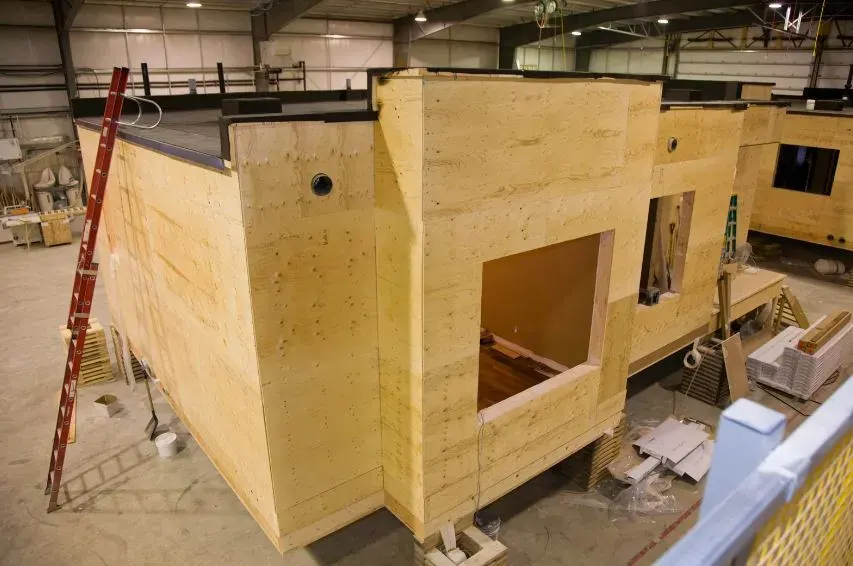
Modern methods of construction represent a shift towards a more industrialised approach to homebuilding. The core concept is prefabrication and off-site construction, where key components of the home are manufactured in a controlled factory environment. These components are then transported to the building site for fast, efficient assembly.
Key Benefits of MMC
- Faster construction times: With prefabricated components ready for assembly, on-site work takes significantly less time. Many modular homes can be completed in 3 to 6 months.
- Improved quality control: Factory settings provide a controlled environment where stricter quality checks and consistent construction practices are standard.
- Reduced waste: Manufacturing components to exact specifications in a factory means less material waste compared to traditional on-site building.
- Less weather disruption: Most of the construction happens indoors, reducing the impact of rain, wind, and extreme temperatures on the build schedule.
MMC Techniques Compared
| Description | Build Speed | Customisation | |
|---|---|---|---|
| Panelised Construction | Wall, floor, and roof panels prefabricated in a factory, assembled on-site | Moderate, faster than traditional but requires on-site assembly | Good, allows on-site adjustments and design flexibility |
| Volumetric (Modular) | Complete 3D room modules built in a factory, transported and stacked on-site | Fast, minimal on-site work required | Moderate, limited by module size and transport constraints |
| ICF (Insulating Concrete Forms) | Prefabricated insulating foam forms filled with concrete on-site | Moderate | Good, similar flexibility to traditional concrete construction |
| 3D-Printed Construction | Structures built layer by layer using large-scale 3D printers with concrete | Potentially very fast for simple designs | Growing, but currently limited to simpler forms |
Modular Construction Explained
Modular construction is the most widely adopted form of MMC in Australia. It involves building sections of a home, from individual wall panels to complete rooms, in a controlled factory setting.
Panelised Construction
Panelised construction prefabricates walls, floors, and roof panels to precise specifications in a factory. The panels are delivered to the site and assembled by a construction crew. This approach offers a balance between speed and customisation, as some on-site adjustments are still possible during assembly.
Volumetric Construction
Volumetric construction takes prefabrication further by building entire three-dimensional modules in a factory. These complete rooms or sections are transported to the site and connected together. This method requires minimal on-site work, making it the fastest MMC option.
Pros
- Significantly faster construction timeline (3 to 6 months)
- Stricter quality control in factory conditions
- Reduced material waste and environmental impact
- Potentially lower overall costs due to efficiency
Cons
- Design flexibility can be limited compared to traditional methods
- Transport of large modules may be restricted by road access and site conditions
- Fewer builders specialise in modular construction in some areas
Other MMC Techniques
Insulating Concrete Forms (ICF)
ICF uses prefabricated forms made of insulating polystyrene foam that are stacked and then filled with concrete. The result is high-performance walls that offer superior strength, insulation, soundproofing, and fire resistance. ICF is well-suited to Australian conditions, particularly in areas prone to extreme heat, bushfire, or severe weather.
3D-Printed Construction
While still in its early stages in Australia, 3D-printed construction uses large-scale printers to create building structures layer by layer using concrete or other printable materials. The technology is advancing quickly and has the potential to reduce construction costs and timelines for simpler building designs.
MMC techniques can be combined to create a hybrid approach. For example, you might use volumetric modules for the main living areas while using prefabricated roof trusses or ICF walls for other sections of the home.
Traditional vs MMC Comparison
| Traditional | MMC (Modular) | |
|---|---|---|
| Build Time | 8 to 14 months | 3 to 6 months |
| Quality Control | Variable, depends on trades and site supervision | Consistent, factory-controlled environment |
| Material Waste | Higher, materials cut and fitted on-site | Lower, precision manufacturing reduces waste |
| Design Flexibility | High, changes can be made throughout the build | Moderate, limited by prefabricated components |
| Weather Impact | Significant, rain and wind cause delays | Minimal, most work done in a factory |
| Cost | Varies widely, $1,500 to $3,500+ per square metre | Potentially lower due to efficiency, but varies by project |
Choosing the Right Method for Your Home
Selecting the right construction method depends on your specific project needs. Consider these factors:
- Project timeline: If speed is a priority, MMC significantly reduces construction times compared to traditional methods.
- Budget: Compare quotes from both traditional and MMC builders for your specific project. MMC can offer savings, but this is not guaranteed.
- Design complexity: If your home features a highly customised or intricate design, traditional construction may offer more flexibility. However, modular designs are becoming increasingly sophisticated.
- Site conditions: Difficult access, steep slopes, or remote locations may favour one method over another. Large modular components require adequate road and crane access.
- Sustainability goals: If reducing your environmental footprint is a priority, MMC generally produces less waste and can offer better energy performance through precision manufacturing.
Key Takeaways
- Modern methods of construction (MMC) involve manufacturing building components off-site in a factory before assembling them on the property.
- MMC offers faster build times (3 to 6 months vs 8 to 14 months), better quality control, and reduced material waste compared to traditional construction.
- The main MMC techniques are panelised construction, volumetric (modular) construction, ICF, and 3D printing.
- Traditional construction provides more design flexibility and is better suited to complex or highly customised home designs.
- Australia's prefabricated building market is growing rapidly, with more builders offering MMC options each year.
- The right construction method depends on your timeline, budget, design complexity, site conditions, and sustainability goals.
- Independent construction stage inspections are recommended regardless of which method you choose, to make sure the work meets Australian building standards.
Frequently Asked Questions
Can modern methods of construction be used for home extensions or renovations?
Yes. MMC techniques such as modular and panelised construction can be adapted for home extensions and renovations. These methods can offer a faster and less disruptive process compared to traditional on-site renovation work, particularly for additions like new rooms, granny flats, or upper-storey extensions.
How do building codes affect MMC projects in Australia?
All construction projects in Australia, including those using MMC, must comply with the National Construction Code (NCC) and relevant state regulations. MMC projects may sometimes require additional approvals depending on the specific techniques used. Working with a builder experienced in MMC and local regulatory requirements helps make sure all compliance obligations are met.
Are there financing differences when building a home using MMC?
Financing a home built with MMC can differ from traditional construction loans. Some lenders may require different documentation or use different milestone payment schedules due to the construction method. It is worth consulting with lenders who are familiar with modular and prefabricated building to find the most suitable financing arrangement.
Can MMC homes be personalised for unique designs?
Yes, though the level of customisation varies by technique. Panelised construction offers good design flexibility, allowing changes to layout, finishes, and interior details. Volumetric construction is more constrained by module sizes, but many builders specialise in creating customised modular designs that meet individual preferences.
How sustainable are homes built with MMC compared to traditional homes?
Homes built using MMC generally have a smaller environmental footprint. This comes from reduced material waste, more efficient use of resources, and better energy performance in the finished home due to precise factory manufacturing. Some MMC techniques, like ICF, also provide superior insulation that reduces ongoing energy consumption.
What is the lifespan of a modular home compared to a traditionally built home?
Modular homes constructed with quality materials under strict factory controls have a lifespan comparable to traditionally built homes. With regular maintenance, a well-built modular home can last 50 years or more. The construction method does not inherently limit the home's longevity.
How do MMC homes perform in extreme weather conditions?
Homes built using MMC can perform well in extreme weather, often matching or exceeding the performance of traditional homes. Techniques like ICF provide excellent resistance to high winds, fire, and temperature extremes. Precise factory construction also produces tighter building envelopes, improving resilience against severe conditions.
Are there limitations on where a modular home can be placed?
The main considerations for placing a modular home are zoning laws, site access for delivery trucks and cranes, and foundation requirements. Sites with narrow streets, steep slopes, or limited space may present challenges for transporting and positioning large modules. Proper planning and site evaluation can usually address these factors.
Can I integrate smart home technology into an MMC home?
Yes. MMC homes can easily incorporate smart home technologies. The controlled factory environment allows for planned integration of wiring, sensors, and automation systems during manufacturing, often resulting in a cleaner and more reliable installation than retrofitting these systems into a traditionally built home.
Do I need construction stage inspections for an MMC home?
Yes. Regardless of the construction method, independent construction stage inspections are recommended to verify that the work meets Australian building standards and the NCC. For MMC homes, inspections typically focus on the foundation, site assembly, connections between modules or panels, and the completed structure. An independent inspector provides unbiased assurance that the build quality meets your expectations.
References and Resources
- Australian Building Codes Board (ABCB) - National Construction Code and building standards for all construction methods
- PrefabAUS - Industry body for prefabricated building in Australia
- CSIRO - Building and Construction - Research on modern construction methods and building performance
- Victorian Building Authority (VBA) - Building permits and compliance for new construction in Victoria
Related Articles
Building Inspection Stages: A Comprehensive Guide
Tips for a Successful Off the Plan Property Purchase
Buying off the plan can be an exciting way to secure a new property, but it requires careful planning and due diligence. This guide provides practical tips covering research, financials, design evaluation, managing the waiting period, and leveraging professional guidance to help you navigate the process successfully.
Restumping a House: How It's Done
Restumping (reblocking) replaces the stumps that hold up a raised house when they rot, sink or are attacked by termites. This guide covers the warning signs, how a house is restumped step by step, how long it takes, concrete vs timber vs steel stumps, what drives the cost, and the permit and licensing rules in Victoria, NSW and Queensland.
Building a new home in Australia? Owner Inspections provides independent construction stage inspections for both traditional and MMC builds across NSW, Victoria, and Queensland. Our licensed inspectors check quality and compliance at every stage. Book your inspection today or call us on 1300 471 805.