
Understanding the full process from booking through to receiving your report helps you plan around auction dates, cooling-off deadlines, and contract conditions. This guide breaks down the timeline step by step so you know exactly what to expect.
On-Site Inspection Time
Use the guide below as a practical benchmark. Actual timing depends on property size, age, access, and whether the job is building-only or building and pest. Industry pages commonly place standard inspections at around 1 to 2 hours for many homes, with larger or more complex homes taking 2 to 4 hours.
Here is a general guide based on property type:
| Property Type | Typical On-Site Time |
|---|---|
| 1-2 bedroom apartment | 45 minutes to 1.5 hours |
| 3-bedroom house | 1.5 to 2.5 hours |
| 4-5 bedroom house | 2 to 3 hours |
| Large or multi-level home | 2.5 to 3.5 hours |
| Rural property with outbuildings | 3 to 4+ hours |
These times cover a thorough inspection. Be cautious of inspectors who promise to complete a full house inspection in under an hour. A comprehensive assessment takes time, and rushing through it increases the risk of missing important defects.
Buying soon? Start with the full pre-purchase guide
Get a clear overview of what a pre-purchase building and pest inspection covers, why it matters, and what buyers should expect before they commit.
inspection guide
What Affects How Long a Pre-purchase Inspection Takes?
The first factor is the property itself. Bigger homes take longer. Older homes also take longer because they tend to have more wear, more past alterations, and more areas that need careful checking. Access matters too. A roof void, subfloor, locked room, packed garage, or blocked inspection hatch can slow the process or limit what the inspector can assess.
The second factor is scope. A standard building inspection is not always the same as a combined building and pest inspection. NSW guidance makes that clear: a building report may note visible termite damage, but it does not confirm whether termites or other timber pests are still present, which is why a separate pest inspection is often recommended. Electrical inspections may also need to be arranged separately unless they are specifically included.
The third factor is property type. In strata and company title properties, the inspector will usually assess the interior and immediate exterior of the unit, not all common property. If a buyer wants wider common-area assessment, that generally needs to be requested separately. That point is missing from many lightweight articles, but it is highly relevant for apartment buyers.
What Happens During the Inspection
In property, PPI usually means pre-purchase inspection. A standard pre-purchase building inspection focuses on the visible condition of the building and aims to identify significant defects, movement, damp-related issues, safety concerns, and other major problems present at the time of inspection. Government guidance also notes that inspectors look beyond cosmetic presentation and help buyers spot faults that an untrained buyer may miss.
Exterior assessment (30 to 45 minutes). The inspector walks the full perimeter of the property, examining external walls, cladding, windows, doors, roofline, gutters, downpipes, drainage, paths, driveways, retaining walls, fencing, and landscaping. They look for cracking, water damage, deterioration, and conditions that might attract pests.
Subfloor inspection (15 to 30 minutes). If the property has a subfloor that is accessible via a crawl space, the inspector will enter and examine stumps, bearers, joists, bracing, plumbing, and ventilation. They also check for moisture, termite activity, and timber decay. Not all properties have accessible subfloors.
Roof void inspection (15 to 30 minutes). The inspector accesses the roof space through a manhole and checks the roof framing, insulation, ventilation, electrical wiring, and signs of water penetration or pest activity.
Interior assessment (30 to 45 minutes). Every room is inspected, including walls, ceilings, floors, doors, windows, wet areas (bathrooms, laundry, kitchen), built-in fixtures, and the electrical switchboard. The inspector uses moisture meters in wet areas to check for leaks.
Pest inspection (20 to 40 minutes). The timber pest assessment often overlaps with the building inspection but involves additional tools such as thermal imaging cameras, moisture meters, and tapping tools. The inspector checks all accessible timbers for evidence of termites, borers, and fungal decay, and documents any conducive conditions.
Site notes and wrap-up (10 to 15 minutes). The inspector completes their on-site notes, photographs, and measurements. If you are present, they will walk you through the key findings and answer your questions at this stage.
What Should a Pre-purchase Inspection Include?
In NSW, the report is meant to identify major visible problems, not every issue in the property. In Victoria, consumer guidance says a professional report should list faults, whether they can be repaired, likely costs, and unsafe or unauthorised renovations, which shows why buyers should always confirm scope with the inspector before booking.
A strong pre-purchase inspection should include:
- A written report with photos
- A clear summary of major defects and safety issues
- Notes on areas that were not inspected or could not be accessed
- Advice on whether further specialist checks are needed
- Clear wording about exclusions, such as pests, electrical, plumbing, pools, or asbestos testing if those are not part of the booked service.
NSW guidance says standard reports do not usually cover things like concealed damp-proofing, most plumbing and drainage, electrical wiring and smoke detectors, pools, appliances, or termite detection. Building inspection report is not a certificate of compliance and should not be treated as a guarantee against future problems.
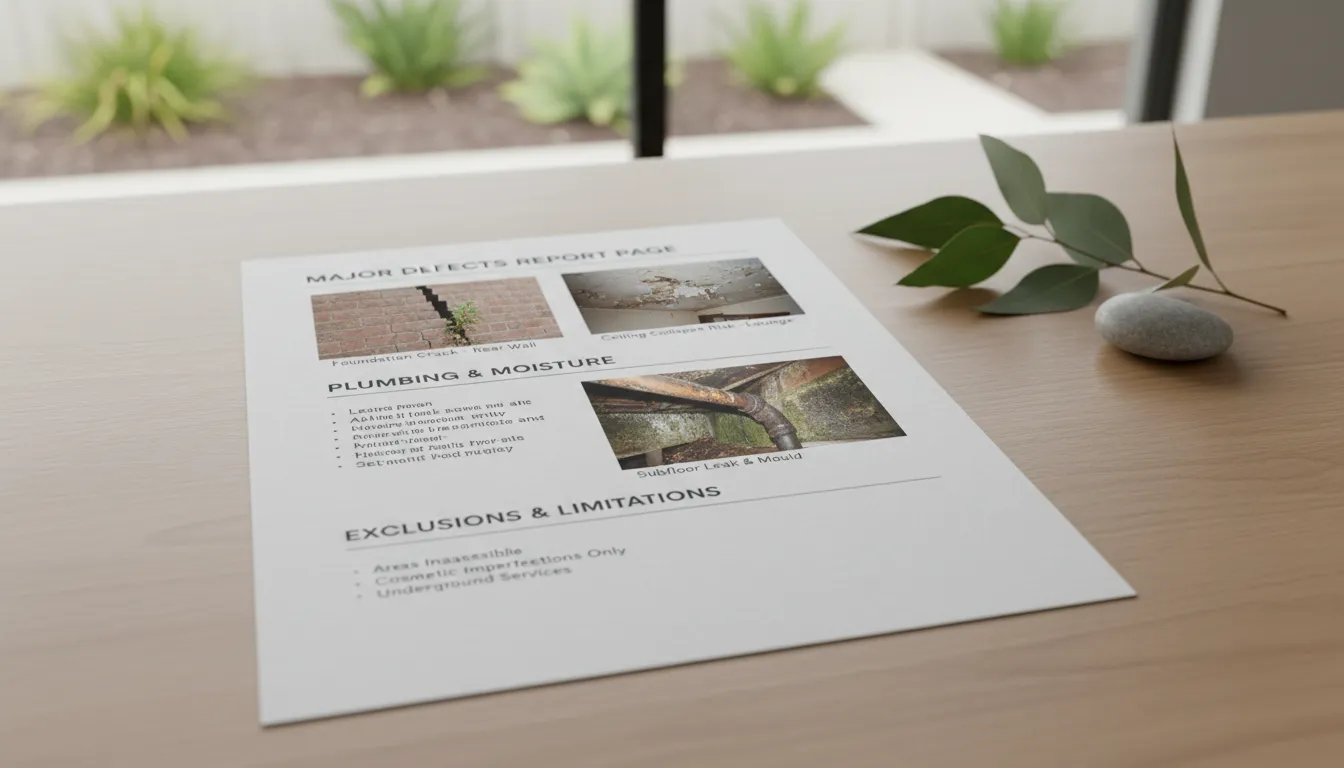
Report Delivery Timeline
Most reputable inspection companies deliver the written report within 24 hours of the on-site inspection. Some offer same-day delivery, particularly when auction deadlines or contract conditions require a fast turnaround.
The report preparation process involves:
- Organising and annotating hundreds of photographs
- Writing detailed descriptions of each defect found
- Classifying defects by severity (minor, significant, or major)
- Documenting areas that could not be accessed and explaining why
- Preparing recommendations for repairs or further specialist investigation
- Reviewing the report for accuracy before delivery
A comprehensive report for a standard house typically runs 30 to 60 pages. Some inspectors deliver longer reports for larger or more complex properties.
If you need the report before a specific deadline (for example, before the end of a cooling-off period), make sure you communicate this when booking the inspection. Most companies can accommodate tight timelines when given advance notice.
Is a Pre-purchase Inspection Worth It?
For most buyers, yes. Government guidance in NSW says the report can help you know the problems in advance, negotiate on price, and get advice on major issues. Consumer Affairs Victoria says the inspection fee is small compared with the cost of buying a property that needs extensive unforeseen repairs. Queensland guidance also recommends getting a pre-purchase building inspection before buying and making the contract conditional on satisfactory results where appropriate.
Even when the property is in good shape, the inspection still has value. It can help buyers budget for maintenance, compare one property against another, and decide whether a polished presentation is hiding a bigger problem. In a fast market, that kind of independent detail can be the difference between buying with confidence and buying blind.
Want a closer look at what inspectors actually check?
Use this buyer-friendly checklist to see the main items covered during a pre-purchase inspection, from roofing and structure to moisture, pests, and safety issues.
inspection checklist
Factors That Affect Duration
Several factors can make an inspection take longer or shorter than average.
Property size and complexity. Larger homes take longer. Multi-level homes, homes with extensions, or properties with multiple outbuildings (sheds, granny flats, garages) all add to the inspection time.
Property age. Older homes often require more time because they are more likely to have accumulated defects, undergone renovations of varying quality, and developed issues related to ageing materials. Homes built before 1990 may also require asbestos identification.
Accessibility. If the subfloor is restricted by low clearance, the roof void is difficult to access, or furniture and stored items block walls and floors, the inspection takes longer. Poor accessibility can also limit what the inspector can assess.
Property condition. A well-maintained property in good condition is quicker to inspect because there are fewer issues to document. A property with significant defects, active leaks, or extensive damage requires more time for thorough documentation.
Weather conditions. Heavy rain can delay or extend external inspections. Wet conditions can also make subfloor and roof access unsafe, potentially requiring a return visit to complete those sections.
Combined inspections. A building-only inspection is faster than a combined building and pest inspection. The pest component adds approximately 20 to 40 minutes depending on the property and the level of risk.
The Full Timeline From Booking to Report
Here is a typical timeline for the entire inspection process:
| Stage | Timeframe |
|---|---|
| Booking the inspection | 1 to 5 business days before the appointment |
| On-site inspection | 1.5 to 2.5 hours |
| Report preparation | Same day to 24 hours after inspection |
| Report review with inspector | 15 to 30 minutes (if requested) |
| Total elapsed time | Typically 2 to 3 business days from booking to report in hand |
In urgent situations, many inspection companies can arrange same-day or next-day inspections and deliver the report within hours of completing the on-site work. This is common before auctions, where buyers may only have a few days to arrange an inspection.
When Should You Book the Inspection?
Book as early as possible in the negotiation process. NSW says most consultants need at least 2 to 3 days’ notice, and that there is little point spending money on conveyancing before you understand the property’s condition. In Queensland, buyers are advised to arrange inspections before negotiations where possible, or build suitable inspection conditions into the contract if timing is tight.
If you are buying at auction, timing becomes even more important because inspection opportunities can be tight and contract conditions may be limited. If you are buying a strata property, ask whether the report covers only the lot itself or whether you also need records or a special-purpose inspection for common areas.
What to Expect if You Attend
Attending the inspection is highly recommended. It gives you the chance to see issues firsthand and ask the inspector questions in context. Here is what typically happens:
Arrival. The inspector will meet you and the real estate agent at the property. They may briefly explain their process before starting.
During the inspection. The inspector works methodically through the property. You are welcome to follow along, but give them space to concentrate. Many inspectors prefer to complete their assessment first and then walk you through the findings.
End-of-inspection summary. After completing the on-site work, the inspector will give you a verbal summary of their key findings. This is your opportunity to ask about anything you noticed during the inspection. The verbal summary is not a substitute for the written report, but it gives you an early indication of any significant concerns.
After the inspection. The written report will follow within the agreed timeframe. Some inspectors offer a follow-up phone call to discuss the report in detail once you have had time to read it.
Plan to spend 2 to 3 hours at the property if you are attending. This allows time for the inspection itself plus the verbal summary and any questions.
Tips for a Smooth Inspection
To help the inspection run efficiently and produce the best possible results:
- Book early. Do not wait until the last minute. Inspectors in busy markets can be booked out days in advance, especially around auction weekends.
- Communicate deadlines. If you have a cooling-off deadline or auction date, tell the inspection company when you book so they can prioritise report delivery.
- Confirm access. Make sure the real estate agent knows the inspection is happening and that the property will be accessible, including subfloor hatches, roof access, and locked areas.
- Clear the path. If you already own the property (for example, a pre-sale inspection), move stored items away from walls, clear subfloor access points, and ensure the roof manhole is accessible.
- Ask about the scope. Confirm what the inspection does and does not cover when you book. If you want additional assessments (such as asbestos testing or a pool inspection), ask whether these can be included.
- Attend if possible. Being there gives you context that no report can fully replicate.
A pre-purchase inspection is one of the most important steps in buying a property. Understanding the timeline helps you plan effectively and ensures you have the information you need before making one of the biggest financial decisions of your life.
For a complete overview, see our guide to pre-purchase building and pest inspections.
How to Get the Most Value From the Inspection
Choose your own independent inspector rather than relying on a seller’s report. NSW says a vendor report can help, but it is not a substitute for your own independent report. Consumer Affairs Victoria goes further and says buyers should be wary of reports supplied by the agent or seller.
Check qualifications, insurance, and licensing before you book. Queensland says only a licensed residential building inspector can complete pre-purchase building inspections there, and only a licensed pest controller can carry out termite inspections. Victoria also advises using an inspection service with full professional indemnity insurance.
Frequently Asked Questions
How Long Does a Pre-Purchase Inspection Take?
The on-site inspection runs for about 1.5 to 2.5 hours and the written report is typically delivered within 24 hours. Actual timing depends on property size, age, access, and whether the job is building-only or building and pest, with larger or more complex homes taking 2 to 4 hours.
What Affects How Long a Pre-purchase Inspection Takes?
The property itself: bigger and older homes take longer, and access matters too, since a roof void, subfloor, locked room or blocked inspection hatch can slow the process. Scope matters, since a standard building inspection is not always the same as a combined building and pest inspection. Property type matters too — strata and company title properties are usually assessed on the interior and immediate exterior of the unit rather than all common property.
Is a Pre-purchase Inspection Worth It?
For most buyers, yes. Government guidance in NSW says the report can help you know the problems in advance, negotiate on price, and get advice on major issues. Even when the property is in good shape, the inspection still has value: it can help buyers budget for maintenance and compare one property against another.
When Should You Book the Inspection?
Book as early as possible in the negotiation process. NSW says most consultants need at least two to three days' notice, and there is little point spending money on conveyancing before you understand the property's condition. If you are buying a strata property, ask whether the report covers only the lot itself or whether you also need a special-purpose inspection for common areas.
Need a Pre-Purchase Inspection?
Our licensed inspectors cover Sydney, Melbourne, and all major Australian cities.