

Construction litigation refers to legal disputes that arise from construction projects. These disputes commonly stem from contract breaches, construction defects, project delays, or failure to comply with building codes and industry standards. Given the high financial stakes and technical complexity involved, courts and arbitration panels rely on expert witnesses to provide unbiased, professional opinions that clarify the facts and inform judicial decisions.
Why Construction Disputes Require Expert Witnesses
Construction disputes often hinge on technical details that require specialised knowledge to interpret. Courts and arbitration panels rely on expert witnesses to provide unbiased, professional opinions on construction issues. These experts help clarify disputes by analysing evidence, offering technical assessments, and testifying in legal proceedings.
Expert witnesses serve as a bridge between legal principles and industry-specific knowledge. Attorneys, judges, and arbitrators may not have construction-specific expertise, and without a qualified professional to interpret technical evidence, the court risks making decisions based on incomplete understanding.
The Fundamentals of Construction Litigation
Common disputes in construction litigation include:
- Contractor-owner disagreements: Differing interpretations of contract terms or failure to meet agreed-upon standards
- Claims of defective workmanship: Property owners or developers alleging construction flaws that compromise safety or performance
- Project delays and cost overruns: Unforeseen circumstances or mismanagement leading to significant budget increases or missed deadlines
- Violations of building codes and safety regulations: Construction work that fails to comply with local, state, or national codes
Key stakeholders in construction disputes
- Homeowners and residential property buyers seeking quality assurance
- Builders, developers, and subcontractors facing allegations of poor workmanship or contractual breaches
- Engineers, architects, and project managers whose designs and plans may be scrutinised for compliance
- Insurers and government regulators overseeing adherence to industry standards
The impact of litigation on construction projects
Legal disputes can lead to significant disruptions, including project delays and cost escalations, diminished trust between parties, financial losses due to legal fees and penalties, and regulatory scrutiny that can attract additional oversight from governing bodies.
Expert Witness vs. Fact Witness
| Expert Witness | Fact Witness | |
|---|---|---|
| Basis of Testimony | Professional opinions based on specialised knowledge and analysis | Firsthand observations of what they saw or experienced |
| Qualifications Required | Formal education, certifications, industry experience, and prior case involvement | Direct involvement in or observation of the events in question |
| Role in Court | Provides technical analysis, interprets evidence, and offers professional opinions | Describes what happened from their own perspective |
| Independence | Must be neutral and impartial, not advocating for either party | May be aligned with one party as a participant in the events |
Core Functions of a Construction Expert Witness
- Analysing case materials and construction documentation: Reviewing blueprints, contracts, project schedules, and relevant industry regulations
- Providing technical insights into disputes: Offering professional opinions on whether a defect is due to poor workmanship, design flaws, or external factors
- Offering credible testimony: Presenting clear, well-documented findings that reinforce legal arguments in hearings and trials
- Assisting in mediation and arbitration: Helping conflicting parties reach settlements by providing objective, evidence-based evaluations
Types of Expertise Provided
Structural engineering assessments
Assessing the integrity of buildings, load-bearing structures, and compliance with Australian Building Codes. This is particularly important in cases involving collapsed structures, foundation failures, or load-bearing deficiencies.
Building code compliance evaluations
Ensuring adherence to the National Construction Code (NCC) and state-specific regulations. Non-compliance can result in legal action, fines, or mandated repairs.
Material and methodology analysis
Examining whether construction materials and techniques meet industry standards for durability and quality. Experts evaluate material performance under stress, environmental impact, and longevity.
Construction project management and scheduling
Evaluating project timelines, delays, and inefficiencies that may affect case outcomes. Poor planning, unexpected site conditions, or inadequate resource management are common causes of disputes.
Workplace safety and site conditions
Reviewing compliance with Work Health and Safety (WHS) regulations to determine liability in workplace accidents. Experts assess safety protocol violations, equipment failures, and hazard mitigation measures.
Legal Requirements in Australia
Expert witnesses in Australia must adhere to strict guidelines:
- Federal Court's Expert Evidence Practice Note: Requires expert testimony to be presented fairly, transparently, and without bias
- Independence and objectivity: Experts must provide opinions based on facts and professional experience, not advocate for either party
- Transparent reporting and documentation: Findings must be presented in a way that meets legal standards and can withstand cross-examination
Under Section 79 of the Evidence Act 1995 (Cth), expert opinions must be based on specialised knowledge obtained through training, study, or experience. Similar provisions exist under state laws such as the Evidence Act 1995 (NSW) and the Evidence Act 2008 (VIC).
Benefits of Engaging an Expert Witness Early
- Strengthening legal strategy: Expert analysis helps lawyers build stronger cases by providing technical evidence to support claims
- Enhancing credibility in legal proceedings: Judges and arbitrators often rely on expert testimony to make informed decisions
- Facilitating dispute resolution: Expert reports can clarify issues and lead to settlements before trial, saving time and legal expenses
- Identifying strengths and weaknesses: An expert can assess whether claims have a strong foundation before engaging in costly legal battles
- Supporting negotiations and mediation: Expert reports provide leverage in settlement discussions, helping parties reach fair agreements
Key Takeaways
- Expert witnesses provide independent, fact-based analysis that helps courts understand technical construction issues.
- They review documentation, assess structural integrity, evaluate code compliance, and testify under oath.
- Expert witnesses differ from fact witnesses: they provide professional opinions, not just firsthand observations.
- Engaging an expert early strengthens legal strategy and can lead to faster settlement or mediation outcomes.
- In Australia, expert witnesses must comply with the Evidence Act 1995 (Cth) and maintain independence and objectivity.
- Types of expertise include structural engineering, building code compliance, material analysis, project management, and workplace safety.
- Expert witness fees may be recoverable as part of awarded costs in some cases.
Frequently Asked Questions
How does an expert witness contribute to a construction litigation case?
They provide factual analysis, expert reports, and in-court testimony to clarify technical matters. Their independent assessment helps the court understand complex construction issues and make informed decisions based on professional evidence rather than speculation.
At what stage of litigation should I engage an expert witness?
Ideally, during case preparation. Engaging an expert early allows them to review documentation, conduct inspections, and identify strengths and weaknesses in your case before legal proceedings begin. This early involvement often leads to better case strategy and can support settlement negotiations.
Can an expert witness help in mediations or settlements outside of court?
Yes. Expert reports often facilitate settlements by clarifying contested issues with objective, evidence-based evaluations. When both parties understand the technical facts, they are more likely to reach a fair agreement without proceeding to a full trial.
How do I assess the credibility of a potential expert witness?
Review their credentials, including academic qualifications and industry certifications. Check their past case involvement, publications in their field, and professional reputation. An experienced expert witness should have a track record of providing clear, well-supported testimony.
What is the difference between a fact witness and an expert witness?
A fact witness testifies about firsthand observations of events they personally witnessed. An expert witness provides professional opinions based on their specialised knowledge and analysis of the evidence, even if they were not present during the events in question.
How do expert witnesses prepare their testimony for court?
They review all relevant documents, conduct site inspections where necessary, and formulate detailed written reports. Before court, they prepare structured testimony that presents their findings clearly and can withstand cross-examination by opposing counsel.
Are expert witness fees recoverable in construction litigation?
In some cases, expert fees may be included in the costs awarded by the court. This depends on the outcome of the case and the specific cost orders made by the judge or tribunal. Discuss fee recovery with your legal representative at the outset.
What role does an expert witness play in identifying construction defects?
They assess structural integrity, material quality, and compliance with industry standards and the National Construction Code. Their analysis determines whether defects resulted from poor workmanship, design flaws, substandard materials, or other causes, which directly impacts liability.
How can expert witnesses assist in understanding complex construction contracts?
They interpret technical clauses, evaluate whether contractual obligations were met, and identify breaches related to construction standards or project delivery. Their industry knowledge provides context that legal professionals may not have on their own.
What qualifications should a construction expert witness have in Australia?
They should hold relevant academic qualifications, industry certifications, and have demonstrable experience in their specialised field. They must comply with the Federal Court's Expert Evidence Practice Note and maintain independence and objectivity. Prior experience as an expert witness in similar cases is also highly valued.
References and Resources
- Evidence Act 1995 (Cth) - Australian Government legislation governing expert evidence
- Federal Court of Australia - Expert Evidence Practice Note - Guidelines for expert witnesses in federal proceedings
- National Construction Code (NCC) - Australian building code compliance standards
- Victorian Building Authority - Building dispute resolution in Victoria
- Safe Work Australia - Work Health and Safety regulations
Related Articles
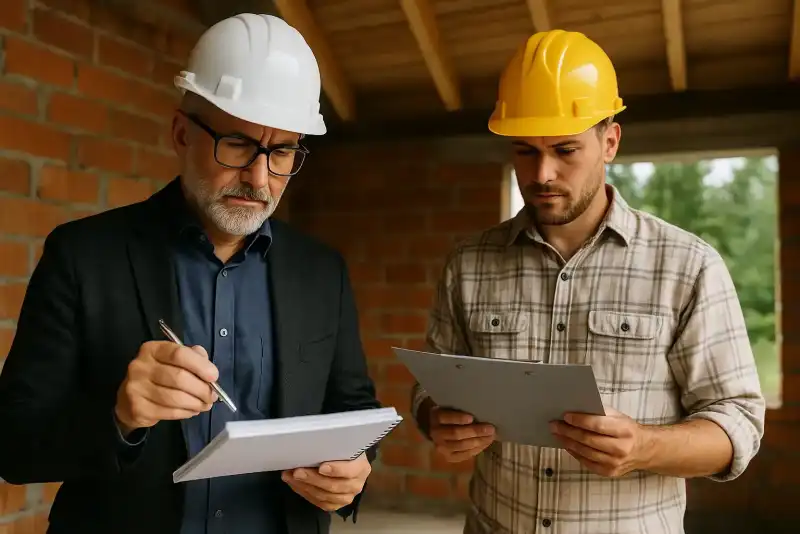
Expert Witness Reports vs Routine Inspection Reports
A routine inspection report tells you what is wrong with a property. An expert witness report tells a tribunal why it is wrong, who is responsible and what it costs to fix, in the form the rules of evidence require. This guide compares scope, duty, legal standing and cost.
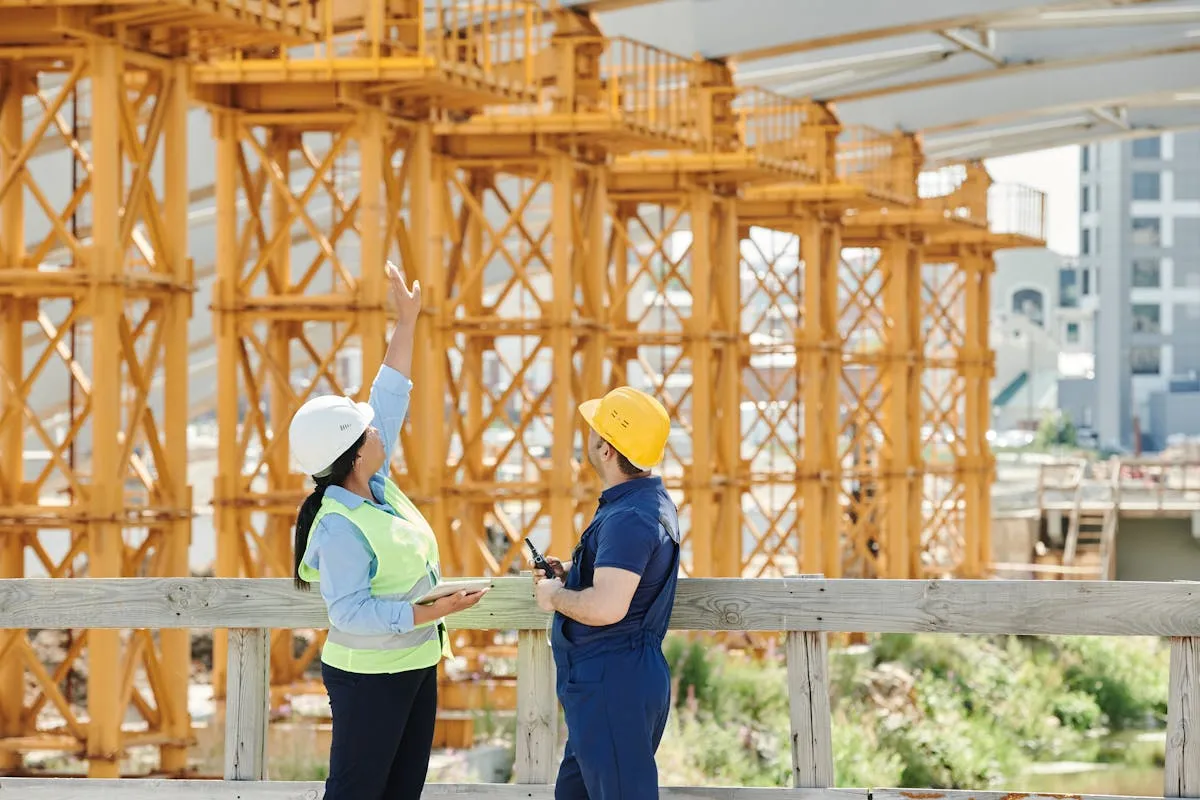
Expert Witnesses in Construction
Construction disputes over defects, delays, and cost overruns frequently end up before Australian tribunals like NCAT, VCAT, and QCAT. Expert witnesses provide the independent technical analysis that helps these bodies reach fair outcomes. This guide explains who they are, what they do, and when you need one.

Expert Witnesses in Body Corporate Building Disputes
Over two million Australians live in strata schemes, and disputes over defective common property are on the rise. This guide explains how expert witnesses provide independent assessments for body corporate building disputes.
Need an expert witness for your construction dispute? Owner Inspections provides experienced construction expert witnesses who deliver in-depth analysis, credible testimony, and litigation support. Get a free quote or call 1300 471 805.
For a complete overview, see our guide to expert witness reports for building disputes.
Need an Expert Witness Report?
Our experienced expert witnesses support cases at NCAT, VCAT, and tribunals across Australia.