
If you won at VCAT or QCAT and the builder has not paid, the next step is to take the order to a court and have it enforced as a judgment of that court. Neither tribunal collects money for you. Once the order is filed, you get access to the ordinary debt recovery tools: seizure and sale of property, redirection of wages or bank accounts, and an examination of the builder's finances. Before you spend anything on that, check whether the builder still has a company, a licence and any assets, because enforcement against an empty shell costs money and returns nothing.
That last point is the one people find out too late. Winning proves you were right. Getting paid is a separate contest, and it is decided by whether there is anything left to take.
Note
Owner Inspections is a building consultancy, not a law firm. This explains what the enforcement process involves and what evidence supports it. Enforcement steps, limitation periods and insolvency questions are legal matters, so get advice from a solicitor before you file anything.
Does VCAT or QCAT chase the money for you?
No. Both tribunals decide the dispute and then stop. VCAT states plainly that it does not enforce its own orders, and QCAT directs successful parties to the courts to enforce a monetary decision. The order is a debt. You are now a creditor, and you have to act like one.
How to enforce a VCAT order in Victoria
Under section 121 of the Victorian Civil and Administrative Tribunal Act 1998, a person who has a monetary order in their favour can file a certified copy of it in a court of competent jurisdiction, after which it is enforceable as an order of that court.
Ask VCAT for a certified copy of the order
VCAT certifies the order as a true copy. You cannot use the copy that arrived in your email, it has to be the certified one.
Have the order recorded in the right court
For amounts of $100,000 or less, the Magistrates' Court of Victoria records the VCAT monetary order and confirms this to you in writing. Larger amounts go to the County Court or the Supreme Court.
Apply for an enforcement process
Once recorded, the full set of enforcement options opens up: a summons for oral examination of the debtor, an instalment order, a warrant of seizure and sale, an attachment of earnings order, or an attachment of debts order against a bank account.
Expect to choose, not to fire everything at once
Each step has its own fee and its own timeframe. Which one is worth using depends entirely on what the oral examination reveals about the builder's assets.
Non-monetary orders work differently. Section 122 of the same Act treats a non-monetary VCAT order as an order of the Supreme Court for enforcement purposes, which puts a builder who ignores it in contempt territory. That is a serious remedy and a slow, expensive one.
How to enforce a QCAT decision in Queensland
The Queensland process is close in substance and different in paperwork. You take a certified copy of the QCAT decision plus a sworn affidavit stating how much of the decision remains unpaid, and you file both in the court that matches the amount.
| Amount of the decision | Court to file in | What you can apply for next |
|---|---|---|
| Up to $150,000 | Magistrates Court | Enforcement warrant, enforcement hearing, statement of financial position |
| $150,001 to $750,000 | District Court | Same enforcement warrants, higher court fees |
| Above $750,000 | Supreme Court | Same, and the point at which most people already have a solicitor |
Section 131 of the Queensland Civil and Administrative Tribunal Act 2009 is the provision that makes this work. Once filed, the decision is treated as an order of that court, and you can apply for an enforcement warrant authorising seizure and sale of the debtor's property, or the redirection of earnings or debts owed to them. You can also require the debtor to complete a statement of financial position, which is the cheapest way to find out whether pursuing them is worth it.
Check whether the builder still exists before you spend a cent
This is the step that saves people thousands. Search the builder's company on ASIC's registers and check whether it is in liquidation or administration, and check the licence status with the state regulator. If the company has been wound up, an enforcement warrant achieves nothing, because you join the queue of unsecured creditors behind the ATO and the secured lenders.
- Company in liquidation. Enforcement stops. Your claim goes to the liquidator, and unsecured creditors in construction insolvencies commonly recover nothing.
- Company deregistered, director trading under a new entity. The new company did not sign your contract and is not bound by your order. This is where legal advice matters, quickly.
- Builder is a sole trader with assets. Often the better outcome for you. Individuals own cars, homes and wages, and all three are reachable.
- Builder is trading but stalling. The most common case. Enforcement usually works here, and the oral examination alone frequently produces a payment.
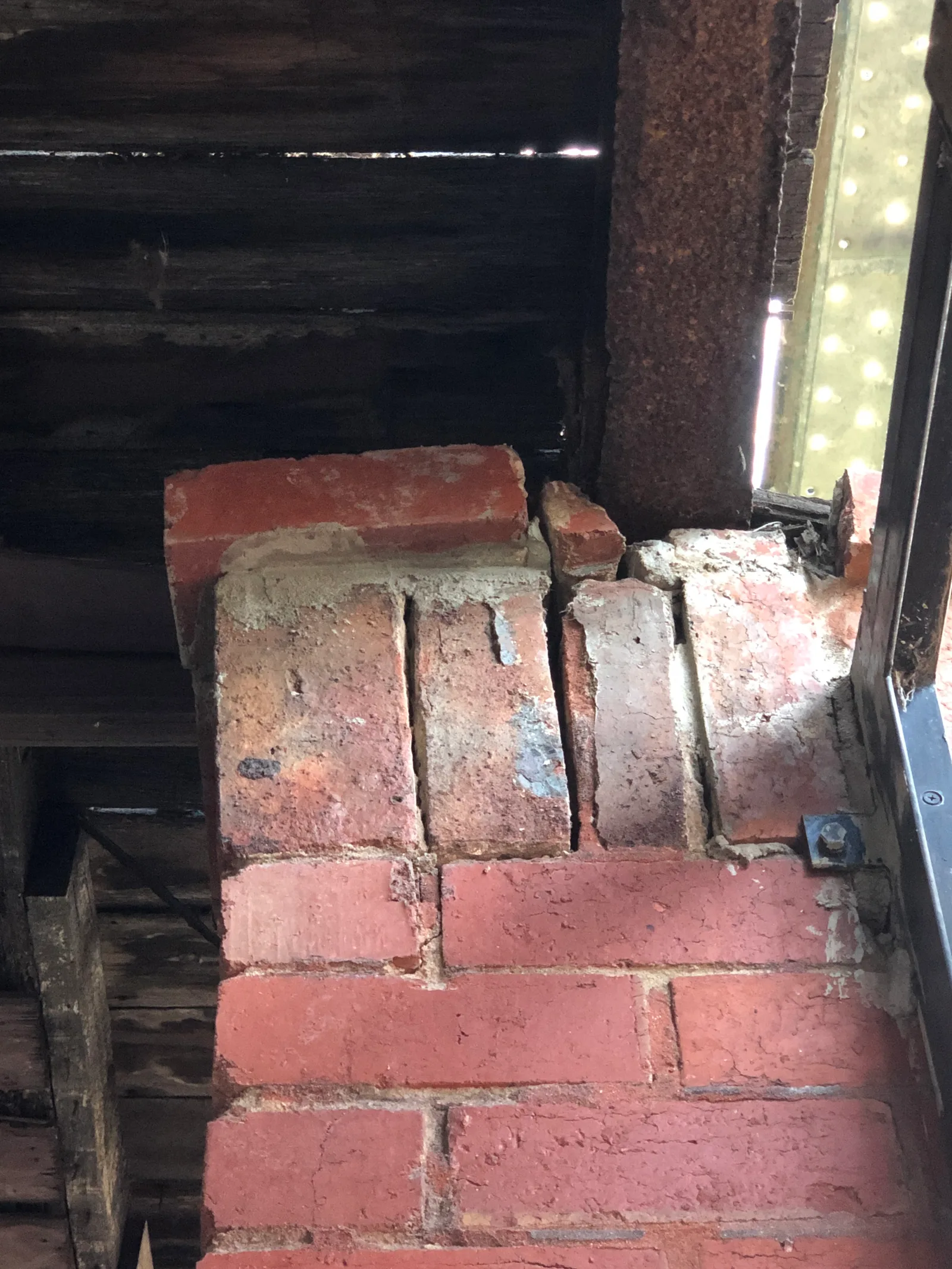
Defects like this one are why the order exists. They are also why the wording of the order matters so much, which is the next problem.
What if the order said fix it, not pay me?
A rectification order is harder to enforce than a money order, and homeowners are often surprised by that. If the builder does nothing, you have to go back to court to enforce a non-monetary order. If the builder comes back and does the work badly, you are in an argument about whether the order was complied with, and that argument needs evidence.
An independent re-inspection against the scope in the order is what turns "they did a rubbish job" into a document a court or an insurer can act on. It should list each item in the order, state whether it was done, and state what standard or code the work fails against.
Where you can, ask the tribunal for a money order supported by a costed scope of works rather than an order that the builder return to site. A number is enforceable. A promise to rectify is a second dispute waiting to happen, and by that point most homeowners have lost all confidence in the builder anyway.
Turn the Order Into Something Enforceable
An independent expert report itemises each defect, the rectification method and the cost, in the form a tribunal, a court or an insurer can actually use.
The insurance route, and why the clock may already have run
Both states have a last resort insurance scheme, and neither is a simple substitute for enforcement.
In Victoria, domestic building insurance is compulsory for domestic building work above $16,000, and it is last resort cover. Consumer Affairs Victoria explains domestic building insurance and insolvency, including that a policy issued on or after 1 July 2015 can also respond where the builder has failed to comply with a tribunal or court order after 28 days, on top of the death, disappearance and insolvency triggers. That is the one insurance path aimed squarely at the situation this article is about. The scheme is now administered by the Building and Plumbing Commission, which took over the domestic building insurance function along with the roles of the Victorian Building Authority and Domestic Building Dispute Resolution Victoria on 1 July 2025.
In Queensland, the Queensland Home Warranty Scheme is run by the QBCC, and you claim under it through the QBCC rather than through the tribunal. The catch is the timing. Non-completion claims must be lodged within three months of the contract ending, and defect claims run from when the work was completed and when the defect was noticed, not from the date you won at QCAT. A dispute that took a year to get to hearing can outlive the claim window entirely.

Insurers assess the defects themselves. A report that already itemises each item with photographs, dates and costs shortens that assessment considerably.
Can the regulator make the builder pay?
Not directly, but regulator pressure is real and it is free to trigger.
- Victoria. Failing to comply with a determination or direction of VCAT is a ground for disciplinary action against a registered building practitioner under section 179 of the Building Act 1993. The BPC issues a show cause notice and can reprimand, fine, impose conditions on registration, suspend it or cancel it, and outcomes are published on its prosecution and disciplinary register.
- Queensland. Paying debts when they fall due is a licensing condition. The QBCC treats an unpaid judgment debt owed by a licensee as a breach that can lead to penalties and to licence suspension or cancellation.
A builder who wants to keep working has a strong reason to settle before that lands. It is worth lodging in parallel with enforcement rather than instead of it.
What actually makes an order collectable
Looking back at the disputes that end well, the difference is usually decided long before the hearing.
Frequently asked questions
Does VCAT or QCAT collect the money for me?
How do I turn a VCAT order into a court judgment?
What do I need to file a QCAT decision in court?
What happens if the builder's company goes into liquidation?
The order says the builder must fix the work. What if they do it badly?
Is a small order worth enforcing?
Related Articles

Builder won't fix defects: what are your options in NSW and Victoria?
The escalation path from a written defect notice through to the regulator and the tribunal, before enforcement ever comes up.

How to Prepare for NCAT or VCAT as a Homeowner
What to gather before a hearing, from dated defect evidence to an expert report, so the order you win is specific enough to enforce.

How Long Do Tribunal Building Disputes Take in Australia?
Realistic timeframes for each stage, which matters because insurance claim windows keep running while your case sits in the queue.