
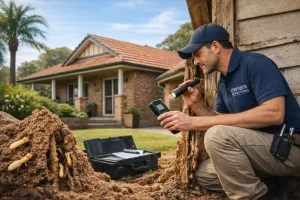
Termites are silent invaders. They often go unnoticed until they’ve caused significant damage to your home. Homeowners must be particularly vigilant in Australia, where warm, humid climates provide the perfect breeding ground for these destructive insects. According to the Australian Pest Control Association (APCA), termites are responsible for causing a staggering $1.5 billion in damage annually to Australian properties, highlighting the scale of the problem.
Termites target the timber structures of your home, feeding on cellulose materials such as wood. They work quietly behind the scenes, often unnoticed until late. If left untreated, termites can compromise a house’s very foundation, leading to dangerous structural issues and costly repairs.
What is a Termite Inspection?
A termite inspection is a professional evaluation designed to detect the presence of termites in and around your home. This involves a detailed assessment using specialized tools and techniques to identify early signs of infestation before the damage becomes irreversible. In Australia, where termite activity is everyday, termite inspections are recommended for new properties and homes of any age.
The inspection process typically includes:
- External Inspection: Inspectors will check the exterior of your home for visible termite activity, such as mud tunnels and wood damage. They will also look for the typical signs of termite activity around areas like doors, windows, and the foundation, which are common entry points for termites.
- Internal Inspection: Inside your home, an inspector will examine wooden beams, floorboards, subfloor areas, and behind drywall. They’ll use moisture meters to detect excess moisture, a key indicator of termite presence. Sound detectors and infrared cameras also spot hidden termite colonies inside walls, ceilings, or floors that are otherwise difficult to access.
- Advanced Equipment: Many pest inspectors use thermal imaging or infrared cameras to ensure the most accurate results. These devices can detect temperature changes, often indicating hidden termites within walls and floors that might not be visible to the naked eye. Moisture meters help detect excess moisture in wood, which termites feed on, and sound detectors pick up the vibrations created by termites moving through timber.
A termite inspection is not just about finding evidence of termites; it’s also about preventing future infestations. Inspectors can suggest preventive measures to protect your property from future threats by identifying any vulnerabilities in your home.
Related blog: The Economic Cost of Termite Infestation
Signs Your Home Might Have Termite Damage
Recognizing the early signs of termite damage can save you from extensive and costly repairs. The signs of termite damage are not always obvious and may be subtle, especially in the early stages. Here are some visual and subtle indicators that might suggest your home has been compromised:
Obvious Visual Indicators:
- Hollow-sounding Wood: If the wood in your walls, beams, or posts sounds hollow when tapped, this is a clear sign that termites are feasting on the wood’s interior. Over time, the surface wood remains intact while the termites devour the material beneath, leading to hollow-sounding timber.
- Mud Tubes: Termites build these mud tubes to protect themselves from predators while traveling to and from their colony. Mud tubes are often found on exterior walls, foundations, or inside the house along wooden beams and structural elements.
- Cracked or Bubbling Paint: Termites can weaken the timber beneath the paint, causing the paint to bubble or crack. If you see unusual paint bubbling, it could indicate that termites have been feeding on the timber beneath the surface.
- Wood Dust or Frass: Termites expel their waste in powdery wood dust called frass. If you find small piles of this powder near wooden structures, it’s a sign of active termite activity.
Subtle Indicators:
- Sawdust Around Wooden Structures: This is another common sign of termites at work. As termites burrow through wood, they expel fine sawdust or frass that can accumulate around affected areas.
- Changes in Wood Color or Texture: Over time, wood that has been damaged by termites will change in texture, becoming soft and spongy. You may notice darkening of the wood or areas that feel soft to the touch, making them vulnerable to further damage.
Related blog: Termite Inspections: Expectations and Preparations
The Cost of Termite Damage and Why Inspections Are Worth It
Termite damage can wreak havoc on your home’s structural integrity, leading to expensive repairs that are often much higher than the cost of preventative measures. Termite damage repair costs in Australia can range from $5,000 to $100,000 or more, depending on the extent of the infestation. The damage is typically to timber structures, foundations, and flooring, requiring extensive rebuilding or restoration.
In comparison, a professional termite inspection typically starts at $100, depending on the property’s size and the inspection’s complexity. The cost of an inspection is 100 times less than the cost of repairing extensive termite damage.
Why Inspections are Worth It:
- Early Detection Saves Money: Detecting termite activity can immediately prevent further damage. Treatments in the early stages of an infestation are significantly less expensive than replacing structural timber or repairing foundations later.
- Long-Term Protection: Termite inspections help detect existing infestations and provide an opportunity to implement preventative measures. Regular inspections allow you to address any weak spots in your home that could invite termites, helping keep your property safe for years.
How Often Should You Get a Termite Inspection?
The frequency of termite inspections depends on various factors, including the location of your property, its age, and its vulnerability to termite attacks. Here’s a general guideline for how often you should schedule an inspection:
- Annual Inspections: A yearly inspection is typically sufficient if your home is in a moderate to high-risk area. This is especially important for homes built with timber or those in high-risk regions like Queensland, New South Wales, and parts of Western Australia.
- Bi-Annual Inspections: In high-risk zones, homes located near forests, coastal areas, or regions with known termite activity should be inspected every six months. Additionally, older homes or those with previous infestations should undergo more frequent checks.
- Additional Considerations: If your home is in a humid or tropical climate, where termites are particularly active, or if you notice signs of possible infestation, it’s wise to schedule inspections more frequently.
How a Termite Inspection Protects Your Home
The main benefit of a termite inspection is early detection. When caught early, termites can often be controlled with targeted treatments, which are much less expensive than repairing structural damage. Here’s how termite inspections protect your home:
- Early Detection Prevents Major Damage: Termite damage is usually most serious in areas like foundations and structural timber. The sooner they are detected, the easier it is to apply localized treatments that limit the damage.
- Long-Term Stability: Termites don’t just damage timber—they can also compromise the structural integrity of your home. Regular inspections and treatments prevent these issues from escalating, ensuring the long-term stability of your property.
- Tailored Treatment Plans: Once an inspection is complete, a pest control professional can design a customized treatment plan for your home’s needs. Whether that involves baiting systems, chemical treatments, or creating physical barriers, a customized approach is the best way to protect your home effectively.
Related blog: Conducting a Pre-Purchase Timber Pest Inspection
Hiring a Professional for Termite Inspection
Choosing a certified professional is critical when it comes to termite inspections. Only a certified and experienced pest control technician can accurately detect and diagnose termite problems. Here’s what to look for when hiring a pest control expert:
- Certifications: Ensure the inspector is certified by recognized Australian organizations, such as the Australian Environmental Pest Managers Association (AEPMA).
- Experience and Expertise: Look for professionals who have extensive experience in termite inspection and treatment. Experienced technicians know where to look for termites and how to detect early signs of damage.
- Insurance and References: Verify the company has proper insurance coverage and ask for customer reviews or referrals to ensure their credibility.
Additional Considerations: Related Issues in Home Stability
Beyond termites, other issues like restumping or reblocking may be required to maintain your home’s stability. If termites have caused damage to the structural supports (stumps) of your home, restumping may be necessary. Here’s how it works:
- Restumping: This involves replacing or reinforcing the stumps that support the house’s structure. Restumping can be crucial for restoring stability in homes with termite damage.
- Costs: Restumping can be significant, especially if termites have weakened the foundation. However, when termite inspections reveal damage to the stumps, addressing the issue promptly is essential.
Termite inspections are a vital defense against these pests. They allow for early detection, which is crucial in preventing significant damage. If you’ve recently bought a new property or want to ensure that your current home remains secure, getting a professional termite inspection is essential in protecting your investment.


