

An expert witness in a construction dispute provides independent, technically grounded evidence to assist a tribunal or court in reaching a fair outcome. Their role is not to advocate for either party. Instead, they owe a duty to the tribunal itself, offering objective analysis that helps decision-makers understand complex building and construction matters.
This guide explains how expert witnesses function within Sydney's construction dispute framework, what qualifications they need, how hearings are prepared for, and what types of disputes commonly require expert involvement.
The value of an expert witness lies in their independence. A report that reads like advocacy will be given little weight by the tribunal. The strongest expert evidence is that which presents the facts plainly and lets the technical findings speak for themselves.
The Nature of Construction Disputes in Sydney
Sydney has experienced rapid urban growth over the past two decades. High-density residential developments, large infrastructure projects, and suburban housing estates have driven a construction boom. With that growth, the volume and complexity of disputes have increased.
Why Disputes Arise
Construction disputes in Sydney commonly stem from a combination of contractual, technical, and financial factors. Poor communication between parties, ambiguous contract terms, and pressure to meet tight deadlines all contribute to disagreements.
The types of issues that trigger disputes include:
- Defective workmanship that fails to meet the standards required under the Home Building Act 1989 (NSW)
- Delays to project completion caused by weather, supply chain disruptions, or mismanagement
- Variations and scope changes that were not properly documented or agreed upon
- Non-payment or disputed payment claims between principals and contractors
- Non-compliance with the National Construction Code or relevant Australian Standards
Many of these disputes involve technical questions that fall outside the knowledge of legal practitioners and tribunal members. That is precisely where expert witnesses become necessary.
Common Building Defects in Sydney
Sydney properties are subject to particular environmental and construction challenges. Reactive clay soils in the western suburbs, coastal salt exposure in the eastern suburbs, and water table issues across the basin all influence the types of defects that arise.
For a detailed overview of defect types specific to the region, see our guide on common building defects in Sydney.
How NCAT Handles Construction Disputes
The NSW Civil and Administrative Tribunal (NCAT) is the primary forum for resolving residential building disputes in New South Wales. It provides a more accessible and cost-effective alternative to the courts for homeowners and builders.
NCAT's Jurisdiction
NCAT's Consumer and Commercial Division handles most residential building disputes in Sydney. Its jurisdiction covers:
- Claims relating to defective residential building work
- Disputes about incomplete or abandoned construction projects
- Payment disputes between homeowners and licensed builders
- Claims under statutory warranties provided by the Home Building Act 1989
For disputes involving amounts above certain thresholds, or commercial construction matters, proceedings may instead be filed in the NSW District Court or Supreme Court. However, for the majority of homeowner and builder disputes, NCAT is the appropriate venue.
For a broader explanation of how the tribunal operates, read our article on understanding NCAT.
The Tribunal's Reliance on Expert Evidence
NCAT members are typically legally trained, but they do not hold building or engineering qualifications. When a dispute involves questions about whether work complies with the National Construction Code, whether a defect is structural or cosmetic, or what the reasonable cost of rectification should be, the tribunal depends on expert evidence.
In many NCAT proceedings, each party engages their own expert. The tribunal may also appoint a single expert or direct that a joint expert conference take place to narrow the issues in dispute.
Qualifications and Duties of an Expert Witness
Not every building professional is suited to serve as an expert witness. The role carries specific requirements regarding qualifications, experience, and ethical obligations.
Required Qualifications
An expert witness in Sydney construction disputes should hold:
- A relevant tertiary qualification in building, construction management, architecture, or engineering
- Current licensing or registration with NSW Fair Trading where applicable
- Substantial practical experience in the specific area of construction at issue
- Familiarity with the National Construction Code, Australian Standards, and NSW building legislation
Experience as a practitioner is not enough on its own. The expert must also be able to communicate their opinions clearly, both in writing and under oral examination.
The Expert's Duty to the Tribunal
Under the NCAT rules and the Uniform Civil Procedure Rules 2005 (NSW), an expert witness has an overriding duty to assist the tribunal. This duty takes precedence over any obligation to the party who engaged and is paying them.
In practical terms, this means the expert must:
- Provide opinions that are genuinely held and based on their specialised knowledge
- Disclose all material facts, including those that may be unfavourable to the engaging party
- Clearly distinguish between matters of fact and matters of opinion
- Acknowledge the limits of their expertise and not stray beyond their area of competence
- Notify the tribunal if their opinion changes at any stage
Failure to comply with these duties can result in the expert's evidence being disregarded entirely, which may have serious consequences for the party relying on it.
Types of Construction Disputes Requiring Expert Witnesses
Expert witnesses are engaged across a broad range of construction dispute types. Each category presents its own technical challenges and requires specific expertise.
Contract Disputes
Contract disputes arise when the parties disagree about the scope, terms, or performance of a building contract. An expert witness in a contract dispute may be asked to assess:
- Whether the work described in the contract was actually performed
- Whether variations were within or outside the original scope
- Whether the quality of work met the contractual specifications
- The reasonable cost of completing unfinished work
Delay Disputes
Delays are among the most contentious issues in Sydney construction. An expert in delay analysis may use methodologies such as the "as-planned versus as-built" approach or the "impacted as-planned" method to determine:
- The causes of delay and which party is responsible
- Whether extensions of time were justified
- The financial impact of delay on both parties
Quality and Defect Disputes
These are the most common disputes heard at NCAT. An expert witness assessing quality and defects will typically:
- Conduct a thorough site inspection
- Document defects using photographs, measurements, and testing
- Assess each defect against the relevant Australian Standard or NCC requirement
- Prepare a Scott Schedule listing each defect, its cause, and the estimated cost of rectification
Payment Disputes
Payment disputes may involve claims under the Building and Construction Industry Security of Payment Act 1999 (NSW). Expert evidence in these matters often addresses:
- The value of work completed to date
- Whether claimed variations were authorised and reasonably priced
- The cost of rectifying defective work that should be offset against amounts claimed
The following table summarises the key dispute types and the role of the expert witness in each.
| Dispute Type | Common Issues | Expert's Role |
|---|---|---|
| Contract disputes | Scope disagreements, variation claims, incomplete work | Assess whether work matches contractual specifications and quantify outstanding obligations |
| Delay disputes | Late completion, extension of time claims, liquidated damages | Analyse the construction programme, identify delay causes, and attribute responsibility |
| Quality and defect disputes | Defective workmanship, non-compliance with codes and standards | Inspect, document, and cost defects against NCC and Australian Standards |
| Payment disputes | Progress claims, valuation of variations, set-off claims | Value completed work and assess the reasonableness of claimed amounts |
Preparing an Expert Witness Report
The expert witness report is the centrepiece of expert evidence. A poorly prepared report can undermine an otherwise strong case. A well-structured report provides the tribunal with a clear, logical foundation for its decision.
Report Structure and Requirements
An expert witness report for NCAT proceedings should include:
- Expert's qualifications and experience with a curriculum vitae attached
- Instructions received from the engaging party or their solicitor
- Documents and materials reviewed including plans, contracts, correspondence, and inspection records
- Site inspection findings supported by photographs, measurements, and test results
- Technical analysis referencing the applicable standards, codes, and regulations
- Opinions and conclusions clearly stated and supported by the evidence
- Declaration confirming the expert understands their duty to the tribunal
The report must comply with the requirements set out in Schedule 4 of the NCAT rules and, where applicable, the Expert Witness Code of Conduct under the Uniform Civil Procedure Rules.
For a comprehensive guide to structuring these reports, see expert witness reports explained.
The Scott Schedule
In defect disputes, NCAT frequently requires parties to present their claims in a Scott Schedule format. This is a tabular document that lists each alleged defect, the claimant's description and costings, and the respondent's response.
Expert witnesses play a central role in preparing Scott Schedules. Their technical assessments form the basis of the defect descriptions, causation analysis, and rectification costings that populate each row of the schedule.
Learn more about how this tool supports construction claims in our article on Scott Schedules.
Cross-Examination of Expert Witnesses
Preparing a report is only part of the expert's role. In most NCAT hearings, the expert will be required to give oral evidence and face cross-examination by the opposing party or their legal representative.
What to Expect During Cross-Examination
Cross-examination is designed to test the reliability and credibility of the expert's evidence. The opposing party will typically:
- Challenge the expert's qualifications or experience in the specific area
- Question the methodology used to reach their conclusions
- Highlight any inconsistencies between the report and oral evidence
- Present alternative explanations for defects or failures
- Attempt to demonstrate bias or partiality
How Experts Should Prepare
Effective preparation for cross-examination involves:
- Thorough familiarity with the report. The expert must know the contents of their report in detail and be able to explain every opinion without referring to notes excessively.
- Understanding the opposing expert's report. Knowing where the two experts disagree allows the witness to anticipate lines of questioning.
- Staying within their expertise. An expert who speculates beyond their area of knowledge risks damaging their credibility.
- Remaining calm and objective. Cross-examination can be adversarial. The most effective witnesses answer questions directly without becoming defensive.
Joint Expert Conferences
NCAT may direct the experts to meet and confer before the hearing. The purpose of a joint expert conference is to:
- Identify the matters on which the experts agree
- Narrow the matters on which they disagree
- Produce a joint report setting out areas of agreement and disagreement
These conferences can significantly reduce hearing time and help the tribunal focus on the genuinely contested technical issues.
Key Takeaways
- Expert witnesses in Sydney construction disputes owe their primary duty to the tribunal, not to the party that engaged them.
- NCAT is the main forum for residential building disputes in NSW and relies heavily on expert evidence to decide technical questions.
- Qualified expert witnesses hold relevant tertiary qualifications, current licensing, and substantial practical experience in the construction field.
- The expert witness report must be structured, compliant with tribunal rules, and supported by evidence including site inspection findings and applicable standards.
- Scott Schedules are a standard tool in defect disputes, and expert witnesses are central to their preparation.
- Cross-examination tests the reliability and objectivity of expert evidence, making thorough preparation essential.
- Joint expert conferences can narrow disputed issues and reduce hearing time.
Frequently Asked Questions
QWhat is an expert witness in a construction dispute?
An expert witness is a qualified professional who provides independent technical evidence to assist a tribunal or court in understanding complex building and construction matters. Their duty is to the tribunal, not to the party who engaged them.
QWhen is an expert witness needed in a Sydney building dispute?
An expert witness is typically needed when a dispute involves technical questions such as whether work is defective, whether it complies with building codes, what caused a defect, or what it would cost to rectify. Most NCAT defect claims involve at least one expert witness.
QWhat qualifications should a construction expert witness have?
A construction expert witness should hold relevant tertiary qualifications in building, engineering, or architecture, along with current licensing and substantial industry experience. They must also be capable of communicating their opinions clearly in both written and oral form.
QHow does NCAT use expert evidence?
NCAT relies on expert evidence to understand technical aspects of building disputes that fall outside the tribunal members' own knowledge. Expert reports and oral testimony help the tribunal determine whether work is defective, what caused the problem, and what the appropriate remedy should be.
QWhat is a Scott Schedule and how does an expert witness use it?
A Scott Schedule is a tabular document that lists each alleged defect alongside descriptions, costings, and the respondent's reply. Expert witnesses prepare the technical content of these schedules, including defect descriptions, causation analysis, and rectification cost estimates.
QCan both parties have their own expert witness?
Yes. In most NCAT proceedings, each party engages their own expert witness. The tribunal may also appoint a single expert or direct joint expert conferences to narrow the issues in dispute.
QWhat happens during cross-examination of an expert witness?
During cross-examination, the opposing party questions the expert to test the reliability of their evidence. This may include challenging their methodology, highlighting inconsistencies, or questioning their qualifications in the specific area of dispute.
QHow much does it cost to engage an expert witness in Sydney?
Costs vary depending on the complexity of the matter, the number of inspections required, and the length of the hearing. Expert witness fees in Sydney typically range from a few thousand dollars for a straightforward report to tens of thousands for complex multi-issue disputes.
QWhat is the difference between an expert witness and a building inspector?
A building inspector conducts inspections and produces reports for commercial purposes, such as pre-purchase inspections. An expert witness prepares evidence specifically for legal proceedings and owes a duty to the court or tribunal, not to the client.
QCan an expert witness report be challenged in NCAT?
Yes. The opposing party can challenge the report through cross-examination, by engaging their own expert, or by highlighting deficiencies in the report's methodology or compliance with tribunal rules. A report that fails to comply with the Expert Witness Code of Conduct may be given reduced weight or excluded entirely.
QWhat types of building disputes are most common in Sydney?
The most common building disputes in Sydney involve defective workmanship, water ingress, structural cracking, non-compliant work, incomplete projects, and payment disagreements. Environmental factors such as reactive soils and coastal exposure contribute to many defect-related claims.
Get Expert Witness Support for Your Construction Dispute
If you are involved in a construction dispute in Sydney and need independent expert evidence, our licensed building inspectors can assist. We prepare expert witness reports that comply with NCAT requirements and provide clear, objective technical assessments.
Contact us today to discuss your matter and find out how we can support your case.
Related Articles

How Do Scott Schedules Strengthen Construction Dispute Cases?
Scott Schedules provide a structured way to present claims and responses in construction disputes. This guide explains how they work, their benefits for tribunal proceedings, and how to prepare one effectively.
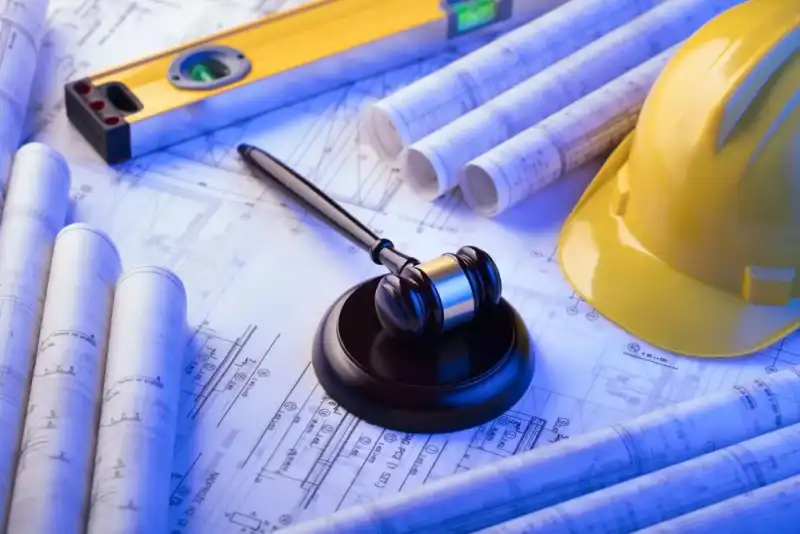
How Can Expert Witnesses Help You Win NCAT Building Disputes?
Building disputes in NSW often end up at NCAT, where expert witnesses play a key role. This guide covers when to engage an expert, how they prepare, and what makes their testimony effective in tribunal proceedings.

What Is NCAT and How Does It Resolve Building Disputes in NSW?
NCAT is the main tribunal for resolving building and construction disputes in New South Wales. This guide explains its structure, jurisdiction, appeal process, and how expert witnesses support cases.
For a complete overview, see our guide to expert witness reports for building disputes.
Need an Expert Witness Report?
Our experienced expert witnesses support cases at NCAT, VCAT, and tribunals across Australia.