
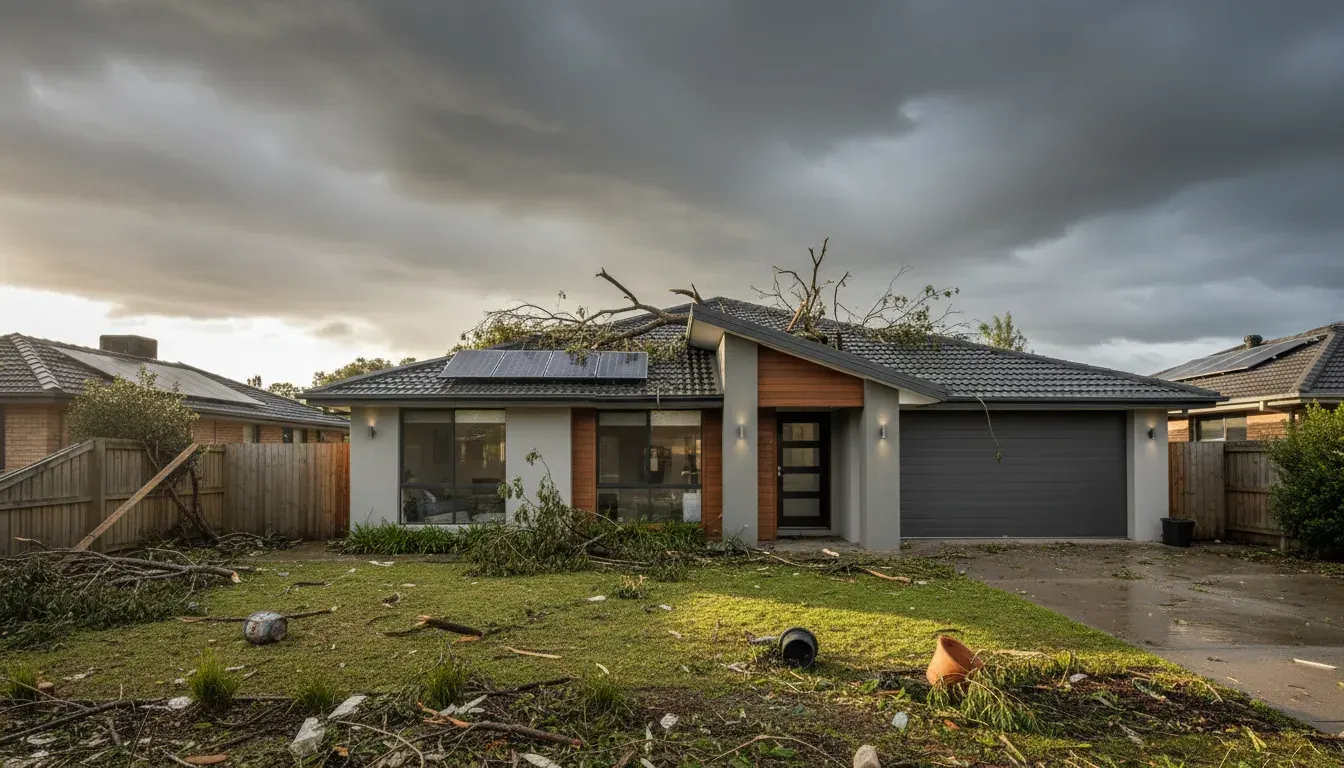
Storms are one of the leading causes of property damage claims in Australia. Every year, events ranging from hailstorms and cyclones to severe thunderstorms and east coast lows cause billions of dollars in damage to Australian homes. Knowing what to do immediately after a storm can save you thousands of dollars and months of frustration.
This guide walks you through the steps to take in the first 48 hours after storm damage, in the order you should take them.
Step 1: Prioritise Safety
Before you do anything else, make sure you and your family are safe. Storm damage can create hazards that are not immediately obvious.
Stay away from fallen power lines. If power lines are down near your property, assume they are live and keep at least eight metres away. Call your electricity distributor or call 000 in an emergency.
Do not enter a structurally compromised building. If you can see significant damage to walls, the roof structure, or the foundation, do not go inside until a professional has assessed whether the building is safe. Cracked walls, sagging rooflines, and leaning structures are warning signs of potential collapse.
Watch for water hazards. Floodwater can conceal sharp debris, open drains, and electrical hazards. Even shallow water inside the home can be dangerous if power points or wiring are submerged.
Check for gas leaks. If you smell gas or hear hissing, leave the property immediately and call your gas provider or 000.
Turn off utilities if it is safe to do so. If you can safely access your switchboard, turn off the electricity. If you can reach the water mains, turn them off to prevent further water damage from burst pipes.
Only proceed to the next steps once you are confident that the property is safe to approach and enter.
Step 2: Document Everything
Thorough documentation in the first 48 hours is one of the most valuable things you can do for your insurance claim. Insurers need evidence of the damage, and the more detailed your records are, the stronger your claim will be.
Photographs and Video
Take photographs and video of all damage, both inside and outside the property. Follow these guidelines:
- Take wide shots first. Capture the overall scene showing the extent of the damage from multiple angles.
- Then take close-up shots. Document specific areas of damage in detail, including cracks, broken tiles, water stains, and debris.
- Include reference points. Place a ruler, coin, or other object next to cracks and holes to show scale.
- Photograph undamaged areas too. This establishes the baseline condition of parts of the property that were not affected.
- Record the date and time. Most phone cameras do this automatically, but double-check that your settings are correct.
- Photograph damaged contents. If personal belongings have been damaged, photograph them before cleaning up or disposing of anything.
Written Notes
Keep a written record of:
- The date and approximate time the storm hit
- What you saw and heard during the event
- When you first noticed specific damage
- Any conversations you have with neighbours, emergency services, or tradespeople
- The weather conditions at the time (you can corroborate this later with Bureau of Meteorology records)
Keep Damaged Materials
If possible, keep samples of damaged materials. Broken roof tiles, waterlogged insulation, and damaged timber can serve as evidence. Do not throw anything away until your insurer or independent assessor has inspected the property.
Step 3: Make Emergency Repairs Only
You have a duty under your insurance policy to take reasonable steps to prevent further damage. This means making emergency repairs to protect your property, but not carrying out permanent repairs before the insurer has assessed the claim.
Appropriate emergency repairs include:
- Tarping a damaged roof. Cover holes or missing sections with a tarpaulin to prevent further water ingress.
- Boarding up broken windows or doors. This prevents weather damage and secures the property against theft.
- Removing fallen branches from the structure. If branches are resting on the roof and causing ongoing damage, remove them if it is safe to do so.
- Mopping up water. Remove standing water to prevent it from causing additional damage to floors, walls, and electrical systems.
- Placing buckets under leaks. A simple but effective way to limit interior water damage.
Important: keep all receipts for emergency repair materials and any tradespeople you engage. These costs are typically covered by your insurance as part of the claim. Also photograph the emergency repairs before, during, and after they are completed.
Step 4: Contact Your Insurer
Notify your insurer about the damage as soon as practical. Most insurers have 24-hour claims hotlines, and many allow you to lodge claims online or through their app.
When contacting your insurer, have the following ready:
- Your policy number
- The date and time of the storm
- A general description of the damage
- Your contact details and the property address
The insurer will assign a claim number and explain the next steps. In most cases, they will arrange for a loss adjuster or assessor to inspect the property. After major storm events, there can be significant delays before the insurer's assessor visits, sometimes weeks or even months. Do not wait for their visit before taking the other steps outlined in this guide.
A few things to keep in mind when speaking with the insurer:
- Stick to the facts. Describe what happened and what damage you can see. Do not speculate about causes or make guesses about repair costs.
- Do not accept a quick settlement. After major events, some insurers may offer a quick cash settlement. Before accepting, make sure it will actually cover the full cost of repairs. Once you accept, you generally cannot go back and ask for more.
- Ask about emergency accommodation. If the property is uninhabitable, your policy may cover temporary accommodation costs. Ask about this early so you know your options.
Step 5: Arrange an Independent Assessment
While your insurer will send their own assessor, consider engaging an independent building assessor to inspect the property as well. As outlined above, the insurer's assessor works for the insurer, and their report may not fully capture the extent of the damage.
An independent assessment is particularly important when:
- The damage appears extensive or involves structural elements
- There is likely to be hidden damage (such as water in wall cavities or subfloor areas)
- You want an objective record of the damage before any repairs begin
- Previous storms or events have affected the property and causation may be disputed
An independent assessor will document all visible and accessible damage, assess the likely extent of concealed damage, determine the cause, and provide a detailed scope of works with cost estimates. This report becomes your evidence if the insurer's assessment seems inadequate.
The best time to arrange an independent assessment is as soon as possible after the event, while the damage is fresh and before any permanent repairs are carried out.
Step 6: Know What Not to Do
In the chaos after a storm, it is easy to make mistakes that can hurt your claim. Avoid these common pitfalls:
- Do not carry out permanent repairs before the insurer inspects. Emergency repairs are fine, but replacing a roof, replastering walls, or fixing structural damage before the insurer has seen it can give them grounds to reduce or deny your claim.
- Do not throw away damaged materials. Everything is potential evidence. Keep it until both the insurer's assessor and your independent assessor have inspected the property.
- Do not clean up more than necessary. By all means, mop up water and remove debris that poses a safety risk. But do not scrub, repaint, or renovate before the assessments are complete.
- Do not post detailed information on social media. Insurers and their investigators do check social media. Casual comments about the damage or your claim can be taken out of context and used against you.
- Do not sign any documents without reading them carefully. If the insurer asks you to sign a scope of works, a settlement offer, or an authority to act, read every word. If you are unsure, get independent advice first.
- Do not ignore the damage. Even if the damage seems minor, report it to your insurer. What looks like a few cracked tiles could hide significant water damage underneath. Leaving it unreported may also breach your policy conditions about timely notification.
After the First 48 Hours
Once the immediate crisis has passed, stay organised. Keep a folder (physical or digital) with all your claim documents, including:
- Your claim number and insurer contact details
- All photographs and videos
- Receipts for emergency repairs
- Correspondence with the insurer
- Your independent assessment report
- Quotes for permanent repairs
Follow up with the insurer regularly if you have not heard back. After major storm events, claims volumes surge and response times slow down. Being proactive and well-documented puts you in the strongest possible position.
The first 48 hours after storm damage are when the foundation of your insurance claim is built. What you do in that window, and what you avoid doing, can make the difference between a fair outcome and a frustrating dispute.
For a complete overview, see our guide to insurance claim assessments.
Need an Insurance Claim Assessment?
Our independent assessors cover Sydney, Melbourne, and all major Australian cities.