
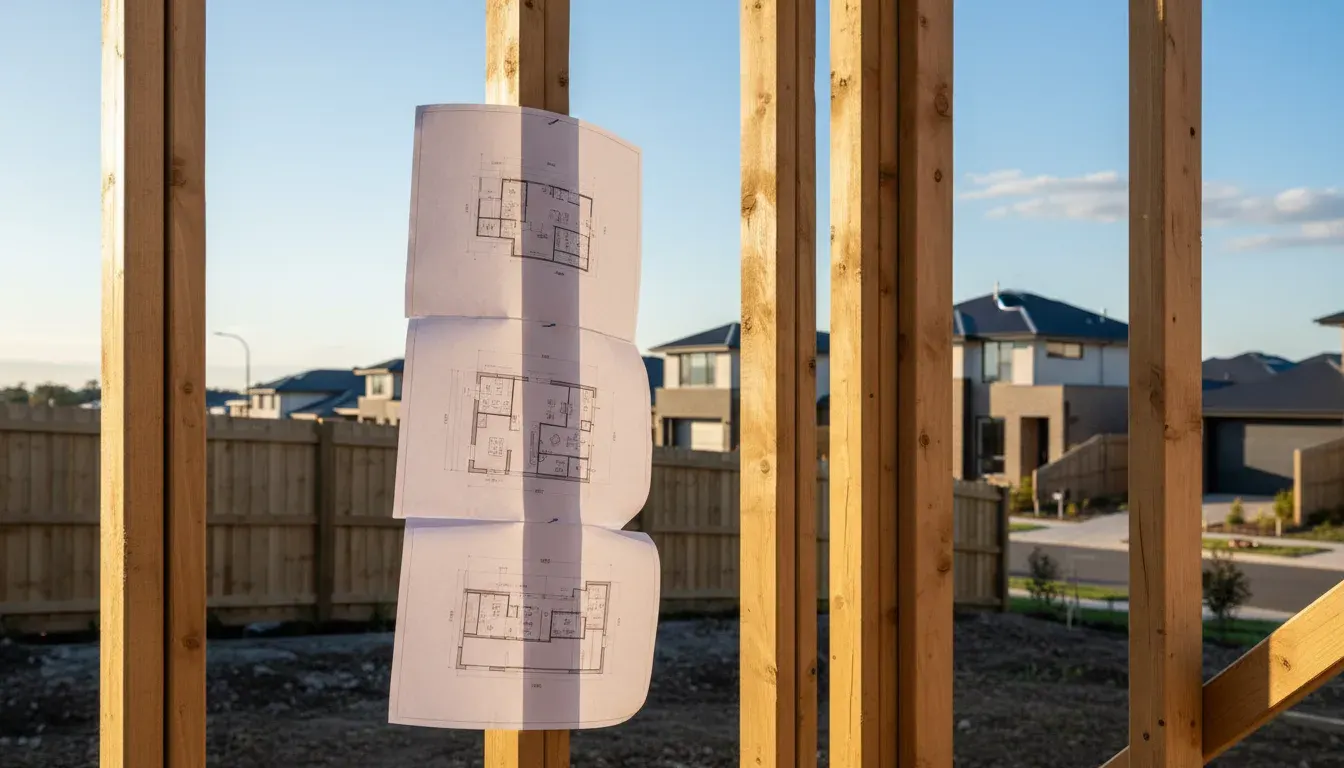
This guide covers the inspection requirements for owner builders in New South Wales, Victoria, and Queensland, including mandatory inspection points, the difference between council and independent inspections, and why going beyond the minimum requirements is strongly recommended.
What Is an Owner Builder?
An owner builder is a homeowner who takes on the role of the principal contractor for a residential building project on their own property. Instead of hiring a licensed builder to manage the entire project, the owner builder coordinates the trades, manages the construction schedule, and takes legal responsibility for the work.
In all three states covered in this guide, you need an owner builder permit before starting any work above a certain value threshold. The permit application process typically includes completing an approved owner builder course and providing evidence of appropriate insurance.
As an owner builder, you carry the same legal obligations for building compliance and defect liability that a licensed builder would. This includes ensuring all mandatory inspections are completed at the required stages. Failure to do so can affect your ability to sell the property and may void your home warranty insurance.
Why Inspection Requirements Matter for Owner Builders
When a licensed builder manages a project, they are responsible for meeting inspection requirements and coordinating with the relevant certifier or council. As an owner builder, that responsibility falls entirely on you.
Mandatory inspections serve several purposes:
- They confirm that critical construction stages comply with the approved plans, the National Construction Code (NCC), and relevant Australian Standards
- They create a documented record of compliance that is required for the occupation certificate or certificate of final inspection
- They protect you from liability by providing independent verification of the work at key stages
- They are often a condition of your home warranty insurance policy
Missing a mandatory inspection can lead to a stop-work notice, require retrospective assessment (which may involve opening up completed work), or prevent you from obtaining the final certificate needed to legally occupy the home.
New South Wales (NSW)
In New South Wales, owner builder inspection requirements are governed by the Environmental Planning and Assessment Act 1979 and the Environmental Planning and Assessment Regulation 2021.
Owner Builder Permit
You need an owner builder permit from NSW Fair Trading for residential work valued at more than $10,000. To obtain the permit, you must complete an approved owner builder course and meet insurance requirements.
Mandatory Inspection Points (Critical Stage Inspections)
NSW legislation requires critical stage inspections to be carried out by the Principal Certifier (formerly known as the Principal Certifying Authority or PCA). The Principal Certifier can be either a council building surveyor or a private certifier registered with the NSW Building Professionals Board.
The mandatory critical stages in NSW are:
- After excavation for and prior to the placement of any footings
- After placement of reinforcement for footings and prior to the pouring of concrete
- Prior to covering of the framework for any floor, wall, roof, or other building element
- After placement of all stormwater drainage connections
- After installation of waterproofing in any wet area
- Prior to covering of any in-ground or concealed plumbing and drainage
- At any other stage specified by the Principal Certifier in the construction certificate
The Principal Certifier must also carry out a final inspection before issuing the occupation certificate.
Warranty Obligations
If you sell the property within six years of completion, you must provide the buyer with a copy of the owner builder permit and disclose your role as owner builder. Statutory warranty obligations apply to the work for the same periods as they would for a licensed builder: six years for structural defects and two years for non-structural defects.
Victoria (VIC)
In Victoria, owner builder inspection requirements fall under the Building Act 1993 and the Building Regulations 2018.
Owner Builder Certificate of Consent
You need a Certificate of Consent from the Victorian Building Authority (VBA) to act as an owner builder for work valued at more than $16,000 (as of 2026). An approved owner builder course must be completed before applying.
Mandatory Inspection Points
In Victoria, mandatory inspections are carried out by the Relevant Building Surveyor (RBS), who can be a municipal (council) building surveyor or a private building surveyor registered with the VBA.
The mandatory inspection stages specified by Victorian regulations typically include:
- Footings and reinforcement, prior to concrete pour
- Slab, prior to concrete pour (where applicable)
- Frame stage, before any cladding, lining, or insulation is installed
- Final inspection, before an occupancy permit is issued
The RBS may also specify additional inspection points based on the complexity of the project. It is your responsibility as the owner builder to notify the RBS when each stage is ready for inspection and to not proceed to the next stage until the inspection has been completed and approved.
In Victoria, the Relevant Building Surveyor has the authority to add mandatory inspection points beyond the standard stages. Always check with your RBS at the start of the project to confirm the full list of required inspections for your specific build.
Warranty Obligations
Victorian owner builders face significant warranty obligations. If you sell the property within 6.5 years of completion, you must take out owner builder warranty insurance (also known as domestic building insurance) before the sale. Structural defect warranty periods in Victoria extend to 10 years, which is the longest in Australia.
Queensland (QLD)
In Queensland, owner builder requirements are managed by the Queensland Building and Construction Commission (QBCC) under the Queensland Building and Construction Commission Act 1991 and the Building Act 1975.
Owner Builder Permit
You need an owner builder permit from the QBCC for residential work valued at more than $11,000. An approved owner builder course must be completed before the permit is granted.
Mandatory Inspection Points
Queensland mandatory inspections are carried out by a private building certifier or the local council. The Building Act 1975 specifies the following mandatory inspection stages:
- Foundations (footings), before concrete is poured
- Slab (where applicable), before concrete is poured
- Frame stage, before any cladding or linings are applied
- Final inspection, before the certificate of classification is issued
The building certifier may require additional inspections depending on the nature and complexity of the project. For example, pool fencing, retaining walls, and specific engineering elements may require separate inspections.
Warranty Obligations
Owner builders in Queensland must provide a notice to prospective buyers if the property is sold within six years and six months of completion. The statutory warranty periods for owner builder work are the same as for licensed builder work: six years and six months for structural defects and six months for non-structural defects.
Council Inspections vs Independent Inspections
It is important to understand the difference between mandatory inspections carried out by the certifier (whether council or private) and independent inspections commissioned by you as the owner builder.
| Council / Certifier Inspections | Independent Inspections | |
|---|---|---|
| Purpose | Confirm compliance with the building permit and the NCC at mandatory hold points | Provide a detailed, trade-by-trade quality assessment of all work completed at each stage |
| Scope | Limited to structural compliance, bracing, and overall code adherence | Covers waterproofing, insulation, electrical, plumbing, finishes, and all other trades |
| Who Pays | Usually included in the building permit fees or certifier engagement | Paid separately by the owner builder |
| Legal Requirement | Mandatory in all states | Voluntary but strongly recommended |
| Report Use | Required for occupation certificate / certificate of classification | Used for quality assurance, defect resolution, and future sale documentation |
Mandatory certifier inspections are essential for legal compliance, but they do not assess everything. Many of the most common and costly defects, particularly waterproofing failures, insulation gaps, and workmanship issues, fall outside the certifier's scope.
Why Independent Inspections Are Worth Adding
As an owner builder, you do not have the oversight structure that a licensed builder would typically provide. You are coordinating trades yourself, and you may not have the technical knowledge to assess every aspect of their work. This is where independent inspections fill a critical gap.
- Independent inspectors assess trades that the certifier does not cover, including waterproofing, tiling, plumbing, electrical, and finishes
- They provide a detailed photographic report that you can use to hold subcontractors accountable for defective work
- They give you a professional, documented record of the construction quality, which is valuable if you sell the property within the warranty period
- They reduce your personal risk by identifying problems before they become expensive to fix
Given that owner builders carry the same warranty obligations as licensed builders but often have less construction experience, independent inspections are one of the most effective risk management tools available.
Common Mistakes Owner Builders Make With Inspections
- Proceeding past a mandatory hold point without booking the required certifier inspection, which can result in a stop-work notice or the need to open up completed work
- Assuming the certifier inspection covers all aspects of the build, when it only covers compliance at specific hold points
- Not documenting defects in writing and relying on verbal agreements with subcontractors to fix problems
- Skipping independent inspections to save money, only to face much higher rectification costs later
- Failing to keep copies of all inspection reports, certificates, and correspondence, which creates problems at sale time
Key Takeaways
- Owner builders carry the same legal inspection and warranty obligations as licensed builders.
- NSW requires critical stage inspections by a Principal Certifier at footing, slab, frame, waterproofing, drainage, and final stages.
- Victoria requires inspections by the Relevant Building Surveyor at footing, slab, frame, and final stages, with the RBS able to add extra stages.
- Queensland requires inspections by a building certifier at foundation, slab, frame, and final stages.
- Council and certifier inspections are mandatory but limited in scope. They do not assess waterproofing quality, insulation, electrical, plumbing, or finishes in detail.
- Independent inspections fill this gap and are strongly recommended for owner builders who may lack technical construction oversight.
- Warranty periods apply to owner builder work and affect your obligations when selling the property.
- Keep all inspection reports and certificates in an organised file for compliance, insurance, and future resale.
Frequently Asked Questions
Do owner builders have the same inspection requirements as licensed builders?
Yes. The mandatory inspection requirements under the building permit apply equally to owner builders and licensed builders. The same critical stages must be inspected by the relevant certifier or building surveyor before construction can proceed. As an owner builder, it is your personal responsibility to ensure these inspections are booked and completed on time.
Can I use a private certifier instead of the council?
In all three states covered in this guide (NSW, VIC, QLD), you have the option of engaging a private certifier or building surveyor instead of relying on the local council. Private certifiers are registered professionals who perform the same mandatory inspection functions as council building surveyors. Many owner builders prefer private certifiers for their flexibility in scheduling and responsiveness.
What happens if I miss a mandatory inspection?
If you proceed past a mandatory hold point without completing the required inspection, you may face a stop-work order, a requirement to open up completed work so the certifier can assess it, or difficulty obtaining the occupation certificate at the end of the project. In some cases, retrospective assessment can be very expensive, especially if walls, floors, or other elements need to be removed for inspection.
Do I need independent inspections on top of the mandatory certifier inspections?
Independent inspections are not legally required, but they are strongly recommended. Certifier inspections are limited in scope and focus on code compliance at specific hold points. They do not cover many trades, including waterproofing application quality, insulation placement, plumbing connections, tiling, and finishes. Independent inspections provide a comprehensive quality assessment that protects you from defects the certifier does not check for.
What warranty obligations do owner builders have when selling?
If you sell a property that you built as an owner builder within the statutory warranty period (which varies by state), you must disclose your role as the owner builder and comply with warranty insurance requirements. In Victoria, you must take out domestic building insurance before the sale. In NSW, you must provide the buyer with a copy of the owner builder permit. In Queensland, you must give the buyer a notice about the owner builder work. Statutory warranty periods for structural defects range from six years (NSW, QLD) to ten years (VIC).
For a complete overview, see our guide to construction stage inspections.
Need Construction Stage Inspections?
Our licensed inspectors cover Sydney, Melbourne, and all major Australian cities.