
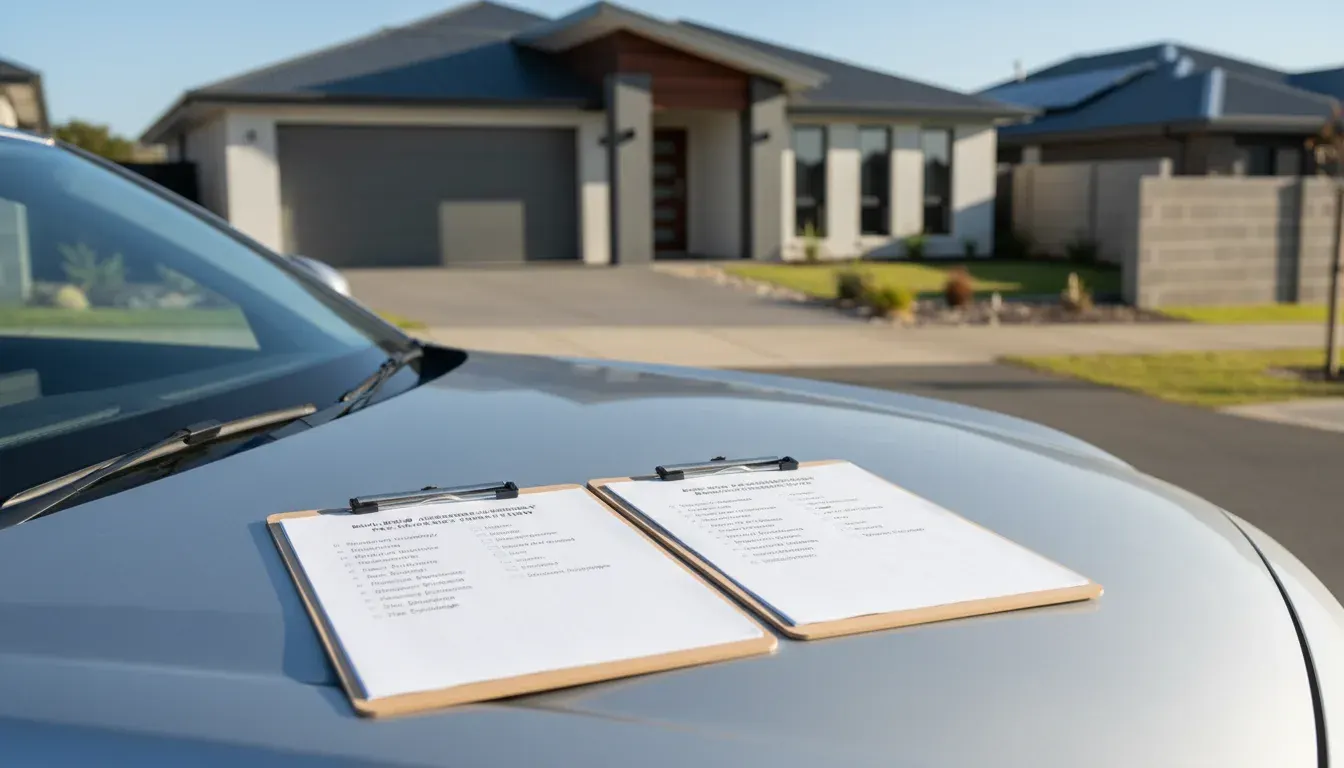
Most insurers will send an insurance assessor, claims assessor, building assessor, or loss adjuster to inspect the property. That report may affect the claim outcome, the repair scope, and the settlement amount.
The key question is simple: does the assessor work for the insurer, or do they work for you?
This guide explains the insurance assessor meaning, what an insurance assessor does, what insurance assessors look for, and when an independent insurance assessor can help Australian homeowners get a clearer view of property damage.
Need a Clear Defect Report Before Things Escalate?
Get an independent defect investigation report that records the issue, likely cause, photos, and repair guidance before a builder dispute becomes harder to prove.
Investigation
What Is an Insurance Assessor?
An insurance assessor is a person who inspects damage, records evidence, reviews the likely cause, and prepares findings for an insurance claim.
In a property claim, the insurance assessor may inspect damaged roofing, ceilings, walls, flooring, subfloors, external areas, moisture issues, cracking, or other building defects linked to the event.
The role can be handled by different people, including:
- An internal insurance claims assessor
- An external loss adjuster
- A building assessor
- A property damage assessor
- An independent insurance assessor engaged by the homeowner
- A specialist expert, such as an engineer, builder, hydrologist, or trade expert
ASIC explains that insurance claims handling and settling is treated as a financial service in Australia, and the rules apply to people who carry on claims handling and settling services in Australia unless an exemption applies.
The Insurance Council of Australia also states that expert reports may be used when insurers need verified information about the cause or extent of property damage, and those reports can be reviewed by a claims manager, assessor, or loss adjuster.
What Does an Insurance Assessor Do?
An insurance assessor looks at the damage and prepares information that helps the claim move forward.
For a home insurance assessor, the work usually includes:
- Inspecting visible property damage
- Asking when and how the damage happened
- Taking photos and notes
- Checking whether the damage appears sudden, accidental, gradual, or pre-existing
- Looking for signs of water entry, impact, movement, mould, rot, or poor maintenance
- Reviewing whether further expert reports are needed
- Preparing an insurance assessment report
- Estimating the repair scope or advising the insurer on what needs to be assessed next
The Financial Rights Legal Centre advises policyholders to understand their Product Disclosure Statement and Policy Schedule, and notes that people making home and contents claims may need to prove their loss.
That is why the assessor’s report matters. If the report misses damage, records the wrong cause, or gives a narrow repair scope, the claim can become harder to resolve.
What Do Insurance Assessors Look For?
During a property insurance assessment, insurance assessors may look for:
- The likely cause of the damage
- Whether the damage is linked to the insured event
- Whether there are signs of gradual deterioration
- Whether maintenance issues may have contributed
- The visible extent of damage
- Hidden or secondary damage
- Whether temporary repairs were done
- Whether the property is safe
- Whether further expert reports are needed
- Whether the repair scope matches the damage
The Financial Rights Legal Centre advises policyholders to understand their Product Disclosure Statement and Policy Schedule, and notes that people making home and contents claims may need to prove their loss.
For example, after heavy rain, a home insurance assessor may check roof tiles, flashing, gutters, ceiling stains, wall cavities, moisture readings, and whether the water entry came from storm damage or long-term maintenance problems.
Insurer-Appointed Assessor vs Independent Insurance Assessor
An insurer-appointed assessor is chosen by the insurance company. An independent insurance assessor is chosen by the homeowner.
Both may inspect the same property, but their appointment, reporting pathway, and practical focus can be different.
| Area | Insurer-appointed assessor | Independent insurance assessor |
|---|---|---|
| Who appoints them? | The insurer | The homeowner or property owner |
| Who receives the report first? | Usually the insurer | The homeowner |
| Main task | Assess the claim for the insurer | Assess the damage independently |
| Common titles | Loss adjuster, claims assessor, building assessor | Independent assessor, independent loss assessor, property damage assessor |
| Report focus | Cause, cover, extent, repair scope, claim position | Cause, extent, defect evidence, repair scope, supporting photos |
| Best used for | Standard insurer claim assessment | Disputed scope, low payout, denied claim, unclear cause, hidden damage |
This does not mean an insurer-appointed assessor is dishonest. Many loss adjusters and claims assessors act professionally.
The issue is that they are appointed through the insurer’s claims process. Their report is usually used to help the insurer decide what it will accept, reject, repair, or pay.
An independent assessor gives the homeowner a separate evidence-based view. This can be useful when the insurer’s findings do not match the visible damage, repair quotes, or building evidence.
Loss Adjuster vs Assessor vs Loss Assessor
Search data shows users often compare a loss adjuster vs assessor, loss assessor vs loss adjuster, and loss adjuster vs loss assessor. These terms are often mixed up.
| Term | Meaning | Usually works for |
|---|---|---|
| Insurance assessor | General term for a person assessing damage for a claim | Insurer, owner, or appointed party |
| Claims assessor | Person reviewing claim details, damage, documents, and claim value | Usually insurer |
| Loss adjuster | External specialist who investigates and assesses claims | Usually insurer |
| Loss assessor | Person who may assist the policyholder with assessing or presenting a claim | Often policyholder |
| Independent insurance assessor | Building or damage expert engaged directly by the owner | Homeowner or property owner |
In Australia, ASIC notes that a person who represents insured people in pursuing a general insurance claim for a benefit may fall within the claimant intermediary category for claims handling rules.
For homeowners, the practical point is simple. Before you rely on any report, ask who appointed the assessor, who pays them, and whether they are giving a building opinion, a claims opinion, or both.
Who Is the Insurer-Appointed Assessor?
When your insurer receives a claim, they assign it to either an internal claims handler or an external loss adjuster. For property damage claims involving significant amounts, the insurer will usually engage a loss adjusting firm to inspect the property and prepare a report.
Loss adjusters are professionals who investigate insurance claims on behalf of insurers. Their job is to determine:
- Whether the damage is covered under the policy
- What caused the damage
- The extent and cost of the damage
- Whether any exclusions or conditions apply
Loss adjusters are regulated and must hold appropriate qualifications. However, their client is the insurance company. They are paid by the insurer, they report to the insurer, and their recommendations inform the insurer's decision about your claim.
This arrangement creates an inherent tension. The loss adjuster is expected to be thorough and fair, but they are also working within a system where the insurer has a financial interest in minimising the payout.
The Conflict of Interest Problem
It is important to be clear: most loss adjusters act professionally and follow their industry codes of conduct. However, the structural conflict of interest cannot be ignored. Studies and industry reports have consistently shown that insurer-appointed assessors tend to produce more conservative damage estimates compared to independent assessors.
This can manifest in several ways:
- Narrower scope of damage. The loss adjuster may document only the most obvious damage while missing secondary or concealed issues that are related to the same event.
- Cause attribution. The assessor may attribute some of the damage to pre-existing conditions, wear and tear, or maintenance failures rather than the insured event.
- Lower repair costs. The scope of works and cost estimates may favour cheaper repair methods over full replacement, even when replacement is the more appropriate option.
- Exclusion reliance. The report may lean towards interpretations of the policy that favour exclusions or limitations.
None of this means the loss adjuster is acting in bad faith. But the incentive structure means that the assessment may not fully reflect the damage you have experienced.
What Does an Independent Assessor Do?
An independent building assessor is engaged by you, the homeowner. They have no relationship with your insurance company and no financial incentive to minimise or maximise the claim. Their sole obligation is to provide an accurate, thorough assessment of the damage.
An independent assessment typically includes:
- Comprehensive damage documentation. The assessor inspects the entire property, not just the areas flagged by the insurer. They look for secondary damage, concealed issues, and consequential damage that may have been missed.
- Cause analysis. An independent assessor will determine the cause of the damage based on building science and evidence, without any pressure to attribute it to excluded causes.
- Detailed scope of works. The report includes a thorough scope of works needed to properly repair the property, including all trades, materials, and labour required.
- Accurate cost estimates. Repair costs are based on current market rates rather than insurer panel pricing, which can be significantly lower than what independent contractors charge.
- Photographic evidence. Detailed photographs are taken throughout the inspection, creating a comprehensive visual record of the damage.
- Building code compliance. The assessor checks whether repairs need to comply with current building codes, which may require upgrades beyond a simple like-for-like repair.
Preparing Evidence for a Building Dispute?
Owner Inspections can prepare expert witness reports for building defect matters where clear, independent evidence is needed for legal or tribunal proceedings.
Reports
How the Reports Differ
The differences between an insurer-appointed report and an independent report can be significant. Here is a practical example.
After a severe storm damages a roof, the insurer's loss adjuster may report that 20 tiles need replacement and there is minor water damage to one ceiling. The total claim might be assessed at $3,500.
An independent assessor inspecting the same property might find that the storm also damaged the roof sarking, displaced ridge capping, caused water ingress into the wall cavity, and created moisture damage in the subfloor framing. The independent assessment might put the true repair cost at $18,000 or more.
The difference is not about honesty. It is about the depth and scope of the investigation, the methodology used, and the incentive structures at play.
Key areas where reports commonly differ include:
- Extent of damage. Independent reports tend to identify more damage because the assessor has more time and a broader mandate.
- Repair methodology. Insurer reports may specify patch repairs where independent assessors recommend full replacement to ensure durability and code compliance.
- Cost of repairs. Independent reports use current market rates while insurer reports may use panel rates that are 20 to 40 percent lower.
- Causation. Independent reports are more likely to attribute all related damage to the insured event rather than splitting it between insured and non-insured causes.
Why the First Insurance Assessment Report Matters
The first insurance assessment report can influence the whole claim.
If the report records limited damage, the insurer may offer a limited repair scope. If it records the cause as wear and tear, gradual deterioration, or poor maintenance, the insurer may reduce or deny part of the claim.
That is why homeowners should keep their own evidence.
Before and during the assessment, collect:
- Photos and videos of the damage
- Photos showing the wider room or roof area
- The date and time the damage was noticed
- Weather records if storm or flood is involved
- Trade invoices or emergency repair notes
- Moisture readings, where available
- Any past reports showing the property condition before the event
The Financial Rights Legal Centre includes proving your loss as part of the home and contents claim process, which makes clear documentation important.
When Should You Get an Independent Assessment?
Not every insurance claim requires an independent assessment. For small, straightforward claims where the damage is obvious and the insurer's offer seems reasonable, you may not need one.
However, you should seriously consider an independent assessment in these situations:
- The insurer's payout seems too low. If the amount offered does not cover the actual cost of proper repairs, an independent report can demonstrate the true cost.
- Your claim has been partially or fully denied. An independent assessment provides evidence to challenge the denial through internal dispute resolution or AFCA.
- The insurer attributes damage to maintenance or wear and tear. An independent assessor can determine whether the damage was genuinely caused by the insured event.
- You have significant property damage. For claims involving tens of thousands of dollars, the cost of an independent assessment (typically $500 to $2,000) is a worthwhile investment.
- There is hidden or secondary damage. If you suspect the damage goes beyond what is visible, an independent assessor can investigate concealed areas.
- You disagree with the insurer's scope of works. If the proposed repairs seem inadequate, an independent report can recommend the appropriate repair methodology.
The Australian Parliament’s flood insurance inquiry noted concerns about the quality and consistency of expert reports used by insurers when coverage questions arose, including reports used to support claim decisions.
That point matters for homeowners. If the insurer’s report does not explain the cause clearly, does not address all visible damage, or does not match the physical evidence, a second opinion may help.
How to Deal With Insurance Assessors
Use the inspection as an evidence-gathering step, not an argument.
Before the assessor arrives:
- Read your PDS and Policy Schedule
- Write a short timeline of what happened
- Take your own photos and videos
- Make a list of all affected areas
- Keep damaged materials where safe
- Keep invoices for emergency works
- Ask the insurer what the assessor will inspect
During the assessment:
- Show every affected area
- Explain when the damage was first noticed
- Avoid guessing about the cause
- Ask whether hidden areas need further review
- Ask whether expert reports will be used
- Take notes of what was inspected
After the assessment:
- Ask for a copy of any report the insurer relies on
- Compare the scope with your own photos and quotes
- Request clarification if the cause or repair method is unclear
- Get an independent report if the findings do not match the evidence
Final expert report should be made available on request, or when a claim decision is made that relies on the expert report.
How to Choose an Independent Assessor
When selecting an independent assessor, look for the following:
- Qualifications and licensing. The assessor should hold relevant building qualifications and be licensed in your state. In NSW, this means a licence from NSW Fair Trading. In Victoria, they should be a registered building practitioner.
- Experience with insurance claims. Not all building inspectors have experience with insurance work. Look for an assessor who understands how insurance claims work and how to prepare reports that insurers and dispute resolution bodies will take seriously.
- No insurer affiliations. Confirm that the assessor does not work on any insurer panels and has no financial relationship with insurance companies.
- Detailed reporting. Ask for a sample report or outline of what the assessment will cover. A good report should include detailed descriptions, photographs, cause analysis, scope of works, and cost estimates.
Common Mistakes Homeowners Make During an Insurance Assessment
Many homeowners lose ground because they wait too long to gather evidence or rely only on the insurer’s inspection.
Avoid these mistakes:
| Mistake | Why it can hurt the claim |
|---|---|
| Throwing away damaged materials too early | It can remove proof of the damage |
| Only photographing close-ups | The insurer may not see the full context |
| Guessing the cause | A wrong guess can weaken the claim |
| Accepting a narrow scope without checking it | Hidden damage may be missed |
| Not asking for expert reports | You may not know what evidence the insurer relied on |
| Waiting until repairs start | Evidence can be covered or removed |
The safer approach is to document the damage early, keep records, and get expert help when the scope, cause, or repair method is disputed.
Using Your Independent Report
Once you have your independent assessment, you can use it to:
- Negotiate directly with the insurer for a higher settlement
- Support an internal dispute resolution complaint
- Lodge a complaint with AFCA with strong supporting evidence
- Pursue legal action if necessary
An independent report carries significant weight in dispute resolution because it is prepared without any financial connection to the insurer. AFCA and the courts regularly give independent reports substantial consideration when resolving disputes.
The cost of an independent assessment is a small price to pay for ensuring that your claim is treated fairly and that your home is properly repaired.
Getting the Most Value from Your Home and Building Investment
An insurance claim is not just paperwork. It can affect whether your home is repaired properly, whether hidden damage is found, and whether the settlement reflects the actual building issue.
Owner Inspections can help with independent insurance claim assessments across Sydney, Melbourne, Brisbane, and major Australian locations.
If the insurer’s report does not match the damage you can see, or the claim outcome feels unclear, book an independent assessment before accepting the final position.
Get Help Documenting Your Building Defects
Speak with Owner Inspections about your defect issue, photos, timeline, and report needs so you can take the next step with clearer evidence.
Frequently Asked Questions
What is an insurance assessor?
What does an insurance assessor do?
What does an insurance assessor look for?
What is the difference between a loss adjuster and a loss assessor?
Is an independent insurance assessor the same as an insurer-appointed assessor?
When should I get a home insurance assessor?
Can I ask for the insurer’s assessment report?
How do I deal with insurance assessors?
What is an insurance assessment report?
Need an Insurance Claim Assessment?
Our independent assessors cover Sydney, Melbourne, and all major Australian cities.