
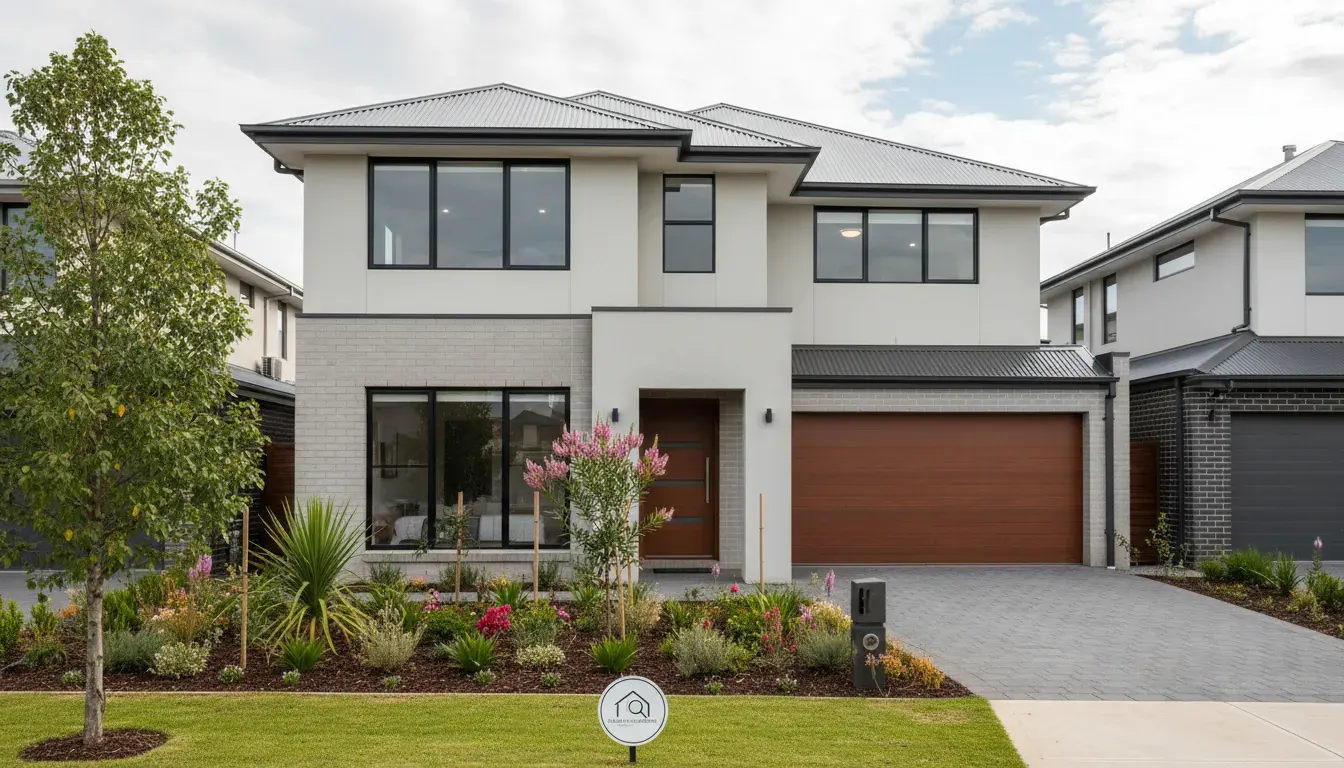
Buying in Melbourne can feel like a sprint. Auction week pressure, short settlement windows, lots of “looks good to me” advice, and not much time to work out what’s normal ageing and what’s a big repair bill. If you’re searching for home inspections Melbourne, the real question is usually this: what problems show up most often, and what should be done about them?
Australian research suggests building issues are common across the housing stock. AHURI reports that 70% of homes had some building quality problem, with cracks (44%), mould (35%), and plumbing issues (27%) among the most commonly reported.
What a standard inspection can’t confirm:
Most inspections are visual and non-invasive. That means they can’t confirm what’s inside sealed wall cavities, under membranes, behind heavy storage, or under finished flooring. Pest activity can also be hidden, and a report may state “no visible evidence” without guaranteeing pests are absent.
When symptoms suggest a hidden issue, the best outcome is usually a clear escalation path: engineer, plumber, waterproofing specialist, electrician, licensed pest inspector, or owners corporation records review.
What This Article Covers (And Who It’s For)
A typical home inspection (also called a building inspection or pre-purchase inspection) is a visual, non-invasive check of accessible parts of the property to identify visible defects, safety issues, and signs of bigger problems.
This article is for:
- Auction-week first home buyers who need fast clarity before bidding
- Investors and landlords planning maintenance budgets and reducing vacancy risk
- Apartment and townhouse buyers worried about waterproofing, balconies, and owners corporation costs
Melbourne’s mix of older brick homes, timber subfloors, and newer Class 2 apartment buildings can produce different defect patterns, so the examples below include both houses and multi-res buildings.
Common Issues We See in Melbourne Homes
- Cracks and signs of movement
- Moisture ingress, damp and mould (wet areas, ceilings, external walls)
- Roof leaks, gutters and stormwater problems
- Subfloor issues (ventilation, moisture, timber decay)
- Termite risk and timber pests
- Bathroom, balcony and waterproofing defects (houses and apartments)
- Non-compliant or poor-quality renovations (DIY red flags)
- Plumbing and drainage warning signs
- Ventilation and condensation risks (especially in cooler months)
- Safety basics (handrails, trip hazards, hot water, obvious electrical issues)
Buying in Melbourne and short on time?
Get a Melbourne building inspection booked fast, with a clear report on common defects like cracks, damp and roof drainage.
building inspection
1. Cracks and signs of movement (when it’s cosmetic vs structural)
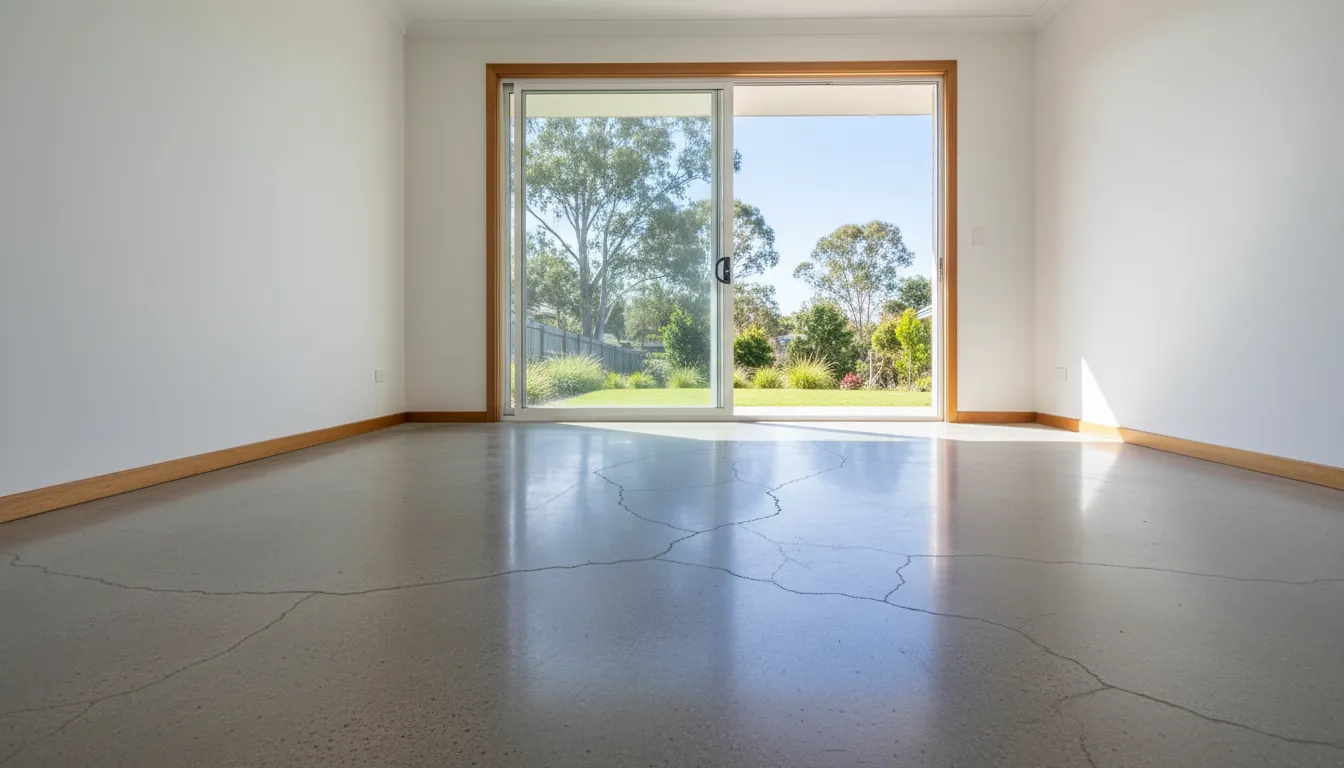
Cracks are one of the most commonly reported housing issues in Australia. In Melbourne, cracks often show up in brick veneer, older solid masonry, and homes sitting on reactive clay sites.
What it can look like:
- Step cracking in brickwork (often around windows or corners)
- Diagonal cracks from door/window corners
- Plaster cracking that repeats after repainting
- Cornice separation
- Doors or windows binding
- Uneven floors or new gaps at skirting
Why it matters: Some cracking is normal settlement or seasonal movement, especially on reactive soils where moisture changes drive expansion and shrinkage. The NCC recognises site classes that include moderately to extremely reactive clay, which can experience moderate to extreme ground movement from moisture changes.
Crack guide: what it often means and the next step
| Crack type | Common location | Why it might matter | Practical next step |
|---|---|---|---|
| Hairline plaster crack | Internal walls/ceilings | Often cosmetic movement | Monitor with dated photos |
| Step crack in brickwork | External walls | Can indicate movement | Check for matching internal signs; consider engineer if progressing |
| Diagonal crack at opening | Doors/windows | Stress concentration, possible movement | Check if doors/windows are sticking |
| Wide crack that changes | Anywhere | Ongoing movement | Engineer assessment recommended |
| Cracks plus sloping floors | Multiple rooms | Higher chance of footing movement | Engineer + drainage review |
Moisture and reactive soils Victorian guidance notes that soil reactivity reflects how much soil shrinks and swells with moisture changes, and “the greater the reactivity, the greater the possibility of excessive movement”.
What helps when movement is moisture-driven:
- Make sure surface water drains away from the house. Victorian guidance suggests sloping soil/paths away from foundations and notes more reactive soils may need steeper falls.
- Check gutters and downpipes discharge away from footings
- Keep garden beds and sprinklers from soaking external walls
When to call an engineer:
- Cracks are widening, new cracks appear quickly, or doors start binding
- Cracks are paired with noticeable floor slope
- You see brickwork separation, bulging, or lintel distress
2. Moisture ingress, damp and mould (especially wet areas)
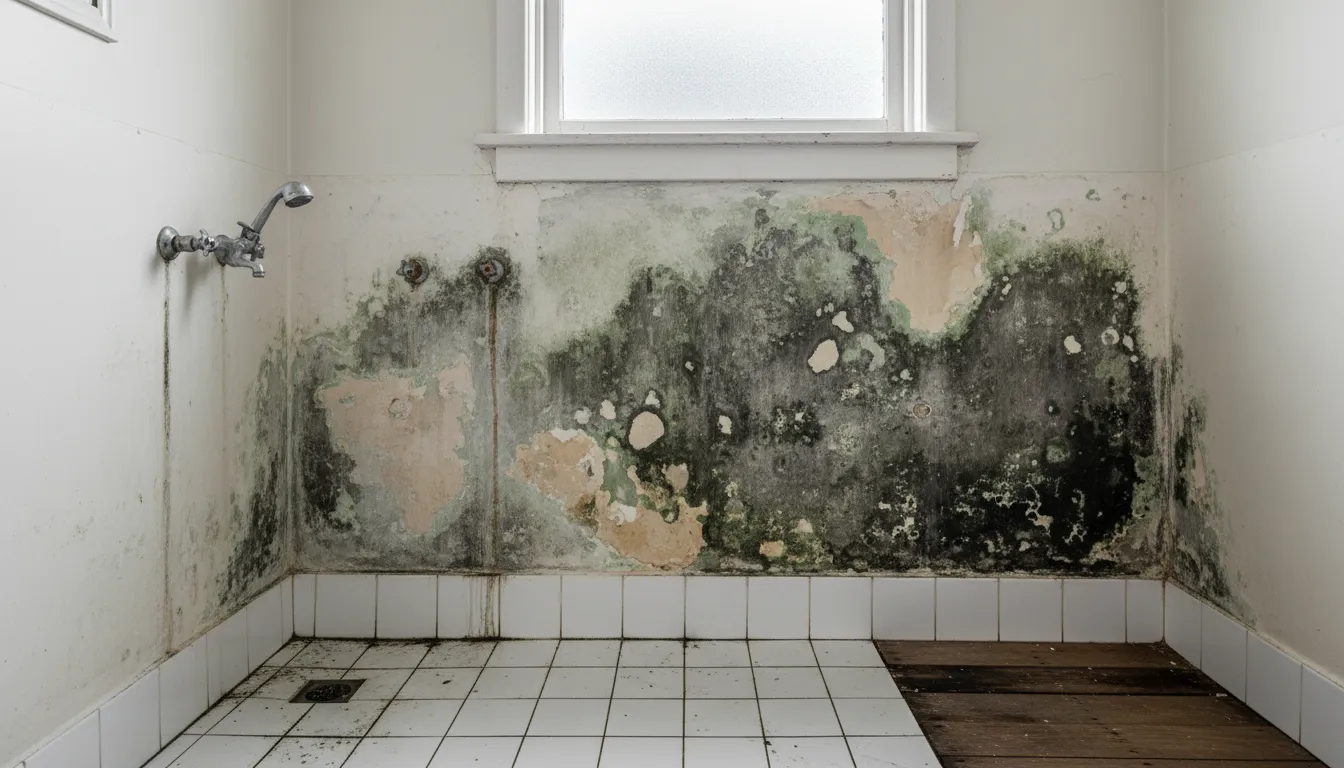
Moisture is one of the fastest ways a “small defect” turns into a bigger one, because it can affect linings, framing, flooring, and indoor air quality. Melbourne’s climate can support moisture issues, with Bureau of Meteorology data for Melbourne Airport showing a mean annual rainfall of 536.2 mm and a mean 9am relative humidity around 72%.
What it can look like:
- Musty smell in wardrobes, bathrooms, or bedrooms
- Bubbling paint, staining, or swollen skirting
- Efflorescence (salty white deposits) on brick or concrete
- Mould spotting around windows, ceilings, or behind furniture
- Loose “drummy” tiles in showers or balconies
- Damp patches at ceiling corners after rain
Common causes checklist:
- Shower leaks and failed grout/seals (grout is not waterproof)
- Bathroom waterproofing defects
- Poor exhaust ventilation
- Roof leaks or blocked gutters
- Downpipes dumping water near the house
- Ground levels too high against walls
- Plumbing leaks under sinks or behind toilets
Why wet areas are a repeat offender
ABCB guidance explains that wet-area waterproofing provisions aim to prevent health risks and building damage caused by internal moisture and water flow from wet areas, such as bathrooms and laundries. Victorian building guidance also draws a clear line between defects and non-compliance. It states that if a bathroom isn’t adequately waterproofed, it may be non-compliant and can lead to moisture problems.
What an inspection can’t confirm
A visual inspection can identify symptoms, but it can’t confirm the condition of a hidden membrane without invasive testing. The Victorian waterproofing fact sheet also shows how compliance and sign-off decisions can depend on building surveyor requirements and documentation.
When to call a specialist
- Licensed plumber for suspected pipe/shower waste leaks
- Waterproofing specialist for shower/balcony membrane failure
- Indoor air/mould specialist if mould is widespread or occupants have health concerns
3. Roof leaks, gutters and stormwater problems
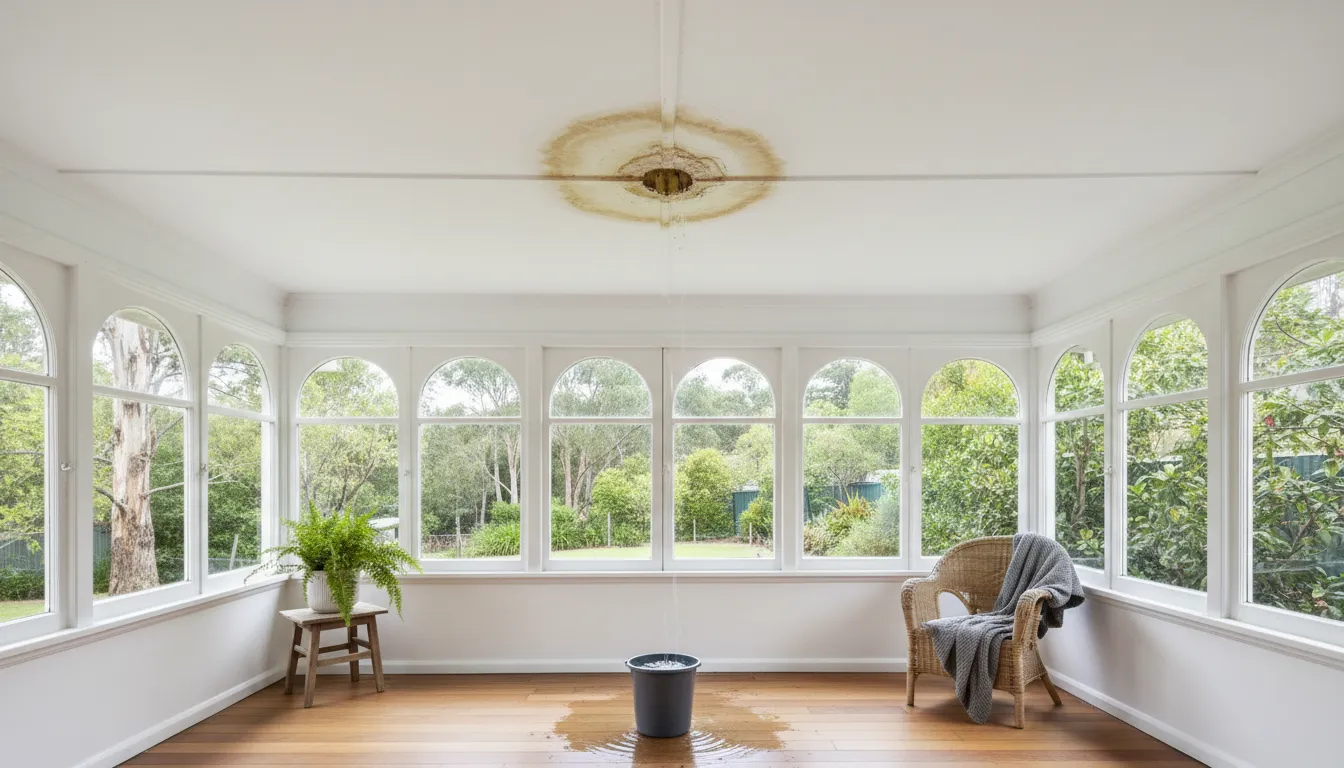
Roof-space access is one of the best “early warning systems” for water issues. In Melbourne, many roof problems show up first as small stains, damp insulation, or mould growth in the roof space.
What it can look like:
- Staining on ceilings (often near cornices or light fittings)
- Damp insulation or mouldy rafters
- Rusted valleys, cracked tiles, loose flashing
- Blocked gutters or sagging sections
- Downpipes discharging at the base of walls
Why it matters
Water entry from above can travel and show up far from the source. Poor roof drainage can also increase moisture around foundations and raise movement risk.
Buyer action steps (fast checks you can do):
- Ask the agent for any roof repair history, leak repairs, or insurance claims
- Look at ceiling corners in bedrooms and living rooms
- Check gutter overflow marks or plant growth in gutters
- Confirm where downpipes discharge and whether stormwater is connected properly
4. Subfloor issues (timber decay, ventilation, moisture)
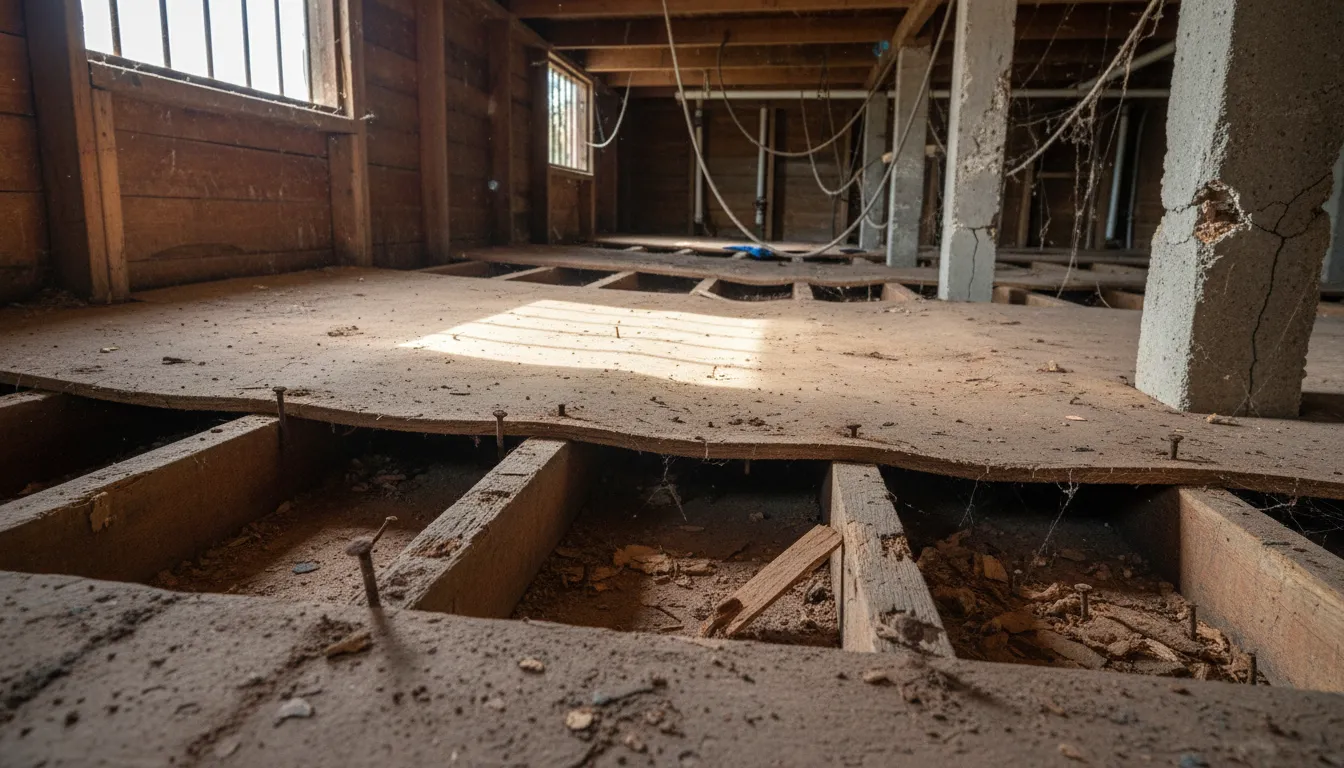
Older Melbourne houses often have subfloors, and subfloor moisture issues can quietly damage bearers, joists, and flooring.
What it can look like
- Bouncy floors or uneven floor levels
- Musty odours near floor vents
- Visible fungal decay on timbers
- Poor clearance or blocked vents
- Pooling water under the house
Risk escalators
- Garden beds or paving higher than the damp course
- Poor site falls that push water towards the building
- Leaking outdoor taps or air con drains near walls
- Downpipes dumping water at footings
Victorian guidance on foundation maintenance stresses avoiding water ponding against footings or walls and managing drainage to reduce moisture problems around the perimeter.
5. Termite risk and timber pests (why “no visible damage” isn’t a guarantee)
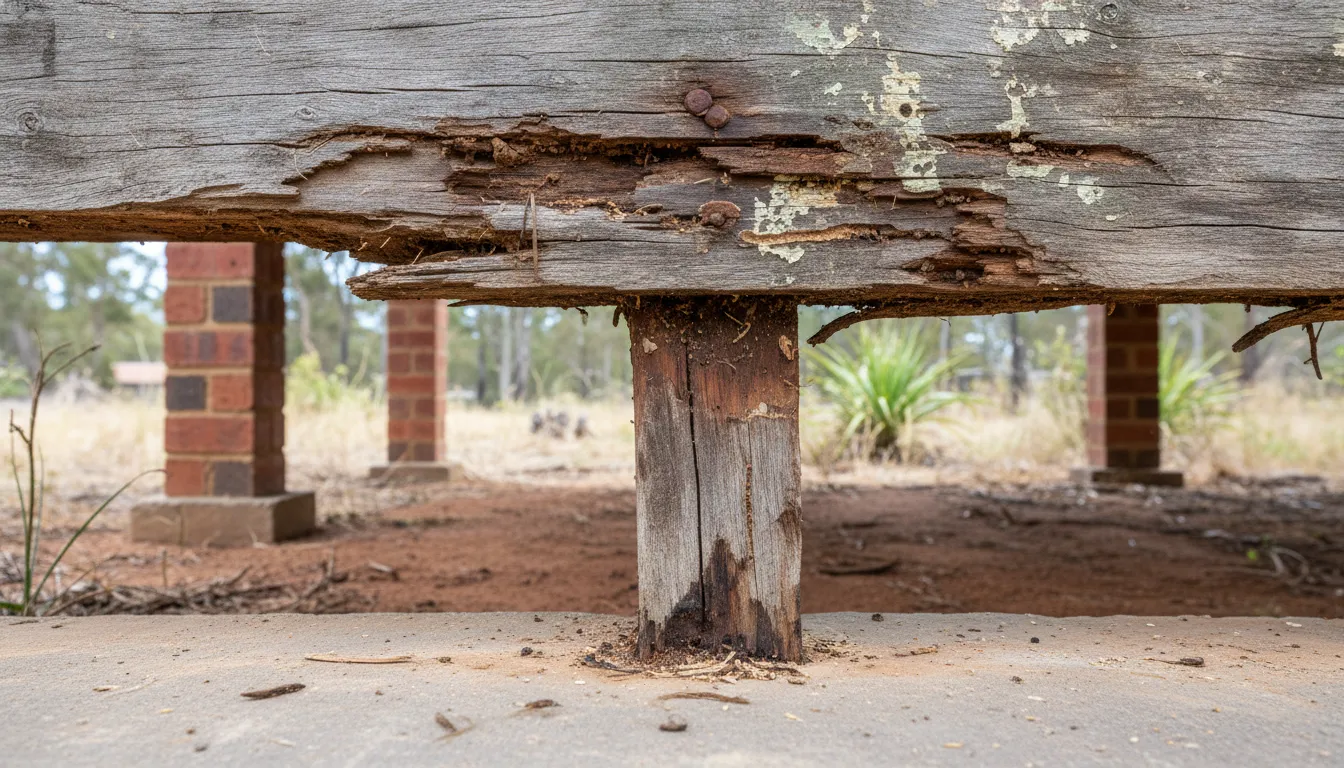
Many buyers ask: “Do I really need building and pest?” For houses, the safest answer is often yes, because timber pest inspection is its own discipline and pests can be hidden.
Archicentre notes timber pest inspections are visual assessments of reasonably accessible parts, and it’s not possible to guarantee a property is completely free of timber pests. It also defines “no visible evidence” as no visible indication at the time of inspection, not proof of absence.
What inspectors look for (visible indicators)
- Mud leads, damaged timbers, or suspect timber softness
- Excess moisture that increases timber decay risk
- Subfloor and roof-space conditions that help pests thrive
- Past treatment evidence and conducive conditions (where visible)
When to add a pest inspection
- Any house with accessible subfloor or garden beds against walls
- Properties with decks, pergolas, timber fencing close to the house
- Homes with known moisture issues or poor drainage
- Older homes with limited maintenance history
6. Bathroom, balcony and waterproofing defects (houses and apartments)
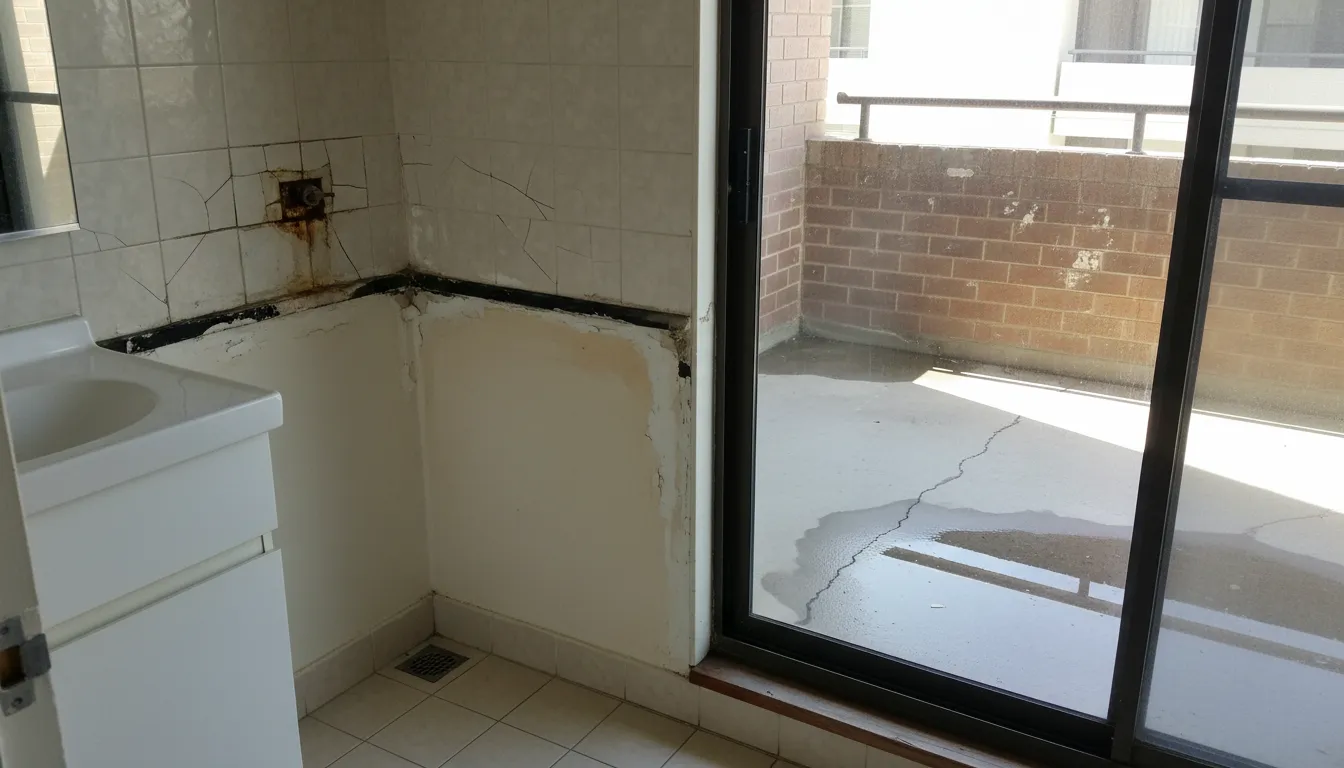
Waterproofing problems can be expensive in any property. In apartments and townhouses, they can also trigger owners corporation (OC) involvement, shared-cost disputes, and longer timelines.
What it can look like
- Balcony tile “drummy” areas, cracking grout, ponding
- Staining under balcony edges or soffits
- Efflorescence on balcony edges or internal walls
- Water marks on ceilings below bathrooms/balconies
- Musty smell in adjacent rooms
Why Melbourne apartment buyers watch balconies closely
Victorian research into balcony defects found:
- 52% of impacted buildings had defective balconies caused by water ingress issues
- 19% had waterproofing issues due to lack or insufficient waterproofing
- 64% of impacted buildings were constructed more than 10 years ago
That doesn’t mean every balcony leaks. It does mean visible symptoms deserve quick follow-up, especially in buildings outside warranty periods.
Balcony decision tree (simple and practical)
-
Minor symptoms only (hairline grout cracking, no staining, no ponding)Monitor, take photos, ask for OC maintenance history.
-
Clear water signs (staining below, efflorescence, ponding, drummy tiles)Ask for OC records, committee minutes, and any past reports. Get a waterproofing specialist opinion.
-
Structural concerns (spalling concrete, rust staining, movement, loose balustrades)Treat as higher risk. Engage an engineer and notify OC promptly.
What inspections can’t confirm in wet areas and balconies
Membranes and concealed junctions can’t be verified without invasive work. The Victorian Building Authority water ingress research insights point to relevant waterproofing standards and encourages engaging a waterproofing consultant or suitably skilled design practitioner for specific designs.
7. Non-compliant or poor-quality renovations (DIY red flags)
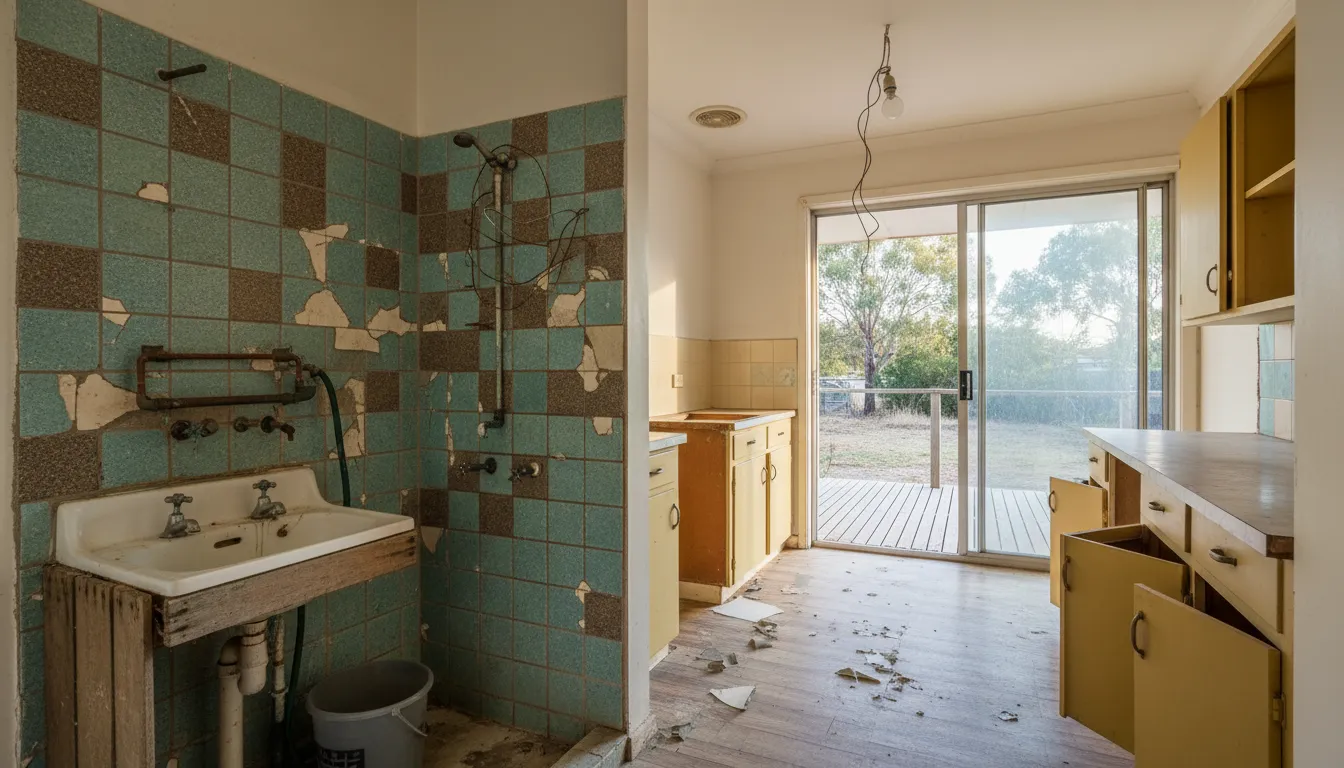
Renovations can look great at opens, but shortcuts often appear around wet areas, structural changes, and ventilation.
Victorian guidance explains:
- Defects relate to contract terms and agreed quality
- Non-compliance means work in breach of building laws, and gives the example that inadequate bathroom waterproofing can be non-compliance and lead to moisture problems
Common red flags buyers can spot
- No visible exhaust fan ducting in bathrooms (or fan that vents into roof space)
- Uneven tiling, cracked grout, or persistent silicone patching
- DIY structural changes (removed walls, altered openings) with no paperwork
- New paint in one corner where staining might have been covered
- Balcony tiles replaced without clear drainage detail
What to ask for
- Compliance certificates where relevant
- Receipts and scope of works for waterproofing, plumbing, and structural changes
- OC approvals for apartment alterations
8. Plumbing and drainage warning signs you can spot early
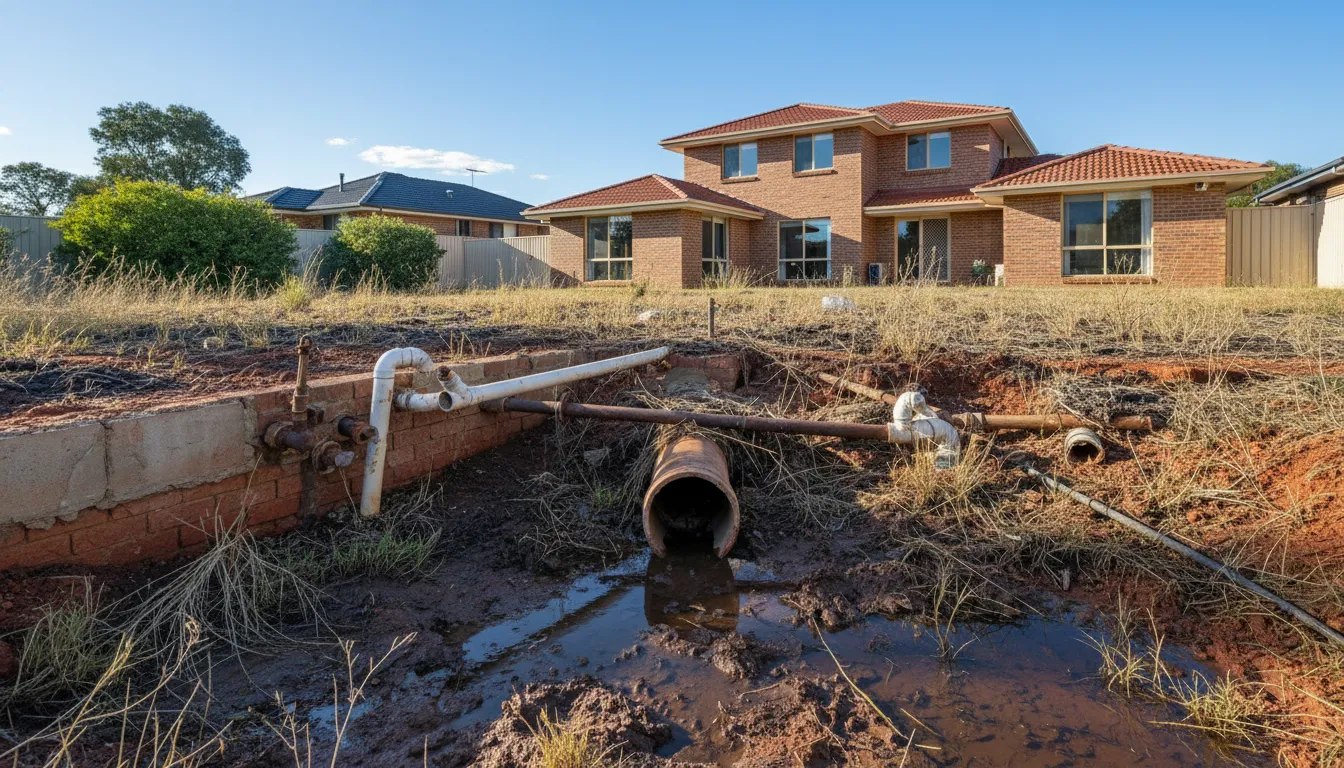
A standard inspection is not a full plumbing test, but visible signs can still tell you plenty.
What it can look like
- Active leaks under sinks or at visible pipe joints
- Rust staining, swollen cabinetry, or damp kickboards
- Slow-draining fixtures
- Yard pooling and soggy patches near stormwater lines
- Downpipes discharging right at the base of walls
Next steps
- If you see active leaks, plan for a plumber to investigate
- If site drainage slopes towards the house, plan for drainage improvements
- For apartments, ask whether leaks have been raised with OC before
9. Ventilation and condensation risks
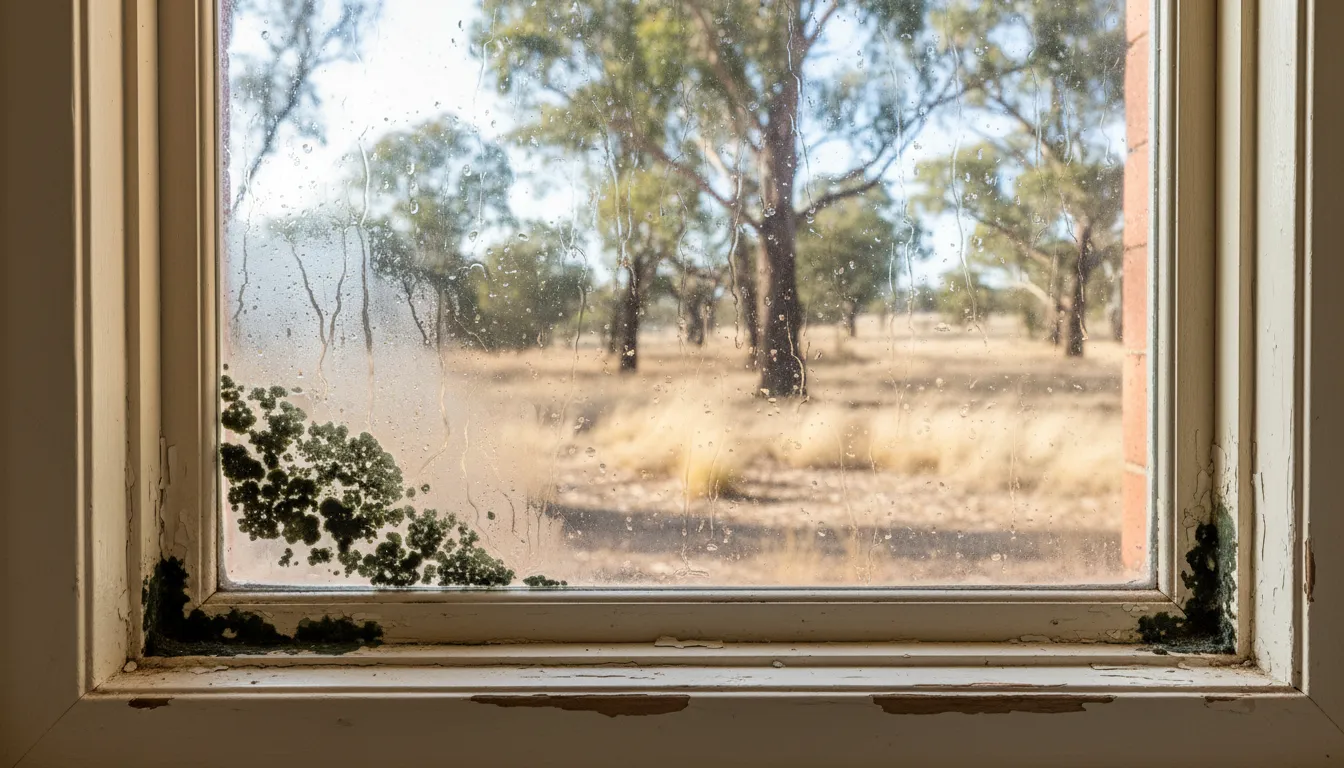
Condensation is one of the most misunderstood issues we see in Melbourne homes. It often gets blamed on “rising damp” or a roof leak, but it can also be a ventilation and temperature problem where warm indoor air hits cold surfaces and turns into water.
What we see
- Water beading on windows in the morning
- Mould on window reveals, curtains, or the corners of ceilings
- Peeling paint or bubbling plaster on cold external walls
- Musty smells in wardrobes, bedrooms, or behind furniture
- Black spotting on bathroom ceilings or around exhaust fans
- Damp skirting in external corners without a clear leak source
Why it matters
Condensation can feed mould, damage finishes, and make rooms feel colder and harder to heat. In some cases, it also hides a different issue like a slow plumbing leak or water ingress, so the pattern is what matters.
Condensation vs leak vs rising damp
| Issue | Common signs | Where it shows up | Likely next step |
|---|---|---|---|
| Condensation | Moisture on glass, mould in corners, worse overnight or mornings | Windows, external corners, behind furniture | Improve ventilation and extraction, check insulation and air flow |
| Leak | Localised stain, gets worse after rain or after using a fixture | Ceiling patches, around showers, under sinks | Plumber or roofer to trace and repair source |
| Rising damp | Dampness low on walls, salts (efflorescence), skirting damage | Lower brick or plaster near ground level | Damp specialist or builder assessment, check ground levels and drainage |
Common causes checklist
- Bathroom and laundry fans not working, not ducted outside, or not used long enough
- Dryer venting indoors
- Blocked or painted-over vents, including subfloor ventilation vents
- Furniture pushed hard against external walls (no airflow)
- Older windows and cold surfaces that collect moisture
- Persistent moisture from wet areas such as leaking showers or failed waterproofing
What a standard inspection can check
- Visible mould patterns, staining, and peeling finishes
- Whether bathrooms and laundries have exhaust fans (and visible ducting where accessible)
- General airflow clues such as vent locations and blocked vents
- Signs that moisture may be coming from elsewhere, like roof leaks, plumbing leaks, or water ingress around openings
What a standard inspection can’t confirm
- Hidden mould inside sealed wall cavities
- Exact humidity levels over time without monitoring equipment
- Insulation coverage behind linings
- The condition of concealed waterproofing membranes without invasive checks
What to do next
If symptoms look like condensation only, start with practical fixes that are low cost and low risk.
- Run exhaust fans during showers and for a period after, and confirm they vent outside.
- Improve cross ventilation when weather allows.
- Avoid drying clothes indoors without extraction.
- Keep a small gap between furniture and external walls.
- Consider a dehumidifier in problem rooms while you investigate the cause.
If mould is widespread, keeps returning after cleaning, or the source is unclear, a specialist can help confirm whether it’s a ventilation issue, a leak, or water ingress.
When to call a specialist
- A mould or indoor air specialist if mould is extensive or persistent
- A plumber if there are wet-area symptoms, leaking fixtures, or unexplained damp patches
- A waterproofing specialist if showers, balconies, or wet areas show ongoing moisture signs
10. Safety basics (handrails, trip hazards, hot water, obvious electrical issues)
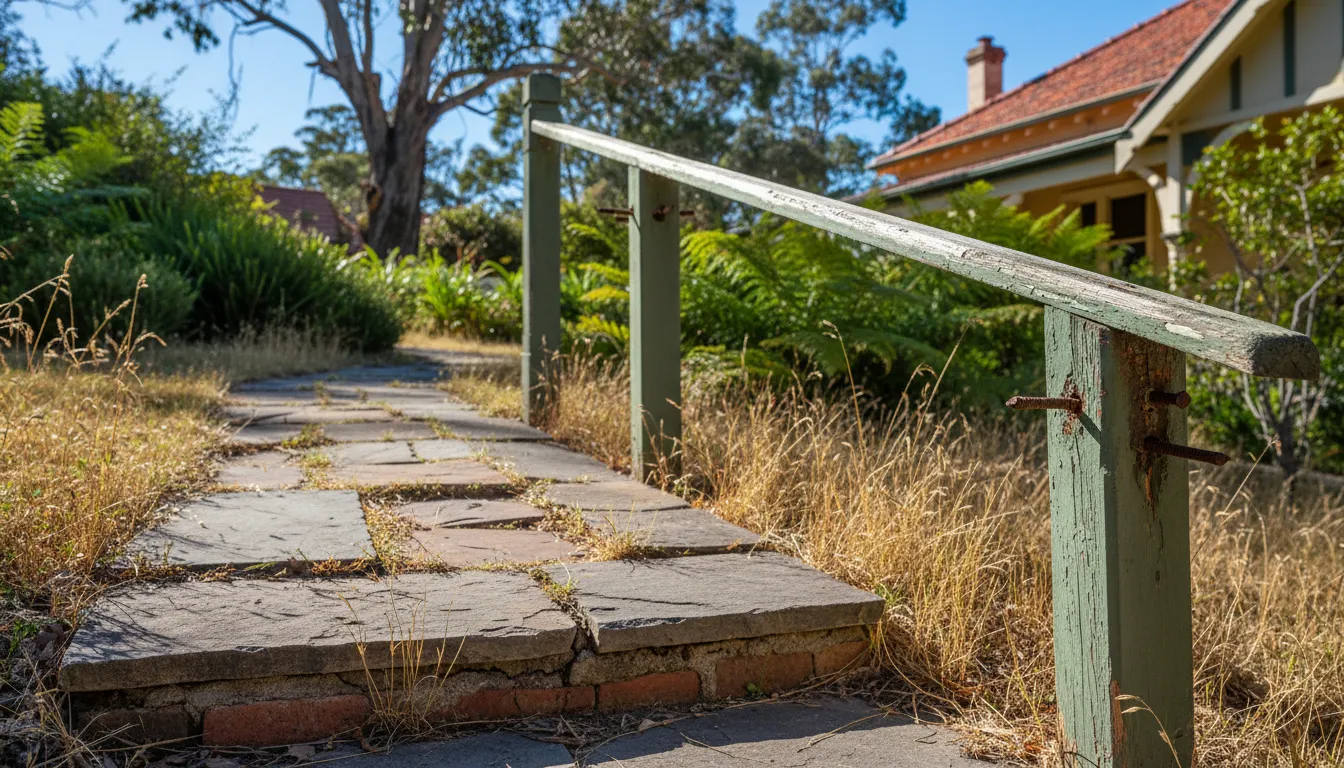
Safety items are easy to dismiss during an emotional purchase, but they can be the fastest way a property becomes unliveable or expensive to make safe. A home inspection won’t replace licensed trade testing, but it can flag obvious hazards and help you set priorities.
What we see
- Loose or unstable handrails and balustrades
- Uneven steps, damaged stair treads, or worn nosings
- Lifted tiles, raised timber edges, loose carpets, or uneven paving
- Missing covers on power points or switchboards, scorch marks, exposed wiring
- Hot water units showing corrosion, leaks, or poor mounting (visual signs only)
- Wet areas where water is reaching power points or lights
Why it matters
Falls and electrical hazards can be immediate risks. Some safety issues are also negotiation points because the fix is often required before moving in or leasing the property.
Safety table: visible signs and next step
| Safety item | What you might see | Why it matters | Likely next step |
|---|---|---|---|
| Handrails and balustrades | Movement when pushed, loose fixings | Fall risk | Repair promptly, builder or qualified trades |
| Stairs and steps | Cracked treads, uneven risers, worn edges | Trip and fall risk | Repair soon, carpenter or builder |
| Floors and paving | Lifted tiles, uneven paving, loose mats | Trip hazard | Repair soon, trades depending on surface |
| Electrical red flags | Scorch marks, exposed wiring, DIY-looking cabling | Fire and shock risk | Electrician assessment before settlement or occupancy |
| Hot water unit (visual only) | Leaks, corrosion, unstable base | Water damage and failure risk | Plumber to assess and service or replace |
What a standard inspection can check
- Obvious hazards that are visible in accessible areas
- Stability of handrails where safe to test lightly
- Clear trip hazards in common walkways
- Visible electrical red flags such as damaged fittings or unsafe-looking cabling
- Visible hot water issues like active leakage or corrosion
What a standard inspection can’t confirm
- Full electrical safety and compliance without testing by a licensed electrician
- Hot water temperature control performance without trade testing
- Hidden wiring issues or concealed plumbing faults
What to do next
If there’s an immediate safety risk, treat it as a priority item, not a “later” job.
-
Urgent safety: exposed wiring, scorch marks, unstable balustrades, severely damaged stepsNext step: licensed electrician or builder before settlement or before anyone moves in.
-
Repair soon: loose handrails, uneven paving in main paths, minor stair damageNext step: obtain quotes and schedule repairs early.
-
Monitor: minor wear that does not create a clear hazardNext step: include in your maintenance plan.
Not sure if you need building and pest?
See the difference between a building inspection and a building and pest inspection, and when it makes sense to book each.
vs pest inspection
What a Home Inspection in Melbourne Typically Includes (And Excludes)
Typically includes (visual, accessible areas)
- External walls, visible brickwork and cladding
- Internal rooms, ceilings, wet areas for visible moisture signs
- Roof covering from ground level and roof space if accessible
- Subfloor if accessible
- Gutters, downpipes, surface drainage basics
- Doors/windows operation (binding can indicate movement)
- Visible safety issues (trip hazards, loose handrails)
Typically excludes (common limitations)
- Invasive testing (cutting access holes, removing tiles, lifting flooring)
- Detailed engineering calculations
- Full electrical or plumbing compliance testing
- Asbestos sampling (requires specialist handling and lab testing)
- Concealed areas blocked by stored items or no safe access
Common add-ons when risk is higher
- Timber pest inspection (AS 4349.3 focuses on timber pests)
- Structural engineer assessment for movement concerns
- Waterproofing specialist for balconies/showers
- Licensed electrician or plumber checks where symptoms exist
How Much Do Home Inspections in Melbourne Cost?
Home inspection pricing in Melbourne depends on the property type, size, access, and what you bundle in. Owner Inspections quotes every job on the property, so ask for a fixed-price quote before you book. Across the Melbourne market, a standard residential building inspection is commonly in the $400 to $700 range.
If you want building condition plus termite and timber pest coverage, a combined building and pest inspection starts from $500, with pricing commonly sitting higher for larger or more complex properties. Owner Inspections also notes combined inspections can take 2 to 3 hours depending on the property, and they provide the report within 24 hours.
What changes the price
- Property type: apartment, townhouse, house, duplex
- Size and layout: floor area, number of storeys, roof complexity
- Access: roof space and subfloor access can affect scope and time onsite
- Age and condition: older homes and visible defects can increase inspection time
- Inspection scope: building-only vs building and pest, plus any specialist add-ons
Indicative pricing table
| Inspection type | Typical Melbourne starting point | Best for | Notes |
|---|---|---|---|
| Building inspection | From $400 | Buyers and owners wanting building condition and defect risk | Report delivered within 24 hours |
| Pre-purchase building inspection | From $400 | Pre-auction or cooling-off decisions | Report typically within 24 hours |
| Building and pest inspection (combined) | From $500 | Houses and any property where timber pest risk needs checking | Usually 2–3 hours onsite, report within 24 hours |
When to Book a Home Inspection in Melbourne
Pre-auction
- Book as early as you can once you’re serious.
- Provide the agent with access details up front (roof space, subfloor, meters).
- Use the report to decide: bid, cap your price, or walk away.
Private sale
- Aim for inspection during the offer stage or within any cooling-off window (your conveyancer can advise on contract timing).
- If access is limited at the first visit, ask the agent to organise follow-up access.
New build handover or pre-settlement
- Focus on workmanship, water management, drainage falls, and obvious compliance signals.
- Keep a list of defects with photos and locations so the builder can action them quickly.
How to use the report to negotiate (without overclaiming)
Good negotiation is about evidence and priorities, not panic.
A conservative approach that works
- Separate findings into urgent safety, repair soon, and monitor
- Ask for receipts, compliance certificates, and OC records to fill gaps
- Get quotes from relevant specialists for leverage on higher-cost items
- Use defect photos and clear descriptions to support a price adjustment or repair request
Severity Guide
| Severity label | What it usually means | Buyer action |
|---|---|---|
| Monitor | Minor issue, no clear progression | Photo and re-check over time |
| Repair soon | Likely to worsen or cause damage | Budget and plan repairs |
| Urgent safety | Immediate risk or major damage likely | Specialist advice before committing |
Home Inspections in Melbourne Common Issues
| Common issue | Visible signs | Why it matters | Likely next step |
|---|---|---|---|
| Movement | Step cracking, binding doors, sloping floors | Can affect structure and finishes | Engineer if progressing |
| Damp | Efflorescence, bubbling paint, musty smell | Can cause decay and mould | Plumber or waterproofing specialist |
| Roof drainage | Blocked gutters, overflow marks | Drives water into building fabric | Repair gutters, confirm stormwater |
| Subfloor moisture | Musty smell, rot, poor vents | Timber decay and pest risk | Improve drainage/ventilation |
| Termite risk | Mud leads, damaged timbers, high moisture | Hidden damage risk | Separate pest inspection |
| Balcony leak | Ponding, staining below, drummy tiles | OC cost risk and structural damage | OC records + waterproofing review |
Melbourne Buyer Checklist
Take this to opens. It won’t replace an inspection, but it helps you spot early warning signs.
- Check ceilings for stains, especially corners and near wet areas
- Smell for mustiness in wardrobes and bathrooms
- Look for efflorescence on bricks, balconies, and basement walls
- Test a few doors and windows for sticking
- Scan external brickwork for step cracking
- Check gutters for overflow marks or plant growth
- Look at downpipe discharge points (do they dump near walls?)
- Note ground levels: do paths and garden beds slope away from the house?
- Check bathrooms for loose tiles, cracked grout, heavy silicone patching
- In apartments, look under balconies for staining and rust marks
- Ask the agent for OC records, maintenance history, and past leak reports (apartments)
- Ask for receipts or compliance paperwork for renovations
- If you see moisture signs, plan for specialist follow-up
- If you see movement signs, consider an engineer review
- If it’s a house, plan for a pest inspection too
Getting the Most Value from Your Home Inspection in Melbourne
A good inspection outcome is not perfect house or run away. It’s a clear picture of what’s normal, what needs repair, what needs specialist checking, and what that means for your budget and negotiating position. In Melbourne, the repeat themes are movement, moisture management, roof drainage, and waterproofing, with balconies and OC risk adding a layer for apartment buyers.
Want clarity before you commit?
Book a home inspection and get a straightforward summary of what’s urgent, what can wait, and what needs a specialist.