
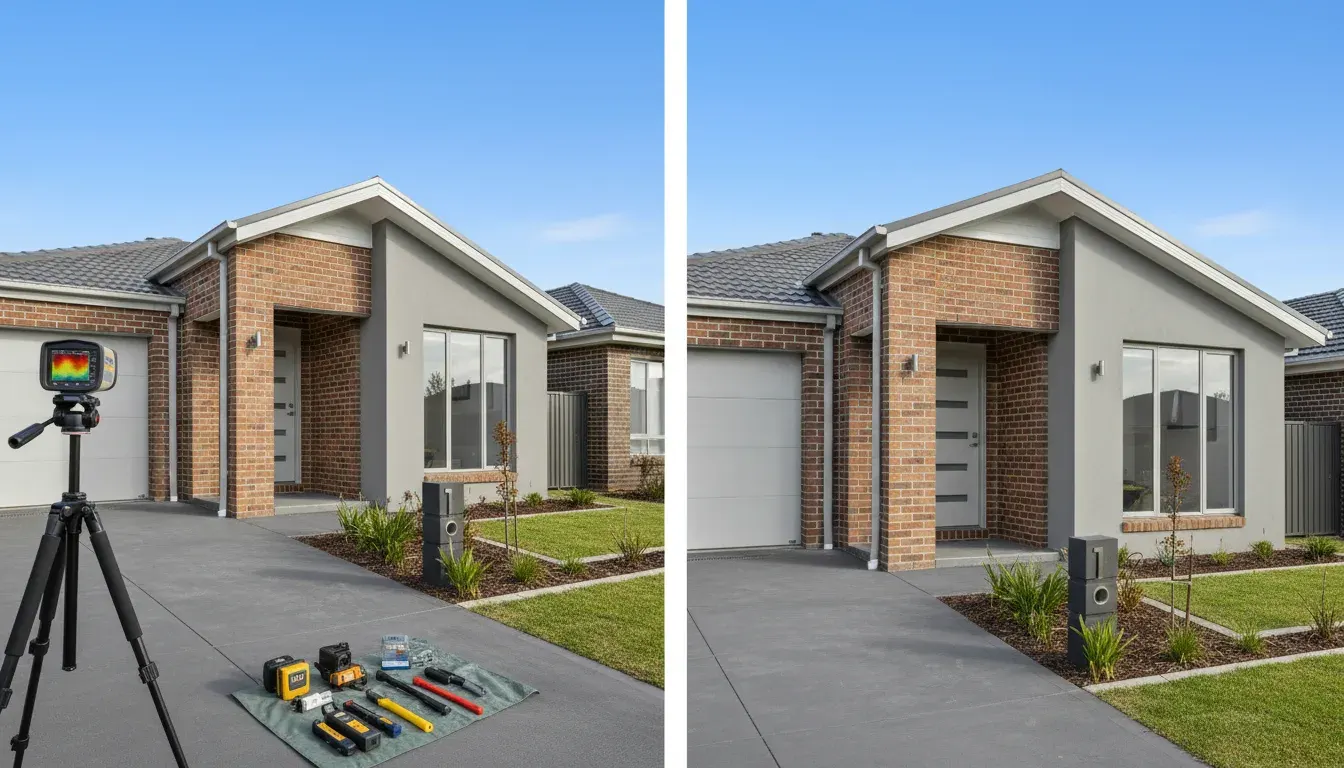
Here is the simple answer. A building inspection focuses on the condition of the property and looks for obvious defects and safety issues. A building and pest inspection includes that building check, plus a separate timber pest assessment for termites, termite damage and termite risk conditions. NSW Government says a building report may note visible termite damage, but it will not tell you whether termites are still present, which is why a separate pest inspection is recommended, especially in known termite areas. Victorian and Queensland consumer guidance also tells buyers to arrange inspections before signing or finalising the purchase.
Choosing the wrong option can leave you exposed to thousands of dollars in undetected damage. This guide explains exactly what each inspection covers, how the costs compare, and when it makes sense to pay for the combined service.
Sponsored
This article contains a sponsored link to Provincial Homes. Owner Inspections received payment or another commercial benefit for the placement, and Provincial Homes had no input into our inspection advice.
What is the Difference Between a Building Inspection and a Building and Pest Inspection?
A pre-purchase building inspection looks for obvious defects and areas of concern in the structure and condition of the home. Queensland guidance lists examples such as a faulty roof, leaking ceiling, weak or cracked walls, damaged foundations, mould, lack of waterproofing and drainage problems. Victorian guidance adds that a written report can flag faults, unsafe or unauthorised renovations or extensions, likely repair needs and issues that may help you negotiate price or contract terms.
A building and pest inspection goes further. The pest side checks for termites, evidence of termite damage and any existing termite management system. QBCC also says the inspector should tell you whether the property sits in an area with termite risk. Its termite management guide explains that a timber pest inspection under AS 4349.3 is a non-invasive visual inspection that looks for present or past timber pest activity, associated damage and conditions that could increase the chance of attack.
Buying a property and not sure which inspection you need?
Learn the difference between a building inspection and a building and pest inspection before you make an offer.
Buyer Guide
Do I Need to Do a Building and Pest Inspection?
In most cases, yes, especially if you are buying a house, townhouse, villa, duplex, older home, or any property with timber elements near the ground. NSW Government says you should get a pest inspection as well as a building report where termites are a known problem. Queensland guidance is even more direct: before you finalise the purchase, get a pre-purchase building inspection and a termite inspection, and make the sale conditional on being satisfied with the results. The National Construction Code also makes clear that termite management matters wherever subterranean termites present a potential risk and termite-susceptible building elements are involved.
A building-only inspection may still make sense in a narrower group of cases, such as some upper-floor apartments in mostly concrete buildings. Even then, that should not be an automatic decision. Shared roof spaces, storage areas, timber framing, balconies, gardens and common property can still raise questions, and a building inspection is still worth getting for defects, damp, safety issues and illegal works.
What Does a Building Inspection Cover?
A building inspection is carried out in accordance with Australian Standard AS 4349.1. A licensed building inspector examines all reasonably accessible areas of the property and provides a written report detailing any defects found.
A typical building inspection covers:
- Structural elements such as foundations, footings, load-bearing walls, beams, columns, and floor systems
- Roof exterior including tiles or metal sheeting, flashings, valleys, gutters, and downpipes
- Roof void where accessible, checking framing, insulation, ventilation, and signs of leaks
- Subfloor including stumps, bearers, joists, and ventilation
- Interior covering walls, ceilings, floors, windows, doors, and wet areas
- Exterior including cladding, decks, balconies, retaining walls, fencing, and drainage
- Safety items such as smoke alarms, handrails, balustrades, and electrical switchboard condition
The inspector will classify defects by severity (minor, significant, or major) and note any areas that were not accessible. A quality report also includes photographs and recommendations for repairs or further specialist investigation.
What a building inspection does not cover is a detailed assessment of timber pest activity. The inspector may note visible signs of termite damage if they happen to observe it, but a standard building inspection does not include the systematic pest evaluation required by AS 4349.3.
What Does a Building and Pest Inspection Cover?
A building and pest inspection combines the full building assessment described above with a dedicated timber pest inspection conducted under AS 4349.3. The pest component is typically carried out by a licensed pest inspector, and in many firms, this is a separate specialist who works alongside the building inspector.
The timber pest inspection adds the following:
- Termite detection using moisture meters, thermal imaging cameras, and tapping tools to identify active termite colonies or evidence of past activity
- Timber borer assessment looking for exit holes, frass (sawdust), and structural weakening caused by borers
- Fungal decay identification checking for wood rot in subfloor timbers, framing, and other structural timber
- Conducive conditions documenting factors that increase pest risk, such as poor drainage, timber-to-soil contact, garden beds against walls, and inadequate subfloor ventilation
- Treatment history review noting any existing termite management systems, chemical barriers, or baiting stations
The pest inspector will provide a separate report (or a combined report) that grades the risk level and recommends treatment or preventative measures.
Key Differences at a Glance
| Aspect | Building Inspection | Building and Pest Inspection |
|---|---|---|
| Standard | AS 4349.1 | AS 4349.1 + AS 4349.3 |
| Scope | Structure, safety, general condition | Structure, safety, condition + timber pests |
| Pest assessment | Incidental observations only | Systematic evaluation with specialised tools |
| Inspector | Licensed building inspector | Building inspector + licensed pest inspector |
| Duration | 1.5 to 2.5 hours | 2 to 3.5 hours |
| Typical cost | $400 to $700 | $500 to $900 |
| Report | Building defect report | Combined building and pest report |
Concerned about termites or hidden timber damage?
See how a timber pest inspection can help uncover termite activity, past damage, and risk areas before you commit.
Pest Inspections
Cost Comparison
The price difference between the two inspection types is smaller than many buyers expect. In most Australian capital cities, a standalone building inspection costs between $400 and $700 depending on property size and location. A combined building and pest inspection typically costs between $500 and $900.
That means the pest component adds roughly $100 to $250 to the total cost. When you consider that termite damage repair bills regularly exceed $10,000 and can climb above $100,000 for severe infestations, the additional outlay for a pest inspection is marginal.
Booking both services together as a combined inspection is almost always cheaper than booking them separately. Most inspection companies offer a bundled rate, and scheduling both at the same time also means less disruption to the vendor and the selling agent.
When You Need a Building Inspection Only
A building-only inspection may be sufficient in a narrow set of circumstances:
- High-rise apartments where the unit is above ground level and there is no direct timber-to-ground contact. Termite risk in upper-floor apartments is very low, though not zero.
- Recent pest report available. If the vendor has a current (within the past three months) timber pest inspection report from a reputable company, you might rely on that and commission a building inspection only. Always verify the report's currency and the inspector's credentials.
- Concrete or steel construction with no significant timber framing. Some commercial and industrial properties use no structural timber, which reduces the relevance of a pest inspection.
Even in these scenarios, it is worth discussing the decision with your inspector. They may identify conditions that increase pest risk beyond what you would expect.
When You Need a Building and Pest Inspection
For the vast majority of residential property purchases in Australia, a combined building and pest inspection is the appropriate choice. This is especially true when:
- The property has a timber subfloor or timber framing. Most Australian houses, including brick veneer homes, use timber framing for walls and roof structures. Termites target these timbers whether the house looks like a "timber house" or not.
- The property is in a high-risk termite zone. The CSIRO has mapped termite risk across Australia, and most of the populated coastline falls within moderate to very high risk areas. Queensland, northern NSW, and parts of Western Australia carry the highest risk.
- The property is older. Homes built before modern termite management systems were standard are more vulnerable, particularly if chemical barriers have expired or were never installed.
- You are buying a house with a garden. Landscaping, mulch, garden beds, and trees near the house create conditions that attract termites.
- There are signs of previous termite treatment. Drill holes in concrete paths, bait stations in the yard, or chemical application records suggest a known termite history that warrants fresh assessment.
- Your lender requires it. Some mortgage lenders require a building and pest inspection report before approving a home loan, particularly in high-risk termite areas.
What is the Most Common Building Code Violation?
There is not one single answer that fits every house in Australia. The type of issue depends on whether you are looking at a freestanding home, a recent apartment build, a renovation or an extension.
That said, waterproofing is one of the most common defect areas raised by regulators. Building Commission NSW says a small selection of defect types accounts for a large share of the defects found in its audits, and its Building Defects Library is built around those common issues.
Separate NSW research into recently completed strata buildings found that, among buildings with serious defects, waterproofing was the most common serious defect at 63%, ahead of fire safety systems and structural defects. The National Construction Code also treats waterproofing of wet areas as a core health and amenity requirement. So if a buyer wants one defect area to pay close attention to, waterproofing is near the top of the list.
Why Your Own Independent Report Matters
Do not rely on a seller’s report just because it is available. NSW Government says a vendor report can help, but it is not a substitute for your own independent report. Consumer Affairs Victoria goes further and says buyers should be wary of reports offered by the agent or seller because getting your own report is the only way to make sure it is independent and accurate.
It is also worth checking who is doing the work. Queensland says only a licensed residential building inspector can carry out pre-purchase building inspections, and only a licensed pest controller can carry out termite inspections. In NSW, pest controllers doing prescribed pesticide work must hold a licence issued by the EPA. Victorian guidance also recommends using an inspection service with full professional indemnity insurance.
Getting the Most Value From Your Home and Building Investment
For most home buyers, the safest default is simple: book the combined building and pest inspection unless there is a clear reason not to. The extra check can uncover termite damage, treatment history and risk conditions that a standard building report will not fully answer. At the same time, the building report helps you spot structural movement, damp, waterproofing failures, unsafe renovations and other defects that can affect price, safety and future maintenance.
The real value is not just finding defects. It is knowing what you are buying, what needs work, what should change the price, and when you need more specialist advice before you commit. For buyers who want a clear, independent view of a property, booking the inspection before exchange is money well spent.
Buyers planning a dual-occupancy build on the block, rather than living in the existing home, have a different checklist. It pays to compare a few builders' duplex designs early, so you know what the site can take before you commit.
Our Recommendation
For any freestanding house, townhouse, villa, or duplex purchase in Australia, we recommend a combined building and pest inspection without exception. The cost difference is small, the protection is significant, and the peace of mind is well worth it.
Termite damage is one of the most expensive defects to repair, and it is also one of the most preventable when detected early. A pest inspection identifies not just existing damage but also the conditions that make future infestation likely. This allows you to take preventative action before a problem develops.
If you are buying an upper-floor apartment in a concrete building, a building-only inspection is usually adequate. But if there is any timber framing or if the building has a history of pest issues, add the pest component.
The bottom line is simple: unless you have a clear reason to exclude the pest inspection, include it. The small additional cost protects you against one of the biggest financial risks in Australian property ownership.
For a complete overview, see our guide to pre-purchase building and pest inspections.
Frequently Asked Questions
What is the Difference Between a Building Inspection and a Building and Pest Inspection?
A building inspection looks for obvious defects and areas of concern in the structure and condition of the home. A building and pest inspection goes further, adding a separate timber pest assessment that checks for termites, termite damage and any existing termite management system.
Do I Need to Do a Building and Pest Inspection?
In most cases, yes, especially if you are buying a house, townhouse, villa, duplex, older home, or any property with timber elements near the ground. A building-only inspection may still make sense in a narrower group of cases, such as some upper-floor apartments in mostly concrete buildings.
What Does a Building Inspection Cover?
A building inspection is carried out in accordance with Australian Standard AS 4349.1. A licensed building inspector examines all reasonably accessible areas of the property, including structural elements, roof exterior, roof void, subfloor, interior, exterior and safety items, and provides a written report detailing any defects found.
What Does a Building and Pest Inspection Cover?
A building and pest inspection combines the full building assessment with a dedicated timber pest inspection conducted under AS 4349.3, adding termite detection, timber borer assessment, fungal decay identification, conducive conditions and a review of any existing termite treatment history.
What is the Most Common Building Code Violation?
There is not one single answer that fits every house in Australia, since the type of issue depends on the property. That said, waterproofing is one of the most common defect areas raised by regulators, and separate NSW research into recently completed strata buildings found it was the most common serious defect.
Need a Pre-Purchase Inspection?
Our licensed inspectors cover Sydney, Melbourne, and all major Australian cities.